
120,000 tonnes of spring water flow through the Daio Wasabi Farm every 24 hours. It surfaces at a steady 13°C from meltwater stored in the gravel layer below the Azumino plain, feeds a 15-hectare network of hand-dug cultivation channels, and exits back into the Manyo river system about 3km downstream. Every wasabi plant on this farm — and there are roughly 500,000 of them — spends its entire life with that water running across its roots, continuously, at a temperature that never varies by more than two degrees year-round. That is why the wasabi tastes the way it does. That is why the farm can exist in this specific spot and nowhere else. And that is why a plate of Daio wasabi-grated-on-sharkskin, eaten at 9am on a bench beside the farm’s main channel, is a different experience from wasabi-anywhere-else.
Daio Wasabi Farm sits on the Azumino plain 15 minutes by bus from JR Hotaka Station. It’s free to enter, open 9am-4:30pm (5pm in summer), year-round. Most visitors come from Matsumoto as a half-day. I’d budget 2-3 hours inside plus transit. Here’s what’s actually there and how to see it properly.
In This Article
- How the farm works (and why you care)
- The three waterwheels (the Kurosawa bit)
- What to actually do inside
- What to eat on site
- History of the farm — the Azumi-no story
- Takeaway wasabi — and whether you can actually bring it home
- Practical visit details
- What to combine with a Daio visit
- When to come
- Getting to Daio Wasabi Farm
How the farm works (and why you care)
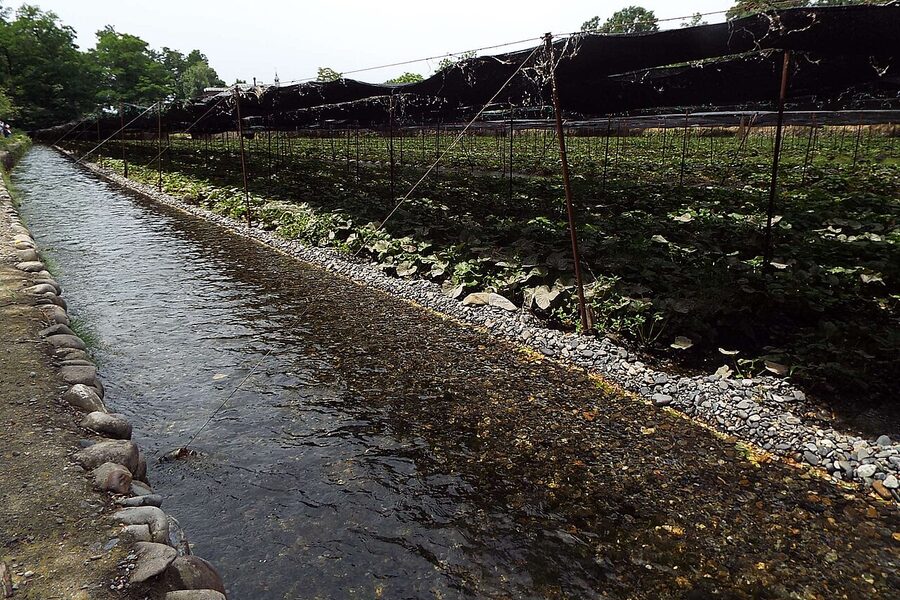
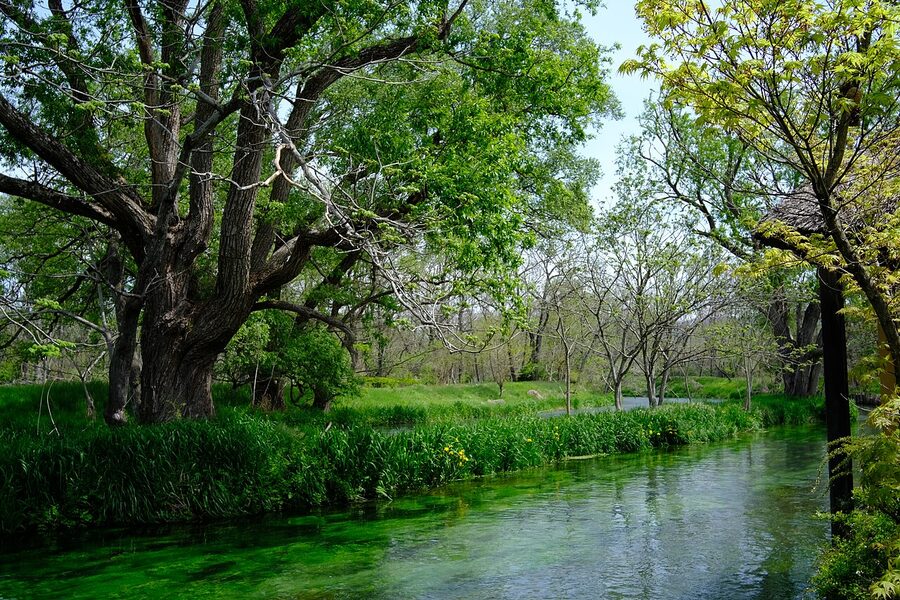
Real wasabi — Wasabia japonica — is a member of the cabbage family that requires three things to grow: cold clean flowing water (under 15°C year-round), shade, and gravel substrate. Take any of those away and you don’t get wasabi; you get sad stunted plants that never develop the root heat compound. Azumino has all three naturally: the spring water surfacing from the Hotaka meltwater aquifer runs at 13°C, the surrounding foothills provide morning shade, the riverbed gravel provides the substrate. Add 15 hectares of hand-dug channels and 500,000 plants and you have the farm.
A wasabi plant takes 3-5 years from transplant to harvestable root. The root grows roughly 1cm per year; a typical harvestable rhizome is 10-15cm long. Daio harvests around 150 tonnes of wasabi rhizomes per year and roughly the same weight of leaves, stems, and flowers (all edible, all with the distinctive green heat). The farm employs about 60 full-time staff year-round, mostly for bed maintenance; wasabi is genuinely labour-intensive.
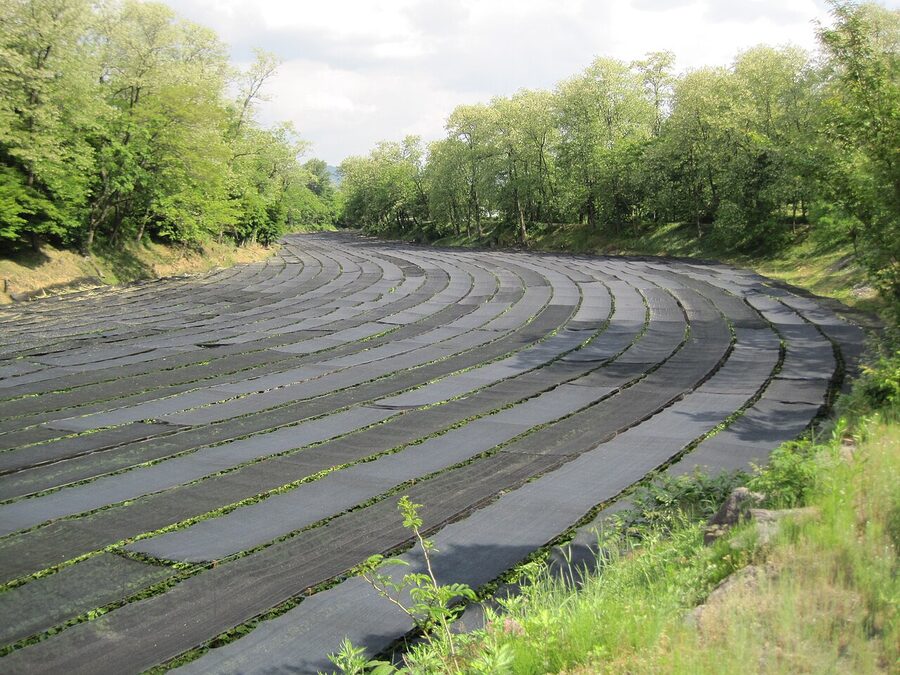
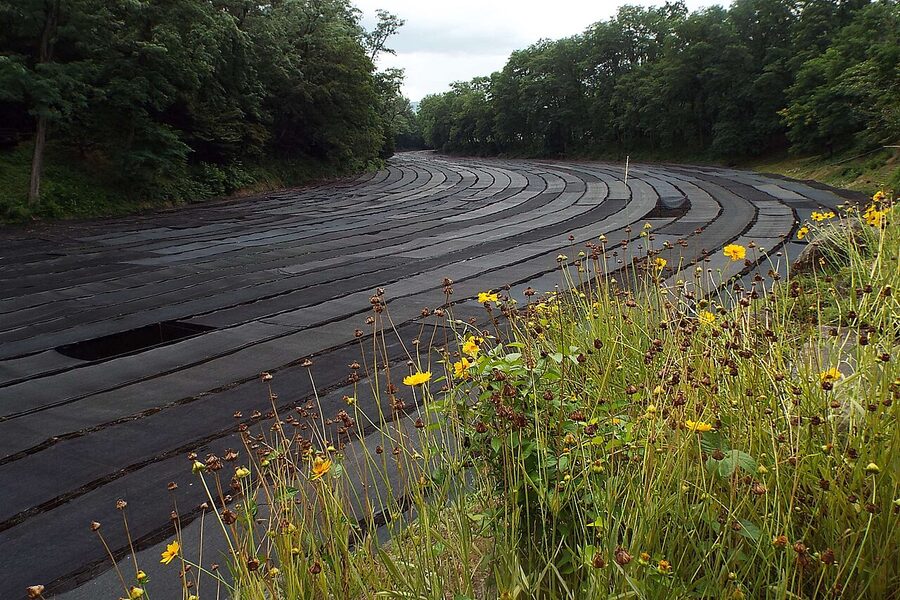
The practical implication for visitors: come March-May if you want the classic green-rows photograph. Summer visits see mostly black tarps; autumn visits see tarps and some leaves turning; winter visits are beautiful but almost all the beds are dormant under tarps. Most travellers come in summer because they’re on holiday, then are surprised by the black tarps in their photos. You have been warned.
The three waterwheels (the Kurosawa bit)
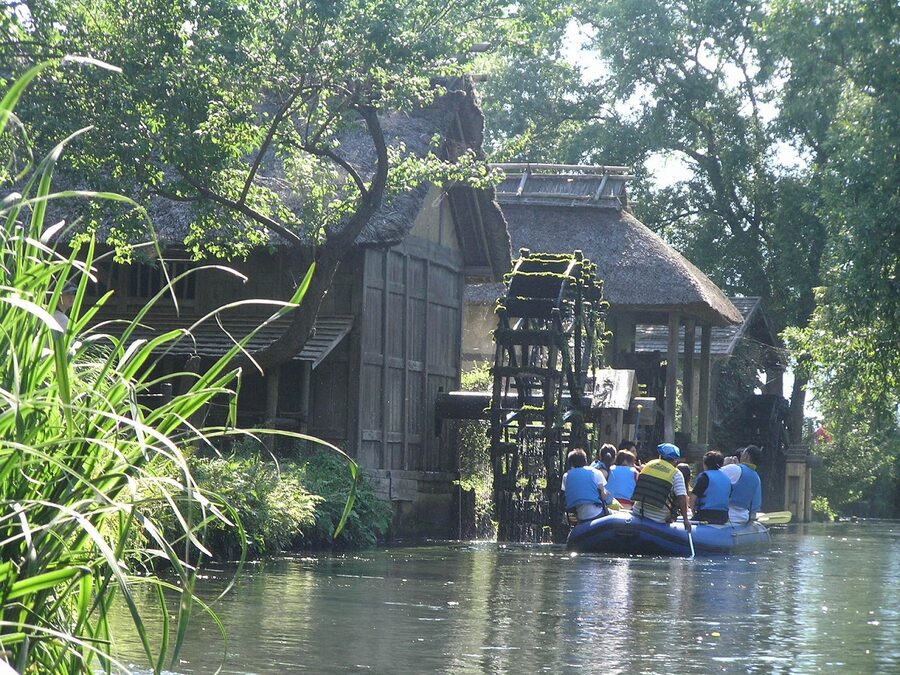
The three wooden waterwheels in the northern section of the farm are the iconic Daio photograph. They’re genuinely working mills — powered by the farm’s spring-water outflow, grinding buckwheat and soba flour used in the farm’s own restaurant. They date from the 1970s as part of the farm’s tourist-attraction build-out; they were chosen by Akira Kurosawa for the eighth and final vignette of his 1990 film Dreams, the “Village of the Watermills” sequence. The farm has leaned heavily into the Kurosawa connection ever since; there’s a small photo display at the approach.
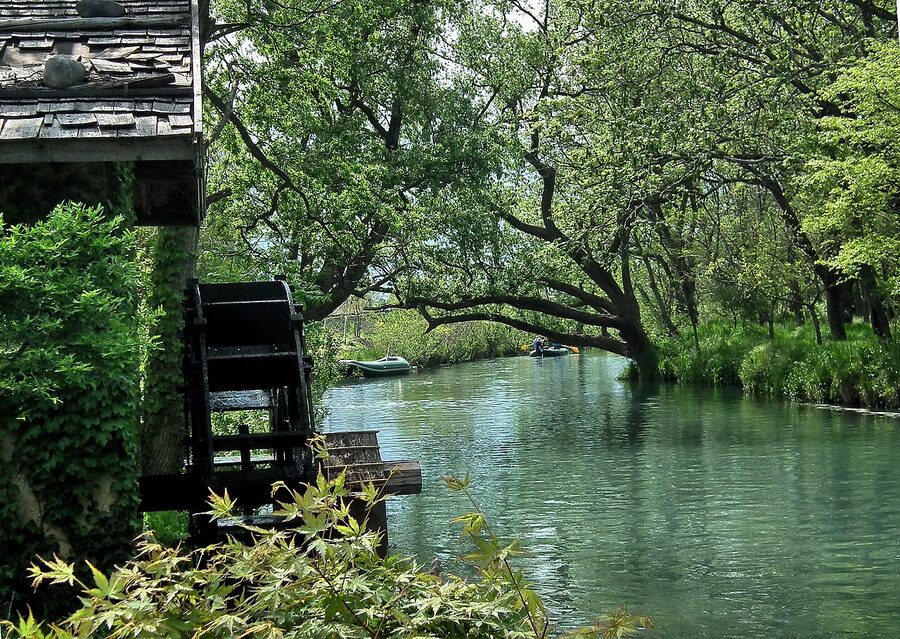
The waterwheels are lovely; they photograph well at 7:30am before the day coaches arrive; they’re a three-minute bridge-crossing from the main farm area. They’re not the reason to come (the wasabi is), but they are the reason most people leave with a photo. Allow 15 minutes.
A thing worth mentioning: the water running under the wheels is the same system that feeds the wasabi beds. Walk downstream a hundred metres from the southernmost wheel and you’re watching your image reflected in the same water that will, in a few hours, be keeping wasabi roots at 13 degrees. This is the kind of ecological loop that makes Daio feel different from a typical tourist farm — it’s all one continuous water system, and every bit of it is visible if you look carefully.
What to actually do inside
A proper visit is 2-3 hours, broken down roughly as:
- Arrival and first walk (30 min) — from the car park, over the first bridge, along the main channel. You’re looking at the cultivation beds from above; most are visible. Free maps in English at the entrance kiosk.
- Observation deck (10 min) — the raised platform on the south side gives the postcard overview with the Hotaka foothills in the background. Best light around 9-10am.
- Waterwheels loop (30 min) — cross the Yokogawa bridge to the waterwheel zone. Photo stops, the three wheels, the small Daio Shrine next to them.
- Retail shop (30 min) — buy a fresh root (¥1,500 for a small one, ¥3,000+ for a large), the sharkskin grater (¥1,800 for a small one), vacuum-packed wasabi paste, wasabi-flavoured packaged foods of every kind. The fresh root keeps for 2-3 weeks refrigerated wrapped in damp newspaper; not something you’d check on an international flight.
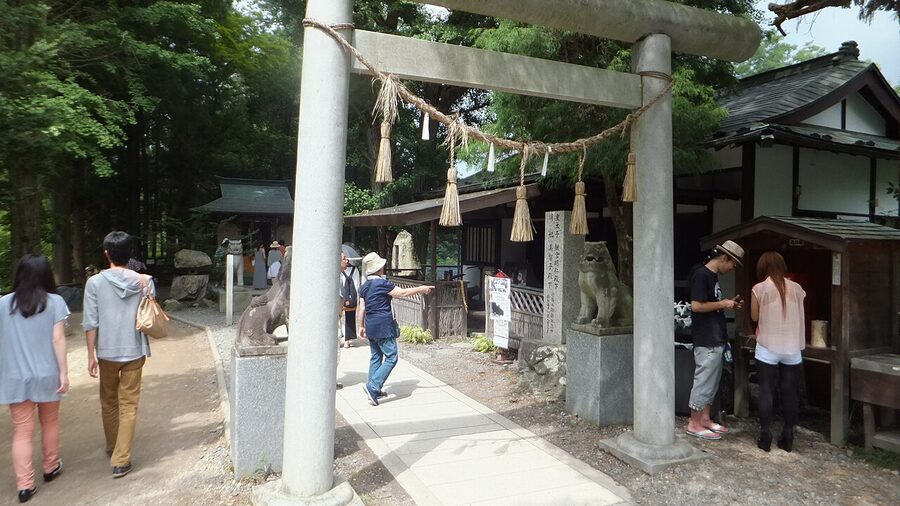
- Hachimen Daio Shrine (10 min) — the small Shinto shrine at the northern end, dedicated to Hachimen Daio (“Eight-faced Great King”), the legendary local demon the farm is named after. Free.
- Eat something (30-45 min) — the farm has three dining options covered below. This is the part most people skip that they shouldn’t.
What to eat on site
Three eating points inside the farm, each with its own niche:
- Main restaurant (Daio no Daidokoro) — the farm’s sit-down restaurant, lunch only (11:00-14:30). ¥1,200 for the wasabi-don rice bowl with freshly grated wasabi on top of beef; ¥1,400 for the wasabi soba with grated wasabi served beside for you to add to taste. Both good. Cash or card. Queue by 12:30pm in peak season.
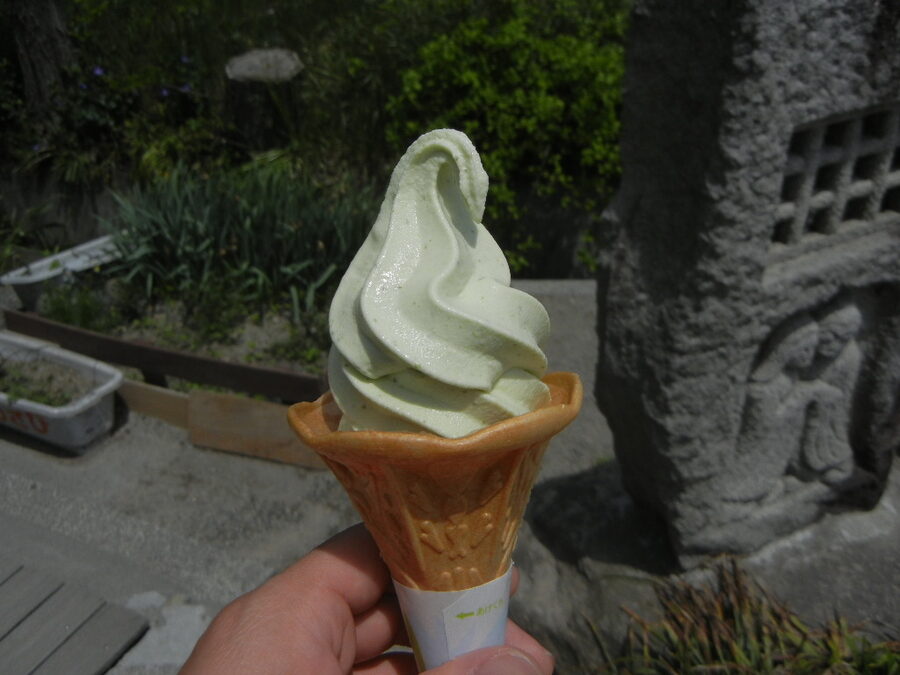
- Snack stalls — the covered food area near the entrance. Wasabi soft serve (¥400), wasabi croquette (¥350, a proper deep-fried potato croquette with grated wasabi in the mix), wasabi beer (¥650 a bottle, a Belgian-style wheat beer brewed with wasabi leaf, no heat in the finish but a herbal peppery nose). Take away, eat on a bench.
- Tasting counter — inside the retail shop, the counter where you can try a sliver of fresh root grated in front of you with their sharkskin grater. Free, one sample per person. The way to understand why real wasabi is different from tube-paste is to eat it this way at the source.
Two things to skip: the wasabi-flavoured potato chips they sell pre-packaged (fake wasabi flavour, mass-manufactured elsewhere), and the overpriced generic Japanese-tourist-souvenir goods in the main shop. The real wasabi products — fresh root, grater, vacuum paste — are the purchases to make here.
History of the farm — the Azumi-no story
Daio Wasabi Farm was founded in 1915 by a former Taisho-era military officer named Zengoro Deuchi, on what was then a boggy flood plain at the convergence of three rivers. Deuchi had been impressed by the spring water quality while convalescing in the area and spent 20 years converting 15 hectares of unusable wetland into the canalised cultivation system you see today. The farm has been continuously operated by the same family through four generations; the current president is Deuchi’s great-grandson.
The “Daio” (“Great King”) in the farm’s name refers to a local folk demon — Hachimen Daio, an eight-faced giant said to have lived in the Hotaka foothills in prehistoric times. The local Azumi clan, originally sea-going people from northern Kyushu who migrated inland in the 5th century, brought the story with them; a small shrine on the farm marks where Daio’s remains are supposed to be buried. The story is neatly preserved in a small museum-room at the farm entrance with English signage.
Takeaway wasabi — and whether you can actually bring it home
Most visitors who fall for the fresh stuff want to take a root home. Two questions that come up:
- Does it survive the journey? Yes, within Japan. A fresh root wrapped in damp newspaper inside a zip-loc bag, stored in a hotel mini-bar at 4°C, is fine for 10-14 days. Back home in a domestic fridge, 2-3 weeks. After that it starts to soften.
- Can you take it on a flight? Yes and no. Fresh wasabi root is a permitted agricultural product in the US, UK, EU, Australia and most of Asia with one caveat: it needs to be declared on arrival and may be inspected (it’s usually waved through). The sharkskin grater is unrestricted everywhere. Vacuum-packed wasabi paste in sealed commercial packaging is the easiest option if you don’t want customs friction — no declaration needed, no inspection risk.
One important warning: fresh wasabi loses its signature volatile heat within about 10 minutes of grating. The way to eat it is to grate small amounts as you need them, not prep a whole bowl. A root bought at Daio and eaten the same night at your hotel tastes roughly the same as what you’d get at a high-end sushi counter in Tokyo. A root eaten a week later at home tastes noticeably milder. The real once-in-a-lifetime bit is eating the grated sliver at the farm’s tasting counter, 90 seconds after it comes off the root. Do that.
Practical visit details
- Hours: 9:00-16:30 (until 17:00 in July-August). Open year-round, including all holidays.
- Entry: Free. No entry fee, no ticket booth. Parking is free too.
- Time: 2-3 hours for a proper visit, 45 minutes if you’re in a hurry.
- Amenities: Clean toilets, English maps, ATM, cafe, full restaurant, retail shop, small Shinto shrine, free Wi-Fi in the main building area.
- Accessibility: the main paths are paved and flat; wheelchair-accessible (one ramp has a slight incline). The waterwheel zone is gravel and less easy.
- Photography: free; no drone use; tripods OK on public paths but not on the narrow cultivation-bed boardwalks (too narrow for other visitors).
What to combine with a Daio visit
Daio Wasabi Farm is 90 minutes to visit properly, which leaves most of a day free if you’ve come out from Matsumoto. Four natural add-ons:
- Azumino cycle loop (half day): rent a bike at Hotaka Station (¥600 for three hours, ¥1,200 full day) and do the 18km Azumino loop. Wasabi farm → Hotaka Shrine → Rokuzan Art Museum → canals → back to station. Best half-day cycling in central Japan. Full details in the Azumino travel guide.
- Nakabusa Onsen (full day): bus 60 minutes into the Hotaka foothills to a 1,500m mountain onsen with an outdoor bath built directly into a stream. Day-pass ¥800. Last bus back leaves 16:50 sharp; miss it and you’re paying ¥10,000 for a taxi.
- Matsumoto Castle + Daio (day trip): Morning at the castle (8:30am opening), train to Hotaka after lunch, wasabi farm 14:00-16:00, train back to Matsumoto for dinner. The standard quick combination for travellers with limited time.
- Narita Airport transfer via Daio: If you’re flying into/out of Tokyo and want a half-day in Azumino, Daio works as a morning stop on the way. Forward luggage via Yamato from your Tokyo hotel to the next accommodation; carry a day bag only.
When to come
- March to May — peak visual season. Tarps off, beds bright green, cherry blossom along the river path through the first week of May. Golden Week (late April-early May) is busy; the weekdays either side are quieter.
- June to August — summer. Tarps on, black. Still worth visiting but the green-rows photo won’t happen. Cool water is pleasant in the 28°C Azumino heat. The farm opens an hour later in July-August (until 17:00).
- September to November — autumn. Tarps still mostly on but starting to come off on some beds. The surrounding foothills turn gold in late October, giving a better backdrop.
- December to February — winter. Most beds dormant, some frost on the channels on cold mornings. Quietest season; the spring water temperature (13°C) means the channels never freeze even when ambient is -10°C. Bundle up.
Getting to Daio Wasabi Farm
From Matsumoto: JR Oito Line to Hotaka Station (30 minutes, ¥330), then either a 15-minute Alpico bus (¥430) or a 20-minute rental cycle (¥600 for three hours at Hotaka Rent-a-Cycle, two minutes from the station exit).
From Tokyo: Azusa Limited Express direct to Hotaka (3h, ¥7,500) — three direct services daily, check Hyperdia for schedule. Or via Matsumoto with one change.
By car: 30 minutes from Matsumoto on Route 147. Free on-site parking for 1,000 vehicles. Sat-nav address: 3640 Hotaka, Azumino, Nagano Prefecture 399-8303.
If you’re combining with the rest of Azumino, see the Azumino travel guide — I’d recommend cycling the wasabi farm, Hotaka Shrine and Rokuzan Art Museum as a single half-day loop. For the wider region, the Japan Alps itinerary hub and access guide cover multi-city routing.


.jpg)

