
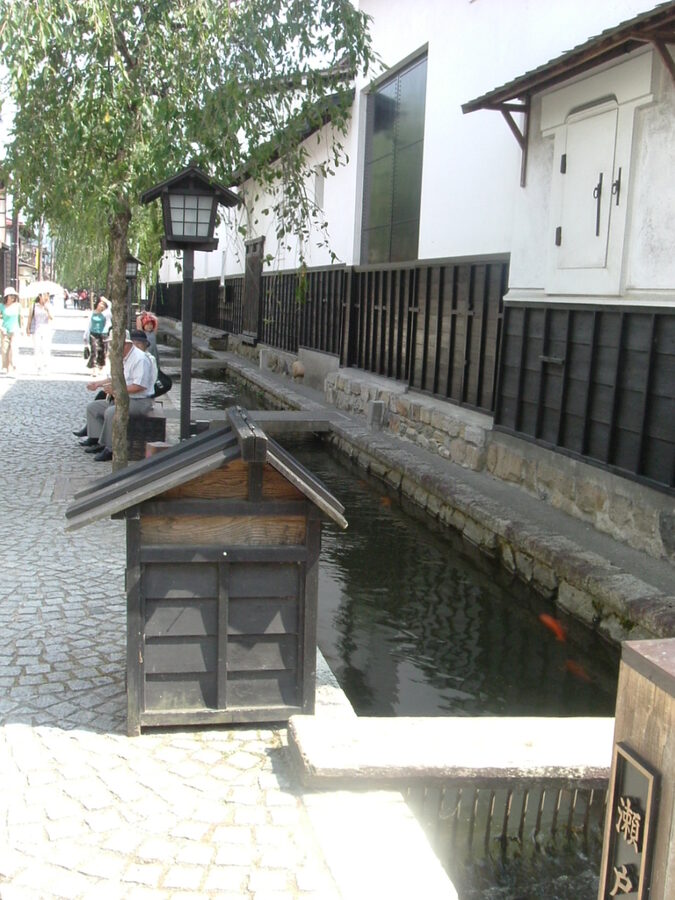
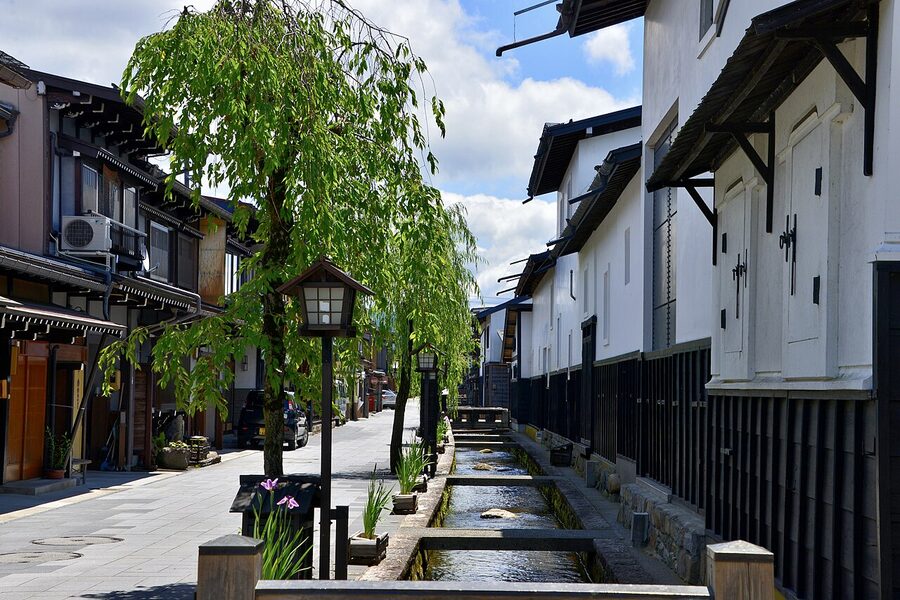
Hida Furukawa has around 1,000 koi living in its drainage ditches. That’s the fastest way to explain the town. The white-walled warehouse district is quartered by a set of narrow stone-lined canals called Setogawa — they were cut in 1589 to carry snowmelt off the merchant rooftops — and in the early 1970s somebody stocked the low-water sections with koi as a clean-water indicator. They’ve been there ever since. You feed them ¥100 pellets from a dispenser bolted to the canal wall. They eat out of your hand. They’re huge. And the town they swim through is one of the best-preserved merchant quarters in central Japan, two stops up the JR Hida line from Takayama, with a festival the locals say is better than Takayama’s own.
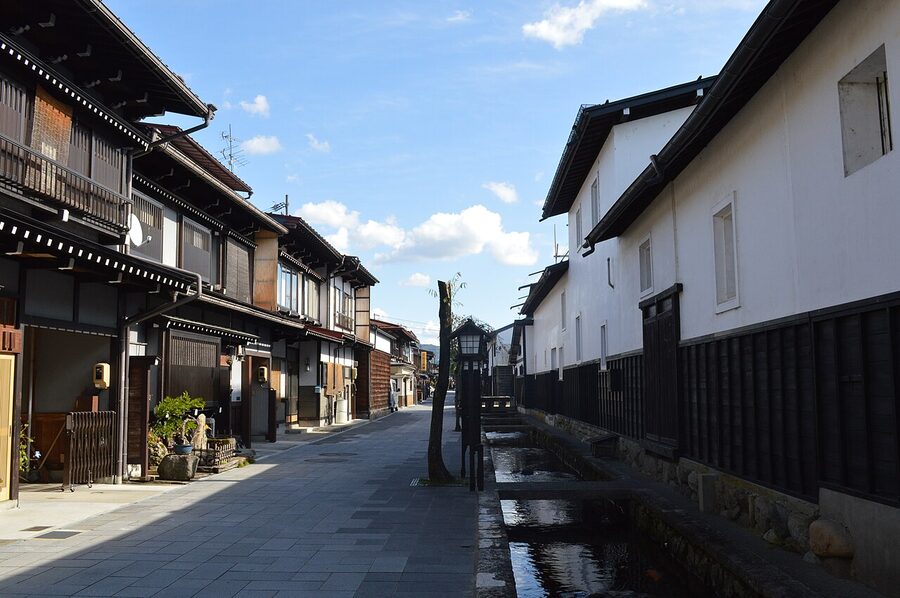
Hida City is the administrative municipality Furukawa sits in — 22,000 people across a lot of mountain, of which 13,000 live in Furukawa itself. The rest is forest, empty valley, and the handful of small villages that feed the sake breweries. You don’t come to Hida City the same way you come to Takayama: there is no walking tour, no festival-float museum queue, no beef-skewer street food circuit. You come to be in a working Japanese town that happens to be beautiful and mostly empty of other visitors. Half a day does it. A full day with a sake brewery tour and a bicycle is better.
In This Article
- The Seto canals and the 1,000 koi
- Furukawa Matsuri (April 19-20)
- The three sake breweries
- The 1,000 neutrinos-per-second thing (Kamioka)
- Santera Mairi — the three-temple walk
- A short history of why Furukawa survived
- The old town on foot, or on a bicycle
- What to shop for
- The takumi tradition — Hida’s other export
- Food
- Where to stay
- When to come
- Getting to Hida Furukawa
The Seto canals and the 1,000 koi
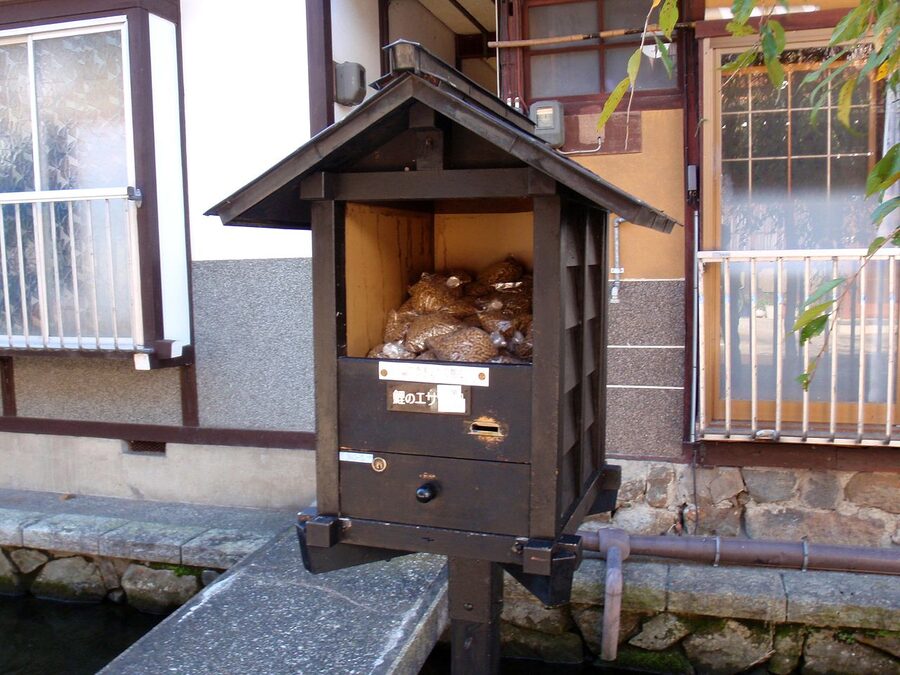
The canal loop is maybe 600 metres, easily walked in 20 minutes if you don’t stop. You should stop. Every dispenser along the railings is a rubber-stoppered pellet tube bolted at waist height — insert a ¥100 coin, a handful of fish food falls into your palm. The koi come from the whole canal at the sound. Five or six feedings along the loop is fine. Any more and you’re just doing a protein-delivery service for fish that are already over-fed by tourists by the time you arrive.
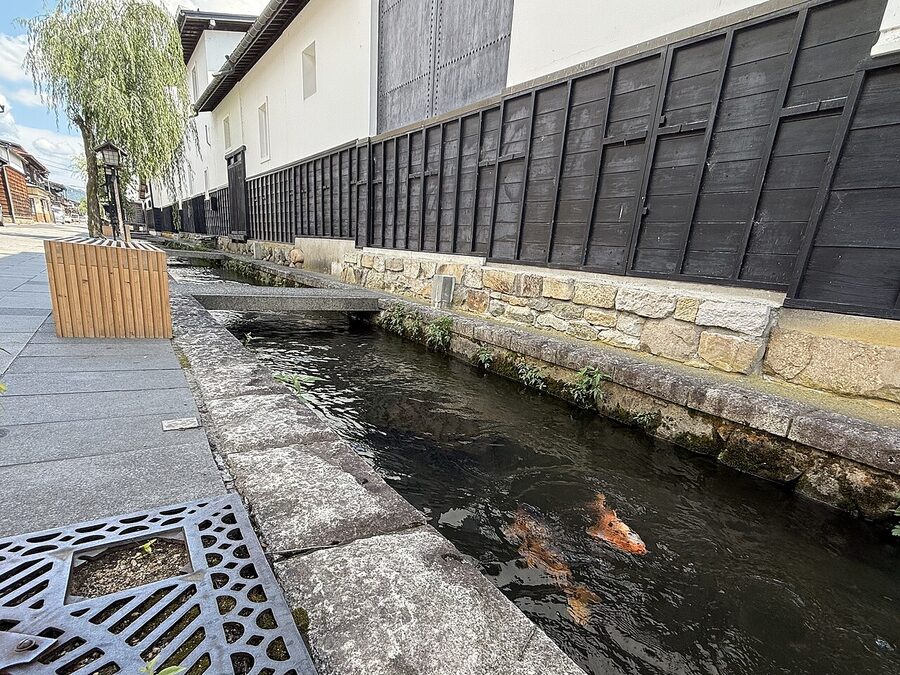
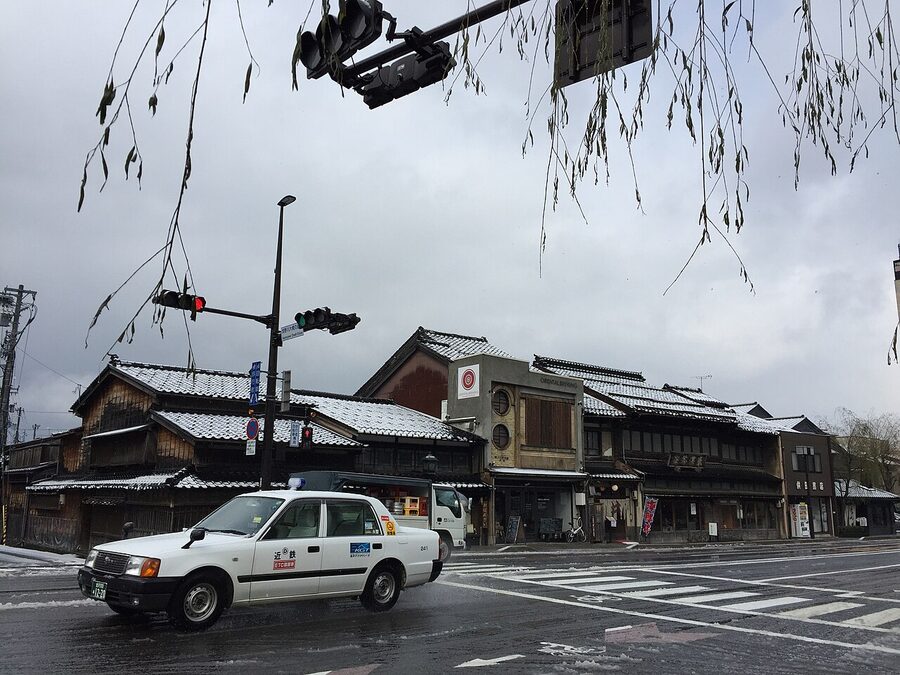
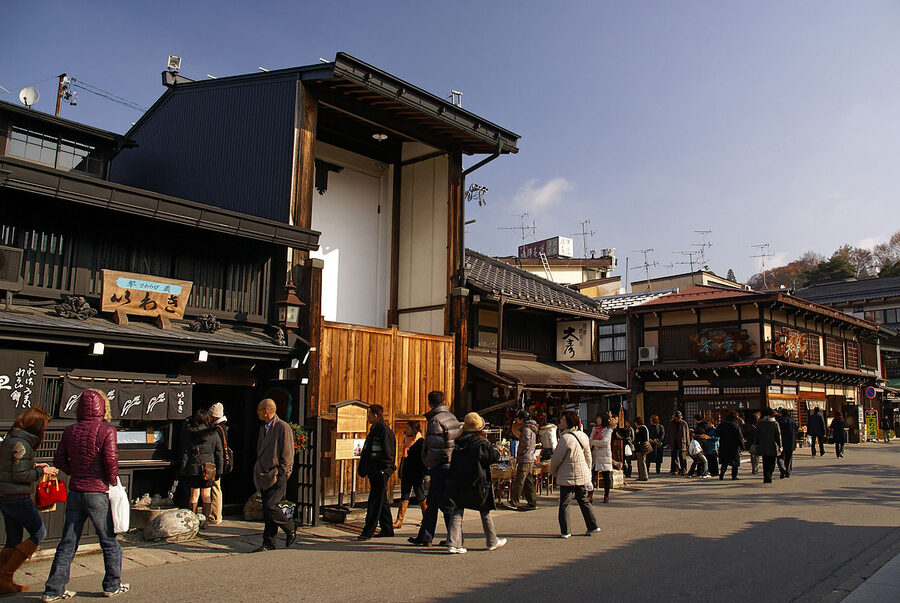
The walls either side of the canals are white-plaster kurazukuri storehouse construction, same as Takayama but mostly intact as a working district rather than a preserved tourist frontage. Several of the warehouses still function as warehouses — dry goods, sake barrels, farm tools — which is the detail that makes Furukawa feel different from the shiny touristed streets of its bigger neighbour.
Furukawa Matsuri (April 19-20)
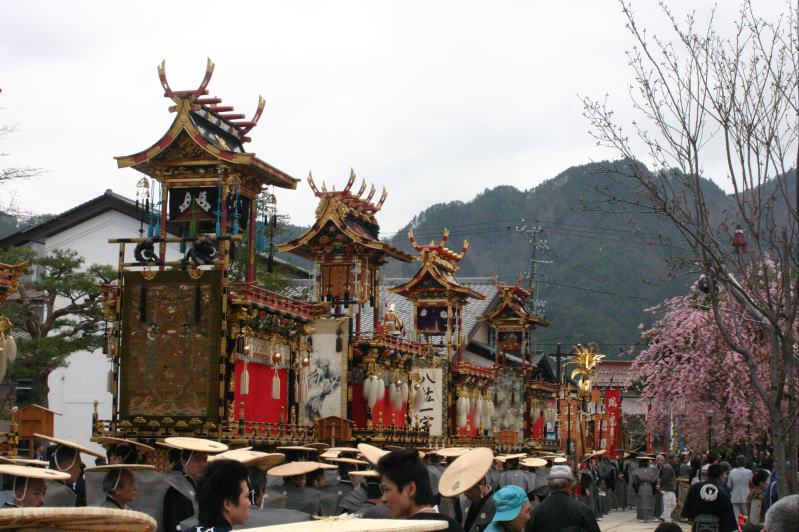
The Furukawa Festival runs April 19-20 every year and is designated a UNESCO Intangible Cultural Heritage alongside the Takayama Matsuri. Nine elaborate yatai floats are paraded through the streets during the day; the evening of the 19th is the Okoshi Daiko, the “rousing drum” ritual, in which bare-torsoed men carry a massive taiko drum through the streets at midnight while nine smaller team drums try to jostle their mobile platforms into contact with the main drum. The teams are technically from rival neighbourhoods; the ritual is a structured brawl. It is not restrained. It’s the best festival I’ve been to in Japan and it’s not close.
If you can plan your Japan trip around the 19th-20th of April, do it. Accommodation in Furukawa books out about a year ahead for these dates; Takayama hotels are a 15-minute train ride away and still bookable closer to travel. Come for Okoshi Daiko in the evening, stay up until 1am, catch the first yatai parade the next morning.
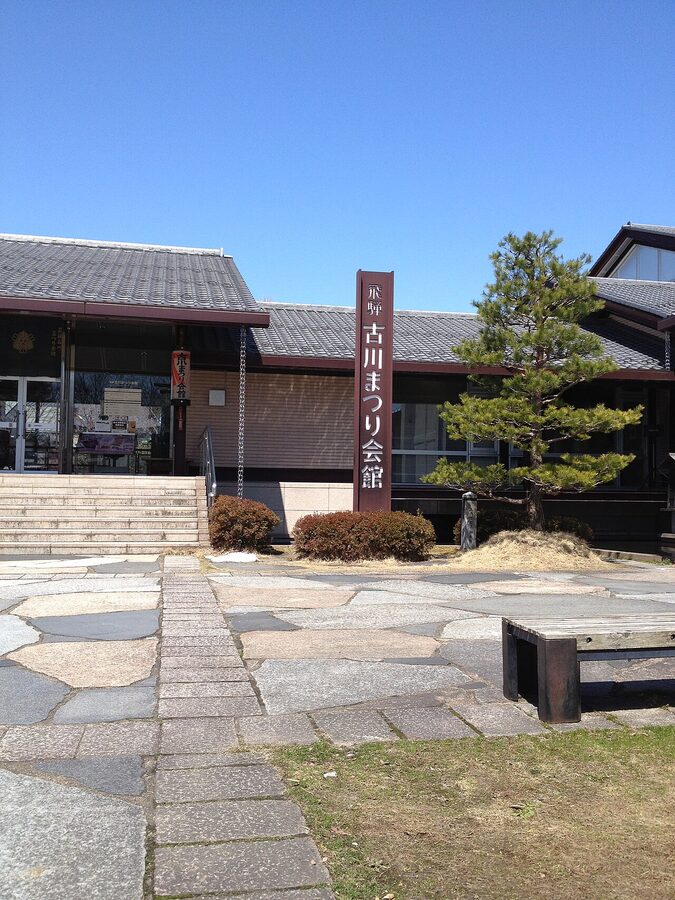
If your dates don’t line up, the Matsuri Kaikan (Festival Exhibition Hall) keeps three of the yatai on rotation year-round, plus a recording of the Okoshi Daiko ritual played on a full-sized drum in a reconstructed street. ¥1,000. It’s a better festival museum than Takayama’s because the three floats are rotated through the full nine over the year, so repeat visits show different floats each time.
The three sake breweries
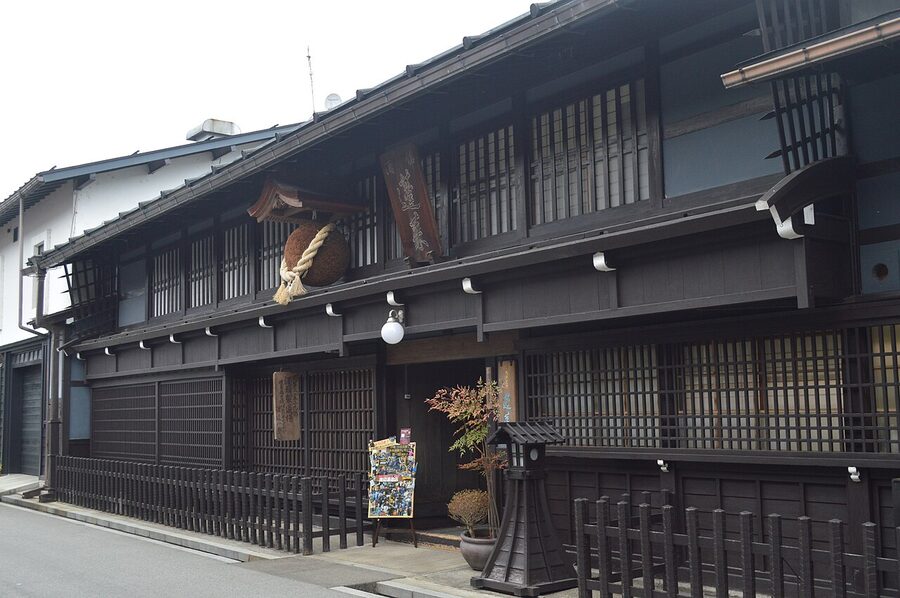
Furukawa has three active sake breweries left, down from nine in 1900. The survivors are distinct enough that you can do a tasting round through all three in an afternoon and come away with a clear idea of which you like.
- Watanabe Shuzouten (Hourai) — founded 1870, big traditional brewery in the centre of town. Their “Watanabe” junmai is the flagship, citrus-forward, drinks a bit dry. The brewery is ordinarily open for self-tours with a ¥500 tasting flight; booked brewery tours run through the autumn brewing season (October to March).
- Hayashi Honten (Hyakujoro) — slightly smaller, more experimental, known for their yamahai style. Their modern sparkling sake pairs weirdly well with Hida beef and is worth the ¥2,500 bottle to take home.
- Kaba Shuzouten (Shirakabegura) — the smallest of the three. The single-cask tastings here are the most interesting if you’ve done some sake homework; the shop staff will happily get into detail if you ask specific questions.
Tasting flights are ¥500-1,000 each. Don’t try to do all three back-to-back unless you’ve had something substantial to eat. The midday soba at Yakuzen-no-Sato Takumi near the Matsuri Kaikan is the usual pit stop between breweries.
The 1,000 neutrinos-per-second thing (Kamioka)
Hida City also contains Kamioka, a former zinc-mining town 40 minutes by bus north-west of Furukawa that’s sitting on top of one of the most important physics experiments of the last 50 years. A kilometre underground in the old mine sits Super-Kamiokande, a 50,000-tonne tank of ultra-pure water lined with 13,000 photomultiplier tubes, used to detect neutrinos from the sun, cosmic rays, and supernovae. Masatoshi Koshiba won the 2002 Nobel Prize in Physics for work done there, and Takaaki Kajita won again in 2015 for the same facility.
You can’t go inside (the lab doesn’t take public tours). What you can do is visit the Kamioka Cosmic Research Exhibition Centre on the surface, ¥200 entry, closed Mondays, where the exhibits explain how 50 billion solar neutrinos pass through every square centimetre of your body every second, and how a handful of them interact with the water in Super-Kamiokande and produce a flash of light that 13,000 sensors catch. It’s a legitimately good science museum in the middle of a forest, and the bus to get there rolls through some of the prettiest valleys in Gifu. Add three hours to your Hida City day if this interests you.
Santera Mairi — the three-temple walk
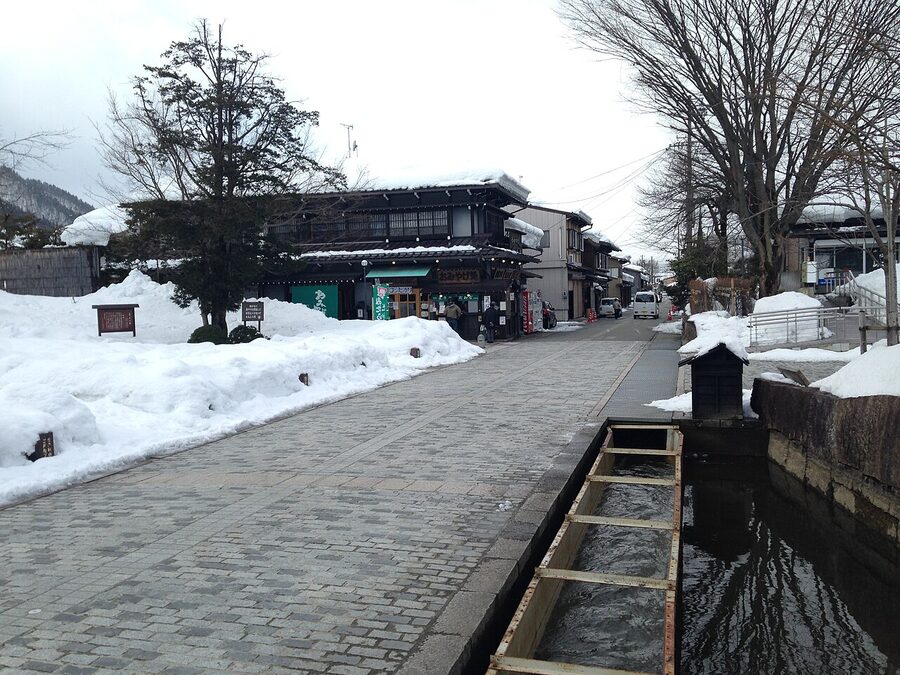
Santera Mairi (“three temple pilgrimage”) is Furukawa’s self-designated town walk: Enko-ji, Honko-ji and Shinshu-ji, three Buddhist temples within a ten-minute radius of the canals. It’s loose as pilgrimages go — there’s no stamp book, no set order, no religious requirement. The tourist office hands out a free map.
The one to make sure you hit is Honko-ji: its bell tower was famously the model for the Miyamizu shrine in Makoto Shinkai’s 2016 anime Your Name (Kimi no Na wa). Furukawa appears repeatedly in the film — the train station, the Matsuri Kaikan, the phone-booth bridge scene — and there’s a quiet but persistent cohort of Japanese and international fans who come specifically to walk the locations. The tourist office has a Your Name map for this too. It’s a charming extra layer, not a reason to come on its own.
A short history of why Furukawa survived
The question worth asking about Furukawa is why so much of it is still standing. Most Japanese merchant towns this size — and this remote — were gutted in the 1960s by a mix of depopulation, shoddy post-war redevelopment, and fires. Furukawa lost most of the merchant quarter to a fire in 1904. What went back up after was a coordinated rebuild in the original kurazukuri style, partly because fire insurance favoured it and partly because the craftsmen who’d helped build the original town were still alive and working.
The koi in the canals are a late-20th-century addition, not an Edo-period survival. The canals themselves had been badly polluted during the post-war industrial boom; the koi were introduced in 1968 specifically as a visible signal that the water was clean again, the same logic as the Nawate-dori frog campaign in Matsumoto. The koi stuck. The branding worked. Within five years the canal loop was Furukawa’s signature tourist draw, and the town was protected under a local heritage ordinance in 1976 — one of the earliest such designations in rural Japan. That early designation is why the modern signage, utility wires, and chain-store fronts you see elsewhere in Gifu aren’t here.
The old town on foot, or on a bicycle
Rent a bicycle at Furukawa-kan across from the station (¥400 for two hours, ¥800 for a full day) and you can loop the canals, all three sake breweries, Santera Mairi, the Festival Hall, and get out into the rice paddies north of town with the mountains behind them in maybe three hours of easy pedalling. The two cycling tours offered by the tourist office (Morning Cycling Tour, ¥4,500, three hours including two sake tastings and a visit to a farm) are aimed at foreign visitors and genuinely useful if you want a local guide.
What to shop for
Furukawa’s craft scene is smaller than Takayama’s but the hit rate on the shops that do exist is higher. Four worth making time for:
- Sansansan — a century-old takumi (master carpenter) workshop now showroom, selling Hida cedar and yew wood-turned bowls, trays, and the small meditation stools that Hida craftsmen are genuinely famous for. Pieces from ¥3,500 up. Ships internationally.
- Mishima Wa-roushoku — one of three remaining traditional candle-makers in Japan, hand-dipping wax tapers the old way. A single candle is ¥600 and gives off a specific clean flicker that kerosene-derived candles can’t match. Watch them being made most weekday mornings.
- Mikasa Bunko — a second-hand bookshop run by a retired schoolteacher, heavy on postwar Japanese literature and photography books. If you read Japanese it’s excellent. If you don’t, the photography books alone justify half an hour.
- Furukawa Kura Zukuri Shiryokan — technically a free museum in a repurposed warehouse, but they also sell small pieces of the local kurazukuri plaster repair materials as cheap souvenirs — a bag of the actual lime-wash plaster used on the town walls for ¥400, which I promise nobody else you meet will have bought home from Japan.
The takumi tradition — Hida’s other export
The one bit of Hida’s history most tourists skip: this region supplied the imperial court with skilled carpenters from the 7th century onwards. The system was called Hida no Takumi — “the artisans of Hida” — and it was technically a tax. Hida villages were poor in rice-growing land, so in the 8th century the central government allowed them to pay their tribute in carpenters instead: roughly 100 skilled tradesmen per year, dispatched to the capital for 330 days of work. They built the temples and shrines of Nara and Kyoto. They came back. The skills stayed.
The modern legacy is specific. If you go into any old merchant house in Furukawa or Takayama and look at the joinery, you’re looking at direct descendants of that 1,300-year-old tradition. The yatai festival floats are a showcase of it. The carpenters’ museum in Takayama (Takumi-kan) is the deep dive; the quick version is to ask at any workshop in Furukawa and someone will happily demonstrate how you make a wooden joint that doesn’t need nails. Ten minutes of someone’s time, a small purchase afterwards, and you will have learned more about Japanese craft than most museums will teach you.
Food
Furukawa’s food scene is narrow and good. Hida beef is available at three or four restaurants in town; the headliner is Kiraku, a tiny counter place near the canals where the Hida beef teppanyaki set (¥5,800) is the kind of thing you remember. Reservation recommended. For cheaper: Furukawa-no-Ramen does a proper Takayama-style ramen with the regional thin soy broth for ¥900. Mitsuyasu nearby does handmade soba with river trout tempura; fish is local, caught that morning from the Hida River, ¥1,600 for the set.
Breakfast is harder. There are exactly two coffee shops in town open before 8am — Cafe Tama Tama and Furukawa Brewery Cafe (yes, a brewery cafe, they do pour-over coffee alongside the sake tasting). Otherwise you eat at your hotel or you eat a rice ball from the Lawson next to the station.
One quirk worth knowing: the local sweet is Mitarashi Dango, the soy-glazed grilled rice-flour dumpling skewer that you can find anywhere in central Japan, but the Furukawa version is made with the soft Hida rice and is genuinely better than the Takayama equivalent. Sansho-do on the canal loop sells them hot off the grill for ¥120 each. Three skewers and a paper cup of green tea is a perfect mid-walk break and costs ¥500. The grandmother who runs the stall has been there since 1972 and remembers when the koi were first stocked.
Where to stay
I’d stay in Takayama and day-trip to Furukawa unless you’re here for the April festival — the accommodation pool in Furukawa is small and more expensive per yen than Takayama equivalents. If you do want to stay: Yatsusankan is a 150-year-old ryokan in the centre of the old town, ¥16,000-20,000 per person with meals, properly atmospheric, shared bath only. Hotel Gujo Hachiman near the station is the business-hotel option, ¥8,000-10,000 single, everything works, no soul but it’s clean and has good wifi.
One guesthouse worth a mention: Guest House Yamakyu, run by a family who speak good English, a few minutes from the canals, ¥6,500 dorm / ¥12,000 private with breakfast. They also run guided walks of the town in English on Saturday mornings if you book ahead.
When to come
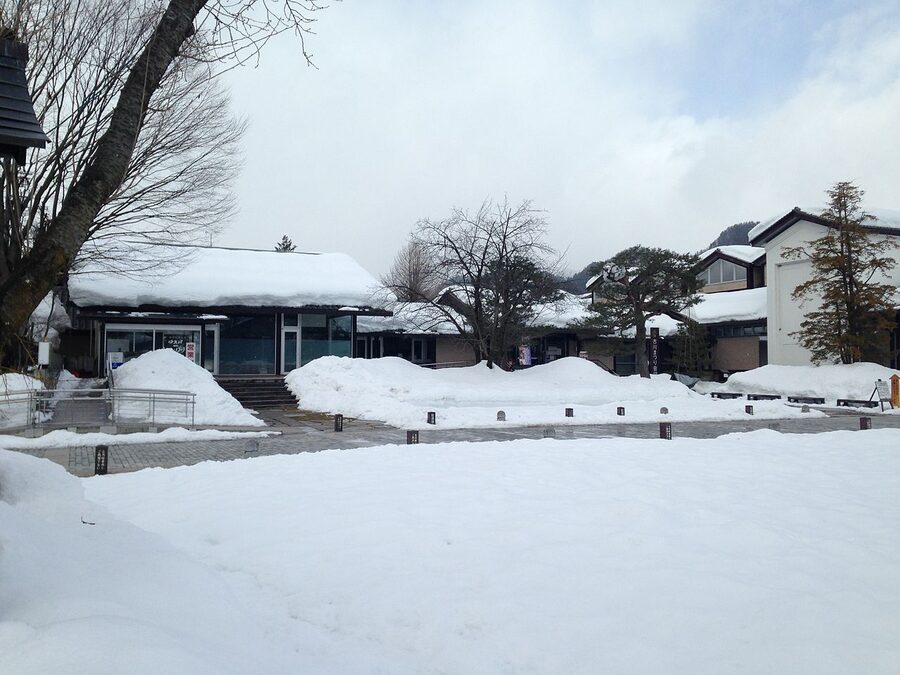
April 19-20 is the festival and the objective best. May-June and late September-October are the optimum for general visiting — koi in canals, sake breweries still operating tastings, weather mild, mountains clear. Summer is fine but warm; the evening is better than the midday. Winter has no koi and only two breweries keeping tasting hours (Watanabe and Hayashi; Kaba closes) but the town under snow is genuinely beautiful and almost tourist-free.
Getting to Hida Furukawa
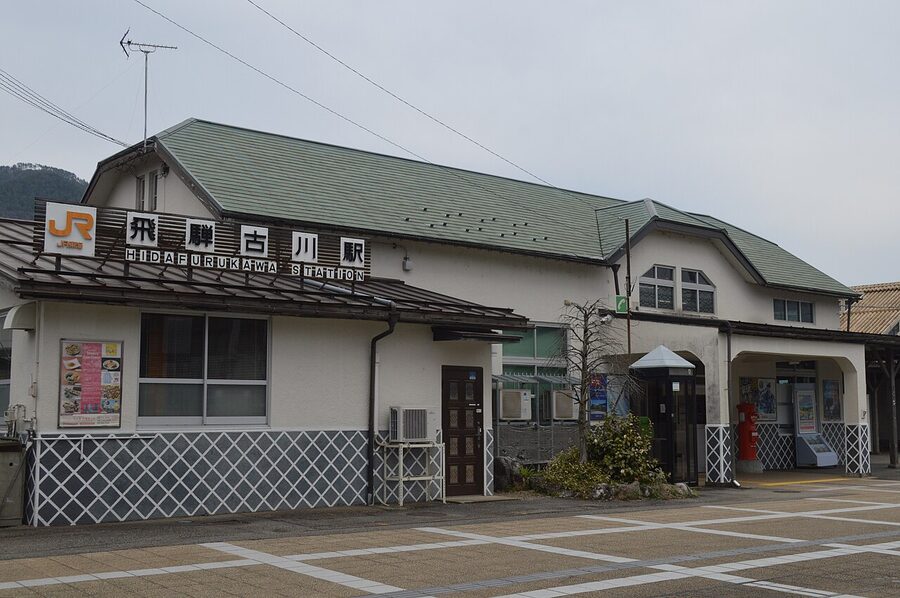
From Takayama, JR Hida line local train, 15 minutes, ¥420 one-way. There’s a train roughly every hour; check times before you go because the frequency drops in the late afternoon and the last train back is earlier than you think (usually 21:30). The station sits right on the western edge of the old town — 5 minutes walk to the Matsuri Kaikan, 10 minutes to the Seto canals.
If you’re coming from Tokyo or Kanazawa directly, change at Takayama — no direct trains. If you’re driving, there’s parking at the station and at the tourist info centre next to the festival hall (¥200/hour). The full transport guide has the Shinkansen + limited express breakdown.
If you’re making a multi-day Japan Alps loop, pair Hida Furukawa with Takayama as a single two-day base — Takayama for the accommodation and food, Furukawa for the morning. See the suggested itineraries for how it fits into a 5-day or 7-day route, and the altitude sickness guide if you’re adding the Shinhotaka side trip.

.jpg)

.jpg)
.jpg)


.jpg)