
How big is 186 metres? Big enough that the dam at the top of Omachi’s only valley generates its own weather. The Kurobe Dam — Japan’s tallest, an arch-curved concrete giant that took seven years and 171 lives to build between 1956 and 1963 — sits at the back end of the Tateyama-Kurobe Alpine Route, a 90-minute electric-bus ride from Omachi station through a series of mountain tunnels. From late June to mid-October the dam releases 10 cubic metres of water per second straight off the lip into the gorge below; the spray throws rainbows from mid-morning until late afternoon and you can stand on the dam crest and watch them. Omachi is the city the road to that dam runs through. It is also a lot more than just the road.
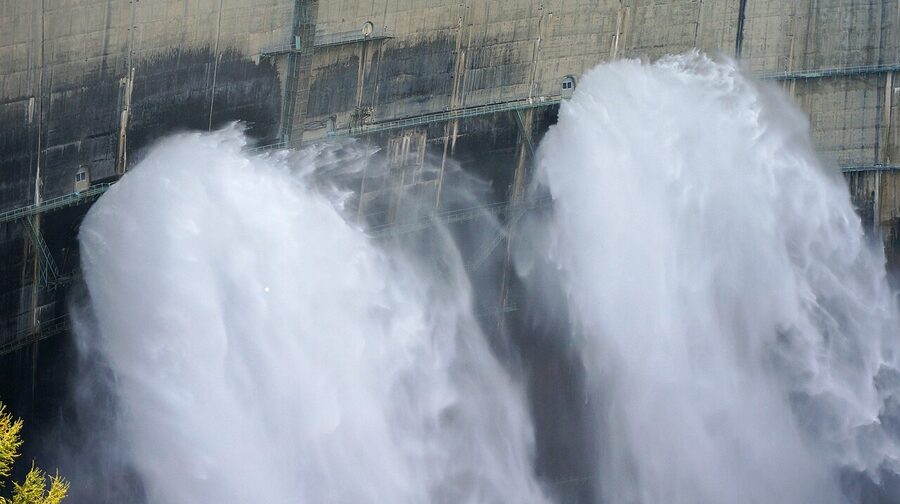
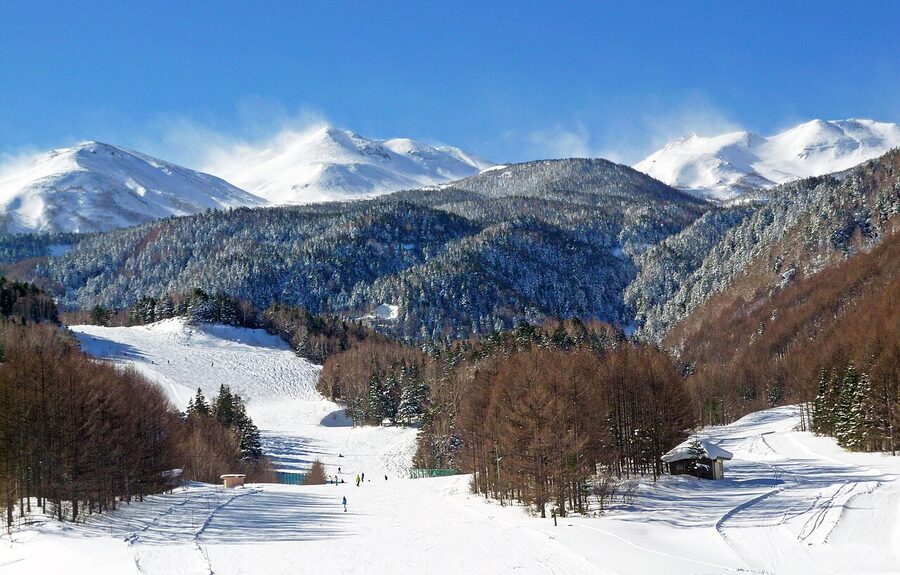
Omachi City sits at the foot of the Northern Alps in north-west Nagano, with a population of 26,000 and a geography that’s mostly water and forest. The three glacial lakes below the city — Kizaki, Aoki and Nakatsuna — are the largest natural lake group in the central Alps. The Kurobe Dam and the Alpine Route are the headline attractions. The onsen village at the back of town is a quiet detour. Two days does it. Three if you’re combining with skiing or hiking.
In This Article
Kurobe Dam — the dam, the lake, the route
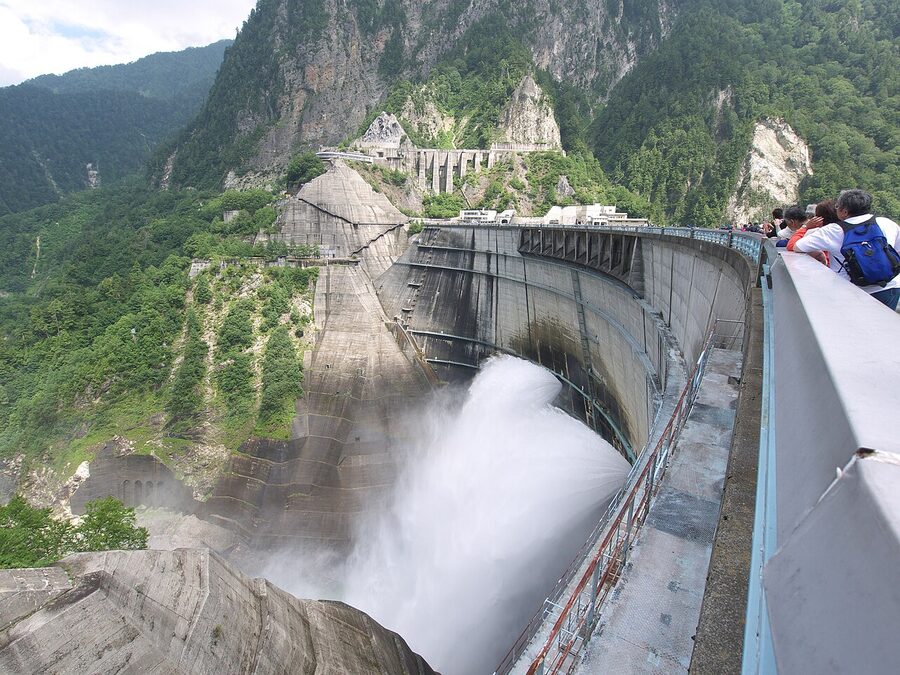
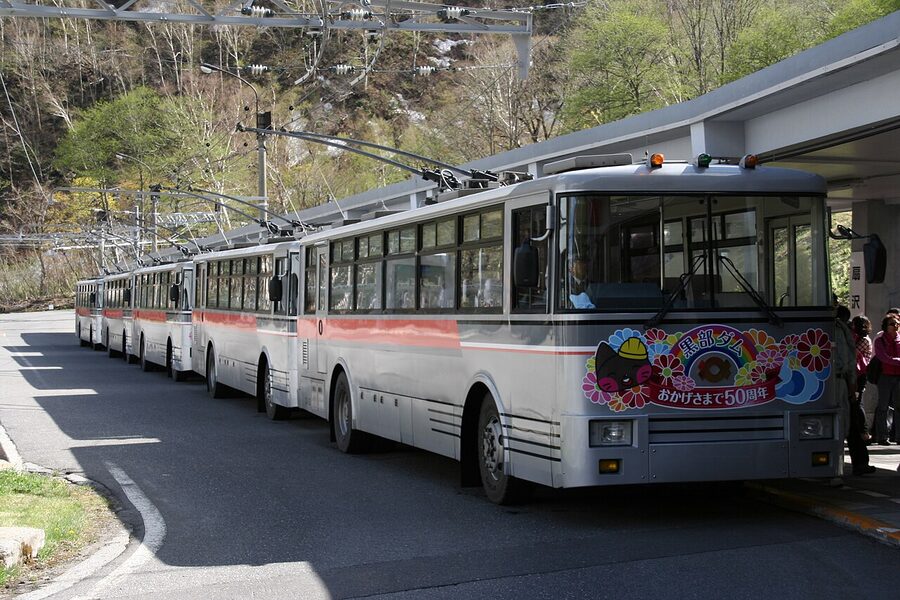
The dam itself is reached from Ogizawa, a small terminus 35 minutes by Alpico bus from Omachi station (¥1,650 one-way; runs 8-12 services a day in season, much fewer outside). At Ogizawa you board the Kanden Tunnel Electric Bus (¥1,690 one-way), which runs 6.1km through a tunnel carved through the spine of the mountain straight into the dam complex. Top of the dam is a five-minute walk from the bus terminus. The visitor centre, the upper viewing deck, the dam-curry restaurant and the underground walkway are all signposted in English from there.
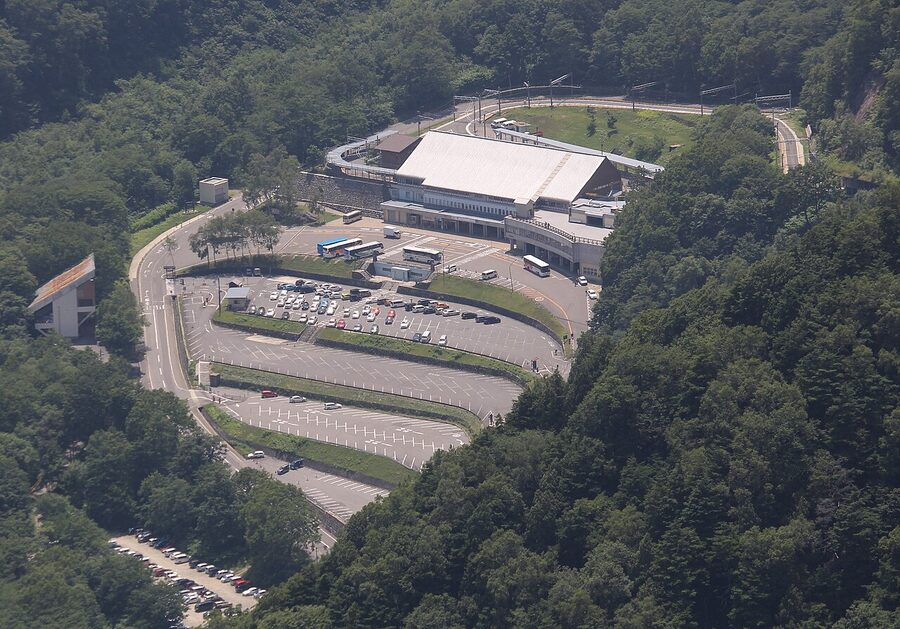
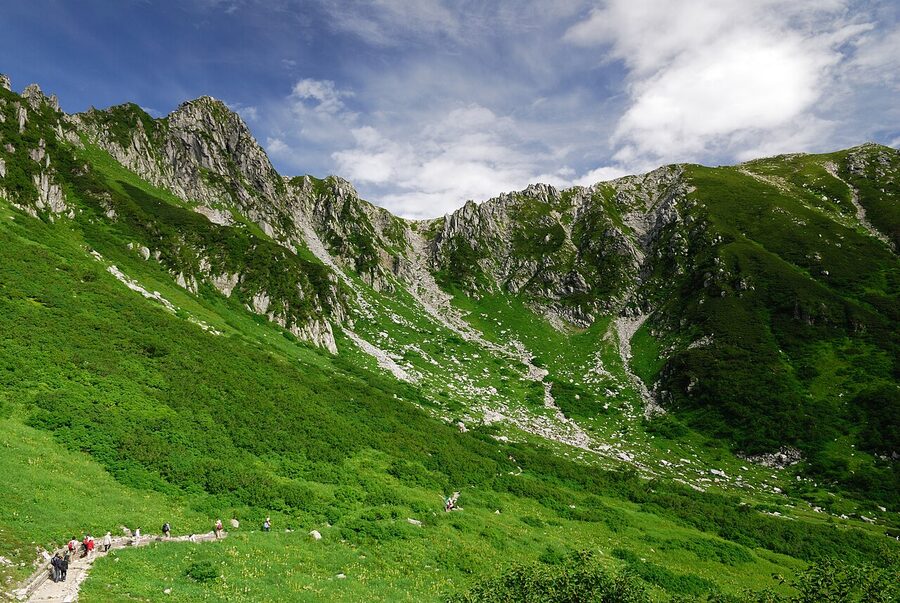
You can do the dam as a half-day round trip from Omachi (4-5 hours total including the bus to Ogizawa, the tunnel bus, dam visit, and return). Or you can keep going on the Alpine Route to Murodo at 2,450m for a full day, optionally crossing all the way through to Toyama. The full crossing takes 7-8 hours and runs ¥10,790 one-way; the half-trip to Kurobeko (the lake at the dam) is ¥6,250 round-trip. Reservations via the official Alpen Route site are mandatory in May and during October peak weekends — show up without one in Golden Week and you might wait three hours for the next bus.
One thing to budget time for: the Black Diamond Road documentary inside the dam visitor centre. It runs every 30 minutes (Japanese with English subtitles), is 25 minutes long, and tells the construction story. It’s the kind of museum film that’s actually good — original 1950s footage of the workforce, the deaths, the technical problems of pouring 1.6 million cubic metres of concrete in a remote mountain valley with no road access. ¥500 included with most bus tickets.
Eat the Kurobe Dam Curry at the dam restaurant before you leave. It’s green — the rice mound is shaped like the dam, the curry sauce is the “reservoir” behind it, and there’s a deep-fried chicken cutlet sitting in the lake as the “tour bus.” ¥1,200. Yes it’s a tourist gimmick. It’s also the best dam-themed lunch you’re going to eat in your life and the kids in any tour group lose their minds for it. (See the altitude sickness guide if you’re going on past the dam to Murodo — the route hits 2,450m within a couple of hours of leaving Omachi.)
The three lakes
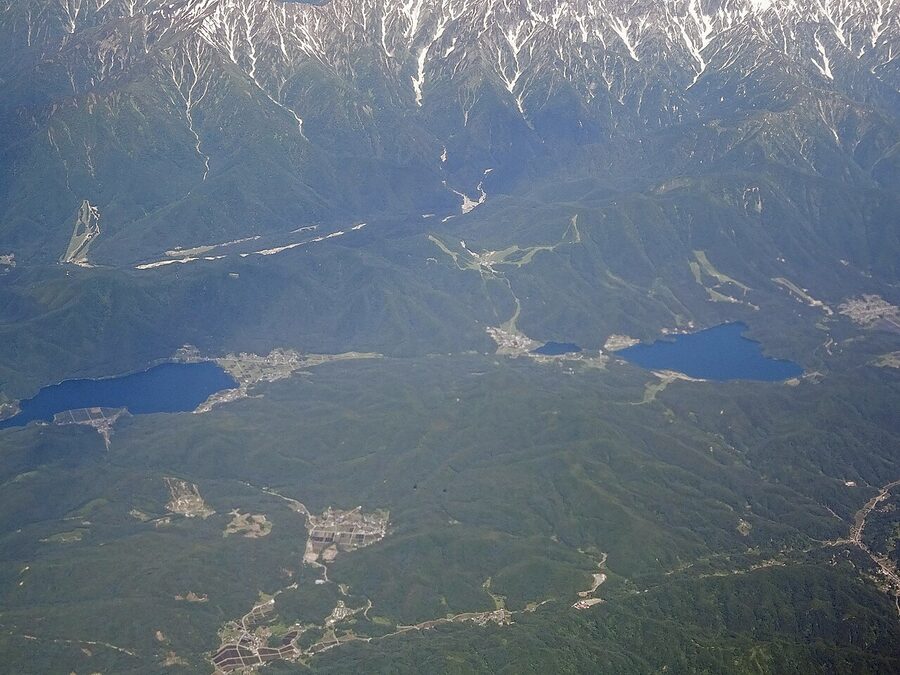
South of central Omachi the JR Oito Line runs alongside three glacier-formed lakes — Kizaki, Aoki and Nakatsuna — collectively known as the Nishina Sanko (the “three Nishina lakes,” named for the medieval feudal family who controlled the area). They’re among the deepest lakes in central Japan (Kizaki bottoms out at 29m, Aoki at 58m) and have a quietly held reputation among Japanese photographers as one of the country’s best autumn-reflection spots.
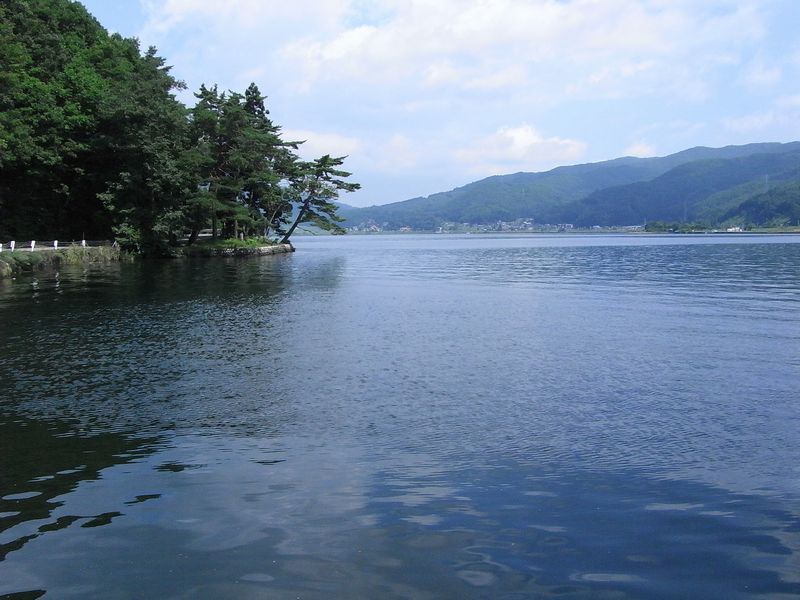
The summer activities are sailing (rentals at the Lake Kizaki Sailing Club, ¥4,000 for a half day), kayaking (at the lake-front YHA), and SUP (¥3,500 a session at the Aoki side). The autumn play is colour walking — Kizaki’s western shoreline drive in late October is one of the great underrated colour drives in Japan. Drive it on a still morning before 8am for the reflections.
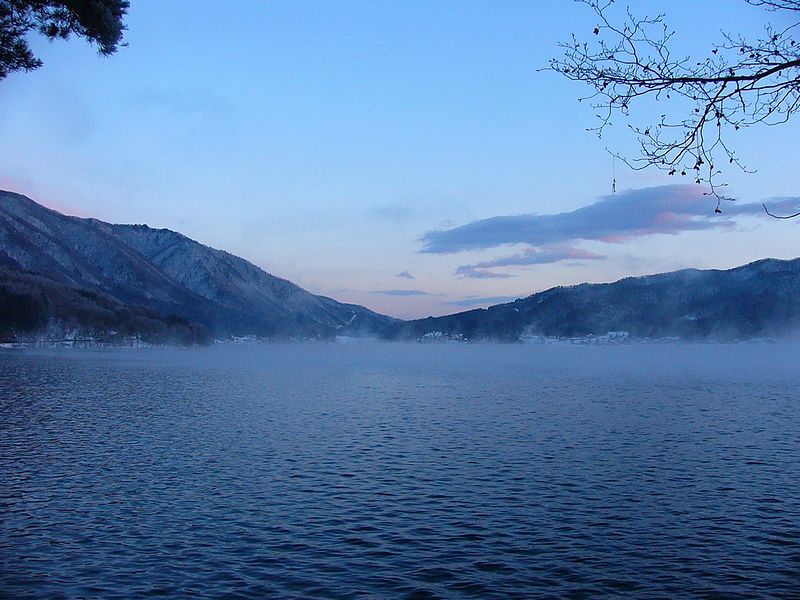
The winter version is genuinely strange. The lakes freeze most years and locally-rigged smelt-fishing tents pop up across the surface. The Lake Kizaki ice fishing season runs late January to mid-February; you can rent a tent, an auger and the equipment for ¥1,500 plus the smelt fee, and the local kiosk will batter and fry your catch on the lakeshore for ¥800 if you bring it back. Surreal experience, almost no foreign visitors.
Omachi Onsen Village
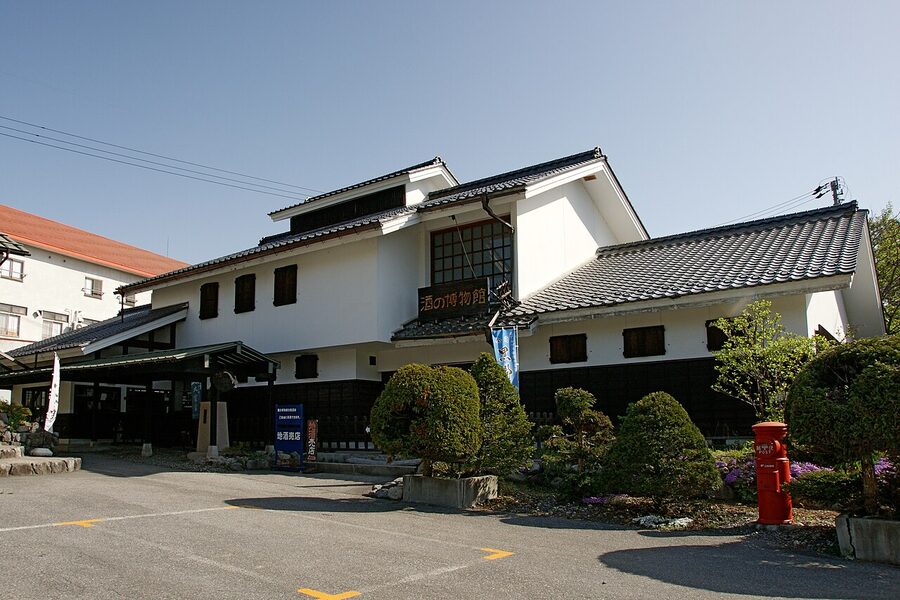
Tucked in a cedar valley 15 minutes by bus west of central Omachi is Omachi Onsen-kyo, a traditional hot-spring village of seven independent ryokan that’s been quietly operating since the 1950s. The water is alkaline, the source temperature is 80°C and naturally clear, and the village is small enough to walk between every property in 20 minutes.
For an evening visit without staying, Tateyama Prince Hotel at the head of the village runs a non-guest day-pass for the open-air bath at ¥1,500 (10am-6pm). For a stay, Karuizawa-style Yamaki Onsen is the cheaper option (¥14,000-18,000 per person with two meals); Sanso Tashiro is the splurge (¥28,000+, four-room ryokan, kaiseki dinner of mountain vegetables and Shinshu beef). Compared to the equivalent quality at Hakuba or Karuizawa, Omachi Onsen is roughly 30% cheaper for the same calibre.
The Northern Alps Art Festival
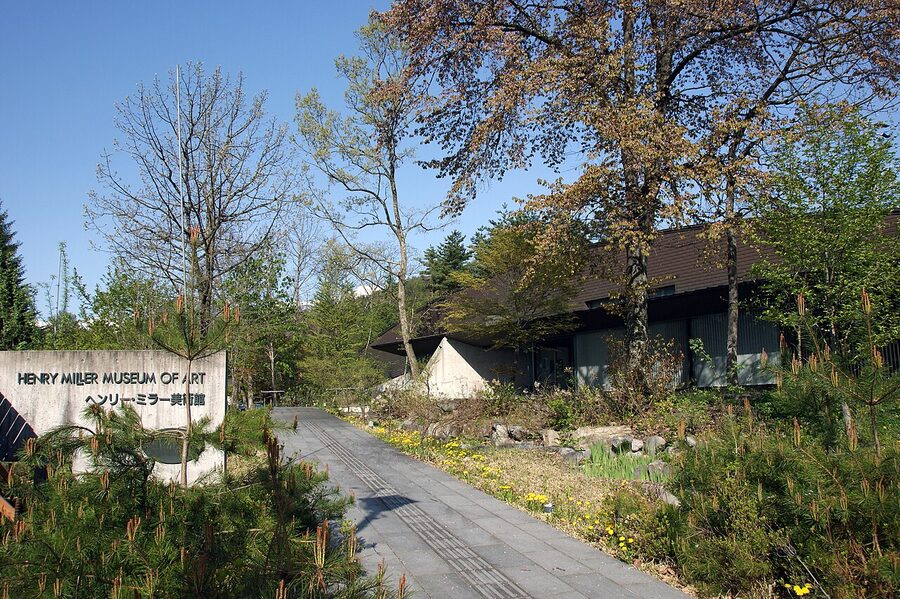
Every three years, Omachi hosts the Japan Northern Alps Art Festival, scattering large-scale outdoor art installations across the city, the lakes, and the surrounding mountain villages. The festival is directed by Fram Kitagawa, who also runs the Echigo-Tsumari and Setouchi Triennale art festivals; if you know either of those, this is the smaller, mountain-set sibling.
Some of the festival highlights from past years that the city has kept in place: a series of mirrored polyhedra placed in the cedar forest above Lake Aoki by the artist Tomas Saraceno; a 12-metre wooden bell tower at the southern end of Lake Kizaki that you can ring with a rope; and a converted mountain shed near Mitsumata Sanso filled with 30,000 hand-tied cotton threads that move when you walk past them. None of these are signposted in English. The festival office on the second floor of the city museum gives out a free walking-route map, in Japanese only but with photos that work as identification.
The next edition is scheduled for 2027 (early September to late October). If you’re visiting in an off-year, the central Omachi City Museum of Art still keeps a permanent collection from past editions and many of the larger outdoor installations stay in place between festivals. Free to walk past the outdoor pieces; ¥600 for the museum building. Worth an hour even if the festival isn’t on.
The Mountain Museum
If you’re going up to Murodo, give an hour to the Yama-no-Hakubutsukan (Mountain Museum) on the eastern edge of central Omachi before you go. ¥400, closed Mondays. The museum was founded in 1951 by a local schoolteacher who’d watched the early generation of European-style alpinism arrive in Japan and felt the documentation was scattered. The collection now covers the geology of the Northern Alps, the prewar climbing history (the British Reverend Walter Weston, the Japanese mountaineering pioneers like Kogoro Kojima), original equipment from early ascents of Yarigatake and Hotaka, and a startlingly good fossil section from the surrounding Itoigawa-Shizuoka tectonic line.
The Walter Weston room is the bit most worth seeing. Weston was the British missionary who introduced recreational mountaineering to Japan in the 1890s; the Japanese Alpine Club was founded in 1905 directly off the back of his book Mountaineering and Exploration in the Japanese Alps. The museum has his ice axe, his guidebook in original first-edition print, and several letters between him and the Hida porters who took him up Yarigatake in 1893. Quietly one of the best small museums in central Japan.
The Salt Road Museum
The Shio-no-Michi Hakubutsukan (Salt Road Museum) is a small but excellent museum on the historic Shio no Michi — the Salt Road that carried sea salt from the Itoigawa coast on the Sea of Japan inland to landlocked Matsumoto and the inner provinces, on horseback, in winter, by a chain of relay porters. Omachi was a key staging town on the route; the museum is in a restored 18th-century salt-merchant’s warehouse.
¥500. Closed Wednesdays. The exhibits are mostly Japanese-language but the porter’s pack-saddle equipment, the salt sacks, and the maps showing the multi-day route give you the picture without needing to read. There’s a one-day annual revival walk over part of the original route every May (the “Chikuni Salt Road Walk,” ¥3,000, register through the museum) which is the kind of niche local event that gives you a good day if you happen to be there.
Hiking from Omachi
Omachi is one of the easiest gateways into the Northern Alps for hikers. Three trail systems start from the city or are reachable by short bus:
- Hakuba Sanzan ridge — the classic 2-3 day traverse from Sarukura via Hakuba-Yarigatake (2,903m) to Hakuba-Dake (2,932m). Bus from Omachi to Sarukura trailhead, 50 minutes. Hut-to-hut, three nights at Hakuba Sanso (mentioned in our altitude sickness guide) is the comfortable version.
- Mt Goryu and Mt Kashimayari — a 2-day route from Hakuba Goryu Ski Resort up to Goryu (2,814m) and across to Kashimayari (2,889m). The Kashimayari ridge is one of the more dramatic walks in the Northern Alps. Bus from Omachi to the Goryu cable car, 30 minutes.
- Lake Aoki to Mt Renge — a single-day moderate hike with a bus return. The Renge ridge has the best Lake Aoki overhead view and an old shrine at 2,000m. Trail starts from Lake Aoki bus stop.
The tourist office at Omachi station hands out a free pocket-size hiking map in English (ask for the “Northern Alps trailhead map”). It covers all three above plus shorter forest walks suitable for half-days. They’ll also call ahead to the mountain hut you want for a same-week reservation in Japanese, which is a service that no other city tourist office in the region quietly offers.
Food in Omachi
Omachi has two specialties. Kurobe Dam Curry — the green-coloured one shaped like the dam, available at half a dozen restaurants in central town as well as at the dam itself. It’s a marketing gimmick that became a regional thing; Owl on the main shopping street does the best version (¥1,300) and adds a small mountain-vegetable salad. The other Omachi food specialty is oshina-soba, a chilled handmade soba served with a clear cold broth and seasonal sansai mountain vegetables. Karoku Kohgen near the station is the place — ¥1,500 for the set, lunch only, queue from 11:30am.
For dinner: Yamato is the local izakaya everyone goes to. ¥3,500 a head for a proper run of mountain food — sansai tempura, grilled river trout, Shinshu beef tataki, the local sake from Hakuba Brewery. Cafe Restaurant Tateyama-no-Mori at the bus terminal is the one option open after 9pm in central Omachi, which is occasionally a useful piece of information.
Where to stay
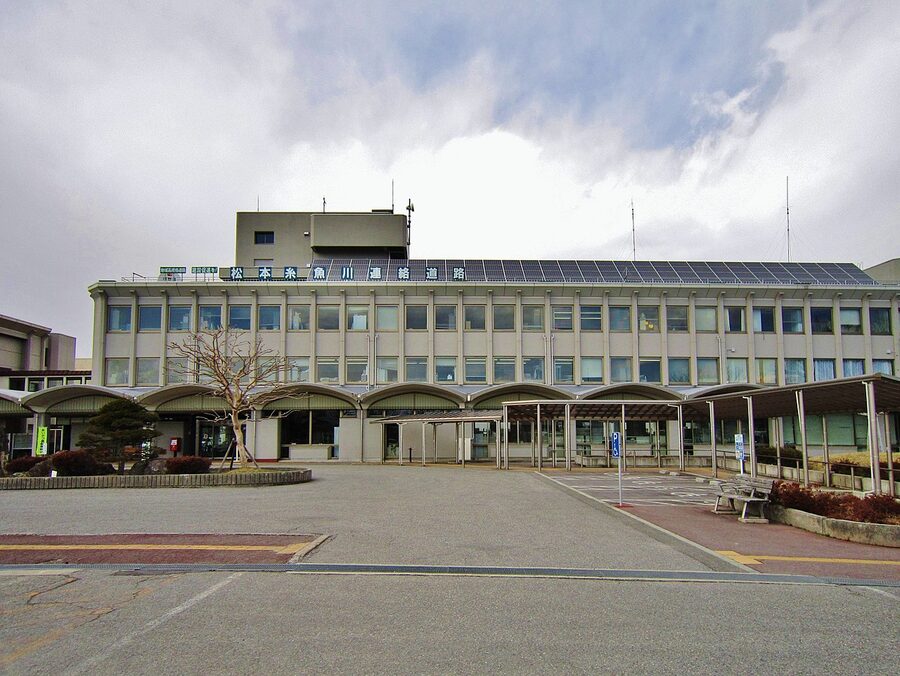
Three good options. In central Omachi (best for early Alpine Route departure): Hotel JM two minutes from the station, business-hotel standard, ¥8,500-12,000 single. Daisanso ten minutes’ walk from the station, family-run, ¥11,000 with breakfast. In Omachi Onsen-kyo (best for atmosphere): see the onsen section above. By the lakes (best for summer/autumn): Resort Inn Lakeland Heights on Lake Aoki’s eastern shore, ¥14,000-20,000, runs canoe rentals.
For a unique mountain stay 30 minutes outside Omachi, Mitsumata Sanso is a 100-year-old mountain hut now operating as a quiet remote ryokan with a small library that’s become its own attraction (¥18,000 per person with meals; bus from the station). Bookings via direct phone only. Booking.com covers the central options.
Getting to Omachi
From Matsumoto: JR Oito Line local train, 60 minutes, ¥1,170 one-way. Limited rapid service shaves it to 50 minutes and runs three times daily. Trains every 60-90 minutes through the day.
From Tokyo: Hokuriku Shinkansen to Nagano (1h 20m), then JR Shinonoi/Oito Line to Omachi via Matsumoto change, total around 4 hours. Or the Azusa Limited Express to Matsumoto plus the Oito connection, also about 4 hours.
From Toyama: there’s no direct rail. The route is via the Tateyama-Kurobe Alpine Route itself — the full crossing takes 7-8 hours and runs from mid-April to late November (one-way ¥10,790). It’s the most scenic possible “train transfer” in Japan and a destination in itself, but plan it as a full day’s travel rather than a quick connection. The access guide has all the rail and bus details, and the 5-day and 7-day itineraries show how Omachi pairs with the rest of the seven cities.


.jpg)


