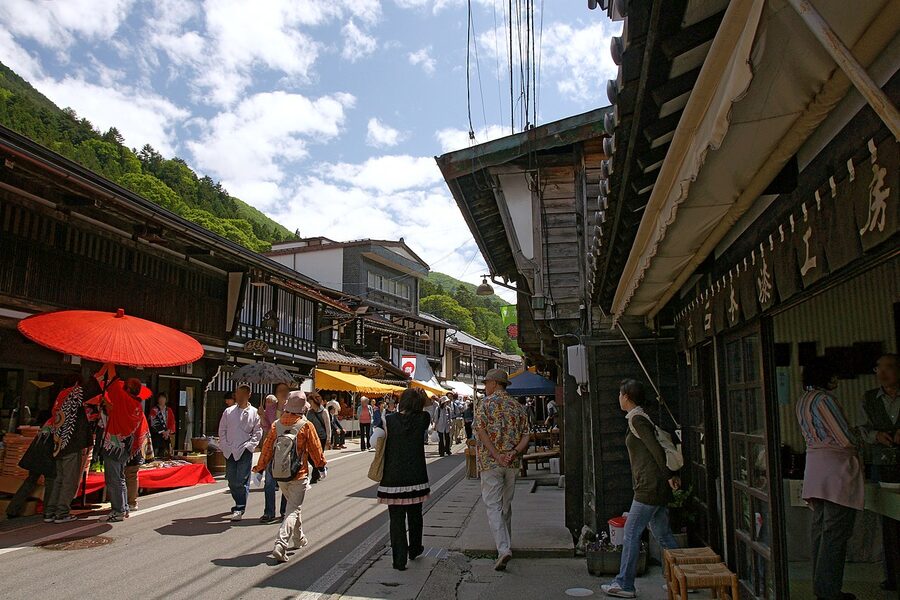
“Don’t do it as a day trip from Tokyo,” the woman who runs the lacquerware shop at the south end of Narai-juku told me, when I made the mistake of telling her I had three hours. “You walk to the top of the village, you walk back, you take photos, you eat soba. You miss what we are.” She was right. Shiojiri City is the southern member of the Japan Alps seven, sitting on the divide between the Matsumoto plain and the Kiso Valley, and its main attraction — Narai-juku, the best-preserved Edo-period post town on the old Nakasendo highway between Kyoto and Edo — is one of those places that genuinely changes when you stay the night and watch the day-trippers leave at 4pm. The streets empty. The lanterns light. The 41 surviving wooden inns shut their wide cedar doors and the village becomes the village it was for 250 years.
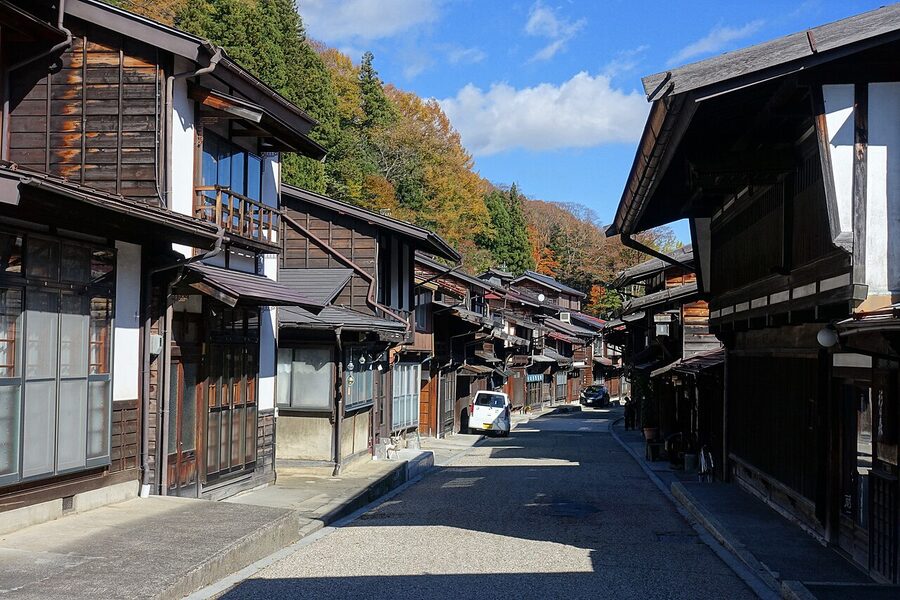
Shiojiri City is small — 65,000 people across a long, narrow strip of mountain valley — and the centre of population is around the modern Shiojiri Station, on the Chuo Main Line 12 minutes south of Matsumoto. Narai-juku is 30 minutes further south down the Kiso Valley, technically still within Shiojiri municipal boundaries but feeling like a different country. The wineries and the lacquerware district at Kiso-Hirasawa fill out the rest of the area. Two days does it well. Stay overnight in Narai for one of those nights.
In This Article
- Narai-juku — the post-town walk
- Stay overnight if you can
- The Nakasendo walk — Narai to Yabuhara
- Kiso-Hirasawa — the lacquerware district
- The Nakasendo, briefly
- Wineries — the surprising bit
- Central Shiojiri (briefly)
- Sanzoku-yaki and other Shiojiri food
- When to come
- Where to stay
- Getting to Shiojiri
Narai-juku — the post-town walk

Narai-juku is the most-preserved of the 11 post towns on the Kiso Road, the western route of the historic Nakasendo highway between Edo (Tokyo) and Kyoto. It was the 34th of 69 post stations on the route, sat at the foot of the Torii Pass — the highest point on the road — and was the natural overnight stop for travellers about to attempt the climb. At its peak in the early 18th century it had over a thousand inhabitants and the highest concentration of inns in the Kiso Valley.
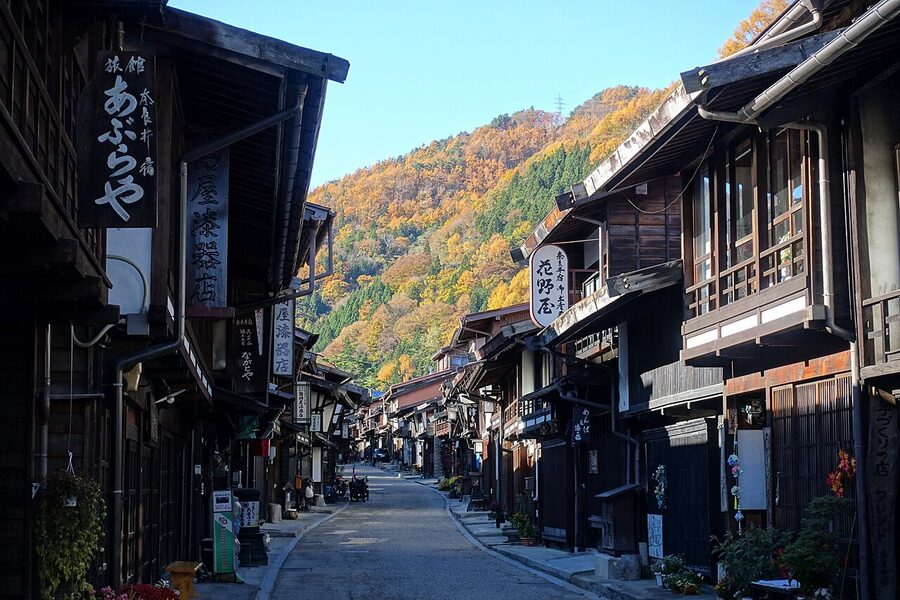
The reason it’s preserved is the same reason most preserved Japanese towns are preserved: it became economically irrelevant. When the Chuo Railway opened in 1909 it bypassed the village by a few hundred metres; the road traffic died, the population shrank to around 400, and nobody ever quite got round to demolishing and rebuilding. The result is a 1km street with 41 original Edo-period buildings, declared a national heritage zone in 1978 and now Japan’s longest preserved post-town street.
What to do once you’re there: walk the full street twice, once each direction, because the light hits the buildings differently on each side. Stop at Nakamura House (¥300 entry, run by the city, an original 1830s comb-merchant house preserved as a museum). Stop at Kamidonya Shiryokan, the original head-of-village house, also ¥300. Eat the regional gohei-mochi at one of the half-dozen stalls — flat skewers of pounded rice grilled with miso-walnut paste, ¥250 each. The lacquerware shops along the street are the real Kiso lacquer (see Kiso-Hirasawa below) and worth browsing.
Stay overnight if you can
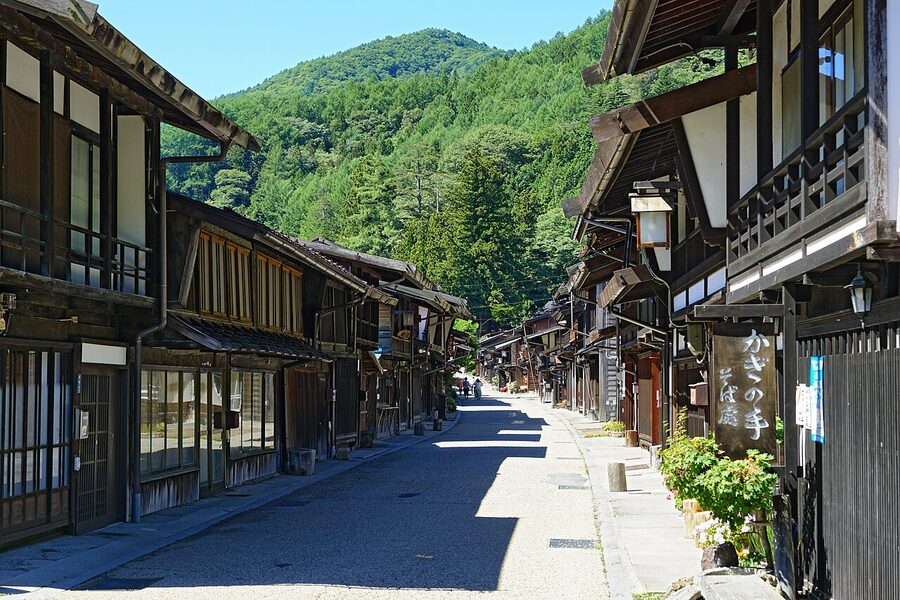
The thing the lacquerware-shop owner was right about: Narai is fundamentally a different place after 4pm. The day-tour buses leave by 4:30 and the village empties. From then until 8 or 9pm the street is yours, the cedar doors of the inns are open onto the street, lanterns hang and the only sound is wind in the cedar trees behind the houses.
Eight inns currently operate as guesthouses inside the preserved district. The standout: Iseya (¥18,000-22,000 per person with two meals), an original 1818 building converted to a 5-room ryokan with a cypress bath that gets mountain spring water. Echigoya (¥14,000-16,000) is the cheaper alternative, equally atmospheric, smaller rooms. Booking is by phone or via the Shiojiri Tourist Office; nothing here works through aggregator sites except for last-minute fills. Book three months ahead minimum, six for autumn weekends.
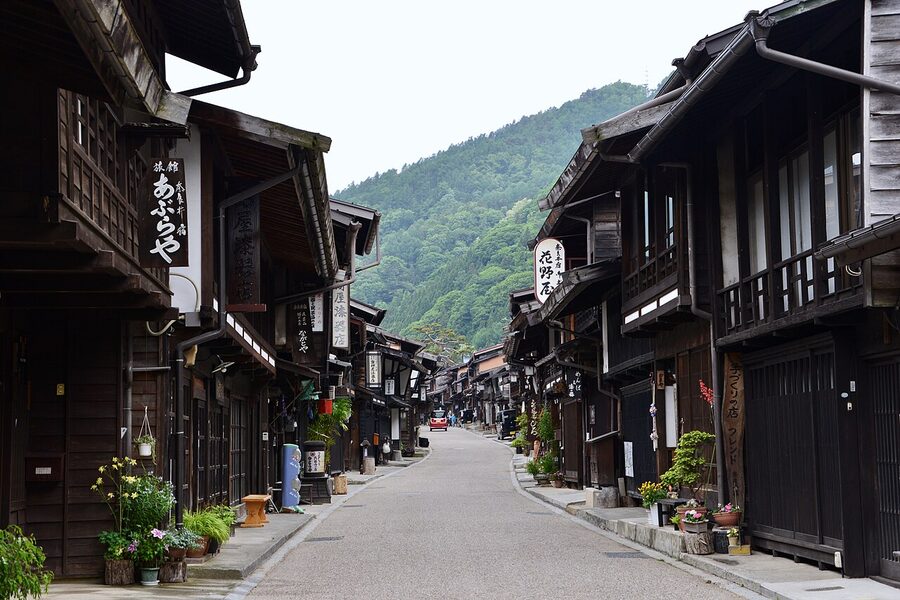
If you do stay, the morning is the second payoff — head out at 6:30am and walk the village before the first tour bus arrives at 9. The lanterns are still warm from overnight; the inn-keepers are sweeping the street; the bakery (Cafe Donguri, near the southern end) opens at 7 with the best fresh bread in the Kiso Valley. This is the Narai-juku you came for.
The Nakasendo walk — Narai to Yabuhara
If you want a half-day Edo-style hike, the original Nakasendo trail still runs over the Torii Pass from Narai-juku to Yabuhara, the next post town to the south. It’s a 6km walk, climbs to 1,197m at the pass, takes 2-3 hours one-way, and is well-marked with English signage. The trail surface is mostly the original Edo paving stones, with stretches of forest path through cedars planted by Tokugawa-era authorities specifically to give shade to the road.
You start in Narai, climb to the pass (where there’s a small Torii shrine and a tea hut that may or may not be open), then descend to JR Yabuhara Station for the train back to Narai (¥200, 5 minutes). It’s the easiest piece of historic Nakasendo walking in central Japan and it’s genuinely good. Take water, no food sold on the route. May-October is the season; closed in winter due to snow.
Kiso-Hirasawa — the lacquerware district
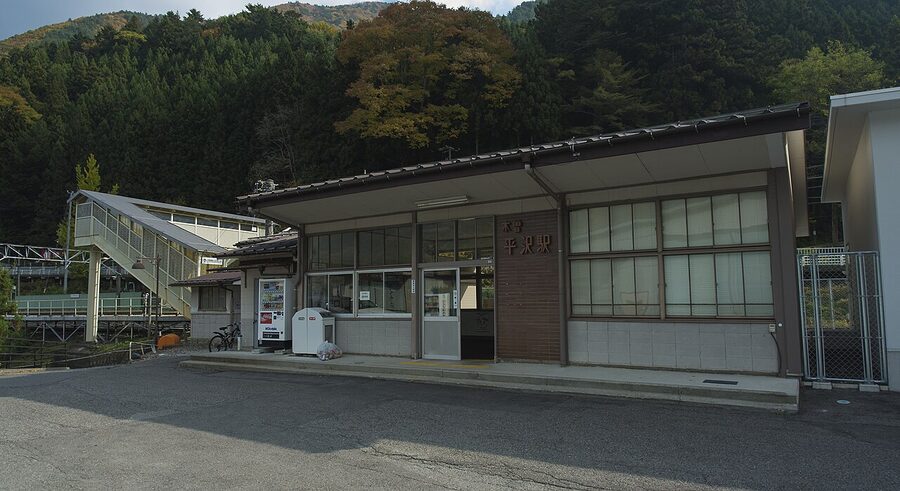
Two kilometres north of Narai — one stop on the JR Chuo Line, or a 30-minute walk along the river — is Kiso-Hirasawa, a smaller village that’s the centre of the centuries-old Kiso lacquerware trade. About 50 lacquer workshops still operate in the village; their signature product is a deep red-and-black bowl called shunkei-nuri, with a semi-transparent finish that lets the wood grain show through. A small bowl runs ¥4,000-6,000; a larger lacquered tray ¥15,000-25,000.
The June Kiso-Hirasawa Lacquerware Festival (first weekend of June) is when most of the workshops open their doors and you can watch lacquer being applied to a bowl in real time — about 40 thin coats over six weeks for proper shunkei-nuri. The shops along the main street are open year-round and most of the artisans are happy to demonstrate the technique to a serious browser. Combine with Narai for a single full day.
The Nakasendo, briefly
One bit of history that helps you read what you’re walking past. The Nakasendo (literally “mountain road”) was one of two major Edo-period highways connecting Edo (Tokyo) and Kyoto. The other was the Tokaido, which followed the Pacific coast and was faster but more vulnerable to bad weather and river crossings; the Nakasendo went over the mountains via the Kiso Valley and was slower but more reliable. Both were maintained by the Tokugawa shogunate as official roads, with mandatory post stations every 10-15km where travellers could rest, change horses, and submit their papers to the local checkpoint.
Sixty-nine post stations stretched along the Nakasendo’s 534km between Edo and Kyoto. Eleven of them were in the Kiso Valley; Narai-juku was the 34th overall and the highest in altitude before the Torii Pass. The system stopped functioning when the Meiji railway opened in 1909, but the road and many of the structures along it survived. Today, three of the eleven Kiso post towns are well-preserved (Magome, Tsumago, and Narai); Narai is the longest and most intact. If you’ve walked the Magome-Tsumago section south of here and are wondering whether Narai adds anything, the answer is yes — it’s the same scale as both of those combined and substantially less crowded.
Wineries — the surprising bit
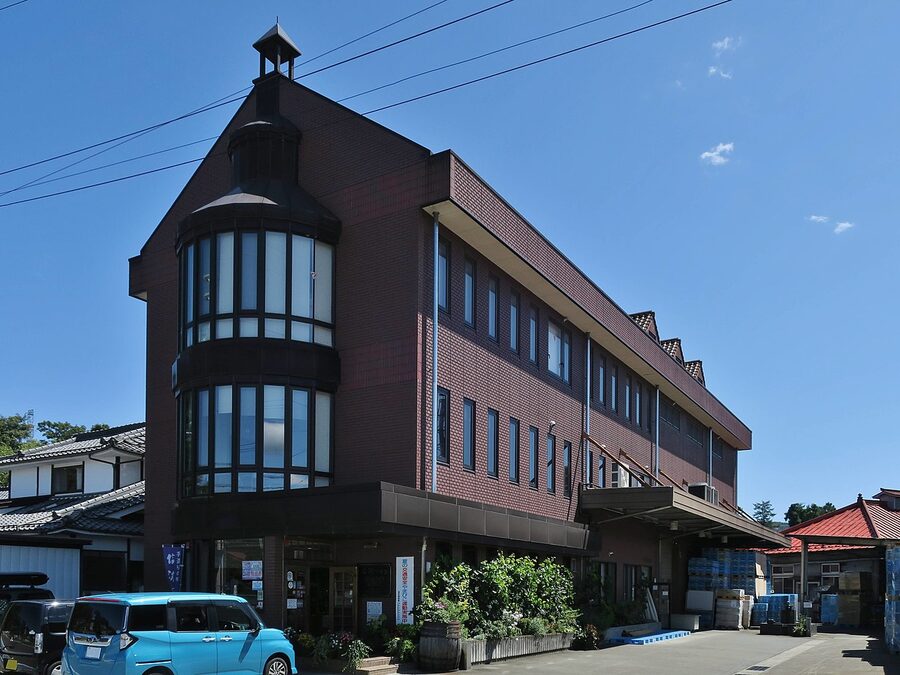
The thing nobody expects from this part of Japan: Shiojiri is wine country. The Kikyogahara plateau west of central Shiojiri sits at 700m above sea level with cool nights, well-drained soil, and a long autumn ripening period — conditions roughly comparable to parts of Burgundy. There are eight working wineries in the area, mostly Concord-Niagara hybrids and Merlot for the reds, with some impressive new Chardonnay from the cooler upper plateau.
The standouts: Shinano Wine (large, accessible, free 30-minute tour with a 3-glass tasting; ¥800 cellar tour with 5 glasses), Goichi Wine (smaller, more interesting tasting flight, ¥1,000), and Iizuka Winery (boutique, weekday-only, by appointment via the Shiojiri tourist office). All three are easily reachable by Alpico bus from Shiojiri Station — 15-25 minutes — or by rental cycle from the station (¥1,000 day rate).
Central Shiojiri (briefly)
Modern Shiojiri City around the JR Shiojiri Station is functional rather than beautiful — a typical regional Japanese city of a few hundred thousand people, with all the chain stores and a working but uninteresting downtown. There are two reasons to spend a couple of hours here rather than passing straight through to Narai.
Hiraide Site Park on the western edge of central Shiojiri is one of the largest excavated Jomon-period archaeological sites in Japan — over 200 reconstructed pit dwellings spread across a low ridge above the modern city, with a small but excellent museum (¥300, closed Mondays). The pit dwellings are reconstructions, not originals, but they’re placed exactly where the originals stood. If you have any interest in Japan’s prehistoric period, this is one of the better in-person sites you can visit. Allow 90 minutes plus 20 minutes’ bus ride from the station.
Naratoge Pass viewpoint on the road south of the city sits at 1,011m on the divide between the Matsumoto plain and the Kiso Valley — the literal watershed of central Honshu. There’s a small viewpoint with a tea hut that opens in summer; the geography is more interesting once explained (the rivers either side of you flow into different oceans, the Sea of Japan to the north, the Pacific to the south, ten metres apart). Worth a 10-minute drive if you have a car; not worth a special trip.
Sanzoku-yaki and other Shiojiri food
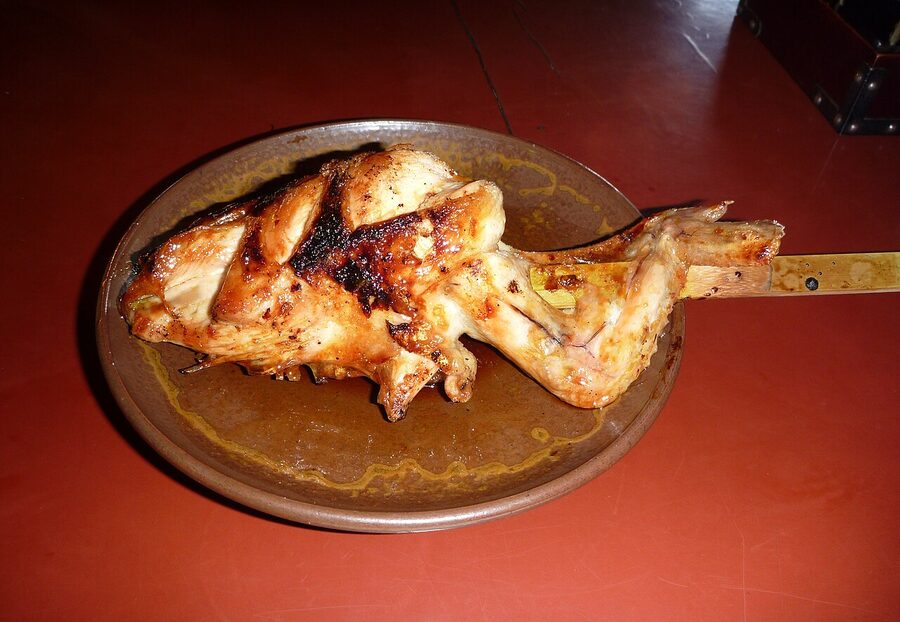
The local food specialty is sanzoku-yaki — literally “mountain bandit chicken,” a whole chicken leg marinated in garlic-soy and deep-fried, served on a wooden board with shredded cabbage. Originally a Shiojiri area dish that’s now spread to Matsumoto. The restaurant Sanzoku in Shoyoji-ji area (the original) still does it best — ¥1,200 a portion, big enough to share between two if you’ve also ordered something else, lunch only.
The other thing to eat: three-colour Shinshu soba at Sobaya Shimizu near Shiojiri Station — three different buckwheat ratios served on the same board so you can compare. ¥1,800 for the set. And in Narai itself, oyaki (filled bun) at the Donguri bakery, ¥250 each, hot from the oven from 7am.
When to come
Narai is a four-season destination but the seasons matter more here than in most Japanese towns because the village changes character with the weather.
Spring (mid-April to mid-May) — cherry blossom along the Naraigawa river that runs behind the village, and the warming weather brings the first wave of domestic tourists. Lacquerware Festival weekend (first weekend of June) is the standout event but accommodation books out 3-4 months ahead.
Summer (June-August) — the village is at peak greenery, the Torii Pass walk is at its best, the wineries are running summer release tastings. Heat is mild here (28°C max, well below Tokyo) because of the altitude. Best general-purpose season.
Autumn (October-November) — the surrounding forest turns gold and red against the dark wooden buildings. The connoisseur’s pick. Photography is at its best in early November mornings. The Kiso Valley grape harvest happens in early October.
Winter (December-March) — cold (-5°C nights), often snow on the ground, the village under blanket-snow on a clear morning is one of the great quiet sights of central Japan. Most shops close from January to early March; only 3-4 inns stay open through the deep winter. If you’ve been to Narai in summer, come back in February for a completely different experience.
Where to stay
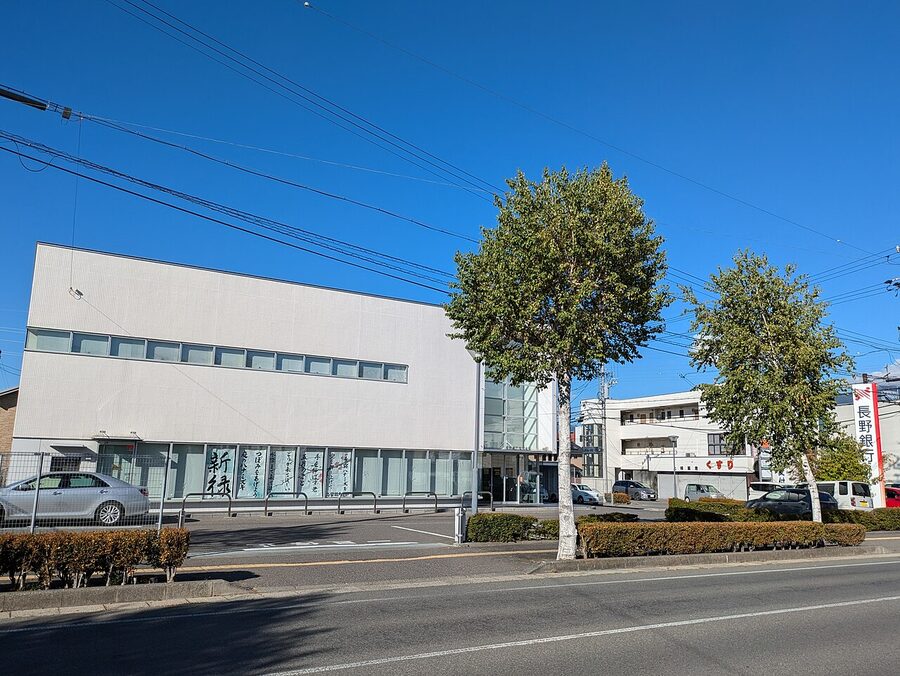
Two areas. Narai-juku for the proper experience — eight working inns, see the “Stay overnight” section above. Central Shiojiri for the convenient business-hotel option — Hotel Route Inn Shiojiri at ¥9,500 single, two minutes from Shiojiri Station, free parking and breakfast included. Booking.com covers the central listings; Narai inns mostly require direct booking.
Getting to Shiojiri
Shiojiri Station is on the JR Chuo Main Line, 12 minutes south of Matsumoto by local train (¥240 one-way, every 20 minutes). Narai-juku is one further stop south — 30 minutes from Matsumoto by Chuo Line local train (¥770), get off at JR Narai Station, the village is 100m from the exit.
From Tokyo: Azusa Limited Express to Shiojiri (3 hours direct, ¥7,800), then local train to Narai. Or Shinkansen to Nagoya, then Shinano Limited Express to Shiojiri (3 hours total, ¥10,000). Shinkansen via Nagoya is faster overall and gives you Nagoya as an optional stop.
Shiojiri pairs naturally with Matsumoto as a single base — stay in Matsumoto, day-trip to Narai-juku and Kiso-Hirasawa together, return for dinner. Or if you have the time, do Shiojiri as the southern bookend of a 7-day Japan Alps loop running from Toyama down through the Hida cities and finishing here. Full transport details in the access guide, and the altitude sickness guide if you’re extending into the Kiso mountains above the valley.