Azumino gets sold to first-time visitors as “Japan’s Switzerland” or “the wasabi capital of the country.” Both descriptions are exaggerated, in the way that everywhere in Japan that has alpine views and a single farm crop ends up being marketed as both. What Azumino actually is: a wide, flat farming plain at the foot of the Hotaka range, fed by genuinely exceptional spring water from the mountains, with one excellent wasabi farm, one really good early-20th-century sculpture museum, an old shrine that’s a footnote of historical significance, and several hundred kilometres of cycling-friendly back roads. That’s enough. It’s a half-day from Matsumoto, a quiet day on its own, and a lovely night if you find the right ryokan. Don’t come expecting Lauterbrunnen.
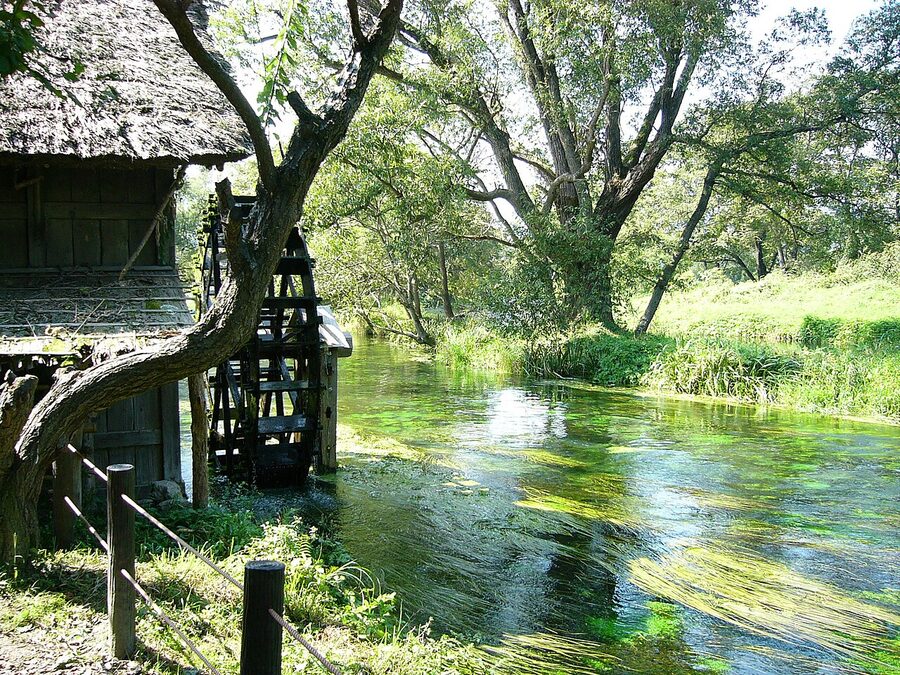
Azumino City is a strung-out plain about 30 minutes north of Matsumoto by the JR Oito Line, with a population of around 95,000 spread thinly across rice fields, wasabi paddies, and the western foothills of the Hotaka range. There’s no real city centre — the major sights are scattered across the plain and you cycle, drive or take occasional buses between them. Two days does the lot if you’re moving at a steady pace; one day works for the highlights if you’re short on time.
In This Article
- Daio Wasabi Farm (and what to actually do here)
- The cycling thing — the real reason to come
- The water history nobody talks about
- Hotaka Shrine
- Rokuzan Art Museum
- Nakabusa Onsen
- Alps Azumino National Government Park
- Soba-making, fruit-picking, canyoning
- Food and sake
- When to come
- Where to stay
- Getting to Azumino
Daio Wasabi Farm (and what to actually do here)
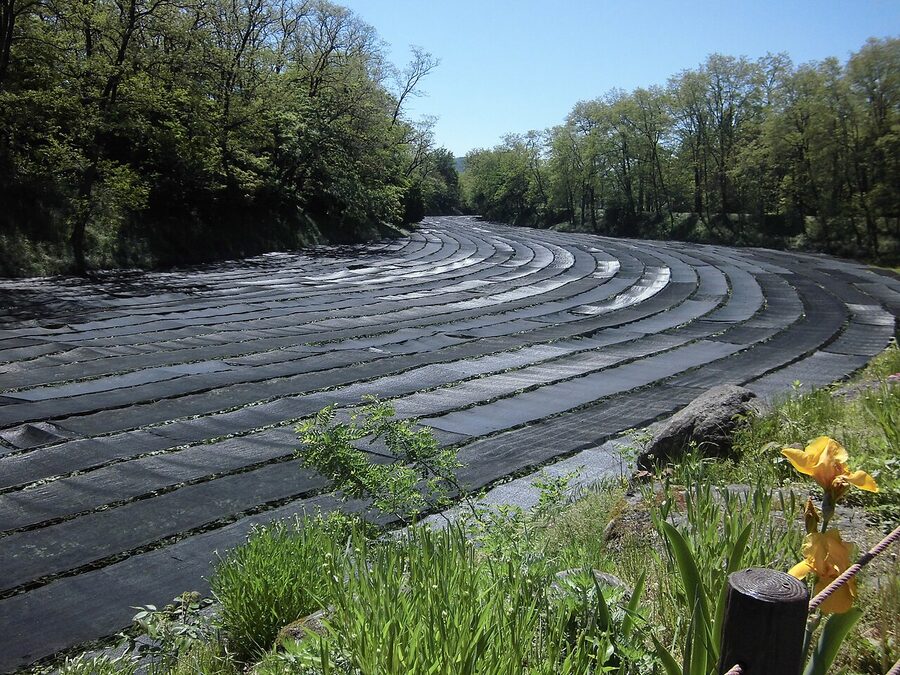
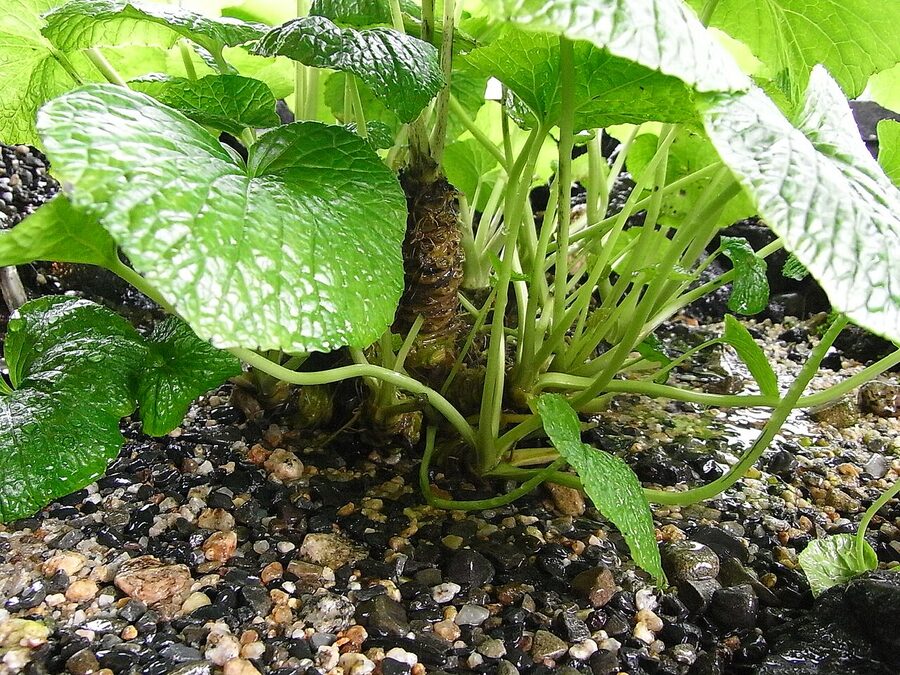
Daio Wasabi Farm is the largest wasabi-growing operation in Japan and the city’s flagship attraction, free, open 9am-4pm year-round (5pm in summer). It covers 15 hectares of canalised spring-water beds, fed by 120,000 tonnes of meltwater per day from the Hotaka snowfields. The wasabi here is the real plant — Wasabia japonica, not the European horseradish dyed green that you get in supermarket sushi packets — and the freshness factor is real. A wasabi croquette eaten on site is a different experience from the tube version.
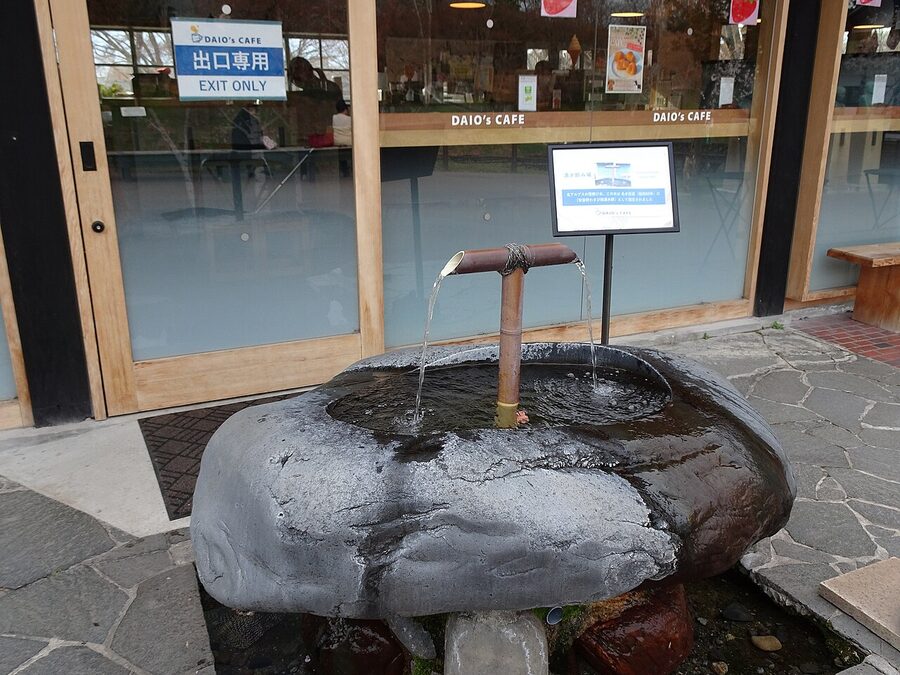
Things to actually do once you’re inside: walk the perimeter of the cultivation beds (45 minutes); buy a fresh wasabi root at the shop and grate it on the provided sharkskin grater (¥1,500 for a small root, gimmicky but legitimate); have the wasabi soft-serve ice cream which sounds wrong and is actually good (¥400). The real wasabi-burger lunch (¥1,200) at the on-site restaurant is fine but not extraordinary. Skip: the “Akira Kurosawa film location” signpost. Yes, three watermills along the river were used in Dreams (1990), but the connection is so thin that the marketing is irritating. The mills are pretty. Look at them and move on.
Get there as close to opening as you can manage. By 11am the tour buses have arrived from Matsumoto and you’ll be walking shoulder-to-shoulder through the channels. From 9-10am it’s essentially yours. Easiest access is by Alpico bus from JR Hotaka Station (10 minutes, ¥430), or by rental cycle from Hotaka Station (see cycling section below).
The cycling thing — the real reason to come
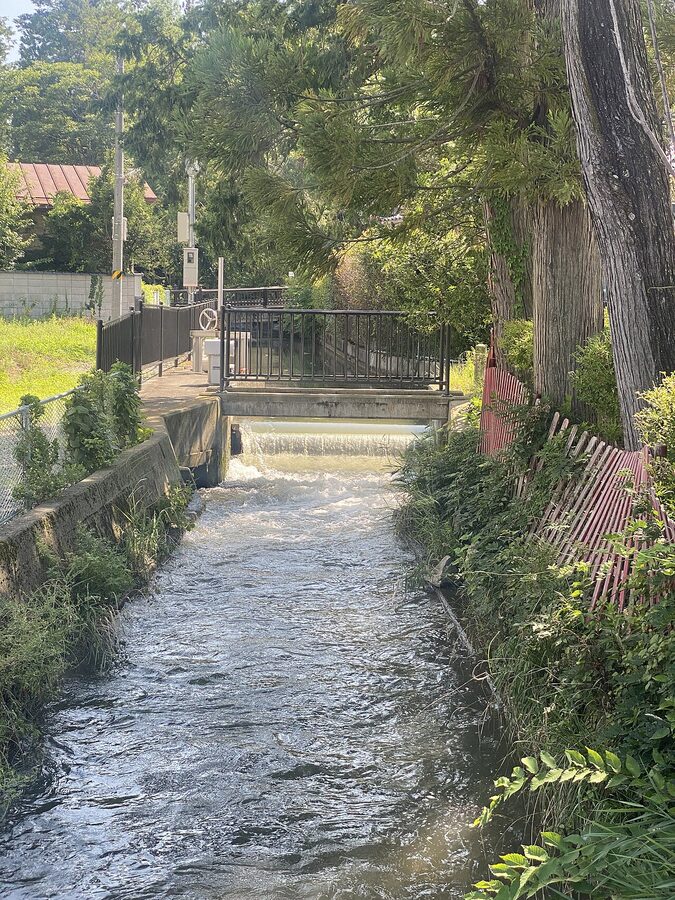
The proper Azumino experience is a rented bike and four hours on the back roads. The plain is laced with about 200km of irrigation canals dug between the 17th and 19th centuries, almost all paralleled by single-lane farm roads with negligible traffic. The Northern Alps sit above you on the western horizon the entire time. Cherry blossoms in late April; rice fields bright green in June; harvest in September; whole plain golden in October. It is the most underrated cycling I’ve done in Japan.
Rental: Hotaka Rent-a-Cycle directly outside JR Hotaka Station, ¥600 for three hours, ¥1,200 for a full day, electric assist add ¥500. They give you a free Japanese-only map, but the tourist office across the road has English-language “recommended cycling course” cards covering 8km, 18km and 32km routes. The 18km loop hits Daio Wasabi Farm, Hotaka Shrine, and the Rokuzan Museum — pretty much everything I’d want a first-time visitor to see. Allow a slow four hours including stops.
The water history nobody talks about
Worth knowing why Azumino looks the way it does. The plain is roughly 100 square kilometres of alluvial fan deposited by four rivers (the Karasugawa, Nakabusa, Hotaka and Akashina) that drain straight off the Northern Alps. The geology is unusual: meltwater from the snowfields disappears into the porous gravel underneath the upper plain and resurfaces 5-10km lower down as cold, mineral-rich spring water. The volume is enormous — an estimated 700,000 tonnes a day surface across the plain — and that’s the resource that made wasabi cultivation possible from the 1880s onwards and the modern sake breweries possible after that.
The plain was an unproductive marsh until the Edo period, when local lords commissioned the canal network you cycle today — designed in the early 1600s to drain the swamp and irrigate rice fields. Most of the canals still in use are the original 17th-century channels, refurbished but on the same alignments. The famous “Wasabi Highway” route through the wasabi farms follows what used to be a 17th-century irrigation supply line. None of this is visibly signposted on the ground but you can pick up an English-language “Azumino Water Heritage” map at the Hotaka tourist office that walks through the dates.
Hotaka Shrine
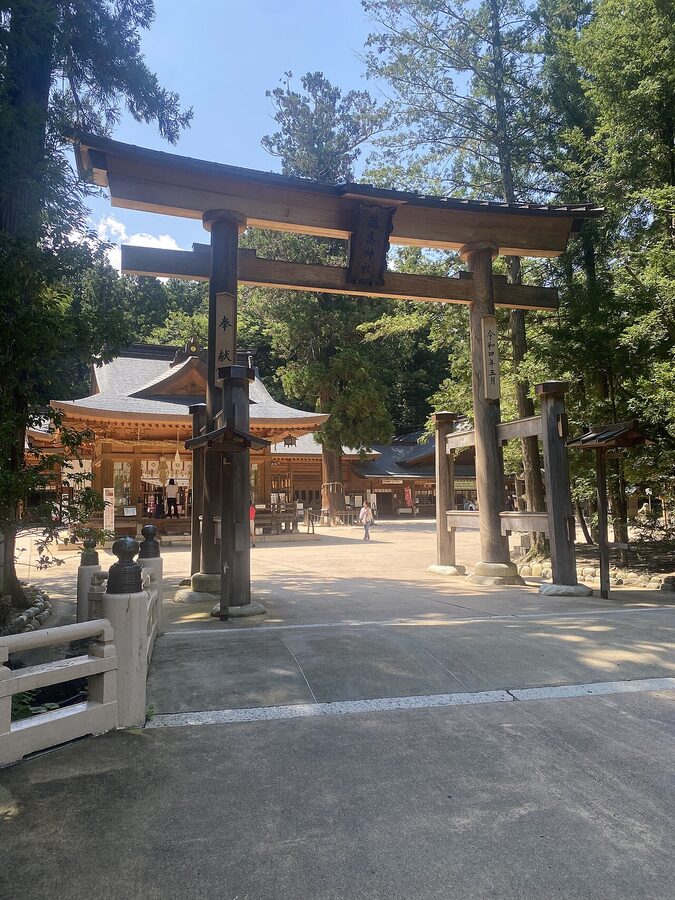
Hotaka Shrine is the spiritual centre of the Azumino plain and worth half an hour. It’s an Engishiki shrine — meaning it was on the official imperial register of shrines compiled in 927 AD — dedicated to Hotaka-mi-no-Mikoto, the kami of the Hotaka mountain range. The connection is unusually direct for Japan: most mountain kami are abstract, but Hotaka-mi-no-Mikoto is essentially the personification of the specific peak you can see from the shrine grounds.
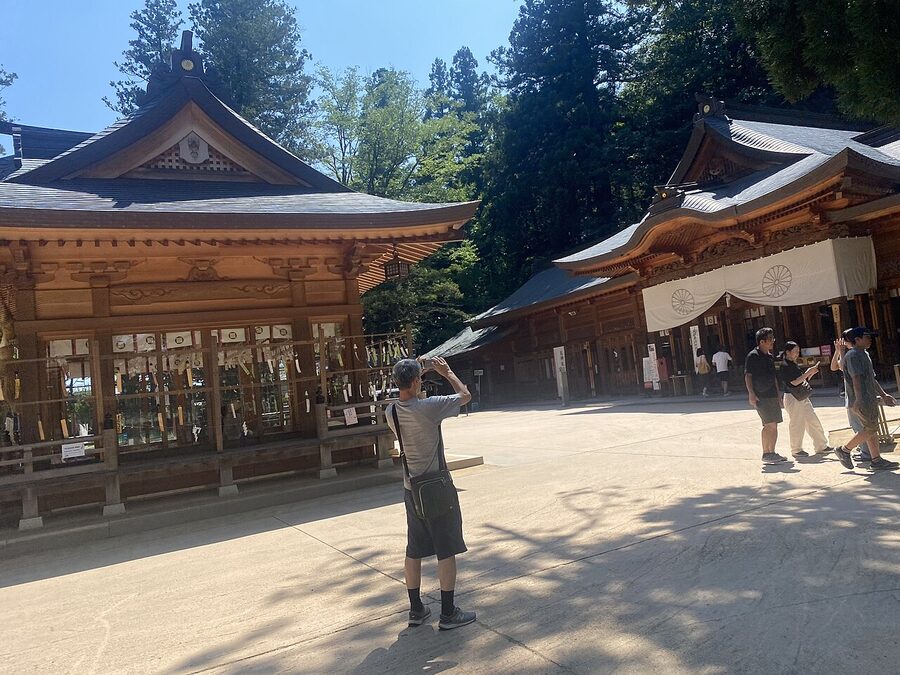
The history is interesting if you ask. The Azumi clan, after whom the area is named, were originally a sea-faring people from northern Kyushu who migrated inland to this mountain plain in the early Yamato period (5th-6th century). They brought with them their existing maritime kami and grafted them onto the local mountain. The result is the unusual O-funa Matsuri (Boat Festival) every September 27th, where two huge ship-shaped festival floats are pulled through the shrine grounds — ships on a mountain plain, 200km from the nearest sea, because of a 1,500-year-old migration. It’s the kind of detail nobody tells you on the official tourist materials.
Rokuzan Art Museum
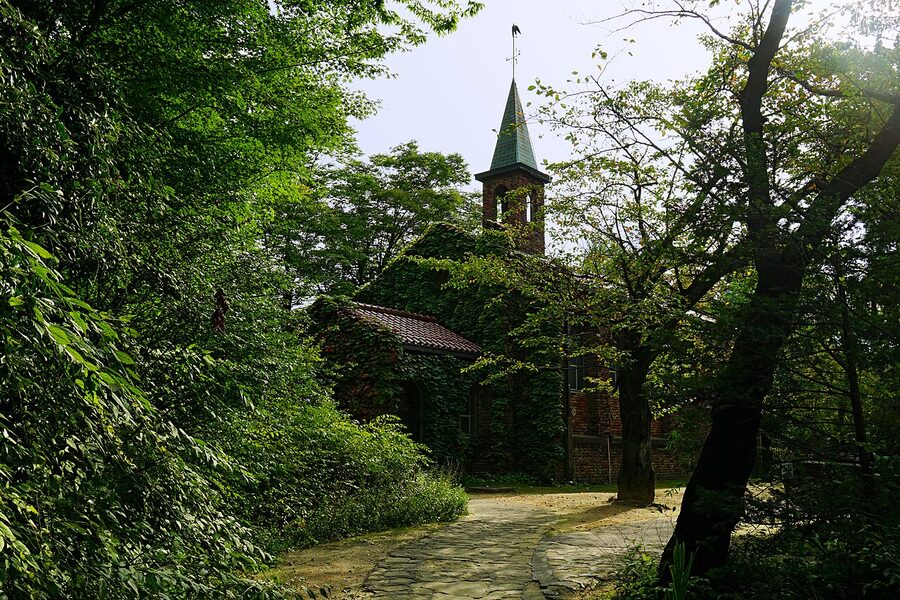
Rokuzan Ogiwara was a Meiji-era sculptor born in Azumino in 1879 who studied in New York and Paris (with Rodin’s circle) before returning to Japan and dying young at 30. His best-known work, Woman, is a small bronze that’s in every Japanese art-history textbook. The museum built to house his work in 1958 is a small ivy-covered brick chapel that looks like nothing else in central Japan, surrounded by smaller sculpture pavilions.
¥700, closed Mondays. Allow 90 minutes including time for the wider grounds, which include three other smaller artists’ pavilions. The building itself is the reason to come even if you don’t care about the sculpture — the architect Imai Kenji designed it to evoke a Western art museum, with deliberate Romanesque touches. Seventy years of ivy and Japanese light have done the rest. Photographers love it. Bring a camera.
Nakabusa Onsen
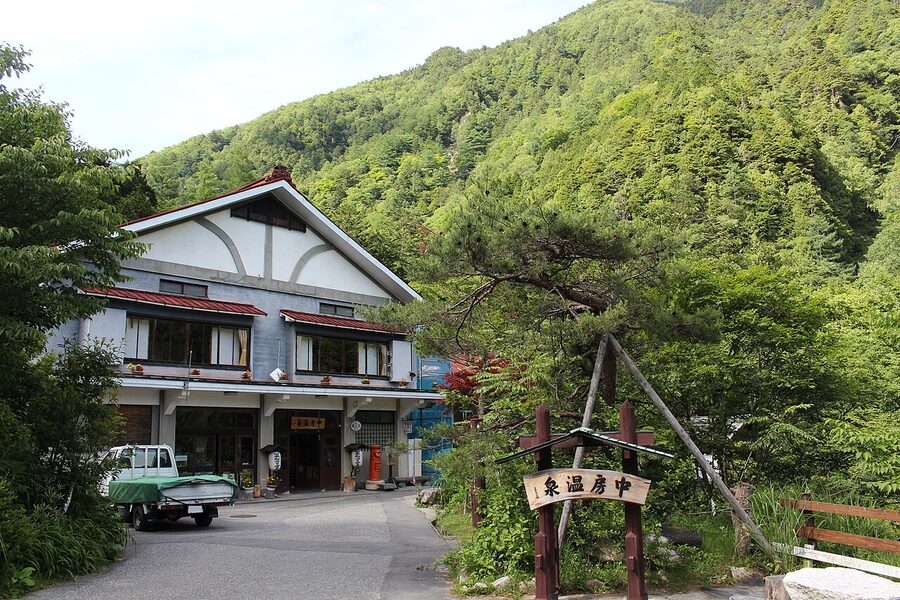
If you’re staying overnight, Nakabusa Onsen is the destination ryokan. Sixty minutes by bus into the Hotaka foothills, sitting at 1,500m above sea level, the inn has been operating since 1888 and is the trailhead for one of the classic Northern Alps hiking routes (the Tsubakuro-dake / Enzan-so route). The outdoor bath is built directly into a fast-running mountain stream — the kind of thing that sounds invented and isn’t. ¥18,000-22,000 per person with two meals. Closed mid-November to mid-April when the bus stops running.
Day-bath visit also possible: ¥800, 9am-4pm in season. Bus 7-8 times a day from Hotaka Station; check the timetable carefully because the last return bus leaves at 4:50pm and missing it means a ¥10,000 taxi back. The route up is genuinely beautiful — switchbacks through cedar forest with brief views of the plain below.
Alps Azumino National Government Park
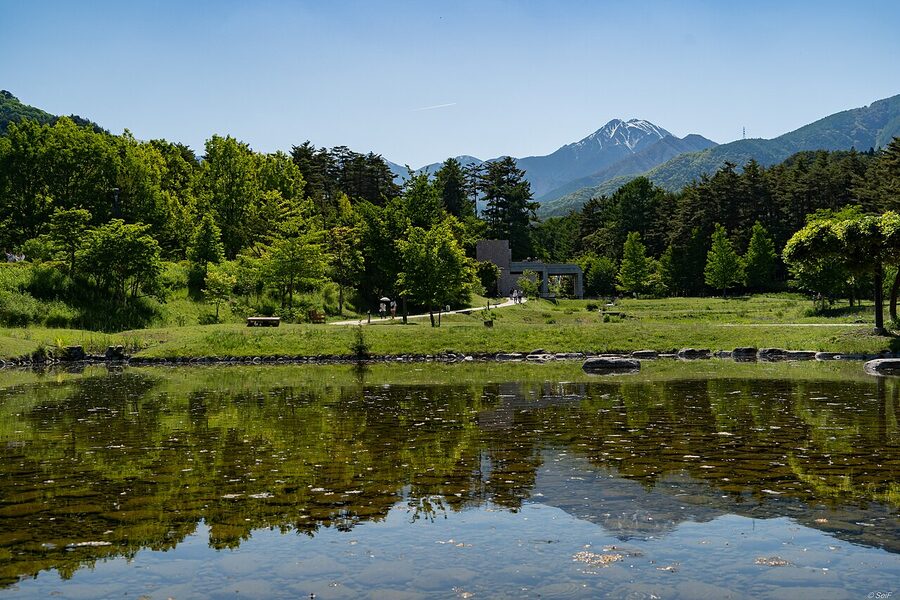
If you’re travelling with kids or you’re into Japanese landscape gardening, the Alps Azumino National Government Park is a 350-hectare flower-and-event ground 15 minutes by bus from Hotaka Station. Different gardens come into peak at different times: tulips in mid-April through May, wildflower meadows in June, kosmos in October, winter illumination in December-January. ¥450 entry, closed Mondays in non-peak periods.
This is more weekend-with-children territory than essential travel. If you’ve got a half-day to spare and you’re here in flower season, it’s a pleasant low-key add. Otherwise the time is better spent on cycling.
Soba-making, fruit-picking, canyoning
If you’ve got an extra half-day, three hands-on experiences run year-round in Azumino and all three are good. Soba-making at Wakayagi is the standout: 90 minutes, ¥3,000, including kneading buckwheat dough, rolling it out, cutting it, eating what you made for lunch with the host. Bookings via the Hotaka tourist office; they take walk-ins on weekday mornings if you ask politely. The host has been making soba professionally for 35 years and the demonstration alone is worth the price.
Fruit picking at the orchards on the southern edge of the plain runs from May (strawberries) through October (apples), with grapes and blueberries in between. Marumoto Orchard is the easiest to reach — 15 minutes by bus from Hotaka Station, ¥1,500 for 30 minutes’ eat-as-much-as-you-want apple picking in autumn. Touristy but genuinely fun.
Canyoning down the upper Azusa river is the unexpected adventure option — full-day trip with Canyons Japan, ¥10,000-12,000 including all gear and lunch, runs late June to early October. They have a base in Hakuba but pick up from Azumino hotels with advance notice. The river drops through a series of pools, slides and short waterfalls; nothing technical but properly fun. Booking at canyons.jp works in English.
Food and sake
Two regional things. Shinshu salmon — a freshwater-farmed salmon raised in Azumino’s spring water that’s genuinely a different fish from coastal salmon, mild, almost trout-like. Honjo near Hotaka Station does a salmon-and-wasabi rice bowl for ¥1,400 that’s the best lunch in town. The other thing: oyaki, the regional Nagano savoury filled bun, eaten warm out of cast-iron pans, ¥200 each at half a dozen stands across the plain.
Sake: Daisekkei, Otokoyama and Daimon are the three local breweries. All three offer free tours and ¥500 tastings most weekday mornings (book ahead via the tourist office). The water from the Hotaka springs makes for an unusually soft sake — even the dry ones drink rounded. The Daimon brewery is the easiest to fit into a cycling day and the small adjoining shop sells five-bottle tasting flights to take home.
When to come
Azumino has four sharply different seasons. Spring (mid-April to early May) is cherry blossom on the canal banks and tulip season at the Alps Azumino park; the wasabi fields are at full water flow with snowmelt; cycling weather is perfect. The peak month overall.
Summer (June-August) is humid and hot at midday on the plain (28-32°C), but Nakabusa Onsen at 1,500m is 8°C cooler. The wasabi fields are spectacular green; the cycling is best done at dawn or evening. Avoid Obon week (mid-August) when the plain fills with domestic visitors heading to family graves — not so much “crowded” as “everywhere is closed.”
Autumn (October-November) is the connoisseur’s pick. Rice harvest turns the plain gold; the apple orchards open for picking; the Hotaka range gets its first snow against still-green forests; the Hotaka Shrine O-funa Matsuri is at the end of September. The light in October mornings is exceptional for photography. My personal favourite season here.
Winter (December-February) is grey, very cold (-5°C nights), and most of the experiential things shut. The Daio Wasabi Farm is open but the channels look bleak. Nakabusa Onsen closes mid-November to mid-April. There’s no real reason to come in winter unless you’re combining with skiing at Hakuba or Norikura, in which case Azumino’s as a base is perfectly serviceable.
Where to stay
Most travellers day-trip from Matsumoto. If you do want a night, three options: Nakabusa Onsen for the proper mountain ryokan experience (see above, ¥18-22k). Yamano Hoteishi near Hotaka Station for a comfortable mid-range stay (¥12k, breakfast included, walking distance to the rental cycle shop). Hotel Buena Vista in central Azumino for the bland but functional business-hotel option (¥9k single, free parking).
One excellent guesthouse: Tabi-Soda Guesthouse in a converted farmhouse 10 minutes from Hotaka Station, ¥6,500 per person with breakfast, run by a couple who do daily cycling tours of the plain in English. Best value in town if you’re in the right month (March-November) and book a fortnight ahead. Booking.com has the central listings.
Getting to Azumino
From Matsumoto: JR Oito Line local train to JR Hotaka Station (the main Azumino access point), 30 minutes, ¥330 one-way. Trains every 60-90 minutes through the day. Hotaka station is the centre of Azumino sightseeing — rental cycle shop and tourist office both 30 seconds’ walk from the exit.
From Tokyo: Azusa Limited Express direct to Hotaka, 3 hours, ¥7,500. Three direct services daily. Otherwise Azusa to Matsumoto, change for the Oito Line.
From Omachi: Oito Line south, 30 minutes. Easy half-day combination — morning at one of Omachi’s lakes, afternoon cycling Azumino, dinner back in Matsumoto. The full 7-day Japan Alps loop includes Azumino as a half-day from Matsumoto rather than a separate base. The access guide has the full multi-city train and bus details, and the altitude sickness guide applies if you’re extending the trip into the Hotaka peaks above the plain.