Kanazawa is not, strictly speaking, a Japan Alps city. It sits on the Sea of Japan coast in Ishikawa Prefecture, 23 minutes by Hokuriku Shinkansen east of Toyama, separated from the rest of the seven cities by a wall of mountains. But almost every Japan Alps trip either starts or ends here — the Shinkansen from Tokyo runs directly in, the Thunderbird from Osaka runs directly out, and the Kenrokuen garden, geisha districts, samurai quarter, and contemporary art museum it holds are all within a 10-minute walk of each other. It’s the cleanest pairing available. Two days in Kanazawa before or after the Alps is the version most travellers end up doing. This is what to actually do in those two days.
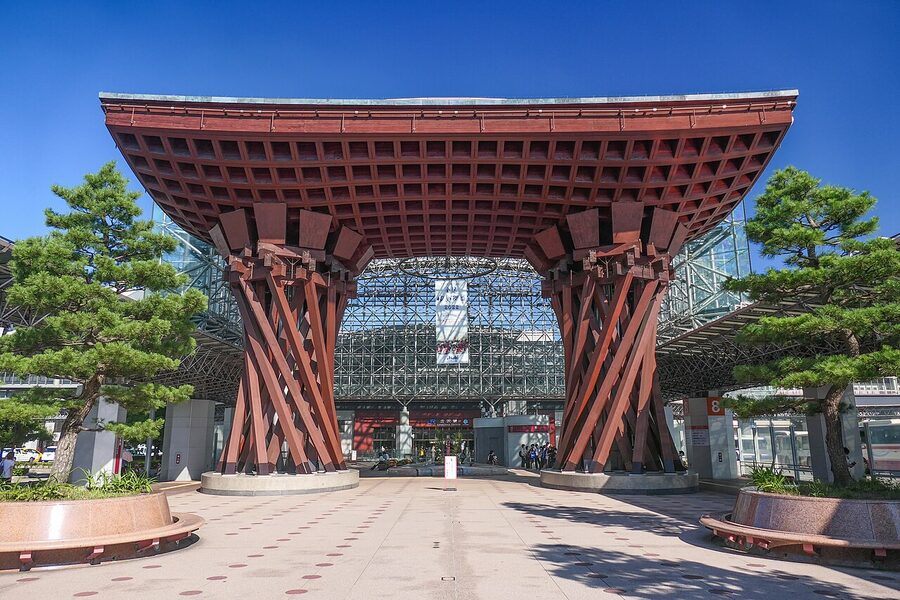
Kanazawa was the historic castle town of the Maeda clan, the wealthiest feudal domain in Edo-period Japan after the shogun’s own. That wealth never went into an army; it went into gardens, tea ceremony, lacquerware, and gold leaf. The result, 200 years later and a few bombs avoided in WWII, is a city with genuinely world-class culture in a compact centre that’s easy to walk in 48 hours.
In This Article
- Kenrokuen Garden
- Kanazawa Castle Park
- Higashi Chaya-gai — the geisha district
- Nagamachi — the samurai district
- Omicho Market — where lunch happens
- 21st Century Museum of Contemporary Art
- D.T. Suzuki Museum (the quiet one)
- Where to eat beyond Omicho
- Where to stay
- Getting to Kanazawa (from the Japan Alps)
- Two-day plan
Kenrokuen Garden
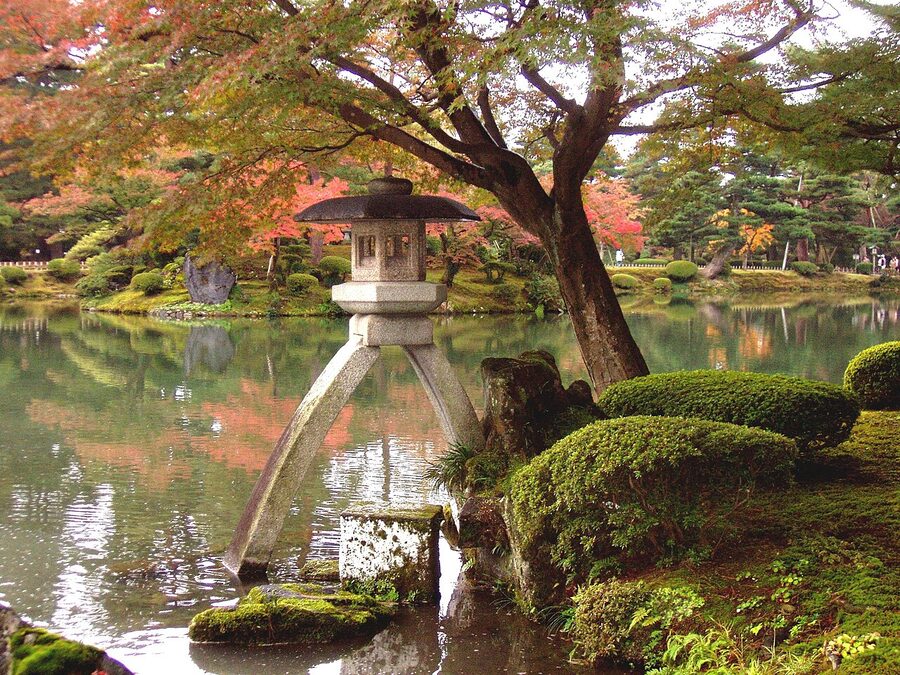
Kenrokuen is one of Japan’s Three Great Gardens (with Mito’s Kairakuen and Okayama’s Korakuen), and most garden-aware visitors consider it the best of the three. The name means “garden of the six sublimities” — spaciousness, seclusion, human artifice, antiquity, water, and broad views — the six qualities of an ideal Chinese garden, all supposedly achievable simultaneously. The Maeda lords started it in 1620 and worked on it for nearly 250 years until it opened to the public in 1874.
Practical visit: ¥320 entry, open 7:00-18:00 March to mid-October, 8:00-17:00 rest of year. Early morning (7:00-8:00) is free entry and almost crowd-free — this is the right time to go if you’re any kind of photographer. Budget 90 minutes to walk the main paths; 2-3 hours if you stop at the tea houses and the Seisonkaku villa on the edge of the garden.
Winter brings the yukitsuri — the distinctive conical rope structures that hold branches clear of snow damage — installed every November and removed in March. Spring is cherry blossom; autumn is maple colour around the ponds. Summer is lushest but busiest; Chinese and Taiwanese tour groups dominate from 10am in summer and autumn.
Kanazawa Castle Park
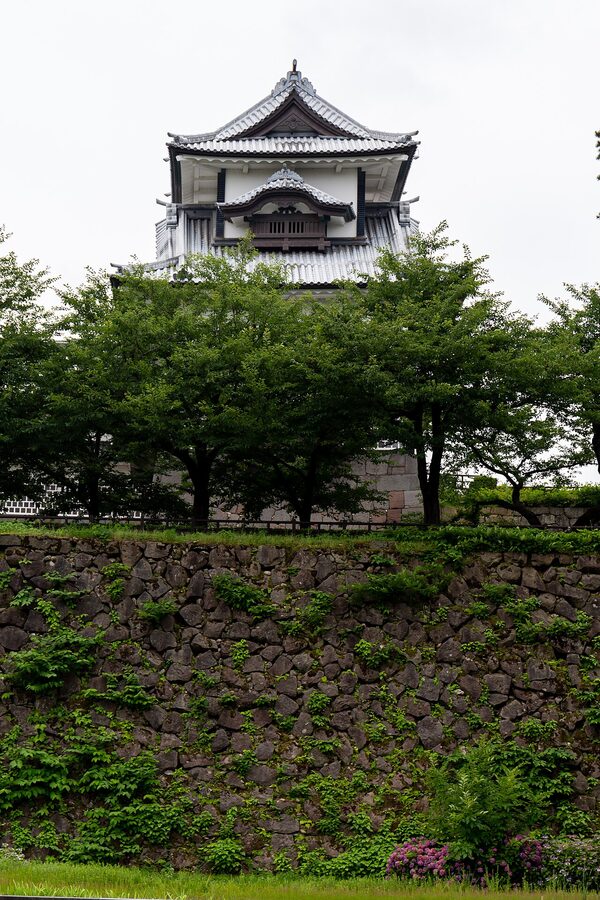
Directly across from Kenrokuen — the two are joined by a footbridge over the moat — is the Kanazawa Castle Park. Most of the original castle burned down during the Meiji dismantling; what you see today is a careful 2001 reconstruction of the Hishi-yagura keep and the Gojukken-nagaya barracks, built using traditional techniques (hand-cut wood joinery, no nails) on the original foundations.
Free to walk the grounds; ¥320 to enter the reconstructed interior (optional — mostly empty rooms with English signage on construction history). Allow 45-60 minutes. Combine with Kenrokuen as one morning.
Higashi Chaya-gai — the geisha district
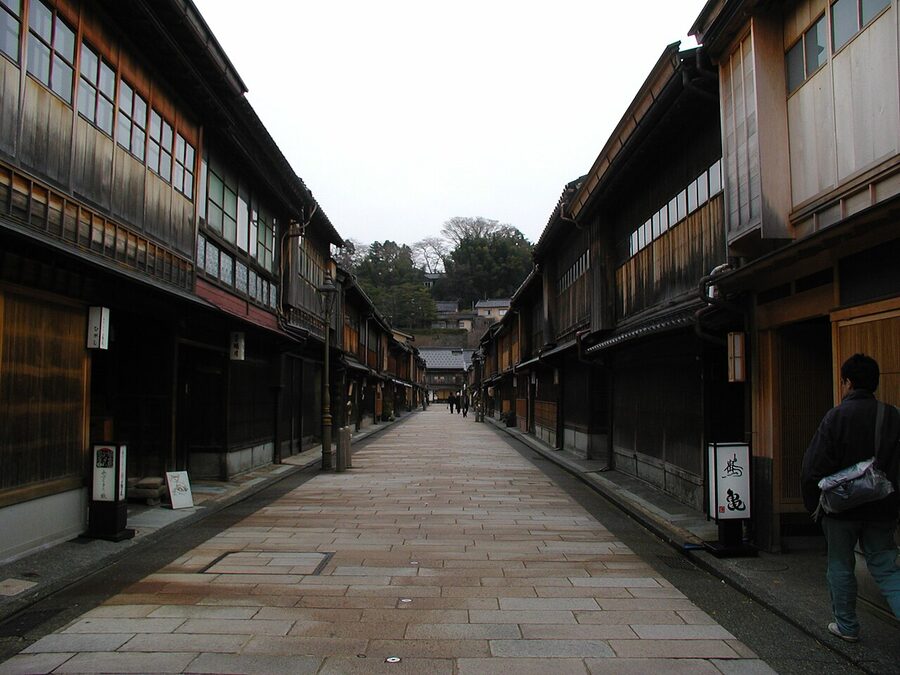
Kanazawa has three surviving geisha districts (chaya-gai) — Higashi, Nishi, and Kazue-machi. Higashi, on the east side of the Asano river, is the largest and the one most visitors see. It was established in 1820 as the geisha quarter for the Maeda lords’ city.
You can walk the main street (Chaya-gai) in 15 minutes; stop at Shima, a preserved 1820 geisha house that’s now a museum (¥500, 40 minutes), to see the layout of an ochaya: tea room on the ground floor, entertainment rooms on the second floor, inner courtyard, kitchen. Several of the remaining working ochaya do tea ceremonies or kimono-photo sessions for tourists; these are quieter in the mornings.
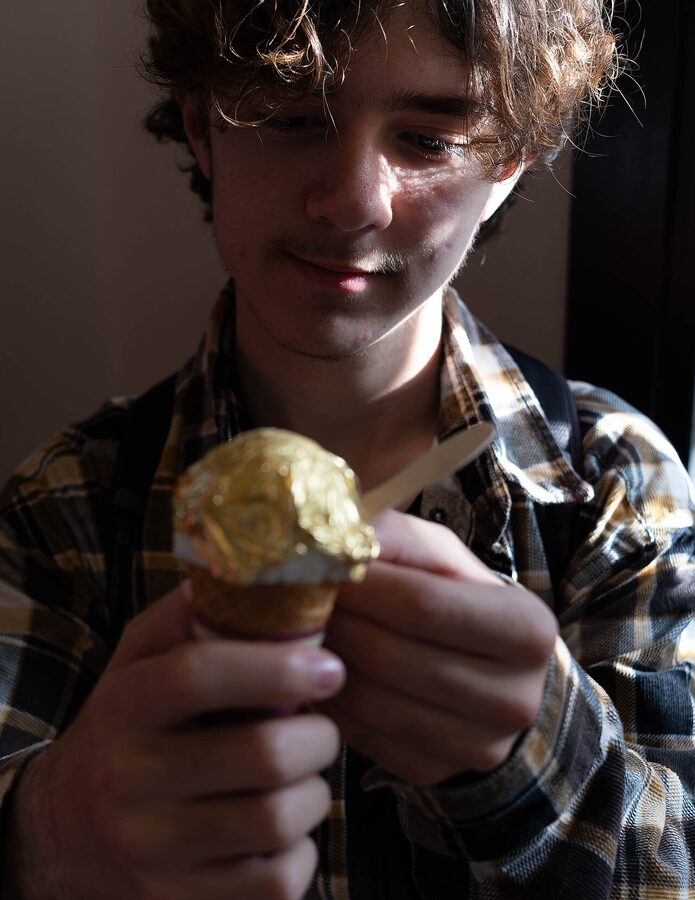
The gold-leaf industry is the second reason to come here. Kanazawa produces 99% of Japan’s gold leaf (kinpaku), a legacy of the Maeda family’s 16th-century workshops. In Higashi Chaya you can buy the gold-leaf soft-serve ice cream (¥891, covered in a whole leaf of real gold), visit the Hakuza gold-leaf shop for a gold-walled tea room, or take a 30-minute gold-leaf-placing workshop (¥1,800-2,500). All three are reasonable uses of half an hour.
The smaller Nishi Chaya-gai (10 minutes west) is half the size and half the tourist count — worth the walk if you like Higashi. Kazue-machi Chaya-gai runs along the Asano river between the two; quietest of the three, with a small historic temple at its centre.
Nagamachi — the samurai district
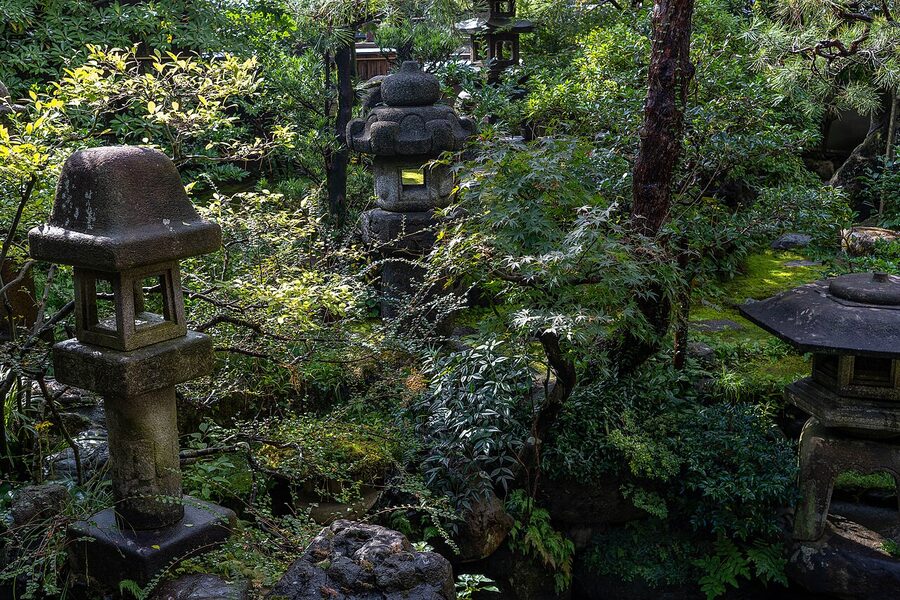
Nagamachi (“long-street district”) was the residential quarter for middle-ranking samurai families under the Maeda clan. The streets are narrow, the earthen walls are the original 18th-century construction, and the whole area feels time-stopped once you’re off the main road. It’s free to walk; it’s small; 30-45 minutes is enough.
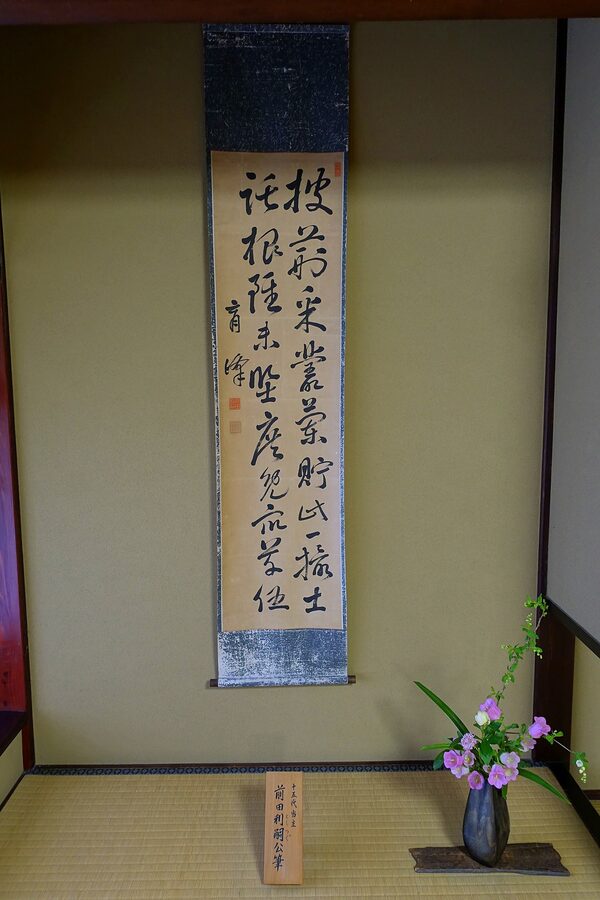
The Nomura Samurai Residence is the one open-to-visit samurai house in the district — ¥550, 45 minutes. Small but well-preserved: a proper Edo-period garden, tea room, weapons display, and one of the prettiest tokonoma alcoves in Kanazawa. More atmospheric than the castle grounds if you want to get a feel for samurai domestic life.
Omicho Market — where lunch happens
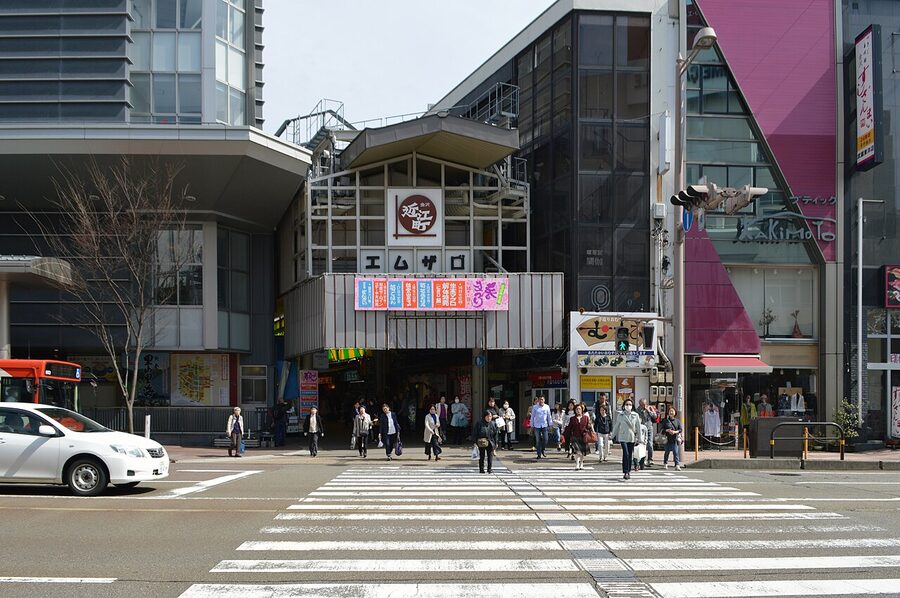
Omicho Market is Kanazawa’s central fish/produce market, running since 1721 — 180+ stalls under a single covered roof in central town, 10 minutes walk from either the castle or Higashi Chaya. This is where to eat lunch. Specifically:
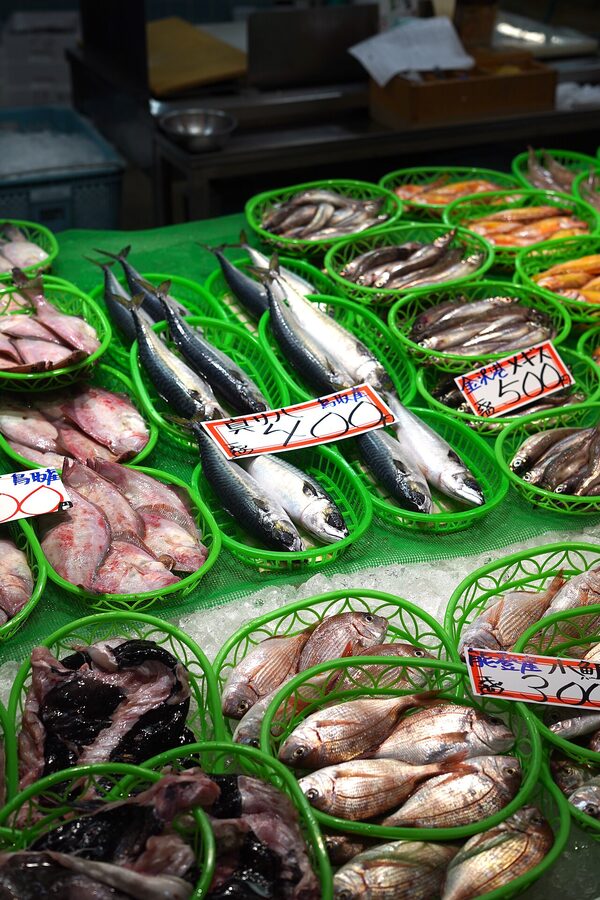
- Kaisen-don (seafood rice bowl) — ¥1,500-3,000 depending on what’s in season. Multiple restaurants inside the market do their own version; all are good. Kaisen Bowl Ainou near the eastern entrance has the shortest lunch queue.
- Oden — the savoury Kanazawa-style oden (fish-cake stew) is distinctively different from Tokyo-style, with crab in the broth. Akabanya stall does a lunchtime takeaway cup for ¥800.
- Kaga vegetables — the 15 traditional vegetables of Kaga (the historic name for the Kanazawa region), including akazuiki (red water-oats) and Kaga renkon lotus root. Visible at half the stalls; buyable in small amounts.
The market is on a slightly hectic scale — English isn’t common among the vendors, the seafood vocabulary is narrow. Point, smile, pay. Budget 45-60 minutes for lunch; another 30 minutes if you want to walk the full covered section.
21st Century Museum of Contemporary Art
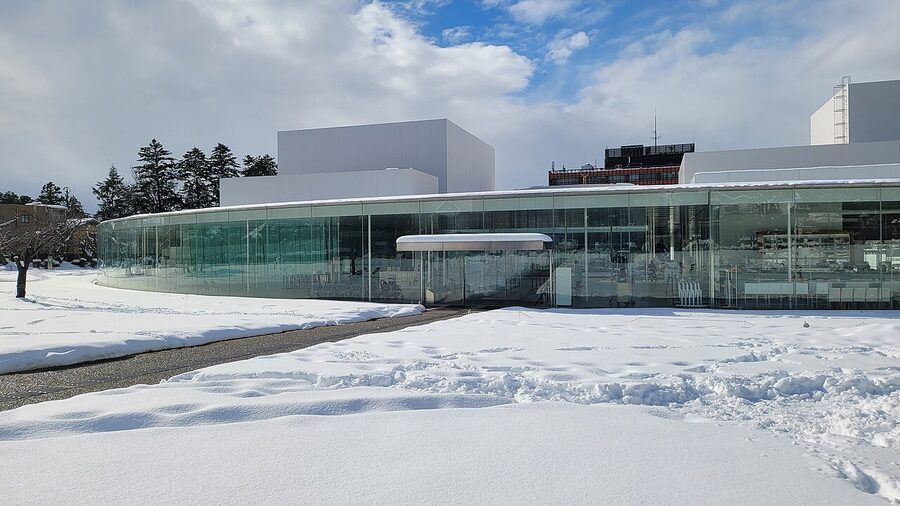
The 21st Century Museum of Contemporary Art (21CM) opened in 2004 in a building by Kazuyo Sejima and Ryue Nishizawa (SANAA) — a circular, single-storey, glass-walled pavilion that’s frequently cited as one of the best contemporary museum buildings of the last 25 years. The permanent-access perimeter (free) includes Leandro Erlich’s Swimming Pool (people walking across the bottom of what appears to be a full pool, visible from above), Patrick Blanc’s Green Bridge vertical garden, and several other outdoor installations. Paid gallery entry is ¥450 for the main rotating exhibitions. Closed Mondays.
90 minutes if you only want the permanent-access pieces; 2-3 hours if the current exhibition is substantial. The museum shop is among the better ones for Japanese design objects and books on contemporary art.
D.T. Suzuki Museum (the quiet one)
If you have half a day more, walk 10 minutes east from the 21CM to the D.T. Suzuki Museum. Daisetz Teitaro Suzuki was the Kanazawa-born philosopher who introduced Zen Buddhism to the English-speaking world in the 20th century. The museum, opened 2011, is a small modernist building by Yoshio Taniguchi around a single reflecting pool, with exhibits on Suzuki’s work and a contemplation space overlooking the water. ¥320. Closed Mondays. Allow 60 minutes, ideally including sitting by the pool for 20 of them.
This is the most quietly atmospheric museum in Kanazawa and the one local friends send me to. Nobody goes; it’s never crowded. If you came to Kanazawa for the contemporary art museum, come here for the Zen-and-architecture version of the same experience.
Where to eat beyond Omicho
- Sushi Ippei in Higashi Chaya — ¥2,800 lunch, ¥8,000-12,000 dinner. Kanazawa sushi is its own regional tradition, using Sea of Japan species (white shrimp, nodoguro throat-black fish, Kaga-mochi yellowtail in winter) at a level that a sushi counter in Tokyo would call high. Book for dinner.
- Kodatsuno Coffee Stand near the castle — specialty coffee and Kaga tea in a converted Edo-period warehouse. ¥700 for an oridori blend. The single best coffee in Kanazawa.
- Fuwari near Korinbo — lunchtime kaga cuisine, ¥2,200 for the multi-dish kaga-ryori set. Vegetable-forward, subtle, a counterweight to a seafood-heavy day at Omicho.
- Maimon at the station — conveyor-belt sushi done at Kanazawa quality, ¥180-580 per plate, no reservation, good option for a late train dinner.
Where to stay
Four tiers, depending on budget and style:
- Hyatt Centric Kanazawa near the station — ¥22,000-30,000, modern design hotel, excellent breakfast, the business-standard upper choice.
- Hotel Nikko Kanazawa at the station — ¥14,000-18,000, larger rooms than typical Japan business hotels, best for rail arrival/departure.
- Sumiyoshiya Ryokan in Higashi Chaya — ¥18,000-24,000 with two meals, original Edo-era building, single best traditional option in the city. Book 3 months ahead.
- K’s House Kanazawa — ¥3,800 dorm, ¥10,000 private. The best hostel in the city, 10 minutes walk from Higashi Chaya.
Book via Booking.com; Sumiyoshiya requires phone or direct-website reservation.
Getting to Kanazawa (from the Japan Alps)
From Toyama: Hokuriku Shinkansen, 23 minutes, ¥3,400. Cheapest and fastest Japan-Alps-to-Kanazawa leg available. Trains every 30 minutes.
From Takayama: Nohi Bus direct, 2h 15m, ¥3,500. Scenic route over the mountains via Shirakawa-go. Book ahead at nouhibus.co.jp; books out 2-3 days in peak season.
From Tokyo: Hokuriku Shinkansen direct, 2h 30m, ¥14,000. Covered by JR Pass and Hokuriku Arch Pass.
From Kyoto/Osaka: Thunderbird Limited Express to Tsuruga, transfer to Hokuriku Shinkansen. 2h 15m from Osaka, ¥7,500.
Full inter-regional transport details in the access guide. For the full loop that pairs Kanazawa with the seven Japan Alps cities, see the 7-day classic itinerary — Kanazawa usually slots in as days 1-2 or days 7-8 depending on which direction you’re travelling.
Two-day plan
If you’ve got two days, the version that works:
Day 1: Morning at Kenrokuen (arrive 7am for free entry) + Kanazawa Castle. Lunch at Omicho Market. Afternoon at 21CM (allow 2 hours including exhibition entry) and D.T. Suzuki Museum (allow 60 minutes). Evening in Higashi Chaya for the lantern walk.
Day 2: Morning at Nagamachi samurai district including the Nomura Residence. Gold-leaf workshop in Higashi Chaya after lunch. Afternoon for whatever you missed or wanted to return to — usually an extra hour at Kenrokuen in different light, or Omicho for something you skipped. Train out late afternoon.
A single day is enough if you focus: Kenrokuen + castle in the morning, Omicho lunch, 21CM in the afternoon, Higashi Chaya at dusk. Cuts out the samurai district and D.T. Suzuki but covers the headline sights.