
Most travellers fly into Tokyo, ride the Tokaido Shinkansen down to Kyoto, and miss the Sea-of-Japan side of central Honshu entirely. That’s the mistake Toyama was built to fix. It’s the only Japan Alps city with a coastline, the gateway to the most spectacular alpine bus-and-cable-car route in Japan, and home to a glass art museum housed in one of Kengo Kuma’s best buildings. The food is half mountain (Hida beef, sansai mountain vegetables) and half sea (white shrimp, firefly squid, the buttery yellowtail caught off the bay in winter). And it’s the one Japan Alps city the rest of the country’s tourist industry hasn’t worked out how to package yet, which means you can still book a Tateyama hotel a week out in summer and pay normal prices.
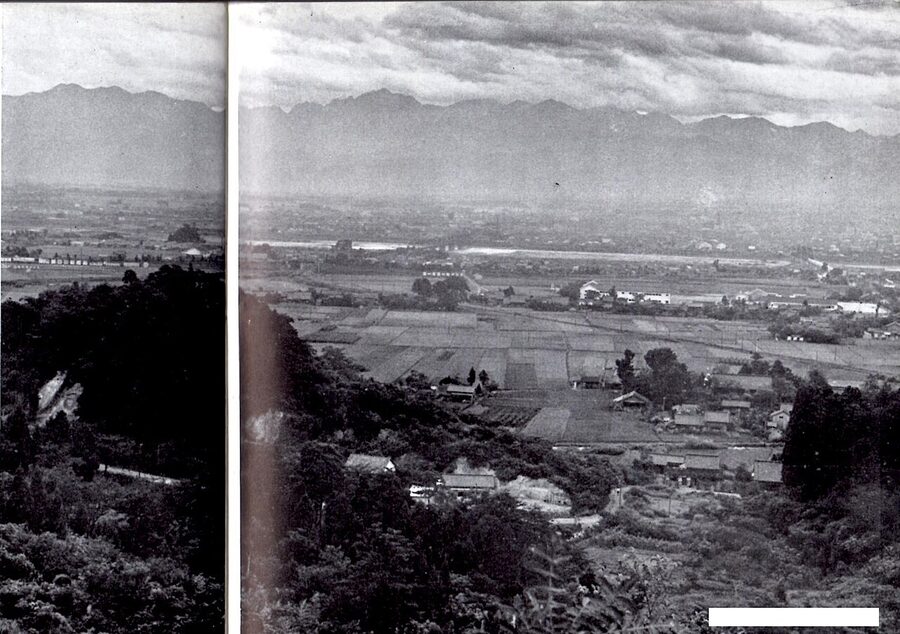
Toyama City sits on a wide plain at the foot of the Tateyama mountain range, with Toyama Bay (a deep submarine canyon system, biologically very rich) opening to the north. It’s a regional capital of around 410,000 people. Two days does the city well. Add a third for the Tateyama-Kurobe Alpine Route, and a fourth if you want the Kurobe Gorge railway as well. If your time budget is one day, the loop I’d do is in this order: glass museum (morning), Iwase district (lunch and a sake brewery), castle park and Kurehayama sunset (afternoon), Toyama Bay sushi for dinner.
In This Article
- Toyama Glass Art Museum
- Iwase — the old port district
- Toyama Castle Park and Kurehayama
- Toyama Bay sushi (it’s the headline)
- The pharmacy thing — Toyama’s other industry
- Toyama Black Ramen
- Tateyama-Kurobe Alpine Route
- Kurobe Gorge Railway
- The bay-cruise option (and why I’d skip it)
- When to come
- Where to stay
- Getting to Toyama
Toyama Glass Art Museum
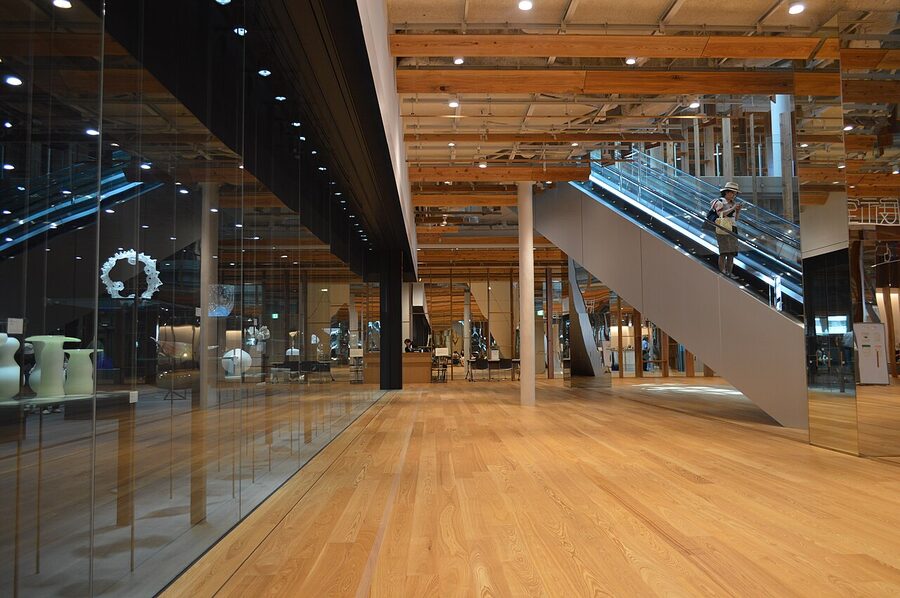
The Glass Art Museum is on floors 4-6 of a 2015 Kengo Kuma building called TOYAMA KIRARI, three blocks from the station. The building itself is the first reason to come — a six-storey atrium clad in tilted aluminum-and-glass screens, with cross-hatched local cedar inside, that does interesting things to the light at every hour of the day. The collection is the second reason. Toyama has been a glass-making centre since the late 19th century when local pharmaceutical companies needed bottle-makers; the city quietly turned that industrial base into a contemporary art scene. The permanent collection includes pieces by Dale Chihuly, Lino Tagliapietra and a rotating cast of Japanese glass artists working today.
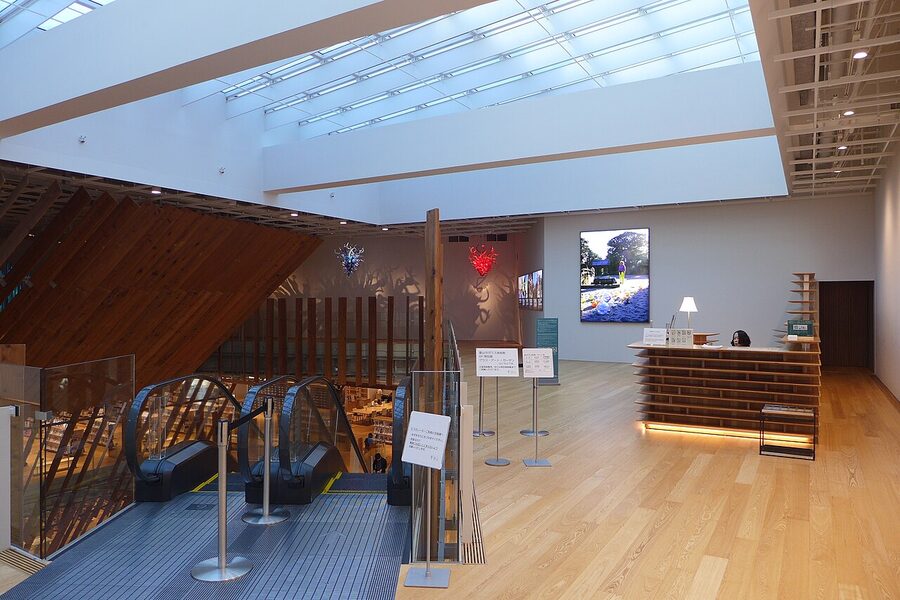
¥200 entry to the permanent collection (extra for special exhibitions, usually ¥1,200), closed first and third Wednesdays, open until 6pm Thursday-Sunday and until 8pm on Fridays. The museum’s top-floor cafe overlooking the city is genuinely good and reasonably priced for a museum (¥800 for a coffee + cake set). Allow 90 minutes for the museum, more if you want to also walk the architecture of the building itself, which deserves it.
Iwase — the old port district
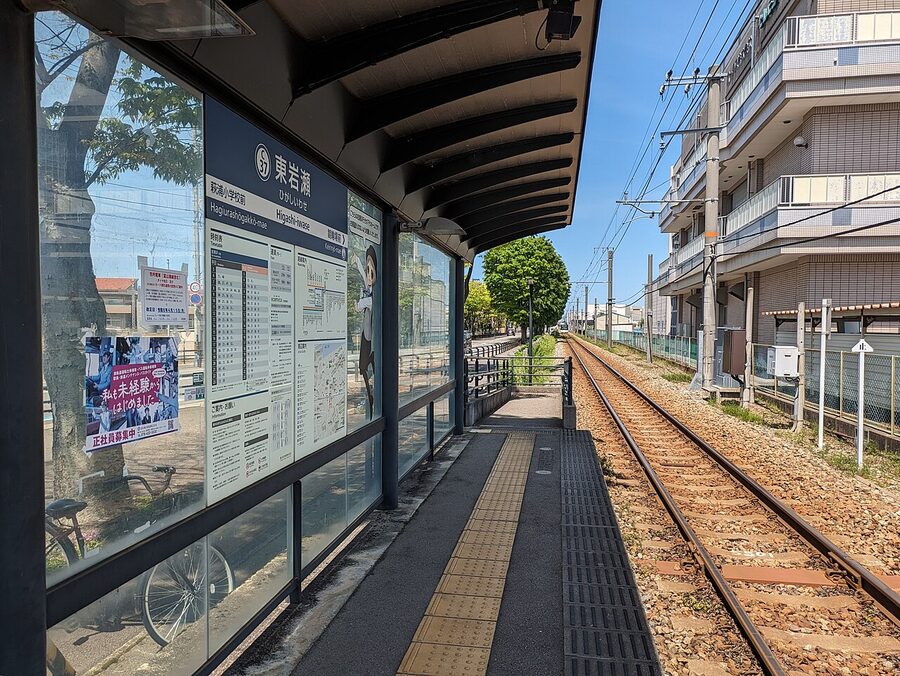
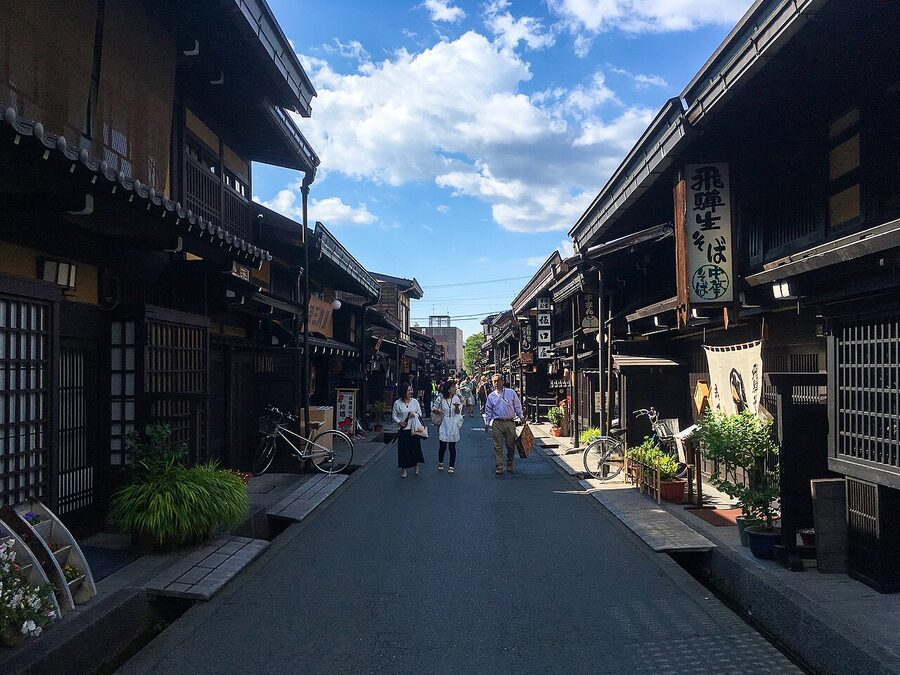
Iwase is what most travellers miss. It’s the old port district 25 minutes by tram from the central station — you take the Toyama Light Rail’s Portram (¥210, runs every 15 minutes), get off at Higashi-Iwase, and walk into a quietly preserved Edo-era merchant quarter that survived the war intact. The streets are wider than Takayama’s, the houses are bigger, and almost none of them have been turned into souvenir shops. They’re actual residences, a couple of small museums, three working sake breweries, and one of the most important contemporary art galleries on the Sea of Japan side — Glass Studio Toyama — tucked into a converted boat-builder’s workshop.
Lunch here at Mori Mori Sushi Iwase for the ¥3,200 chef’s special — a 12-piece run that almost always includes white shrimp (shiroebi), Toyama Bay yellowtail, and at least one piece of glass shrimp (ama-ebi) that’s been on the boat that morning. Then walk down the main street to Masuda Shuzou sake brewery (Masuizumi label), where the ¥1,000 tasting flight comes with a small plate of pickled sansai mountain vegetables, in case you needed an excuse to drink five things at midday. Iwase fills 3-4 hours easily.
Toyama Castle Park and Kurehayama
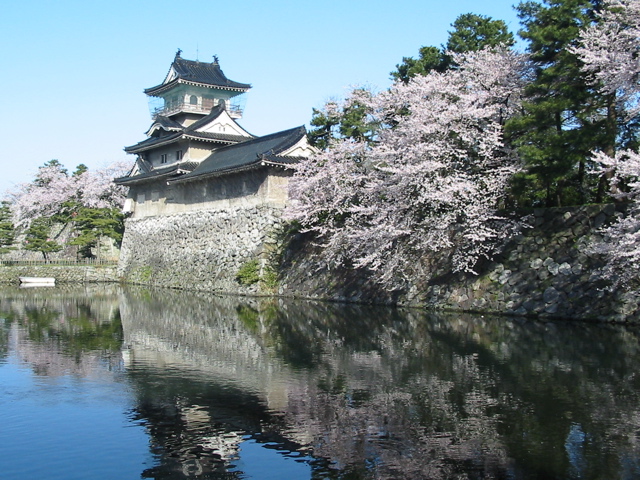
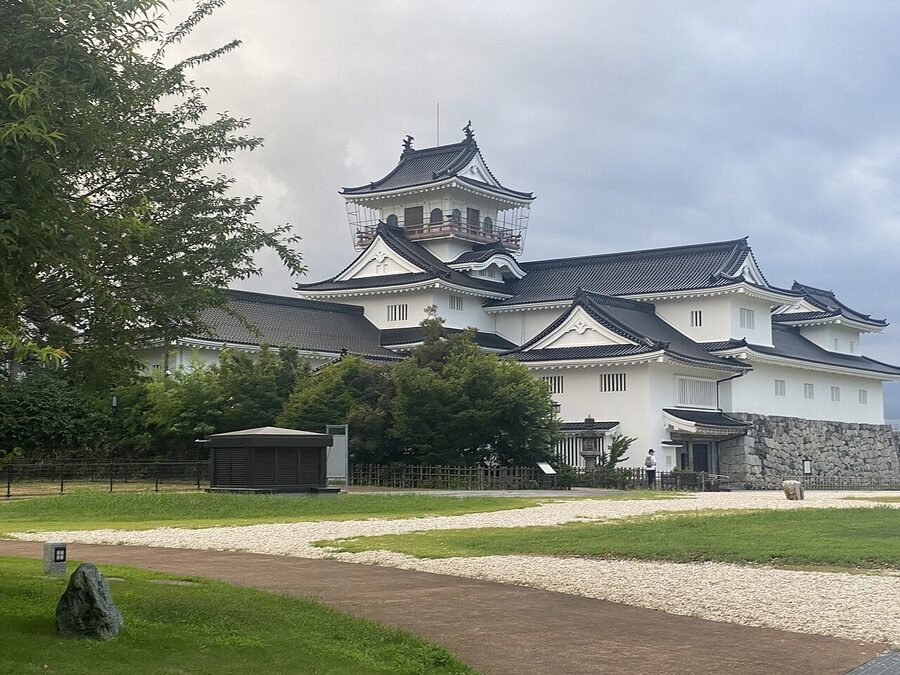
The castle itself is a 1954 reinforced-concrete reconstruction of a 1543 fort that didn’t survive the Meiji teardown. ¥210 to go inside; there’s a small history museum that’s fine but skippable. The reason to come is the surrounding park — a full city block of garden, moat and outer-wall remnants, with one of the best cherry-blossom canopies in Toyama prefecture in early April. Free, open 24 hours, ten-minute walk from the station.
For the actual view, climb Kurehayama — a small mountain on the western edge of the city, accessible by a 90-minute walk from the central station or a ¥600 taxi. The summit park sits at 145m and gives you the best view in Toyama: the city spread below, Toyama Bay shining to the north, and the full ridge of the Tateyama range stretching across the eastern horizon. Sunset from here on a clear evening is the best free thing the city offers. Bring water; there’s no shop on the summit.
Toyama Bay sushi (it’s the headline)
Toyama Bay is a deep submarine canyon system that produces some of the most distinctive seafood in Japan. The headline catches:
- Shiroebi (white shrimp) — tiny, translucent, sweet. Nearly all of Japan’s commercial shiroebi catch comes from this bay. Eaten raw on rice as nigiri, or as a tempura. The good restaurants serve it as a single piece on top of warm rice with a leaf of shiso. Season is April-October.
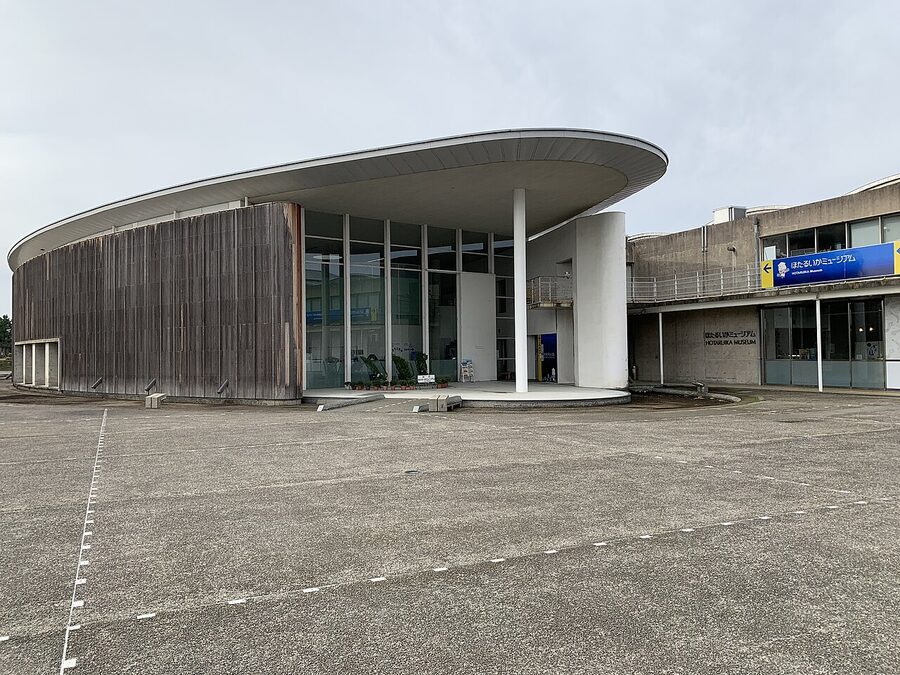
- Hotaruika (firefly squid) — small bioluminescent squid that mass-spawn in Toyama Bay every March-May. Eaten boiled with miso-vinegar dipping sauce or as raw nigiri. The annual catch happens at night and is a tourist event in its own right (the Hotaruika Museum at Namerikawa runs night boat tours).
- Buri (yellowtail) — winter catch, December-February, when the cold-water yellowtail (kanburi) come down the bay. Sashimi or shabu-shabu. The Himi Buri brand from the eastern bay is the gold standard.
Where to actually eat: Sushidokoro Mori Mori in central Toyama (different to the Iwase branch) for the lunch chef’s special; Kanetsu Sushi in Iwase for the higher-end omakase (¥9,000 evening); Toyama-no-Sushi on the second floor of the Toyama Marier department store for budget shiroebi nigiri at ¥390 per piece.
The pharmacy thing — Toyama’s other industry
One bit of Toyama context most travel guides skip: the city was Japan’s pharmaceutical capital from the 17th century onwards, and most of central Toyama’s wealth came from kobaiyaku — door-to-door medicine sellers who travelled the countryside leaving wooden medicine boxes in farmhouses, returning yearly to restock and collect payment for what had been used. By 1850, Toyama had over 5,000 of these travelling pharmacists. The system survived into the 1960s, and the residual industry — bottle-making, glass labs, the technical glass workforce that eventually fed the contemporary art scene — is the reason TOYAMA KIRARI exists in the form it does.
You can see the surviving end of this at the Toyama Kobaiyaku Museum (10 minutes by bus from Toyama Station, ¥210 entry), which keeps original medicine boxes, the carrying poles the salesmen used, and the route maps showing how a single pharmacist’s territory might cover 200 villages over six months. It’s a small museum and not a destination on its own, but if the Glass Museum has piqued your curiosity about why Toyama makes glass at all, this fills in the historical missing piece in 45 minutes.
Toyama Black Ramen
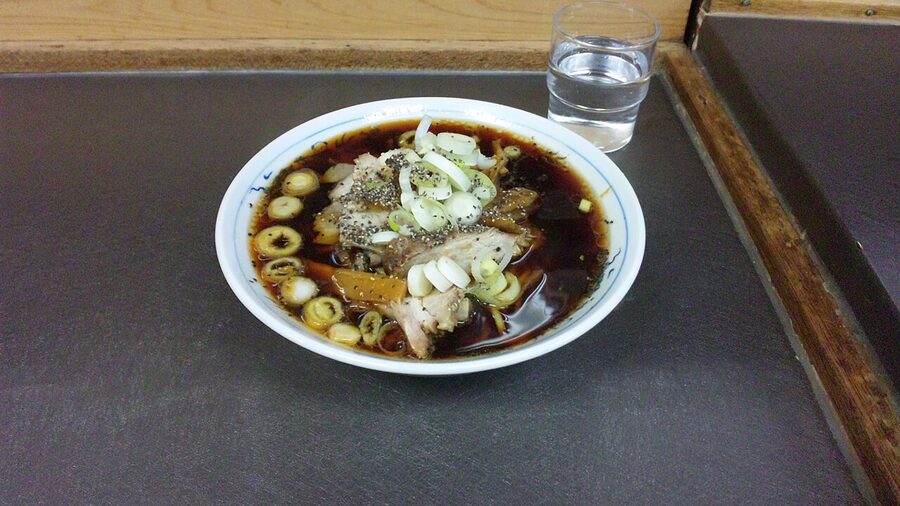
The other Toyama food story is ramen, specifically Toyama Black — a postwar invention from the 1950s when steelworkers in the city’s heavy-industry zone needed a salt-and-protein-heavy lunch. The result was a ramen with a near-black soy broth that’s aggressively saline; you’re meant to eat it with white rice on the side, which sounds odd until you do it. Menya Iroha in central Toyama is the most famous and the most accessible to first-timers; Yamaoka-ya on the south side does a denser, more intense version that proper Toyama Black evangelists prefer. Either is around ¥900 for the full set with rice.
Tateyama-Kurobe Alpine Route
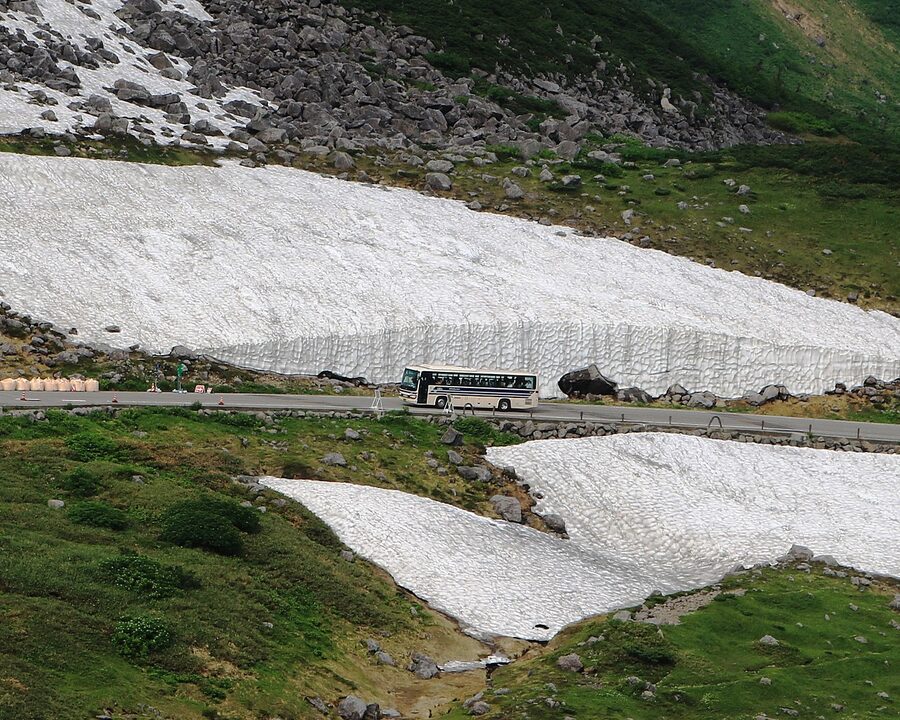
The Tateyama-Kurobe Alpine Route is the headline excursion from Toyama. It’s a 90km trans-mountain transport chain that climbs from the Toyama plain at 475m to Murodo at 2,450m, traverses the high alpine plateau, and descends the other side to Ogizawa near Omachi at 1,433m, using nine different vehicles in succession (cable car, highland bus, trolleybus, tunnel-trolleybus, ropeway, more bus, descent cable car). It’s open from mid-April to late November.
The standout sections: Yuki-no-Otani (the snow corridor) cut through up to 18m of compacted snow on the Tateyama Toll Road in spring; the Murodo plateau at 2,450m where you’re standing on actual high alpine terrain; the dramatic Kurobe Dam at the eastern end. The full one-way crossing takes 7-8 hours and costs ¥10,790; an out-and-back from Toyama to Murodo (no full crossing) is more manageable at 5-6 hours and ¥7,500.
Two important warnings. First, this is a 2,450m route, and altitude sickness is genuinely a thing for some travellers — see the altitude sickness guide for the full picture, but if you’ve flown in the day before and aren’t acclimatised, you may feel rough at Murodo. Second, the entire route gets booked solid in Golden Week (late April-early May) for the snow corridor, in late October for autumn colour, and at weekends through the season. Reserve seat tickets via Alpen Route’s English site at least a week ahead. Show up without one and you may wait 2-3 hours for the next available bus.
Kurobe Gorge Railway
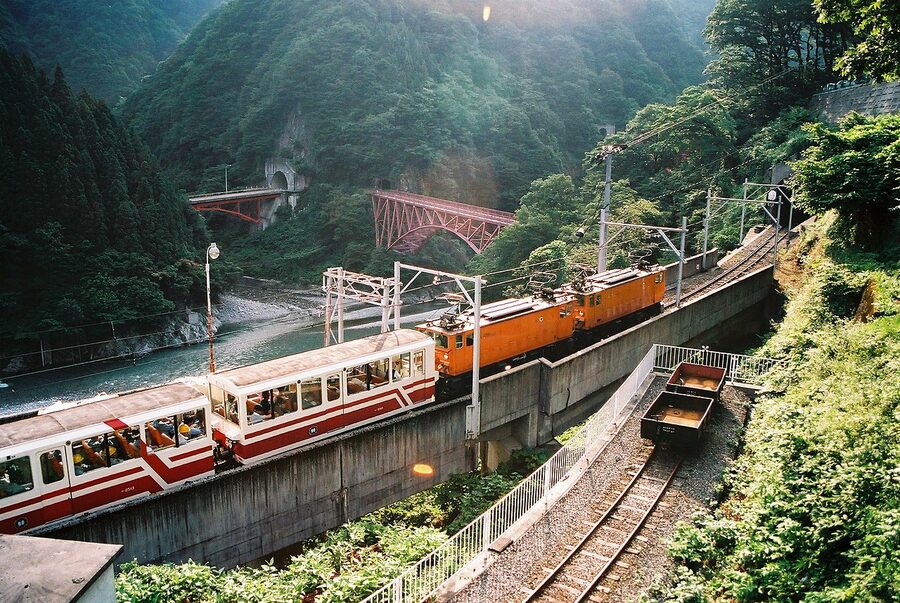
Different excursion, different mountain. The Kurobe Gorge Railway runs from Unazuki Onsen (45 minutes east of Toyama by Toyama Chiho Railway) for 20km up the Kurobe Gorge to Keyakidaira, in narrow-gauge open-carriage trains originally built for dam construction in the 1920s. The journey takes 80 minutes one-way; the round trip with stops at the bridges and waterfalls along the way is a full day from Toyama. ¥1,980 each way for standard carriages; +¥520 for the open carriages, which I’d recommend in summer when the breeze through the carriage is half the experience.
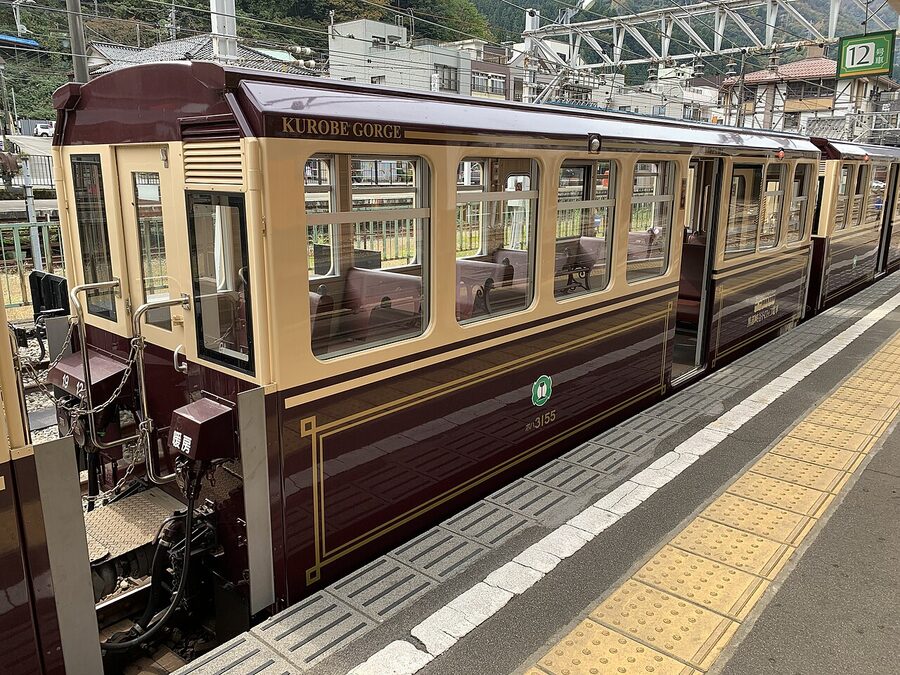
The line runs late April to late November. Plan to combine it with a soak at Unazuki Onsen, the small hot-spring town at the lower end of the gorge — the public bath at Yumeya is ¥800 and has a riverside outdoor pool that’s genuinely worth structuring a day around. Don’t try to do both Tateyama-Kurobe Alpine Route and the Kurobe Gorge Railway in the same day. They’re different sides of the same mountain massif and the logistics don’t connect.
The bay-cruise option (and why I’d skip it)
Toyama’s tourist office heavily promotes a Toyama Bay cruise out of the Iwase port: 60 minutes on the water, ¥1,500-2,500 depending on season, photos of the city skyline against the Tateyama range. On a clear day — specifically, an early-morning weekday in November when the air is dry — this is genuinely worth doing. On any other day, you’re paying to look at industrial port infrastructure with mountains barely visible through haze. The success rate of the cruise depending on weather is maybe one day in five outside late autumn. I’d skip it unless you happen to land on a perfect-clarity morning, in which case the boat is a unique vantage on the bay-and-mountain combination that defines the city.
When to come
Four seasons, all with a case. Spring (April-May) is sakura at the castle and the snow corridor on the Alpine Route — the highest-traffic months and a real headache for booking. Summer (June-August) is humid in the city but excellent for the Alpine Route and Kurobe Gorge, both of which run at full schedule. Autumn (October-November) is the connoisseur’s pick — clear skies, autumn colour on the Alpine Route, the bay yellowtail starting to come in, the city’s annual fireworks festival in early August already a memory. Winter (December-March) is grey, wet, occasionally heavy snow — but kanburi (cold-water yellowtail) season makes the food the best of the year, and the indoor bits of the city (Glass Museum, Iwase, sake breweries) all stay open and become much quieter.
Where to stay
Toyama central station has the usual cluster of business hotels — Hotel Granvia Toyama directly above the station for convenience (¥12,000-15,000), ANA Crowne Plaza three minutes’ walk away with proper rooms (¥14,000-18,000). Both fine. The interesting accommodation is in Iwase: Iwase no Rokufuku is a converted Edo merchant house run as a four-room ryokan with a kaiseki dinner of all the bay seafood mentioned above (¥28,000-35,000 per person, two-night minimum). Worth a splurge night.
For a mountain night: Hotel Tateyama sits at Murodo on the Alpine Route at 2,450m and is the highest-altitude hotel in Japan. Rooms are basic and overpriced (¥18,000-25,000) but the location is unmatched — you watch the dawn over the alpine plateau without leaving the hotel. Book months ahead. For something cheaper: K’s House Hostel Toyama at ¥3,800 dorm / ¥9,000 private. Book via Booking.com.
One more option for sake-curious travellers: Sakahan Iwase is a working sake brewery that runs a guesthouse in part of its merchant complex. Three rooms, ¥18,000 per person with a tasting menu of their own production paired with Iwase fish. The owner is a fourth-generation brewer and will sit and talk about saturation, polishing ratios, and water-source geology if you ask. Genuinely one of the better small-stay experiences in central Japan.
Getting to Toyama
The Hokuriku Shinkansen runs direct from Tokyo (Kagayaki service, 2h 8m, ¥13,000 reserved) and from Kanazawa (23 minutes, ¥3,400). Both covered by JR Pass. From Kyoto/Osaka the route is via the Thunderbird limited express to Tsuruga and the Hokuriku Shinkansen onwards — about 3.5 hours total. The Hokuriku Shinkansen route is one of the underrated journeys in Japan, threading through Nagano and Toyama prefectures with constant mountain views.
From Takayama: there are direct buses (2h 30m, ¥3,500) running 4-6 times daily, scenic and a lot cheaper than rail via Nagoya. The full multi-city route is mapped in the getting there guide, and Toyama makes the most sense as the start or end of a 7-day Japan Alps loop rather than the middle.
Toyama Airport (TOY) handles a few international flights from Taipei and Shanghai; for most travellers the Shinkansen from Tokyo is the better option. The other Japan Alps city-pairs cover the surrounding region: see all seven city guides for how to mix and match.
.jpg)


