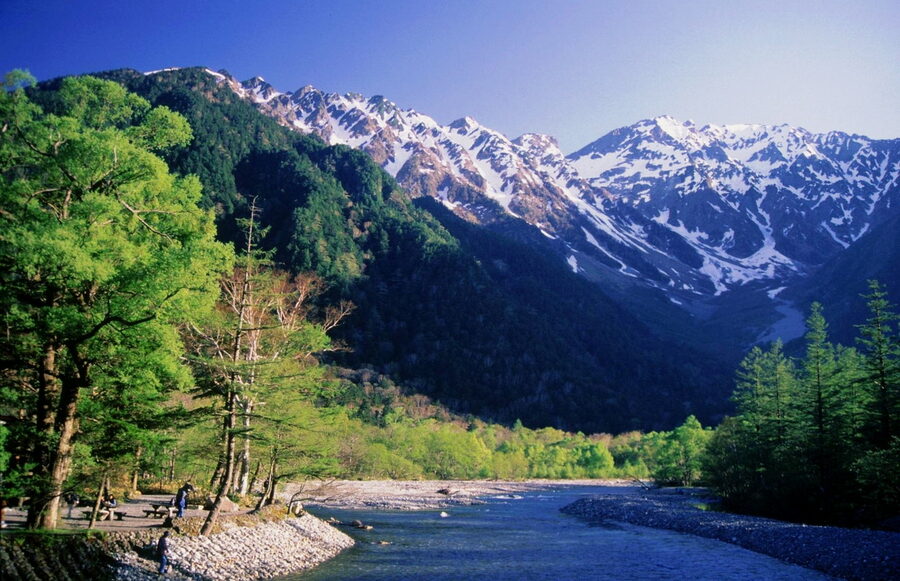
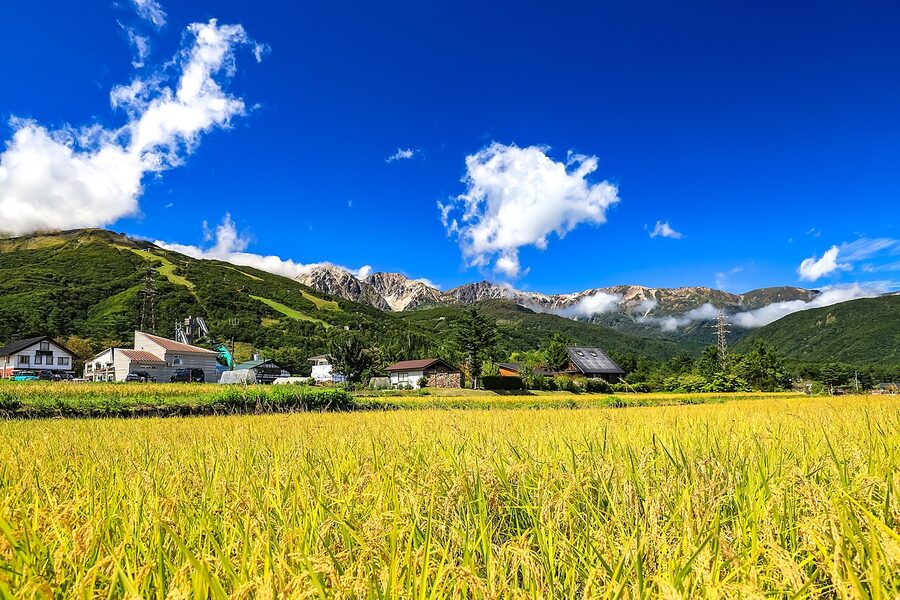
Hakuba Valley gets eleven metres of snow in an average winter, more in a heavy one. That figure alone explains why ten ski resorts cluster along a fifteen-kilometre stretch of one Nagano valley, why an Olympics happened here in 1998, and why the village runs on Australian and Hong Kong tourism every January. It also explains why most of the international visitors never see Hakuba in summer, when the same lifts climb to alpine ponds, the paragliders launch off Iwatake, and a single ridge above Happo gets you face to face with three 2,900-metre peaks.
In This Article
- What Hakuba actually is
- Where Hakuba sits in central Honshu
- How it compares to the rest of the Japan Alps
- Winter in Hakuba
- The ten resorts of Hakuba Valley
- Happo One
- Hakuba 47 and Goryu
- Tsugaike
- Cortina and Norikura
- Iwatake
- The smaller resorts
- Hakuba Valley pass: the economics
- Off-piste, sidecountry and backcountry
- Named runs worth seeking out
- The international vs domestic experience
- Summer in Hakuba
- The Northern Alps trailhead
- Happo Pond, the day-hike payoff
- Tsugaike Nature Park
- Hakuba Iwatake Mountain Harbor
- The unique paragliding scene
- The 1998 Olympic legacy
- Other summer activities
- Where to stay in Hakuba
- Wadano (ski-in, slightly Western)
- Echoland (Western, walkable, lively)
- Happo (close to bus terminal, mixed style)
- Misora (quiet ryokan)
- Goryu and Tsugaike base areas
- Booking and prices
- What to eat in Hakuba
- Ramen and soba
- Izakaya and yakitori
- The international scene
- Bars
- The onsen scene
- Getting to Hakuba
- From Tokyo
- From Matsumoto
- From Nagano City
- By car
- Inside the valley
- When to come
- Winter, December to early May
- Spring, late April to early June
- Summer, June to September
- Autumn, mid-September to early November
- What to combine Hakuba with
What Hakuba actually is
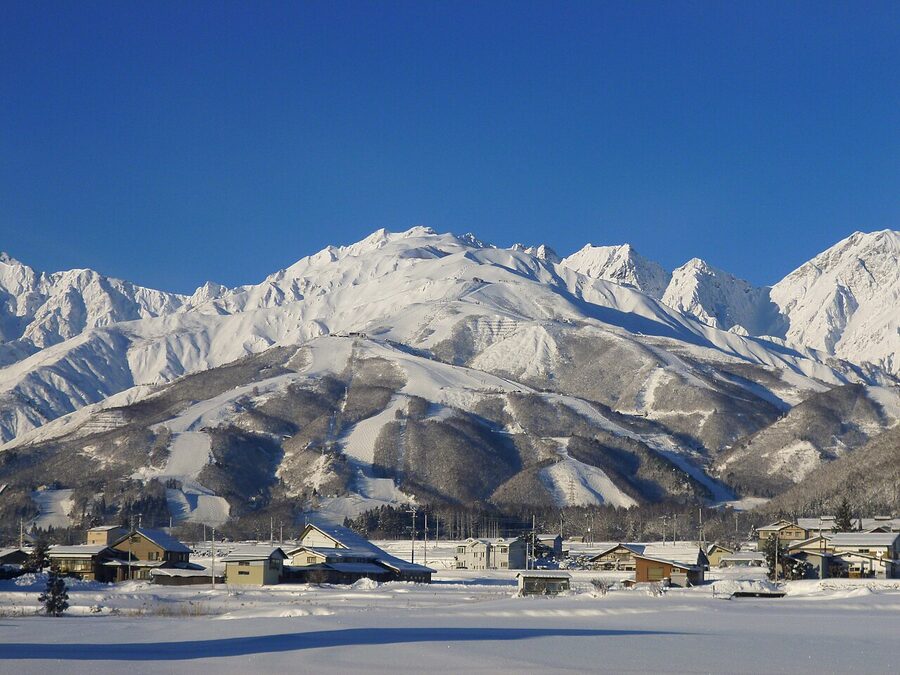
Hakuba is a long thin village strung along the Matsukawa river at the foot of the Shirouma mountains. The mountains hit 2,932m at Shiroumadake, the valley floor sits at about 700m, and the gap between is filled with ski runs in winter and hiking trails in summer. There is no single town centre. Instead the valley splits into clusters: Happo at the foot of the main resort, Echoland a kilometre south for nightlife, Wadano up the hill for ski-in lodges, Misora down the road for quieter ryokan, and the smaller hamlets of Iwatake, Goryu and Tsugaike that each sit at the foot of their own ski hill.
Add the connected resort of Cortina at the far north end (technically in Otari, but skiable on the same lift pass) and you get the famous ten resorts of Hakuba Valley. The valley is officially the trio of Otari, Hakuba and Omachi villages, though most visitors only mean the central ten kilometres.
Where Hakuba sits in central Honshu
Hakuba is 44km west of Nagano City and roughly 270km northwest of Tokyo. By Hokuriku Shinkansen plus express bus you arrive in about three hours from Tokyo Station. By car it is closer to four. Most international visitors flying into Narita or Haneda use a direct snow-shuttle bus that takes five to six hours and lands you at your accommodation door. There is no bullet-train station in the valley itself. The nearest is JR Hakuba on the local Oito line, useful for a Matsumoto day trip but slow for an arrival from Tokyo.
How it compares to the rest of the Japan Alps
If you are weighing Hakuba against other valleys in the region: Hakuba is the international one. Snow quality is very good, but Hokkaido is colder and drier. Hakuba’s edge is the alpine scenery (the Shirouma ridge towers above the slopes the way Niseko and Furano simply do not), the Epic Pass tie-in, and the depth of English-speaking infrastructure. If you want a quieter Japan ski experience with deeper local culture, look at Nozawa Onsen or Norikura Kogen. If you want a low-altitude family resort with shorter queues, Karuizawa wins. Hakuba is for people who want world-class terrain, after-ski beer in English, and the option to look up from the lift and see something that looks like the Bernese Oberland with Japanese signage.
Winter in Hakuba
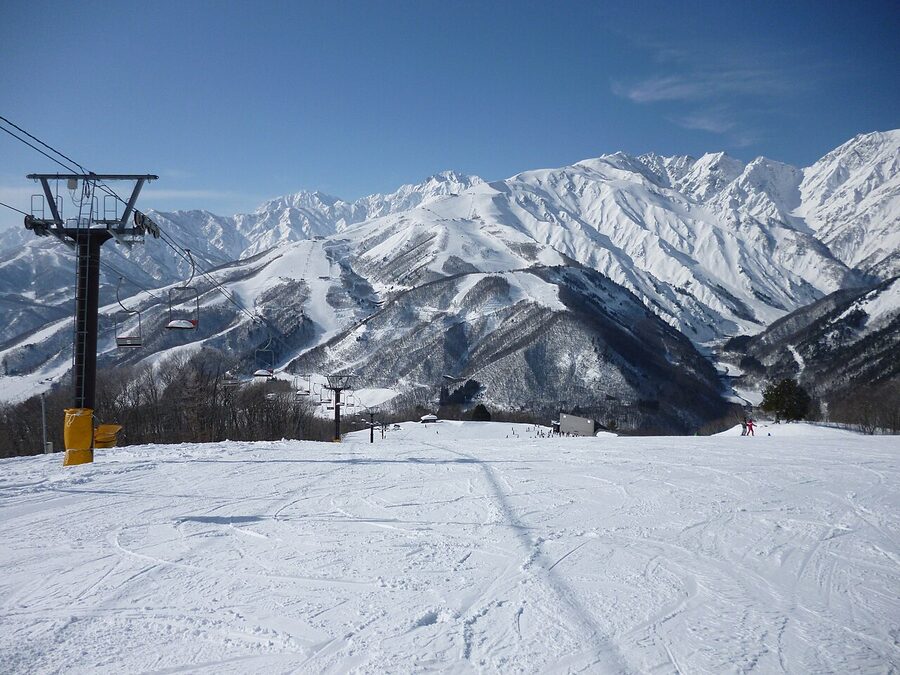
Winter is the headline season. The first lifts spin in early December, the snow gets serious by mid-January, and the latest resorts close in early May. Peak conditions sit in late January through mid-February, when the cold and the snowfall both stack up. By March the snow is still deep but the days are warmer and the crowds thinner. Most international visitors come in January.
The ten resorts of Hakuba Valley
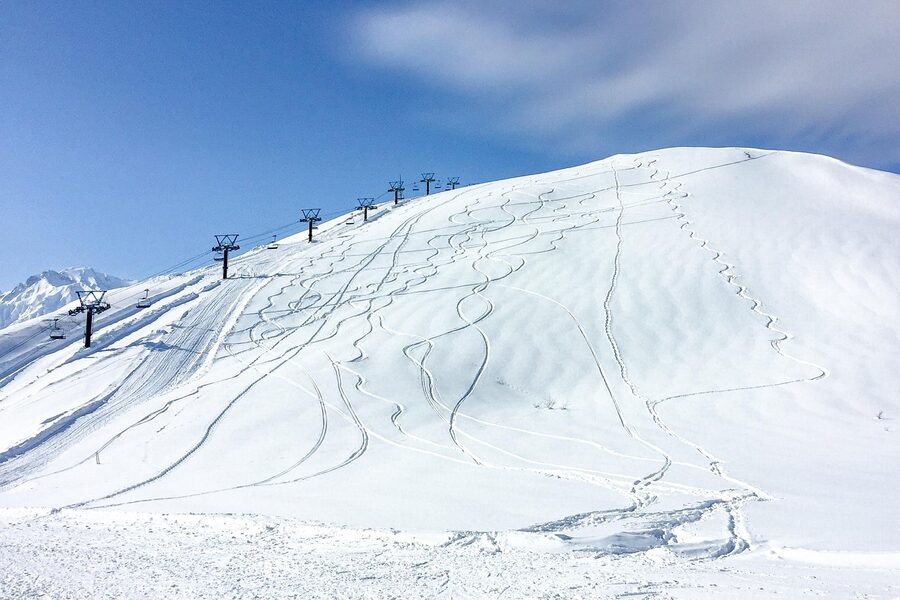
The valley’s ten ski areas (running roughly north to south: Cortina, Norikura, Tsugaike, Iwatake, Happo One, Hakuba 47, Goryu, Sanosaka, Kashimayari and Jigatake) share a common lift pass and a free shuttle network. Most are not connected on snow. The exceptions are Cortina + Norikura (lift connection at the top) and Hakuba 47 + Goryu (also linked). To ski more than one resort in a day you usually take the bus.
Happo One
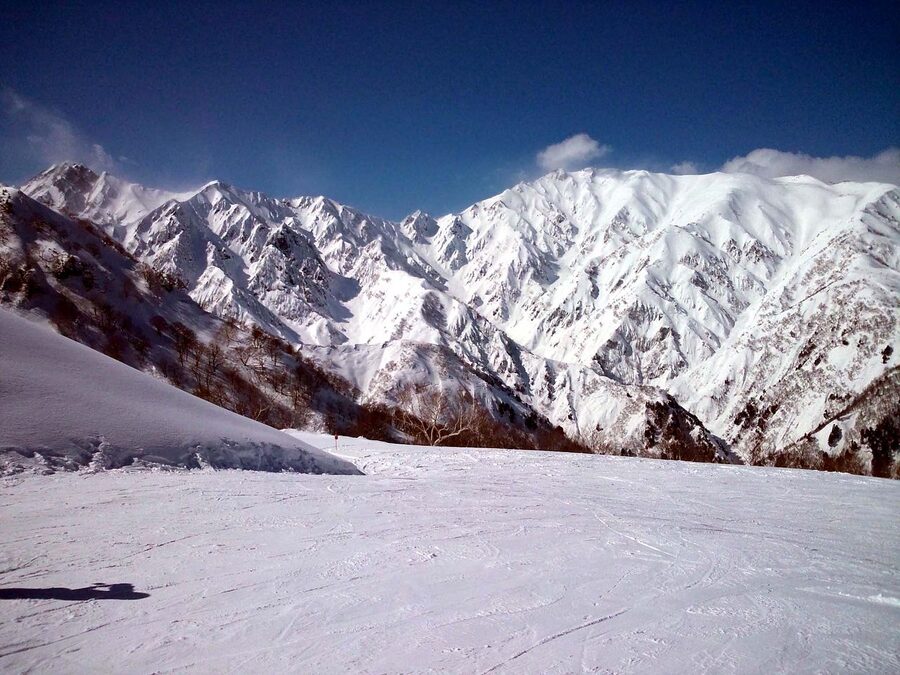
Happo One (pronounced “oh-nay”, not “one”) is the biggest, the most famous, and the one with the alpine views. It hosted the 1998 Olympic downhill and super-G. The terrain climbs from 760m at the base to 1,830m at the top of the gondola, with another 200m of ridge accessible by chairlift in good visibility. On a clear day from the top of the Riesen quad you can see straight up the spine of the Northern Alps.
The downside: Happo is exposed above the tree line, so wind closures happen. The lower mountain is mellow groomed runs that suit families. The upper mountain is steeper, faster, and where the experienced skiers spend their day. The infamous Olympic downhill course is open to the public when conditions allow. It is genuinely steep.
Hakuba 47 and Goryu
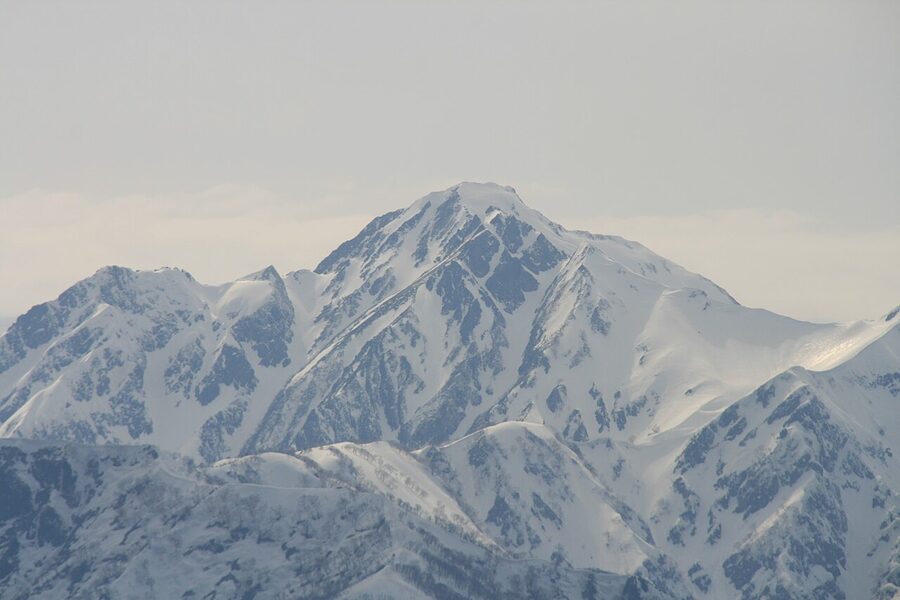
Hakuba 47 and Goryu share a single linked ski area sometimes called HAKUBA47/GORYU. The combined resort gives you a wide spread of beginner to advanced terrain on two distinct sides of the same mountain. Goryu is the older Japanese-style resort with a denser village at the base. Hakuba 47 is the newer side and the one with the long groomed runs and the freestyle park. Both are on the Epic Pass. The middle gondola serves the largest beginner area in the valley.
Tsugaike
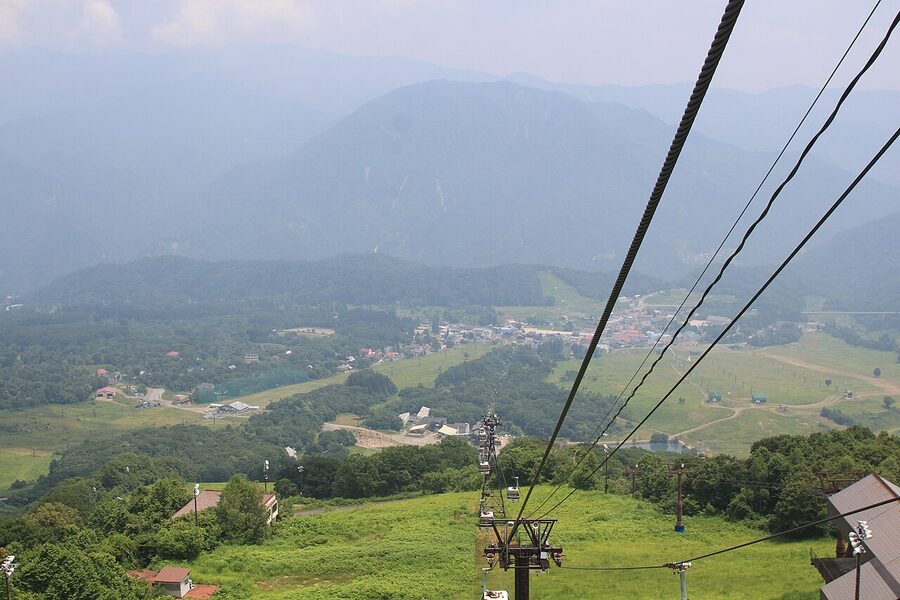
Tsugaike (full name Tsugaike Mountain Resort) is the gentlest of the big resorts and the best place in the valley to learn to ski. Long flat green runs spread across a wide bowl above the gondola mid-station. The English ski school here, Evergreen, runs group lessons in season. Above the trees, Tsugaike opens onto serious backcountry: the famous Tsugaike DBD (Double Black Diamond) terrain is reached by a single chair into open alpine, only opens when conditions allow, and has killed careless skiers more than once. Do not enter without a guide if you do not know the snowpack.
Cortina and Norikura
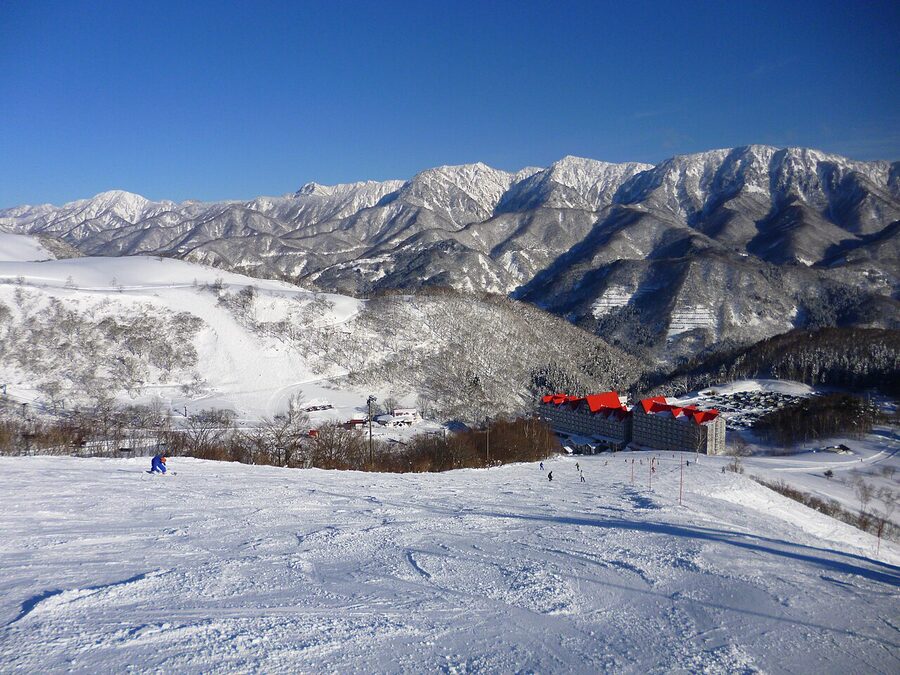
Cortina (officially Hakuba Cortina Kokusai) is at the far north end of the valley, technically in Otari village. It gets the deepest snow of any Hakuba resort because the storm track from the Sea of Japan dumps first as it hits the mountains. Cortina is also one of the few resorts in Hakuba where tree skiing is officially permitted in designated zones. The downside is everyone knows. On a powder day Cortina can be the busiest place in the valley by 8am, and the marked tree zones get tracked out fast.
Norikura (Hakuba Norikura Onsen, not to be confused with the bigger Norikura further south) sits on the same mountain and connects to Cortina via lift at the top. Norikura is mellower, less crowded, and useful as a sneak route over to Cortina without queueing at the Cortina base.
Iwatake
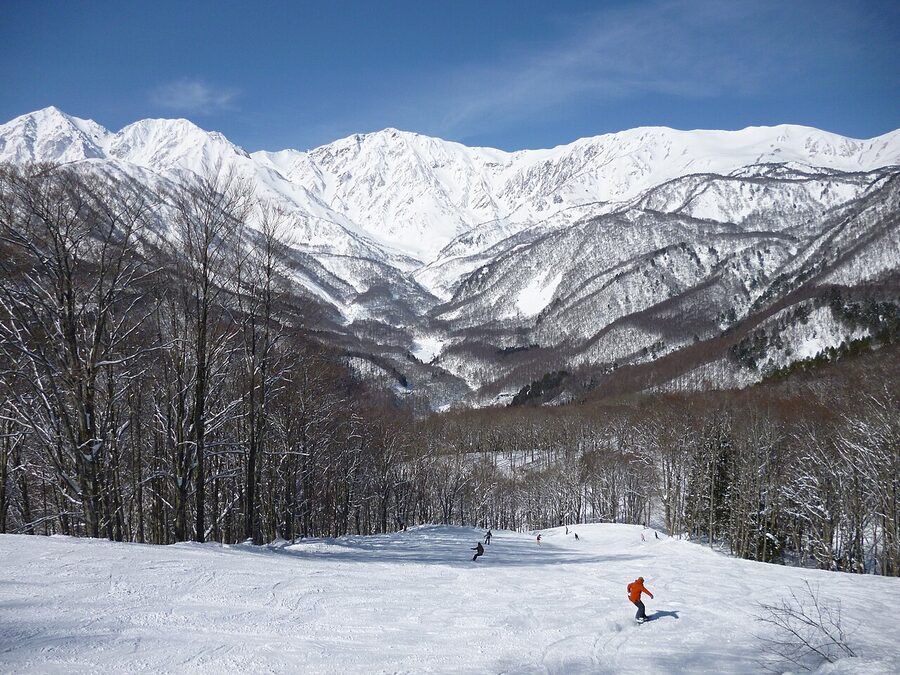
Iwatake (Hakuba Iwatake Mountain Resort) is the standalone hill in the middle of the valley, sitting opposite Happo One. It is smaller than the big four but has 360-degree views from the top and the famous Mountain Harbor terrace, which works in any season. In winter the ski runs are mostly intermediate groomers. The unique feature is the half-pipe and freestyle park: Iwatake hosts the freestyle scene and the snowpark riders.
The smaller resorts
Sanosaka, Kashimayari and Jigatake sit at the south end of the valley. They are smaller, cheaper, and almost entirely Japanese in clientele. If you want to ski without queueing and do not need challenging terrain, these are useful. Jigatake is the smallest and most family-oriented. Iimori, often counted as a half-resort, is the absolute beginner hill at the base of Happo and where the kids ski school operates.
Hakuba Valley pass: the economics
The Hakuba Valley All Mountain Pass covers all ten resorts plus the inter-resort shuttle. A 5-day adult pass runs about ¥33,500. A single resort one-day pass runs about ¥7,500. So the multi-resort pass pays off if you ski three or more resorts in five days, which most visitors who stay a week end up doing. Single-day single-resort tickets are mildly cheaper if you know exactly where you want to go and do not plan to move.
The bigger play: the Epic Pass. Vail Resorts owns the Hakuba Valley relationship, and an Epic Pass holder gets five free days at any Hakuba resort. If you are already buying the Epic Pass for North America, this is genuinely free Hakuba skiing. It is the single biggest reason Hakuba’s international numbers exploded in the late 2010s.
Off-piste, sidecountry and backcountry
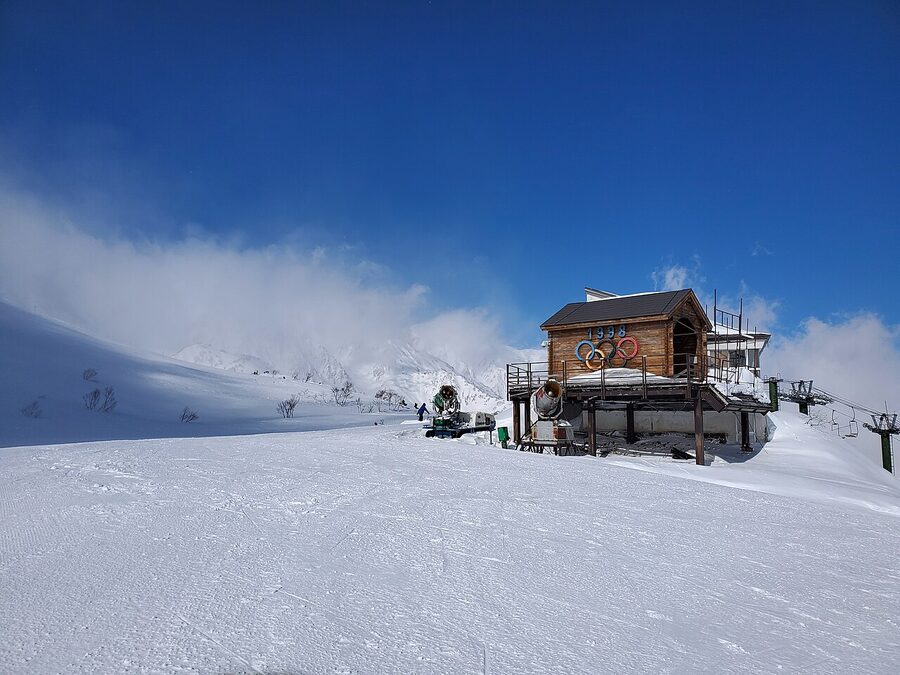
Most Hakuba resorts allow off-piste in marked tree zones. Cortina, Tsugaike and Hakuba 47 are the most relaxed about it. Goryu and Iwatake are stricter. The fresh powder in-bounds gets gobbled up within a few hours of opening on a powder day, but it is still better than at Niseko on the same morning because the crowds are slightly thinner.
The real Hakuba experience for advanced skiers is the sidecountry and backcountry above and beyond the lifts. Tsugaike’s Hakuba Backcountry Zone (the gated DBD) is the famous one. Beyond Happo One ridge sits a network of accessed-by-skinning lines. None of this is for solo skiers without local knowledge. Book a guide. The Hakuba avalanche history includes well-known names. The local outfit Evergreen and several smaller operators run guided backcountry days from about ¥25,000 per person.
Named runs worth seeking out
- Riesenslalom (Happo One): the Olympic super-G course, top to mid-mountain, fast and steep when groomed.
- Olympic Downhill (Happo One): the original 1998 Olympic course. Open intermittently. Plummets the full vertical of the resort.
- Lookout Course (Hakuba 47): long top-to-bottom intermediate cruiser with the best view in the linked area.
- Champion Expert Course (Cortina): short, very steep, often used as the entry to the marked tree zones.
- Tsugaike Hanano Mori: the wide groomed beginner run that proves Tsugaike’s reputation. Best shallow slope in the valley.
- Iwatake Skyline: the long valley-floor cruiser at Iwatake with the ridgetop view of the Hakuba Sanzan.
The international vs domestic experience
This is unusual for a Japanese ski resort: in Hakuba you can spend a week and barely speak Japanese. Most lift staff at the big resorts speak English. Rental shops have English forms. Echoland’s bars run in English from December to March. The trade-off is obvious: it does not feel like Japan in the way Nozawa or Norikura do. The Japanese ski culture is still here, but it is a layer underneath the international one. If you want to find it, head to Sanosaka or Jigatake at the south end and watch the local school groups in matching ski suits queue patiently for one slow chair. Or spend an afternoon at Happo Onsen, where the etiquette is unforgiving and English signs are minimal.
Summer in Hakuba
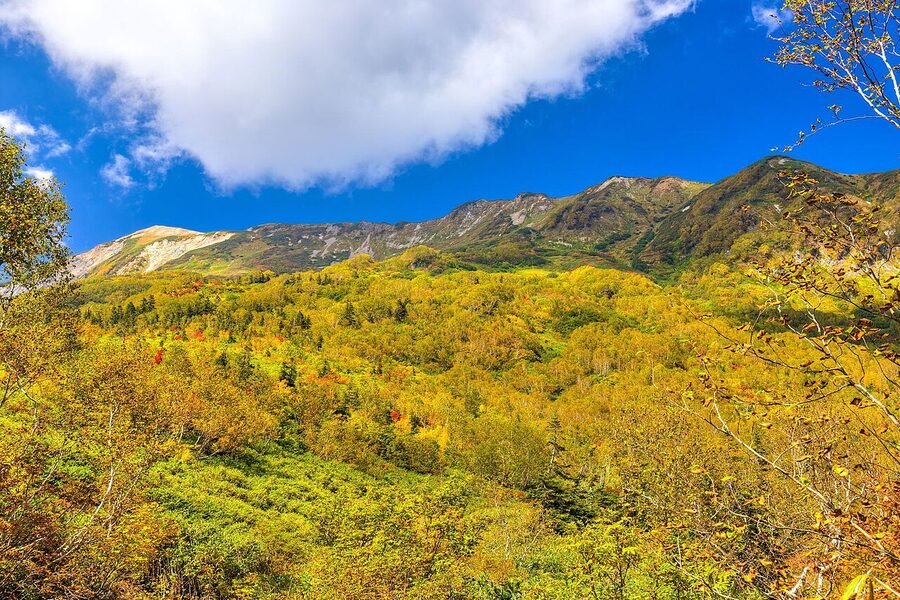
Hakuba in summer is a different town. The lifts that carry skiers in winter become hiking gondolas. The same Mountain Harbor that sells hot chocolate in February sells iced coffee in July. The mountains lose their snow above 2,500m by late June, and the valley becomes one of the easiest staging grounds for the Northern Alps.
The Northern Alps trailhead
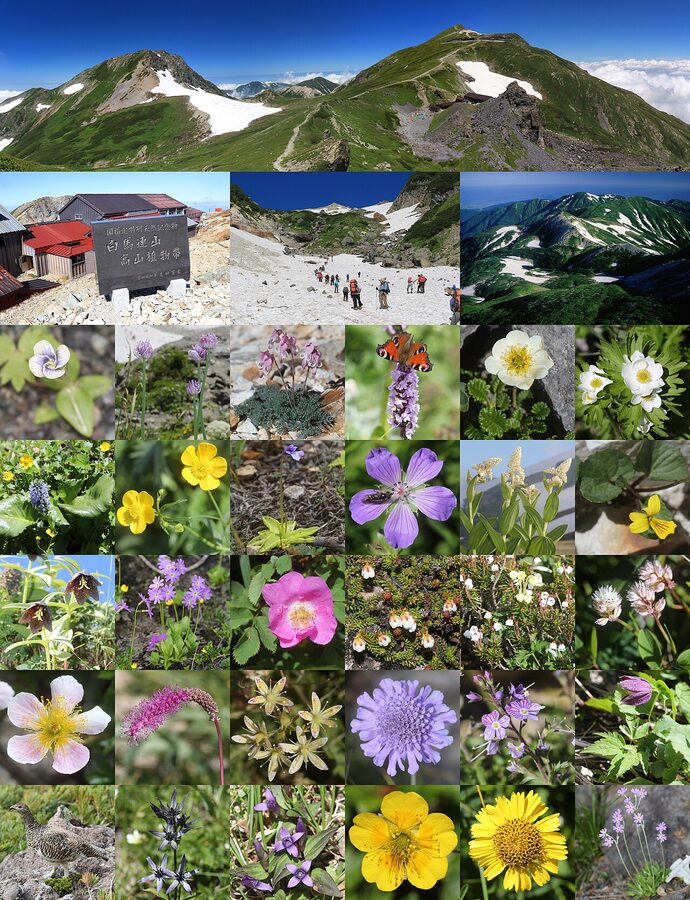
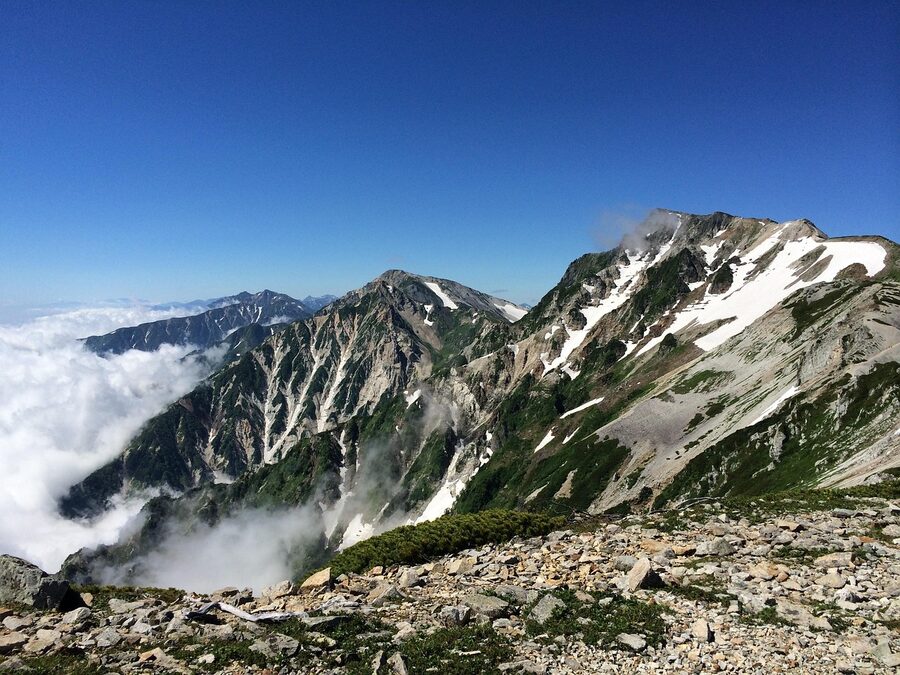
Hakuba is one of the four main entry points to the high Northern Alps. The trail up Shiroumadake (Mt Shirouma, 2,932m) starts at the Sarukura trailhead, climbs the Daisekkei snow gully (a permanent snowfield you walk up in late July, ice axe and crampons recommended), and reaches Hakuba Sanso, the iconic mountain hut at 2,832m. From there you can summit Shiroumadake in a 30-minute round trip, traverse the ridge to Yarigatake over several days, or descend to Tsugaike via the gentler western route.
Bookings for Hakuba Sanso are essential in July and August. See our guide on how to book a Northern Alps mountain hut for the system. Above 2,500m you should also read up on altitude sickness in the Japan Alps; it is rarely serious in the 2,900m range but the symptoms catch people out at the huts.
Happo Pond, the day-hike payoff
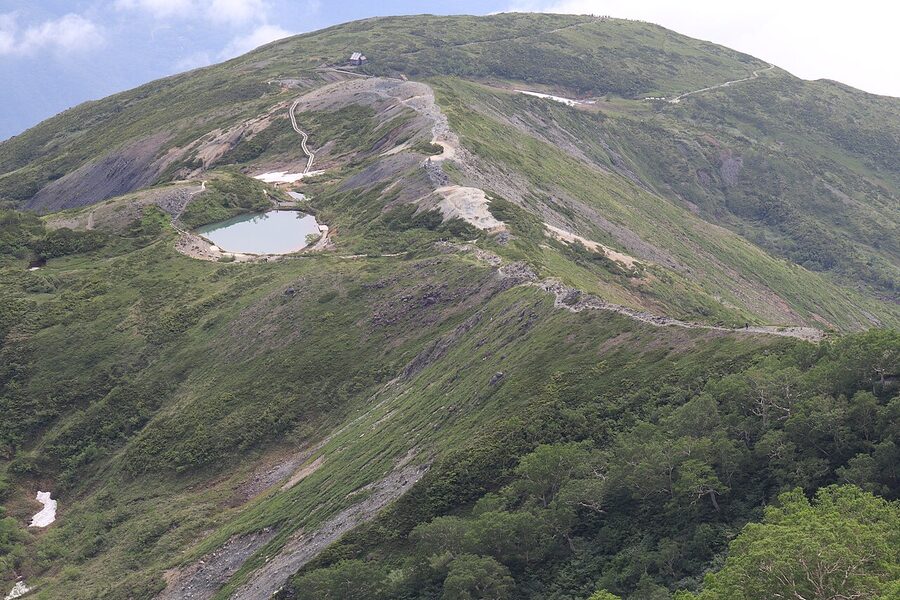
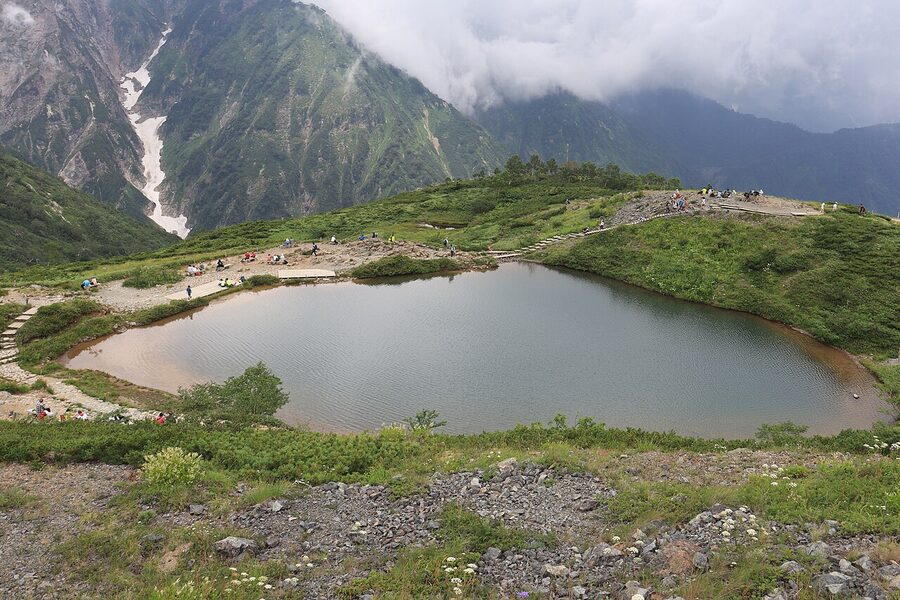
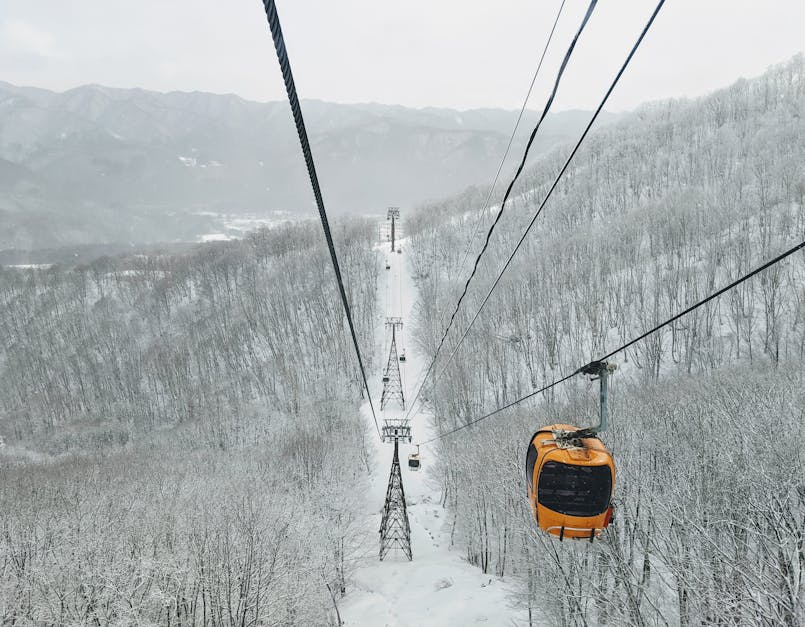
The single best day-hike in Hakuba for non-mountaineers is the walk from the top of the Happo Alpen Line up to Happo Pond. You ride the gondola plus two chairlifts (8:00 to 16:50, ¥3,400 round trip in summer) to Happo-ike Sanso at 1,830m. From there a marked path climbs the ridge for about 90 minutes one-way to reach the pond at 2,060m.
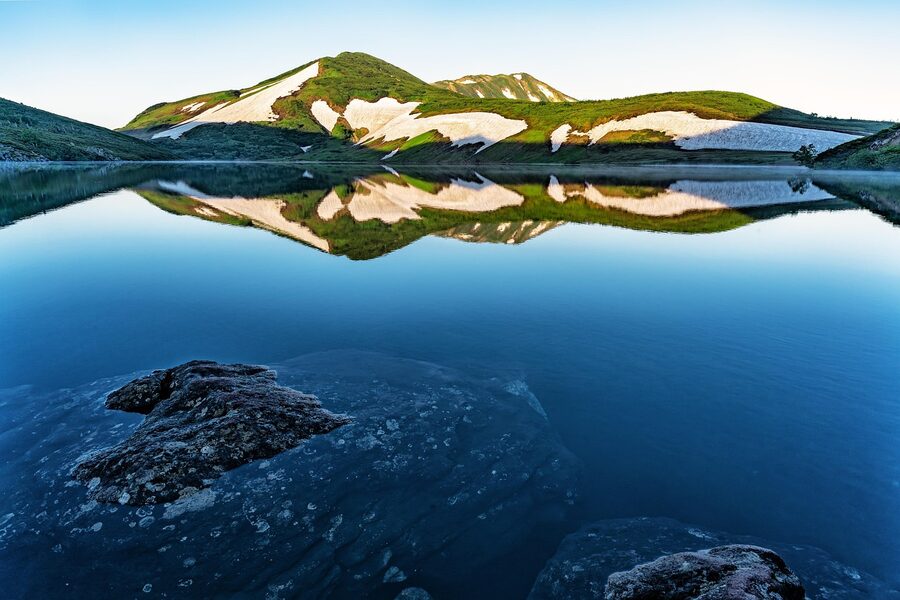
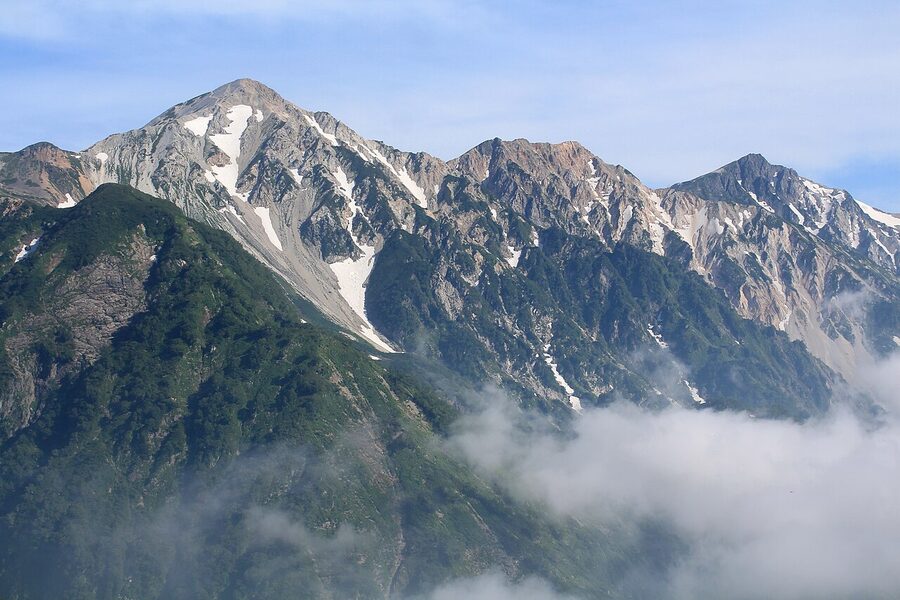
The reward, on a clear morning, is one of the most photographed scenes in the Japanese mountains: the three Hakuba peaks reflected in the pond. Get there before 9am for the still water. The walk is doable in trainers in good weather, but the upper section is rocky and the chains in places are not optional. Add a fleece even in August.
Tsugaike Nature Park
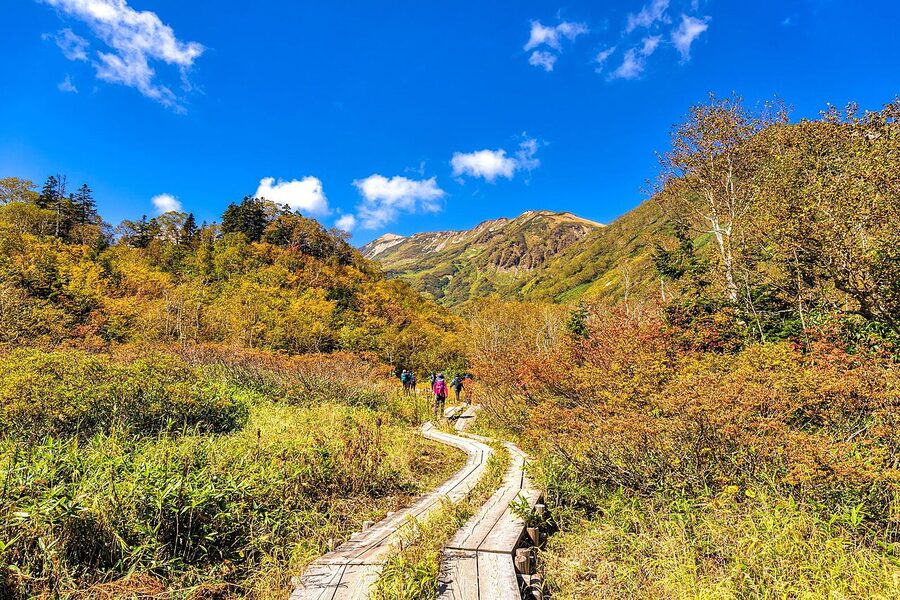
Tsugaike Nature Park (Tsugaike Shizen-en) is the gentlest mountain experience in Hakuba. Take the Tsugaike Ropeway to 1,900m, walk a 5km loop on raised wooden boardwalks through marshland, photograph the Hakuba Sanzan from a viewing platform, and ride back down. No gear needed. The wildflowers peak in late June and July (mizubasho skunk cabbage in June, kobaikeso false hellebore in July). Autumn colours arrive in early October. The park is open from late May to early November. The whole loop takes 2 to 3 hours at a relaxed pace.
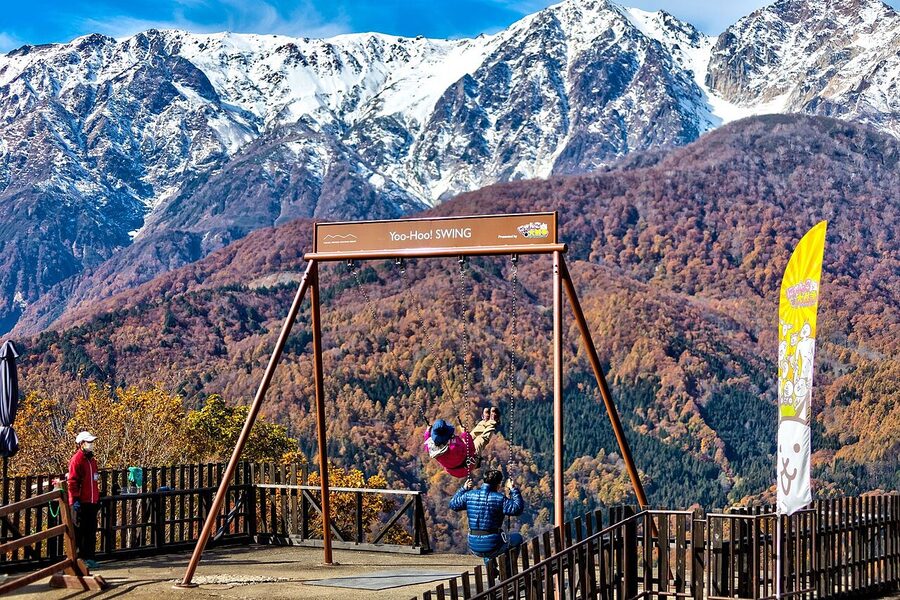
Hakuba Iwatake Mountain Harbor
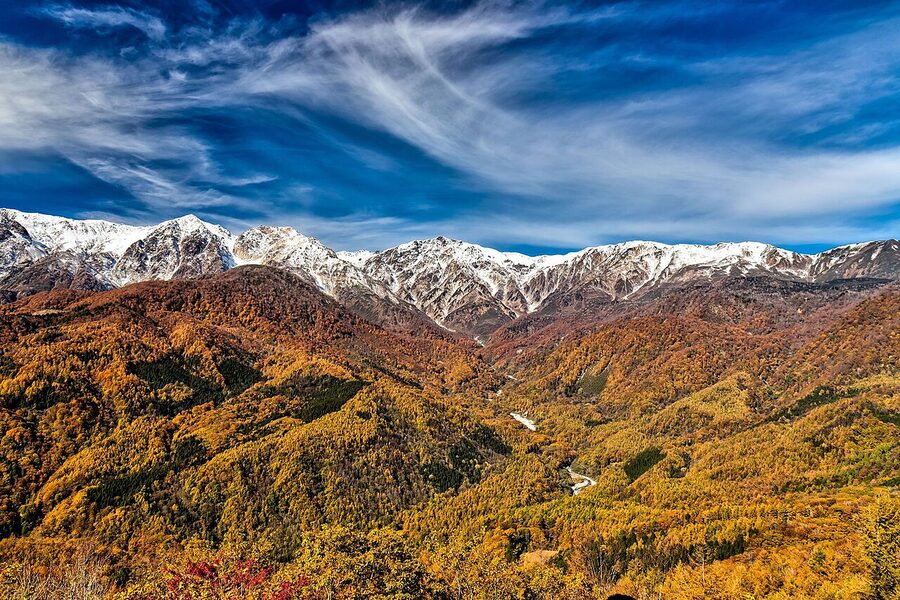
The Iwatake gondola (operating roughly 8:15 to 15:30 in summer, ¥2,400 round trip) climbs to the Mountain Harbor terrace, which is the single most-photographed mountaintop view in Hakuba. The terrace was built in 2018, the New York chain CITY BAKERY moved in shortly after, and the result is a wide deck over a 1,289m drop with the entire Hakuba Sanzan filling the horizon and good coffee in your hand.
Beyond the terrace, Iwatake in summer is a serious mountain bike park. The longest course is 6,900m with a 521m vertical drop, runs from beginner to expert, and bike rentals are available from Rhythm Japan or Spicy at the base. A separate path leads to Hakuba Mountain Beach, an artificial sand beach perched at 1,289m altitude with deck chairs and a view straight at the alps.
The unique paragliding scene
Hakuba is one of the best paragliding sites in central Honshu. The launch site at Iwatake gets reliable thermal lift in summer afternoons. Tandem flights with a certified pilot run roughly ¥13,000 to ¥18,000 for a 15 to 20 minute flight, including the ride up the gondola and your photos taken in flight. Hakuba Skysports operates from May to October. Wind closure happens; the safe-flight rate is roughly 70% on summer days. Book the morning slot for the steadier conditions.
The 1998 Olympic legacy
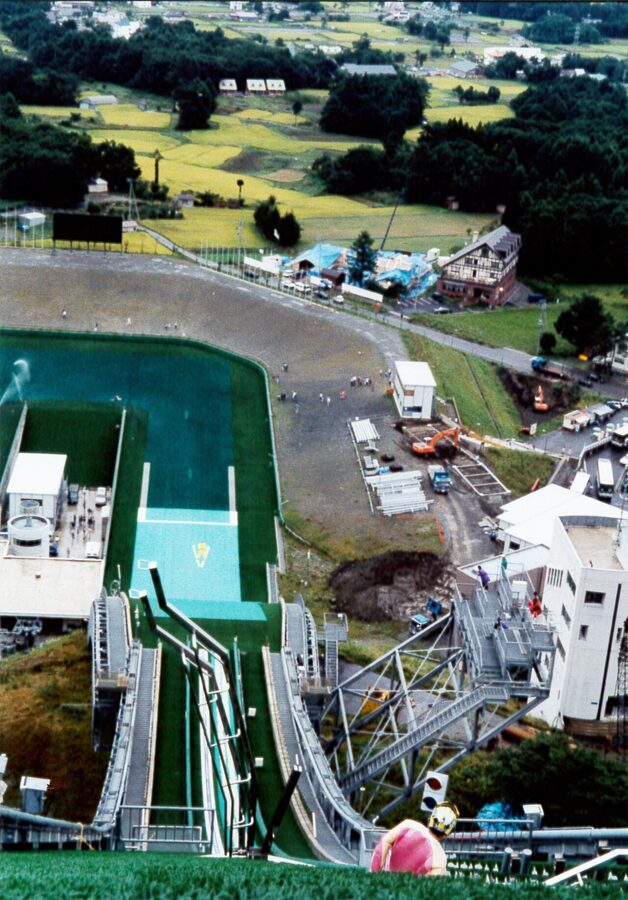
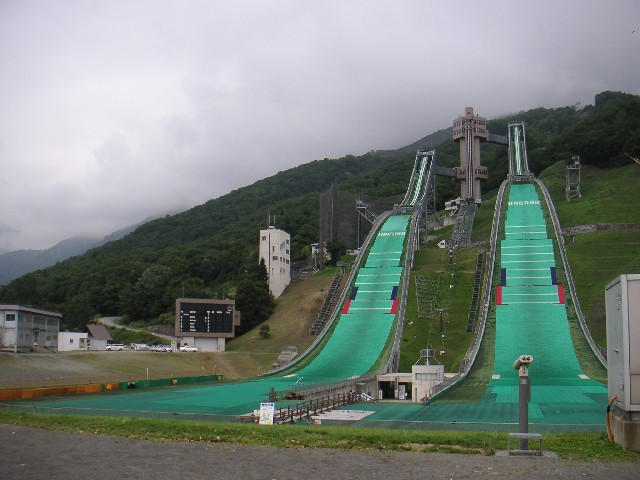
Hakuba hosted the ski jumping, downhill, super-G, combined, and biathlon events at the 1998 Nagano Winter Olympics. The two ski jumping towers at Happo (K90 and K120) are still in active use for World Cup events and are open to the public outside competition season. Take the lift to the top of the K120 inrun for a vertigo-inducing view straight down the jump and out across the village. Entry to the towers is ¥460. The on-site museum has the gold medals from 1998 and the original timing equipment.
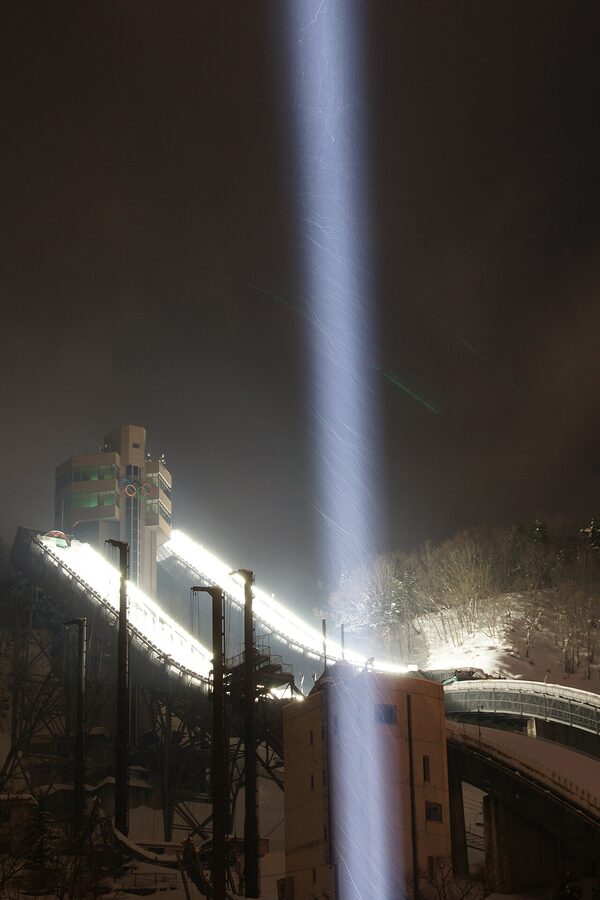
The Olympic downhill course at Happo One is sometimes opened to the public. When it is, it is the steepest groomed run in the valley and a notable bucket-list ski for advanced skiers. Check the resort’s daily run report.
Other summer activities
- Hot air balloon at sunrise: Hakuba Lion Adventure runs sunrise balloons from late April to early November, ¥2,900 adult, departing 5am or 6am. The slow vertical lift over the valley with the Shirouma ridge lighting up is the trip-defining shot.
- Cycling the valley loop: the Oito Line cycle path follows the Matsukawa river through Hakuba and on to Otari. About 30km return, easy gradient, rentable e-bikes available from Rhythm Japan in Echoland.
- Snow Monkey day trip: the Jigokudani Snow Monkey Park near Yamanouchi is 90 minutes from Hakuba by car or guided tour bus. Tours run year-round from Hakuba (about ¥16,500 with lunch and Zenkoji included) and remain one of the most-booked day trips in the valley.
- Day trip to Matsumoto: 60 minutes by Limited Express Azusa or 100 to 120 minutes by local train. The black-walled Matsumoto Castle and the Yayoi Kusama collection at Matsumoto City Art Museum make a good full-day combination.
- Ride to Nagano City and Zenko-ji: 70 minutes by express bus from Happo Bus Terminal. The 8th-century temple is one of Japan’s most important Buddhist sites and pairs naturally with a snow monkey trip.
Where to stay in Hakuba
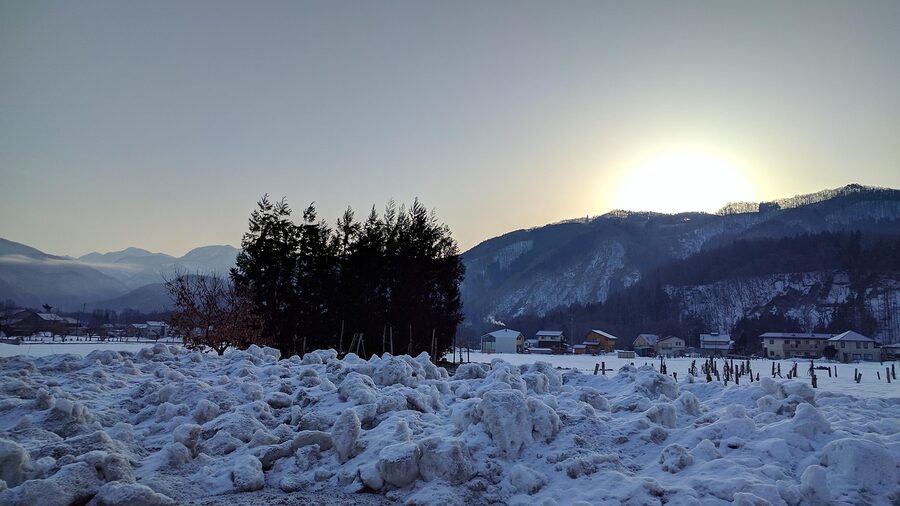
Hakuba accommodation breaks into clusters and the right one depends on what you want from the trip. Skip the maps for a moment and pick the cluster first; the specific lodge is then a smaller decision.
Wadano (ski-in, slightly Western)
Wadano sits on the slope above Happo and is the closest cluster to ski-in ski-out at Happo One. Western-style chalets dominate, including high-end self-contained houses managed by White Fox, Hakuba Hospitality and similar operators. Expect ¥30,000 to ¥100,000+ per night for a chalet sleeping 6 to 12. The trade-off is access: bus connections from Wadano to other resorts are limited, so book a chalet here only if you plan to ski mostly Happo or rent a car.
Echoland (Western, walkable, lively)
Echoland is the international bar street and the densest cluster of mid-range Western-style hotels and lodges. From here you can walk to twenty bars and restaurants and catch the free shuttle to any of the ten resorts in the morning. The 5-bedroom group lodges run from ¥60,000 to ¥150,000 per night for the property. Single rooms in mid-range hotels (Hotel La Neige, Lodge Nagano, etc.) sit around ¥15,000 to ¥25,000 per person per night with breakfast.
Happo (close to bus terminal, mixed style)
Happo Village proper is between Wadano and Echoland and is the home of the bus terminal that serves the whole valley. Limited slopeside accommodation, very good bus access. Some traditional ryokan survive here: Happo Onsen Ryokan and Tabist Hakuba Hifumi both offer the futon-and-kaiseki experience at ¥15,000 to ¥30,000 per person with two meals. Book early, the deluxe ryokan rooms sell out by October for the following winter.
Misora (quiet ryokan)
Misora sits to the north of central Hakuba and is the Japanese-traditional cluster. A handful of small ryokan, almost no nightlife, and the best spot for a couple who want kaiseki dinners and onsen baths instead of bars and pizza. Senjukaku and Sierra Resort sit in this area.
Goryu and Tsugaike base areas
If you plan to ski only Goryu/Hakuba 47 or only Tsugaike, staying directly at the base of one of those resorts gives you ski-in convenience at the cost of nightlife and shuttle flexibility. Tsugaike has more ski-in accommodation than any other resort in the valley. Goryu has the village atmosphere and a few small ryokan in the base hamlet.
Booking and prices
December and January peak prices are 2 to 4 times shoulder season prices. Book Wadano and Echoland chalets by August for the following winter. Mid-range hotels in Echoland have more flexibility and often release rooms in late November. Off-peak (late February, March, summer) prices drop sharply. Cross-check rates on Booking.com and Agoda; both have the bulk of the lodges, the Japanese-only places usually only on Booking or direct.
What to eat in Hakuba
Hakuba’s food scene is the best of any ski resort in central Japan, and that has nothing to do with traditional Japanese cuisine. International chefs followed the international skiers in the late 2000s and the result is a small valley with genuinely good Italian, French, Indian, Mexican, Thai and Korean alongside the expected ramen and izakaya.
Ramen and soba
The local soba flour is good (Nagano sits in soba country) and a handful of small soba shops serve the regional shinshu soba in cold dipping or hot broth form. Hakuba Soba Kura in Echoland and Soba Restaurant Yamagami in Happo both run lunchtime queues. Average bowl ¥1,200 to ¥1,800.
Ramen-wise, Mimi in Echoland is the late-night standby that ski-instructor Australians have made famous. Order the miso ramen and a beer. Hakuba Ramen in Happo serves a richer tonkotsu. Both run ¥1,000 to ¥1,500 a bowl.
Izakaya and yakitori
Yakitori Bantan in Echoland and Hakuba Hifumi in Happo are the two reliable izakaya. Order yakitori sets, gyoza, and sashimi. Beer and sake. Expect ¥3,500 to ¥6,000 per person with drinks. Cash works. Reservations recommended in January.
The international scene
Pizzakaya serves wood-fired pizza, queues out the door from 6pm in January. UncleStevens does Mexican (the burrito is genuinely good). Mimi’s Indian opposite the bus terminal is decent for a curry-and-naan reset after three nights of izakaya. Bella Pizzeria in Wadano runs at the upper end. Mains run ¥1,500 to ¥3,000.
Bars
Echoland is the bar street. The Pub, Tracks Bar, Hakuba Pub Tipsy, Tipsy Pizza Bar: take your pick. Drinks are mid-range expensive (¥800 to ¥1,200 a beer). The local craft brewery Hakuba Brewing Company has a taphouse worth seeking out. Most bars run from 6pm to past midnight in season.
The onsen scene
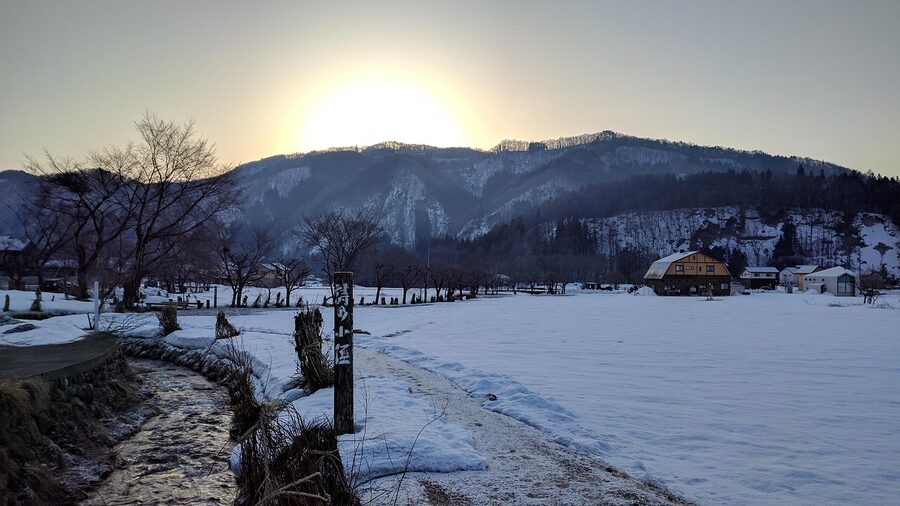
Hakuba sits on six natural hot-spring sources and the village runs five public day-use onsen plus several footbaths. Most of the lodges and ryokan have their own private baths drawn from the same sources.
- Happo Onsen (Happo no Yu): the main public bath in central Happo, ¥850 entry, open 10:00 to 22:00. Indoor and outdoor baths, basic facilities. Crowds after 5pm in ski season.
- Mimizuku no Yu: a smaller, quieter day-use bath with a good outdoor pool facing the mountains. ¥750. Open 10:00 to 21:00 except Wednesday closed.
- Obinata no Yu: the rustic option, an old wooden building with an outdoor bath fed by a different mineral source. ¥750.
- Sato no Yu: the hottest of the public baths, a dense smell of sulphur, popular with day-trippers from the resort.
- Hakuba Shionomichi Onsen Kurashita no Yu: the salt-spring bath, slightly different chemistry from the others, drawn from a deeper aquifer.
The onsen etiquette is unforgiving. Rinse fully before entering the bath. No bathing suits. Tattoos are still a problem at most baths in the valley; Mimizuku and Sato no Yu are the most permissive but check before stripping. For background on the broader regional scene, see our Japan Alps onsen guide.
Getting to Hakuba
Three sensible routes, depending on where you start.
From Tokyo
The fastest is Hokuriku Shinkansen Tokyo to Nagano (90 minutes, about ¥8,500 unreserved), then Alpico express bus Nagano Station to Hakuba Happo Bus Terminal (70 minutes, ¥2,000). Total time about 3 hours, total cost ¥10,500.
The cheapest is the direct Hakuba Shinjuku express bus, departing several times daily. About 5 hours 15 minutes, ¥5,000 one way. The bus is comfortable, the schedule is fixed.
The easiest with luggage is the Nagano Snow Shuttle from Narita or Haneda. Door-to-door door-to-accommodation, 5 to 6 hours, ¥15,000 one way per adult. In winter only.
From Matsumoto
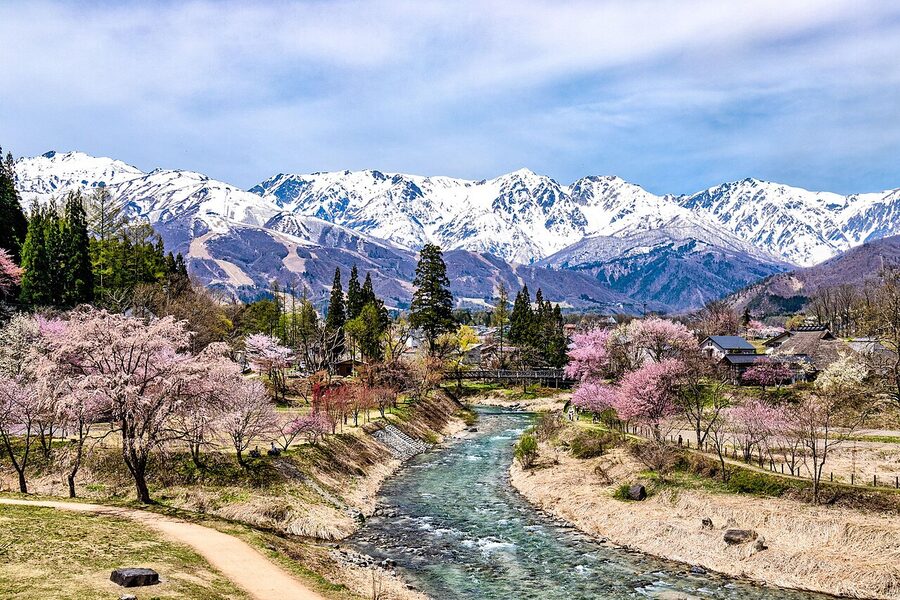
Limited Express Azusa, JR Matsumoto to JR Hakuba via the Oito Line, 60 minutes, about ¥4,500. Local train via the same Oito Line takes 100 to 120 minutes for ¥1,170 and is one of the prettiest local-train rides in Japan, hugging the Azusa river through alpine farmland. See our Japan Alps access guide for the full route options and seat-booking notes.
From Nagano City
Alpico express bus, Nagano Station to Hakuba Happo Bus Terminal, 70 minutes, ¥2,000. Multiple departures per day. Local train via Oito Line is also possible but takes 2 to 3 hours and requires a change at Matsumoto. The bus is the faster option.
By car
Hakuba is about 4 hours from central Tokyo via the Joshin-etsu Expressway (exit at Nagano IC, then 60 minutes on Route 19 and 148) or via the Nagano Expressway (exit at Azumino IC, then 70 minutes north on 147 and 148). Studless tyres mandatory in winter. The road from Otari to Cortina is steep and narrow with regular closures during heavy snowfall.
Inside the valley
The free Hakuba Valley shuttle bus connects all ten resorts and most accommodation clusters during winter. The schedule shrinks dramatically in summer. From mid-spring to autumn most visitors rent a car at Nagano Station to keep the option of moving between trailheads.
When to come
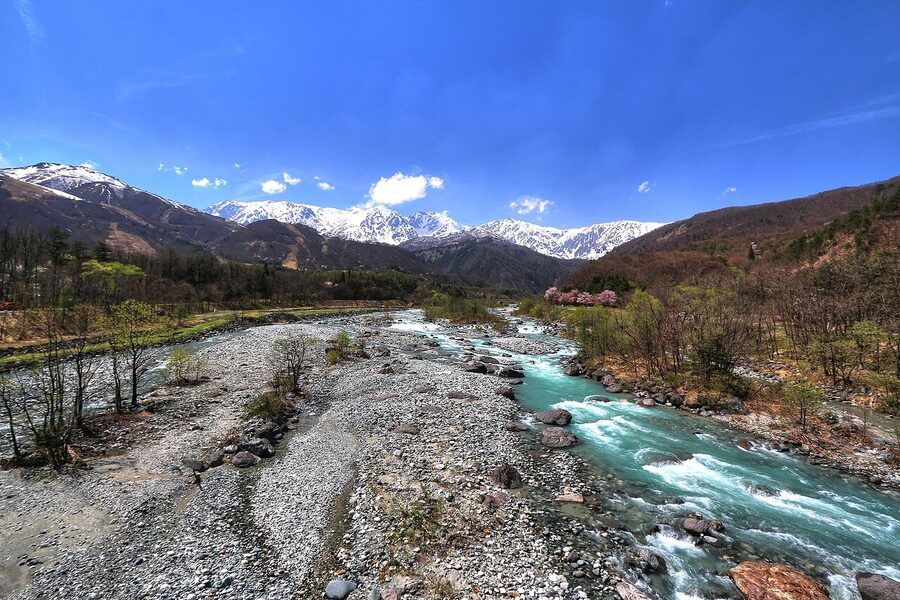
The valley has two real seasons (winter and summer) and two transitional ones (spring and autumn). Each has a different proposition.
Winter, December to early May
Lifts open early to mid-December. Snow is reliable from late December onwards. Peak conditions sit in the second half of January through mid-February, when the cold and the snowfall both stack. Crowds are heaviest during the first week of January (Japanese New Year) and the Lunar New Year week (late January or early February). For powder with smaller crowds, target the first two weeks of February or the second half of March. The latest resorts close in early May. Tsugaike’s upper bowl can hold snow into June some years.
Spring, late April to early June
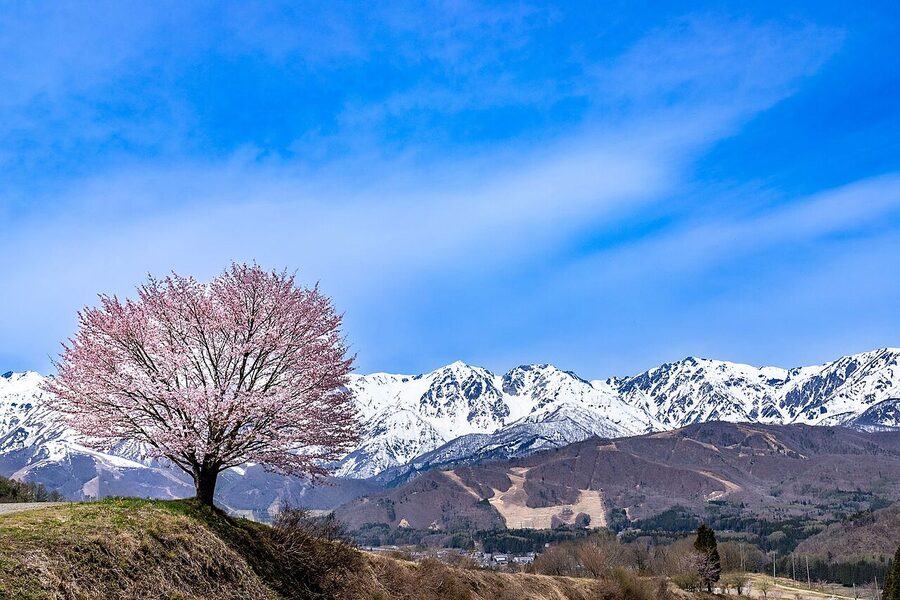
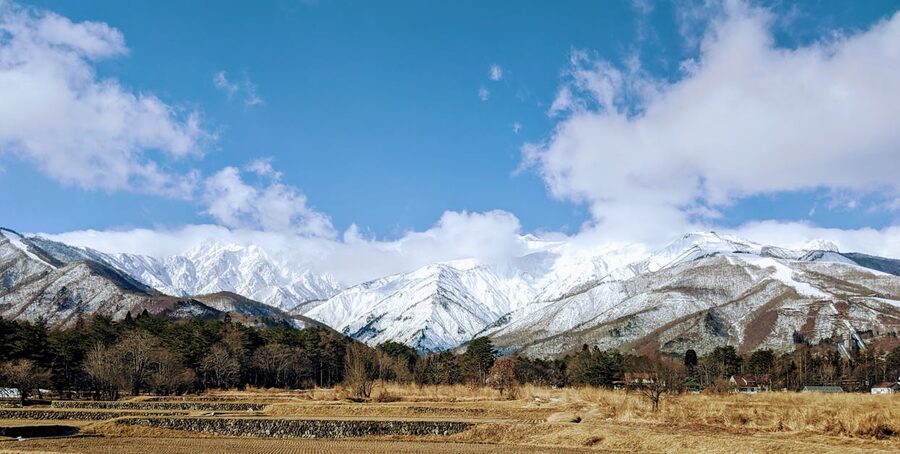
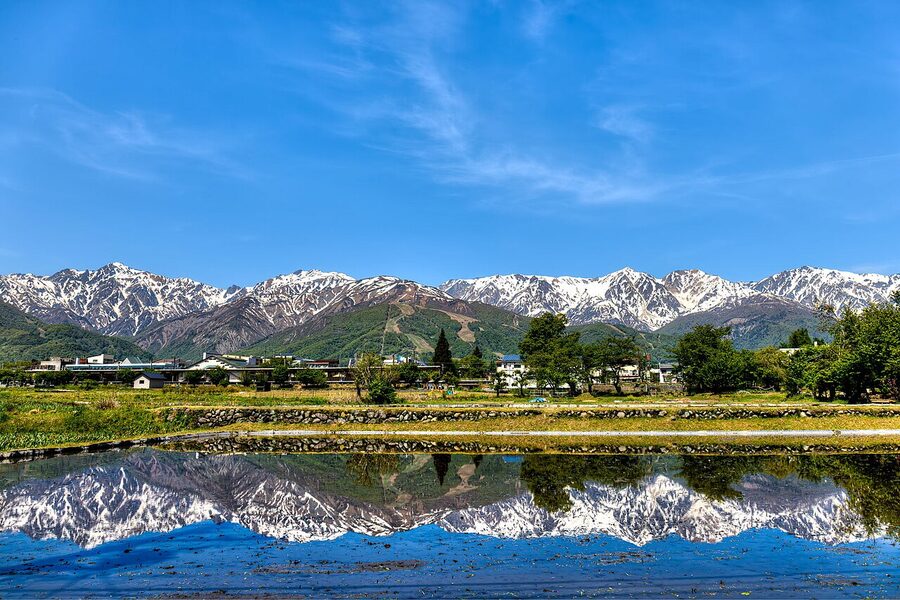
Cherry blossoms in the valley peak in late April. The combination of snow-capped peaks above and pink blossom below creates the iconic spring photographs taken at Hakuba Bridge, Oide Park and the Nodaira lone cherry tree. Spring skiing continues at Tsugaike and Iwatake into May. Hiking is not yet possible above 2,000m, the snow lingers.
Summer, June to September
Hiking season begins mid-June and runs until mid-October. July and August are the hottest months at the valley floor (mid-20s by day, cool nights), and the busiest at the trailheads. Rain is common in June and early July (the rainy season), and again in early September. Mid-July to mid-August is the most reliable weather window. Above 2,500m, daytime highs sit around 15 degrees and nights drop near freezing even in August.
Autumn, mid-September to early November
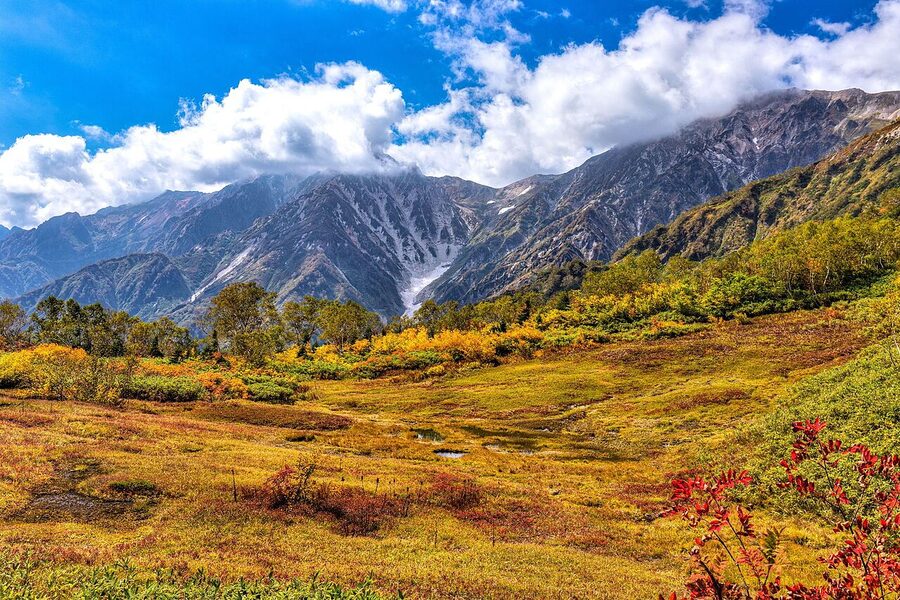
Autumn colours arrive at altitude in mid-September and reach the valley floor by late October. The Tsugaike Nature Park boardwalks are at their best in early October. The Iwatake Mountain Harbor sees a second peak season around the foliage. By early November the lifts close, the village quietens, and the valley sits in a few short weeks of mud-season before the snow arrives again.
What to combine Hakuba with
Hakuba sits in the upper-left corner of Nagano Prefecture and links naturally with the rest of the Japan Alps and the eastern Nagano destinations. A few combinations that work well:
- Hakuba + Otari: the next valley north. Quieter, deeper snow, the natural extension if you want to escape Hakuba’s crowds.
- Hakuba + Matsumoto: hour-long train south. Castle, museum, soba, decent base for two nights.
- Hakuba + Nagano City: the nearest big station and the home of Zenkoji Temple. Pair with the snow monkey day trip.
- Hakuba + Yarigatake traverse: the multi-day high-route from Hakuba Sanso along the spine of the Northern Alps to Yarigatake. Five to seven days, hut-to-hut, late July to early September.
- Hakuba + Mt Hotaka: the same multi-day high route extended south. The full Shirouma to Hotaka traverse is a serious 8 to 10 day undertaking.
- Hakuba + a wider Japan Alps ski trip: our regional skiing guide covers how to combine Hakuba with Norikura Kogen for spring skiing, or with Nozawa Onsen for the cultural ski-onsen experience.
- Hakuba + a 7 to 10 day Japan Alps itinerary: the standard route splits four nights in Hakuba with two nights in Matsumoto and two in Takayama.
The local soba shop owner I once asked about Hakuba’s best season looked at me for a moment before answering. “All of them,” he said. “But they pay me in winter.” That is the village in one sentence: built for snow, quietly extraordinary in summer, and only really appreciated by those who come back twice.