Most travel guides will tell you Shirakawa-go is best visited as a day trip. The Japanese guides, the local-tourist-board content, and a few of the better editorial blogs say the opposite, and once you understand why, your whole plan changes. The village empties out around 4pm. The day-trippers leave on the last Kanazawa and Takayama buses, the tour coaches roll down the road towards their hotels, and the gassho-zukuri farmhouses are left to a few overnight guests, the people who live there, and the kind of evening light that doesn’t show up in any guidebook photograph. That two-hour window, roughly 4pm to 6pm in winter, an hour later in summer, is the version of Shirakawa-go you’re looking at when you decided you wanted to come here.
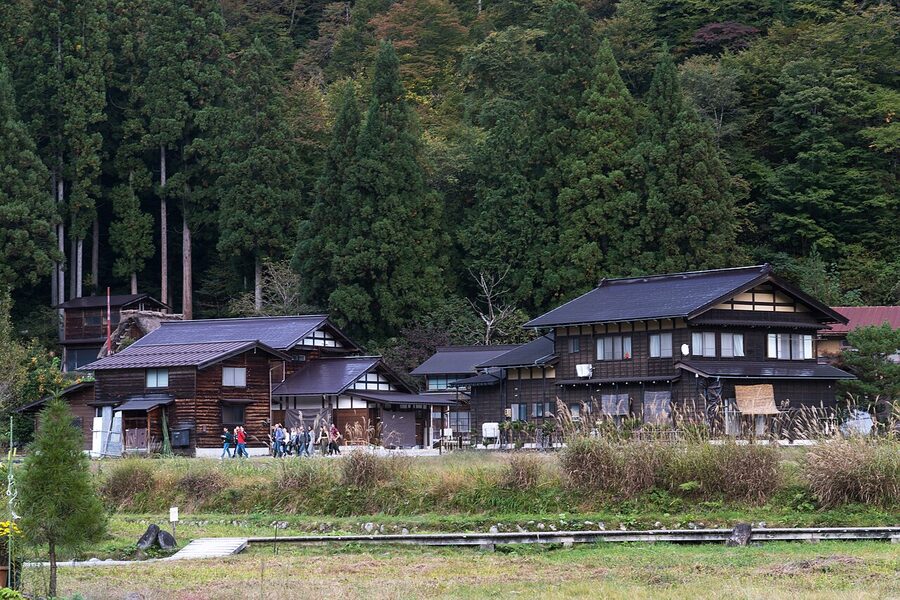
This is a guide to the Shirakawa-go that exists outside the day-trip window. And to the day trip itself, when that’s all you have time for. I’ll cover Ogimachi (the main village, the one nearly everyone means when they say “Shirakawa-go”), the open-air museum, the Shiroyama viewpoint, the houses that are worth your ¥400, the houses that aren’t, and the two smaller villages of Suganuma and Ainokura over in Gokayama that almost nobody ranks correctly. I’ll tell you when to come, how to come without a car, what the bus rules actually are, and where to eat a meal that isn’t queued for forty minutes by tour groups. And because the daytrip-vs-overnight question is the live one, I’ll cover when each version makes sense.
In This Article
- The basics: what Shirakawa-go actually is
- The hook: why everyone else gets the timing wrong
- Getting there without a car
- Driving in (and the parking situation)
- What to actually do in Ogimachi
- Shiroyama viewpoint, the photo spot
- Wada House (and which farmhouses are worth your time)
- Kanda House interior, the part most people miss
- Myozen-ji and the Hachiman Shrine
- The Doburoku Festival (mid-October)
- The main street and what to eat
- Deai-bashi and the open-air museum
- The four seasons (and which one to pick)
- Winter (December–February)
- Winter Light-up (selected nights, mid-Jan to mid-Feb)
- Spring (April–May)
- Summer (June–August)
- Autumn (October–mid-November)
- Where to stay (and the overnight question, settled)
- Day trip vs overnight: settled
- Suganuma and Ainokura: the Gokayama villages most guides skim past
- Iwase House: the one most foreign visitors miss
- Practical bits
- Budget for a day visit
- Cash, ATMs and cards
- What to wear
- Photography rules
- Toilets
- What goes well with Shirakawa-go
- The mistakes I see people make
The basics: what Shirakawa-go actually is
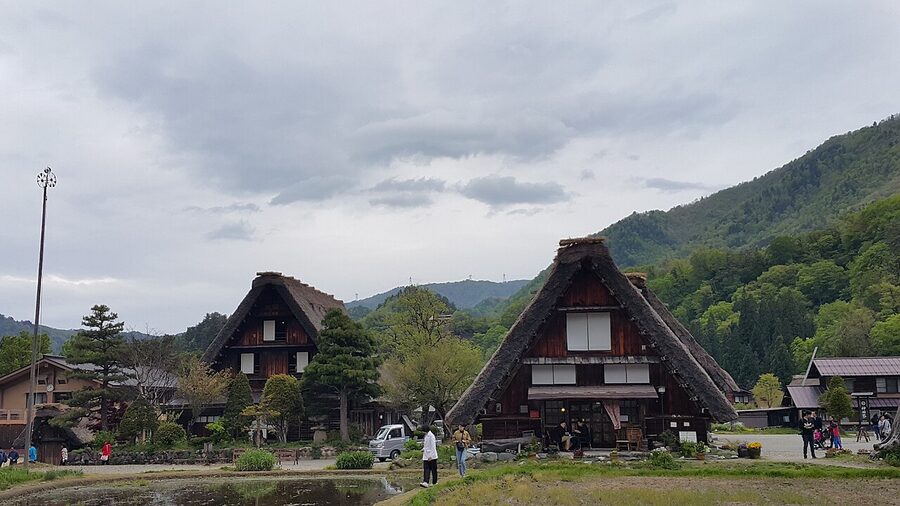
“Shirakawa-go” is shorthand for three villages, not one. The big one is Ogimachi, in Shirakawa Village, Gifu Prefecture. That’s the one in every photo. About an hour up the same valley, across the prefectural line in Toyama, are Ainokura and Suganuma, the two smaller Gokayama villages. All three were inscribed together as a UNESCO World Heritage Site in 1995, and all three share the same architectural lineage: the steep-pitched, A-frame, thatched-roof gassho-zukuri farmhouse, designed to shed three to four metres of winter snow and to give the family enough attic space inside to raise silkworms.
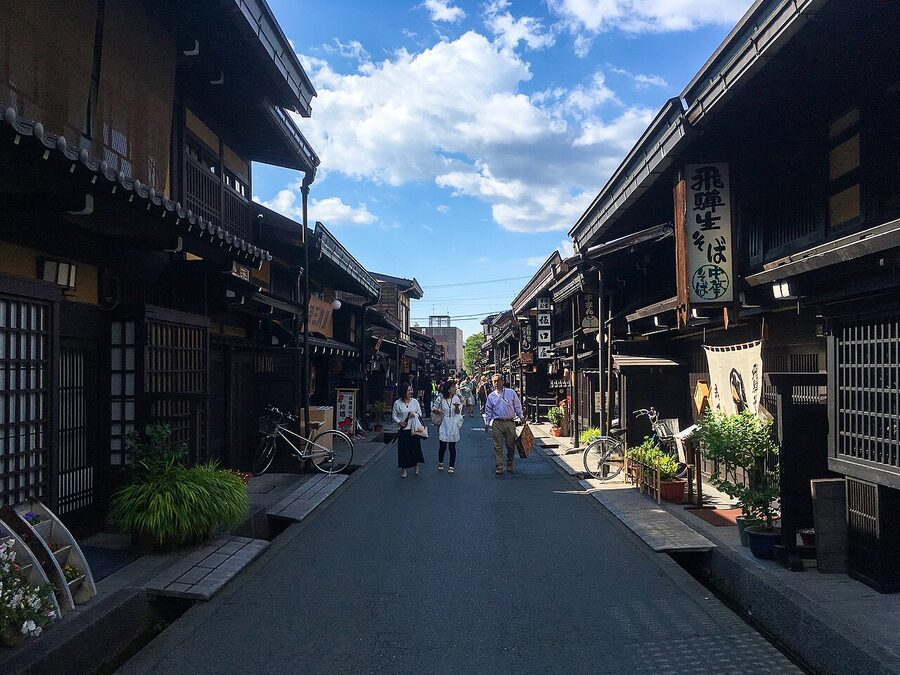
What’s special isn’t just the architecture. It’s that Ogimachi is still a working village. Around 700 people live there. The houses you photograph are private homes, with people inside them, doing laundry and watching television and walking to the village shop. Several have been converted into museums or guesthouses, but most haven’t. The first practical thing to know is that you cannot wander into a Wada House replica or a polished theme park. You’re walking through someone’s actual neighbourhood, and the village has hours (8am to 5pm) outside of which non-staying visitors are politely asked to leave.
The hook: why everyone else gets the timing wrong
Here’s what I see, every time. The Kanazawa morning express arrives around 10:30am. The Takayama buses dump their loads around 11. By 11:30, the main street through Ogimachi is moving slowly, photogenic shots from the Shiroyama viewpoint involve waiting, and the Wada House attic feels like a queueing system. By 1pm, half the village is eating Hida-beef skewers in the same block of street stalls. The 14:50 and 15:40 buses back to Kanazawa fill up. By 16:30, all the day-trippers are gone.
And then this happens: the tour buses leave. The shops start to close. The silver light off the snow or the rice paddies softens. Smoke rises from a couple of irori (hearth) fires inside the houses. A handful of overnight guests come out of their guesthouses for a walk before dinner. It’s the village in its proper register, and it lasts about ninety minutes before full dark.
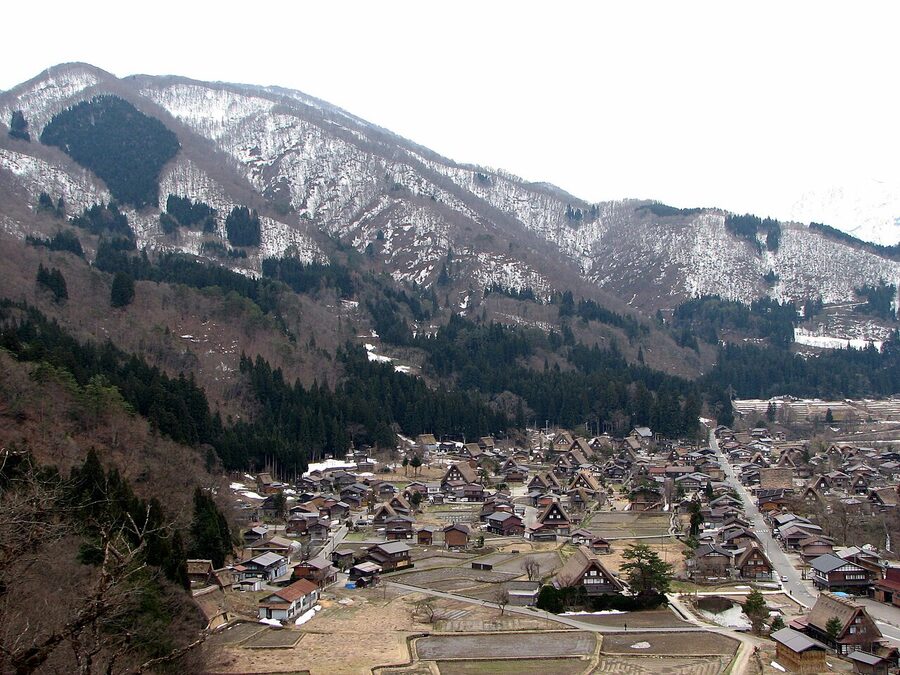
If you can swing it, stay overnight. You’ll see the village empty. You’ll have dinner at your guesthouse, a multi-course Japanese spread cooked over an irori in the same room you’re sleeping in. The next morning and have the place to yourself for an hour before the Kanazawa bus arrives. If you can’t stay overnight, take the latest bus out you can manage, and front-load your day so you’re at the Shiroyama lookout by 4pm rather than 11am.
Getting there without a car
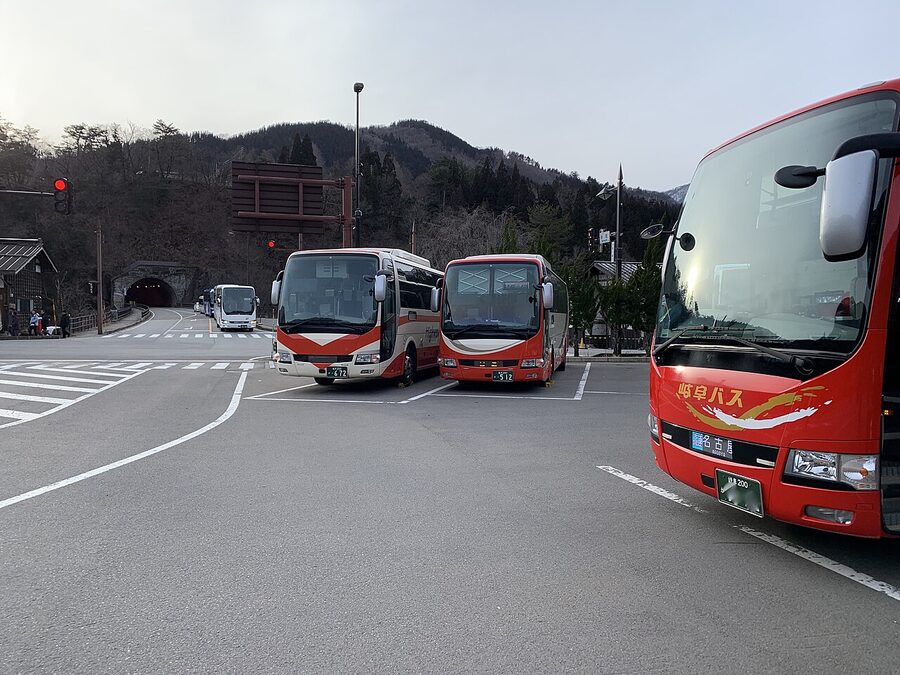
There is no train station within striking distance. The expressway bus is the only realistic public-transport option, and it runs from four cities. Travel times from each:
- Takayama (about 50 minutes). Operated by Nohi Bus from Takayama Bus Terminal (next to JR Takayama Station). The shortest, most frequent route. About ¥2,600 one way.
- Kanazawa (about 1h 15–25min. Direct services from Kanazawa Bus Terminal (outside Kanazawa Station, stop number 4). Around ¥2,000–2,200 one way. About nine departures a day.
- Toyama (about 1h 20min). Less frequent than the Kanazawa runs, but useful if you’re entering the region from the Hokuriku Shinkansen.
- Nagoya (about 2h 30–3h. Departs from Meitetsu Bus Center next to Nagoya Station. The longest of the four routes and most prone to weather delays in winter.
Three things that catch first-timers out:
One, reservations are mandatory on most runs and strongly encouraged on all of them. Book through Nohi Bus or Hokutetsu’s official sites. You can book a month in advance, and on weekends and through autumn-foliage season the late-afternoon Kanazawa-bound buses do sell out. The Takayama route has more capacity and more flex; the Kanazawa one books up first.
Two, you board with your reservation email visible on your phone or printed. There’s no ticket, just the seat assignment. Bus stops at terminal points are signed in English; the digital strip on the side of the bus says “This bus is for Shirakawa-go” or the destination city.
Three, luggage storage at Shirakawa-go is limited. The bus terminal has a small paid storage room behind the information centre with a list of items they won’t accept (anything liquid, anything large), and it fills up. If you’re moving cities, leave your bags at your origin station’s coin lockers or have them forwarded by Yamato courier to your next hotel. Our Japan Alps access guide walks through the routing options for getting in and out of the region by rail and bus, including how Shirakawa-go connects to Takayama and Kanazawa.
Driving in (and the parking situation)
You can drive. Shirakawa-go IC on the Tokai-Hokuriku Expressway is about 5 minutes from the village. The catch is that the central village is closed to non-resident vehicles, and you park on the western side of the Sho river at Seseragi-koen Parking. From there it’s a two-minute walk across the Deai-bashi bridge into Ogimachi.
Parking costs ¥1,000 for cars, ¥3,000 for buses, ¥200 for motorcycles, paid on exit. The lot has space for around 200 cars. In autumn-foliage weeks and during winter light-up dates the overflow lots fill, attendants direct you, and the wait at the gate can run thirty minutes. Operating hours are 8am to 5pm. There’s a tourist information building next to the parking lot with maps in seven or eight languages and toilets, so pick up a map there before you cross the bridge.
What to actually do in Ogimachi
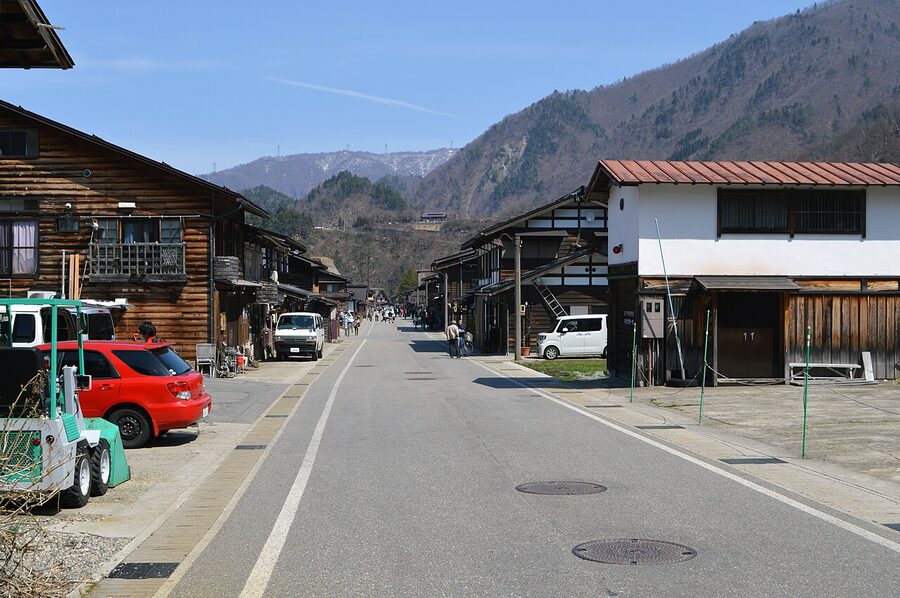
Ogimachi is small. The whole village is maybe 600 metres long and 300 wide. You can walk every street in two hours. The trick is choosing what to actually go inside, because the four or five paid attractions all charge similar amounts (¥300–600) and a few are noticeably better than the others.
Shiroyama viewpoint, the photo spot
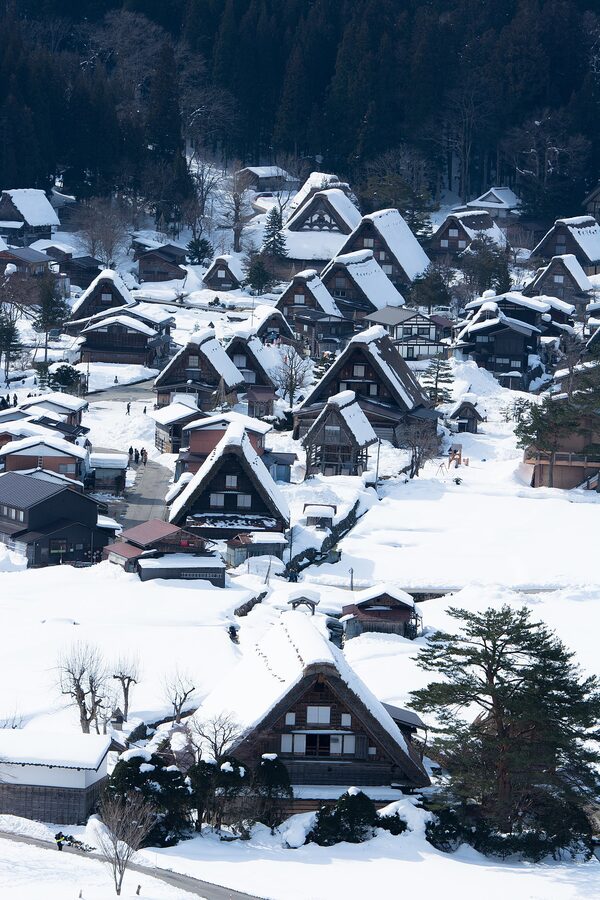
This is the one that justifies the trip on its own. Shiroyama (sometimes “Shiroyama Tenshukaku”) is the platform on the hillside above Ogimachi, on the site of a former mountain castle. It gives you the postcard composition: the village laid out below, the gassho roofs aligned along the river, and on a clear day the wall of the Hida mountains behind. There’s a free open-air observation deck (Ogimachi Castle Observation Point, the upper one) and a paid shop/cafe deck (Tenshukaku Observation, ¥200 small fee for the cafe consumption).
Two ways up. Walk it, about 15 to 20 minutes uphill from the village centre, on a paved road that’s manageable but a steady climb. Or take the ¥200 shuttle bus from near the bus terminal. I’d take the bus up and walk down. The descent is lovely (you cut down through the village from above) and the climb in winter snow is genuinely slippery.
One annoying detail: the staircase route up has been intermittently closed in recent years for bear sightings. Check at the information centre when you arrive. The road route is always open.
Wada House (and which farmhouses are worth your time)
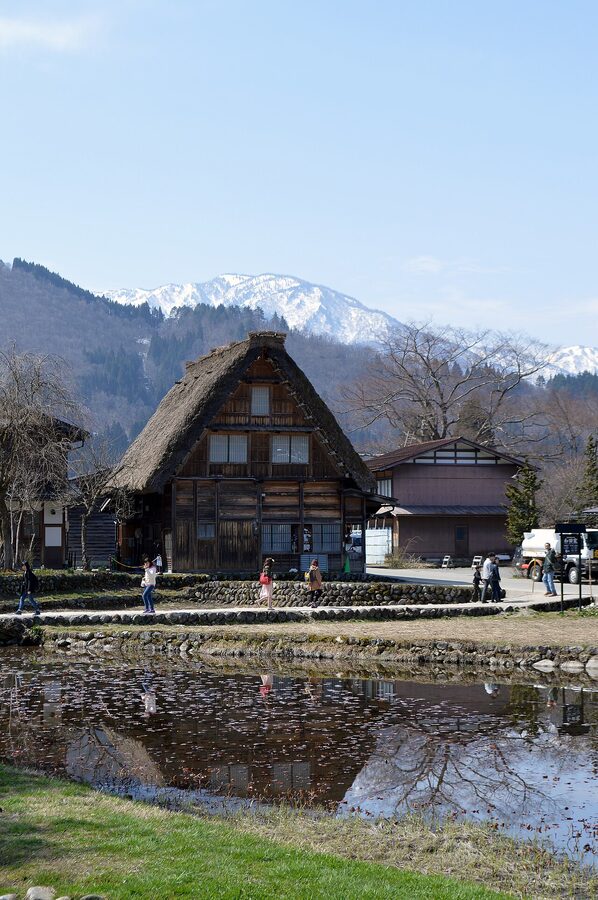
Of the gassho-zukuri houses you can pay to enter, four are routinely listed: Wada, Kanda, Nagase and the Myozen-ji Kuri. They’re all similar inside (heavy ground-floor beam structure, irori hearths, three or four upper floors of attic space with old farming and silk-cultivation tools). You don’t need to do all four.
If you only do one, make it Wada House. It’s the largest in the village, an actual nationally-designated Important Cultural Property (the only one in Ogimachi), and the family. Descendants of Edo-era village heads who traded silk and saltpeter, they still lives in part of it. Open 9:00–17:00, ¥400 adults / ¥200 children. The second floor opens onto a view of the rice fields out the back.
Kanda House (¥400, 9:00–17:00, closed Wednesdays) is the second pick if you want a contrast: it dates to about 1850, has an excellent attic display of silk-rearing tools, and a koi pond out front. Skip it on Wednesdays. Nagase House is the tallest, five storeys, and the family were physicians, so the medical equipment exhibits are worth seeing if you have any interest in Edo-period medicine. Myozen-ji Kuri (the temple’s old residence-turned-museum) is ¥300 and bundled with the temple’s main hall, which has a striking modern Buddhist mural by the painter Hamada Taisuke. Worth doing for the temple, which I’ll come to in a second.
If you’re picking only one, do Wada. If you have time for two, add Kanda or Myozen-ji depending on whether you want craft history or architecture-plus-temple. Three is enough; four is probably one too many and you’ll start to feel they’re repeating themselves.
Kanda House interior, the part most people miss
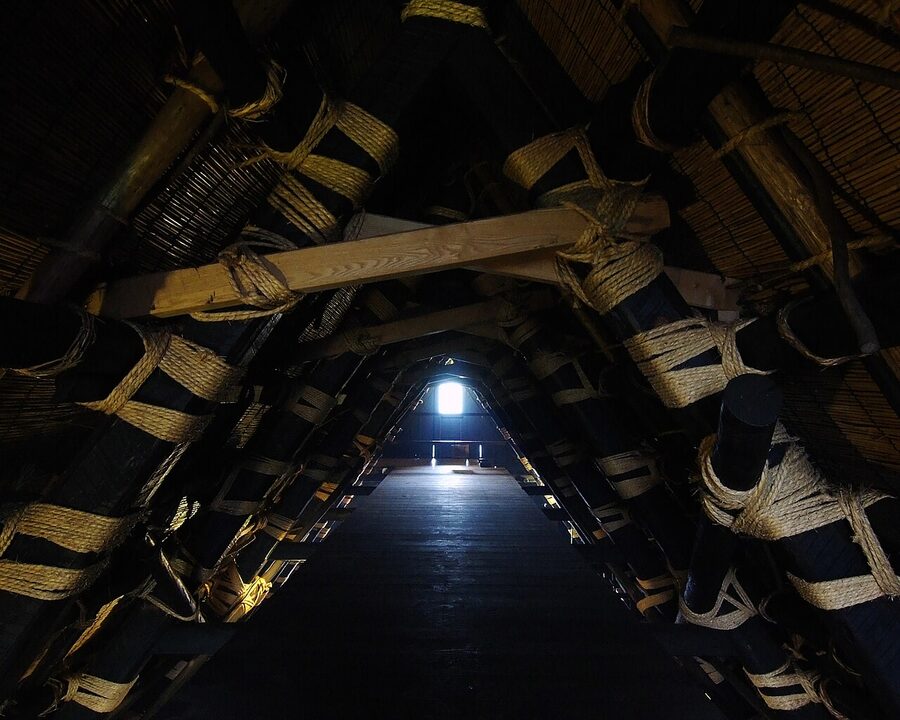
People miss the upper floors because they’re physical work to climb (steep wooden ladders, low ceilings on the top tier) and the staff don’t push you up. The reward is that you can stand inside the apex of a gassho-zukuri roof, look down through the floor lattices to the irori below, and see the smoke-blackened ceiling beams that have been hardening the wood for two hundred years. The construction logic of the building only makes sense from up there. Take your shoes off properly, mind your head, and go up.
Myozen-ji and the Hachiman Shrine
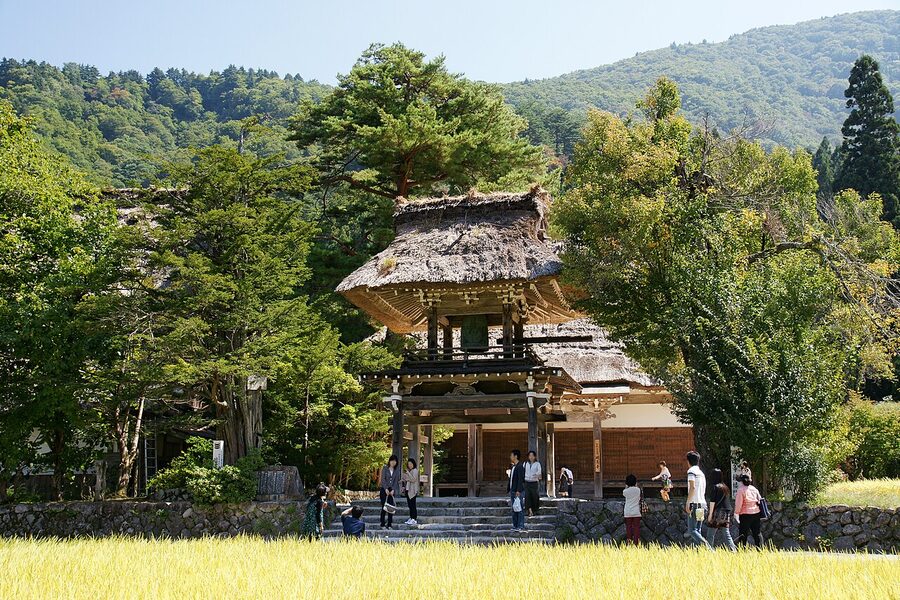
Myozen-ji (1748) is the village’s main temple and unusual in that the main hall, the kuri (priest’s residence) and the bell tower all use the gassho-zukuri thatched style. The bell tower in particular, with snow piled on its asymmetric roof in winter, is a quiet photograph that a lot of visitors walk past. The inside includes a Buddhist altar and modern murals by Hamada Taisuke (who has work at Toji and Daigo-ji in Kyoto). Open 8:30–17:00 April–November, 9:00–16:00 December–March. ¥300.
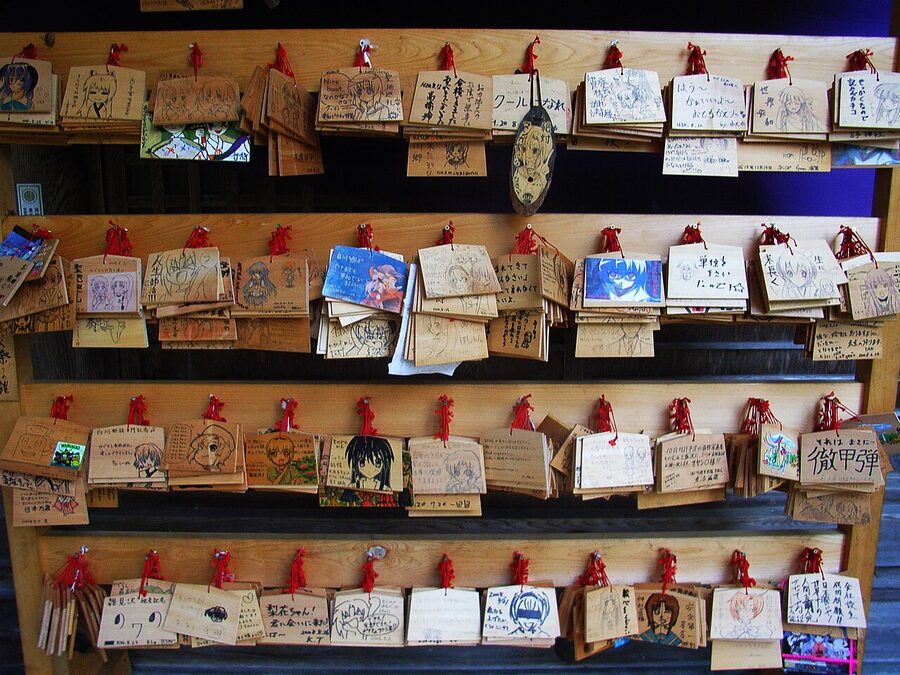
Right next to it is Shirakawa Hachiman Shrine. Founded sometime around 708–715 according to local records, this is the village’s main shrine, and it’s also where the Doburoku Festival is held every October. The grounds are free, and the cedar standing inside the precinct is several hundred years old, the village considers it a natural treasure. Most visitors miss it because it’s set back behind Myozen-ji. Don’t miss it.
The Doburoku Festival (mid-October)
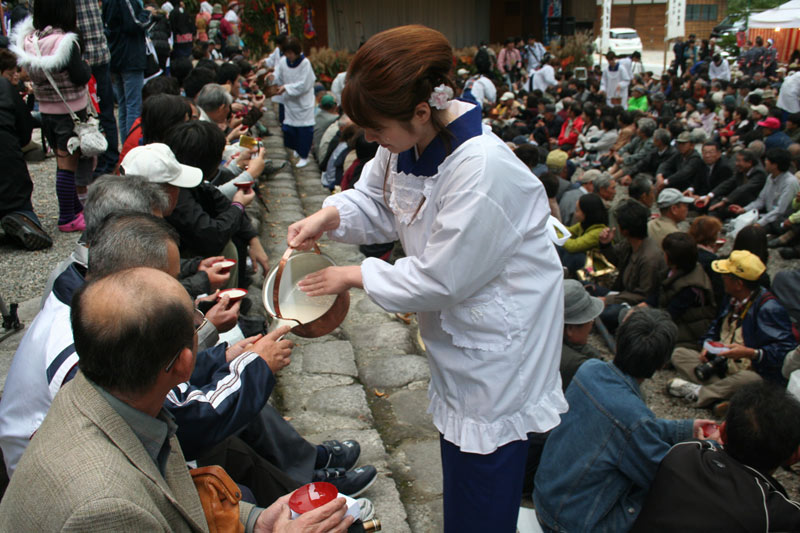
If you can time your visit, go in mid-October. The Doburoku Festival is a 1,300-year-old harvest rite at three local shrines, where unfiltered (cloudy, milky, slightly sweet, slightly sour) doburoku sake is brewed in the shrine itself and offered to attendees. Lion dances, shishimai performances, and a procession through the village. Mid-October also lines up with the Takayama Autumn Festival (9–10 October), which means you can plan a serious 4-night base in Takayama and catch both. If you’re already in central Japan in autumn, this is the timing to aim for.
The main street and what to eat
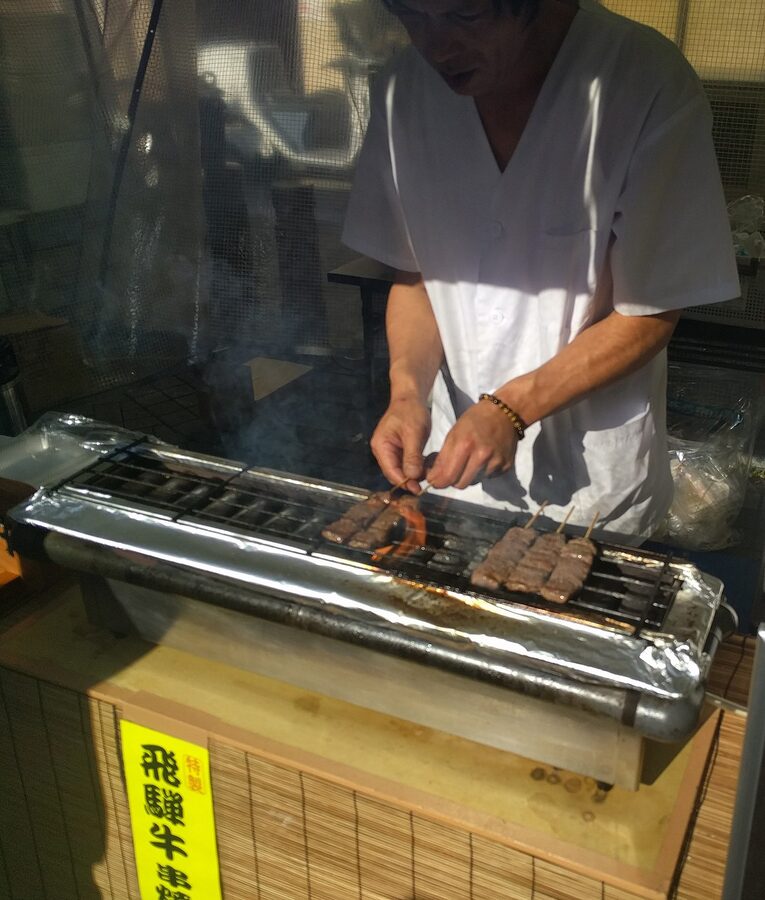
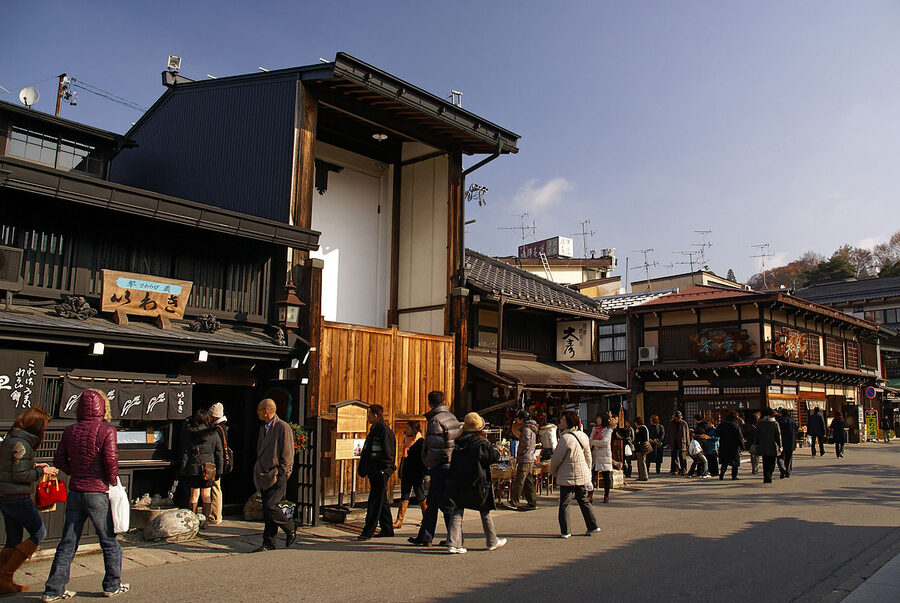
Shirakawa Kaido is the spine of the village. Down its 600 metres you’ll find the snack stalls and the souvenir shops and most of the food. A few specifics:
- Hida-gyu skewers, ¥500 to ¥800 a stick depending on cut. Multiple stalls. Pick the one with locals queueing if you can spot one.
- Hida-gyu croquette, crumbed and fried beef-and-potato. Roughly ¥400. A good cheap mid-morning bite.
- Gohei mochi, pounded rice on a flat skewer, painted with a salty-sweet miso-walnut sauce, grilled. ¥300–400. The real one.
- Mitarashi dango: soy-glazed rice dumplings, often sold by an elderly couple from a window stall on the eastern side near Kanda House. Cash only, ¥100 each.
- Soba and Hida-beef set meals: sit-down lunch in any of the converted-farmhouse restaurants. Expect ¥1,800–2,800 for a teishoku set.
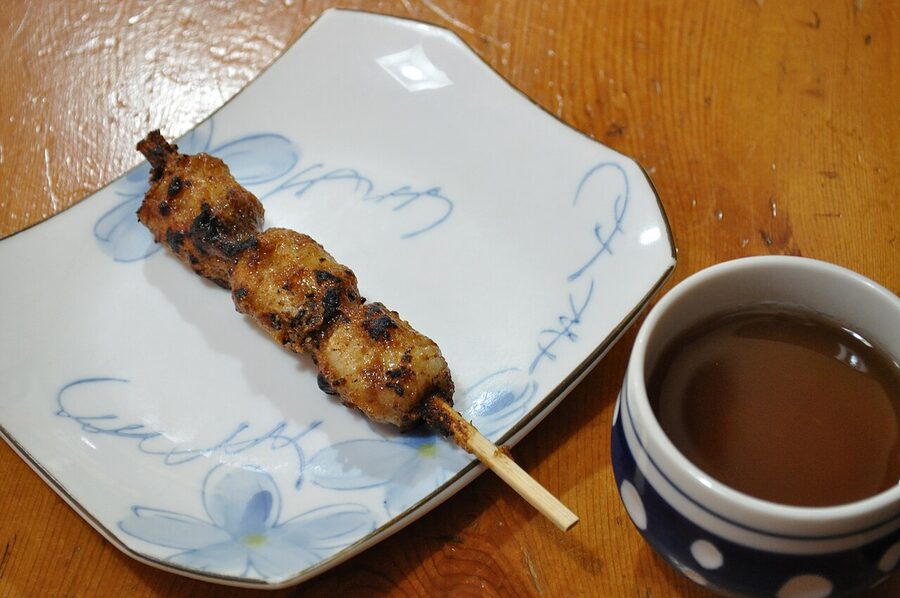
Two practical notes. The village is mostly cash-only, especially the small stalls. There are a couple of ATMs near the bus terminal but they don’t always take foreign cards, so bring yen with you. And the locals don’t walk and eat. Stand at the stall, eat, throw the stick in the bin, walk on. You’ll see signs about it. It matters.
If you have a longer afternoon and want a real meal, a 30-minute walk north of the village core takes you to Zundou, a small ramen shop with limited posted hours and no English menu. The miso ramen is genuinely good. If you’re willing to navigate Japanese signage and accept that the shop may be closed when you arrive, it’s worth the walk. If you’re not, eat in the village and don’t worry about it.
Deai-bashi and the open-air museum
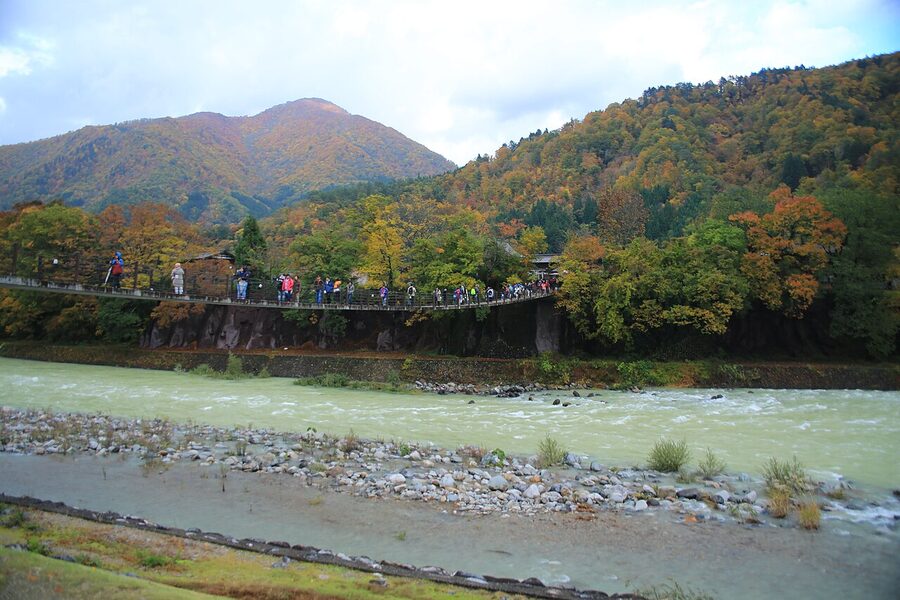
Deai-bashi is the pedestrian suspension bridge that connects the parking area to the village. 107 metres long, deck about 20 cm thick, central span 10 metres above the Sho river. It won the Japan Society of Civil Engineers’ Design Award in 2003. The brown handrails and the way it dissolves into the trees from above were specifically engineered to disappear into the landscape. It also wobbles, especially when a tour group crosses together. That’s deliberate.
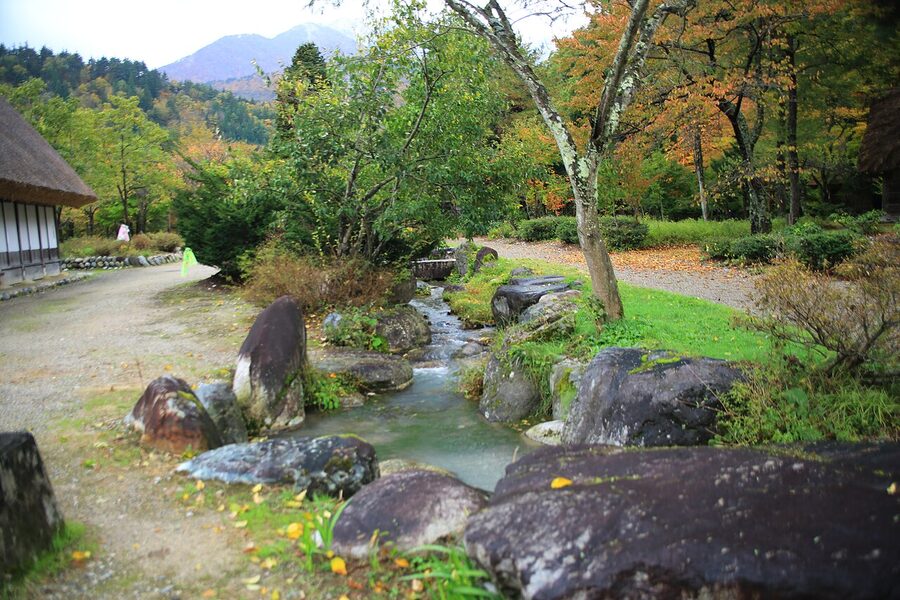
Cross Deai-bashi and turn right and you’re in the village. Cross it and turn left, walk five minutes, and you’re at the Gassho-zukuri Minkaen open-air museum. This is where the village relocated 25 gassho buildings (some Important Cultural Properties, including the 1750s Yamashita farmhouse) when they would otherwise have been lost to roadworks and dam-construction projects in the 1960s. You can go inside almost every one. It’s also pleasantly less busy than the village proper, because most day-trippers run out of time before they get here. ¥600 adults / ¥400 students. Open 8:40–17:00 March–November, 9:00–16:00 December–February (closed Thursdays in winter).
Allow 45–60 minutes inside the Minkaen. There’s a soba restaurant on the grounds, and a shop selling some genuinely odd local ice creams : soba, doburoku, mugwort, kibi. Try the doburoku one if you don’t make it to the festival.
The four seasons (and which one to pick)
Winter (December–February)
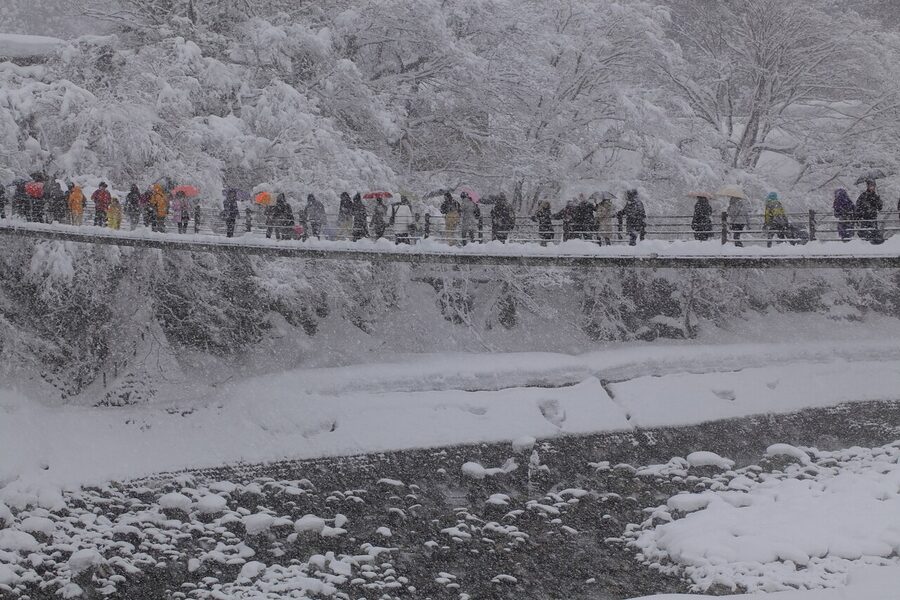
This is the most photographed Shirakawa-go and it earns the reputation. Three or more metres of standing snow on the village by mid-February. Snow piled on the gassho roofs in great smooth wedges. Ice on the irrigation channels that run down the side of the main street. If you want a snow trip, target the second half of January through about 20 February, earlier and you risk no snow, later and the thaw is starting.
Two practical things. The bus from Nagoya is the most weather-prone of the four routes; cancellations and delays in heavy snow are normal. From Kanazawa or Takayama you’ll generally get through. And bring proper boots. The houses you pay to enter all require you to take your shoes off, so wear something with good waterproofing that comes off easily, and pack a thick pair of socks to change into.
Winter Light-up (selected nights, mid-Jan to mid-Feb)
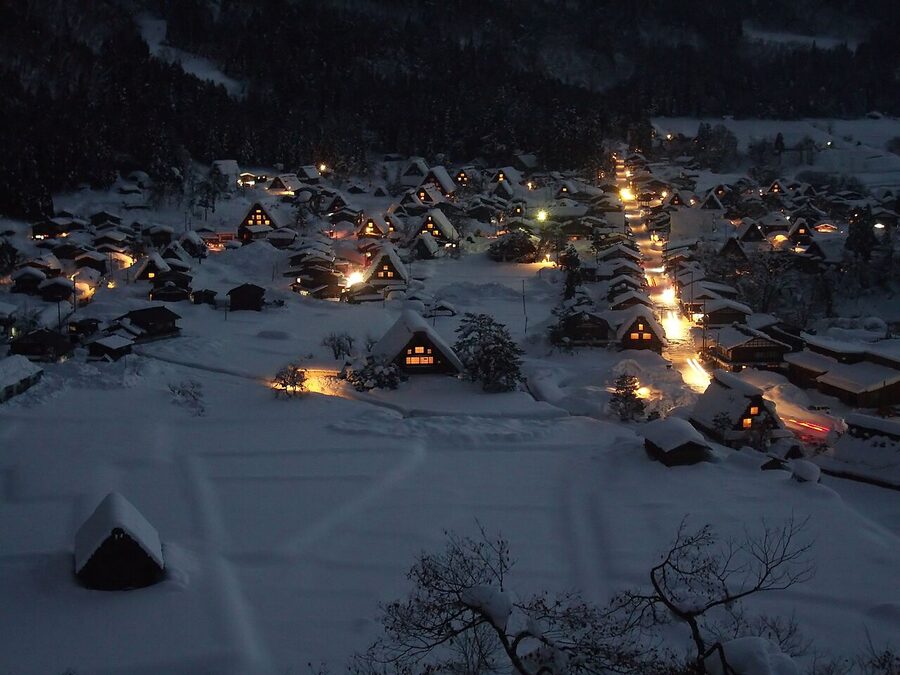
The Shirakawa-go Light-up is the village’s signature event: six designated evenings a year (typically a Sunday and a Monday in mid-January through mid-February), when the gassho-zukuri houses are floodlit against the snow. It’s strikingly beautiful and very controlled. Since 2019, viewing has been by reservation only. The information for the year’s dates and reservation system goes up on the Shirakawa-go Tourist Association website around July. Day-trippers cannot just turn up, you need either a guesthouse booking inside Ogimachi for the night, a reservation through one of the official tour packages from Takayama or Kanazawa, or a viewing slot at the Shiroyama observation deck (which has its own ticketed reservation).
If you want the Light-up, plan it eight months ahead. If you can’t, the daylight winter version is still magnificent and entirely viewable.
Spring (April–May)
The village runs a few weeks behind Tokyo for cherry blossom, late April rather than late March. April is also when the rice paddies start to fill with water and reflect the sky and the houses, which is one of my favourite Shirakawa-go compositions and one almost nobody photographs. Temperatures are 5–15°C, the snow is gone but the mountains around still have it, and the light-up dates are over so the village is properly quiet again. If you want crowd-free shoulder season, this is when.
Summer (June–August)
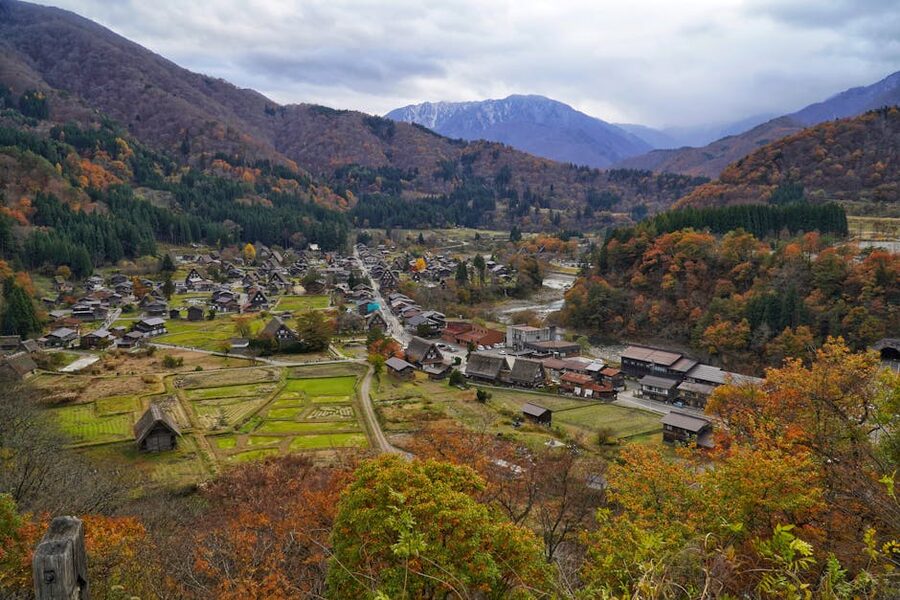
The village sits at around 500m elevation in a deep valley, so summer days are warm but not Tokyo-hot. The rice paddies are vivid green, hydrangeas come in, and the smell of cedar and woodsmoke from the houses is at its strongest. Domestic Japanese tourism eases off slightly between mid-July and August (school holiday period redirects families to beaches), so you’ll have a marginally easier time on the Kanazawa bus. Bring a layer for evenings, the temperature drops sharply after sunset.
Autumn (October–mid-November)
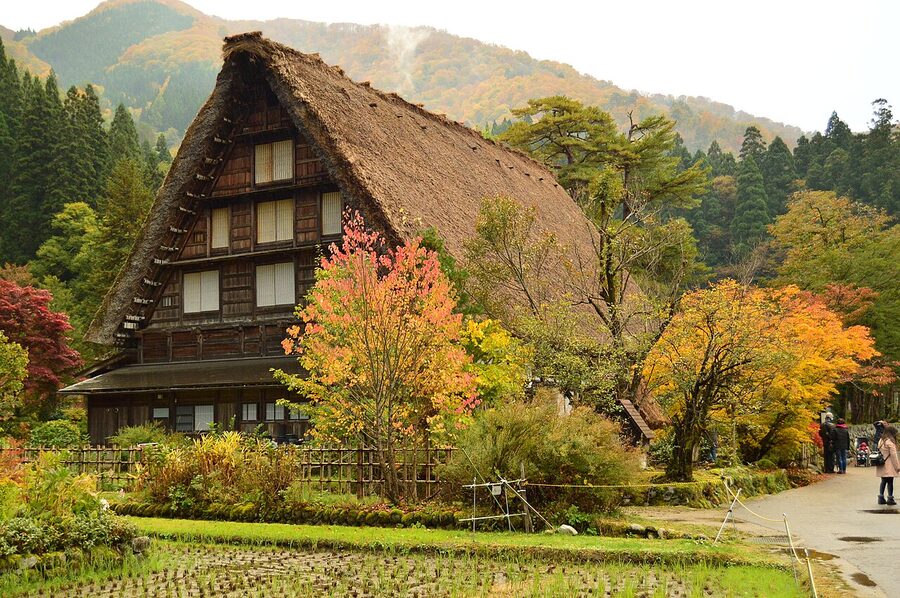
Autumn colour peaks the first week of November in the village and a week earlier on the surrounding hills. Late October is when the hills turn but the rice paddies are still being harvested, which gives you the most varied colour palette of any season. It’s also the most crowded period after the New Year holidays. Book your bus seat as far ahead as you can. The Doburoku Festival in mid-October is the single best week to visit if you can pick freely.
Where to stay (and the overnight question, settled)
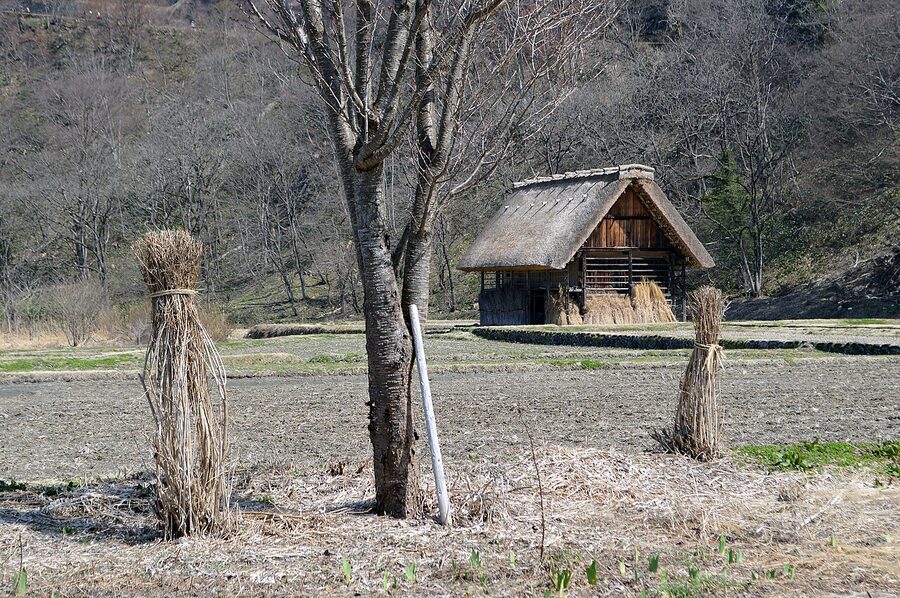
About 15 of the gassho-zukuri houses in Ogimachi take overnight guests, plus a couple more in Suganuma and Ainokura. They’re minshuku, family-run inns, not hotels. That means: futon on tatami, shared bathrooms, no lock on your room (most don’t), dinner and breakfast included (because there are no restaurants open at night), and an early breakfast (often 7am). Prices are typically ¥12,000–18,000 per person per night with both meals included. They book out three to six months in advance for autumn and winter, longer for the Light-up dates.
If you can get one of those rooms, do. The dinner is served around an irori. Hida beef, river fish, mountain vegetables, sansai pickles, a bowl of miso soup off the iron pot. And it’s the best Japanese countryside-inn experience you’ll have outside a proper ryokan. Look at the Shirakawa-go Tourist Association’s lodging list, or book through Booking.com or Rakuten Travel. Direct booking by phone gets you slightly better rates but requires Japanese.
If you can’t stay in the village, base in Takayama. Takayama has a much wider choice of ryokan and Western-style hotels, the Hida-beef restaurants are better, and the bus to Shirakawa-go is 50 minutes. Our Takayama guide covers the lodging options there in detail. Kanazawa is the second-best base, especially if you’re combining Shirakawa-go with the city’s gardens and tea districts in a 1-night-2-day plan, the JRE (JR East) and KNT travel-agency itineraries that dominate domestic Japanese travel-planning sites all use this combination, and there’s a good reason for that. Our Kanazawa guide handles those details.
Day trip vs overnight: settled
If you’re already going to be in Takayama for a night or two, do Shirakawa-go as a half-day from there. The 50-minute bus, three to four hours in the village, and back. That’s the standard plan and it works.
If you have to choose between Shirakawa-go-as-daytrip from Nagoya (3 hours each way of bus) or Shirakawa-go-as-overnight, do the overnight every time. Six hours of bus for four hours in a tourist village isn’t worth it. One night in a minshuku, with the village empty and the dinner around an irori, absolutely is.
If you’re tight on time and weren’t going to make Takayama anyway, ask yourself whether you actually want to come, or whether you just want the photo. The photo is from the Shiroyama viewpoint, which most Kanazawa daytrips reach. If that’s the experience you want, the daytrip from Kanazawa is fine. If you want the quiet evening and morning village, you need the overnight.
Suganuma and Ainokura: the Gokayama villages most guides skim past
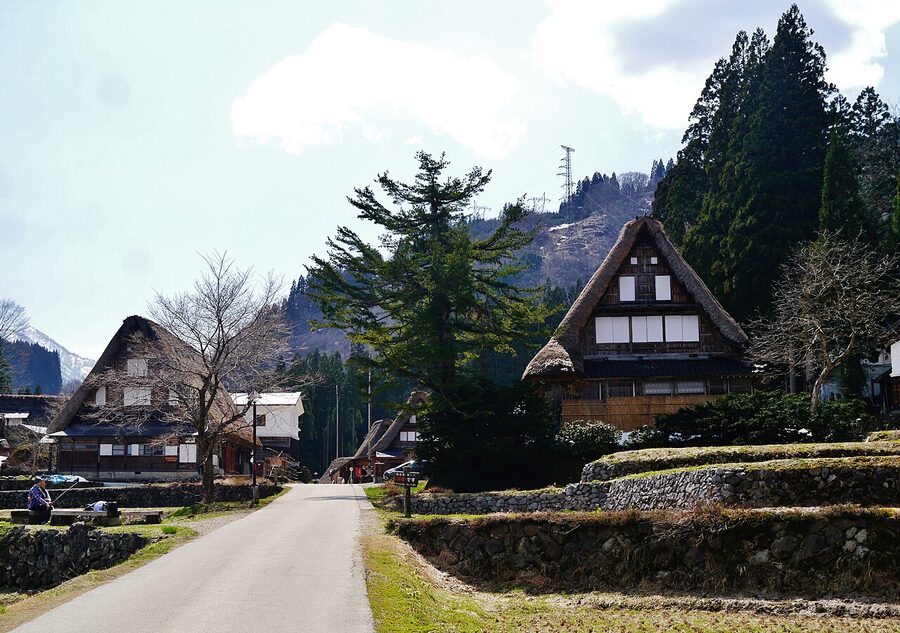
Forty minutes north of Ogimachi by car or bus, across the prefectural line into Toyama, are the two smaller World Heritage villages. They’re easy to dismiss because they don’t have Ogimachi’s scale. But if you’ve come to see gassho-zukuri without crowds, they’re the place.
Ainokura is the larger of the two, with around twenty farmhouses on a high terrace. It’s the most remote and the quietest. Most farmhouses are still residences; a few are open as small museums (¥300 typically), shops or guesthouses. There are washi-paper workshops where you can watch the paper being made (Gokayama is one of Japan’s main washi-producing regions). There’s a small kokiriko-bushi performance hall, kokiriko is the local folk-dance tradition, said to be one of Japan’s oldest. Free to wander; ¥500 to park.
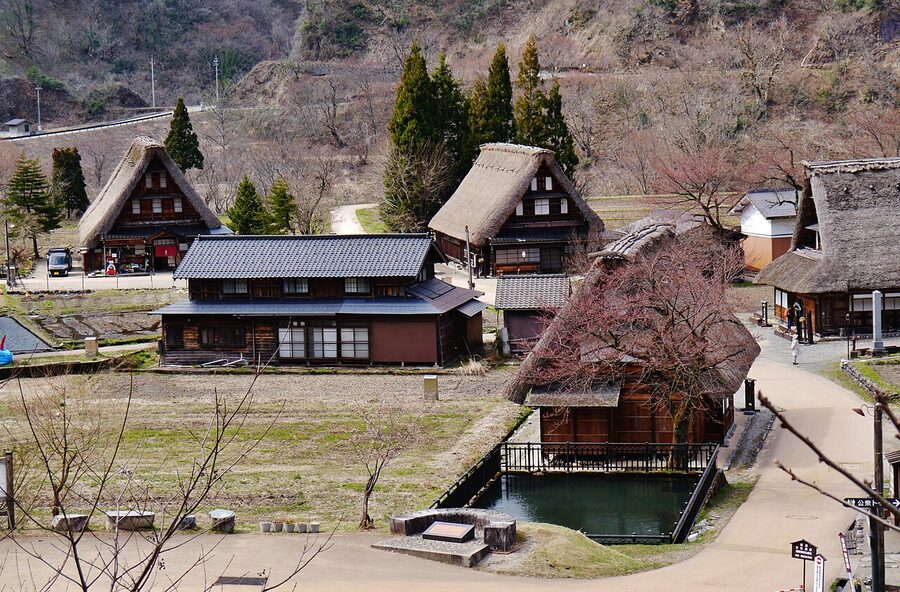
Suganuma is smaller. Just nine houses, set on a riverside terrace and reached via a steep walk down from the parking area (or a small lift, ¥200 round trip, that runs in season). An hour is plenty. Two of the houses are museums covering Gokayama’s saltpeter (gunpowder) production history, which is genuinely interesting because saltpeter was Gokayama’s main export to the Edo-period Kaga shogunate, smuggled out hidden inside ceremonial Buddhist altars to avoid Tokugawa scrutiny. ¥500 entry to the museums; the village walk itself is free.
From Ogimachi, the World Heritage Bus runs a couple of times a day in each direction (about ¥1,000 to Suganuma, ¥1,300 to Ainokura), and timings let you do both as an extension of the Ogimachi day with careful planning. Or (the better plan) drive between them, stopping at the Murakami House folk museum and the Iwase House (Important Cultural Property, the largest gassho house in Japan, between Ainokura and the river). You’ll see four villages, three classified, in one day, with about a tenth of the foot traffic of doing Ogimachi alone. Our itineraries page has a route for the full Gokayama–Shirakawa-go loop with a Takayama base.
Iwase House: the one most foreign visitors miss
Between Ainokura and Suganuma, just off Route 156, is the Iwase House (岩瀬家). It’s the largest gassho-zukuri building in Japan, five floors, designated an Important Cultural Property. The Iwase family were saltpeter producers and headman of their village. Inside, it’s a much rougher, more functional building than the Ogimachi houses, the floors are unfinished, the irori is still in active use during opening hours, and the upper floors show the saltpeter cellars hidden under the floor planks. ¥300 entry. Worth the detour if you’re driving the Gokayama loop.
Practical bits
Budget for a day visit
- Round-trip bus from Takayama: about ¥5,200
- Wada House entry: ¥400
- One additional house (Kanda or Myozen-ji): ¥300–400
- Shiroyama shuttle bus one way: ¥200
- Lunch: ¥1,500–2,500
- Snacks (skewer + gohei mochi + a coffee): ¥1,200
- Open-air museum (optional): ¥600
So a day from Takayama costs around ¥9,000–11,000 per person, before any souvenirs.
Cash, ATMs and cards
Cash. The bus terminal building has a Japan Post ATM that takes most foreign cards. Inside the village, almost everything is cash-only, the houses, the stalls, most of the small restaurants. Larger sit-down restaurants and a couple of the souvenir shops take cards. Bring ¥15,000–20,000 in cash for the day.
What to wear
Layers. The valley is at altitude, and the temperature swing between sun and shade is sharp. In winter, proper waterproof boots are essential. You’ll be walking on packed snow that has been thawed and refrozen. In summer, walking shoes for the Shiroyama climb. All seasons, slip-on shoes are easier because you’ll take them off four to six times if you go inside the houses.
Photography rules
The houses are private homes. There are signs throughout the village. Don’t photograph through windows, don’t enter property without checking, don’t fly a drone (it’s banned). Outside the houses, you’re free to shoot.
Toilets
One block of public toilets at the bus terminal/parking area, one set near the eastern end of the main street, and one inside the open-air museum. The houses you pay to enter generally have toilets. There’s nothing in between, so go before you climb to the Shiroyama viewpoint.
What goes well with Shirakawa-go
The classic combination is Shirakawa-go with Takayama and Kanazawa, in some order. From Tokyo, the Hokuriku Shinkansen to Kanazawa first, then the bus to Shirakawa-go, an overnight there or in Takayama, the next day in Takayama, then the Limited Express Hida down to Nagoya. Three nights, four days. From Osaka or Kyoto, the same loop runs in reverse using the Thunderbird Limited Express. The access guide has the train and bus timings worked out.
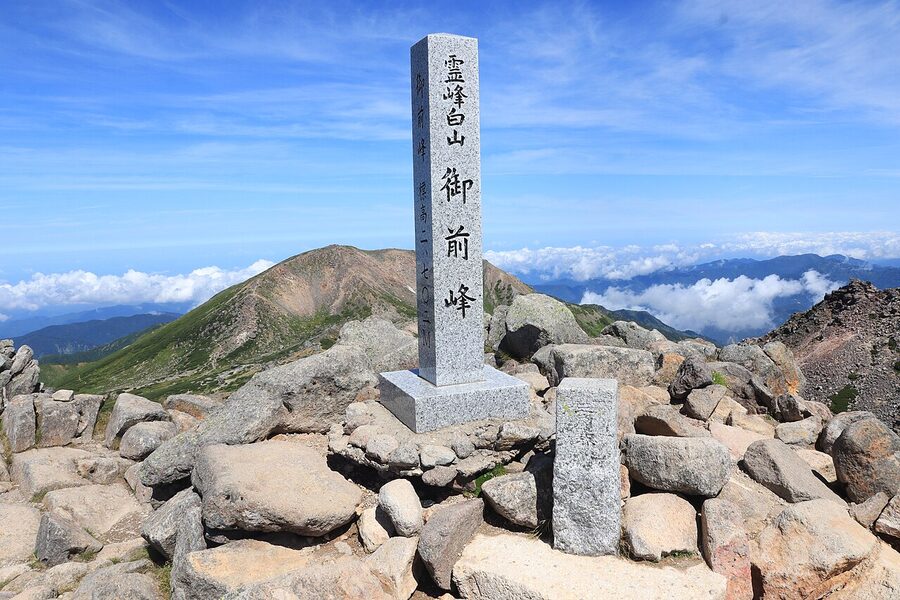
If you have a car and an extra day, the Hakusan Shirakawa-go White Road is the road through the Hakusan National Park, opening some of central Japan’s deepest old-growth forest. Around an hour end to end, ¥1,700 toll, only open early June to mid-November. There are seven major waterfalls along the route, the best of them being Ubaga-daki, where there’s a free open-air bath and a foot bath you can sit in while watching the cascade. Closes for snow from late November to early June. If you’ve come for autumn colour, the White Road in late October is among Japan’s best foliage drives.
For a quieter, more architectural detour, Hida-Furukawa, the small post-town an hour north of Takayama, deserves an afternoon. Less polished than Takayama, less photographed, more lived-in. The koi-filled drainage canals and the white-walled storehouses give it a different texture from anywhere else in the region.
The mistakes I see people make
Three to flag, briefly.
First, treating Shirakawa-go as a Tokyo day trip. I get the question often, and the answer is no. From Tokyo it’s eight hours of round-trip travel for four hours on the ground. If you’re going from Tokyo, you’re staying in Takayama or Kanazawa overnight, which means you’re already on the proper version of the trip.
Second, going during Golden Week (29 April to 5 May), the New Year holidays, or the first weekend of November autumn-foliage peak. It’s not just busy. Standing-traffic-on-the-Tokai-Hokuriku-Expressway busy, with two-hour parking queues. If you’re locked into those dates, take the bus, not a car.
Third, doing only Ogimachi and skipping Gokayama because “they’re smaller.” If you have the day, drive or bus the Gokayama loop in the afternoon and be back in Ogimachi for the late light. You’ll see the same architecture in a fraction of the crowd.
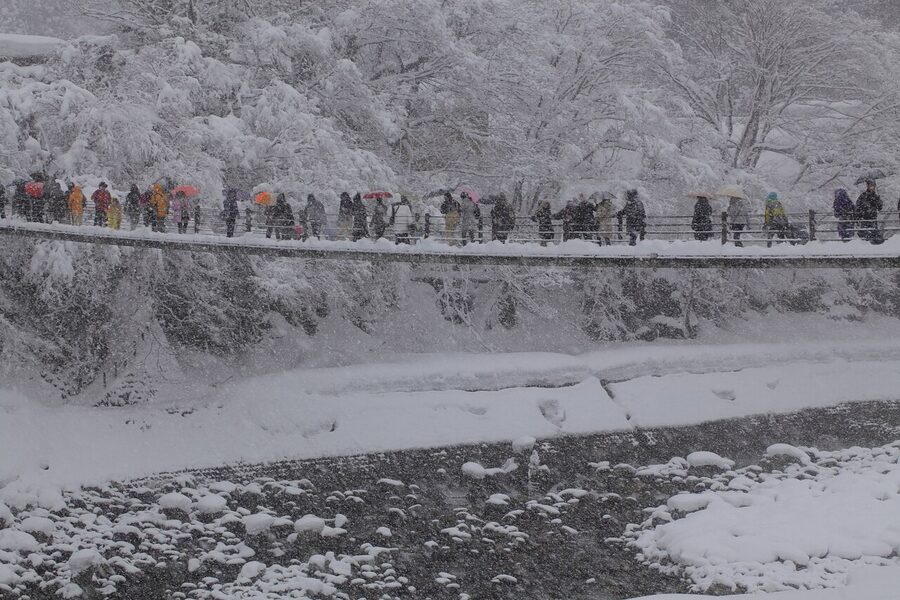
The last time I came up the Sho river road, on a January evening with the Kanazawa bus running fifteen minutes late because of fresh snow, the village was almost dark by the time I got off. There were still a few people standing on Deai-bashi, taking photographs of nothing in particular, and an old man in a knit cap walking a dog along the embankment. The roof of the Wada house had about a metre of snow on it. The smell off the irori inside the closest guesthouse was woodsmoke and miso. That’s the version of Shirakawa-go I’d come back for. The day-trip version exists too, and on a Wednesday in October it’s perfectly fine. But the village I keep returning to is the one you only get if you stay.