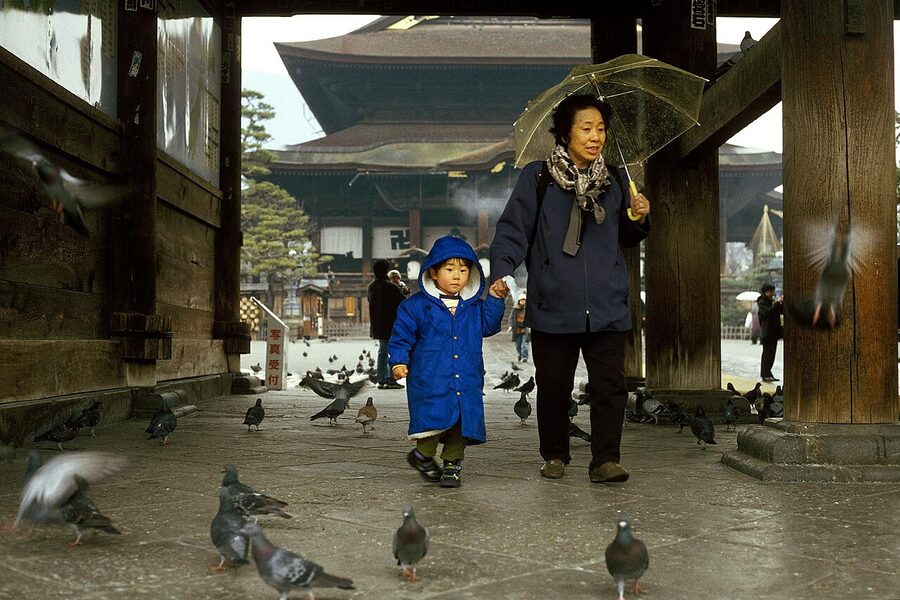
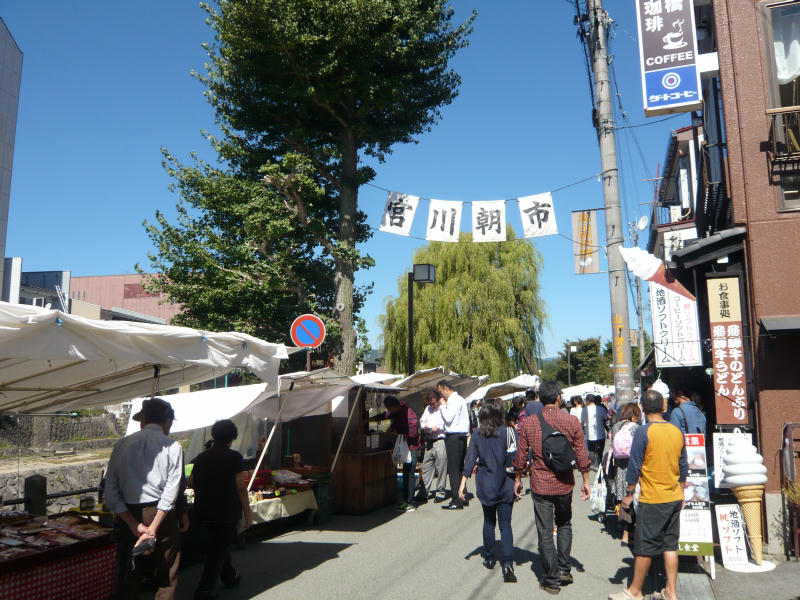
If you turn up to Takayama on a Sunday at 11:30 expecting the morning markets in full swing, you’ve already missed half of it. Both markets technically run until noon, but the busiest stalls (the pickle sellers, the dango grill, the sarubobo lady with the good prices) pack down whenever they sell out. By 11 most days that means a thinned-out row, the produce vendors gone, only a handful of craft tents holding on for the last tour bus. The trick to Takayama’s morning markets isn’t finding them. It’s getting there early enough that they still feel like markets and not a souvenir queue.
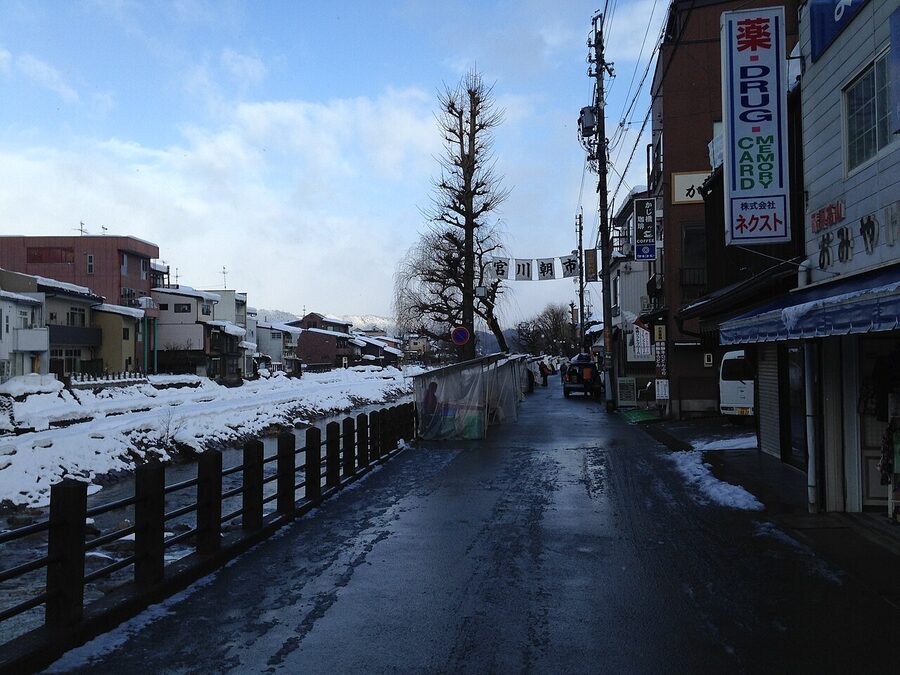
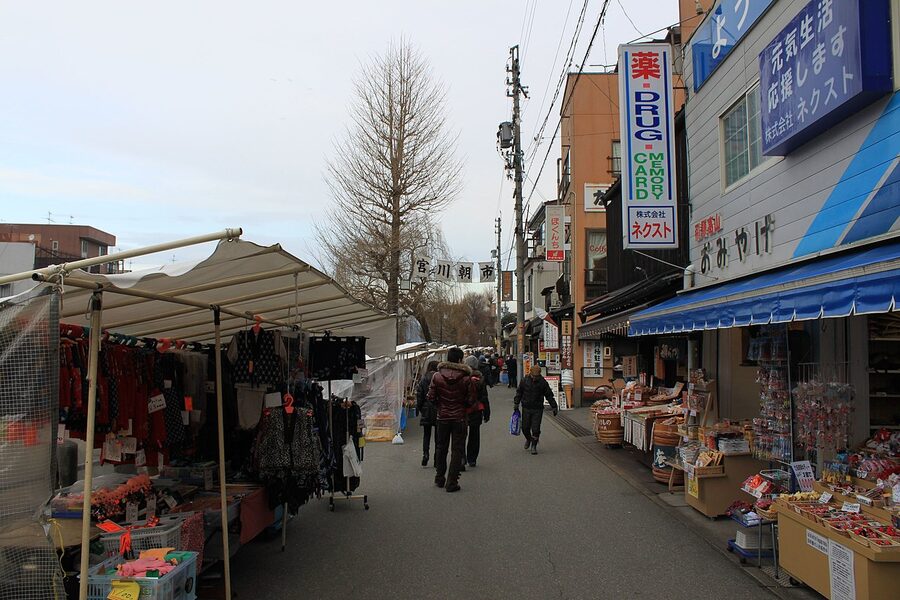
There are two of them, both daily, both year-round, both within easy walking distance of each other and the station. Miyagawa Morning Market runs along the east bank of the Miyagawa river between Kajibashi and Yayoibashi bridges, a 350-metre strip of white tents and shopfronts. Jinya-mae Morning Market sits across the river in front of Takayama Jinya, smaller and quieter, in a paved plaza under the trees. Both have run roughly continuously since the Edo period, when farmers and rice merchants brought produce in to sell. The local tourism authority bills them as part of Japan’s Three Great Morning Markets, alongside Wajima in Ishikawa and Katsuura in Chiba.
Most guidebooks describe both as charming, leave it at that, and skip the bit where the experience varies wildly depending on what day and what time you turn up. So this is the practical version: when to go, what to actually buy, which stalls are worth seeking out, and where it gets weak. I’ve grouped what I learned around the friction points (Sundays, mid-morning crowds, winter cold, the lingering “they’re not really markets any more” complaint) because those are the questions that come up after the first visit.
In This Article
- Hours, in plain numbers
- The Sunday and public-holiday problem
- Miyagawa: what’s actually there
- What to actually buy
- Stalls and shops worth looking for
- Jinya-mae: the smaller one most people skip
- The Jinya combination
- Breakfast at the markets
- Sarubobo dolls without the kitsch
- Photographing without being awkward about it
- Going in winter (the case for it)
- Where the “they’re not really markets any more” complaint comes from
- Getting there from the station
- Cash, cards, and the practical stuff
- Combining the markets with the rest of the morning
- If the markets don’t sell what you need: festival-week alternatives
- Verdict, in order of who should come
Hours, in plain numbers
Both markets, every day of the year, with a winter shift:
- April to November: 7:00 to 12:00
- December to March: 8:00 to 12:00
That’s the official window. The reality is that stalls finish setting up around 8am even in summer, and they pack down whenever they sell out. The produce vendors are usually gone by 10:30. The pickle stalls last longer because their stock travels well. The craft and souvenir stalls hold on until noon because they’re not selling anything perishable. If you arrive at 11:00, what you’ll see is the back half of the day. Fewer stalls, fewer regulars, more bagged souvenirs and fewer fresh things. It’s still a nice walk. It’s just not the same market.
The two markets are six minutes apart on foot, so doing both in one morning is the standard play. Start at Miyagawa for the bigger food and craft selection, cross Nakabashi (the red bridge), and finish at Jinya-mae where the Takayama Jinya itself opens at 8:45 and is worth tying in.
The Sunday and public-holiday problem
Both markets are open Sundays. They’re also open on public holidays, New Year’s Day included. So this isn’t a “they close on weekends” problem.
The actual issue: weekends and holidays are when the tour buses come. The first big arrival usually hits Miyagawa around 9:00, sometimes earlier on autumn weekends. From then until 10:30 the riverside path becomes a slow shuffle. Stalls that were happy to chat at 8am become brisk transaction counters by 9:30. If you’ve heard older travellers say the markets “aren’t what they used to be,” they generally mean they once visited at peak time and saw a queue moving past indistinguishable pickle bags.
So a Sunday is fine. Just be there by 8:00, by 8:30 at the latest. By 9:30 the trade has shifted from neighbours-and-locals to coach-tour-buying, and the difference shows in the rhythm. The Hida dialect goes quiet. The free samples slow down. The vendors stop volunteering opinions on which apples have the best mitsu (honey core) this week.
Miyagawa: what’s actually there
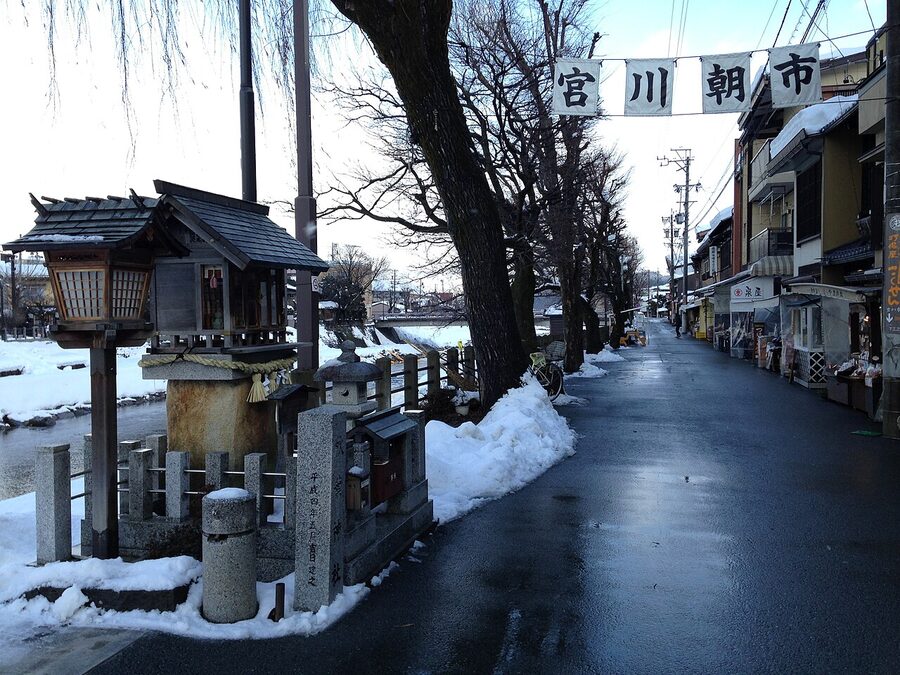
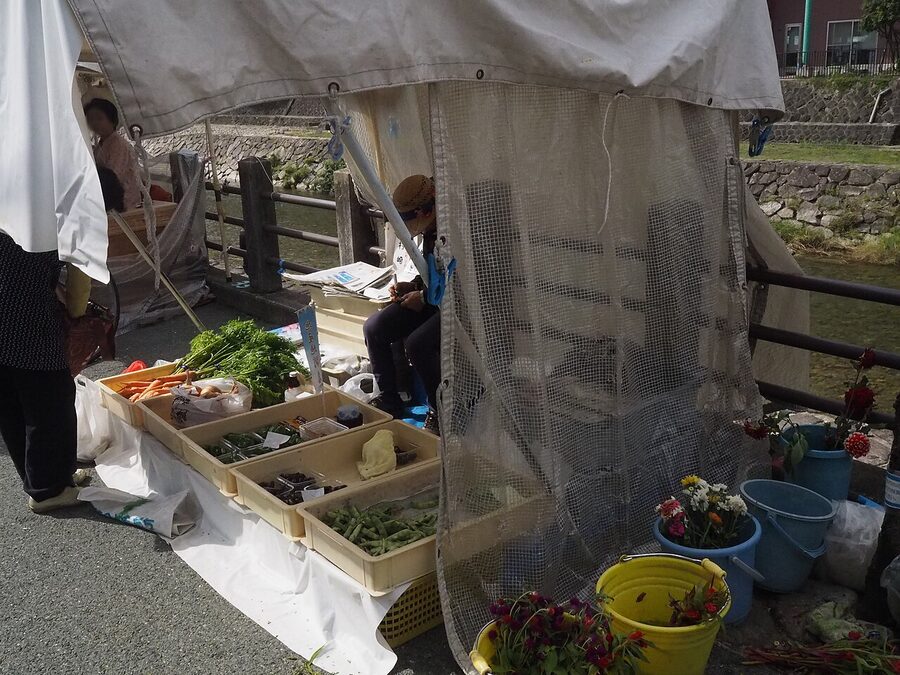
Miyagawa is the bigger one, around 50 stalls in peak season. The local tourism office puts it more conservatively at 30 to 40. I’ve counted both ways depending on the month, 50 sounds about right in October, closer to 30 in February.
The mix runs roughly:
- Around half the stalls sell produce and pickles. This is the backbone of the market and the reason to come early.
- A quarter sell crafts: ichii-itto-bori (yew wood carvings), washi paper goods, hand-carved chopsticks, sarubobo dolls, indigo-dyed textiles.
- The rest are food snacks, flowers, jams, honey, sake, and a handful of permanent shopfronts on the building side of the path that stay open later.
The river side is where most of the action is. The wall side has the permanent shops: Funasaka sake brewery, a couple of cafes, Andersen croissants, the Komaru coffee place with the edible cookie cup espresso that gets photographed more than anything else here. If you only walk the tent side you’ll miss half the market.
What to actually buy
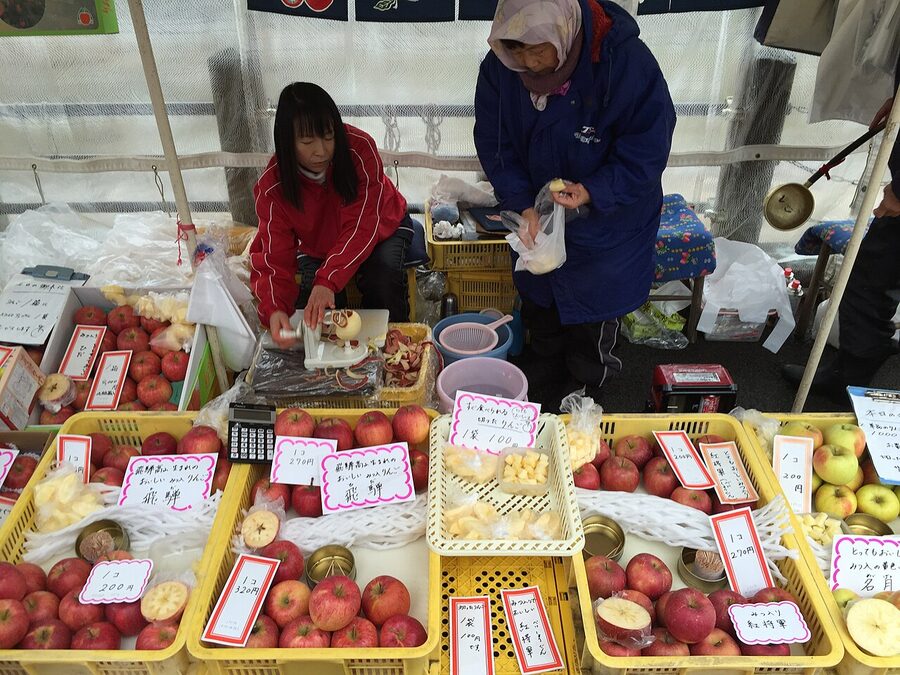
The thing to know about Takayama market shopping is that pickles travel and produce doesn’t. If you’re staying a few nights at a Takayama ryokan with a kitchenette, buy fresh; if you’re moving on, buy preserved. The locals have been telling tourists this for decades. The pickle sellers will offer free samples, so taste before buying because every stall does it slightly differently.
What’s worth picking up:
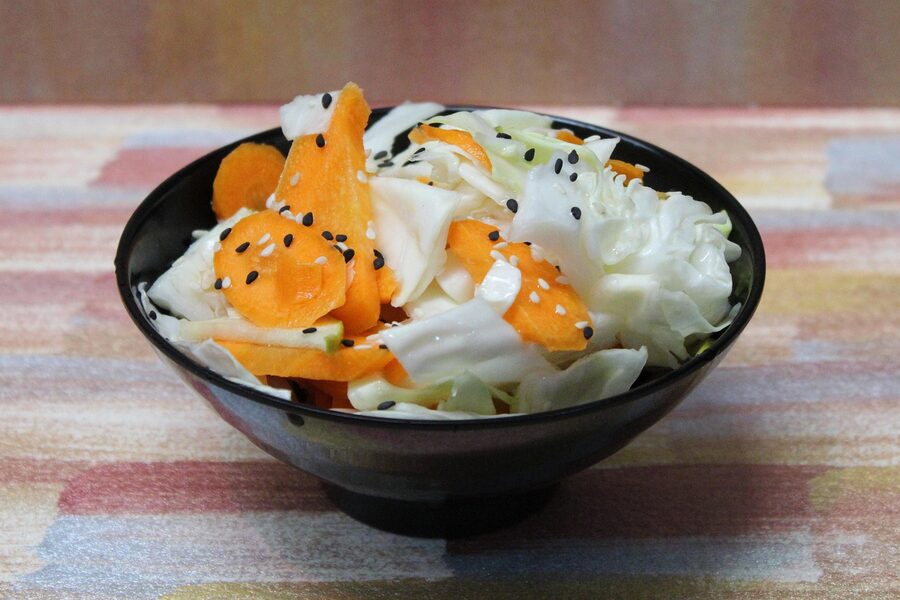
- Akakabu pickles (赤かぶ漬け). The Hida red turnip, salt-pickled in its own juice, no food colouring. The dye in the pickling liquid is the turnip’s natural pigment. The thinly sliced senmaizuke version is the easiest to take home and eats well over rice or with sake. Around ¥500 to ¥800 per packet.
- Sansai-zuke (山菜漬け). Mountain vegetables, fiddlehead ferns, butterbur and wild greens, pickled in soy or miso. Strong flavour, regional, doesn’t travel well past two weeks unrefrigerated.
- Hoba leaves with miso (朴葉味噌). The dried magnolia leaf comes pre-loaded with the local miso paste. You take it home, set it on a small grill or pan over low heat with a knob of butter and some spring onion, and breakfast happens. ¥600 to ¥900 a bag.
- Shichimi-togarashi. Several stalls blend their own seven-spice mix on the spot, sesame heavy, sansho-pepper heavy, or chilli heavy depending on the maker. Worth buying from one of the women who’s pre-mixing on a tatami mat in front of you.
- Sarubobo dolls. The faceless red good-luck doll is the regional mascot. Hand-stitched ones at the market are 3 to 5 times more expensive than the factory versions in the souvenir shops, but they’re stitched by the woman selling them, and each face (or non-face) is slightly different. ¥800 to ¥2,500.
- Genkotsu candy (げんこつ飴). A soybean-flour and starch-syrup sweet, kneaded into long ropes and chopped at speed by men whose knife rhythm is a small show in itself. Eat one to know what you think; buy more only if you do.
Stalls and shops worth looking for
Miyagawa is set up so the same vendors return to roughly the same pitch every day. Names rotate as families retire and new ones come in, but a few constants are worth keeping an eye out for:
- The Higuchi orchard family at the south end, apples in season, persimmons in October, pears in late summer. They’ve been at this market for decades and let you sample most things.
- Komachi coffee / Coffee Komaru, the cookie-cup espresso stand on the shop side. Touristy, photogenic, ¥600 for the cup. Worth doing once.
- Yamabushi Sankai, the senbei (rice cracker) shop on the shop side, midway up the strip. Hand-grilled crackers in front of you, including a savoury miso-glazed version that’s the regional specialty.
- Funasaka brewery’s market-side counter, sake tastings from the brewery a block away, including small cups of their unfiltered nigori. ¥300 a tasting flight.
- Honey vendors at the north end, local Hida honey, sometimes the same family that sells the wooden hives. Ask which flowers were in bloom; the chestnut-flower honey is the most distinctive.
For more on where to eat after the market, see what to eat in Takayama. The markets are the natural starting point of a food walk that ends in the Sanmachi district.
Jinya-mae: the smaller one most people skip
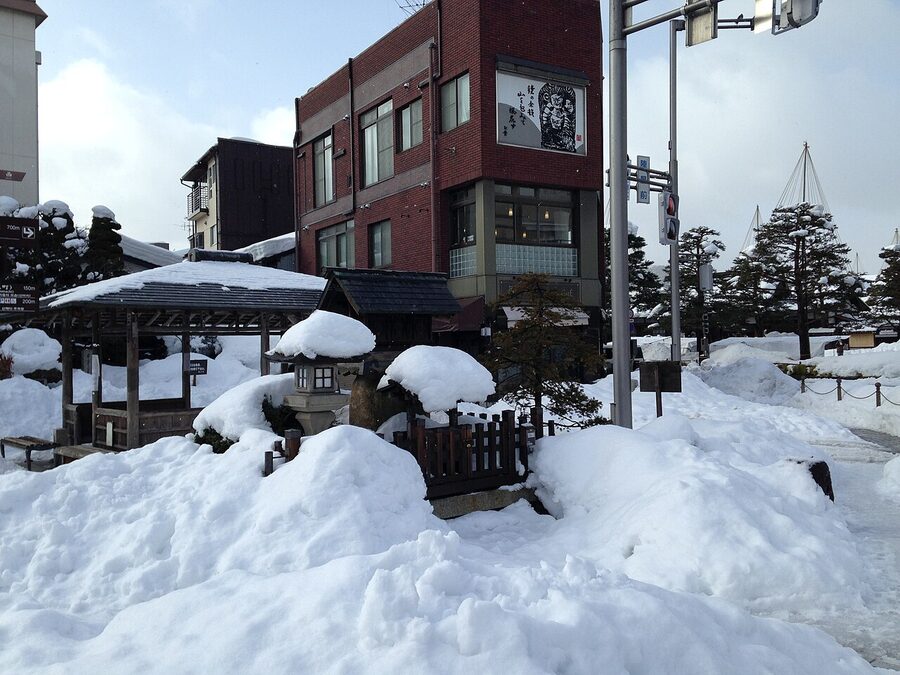
Jinya-mae is the older brother nobody photographs. About 15 to 20 stalls, all clustered in the open plaza in front of the Jinya gate. Smaller, slower, more pickle-and-jam focused, run mostly by women in their seventies and eighties who’ve been doing this for half a lifetime. If Miyagawa is the postcard, Jinya-mae is the kitchen table.
The tour buses don’t really come here. There isn’t space for them, and the Jinya itself is the named attraction, so most groups peel off straight into the building and skip the market in front of it. That makes Jinya-mae the better stop if you’ve turned up at 9:30 and the riverside is busy. It’s also a good twenty minutes of breathing space before you do the Jinya tour proper.
What’s different here:
- Almost everything is pickled, jammed, or otherwise processed. Less fresh produce. More things that travel.
- The crafts lean towards the homely: bibs and cushions in old-cloth patchwork, knitted things, the simpler sarubobo dolls (the granny ones with mismatched eyes).
- Conversation takes longer. The vendors have nowhere to be, and once they realise you’re trying to understand what’s in the jar, the demonstration starts. I’ve spent forty minutes at the akakabu stall here and bought nothing, and it was fine.
- The Jinya gate (the white-walled main entrance) is on one side of the plaza. The light on it through the trees in the morning is the photo most people miss because they’re looking the other way at the stalls.
The Jinya combination
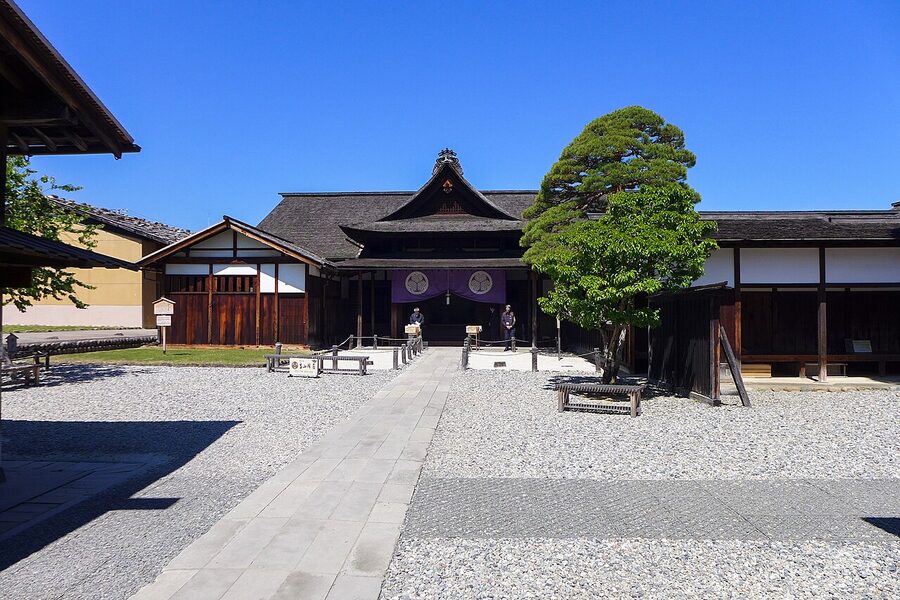
If you walked round the Jinya-mae market for an hour and don’t go into the Jinya itself, you’ve missed the easier half of the morning. It’s the only surviving Edo-period government office in Japan, and the building is genuinely interesting. Original tatami floors in the main audience hall, a documents-and-rice storehouse out the back built without nails, and a small interrogation room where they leave the rice-cake torture device on a wooden block without further comment.
Hours are 8:45 to 17:00 (until 16:30 November to February), entry ¥440. Allow forty-five minutes inside. Combine with the Jinya-mae market on the way in and Sanmachi on the way out and you’ve done a tight three-hour walking loop without crossing the same ground twice. The full Takayama old-town walk ties this together properly.
Breakfast at the markets
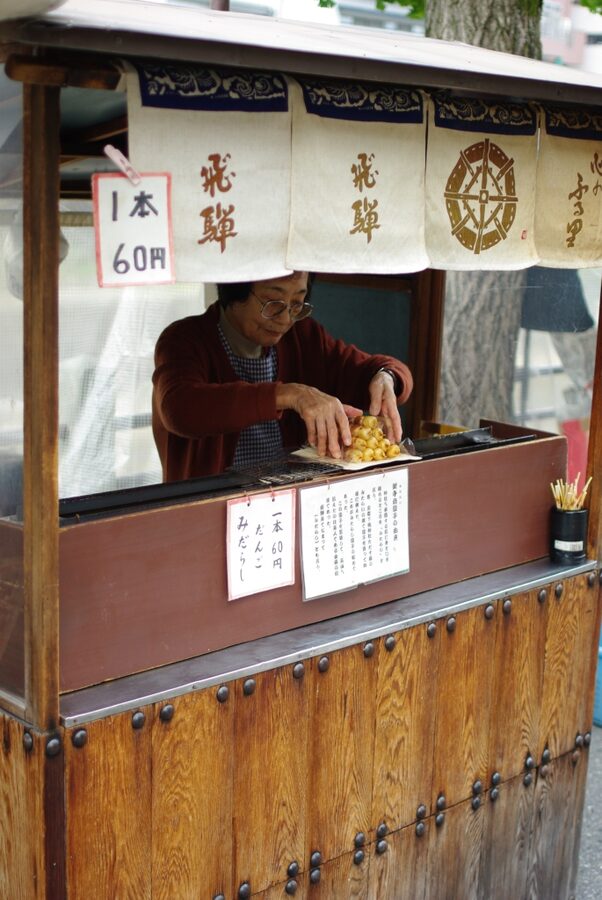
If your accommodation includes breakfast, you’ll have eaten before you walk down. If it doesn’t (and a lot of the budget hotels in town don’t), the markets are a perfectly reasonable place to assemble a morning meal in pieces. None of it is a sit-down breakfast. All of it is good.
- Mitarashi dango, the grilled rice-skewer with the soy-sugar glaze. The Takayama version is sweeter than the Kyoto take. ¥80 to ¥120 per skewer.
- Gohei mochi (五平餅), pounded rice on a flat skewer, slathered in sweet-savoury miso or walnut paste, then grilled. More substantial than dango. ¥300 to ¥500.
- Hot kabocha or tonjiru soup, a small bowl of pumpkin soup or pork-and-vegetable soup at one of the food stalls. ¥200 to ¥300. Particularly good in winter when your hands need something to hold.
- Hida beef croquettes (飛騨牛コロッケ), deep-fried potato-and-beef cakes, ¥250 each. Get one freshly fried, not the warmer-tray version.
- Hida beef nigiri or skewer, at one of the named butchers’ market presence. Around ¥600 for a two-piece nigiri set served on a senbei cracker.
- Funasaka sake tasting, at the brewery’s market counter. ¥300 for three small cups. Not breakfast in any conventional sense. But it’s there.
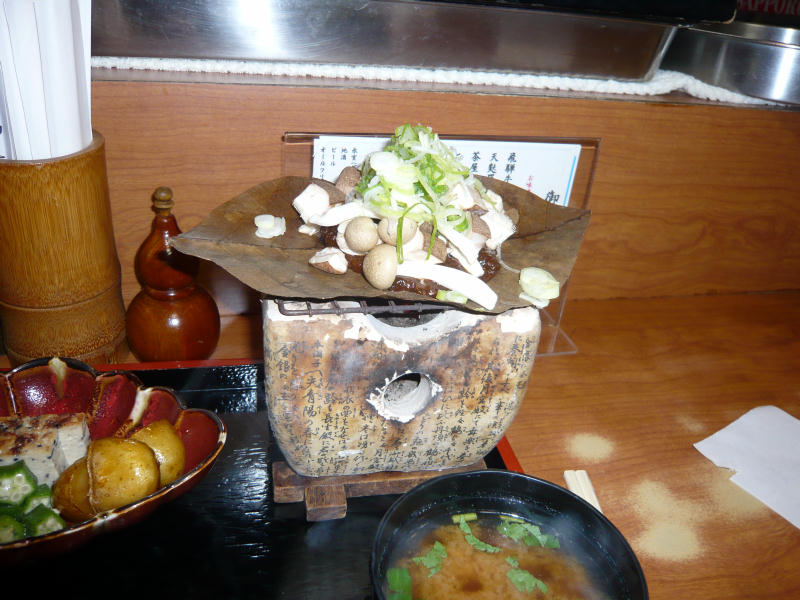
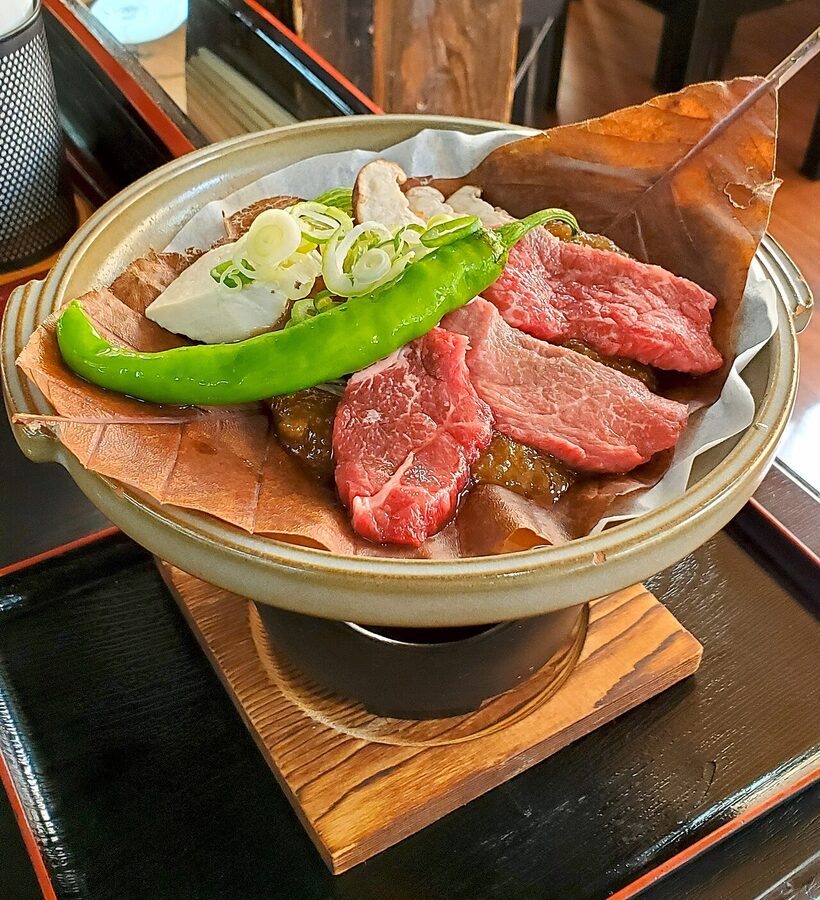
The lunchtime spot for hoba miso, by the way, is at one of the ryokan or inns that grill it at the table. See Takayama food for the proper sit-down version. The market sells the kit; the restaurants serve it cooked.
Sarubobo dolls without the kitsch
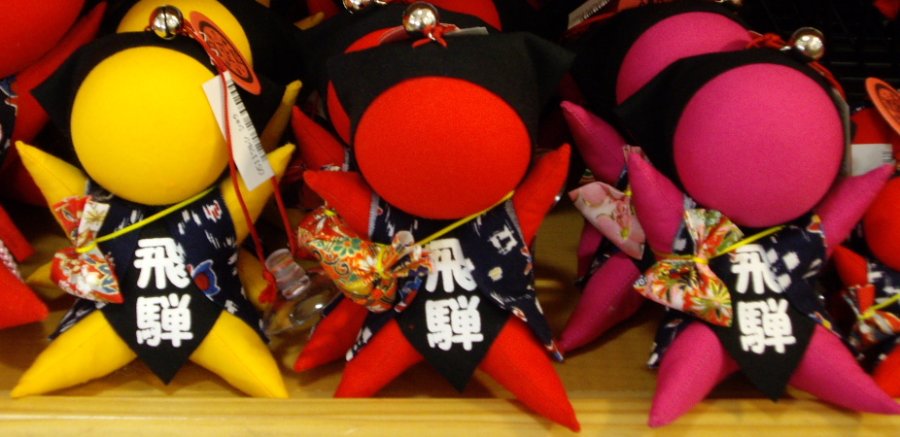
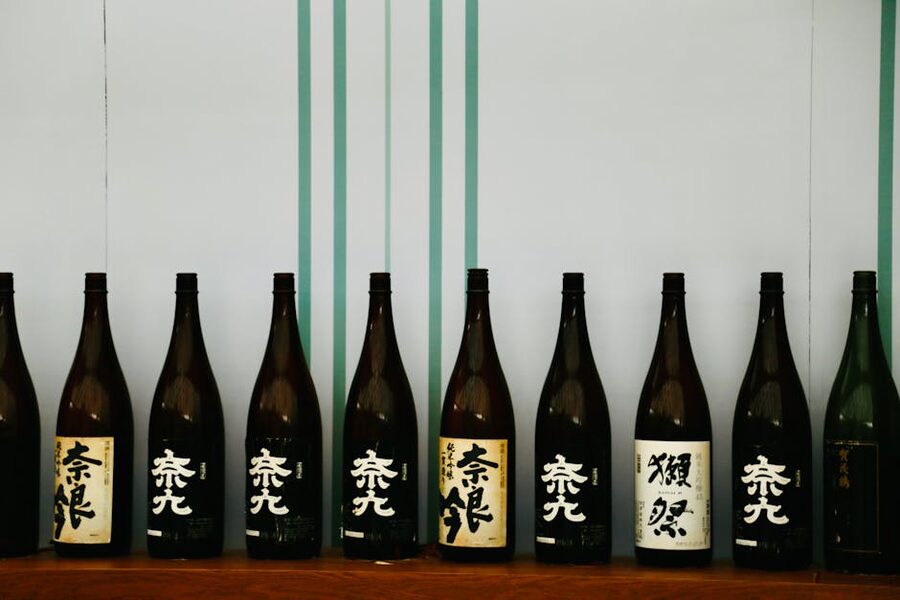
The sarubobo is a faceless red cloth doll, traditionally made by Hida grandmothers as a charm against childbirth complications and household trouble. The factory-produced version sold across Takayama in keychain and phone-strap form has nothing to do with that. The market versions, hand-stitched by older women at the stalls, are recognisably different: slightly uneven proportions, individual face-character (or non-face character), the stitching visible.
The colour codes you’ll see on the souvenir-shop signs (red for general luck, pink for love, blue for study, yellow for money) are a recent retail invention, not a tradition. If you want the real one, buy a red one from a woman who is making it on the spot. Around ¥1,200 for a small one. Avoid the giant fluffy sarubobo plushies. Those are nobody’s tradition.
Photographing without being awkward about it
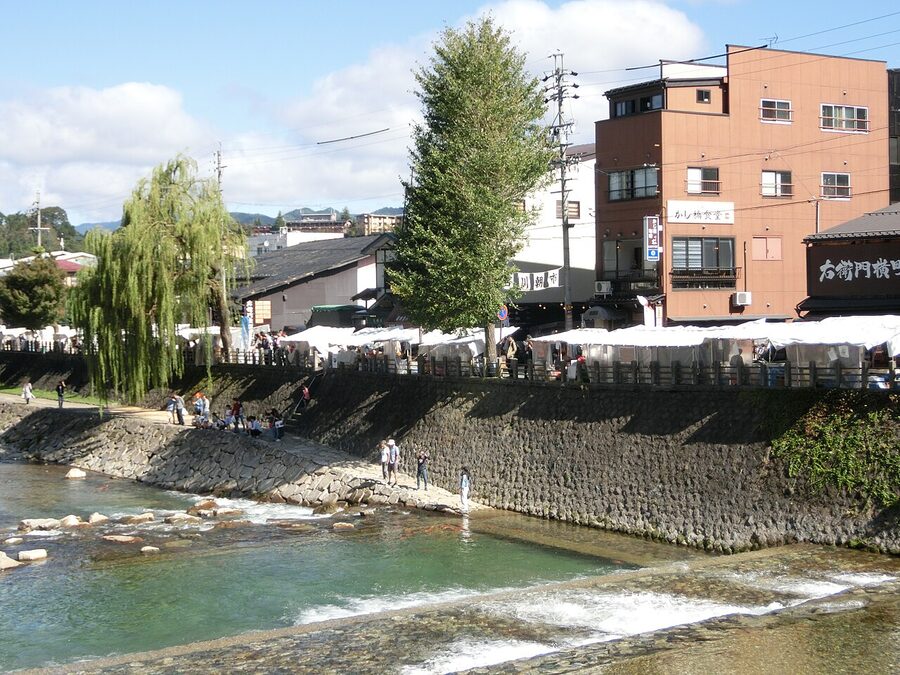
Photogenic golden hour is between sunrise and about 8:30 in summer, light coming over the eastern ridge, hitting the white tents at an angle, river still smoke-thin. In winter the light arrives later because of the surrounding hills, so 9:00 to 10:00 is the better window from December to February. The catch is that 9:00 in winter is also when the buses arrive, so there’s a brief overlap when the light is good and the row is full.
Etiquette here matters more than at most Japanese markets. Vendors are generally fine with photos of their stalls, less fine with photos of themselves without asking. A nod and “shashin ii desu ka?” (写真いいですか?) gets a yes 90% of the time. Don’t take the photo and walk on without buying anything. At least browse, sample, exchange a couple of words. The market has been a community space for two centuries; it isn’t a film set.
Going in winter (the case for it)
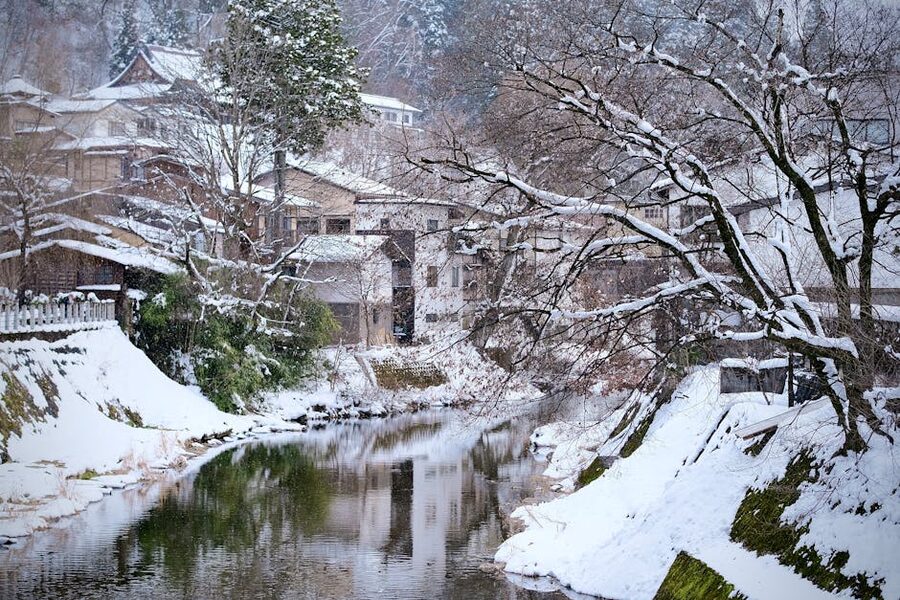
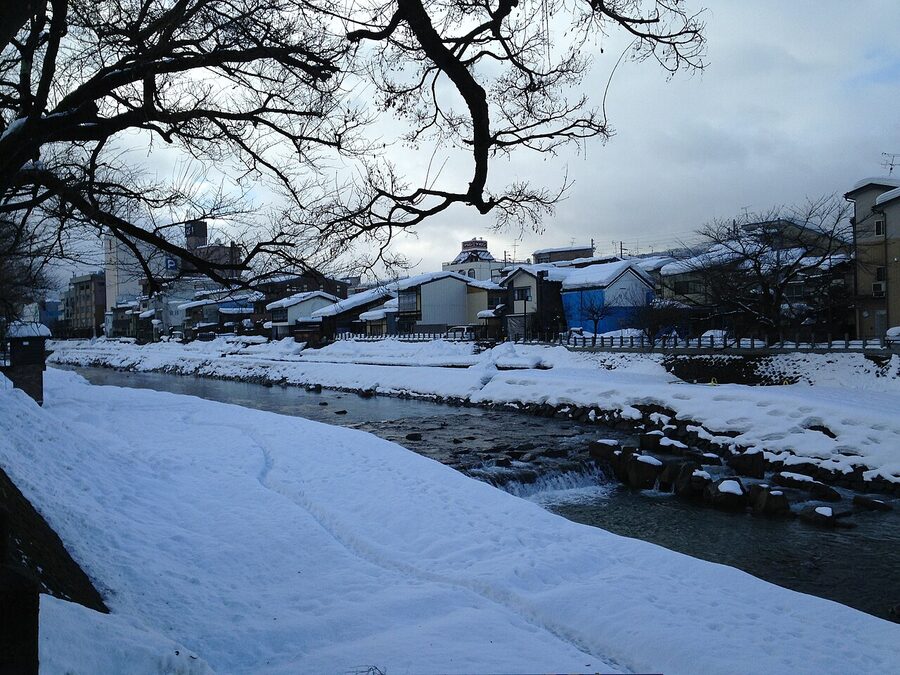
Winter visitors are often told to skip the markets, too cold, fewer stalls, the place is “shut down.” That’s mostly wrong. The markets are open every day from December to March, just on the 8:00 to 12:00 schedule. Stall numbers drop, maybe by a third on the weather-bad days. But the trade-off is that you can hold a 20-minute conversation with a pickle seller, the akakabu is at its peak (red turnips are pickled in October to November and the market stock is at its best from December onwards), and the riverside path is dusted with snow rather than wedged with people.
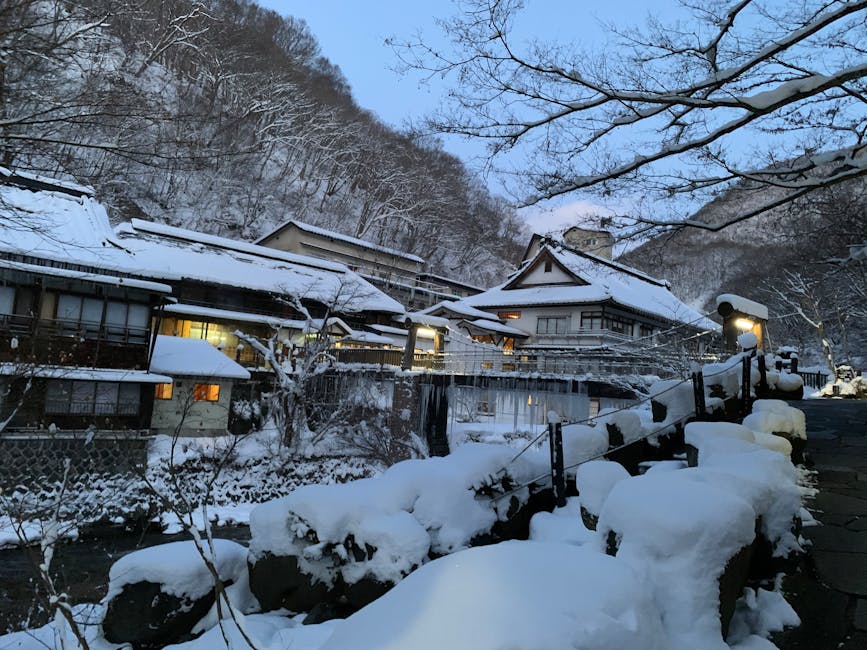
Bring a warm hat, gloves you can take off to handle change, and waterproof boots. The cobbles ice over by the river side. A vending machine of canned hot coffee at the south end of Miyagawa is genuinely your friend. The hot kabocha soup vendor near the middle is open through winter and her bowls are bigger between December and February.
Where the “they’re not really markets any more” complaint comes from
You’ll see this take in older guidebooks and on Reddit threads. Three things are true at once:
- The markets have shifted, over decades, from primarily local-grocery to about 50% tourist-oriented stalls. That’s real. The proportion of crafts and souvenirs has gone up; the proportion of bulk vegetables has gone down.
- The tour-bus pattern from 9am onwards genuinely changes the feel. If you only saw the markets at peak hour you might come away thinking they were a cosplay.
- What’s still there, and you only see it if you arrive before 8:30 or stay through to 11:30, is a working morning ritual. Old neighbours buying daikon. Vendors discussing a child’s exam. A guy at the same stall every day waiting for his usual bag. That part hasn’t gone anywhere.
The fix is the timing, not the market itself. Both markets reward the early start and punish the mid-morning arrival.
Getting there from the station
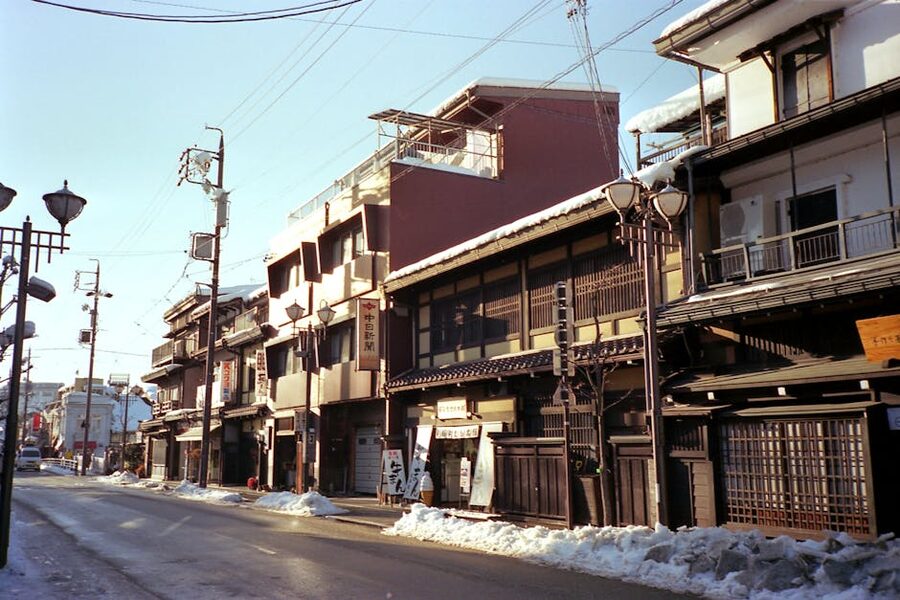
From JR Takayama Station to Miyagawa Morning Market is around 10 to 12 minutes on foot. The walk is flat and well-signposted in English. Two routes work:
- The direct line via Kokubunji-dori (the long-shop street with the cafes). Out the east exit of the station, straight ahead, four blocks, then turn right at Kajibashi. This is the way most people walk and it’s fine, but it’s also where the rolling-suitcase pile-up happens just after 8am.
- The quieter line via Hida Kokubunji temple. Out the east exit, immediately right, then left through the temple grounds. Adds two minutes; subtracts the suitcases and adds a 1,200-year-old gingko tree. In autumn this is the better route by a large margin.
Jinya-mae market is six minutes south of Miyagawa. Cross Nakabashi (the red bridge), continue down Honmachi, and the Jinya plaza is on your right. There’s no sign in English announcing the market: look for the white tents in the open square in front of the Jinya’s white walls.
For broader transit options to Takayama itself, Hokuriku Shinkansen via Toyama, the Wide-View Hida limited express via Nagoya, or the Nohi bus from Shinjuku, see the access guide.
Cash, cards, and the practical stuff
Cash. Most vendors don’t take cards or QR pay. A handful of the permanent shops on the wall side of Miyagawa take credit cards or PayPay, but the tent stalls are cash-only with a few exceptions. Bring small denominations. Vendors hate breaking a ¥10,000 note for a ¥600 pickle bag at 8:15am, and you’ll feel it.
The closest ATMs are at the 7-Eleven on Kokubunji-dori (about 4 minutes from Miyagawa) and the Japan Post on the Jinya-mae side (about 3 minutes south). Both accept foreign cards. The 7-Eleven one has the better hours.
Other practical things:
- Public toilets: at Kajibashi south end and at the Jinya plaza. Both clean. Bring tissues to the riverside one in winter; the dispensers run dry by 10.
- Bag carrying: bring a small fabric or canvas bag. Many vendors don’t supply bags or charge ¥10 to ¥30 for one. The pickle juice can leak, so wrap.
- Disposing of rubbish: there’s basically no public bin. Carry a small empty bag for skewer sticks and dango wrappers. The vendor you bought from will usually take rubbish back.
- Dogs: small dogs on leads are common at Jinya-mae, less so at Miyagawa. Both technically allow them; nobody enforces.
Combining the markets with the rest of the morning
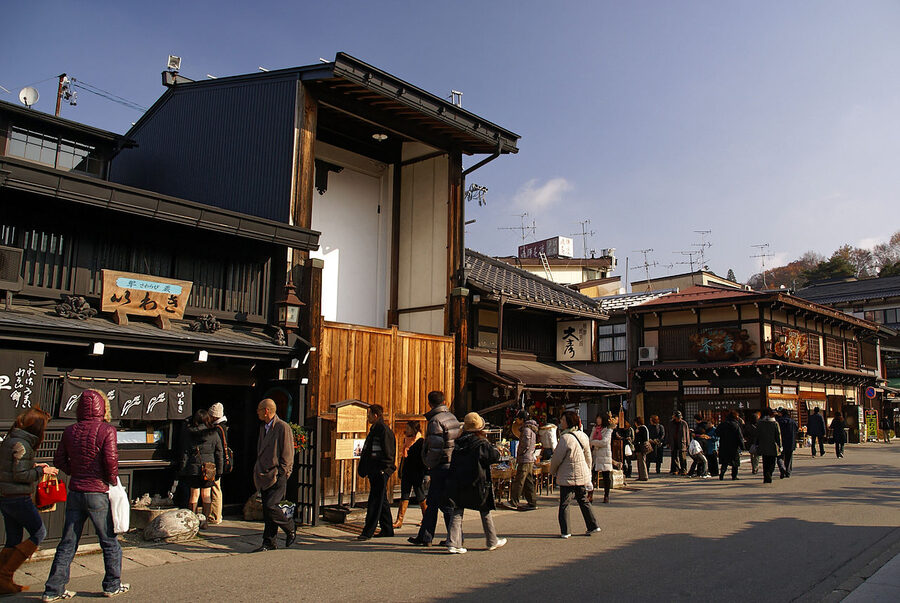
The natural shape of a Takayama morning, ordered by time:
- 7:00 to 8:00 (or 8:00 to 8:30 in winter): Miyagawa market when it’s still locals.
- 8:30 to 9:00: Walk south, cross Nakabashi, take the riverside diagonal back through the empty Sanmachi streets before the shops open.
- 9:00 to 9:30: Jinya-mae market while it’s still quiet.
- 9:30 onwards: Takayama Jinya itself (opens 8:45), about 45 minutes inside.
- 10:30: Coffee at one of the Sanmachi cafes that’s now open.
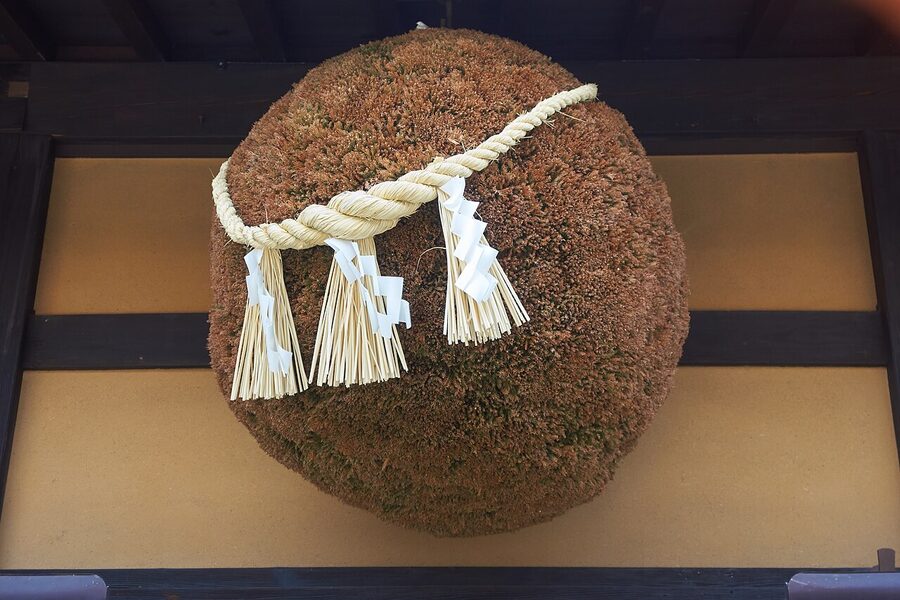
- 11:00 onwards: Sanmachi-suji proper, the Edo merchant houses, the sake breweries with their cedar balls, the Yoshijima Heritage House and Kusakabe Folk Museum.
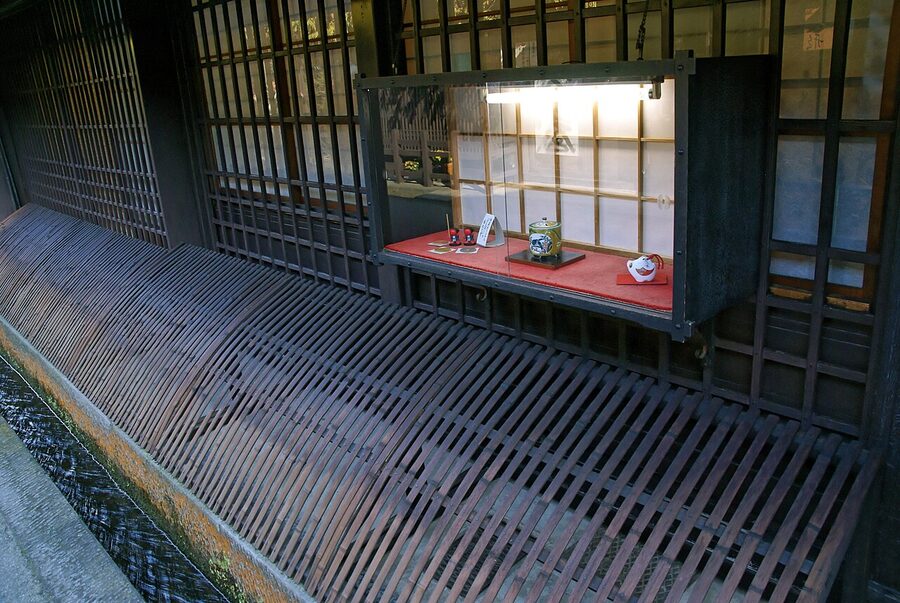
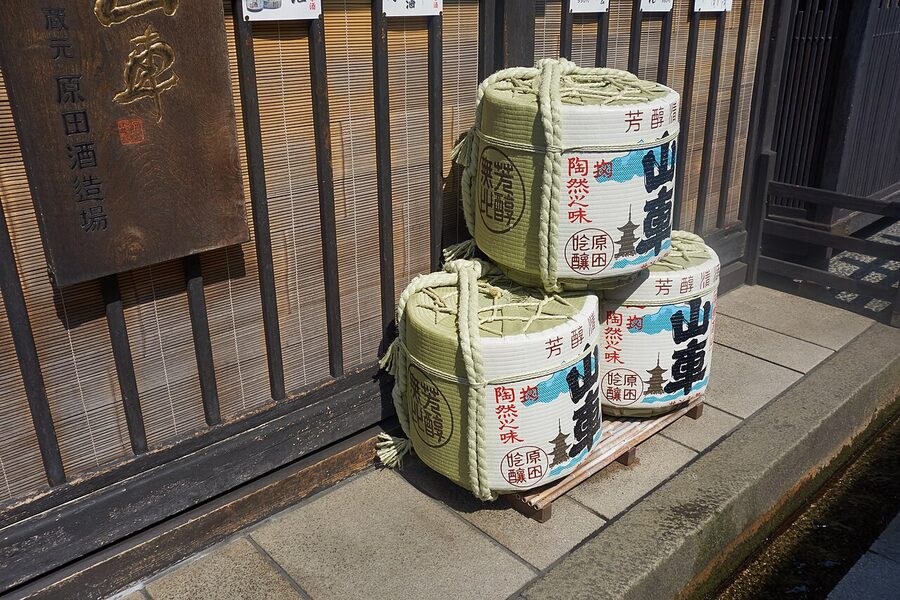
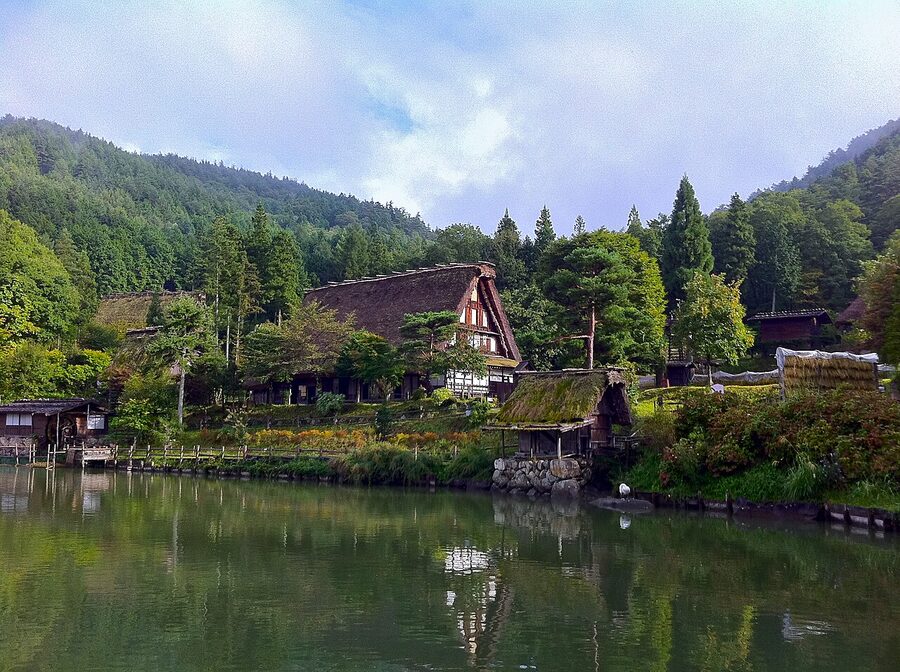
Six hours, no rushing, two markets, the Jinya, and Sanmachi all done by lunch. If you’ve planned a single day in Takayama, this is your morning. The afternoon belongs to Hida Folk Village via the Sarubobo bus, or a half-day at the Yatai Kaikan festival float museum before catching an afternoon train.
If the markets don’t sell what you need: festival-week alternatives
If you’ve timed your visit to the spring (April 14 to 15) or autumn (October 9 to 10) Takayama Matsuri, both markets run as normal but the crowd is incomparably worse. The festival pulls 200,000-plus into a town of 87,000 people. On those two pairs of days, the markets become a procession at 8am rather than a market. If you want the actual market experience, do it the day before or the day after the festival, when the crowd has gone but the festival decoration is still up. See the festival guide for the float schedule and where the yatai parades route.
For where to sleep within walking distance of either market (most ryokan in Sanmachi-suji are 5 minutes’ walk from Miyagawa) see where to stay in Takayama.
Verdict, in order of who should come
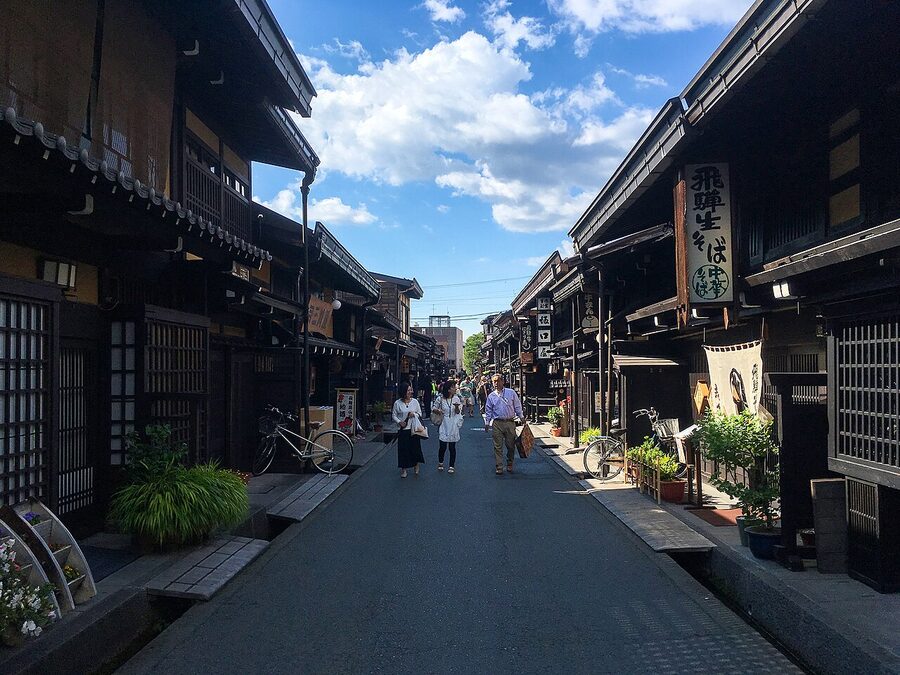
If you’re in Takayama for a single day, both markets in the same morning, plus the Jinya. Don’t skip Jinya-mae for being smaller; it’s the more atmospheric of the two and it costs you ten minutes.
If you’re staying overnight, do Miyagawa twice. Once at 7:00 (or 8:00 in winter) and again at 11:00 the second day to see the difference. The morning rhythm is what makes the place. The midday view is what most travellers come away with.
If you’re a serious food shopper or live in Japan and travel here for the produce, come on a Tuesday or Wednesday in October when the apples and persimmons peak and the festivals don’t draw a crowd. Bring a cool bag.
If your interest is photography only, the trade-off is real: the prettiest light is also the emptiest market. Pick one and don’t try to have both. Empty stalls in beautiful light photograph poorly compared to busy stalls in flat light. The first hour is for snapshots; the second hour is for the story.