
In 1968 the people of Tsumago became the first community in Japan to write a residents’ charter that bound them not to sell, lease, or destroy any building, plot, field, or stretch of forest along the old Nakasendo. They did it because the post-town was dying. Trains had bypassed the village in 1909, the road traffic had drained out by the 1950s, and the timber-framed inns of the 42nd post-station on the road from Edo to Kyoto were being eaten by termites and silence. The charter held. So did the buildings. Tsumago is the oldest preservation district in the country, and once you know that, the village stops feeling like a film set and starts feeling like a working argument.
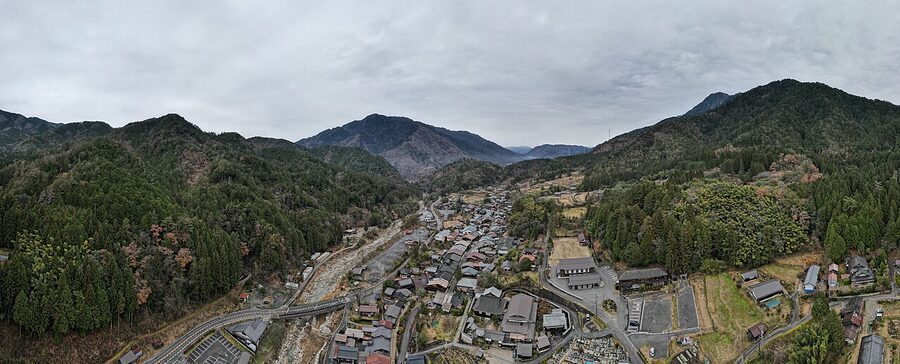
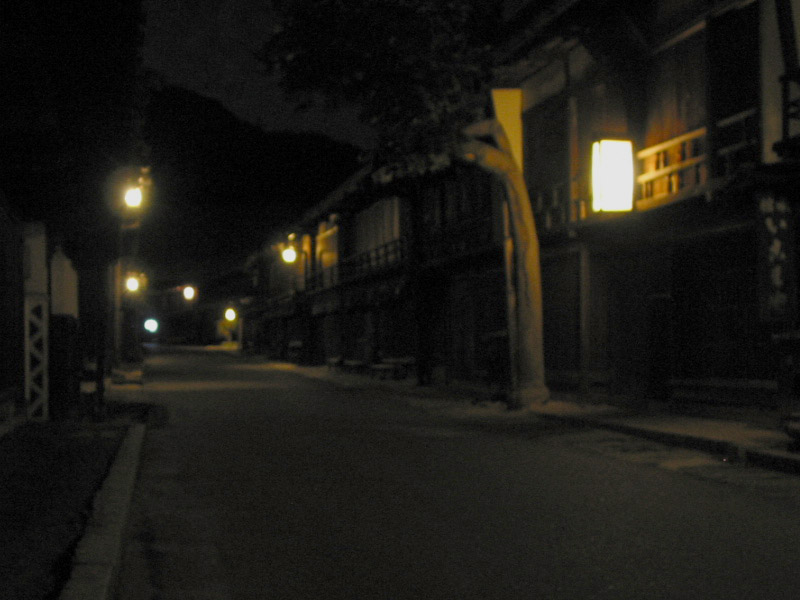
I keep coming back here for the small things. The way the postman still hand-stamps your letter at the wooden post office window if you ask. The miso-coloured glow of the Tera-shita houses at dusk before the day-trippers leave. The smell of gohei mochi grilling on a charcoal brazier outside Onyado Tsutaya. Tsumago rewards a slow second visit more than a hurried first one, which is awkward to say in a guide, but true.
In This Article
- Why Tsumago is preserved when everywhere else isn’t
- How to get to Tsumago: the Nagiso route
- Walking the village: what to see, in the order you’ll see it
- The Kosatsu-ba notice board
- Tsumago-juku Honjin: the principal inn
- Waki-honjin Okuya: the secondary inn (and the better museum)
- The Nagiso Town Historical Museum
- Tera-shita: the original preservation district
- Kotoku-ji: the temple with squeaky floors
- The Tsumago Castle ruins
- Walking the Magome–Tsumago section of the Nakasendo
- Which direction: Tsumago to Magome, or Magome to Tsumago?
- The waterfalls and the tea-house
- Baggage forwarding and trail logistics
- Lesser-known walks from Tsumago
- Where to stay in Tsumago: a short, honest list
- Inside Tsumago
- O-Tsumago
- Nagiso town and beyond
- What to eat in Tsumago
- Festivals and dates worth aiming for
- Hiroshige’s Tsumago, then and now
- Practical: when to visit, what to bring, what’s open
- What to combine Tsumago with
- The obvious pairing: Magome
- The slower route: drive the valley
- The day-trip add-on: Momosuke Bridge
- Onward, north or south
- The thing nobody tells you
Why Tsumago is preserved when everywhere else isn’t
Tsumago was the 42nd of the 69 post-stations on the Nakasendo, the inland highway that connected Edo (now Tokyo) and Kyoto from 1601 onwards. It also sat at a junction, where the Ina Kaido road south to Iida joined the Kiso route, so the village did serious through-business for two centuries. Then the Meiji-era railway cut through the wider Kiso Valley but skipped the high inner gorge where Tsumago sits. The post-towns lost their reason to exist, and most of them quietly burnt down or were bulldozed during the 1950s growth boom.
What happened in Tsumago is unusual. In the early 1960s a handful of locals, including the staff of the Waki-honjin Okuya, started cataloguing the surviving Edo-period houses in the Tera-shita district at the south end of the village. By 1968 the Nagano prefectural government adopted the restoration project as part of its Meiji-centenary programme, and the residents formed an association called Tsumago wo Aisuru Kai, “the Society of Tsumago Lovers”. The association wrote the three-word charter that everyone here still abides by: urananai, kasanai, kowasanai, do not sell, do not rent out, do not destroy. By 1971 some twenty houses had been restored. In 1976 the national government designated the village as the country’s first Important Preservation District for Groups of Historic Buildings, the legal status that now protects 130-plus districts across Japan. Tsumago wrote the playbook.
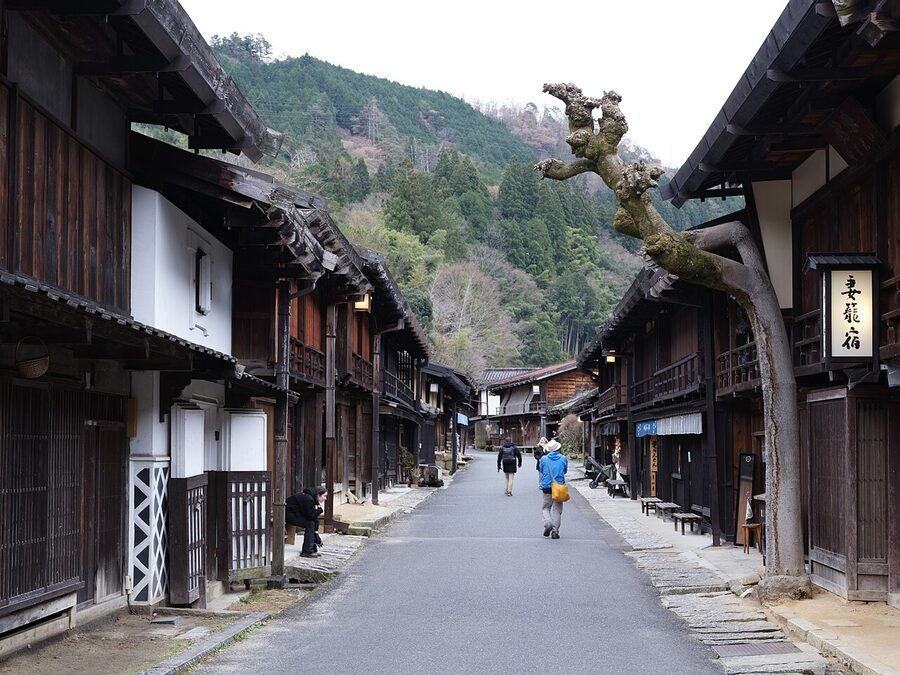
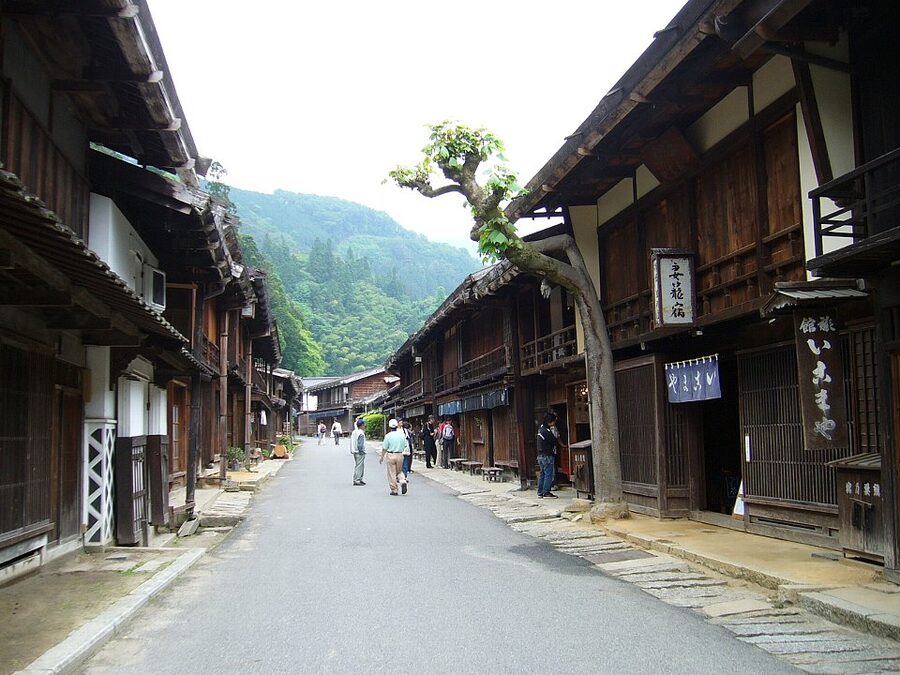
The visible result is what you walk into today. The 1km main street is closed to vehicle traffic during the day. Power and phone cables are run behind the houses, paid for over decades by Nippon National Trust, Chubu Electric and the old NTT. Vending machines and chain logos are banned along the strip. Shopfronts use timber boards and hand-painted kanji rather than backlit signs. Modern fittings, if a house has them, are tucked behind sliding panels you don’t see from the street. None of this is decorative. It’s the residents’ charter at work.
How to get to Tsumago: the Nagiso route
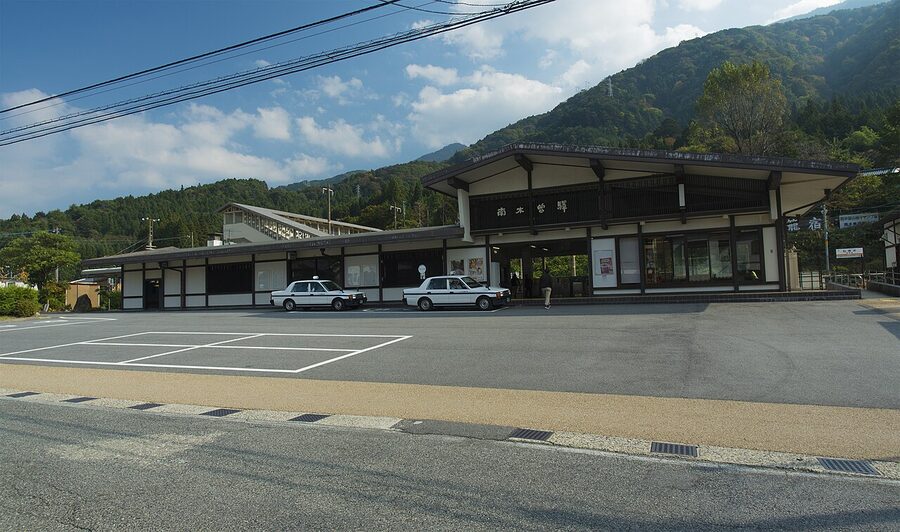
The closest train station is JR Nagiso (南木曽駅), a small unmanned-most-of-the-day stop on the Chuo Main Line between Nagoya and Matsumoto. From Nagoya it’s about 80 minutes on a Limited Express Shinano (¥2,810 unreserved at the time of writing) or roughly two hours on the cheaper local. From Matsumoto it’s about an hour on the Shinano. Either way, get off at Nagiso, not Nakatsugawa, which is where the Magome-side bus runs from.
From Nagiso station you have three choices for the last 4km into the village. The route bus runs about hourly, takes seven minutes and costs ¥300 each way. A taxi is around ¥2,000. Or you can walk it: the path follows the old Nakasendo through the Yogawa hamlet and takes a flat 40 minutes, which is honestly the nicest of the three on a clear morning.
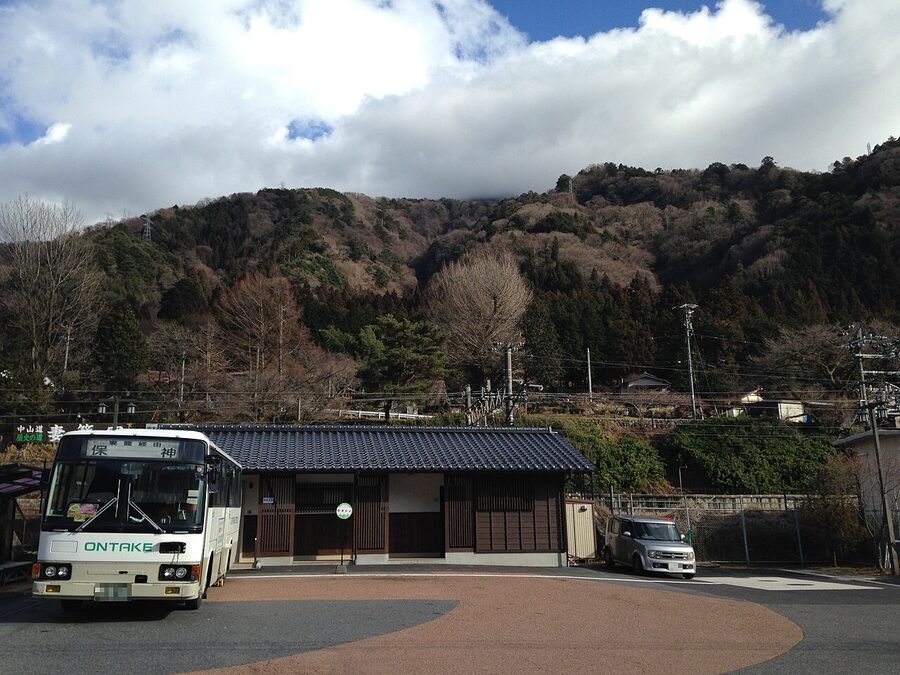
If you’re driving, the village is roughly 30 minutes from the Nakatsugawa IC on the Chuo Expressway, or 55 minutes from Iida-Yamamoto IC. Tsumago has four official car parks along Route 256 outside the conservation district: the second town lot (179 spaces), the central lot (75), and a third town lot (123) that opens during high season. Don’t try to drive into the village, you’ll be turned around. If you’ve come for the day with a car, the central lot is the closest if you have wheelchair-access needs.
For the bigger regional context, including how Tsumago fits into a longer route across central Honshu, our Japan Alps access guide covers the trains, buses, and rail-pass arithmetic.
Walking the village: what to see, in the order you’ll see it
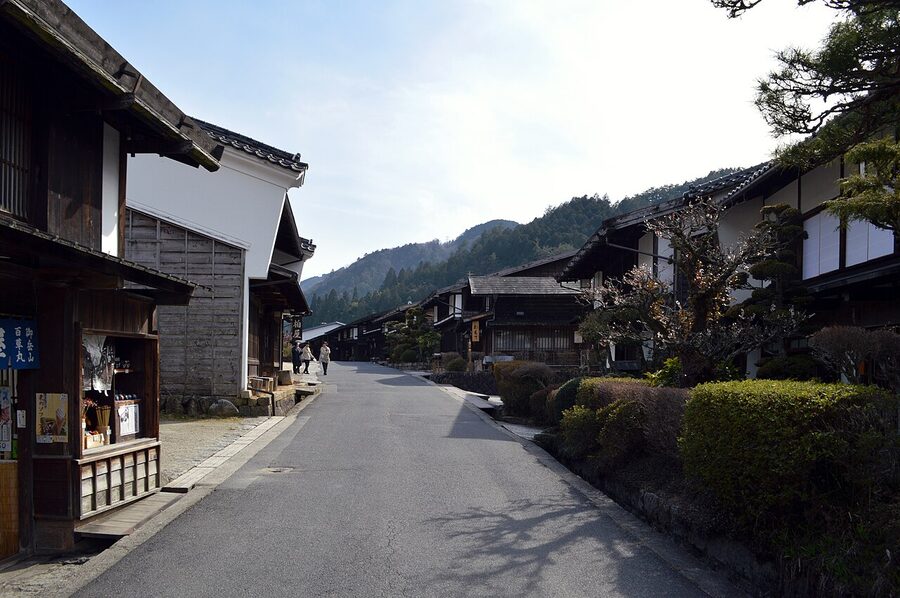
Coming in from the bus stop you arrive near the north end, the Edo end. The whole village is about 1km, north to south, so the natural way to walk it is straight through and back. Plan two to three hours if you stop at the museums, half a day if you eat lunch and try the museum tour in Japanese.
The Kosatsu-ba notice board
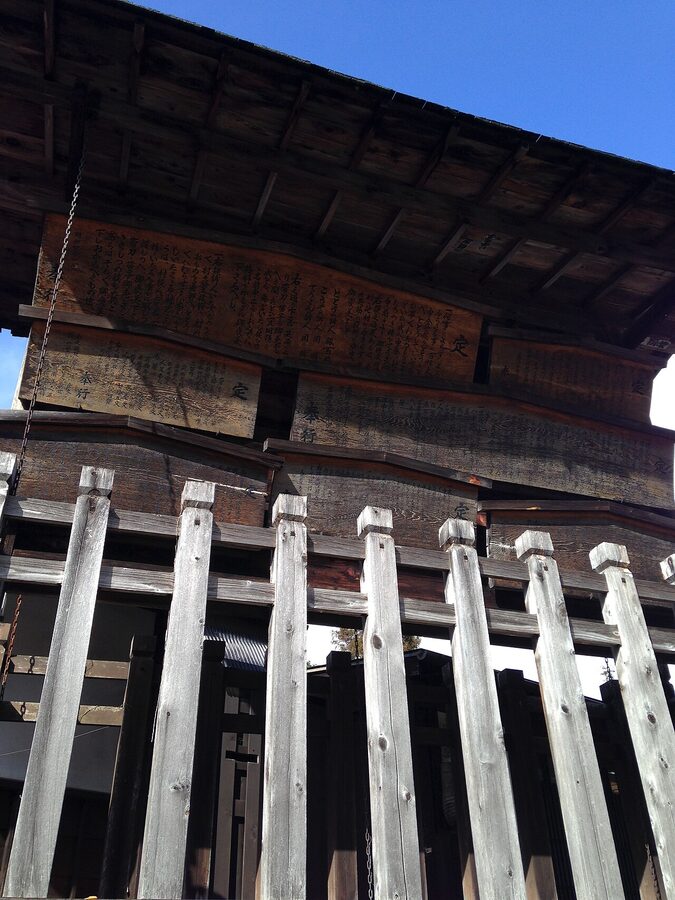
Standing at the very north edge of the conservation district is the Kosatsu-ba, the reconstructed shogunate notice board. The placement is the point: any traveller coming in from the Edo direction had to pass it. The Edo-period equivalent of a town entrance sign that tells you the laws here. It’s a small detail but a useful first stop because it sets the proportion. The original boards loomed over you. The replicas do too.
Tsumago-juku Honjin: the principal inn
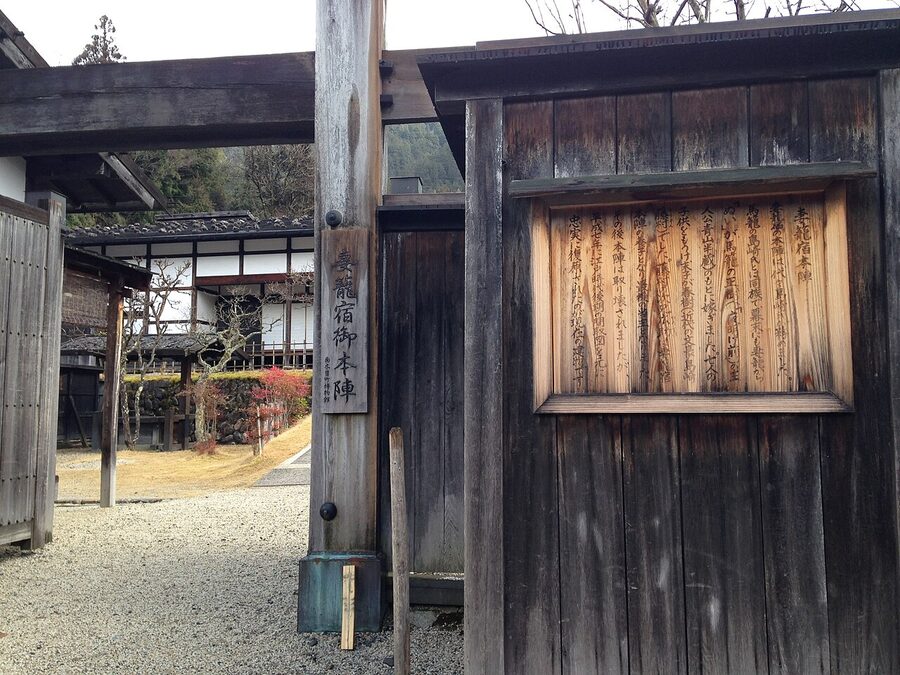
The Honjin was the official inn that received the daimyo, court envoys, and senior government officials passing through. In Tsumago the family that ran it for the entire Edo period were the Shimazaki, and that name matters because Toson Shimazaki, the great Meiji-era novelist and author of Yoake Mae (“Before the Dawn”), was born on this site. His mother grew up in the Honjin household. The current building is a 1995 reconstruction based on surviving floor plans of the 1830s building, and inside you’ll see the layered tatami rooms, the upper-grade reception bay reserved for the highest-ranking guests, and a small exhibition on the Shimazaki family.
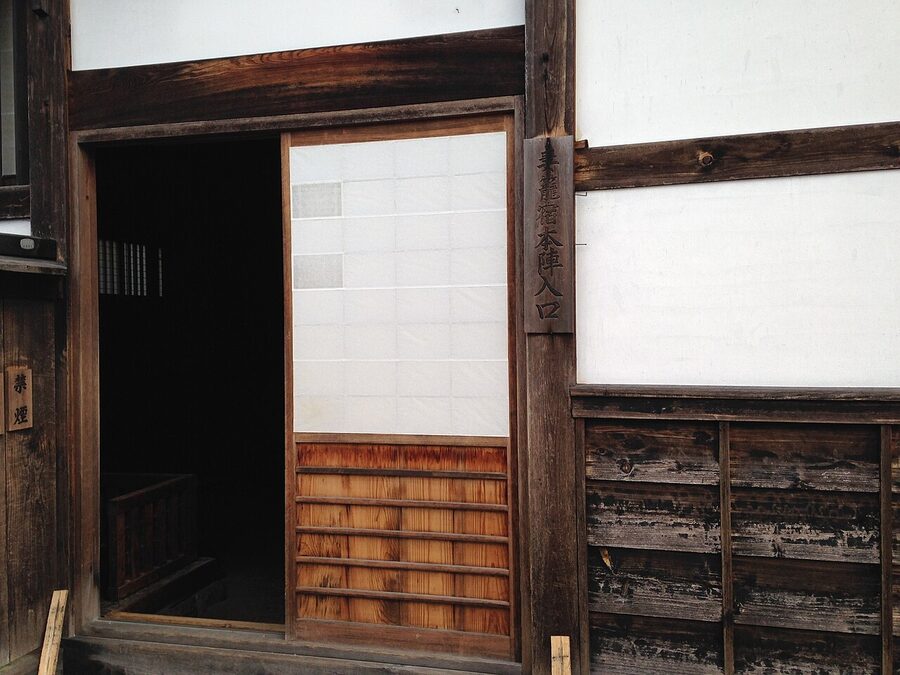
Admission is ¥300 to the Honjin alone, but the more useful ticket is the ¥700 combination pass that includes the Waki-honjin Okuya next door and the Nagiso Town Historical Museum behind it. Hours are 9:00 to 17:00 in summer, closing earlier in winter. Closed 29 December to 1 January.
Waki-honjin Okuya: the secondary inn (and the better museum)
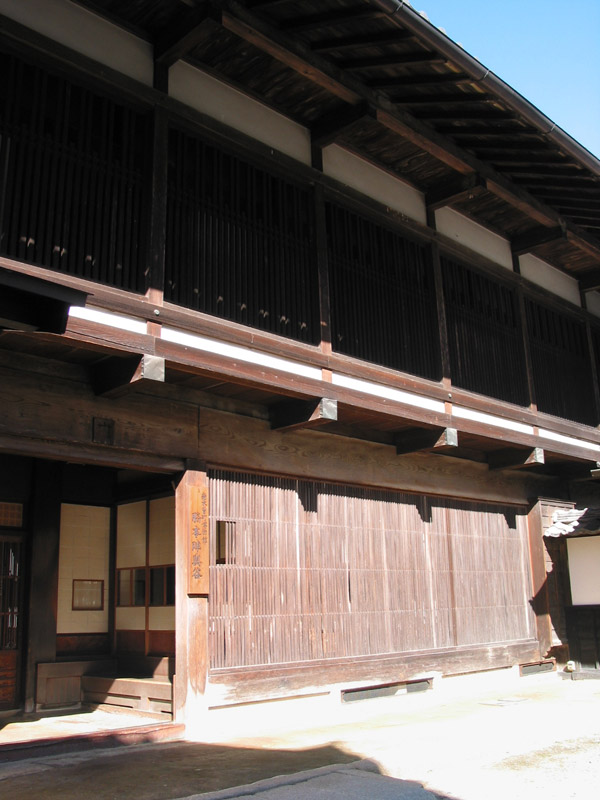
If you only have time for one museum, make it the Waki-honjin. The Honjin is a reconstruction. The Okuya is the real article. The Hayashi family ran the secondary inn here for the entire Edo period and rebuilt the present house in 1877 (Meiji 10) using vast amounts of hinoki cypress that had until then been protected as shogunal forest. The result is one of the very few authentic Meiji-era domestic houses anywhere in the Kiso Valley still standing on its original site, with original timbers, original layout, original irori hearth in the central room. It was designated an Important Cultural Property in 2001.
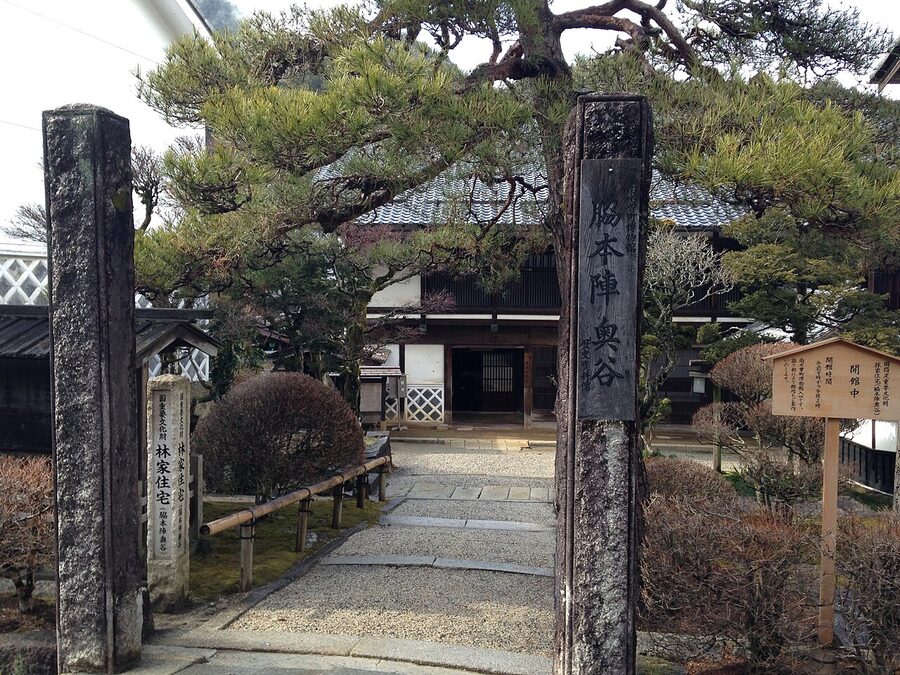
The volunteer guides who staff the Okuya give a 30-minute tour of the house in Japanese (English summary cards available) and they’re worth listening to even if your Japanese is rough. They’ll tell you about Toson Shimazaki’s first love, a girl named Yufu who married into this very house, and they’ll point out the small parlour where Emperor Meiji’s daimyo procession stayed overnight in 1880. The house is closed on the second and fourth Thursday of each month and over New Year. Admission is ¥600 alone or included in the ¥700 combination ticket.
The Nagiso Town Historical Museum
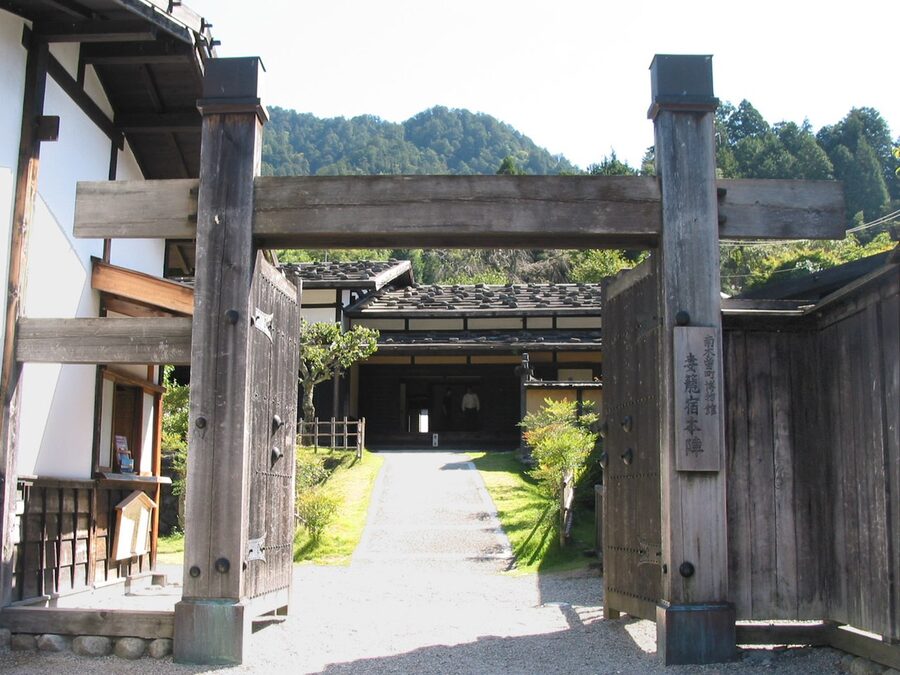
Behind the Honjin and connected by the same ¥700 ticket is the Nagiso Town Historical Museum (Rekishi Shiryokan). The displays cover the wider history of Nagiso town from prehistory to the present, with a strong section on the post-station system and a really good upper-floor exhibit on the Tsumago preservation movement of the 1960s, including the original residents’ meeting minutes and contemporary photographs of houses on the verge of collapse. If you’ve found the village charming and want to know how it actually got that way, this is where you find out. Same hours and closures as the Waki-honjin.
Tera-shita: the original preservation district
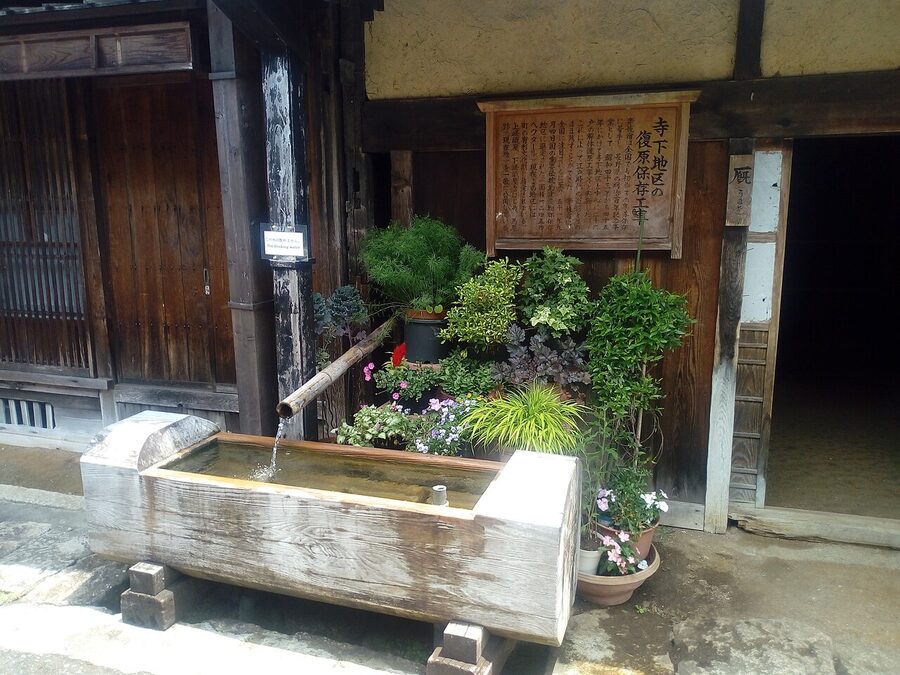
Walking south past the museums, the village narrows and the road bends. This is Tera-shita (“below the temple”), the strip the Tsumago wo Aisuru Kai started restoring in 1968. Two of the oldest houses in the village are here and open to visit free of charge: Kami-Sagaya, considered the most representative surviving inn of the early Edo period, and Shimo-Sagaya, a cheaper minshuku-style townhouse with the close-set lattice windows that defined Kiso post-town vernacular. Stand here for a minute and look at the rooflines: each house has a slight overhang to the second floor, called dashibari, that was specifically banned under the Edo period sumptuary laws elsewhere but was allowed in Tsumago because the patrons of the Honjin and Waki-honjin were classed as official travellers.
Kotoku-ji: the temple with squeaky floors
A short uphill detour from Tera-shita takes you to Kotoku-ji, founded around 1500 and rebuilt several times. The reason to go up there is the uguisu-bari floor, the so-called nightingale floorboards laid so that they squeak when stepped on. The squeak isn’t a flaw, it’s an alarm system, originally designed to warn the temple of intruders. Most of Japan’s famous nightingale floors are at major Kyoto temples behind paid entrances. Tsumago’s is a small rural example you can walk in and stand on for the price of a donation in the box at the door.
The Tsumago Castle ruins
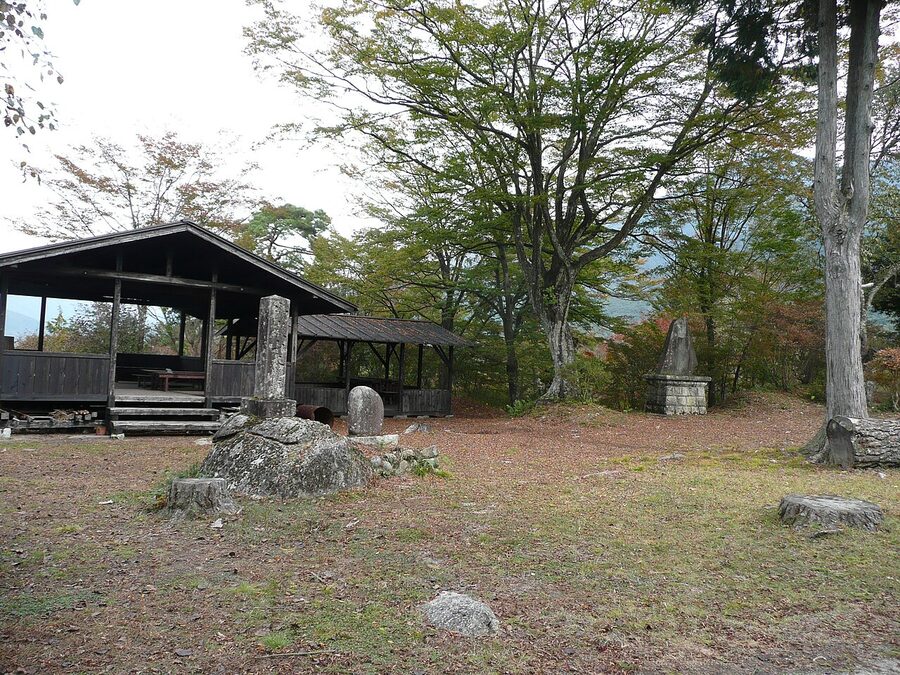
Up on a wooded ridge a kilometre north of the village, the Tsumago Castle ruins are little more than earthworks today, but the climb is worth it for two reasons. First, in 1584 the castle held out against the army of Toyotomi Hideyoshi, in a battle linked to the wider Komaki–Nagakute campaign with Tokugawa Ieyasu, which is the kind of context most travellers don’t realise this quiet village has. Second, the platform of the old keep gives you the best high view of Tsumago and the Kiso river valley. Allow about 90 minutes for the round trip. Wear something with grip in winter, the path turns to ice.
Walking the Magome–Tsumago section of the Nakasendo
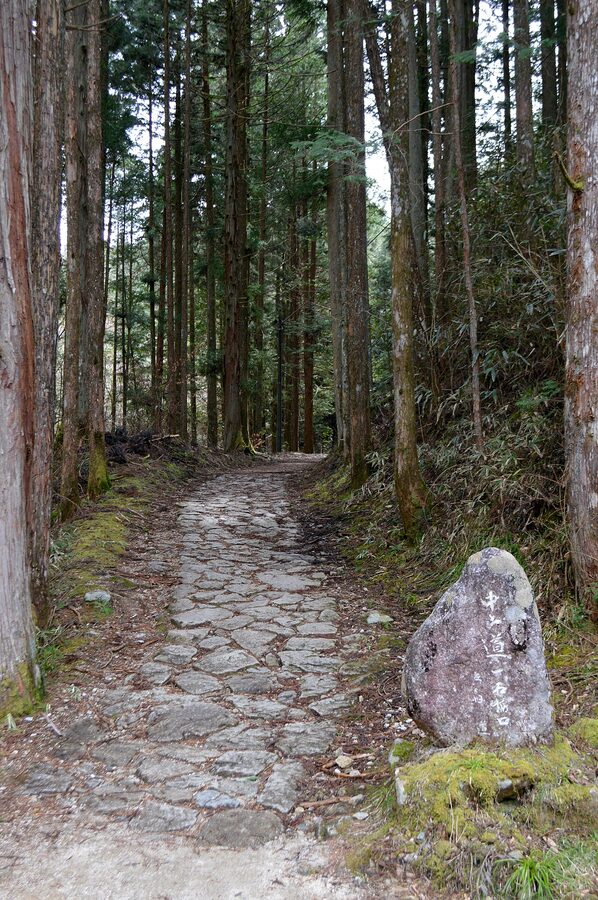
The 8km walk between Magome and Tsumago is one of the most-walked stretches of the entire Nakasendo, and the most accessible section for a traveller without a car. It runs over the Magome-toge pass at 801m, between two of the best-preserved post-towns on the route. The trail is signed clearly in English and Japanese throughout, and there’s a small charcoal-stove rest house called Tateba-jaya at the high point where volunteers serve free tea to walkers in the warm months. You can read more about the post-road’s history in our Nakasendo walking guide.
Which direction: Tsumago to Magome, or Magome to Tsumago?
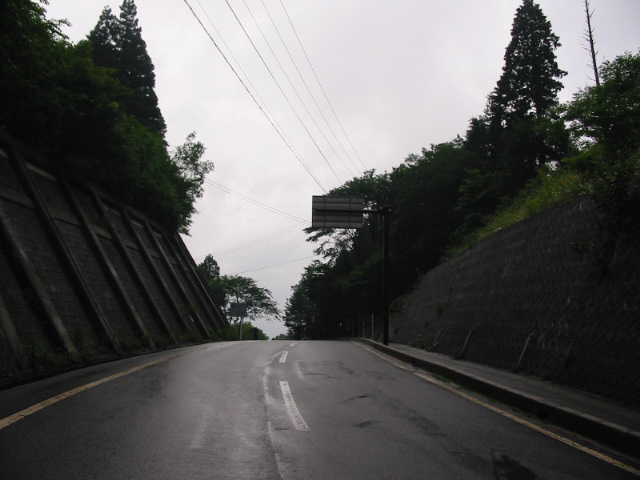
The standard advice you’ll read everywhere is to walk Magome to Tsumago. Most guides say it because Magome is at higher elevation (600m vs Tsumago’s 420m), so on paper the direction is downhill overall. In practice the start from Magome immediately climbs another 200m to the pass before descending 380m to Tsumago, while from Tsumago you climb 380m steadily to the pass then drop a comfortable 200m down to Magome. The Tsumago-to-Magome direction is gentler underfoot, the climb is gradient-friendly, and you finish in a village that has more bus connections back to Nakatsugawa station for onward travel. I walk it Tsumago to Magome.
The exception is if you’re staying overnight in Magome and walking back. Then the morning direction is whatever lets you start before 9am, beat the day-trip groups arriving from Nakatsugawa, and finish your walk by lunchtime in your destination village.
The waterfalls and the tea-house
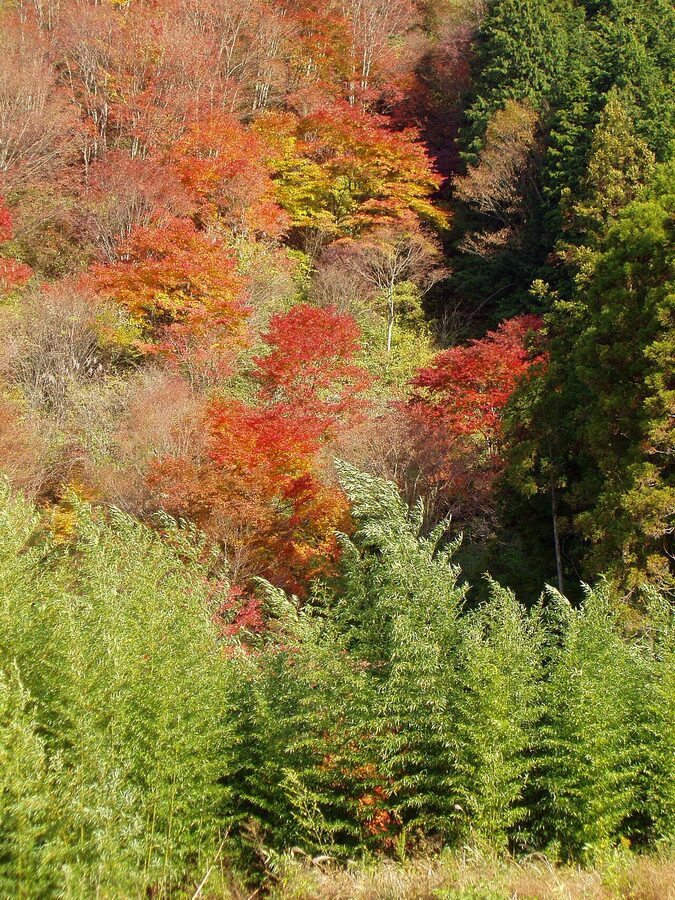
Roughly halfway between the villages, a 200m signed detour off the trail takes you to the Otaki and Medaki waterfalls (the male and female falls). They feature in Eiji Yoshikawa’s twentieth-century novel Musashi as the spot where the swordsman Miyamoto Musashi and his lover Otsu stand under the cascades. The waterfalls themselves are modest by Japanese standards. The detour is more about the legend than the spectacle, but on a hot August day you’ll thank yourself for the spray.
Baggage forwarding and trail logistics
You can have your overnight bag forwarded between Tsumago and Magome through both villages’ tourist information centres for around ¥1,000 per piece, daily through the warmer months (typically March to late November). Drop your bag at the centre by 11:30 am, walk the trail, pick it up in the destination village by 13:00. The Tsumago centre also rents bear bells for ¥100, sells the official Magome–Tsumago “completion certificate” you can stamp at both ends, and has bilingual trail maps. Wear walking shoes, not trainers. The descent from the pass is rooty, the cobbles are slick after rain, and there are wooden bridges with no handrails.
Lesser-known walks from Tsumago
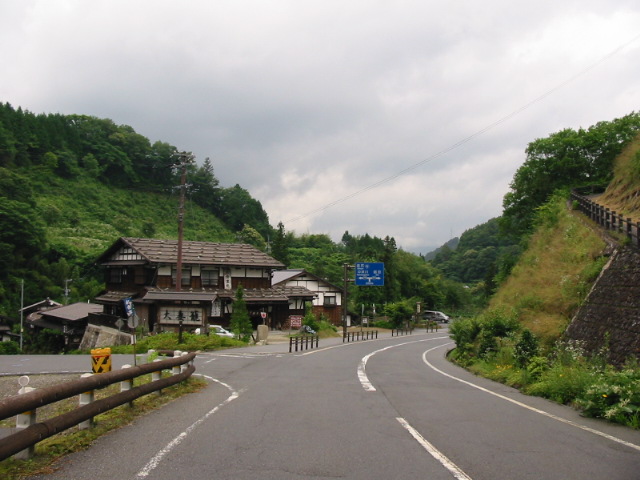
If you’ve already done the Magome leg or you want a quieter walk on a busy day, two longer Nakasendo sections start from Tsumago in the opposite direction, and almost no day-trippers know they exist.
The first is the Tsumago to Nojiri section over the Yogawa-michi, a 19km stretch on a near-deserted side route of the original Nakasendo. The path passes through stands of cypress, descends past three small hamlets, and ends at JR Nojiri station, two stops north of Nagiso on the same Chuo Main Line. Allow six to seven hours and start before 9am. The Yogawa is known asiatic black bear country, especially September to November, so a guided walk through Really Rural Japan or a comparable local outfit is the safer move than going it alone.
The second is the much shorter O-Tsumago section, basically a 25-minute walk south from the conservation district along the same old Nakasendo path. O-Tsumago is a hamlet of seven or eight houses with the original-era inns Hanaya and Maruya still operating as minshuku. There’s no street lighting, no shops, no signs, and on a quiet weekday afternoon you’ll often have the path to yourself. This is the walk to do at sunset before dinner if you’re staying in the village.
Where to stay in Tsumago: a short, honest list
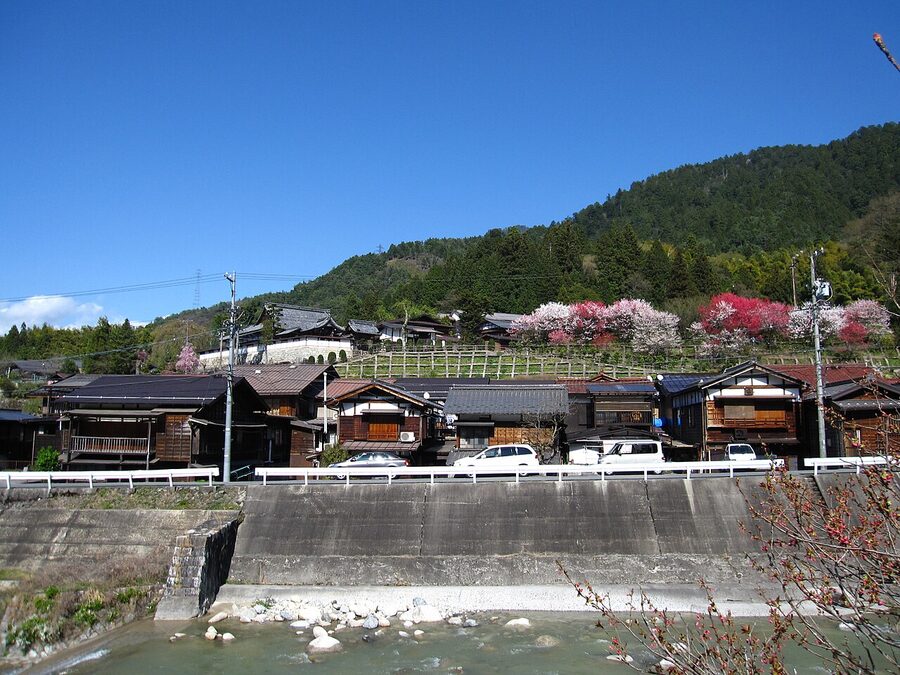
The honest truth: there are exactly two places to sleep inside Tsumago itself. Beyond those, your other options are the O-Tsumago hamlet (15 minutes south on foot), the Nagiso town centre near the station (4km north), or the larger TAOYA Kisoji hotel a 4km drive away. Almost all of these need to be booked direct via the property’s own website, not through Booking.com or Agoda, because the small minshuku haven’t joined the platforms.
Inside Tsumago
Onyado Daikichi. A four-room minshuku with shared baths, on the main street. Run by a husband-and-wife team who do all the cooking themselves. Half-board including the famous Kiso valley cuisine of the season is the way to do it, and the dinner is the reason most repeat visitors come back. Book direct at daikichi.tsumago.jp. The price for half-board sits around ¥13,000–15,000 per person at the time of writing.
Matsushiroya Ryokan. A historic timber ryokan with sliding fusuma doors, shared bathing, and a small garden. Older than Daikichi, less polished, more atmospheric. Book direct via the ryokan’s own site only.
O-Tsumago
Onyado Hanaya. A 300-year-old family-run minshuku in the O-Tsumago hamlet. Mountain produce dinners, irori hearth cooking, a large stone bath. About a 15-minute walk from the centre of Tsumago.
Maruya Inn. Small traditional guesthouse, irori room, garden bath renovated in 2020. Walk-in feel, family rates available.
Tsutamuraya. Tucked further into O-Tsumago on the way to Magome. Home-grown vegetables, the family brews its own sake. Booking via their own website.
Nagiso town and beyond
Hostel Yui-an. A renovated farmhouse on the Nakasendo route just outside Nagiso town. Two rooms only, dinner included, free pickup from Nagiso station. The bookable backup if Tsumago is full.
Oyado Katsu. Self-catering two-bedroom apartment overlooking the Kiso river, walk to Nagiso station. Useful if you’ve hired a car.
TAOYA Kisoji. The only conventional resort hotel option, 4km from Tsumago with shuttle to Nagiso station, sauna and onsen baths. Western and Japanese rooms, can be booked through Booking.com if you prefer that route. Worth it for travellers wanting more facilities than the small inns can offer.
For the broader picture of where the Nakasendo and Kiso post-towns sit in a planned route, see our Japan Alps itineraries.
What to eat in Tsumago
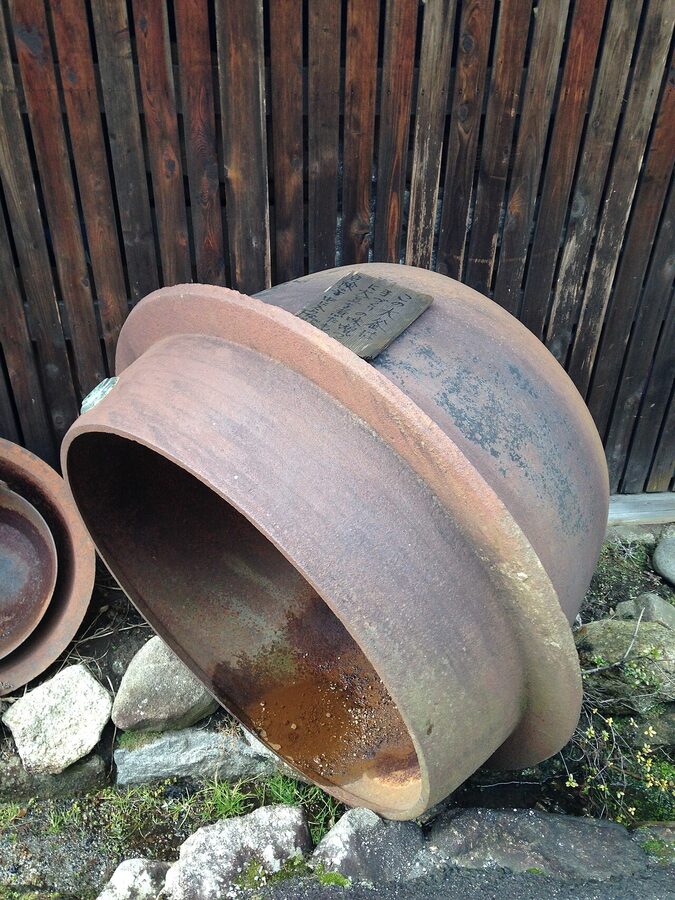
Lunch in Tsumago centres on a few specific things, all of them genuinely Kiso. Don’t be talked into the steam-cooked beef bento at the higher-end places: it’s competent but it’s not regional.
Sansai soba. Buckwheat noodles topped with mountain vegetables: bracken fern, butterbur, wild mushrooms, and sometimes a slice of grilled trout. The cold zaru version comes with a thin dipping sauce in summer; the hot version is a winter staple. ¥1,000–1,400 at the village restaurants. Try it at Yoshimuraya on the main street.
Gohei mochi. Pounded rice flattened on a wooden paddle, brushed with a thick walnut-and-miso sauce, then grilled over charcoal until the outside crisps. The Kiso version uses kurumi walnut, the Hida version (further north) uses just sweet miso. Smell your way to the best stand: there are usually two operating outside the older shops near the centre. ¥300–400 per skewer.
Sunki-zuke. A pickle made from akakabu red turnip leaves fermented in lactic-acid cultures rather than salt. It’s specific to the Kiso valley and you almost can’t find it outside the region. Ask for it in the small grocery shops along the main street. Looks unpromising in the jar, tastes brilliant alongside rice.
Hoba-maki and kuri-kinton. Seasonal sweets. Hoba-maki is sweet rice paste wrapped in a magnolia leaf, made only in early summer. Kuri-kinton is a pure chestnut paste sweet, peak season September to November. Both are sold individually in the wagashi shops on the main street.
Drinks. Try the amazake (sweet, low-alcohol fermented rice drink) sold at a couple of the older shops in winter. In summer, the cold sansai sobacha (mountain-vegetable soba tea) is the local version of an iced tea.
Festivals and dates worth aiming for
Wachino Shrine summer festival, 23–24 July. The shrine on the hill above Tsumago is the village’s tutelary chinju. On the night of the 23rd a portable shrine is carried down to the village to the call of “geni mo sayona”, parades through the streets the next day, and is returned to the shrine on the 24th. Local food stalls run along the strip on the main festival day.
Bunka Bunsei Fuzoku Emaki Procession, 23 November. This is the one to plan a trip around. A 130-strong procession of villagers in Edo-period dress walks the village in costume, recreating the daimyo procession of the early 19th century, with samurai, women on Kiso horses, children carried in palanquins, packhorse handlers, and ronin. The procession started in 1968 to mark the formal launch of the Tsumago preservation movement and has run every year since. It happens on Labour Thanksgiving Day (a public holiday) and brings the largest crowd of the Tsumago calendar by a margin. Travel and accommodation must be booked weeks in advance.
Hyousetsu no Hi Matsuri (Ice Lantern Festival), 3rd Saturday of February. Around 600 ice candles are lit along the main street and the side lanes for one night. Hot wine and udon stations open along the strip. It’s small, it’s deeply local, and on a dry winter night with snow on the eaves it’s the best evening of the Tsumago year.
Hiroshige’s Tsumago, then and now
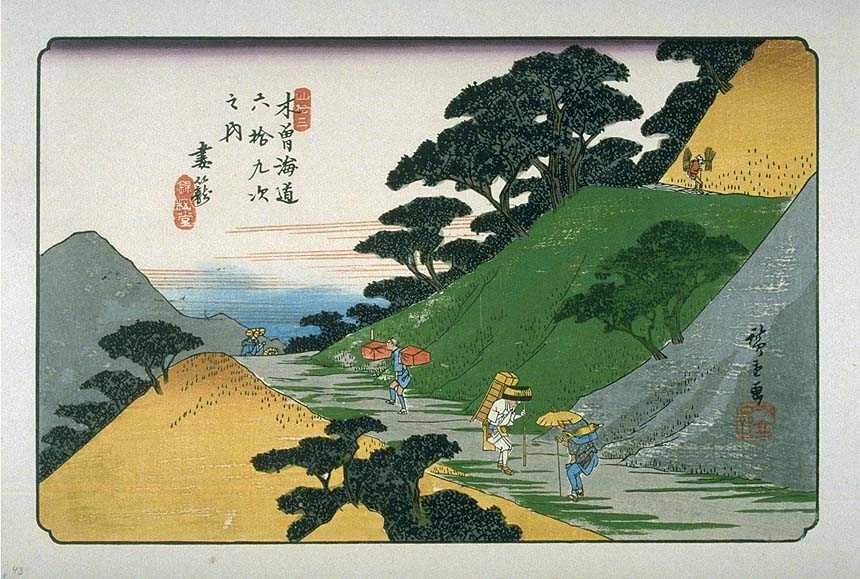
Between 1835 and 1842 the woodblock print artists Utagawa Hiroshige and Keisai Eisen produced a 71-print series titled The Sixty-nine Stations of the Kiso Kaido, the inland counterpart to Hiroshige’s better-known coastal Tokaido series. Tsumago is print number 42. The composition shows the village’s Tajima bridge and the steep cypress-clad slope rising behind it. Stand on the south side of the conservation district today, looking northwest, and the slope is still where Hiroshige put it. The bridge has been rebuilt several times but in the same place. The houses below it are not the houses Hiroshige drew, but their footprint is. It’s an unusual continuity.
Practical: when to visit, what to bring, what’s open
Best months. Late April to late May for new beech leaf, mid-October to mid-November for autumn colour and the procession. Mid-July to August is humid but green. December and February are stone-cold and quiet, which is the right kind of quiet if you have a ryokan booked. The hardest week to find a room is the first week of November, around the autumn colour peak and the run-up to the procession.
What to bring. Walking shoes if you’re doing the Magome leg, layers (the Kiso valley sits at 420m and is consistently 5–7°C cooler than Nagoya), a small cash wallet for the museums and the food stalls, and a power adapter if you’re staying overnight (some of the older ryokan only have two-pin sockets).
What’s closed. The Honjin is closed weekdays except holidays at the time of writing. The Waki-honjin closes on the second and fourth Thursday of each month. Both shut from 29 December to 1 January. Almost all the village’s restaurants close at 16:00 in winter. The post office shuts at 17:00 on weekdays and is closed weekends, which is awkward if you want the hand-stamped postmark, so plan a weekday visit.
Toilets. Free public toilets at the central tourist information centre, the south end car park, and the Kosatsu-ba area at the north end. None inside the museums.
Cash and cards. Many of the smaller shops are still cash-only and the village’s only ATM (Japan Post in the post office) is out of service for international cards on weekends. Bring yen.
For broader walks in the region, our Narai-juku guide covers the larger preserved post-town an hour north on the same Chuo Main Line, and our Shiojiri travel guide handles the wider city around it.
What to combine Tsumago with
The obvious pairing: Magome
The 8km walk to Magome is the standard one-day pairing, and most travellers do it as a day-loop from a single base. If you’re doing a single day from Nagoya or Matsumoto, the cleanest route is: train to Nagiso, bus to Tsumago, walk to Magome, bus to Nakatsugawa, train onwards. Allow eight hours door to door from Nagoya including the walk.
The slower route: drive the valley
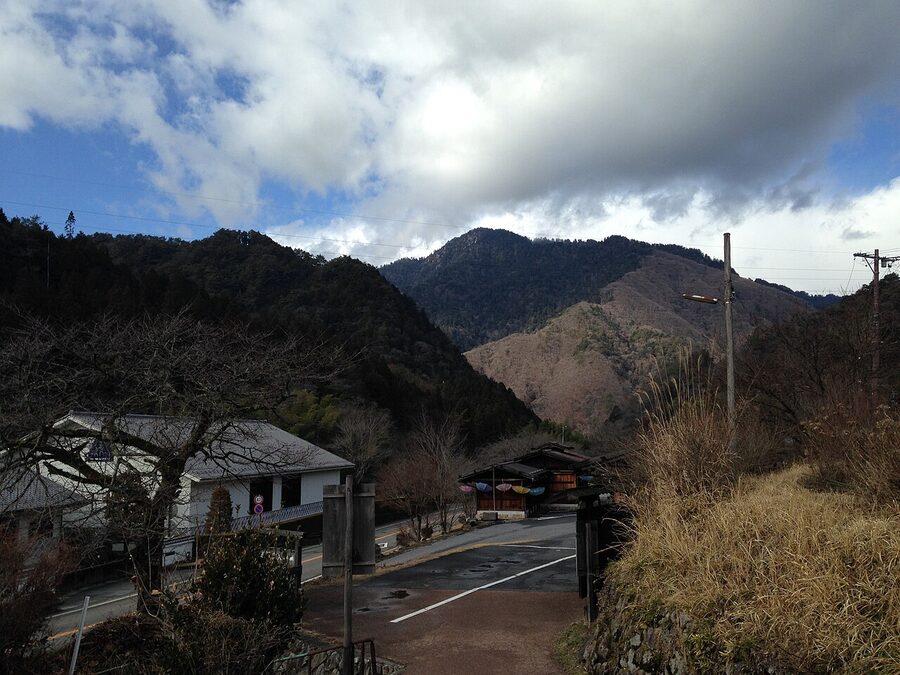
If you have a car and an extra day, take the longer view. Our Kiso Valley driving loop covers the route from Shiojiri south through Narai, Yabuhara, Kiso-Fukushima, Agematsu, Nojiri, Tsumago and Magome, with overnight stops in Kiso-Fukushima, the Akasawa cypress forest detour, and the back-road through the Atera and Kakizore gorges.
The day-trip add-on: Momosuke Bridge
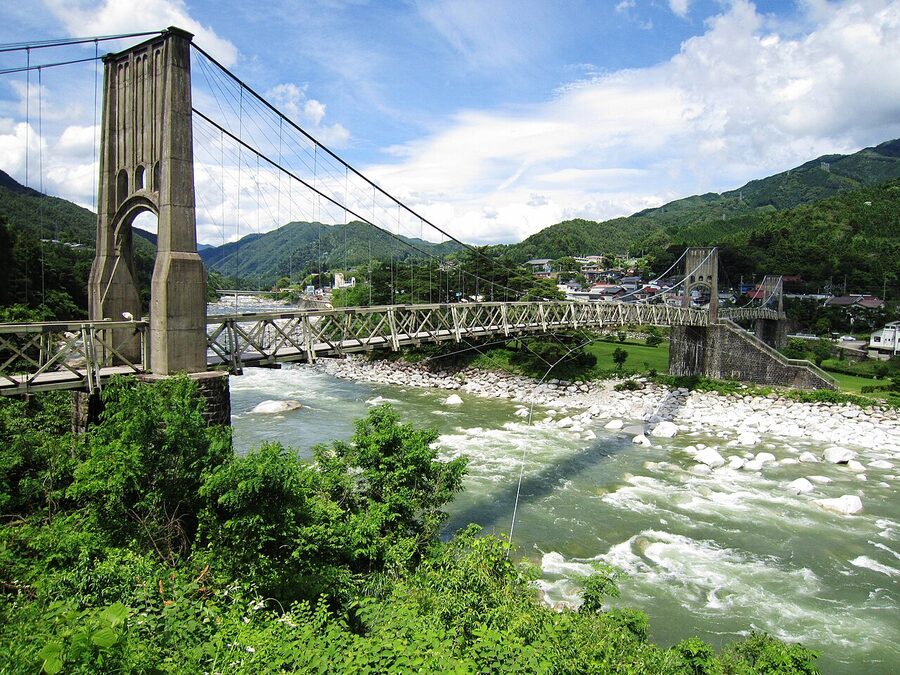
Six minutes by car from Nagiso station (or about 25 minutes on foot), the Momosuke Bridge is a 247m wooden suspension bridge built in 1922 by the industrialist Fukuzawa Momosuke (the son-in-law of Fukuzawa Yukichi) to carry workers to his hydroelectric projects. It’s a National Important Cultural Property, freely accessible 24 hours, and is the kind of small detour the day-trippers never make. From here it’s a five-minute drive on to the Fukuzawa Momosuke Memorial House.
Onward, north or south
If Tsumago is one stop on a longer trip across central Honshu: north on the Chuo Main Line takes you to Matsumoto in around an hour and a half, gateway to the wider Japan Alps. South takes you to Nakatsugawa and then Nagoya. From Nakatsugawa it’s a 30-minute change of train onto the line for Magome’s bus, if you decide on day two to walk the trail in the opposite direction back to Tsumago.
The thing nobody tells you
Most articles about Tsumago talk about it as a beautiful escape from modern Japan. That’s true, but it’s not the whole story. The village is small, the population is around 600 households, and almost everyone you’ll meet behind a counter or at the museum desk is descended from one of the families that signed the 1971 charter. The “do not sell, do not rent, do not destroy” pledge isn’t a quaint slogan: it’s a binding intergenerational promise that gets tested every time a young person leaves for Tokyo and the empty house gets offered for sale to a developer. Every restored façade you see represents a real decision that someone’s grandchild made not to take the offer.
Stay overnight if you can. Walk the village after the 16:00 day-trip exodus, when the strip is suddenly quiet and the buried-cable streetlights flick on dim and warm. Eat dinner in a four-room minshuku where the irori smoke is real. The next morning, walk to Magome before the day-trippers from Nakatsugawa arrive at 11. That’s the order in which Tsumago shows you what it actually is.


.jpg)


