Matsumoto rewards anyone who books a night here over a day-tripper, and the reason is the castle at dawn. By the time the morning Limited Express pulls in from Shinjuku at 11:00, every visitor pouring out of the station is heading to the same black keep at the same time, and the moat is rimmed with hats and lanyards. Stay overnight and you walk the inner bailey alone at 08:30 with mist still on the carp. That single hour is worth a hotel.
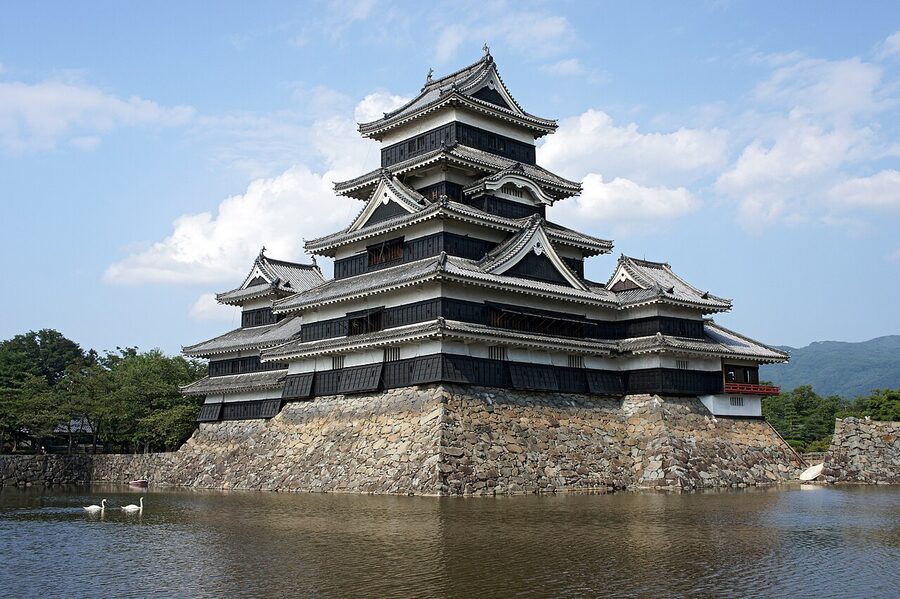
The catch is that Matsumoto is small. About 240,000 people, three walkable stay-zones inside the loop bus map, plus one onsen suburb 15 minutes by taxi and a couple of higher-altitude ryokan villages further out. There is no luxury cluster the size of Kyoto’s Higashiyama. There is no business-hotel canyon the size of Kanazawa Station. What you do have is a shorter, sharper menu: a heritage hotel from 1887, a Relais and Chateaux ryokan up a side valley, a hot-spring district where ten or twelve traditional inns sit elbow-to-elbow, and a station fan of business hotels with rooftop baths and free midnight ramen.
Below is the verdict on each, by area, with the trade-offs spelled out. I have left out anything I would not personally book.
In This Article
- The quick-reference table
- How to choose between the four areas
- Castle and Honmachi: the heart of the old town
- Matsumoto Hotel Kagetsu: best heritage stay
- Matsumoto Marunouchi Hotel: best boutique mid-range
- Hotel Buena Vista: best big-hotel comfort
- Mitsubikiya: best four-room boutique
- Nunoya Ryokan: best ryokan inside the city
- Matsumoto Station: best for value and day-trip bases
- Richmond Hotel Matsumoto: best mid-range business hotel
- Dormy Inn Matsumoto: best for the rooftop bath and free midnight ramen
- Tabino Hotel Matsumoto: best onsen-and-breakfast combination near the station
- Onyado Nono Matsumoto: best new-build onsen hotel
- Asama Onsen: the historic hot-spring district
- Matsumoto Jujo: best design ryokan with a 10,000-volume library
- Hotel Tamanoyu: best classic Asama ryokan
- Hotel Omoto: adult-only with open-air baths
- Utsukushigahara and Tobira: the high-altitude ryokan stays
- Hotel Shoho: best view ryokan
- Tobira Onsen Myojinkan: the splurge
- Budget bed for the night: Couch Potato Hostel
- Honourable mentions worth knowing about
- What most guides get wrong about staying in Matsumoto
- Booking tips: when, where, and how
- Quick picks by traveller type
The quick-reference table
| Area | Best for | Top pick | From / night | Book |
|---|---|---|---|---|
| Castle and Honmachi | First night, walking to the keep, mingei design lovers | Matsumoto Hotel Kagetsu | ¥18,000 | Booking.com |
| Matsumoto Station | Day trips to Kamikochi or Kiso, value, late arrivals | Richmond Hotel Matsumoto | ¥9,500 | Booking.com |
| Asama Onsen | Bath-first stay, kaiseki dinner, 1,300-year-old hot spring | Matsumoto Jujo (Honbako) | ¥42,000 | Booking.com |
| Utsukushigahara and Tobira | View ryokan, mountain quiet, no-traffic morning bath | Tobira Onsen Myojinkan | ¥55,000 | Booking.com |
How to choose between the four areas
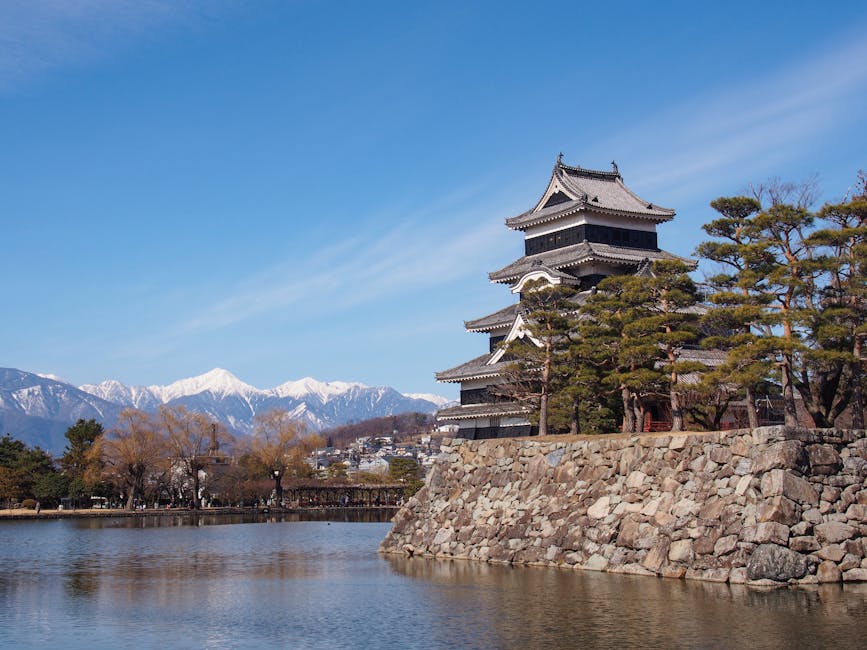
If you are spending one night, stay in the Honmachi blocks east of the station, between the Metoba river and Daimyo-cho. You will be in walking distance of the castle (10 to 12 minutes), Nakamachi-dori (5 minutes), Nawate-dori (3 minutes), the soba shops, and the bar district known to locals as Bar City. This is where the writing on Matsumoto’s distinctness pays off. You skip the loop-bus learning curve and you eat better.
If you are spending two or more nights and using Matsumoto as a hub for day trips, look harder at the station hotels. The Alpico bus to Kamikochi leaves the station bus terminal, the JR Limited Express to Takayama goes from platform 5 to 6, and the local Shinano-line trains to Shiojiri, Azumino and the Kiso Valley all run from the same station. Saving 15 minutes each morning by sleeping above the platforms matters more than you think on a five-day trip.
If you came primarily for the bath, go to Asama Onsen. It sits 6 km north of the city centre and runs on seven natural hot-spring sources at around 50°C. The onsen district has been there for 1,300 years and the older ryokan have the history to prove it. Buses run every 20 minutes from the station; a taxi is ¥1,800.
If your budget is in the ¥40,000-plus range and you want a properly remote stay, head 40 minutes by car up the valley to Tobira Onsen or 20 minutes by bus to Utsukushigahara Onsen. These are not bases for sightseeing. They are destinations in themselves.
Castle and Honmachi: the heart of the old town
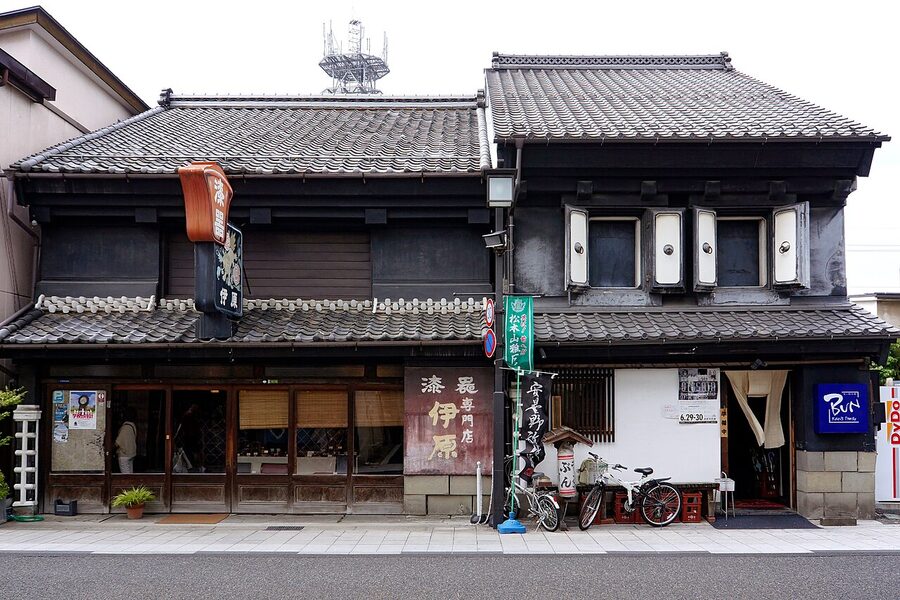
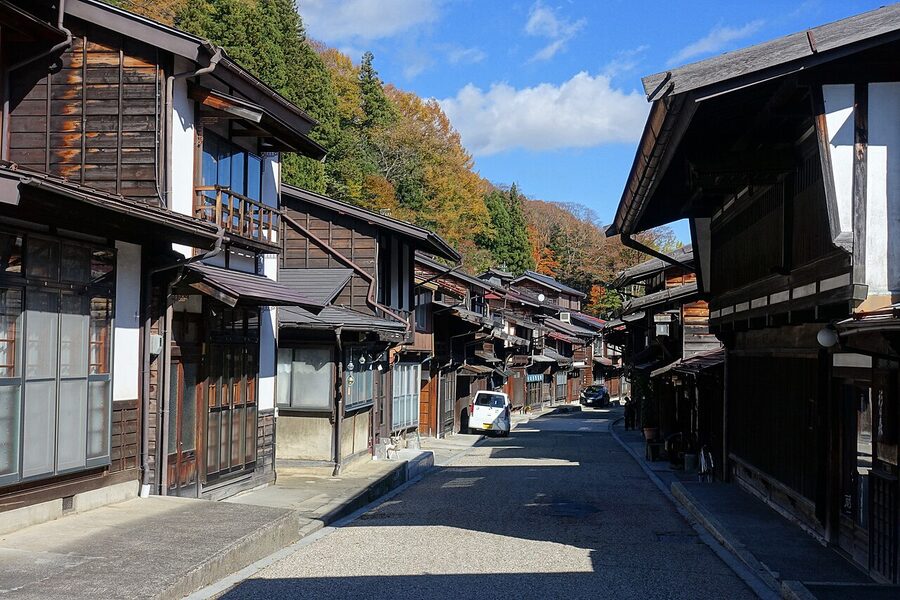
The Honmachi precinct is the city’s old merchant quarter. Whitewashed earthen storehouses line Nakamachi-dori, the Metoba river runs east-to-west under stone bridges, and the castle sits two blocks north. Most hotels here are in renovated buildings or low-rise modern blocks designed not to compete with the keep’s silhouette. Prices are 30 to 50 percent above the station hotels, but you walk to dinner.
One trade-off: this area empties out after dark. The shops shut by 17:30 and even the bars are clustered on a few specific streets. If you arrive at 21:00, expect the streets between you and your hotel to be quiet to the point of feeling underpopulated. Locals know which lanes still have life. Visitors do not, on day one.
Matsumoto Hotel Kagetsu: best heritage stay
Nearest station: Matsumoto (JR Chuo Line), 12 min walk
To Matsumoto Castle: 5 min walk
Best for: design-led travellers, repeat Japan visitors, anyone interested in mingei craft
From: ¥18,000/night
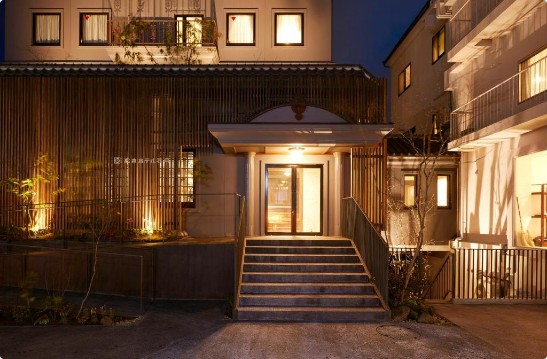
Kagetsu opened in 1887 and has been continuously trading ever since, which makes it the oldest hotel in Matsumoto by a long stretch. The lobby is filled with original mingei furniture from the local Matsumoto Mingei tradition: low chests, lattice screens, hand-blown glass. There is a copy of the magazine Mingei on the side table and old founding-era photographs on the wall. Nothing is performative about it, the family that owns the hotel collected the pieces over five generations.
Rooms are split between a Western-style hotel block and a heritage restaurant building. Ask for a room facing east, towards Daimyo-cho, and you get a sliver of castle wall from the upper floors. The breakfast is Shinshu local: river fish, miso soup with the local nameko mushrooms, soft-boiled Aida-yokeijo eggs.
This is not the hotel for travellers who want a slick contemporary lobby with a barista. The corridors are narrow, the heating creaks, and reception speaks limited English. If those are dealbreakers, book Buena Vista instead.
What’s good:
- Five-minute walk to the castle gate, the closest of any heritage hotel
- Genuine mingei collection in the public spaces, not reproductions
- Local Shinshu breakfast, not the standard buffet
- Restaurant building is registered as a Tangible Cultural Property
What’s not:
- Older building, occasional plumbing noise on the lower floors
- Limited English at reception, written translations help
Check prices at Matsumoto Hotel Kagetsu: Official site | Booking.com | Expedia
Matsumoto Marunouchi Hotel: best boutique mid-range
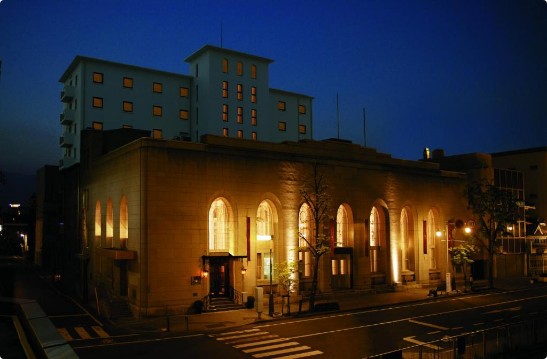
Nearest station: Matsumoto (JR Chuo Line), 12 min walk or 5 min by Town Sneaker bus to Daimyo-cho
To Matsumoto Castle: 2 min walk
Best for: couples, mid-range travellers who want the closest castle-view position
From: ¥14,500/night
The Marunouchi sits in two buildings: a 1930s registered Tangible Cultural Property that houses the restaurants, and a quieter modern hotel block behind it. The best rooms are on the upper floors of the modern block, with a clean line-of-sight to the castle. The eighth-floor suite has a four-poster bed and a window framed exactly on the keep. From the moment the heating clicks on at dawn, you watch the keep go from black silhouette to detail in about 20 minutes.
Rooms use Japan Bed Co’s “Silky” mattresses, which are noticeably firmer than international hotel-chain standard. The brown-toned interior is calm rather than memorable. The breakfast costs ¥2,550 for guests, ¥3,850 for non-guests, and the menu changes daily based on what comes in from local farms (Aida poultry farm eggs are the standout).
What’s not as good: the lobby is small for a property at this price point, and the dinner restaurants in the heritage building close by 21:00 most nights. If you want a late drink in the hotel, you will be sent to the bar three blocks south.
What’s good:
- Two minutes to the castle gate, the closest hotel of any tier
- Eighth-floor castle-view rooms genuinely have the view (book a high floor explicitly)
- Heritage restaurant building, designed in 1937
- Soundproofing between rooms is unusually good
What’s not:
- Lobby is small and lacks the “hotel feel” the price implies
- Restaurants close early, no late-night service
Check prices at Matsumoto Marunouchi Hotel: Official site | Booking.com | Expedia
Hotel Buena Vista: best big-hotel comfort
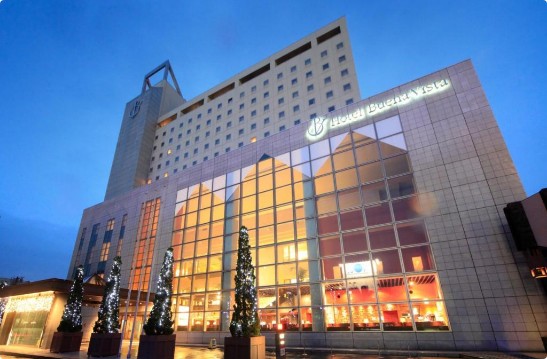
Nearest station: Matsumoto (JR Chuo Line), 7 min walk
To Matsumoto Castle: 18 min walk or 6 min by Town Sneaker bus
Best for: families, business travellers, anyone wanting a full lobby and concierge
From: ¥13,800/night
Buena Vista is the largest hotel in central Matsumoto and runs the way a 200-room city hotel should: real concierge, multiple restaurants open until late, English-fluent reception. It also runs a programme that no other Matsumoto hotel does, a walking tour of the castle town led by a member of staff with formal museum-curator credentials. The tour leaves around 09:00 most mornings and runs about 90 minutes. Worth the price tag for first-time visitors.
Rooms are clean Western-style with the standard set of amenities. The 14th-floor sky lounge has a 270-degree city view and serves cocktails until midnight, which is unusual for Matsumoto. The breakfast is buffet-style and competently done, not memorable.
The negative: at 18 minutes on foot from the castle, this is the furthest of the city-area hotels. If your priority is the early-morning castle visit, book elsewhere. If you want a full hotel experience and you don’t mind the bus or a brisk 18-minute walk, this is the most reliable in the city.
What’s good:
- Genuine concierge with English fluency
- Curator-led castle-town walking tour for guests
- 14th-floor sky lounge open until midnight (rare in Matsumoto)
- Family rooms available, big enough for four
What’s not:
- 18 minutes on foot to the castle, the furthest of the city-area hotels
- Breakfast is competent buffet, nothing more
Check prices at Hotel Buena Vista: Official site | Booking.com | Expedia | Agoda | Hotels.com
Mitsubikiya: best four-room boutique
Nearest station: Matsumoto (JR Chuo Line), 14 min walk
To Matsumoto Castle: 8 min walk
Best for: couples, design-led travellers, anyone tired of generic hotels
From: ¥28,000/night
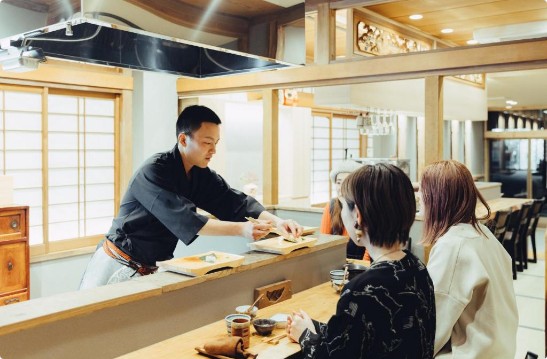
Mitsubikiya is a four-room inn carved out of a 1,855 earthen storehouse near the castle. The original beams, plaster walls and traces of the old hearth are preserved; modern bathrooms and heating are added without erasing them. The frontage is narrow, the interior runs deep, exactly the Edo-period machiya proportion you read about in design books and rarely actually sleep inside.
You won’t find a restaurant on site, the proprietors send you to specific places nearby for dinner (the soba bar Daimon and the kappo restaurant Sotoji are the standard recommendations, both within 6 minutes’ walk). Breakfast is served in the inn, prepared by a chef who comes in for the morning. Reservations need to be made several months ahead, especially for weekends in cherry-blossom season.
The negative: it’s small. Four rooms means there is no lounge, no concierge, and one of you will be cooking on the wrong side of the kitchen counter from your futon. Also, the building heats slowly in winter; the staff will have your room warm by the time you check in but expect a chill if you arrive past 18:00.
What’s good:
- Genuine 1855 storehouse architecture, not a rebuild
- Four rooms only, no other guests in the corridor
- Excellent breakfast prepared by a visiting chef
- Three minutes’ walk to Nakamachi-dori
What’s not:
- No on-site restaurant or bar
- Slow to heat in winter mornings
- Books out months ahead for sakura and koyo seasons
Check prices at Mitsubikiya: Official site | Booking.com | Agoda
Nunoya Ryokan: best ryokan inside the city
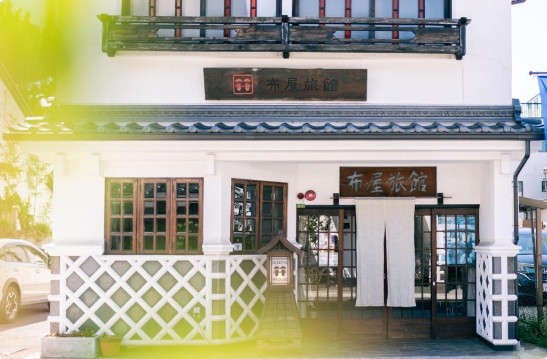
Nearest station: Matsumoto (JR Chuo Line), 13 min walk
To Matsumoto Castle: 9 min walk
Best for: first-time ryokan stayers who want to be in the city, couples
From: ¥15,500/night
Nunoya occupies a renovated storehouse-style building directly on Nakamachi-dori, which means you step out of the front door into the most photogenic block in the city. It’s run by a small family team. Eight tatami rooms, futon bedding laid out by the staff in the evening, a single shared bath. No private en-suite onsen.
The breakfast (included in some rates) is a proper Japanese set: grilled fish, rice, miso, pickles, a small side of nameko, and Shinshu apple. Dinner is not served, you book somewhere on Nakamachi or Nawate, both 30 seconds from the door. The staff will help with the booking if you ask the day before.
The trade-off: there’s no on-site onsen, just a clean shared bath. If you want to soak in real hot-spring water, this isn’t the right ryokan. Asama Onsen is. Also, the tatami rooms have thin walls; light sleepers should ask for the corner room facing away from the street.
What’s good:
- On Nakamachi-dori itself, the prettiest street in the city
- Family-run, futon laid out properly by staff
- Booking help with the surrounding restaurants
- Nine minutes on foot to the castle
What’s not:
- Shared bath, no onsen
- Thin tatami walls, ask for the corner room
- No dinner service, you eat out
Check prices at Nunoya Ryokan: Official site | Booking.com | Expedia | Agoda
Matsumoto Station: best for value and day-trip bases
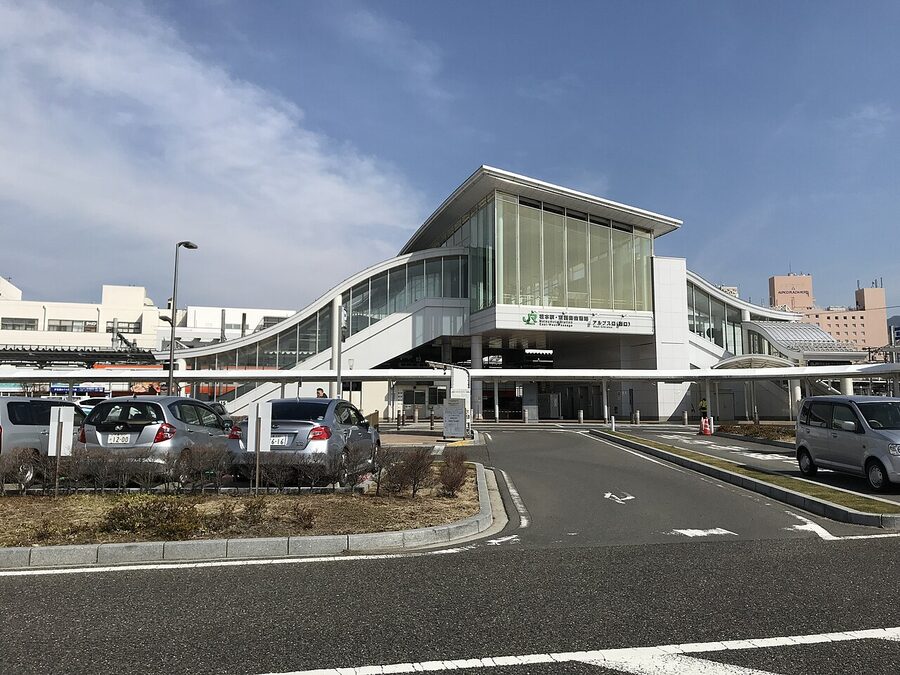
The station hotels cluster within four blocks of either entrance. They are predominantly business-style: smaller rooms, smaller lobbies, but consistently good baths and free amenities (welcome ramen, complimentary morning coffee). The pricing sits 30 to 40 percent below the castle area for comparable quality. If you are using Matsumoto as a base for Kamikochi, Norikura Kogen, Shirahone Onsen, or the Tateyama-Kurobe Alpine Route, this is the smart base.
The trade-off: the area is quiet at night by Japanese-city standards. There are bars, but they’re scattered. Most evening eating happens in the underground arcade between the station and the Parco department store, which closes around 22:00. After that, you’re walking 10 minutes east to the bar streets in Honmachi.
Richmond Hotel Matsumoto: best mid-range business hotel
Nearest station: Matsumoto (JR Chuo Line), 4 min walk
To Matsumoto Castle: 22 min walk or 8 min by Town Sneaker bus
Best for: two-night Kamikochi-base stays, solo travellers, mid-range value
From: ¥9,500/night
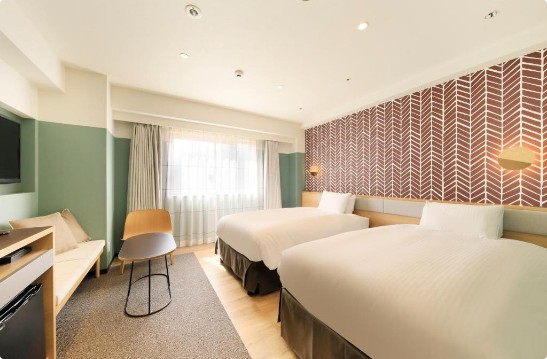
Richmond is a Japanese chain that has built a quiet reputation for being the best mid-priced business hotel for travellers who care about details: real desks, decent kettles, blackout curtains that actually black out. The Matsumoto branch is a 4-minute walk from the JR east entrance and 6 minutes from the Alpico bus terminal.
The breakfast (¥1,500 add-on) is a standout for the price point: a buffet with real local Shinshu items, including a Matsumoto-style Sanzoku-yaki chicken, fresh oyaki, and an apple compote. Rooms come with a Bluetooth speaker and a humidifier, both genuinely useful in dry winter air.
The negative: there’s no onsen, just a standard hotel bathroom. If a soak matters, the Dormy Inn or Tabino Hotel below have rooftop baths. The Richmond is the better night’s sleep, but the worse bath.
What’s good:
- 4 minutes from the JR east entrance, 6 from the bus terminal
- Breakfast above chain-business-hotel average
- Bluetooth speaker and humidifier in every room
- Quiet floors, blackout curtains
What’s not:
- No onsen or rooftop bath
- Lobby is small, not somewhere you’d linger
Check prices at Richmond Hotel Matsumoto: Booking.com | Expedia | Hotels.com
Dormy Inn Matsumoto: best for the rooftop bath and free midnight ramen
Nearest station: Matsumoto (JR Chuo Line), 5 min walk
To Matsumoto Castle: 20 min walk or 7 min by Town Sneaker bus
Best for: late arrivals, onsen-on-a-budget, solo travellers, hikers
From: ¥9,800/night
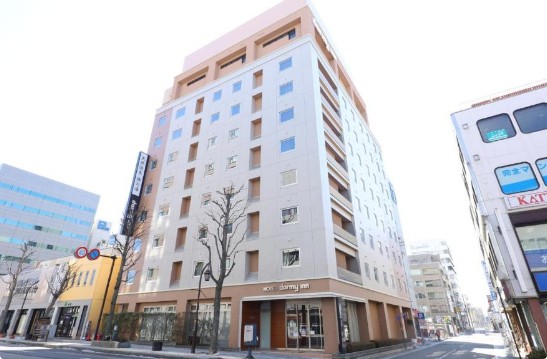
Dormy Inn is a chain, but the Matsumoto branch does two things almost no other station hotel does. First, the rooftop has a real onsen pumped up from a local source, open from 15:00 to 02:00 and again from 05:00 to 10:00. Second, free shoyu ramen is served in the lobby every night from 21:30 to 23:00. Both are signature chain features. Both are unusually good at this branch.
Rooms are smaller than the Richmond next door but the bedding is good and the rooftop bath is the differentiator. After a Kamikochi day-hike or a snowy ski day at Hakuba, soaking on the roof at 21:00 with the keep visible in the distance is a properly memorable end to the day.
The trade-off: the lobby gets crowded at 22:00 when the entire hotel queues for free ramen. If you’re a light sleeper, ask for a room on the floor furthest from the lift. The lower-floor rooms also pick up some street noise on Friday nights.
What’s good:
- Rooftop onsen with castle-direction view
- Free shoyu ramen at 21:30, genuinely worth it
- 5 minutes from the station, 7 from the bus terminal
- Coin laundry on every other floor
What’s not:
- Rooms are small even by Japan business-hotel standards
- Lobby crowded at the ramen hour
- Lower floors get street noise on weekends
Check prices at Dormy Inn Matsumoto: Booking.com | Expedia
Tabino Hotel Matsumoto: best onsen-and-breakfast combination near the station
Nearest station: Matsumoto (JR Chuo Line), 7 min walk
To Matsumoto Castle: 19 min walk or 7 min by Town Sneaker bus
Best for: Kamikochi day-trip base, breakfast lovers, second-night-in-Matsumoto value
From: ¥10,800/night
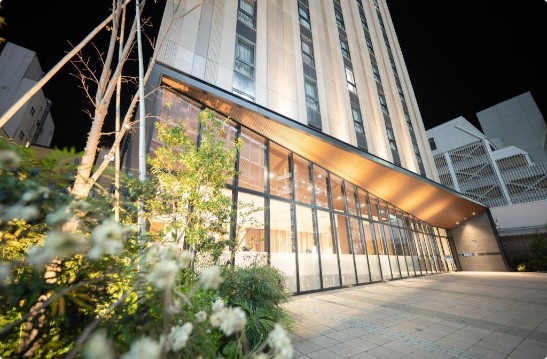
Tabino is a small chain you may not have heard of, and the Matsumoto branch is one of the best in the network. The shared bath is supplied by a milky-white sulphate-rich water trucked in from a real source, which makes it noticeably more interesting than the standard town-water hotel bath. The breakfast is hearty and includes hand-cut soba prepared on-site by a senior member of the kitchen.
Rooms are clean modern Japanese-business-hotel standard. Some have a small partition between the entrance and the bed, which makes a noticeable difference for two-person stays. The hotel is on the same block as a 24-hour Lawson and a 7-Eleven, useful for early Kamikochi bus departures.
The negative: the onsen is small. At 19:30 on a weekend it can fill up, and you may need to come back later. The breakfast room similarly has a queue at 07:30. Eat at 07:00 or 08:30, never in between.
What’s good:
- Genuine sulphate-rich milky bath, not just “rooftop bath”
- Hand-cut soba on the breakfast buffet
- 7 minutes to the JR east entrance, 5 to the bus terminal
- Lawson and 7-Eleven on the same block
What’s not:
- Bath is small, can fill at peak times
- Breakfast queue at 07:30
Check prices at Tabino Hotel Matsumoto: Official site | Booking.com | Expedia | Agoda | Hotels.com
Onyado Nono Matsumoto: best new-build onsen hotel
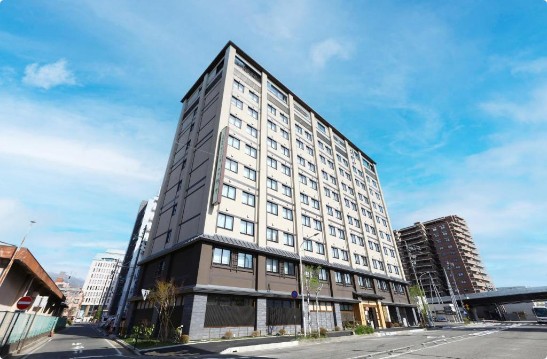
Nearest station: Matsumoto (JR Chuo Line), 6 min walk
To Matsumoto Castle: 18 min walk or 6 min by Town Sneaker bus
Best for: couples wanting a slightly nicer business hotel with onsen, design-conscious travellers
From: ¥11,500/night
Nono is run by the same group as Dormy Inn but reads as a tier above. The interior uses dark wood, kraft-paper lighting, slightly more generous corridors. The onsen is on the top floor, supplied by water trucked in from Azumino’s “Azumino-no-yu” source. Free welcome drinks include sake, beer and yuzu juice from 17:00 to 21:00 in the lobby.
Slippers are tabi-style with split toes, the room amenity kit includes a real cotton yukata and an obi belt, not the usual disposable kind. A small touch but the kind of thing a chain that thinks about the experience gets right.
The negative: the genuine onsen is shared and segregated by sex; rooms have a standard hotel bathroom with no in-room hot-spring water. Also, a gluten-free or vegetarian guest will struggle with the breakfast buffet, which leans heavily Shinshu-pickled.
What’s good:
- Top-floor onsen with trucked-in mineral water
- Free welcome drinks 17:00-21:00 (sake, beer, yuzu)
- Better-quality yukata and tabi slippers in every room
- 6 minutes from the station, 4 from the bus terminal
What’s not:
- Shared onsen only, no in-room hot-spring water
- Breakfast is heavily Shinshu-traditional, limited for restricted diets
Check prices at Onyado Nono Matsumoto: Booking.com | Agoda | Hotels.com
Asama Onsen: the historic hot-spring district
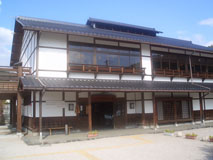
Asama Onsen is Matsumoto’s original hot-spring district, dating back to the eighth century. There are seven natural sources flowing out at around 50°C, all sulphate-rich. The neighbourhood has the right mix of ryokan, bath houses, and small back-street eateries to feel like a destination rather than a suburb. From central Matsumoto it’s a 25-minute bus or 15-minute taxi (about ¥1,800).
The trade-off: Asama is not a sightseeing area. Once you’re there, you’re there for the bath, the kaiseki dinner, and the morning soak. There are no museums, no shopping streets, no headline attractions. If you want to explore the city, you book a base in town and visit Asama as a daytime onsen excursion. If you want to stop sightseeing for 18 hours, this is the place.
Matsumoto Jujo: best design ryokan with a 10,000-volume library
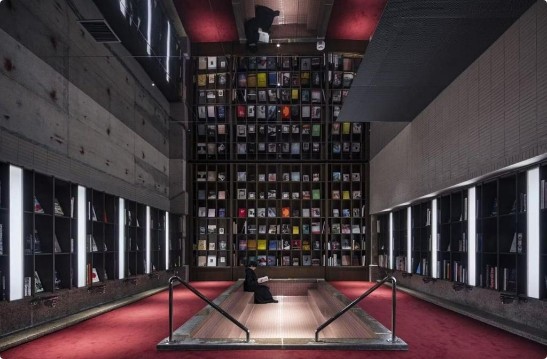
Nearest station: Matsumoto (JR Chuo Line), 25 min by bus / 15 min by taxi
Best for: repeat ryokan stayers, readers, design and architecture nerds
From: ¥42,000/night (room only) / ¥58,000/night (with kaiseki)
Jujo is the most-talked-about new ryokan in Nagano. The project revived a 300-year-old historic Koyanagi inn and inserted “Matsumoto Honbako”, a 10,000-volume bookshop where guests browse late into the night. The architecture preserves original Edo-era timber and shoji proportions while adding contemporary art commissions in every guest room. There’s also a bakery and a general store on site, plus a cafe at the entrance called Oyaki and Coffee where you can check in.
The bath is segregated, traditional in style, and uses Asama Onsen water from one of the seven sources. The kaiseki dinner pairs Shinshu wines (a separate sommelier list of 60-plus labels) with miso-cured local fish, fermented vegetables, and a fired river crayfish course.
The negative: at ¥42,000 a room before kaiseki, this is firmly in the splurge tier. It’s also extremely popular with Japanese design press, which means availability for weekends is tight three to four months out. Book early for any planned trip.
What’s good:
- 10,000-volume bookshop, open late, free for guests
- Genuine Edo-era architecture preserved, not pastiche
- Shinshu wine list with 60-plus labels and a sommelier on staff
- Cafe entrance at “Oyaki and Coffee”, an unusual check-in
What’s not:
- Splurge pricing, books out months ahead
- Reading-focused stay; not a fit for travellers who want to be out all day
Check prices at Matsumoto Jujo: Official site | Booking.com
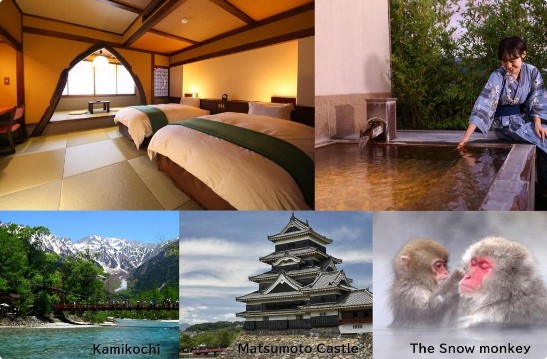
Hotel Tamanoyu: best classic Asama ryokan
Nearest station: Matsumoto (JR Chuo Line), 25 min by bus / 15 min by taxi
Best for: first-time ryokan stayers, couples wanting an in-room kaiseki dinner
From: ¥22,000/night with breakfast / ¥32,000/night with kaiseki dinner and breakfast
Tamanoyu is a third-generation family-run ryokan, established in 1955 and updated several times since. The interior is the classic format: tatami floors, sliding shoji, futon laid out by the staff while you bathe. There are seven baths to work through across men’s, women’s and reservable family-private rooms, all using the natural Asama spring water at the source temperature.
The kaiseki is brought to your room on lacquerware trays. Eight to ten courses depending on the rate plan, leaning Shinshu local: river fish, mountain vegetables, miso-marinated tofu, an apple-and-yuzu sorbet to finish. The proprietor (the third-generation owner) does the rounds at the end of the meal, and is genuinely knowledgeable about local sake and wine pairings if you ask.
The negative: in-room kaiseki means the dinner runs slowly. If you have a 09:00 start the next morning, plan to be in your yukata and at the table by 18:00 at the latest, or you’ll be eating the last course at 21:30.
What’s good:
- Seven baths across men’s, women’s, and bookable private
- In-room kaiseki, properly served on lacquerware
- Family ownership runs the dining floor personally
- Asama spring water at source temperature, no dilution
What’s not:
- In-room kaiseki runs long, plan early starts
- Older building, the rooms vary in size; ask for the upgraded ones
Check prices at Hotel Tamanoyu: Booking.com | Expedia | Agoda | Hotels.com
Hotel Omoto: adult-only with open-air baths
Nearest station: Matsumoto (JR Chuo Line), 25 min by bus / 15 min by taxi
Best for: couples, repeat onsen visitors, anyone wanting a quiet ryokan
From: ¥28,000/night with kaiseki dinner and breakfast
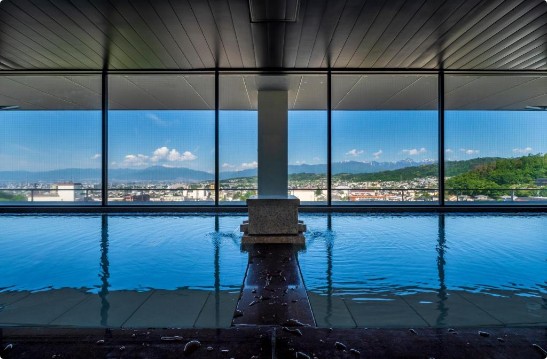
Omoto is one of the few adult-only ryokan in Asama, which makes it a noticeably calmer stay than the family-friendly options. The open-air bath looks out over a small landscaped garden and has the best mountain-direction light at 06:00. There are reservable private baths in addition to the main ones.
The kaiseki dinner is served in a private dining room rather than in your sleeping room. Eight courses, with a particular emphasis on the autumn matsutake mushroom in season (extra charge applies). The morning meal includes a hot-spring boiled egg you crack at the table.
The negative: the adult-only policy keeps the atmosphere right but means it isn’t an option for families with young kids. Also, the rooms are smaller than at Tamanoyu and Jujo. You’re paying for the bath quality and the policy, not for floor space.
What’s good:
- Adult-only, baths and dining room genuinely quiet
- Open-air bath with mountain-direction light at 06:00
- Bookable private baths in addition to the main ones
- Hot-spring boiled egg with breakfast
What’s not:
- No families with under-13s, even on annexe rooms
- Rooms are smaller than the same-tier Asama competitors
Check prices at Hotel Omoto: Booking.com | Expedia | Agoda | Trip.com
Utsukushigahara and Tobira: the high-altitude ryokan stays
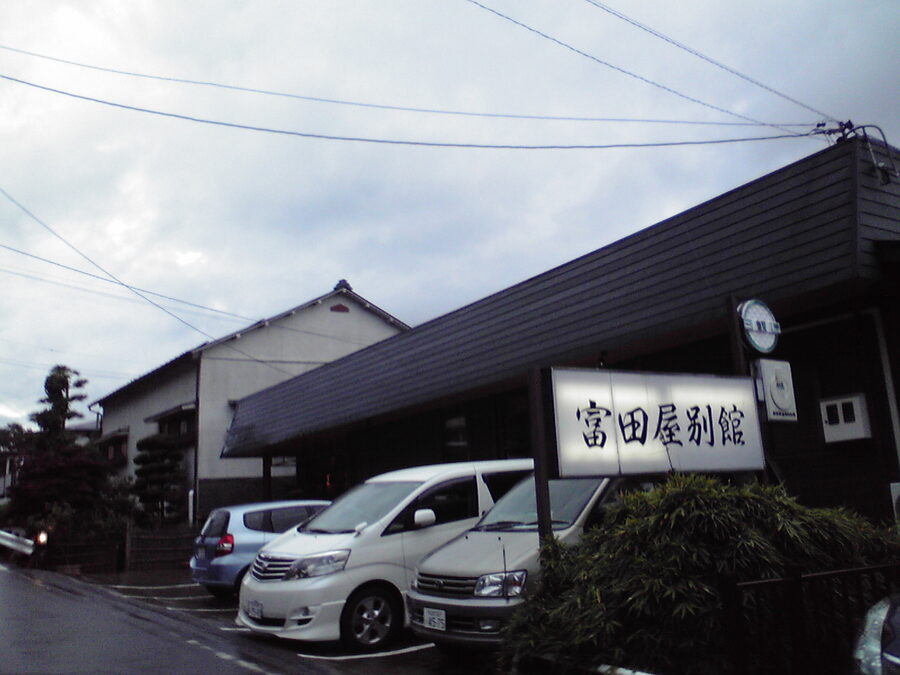
If you want a ryokan stay that genuinely feels like an escape, both Utsukushigahara Onsen (10 km east, in the hills below the Utsukushigahara plateau) and Tobira Onsen (further up the same valley, 40 minutes by car) deliver. These are not bases for sightseeing in Matsumoto. They are destinations themselves, places where you book a room with a private open-air bath, eat the in-room kaiseki, and don’t leave the property until checkout the next morning.
Buses from Matsumoto Station to Utsukushigahara Onsen run hourly during the day. Tobira Onsen requires either a hire car, a taxi (about ¥7,000), or the inn’s complimentary shuttle from the station (book ahead).
Hotel Shoho: best view ryokan
Nearest station: Matsumoto (JR Chuo Line), 20 min by bus to Utsukushigahara Onsen / 25 min by taxi
Best for: view-first travellers, couples, photographers
From: ¥25,000/night with breakfast / ¥38,000/night with kaiseki dinner and breakfast
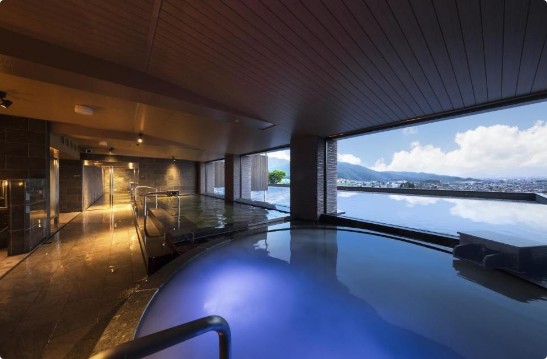
Shoho is a wa-modern hotel-style ryokan built into the hillside above central Matsumoto. Every room faces west. On a clear evening you watch the city lights come on with the Northern Alps as a black silhouette behind. On a clear morning you see the Hotaka peaks line up directly behind the keep. The view is the reason to book here.
There are five baths, including a panoramic public bath called “Utsukushi-no-yu” with the same west-facing view, plus a koshikake (low-stool) outdoor bath that’s quieter at sunset. The food is Shinshu-led: a list of 40-plus local sake from the Matsumoto and Suwa breweries, paired with kaiseki river fish and mountain vegetables.
The negative: Shoho is large by Asama standards, around 100 rooms. At full occupancy it loses some of the intimate ryokan feel. Book the rooms with private outdoor onsen if the budget allows; they have the view to themselves.
What’s good:
- Genuine west-facing alpine view from every room
- Five baths including a panoramic public bath
- 40-plus Shinshu sake list, paired by the floor staff
- Reasonable bus access from the station (no taxi required)
What’s not:
- Larger than the typical Asama ryokan, less intimate
- Best rooms (with private outdoor onsen) are a significant upgrade
Check prices at Hotel Shoho: Official site | Booking.com
Tobira Onsen Myojinkan: the splurge
Nearest station: Matsumoto (JR Chuo Line), 40 min by car or complimentary shuttle (book ahead)
Best for: ryokan splurge, couples, anyone seeking total seclusion
From: ¥55,000/night with kaiseki dinner and breakfast
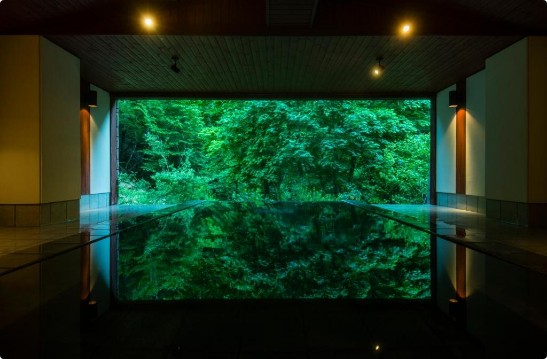
Myojinkan is a single-property ryokan tucked deep in a forested side valley above Matsumoto, 40 minutes by car. It’s a Relais and Chateaux member, the only one in the central Alps. The architecture combines traditional ryokan hospitality with five-star hotel comfort: large rooms, private outdoor onsen on the deluxe tiers, a French-leaning kaiseki menu prepared by a chef who trained in Lyon.
The signature bath is “Setsugekka”, a river-side standing bath with the wasabi-stream sound right outside. It’s at its best at first light, when the valley is still misted. The site also has a regular outdoor bath, an indoor bath, a sleeping bath (“nedoyu”) and a private kashikiriburo for two.
The negative: it is genuinely remote. There’s no village around the property, no shops, no walking-distance distractions. If you’ve never done a remote ryokan stay before, the silence at 23:00 can feel disorienting. Also, the dinner is properly long; expect 2.5 hours.
What’s good:
- Relais and Chateaux property, the only one in the Japan Alps
- Five baths including a unique river-side standing bath
- French-influenced kaiseki, prepared by a Lyon-trained chef
- Free shuttle from Matsumoto Station with reservation
What’s not:
- Genuinely remote, no walking-distance shops or village
- Long dinner, plan accordingly for early-start days
- Splurge pricing, often books out months ahead
Check prices at Tobira Onsen Myojinkan: Official site | Booking.com
Budget bed for the night: Couch Potato Hostel
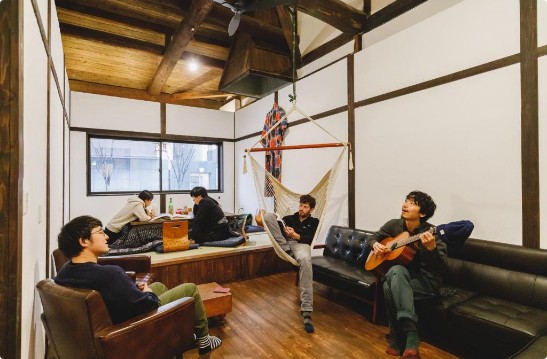
Nearest station: Matsumoto (JR Chuo Line), 14 min walk
To Matsumoto Castle: 5 min walk
Best for: solo travellers, backpackers, social atmosphere
From: ¥3,800/dorm bed / ¥7,200/private double
Couch Potato is the only well-rated hostel close enough to the castle to genuinely walk there. It’s run by a small team, occupies a converted residential house, and has the social-but-not-loud atmosphere that’s hard to find at this price point. There’s a shared kitchen guests can use, a small lounge, and a back garden where smokers gather.
The dorm beds are bunk-style with a curtain and a personal lamp. There are typically one or two private double rooms, which book out three to four weeks ahead in shoulder season and longer in cherry-blossom or autumn-foliage weeks. The owners speak good English and run an informal ryokan-recommendation list for guests planning to upgrade for a second night.
The negative: the bathroom-to-bed ratio is fine on weekdays, tight on weekends. Showers are shared. There’s no breakfast, but a 7-Eleven is a 90-second walk and the Yorozuya bakery (excellent) opens at 07:00 two doors down.
What’s good:
- 5-minute walk to the castle, the closest budget bed in the city
- Shared kitchen, working lounge, garden
- English-speaking owners with strong local recommendations
- Curtain-and-lamp dorm beds (not just an open dorm)
What’s not:
- Shared showers, can queue on weekends
- No breakfast service
- Private rooms book out months ahead in peak season
Check prices at Couch Potato Hostel: Official site | Booking.com | Expedia | Agoda
Honourable mentions worth knowing about
These didn’t earn a full review either because they’re outside the four core stay-zones, or because they’re sold primarily through Japanese-language platforms (Rakuten, Jalan, JTB) rather than Booking.com. Worth knowing.
- Hoshino Resorts KAI Matsumoto (Asama Onsen). The Hoshino group’s Asama ryokan, with eight bath types in 13 variations and a nightly “Fermentation Hour” matching Shinshu wines and miso-marinated bites. Books direct only.
- Beitei Ichihana (Asama Onsen). Small modern ryokan with private outdoor onsen on every room. Sold through Japanese platforms only.
- Kikunoyu (Asama Onsen). Mid-range Asama ryokan with a strong reputation for the kaiseki. Bookable through Rakuten Travel and JTB.
- Ryokan Sugimoto (Utsukushigahara Onsen). Folk-craft inn where the proprietor’s personal collection of jazz records and Shinshu wines define the stay. Bookable through Rakuten Travel.
- Hotel Shokei (Utsukushigahara Onsen). Larger view ryokan with a more accessible price point than Shoho. Sold widely on Japanese platforms.
- Tabi no Yado Takagi (Honmachi). A small heritage inn near the castle that’s registered as a study-trip facility, with optional soba-making and Matsumoto temari workshops.
What most guides get wrong about staying in Matsumoto
The first thing the listicles get wrong is the assumption that the station hotels are dramatically inferior to the castle-area ones. They are not. They are 30 to 40 percent cheaper for a similar level of cleanliness and bedding quality. If your priority is two days of day-trips out of Matsumoto rather than two evenings inside the city, the station base is the right choice and you should not feel like you’re missing the “real” experience.
The second thing they get wrong is overrating the cherry-blossom dates. Matsumoto’s sakura week (typically the second week of April) is genuinely beautiful around the castle, but the city is at peak occupancy, prices are double, and you are competing with international tour groups for every meal. The autumn-foliage week in late October to early November has equally good light, smaller crowds, and prices around 60 percent of sakura week. Locals consider autumn the better month to visit, and they’re right.
The third thing is the persistent recommendation to stay in central Matsumoto if you’re going to Kamikochi. You shouldn’t. Kamikochi closes its road at sunset; the bus from Matsumoto leaves the station bus terminal at 06:00 and the journey is 90 minutes one-way. Sleeping right at the station the night before is worth half an hour of extra sleep.
The fourth thing they get wrong is Asama Onsen. Most guides treat it as “an option” or a side note. It’s not. If you have any interest in onsen at all, Asama is a properly historic district with the kind of multi-generational ryokan that get harder to find every year. Skip the city entirely and stay in Asama for one night of your trip if you can fit it in. The bath quality is the difference between an Instagram visit and an actual onsen experience.
The fifth thing is that everyone recommends the same one or two hotels (usually Buena Vista and the Marunouchi). The other castle-area places are equally bookable, often with better availability and lower rates, and a four-room boutique like Mitsubikiya is a meaningfully different experience from a 200-room chain.
Booking tips: when, where, and how
Book Matsumoto hotels at least eight to ten weeks ahead for any visit between mid-March and mid-November. The two unmissable booking-deadline weeks are the cherry-blossom week (typically second week of April) and the Matsuri Festival week in early August (the Matsumoto Bonbon festival is on the first Saturday). For both, lock the room three to four months ahead.
For Asama Onsen and the Tobira and Utsukushigahara properties, the lead time is longer: aim for three to four months ahead even in shoulder season. These have small inventories and a steady core of repeat Japanese guests.
Booking.com tends to have the best prices and the most flexible cancellation terms for international travellers. Many of the smaller ryokan have a slightly lower direct-booking rate but require Japanese-language phone or email correspondence; Booking.com is the easier path unless you’re confident in Japanese.
Cancellation flexibility is generally good in Matsumoto: most properties allow free cancellation up to seven days before, some up to 24 hours. The three exceptions worth knowing are Mitsubikiya, Matsumoto Jujo, and Tobira Onsen Myojinkan, all of which apply 30-day cancellation windows for peak-season bookings.
For the station hotels (Richmond, Dormy Inn, Tabino, Onyado Nono), week-of bookings are usually fine outside festival weeks. These are the right place to book if your itinerary is still flexible.
Quick picks by traveller type
- First-time visitors: Castle area, Matsumoto Hotel Kagetsu
- Two-night base for Kamikochi or Norikura day trips: Station, Richmond Hotel Matsumoto
- Couples: Castle area, Marunouchi Hotel (eighth-floor castle room) or Asama Onsen, Hotel Omoto
- Families: Castle area, Hotel Buena Vista (family rooms, walking tour, English at reception)
- Repeat ryokan visitors: Asama Onsen, Matsumoto Jujo (book three months ahead)
- Splurge: Tobira Onsen Myojinkan
- Budget: Couch Potato Hostel near the castle, or Dormy Inn at the station
- Onsen-first stay: Asama Onsen, any of Jujo / Tamanoyu / Omoto
- Late arrival from Tokyo: Station, Dormy Inn (rooftop onsen open until 02:00)
The bus to Kamikochi goes from the station bus terminal. The Wide View Hida from Nagoya stops here. The road into the Kiso Valley starts at the southern edge of town. If you’re building a longer Japan Alps trip, see the planning notes in the Japan Alps itineraries guide and the Japan Alps access guide for the practical routing.
One last thing. Whichever hotel you book, ask reception for the eki-ben list. Matsumoto’s station bento boxes are unusually good (the “Yamazato Otsumami Bento” is the standout), and the local chef who runs the bento programme rotates the menu seasonally. Most station hotels have a printed list. The castle-area hotels mostly do not, but the staff will pull one out if you ask.