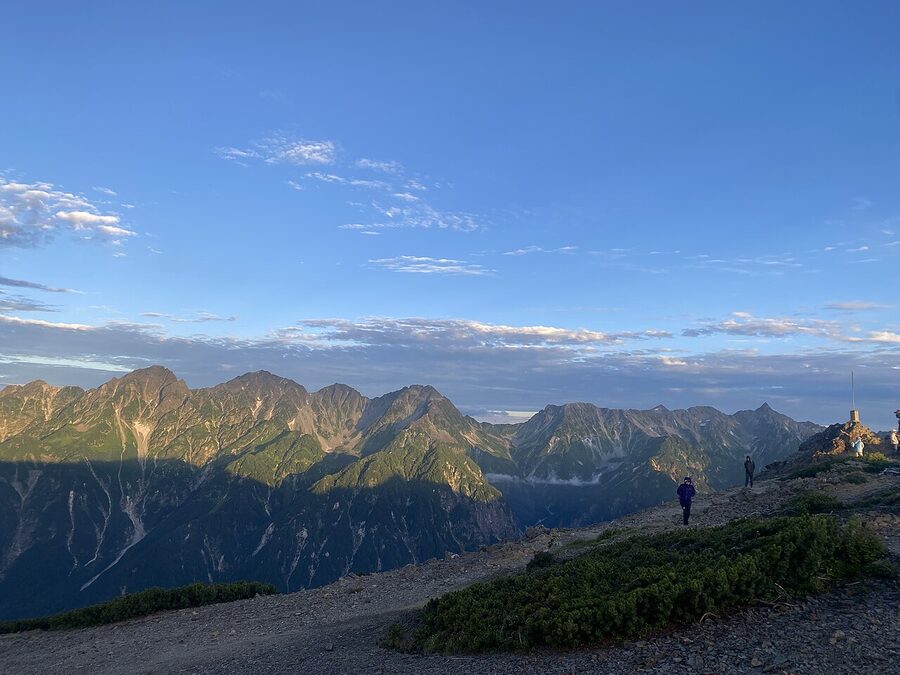
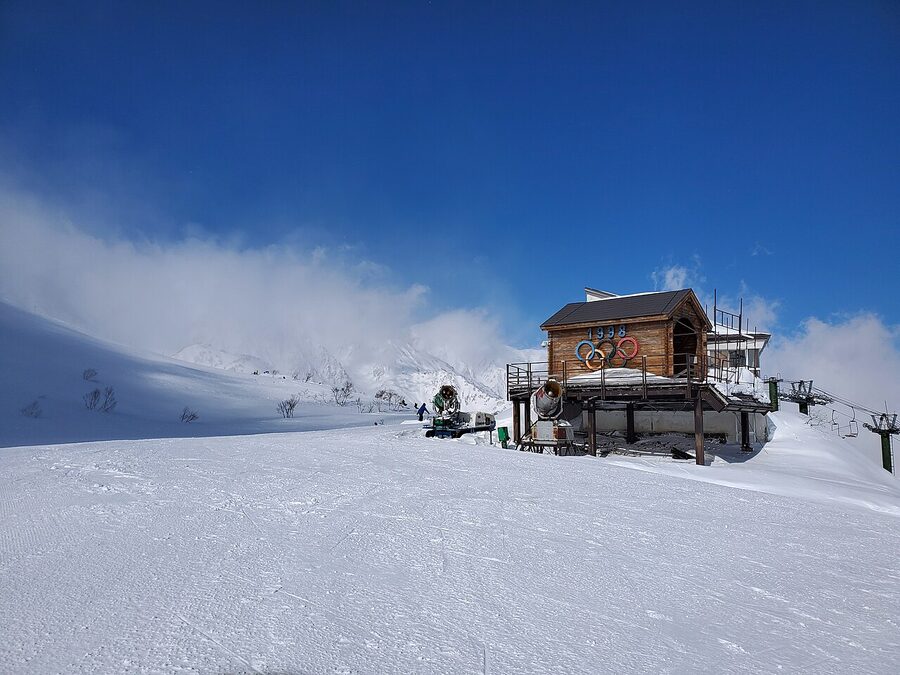
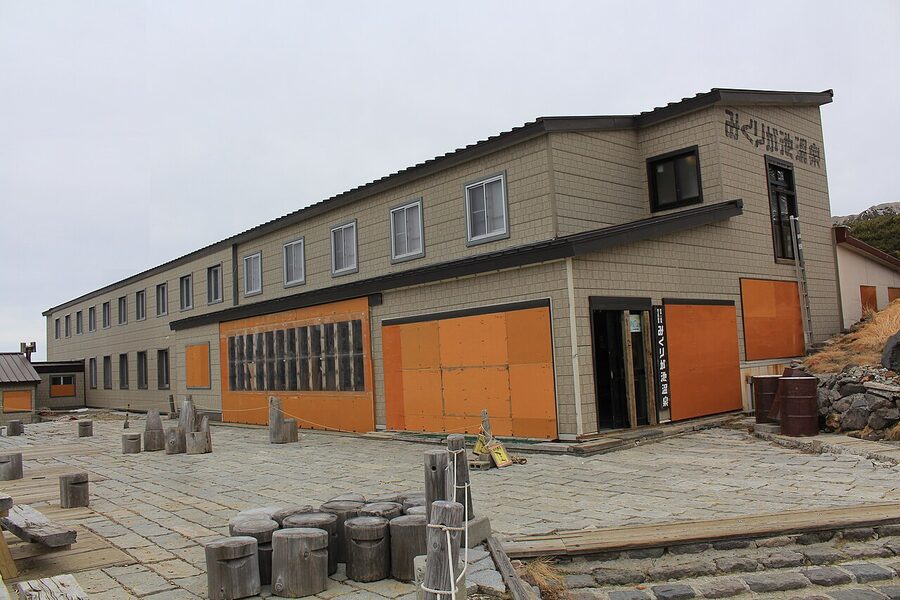
The water comes out of the rock clear. Within minutes of meeting the air, it turns the colour of skimmed milk. That’s not a marketing line, it’s chemistry: calcium and magnesium bicarbonate breaking down, sulphur particles precipitating, the spring effectively painting itself white in front of you. Shirahone Onsen has roughly a dozen sources doing this, every one of them at the same modest temperature, and it’s the reason a small cluster of inns in a steep gorge below Mt Norikura has been famous for nearly four hundred years.
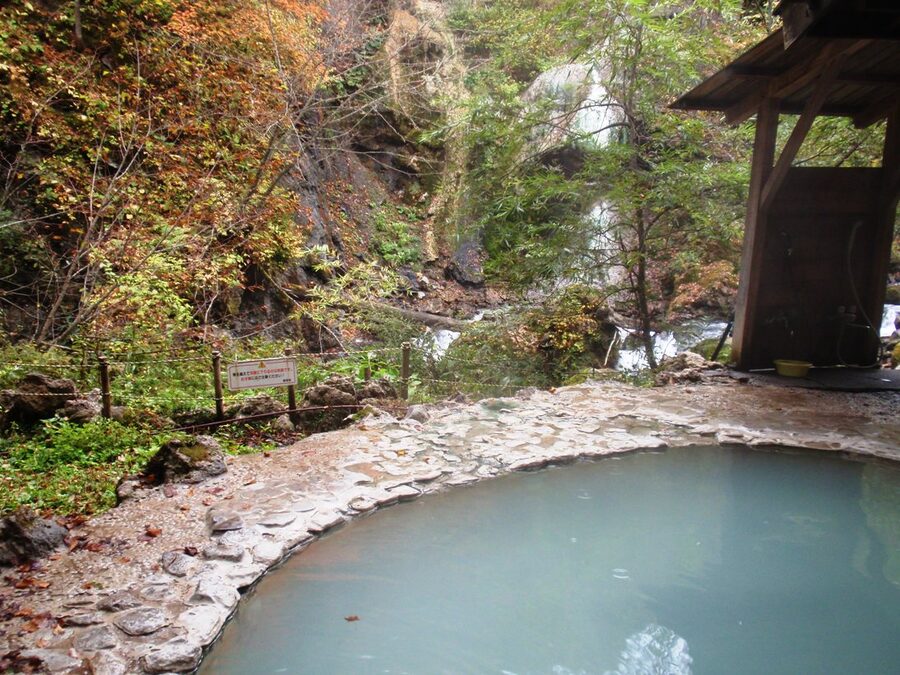
That word “notenburo” matters here, because Shirahone is one of the few onsen villages where the public outdoor bath is the headline act, not a side option. The full name is the Shirahone Onsen Kyoudou Notenburo, and it reopened in April 2019 after a long closure for repair work. You don’t need to book a room to use it. You don’t need to know anyone. You walk down the stairs, pay at the hut, and you’re in.
In This Article
- What “Shirahone” actually means
- The chemistry, in plain language
- The two day-use baths, and which one to choose
- Awanoyu Ryokan: the famous mixed bath
- Shirahone Onsen Kyoudou Notenburo: the public open-air bath
- The named ryokan, ranked honestly
- Awanoyu Ryokan
- Yumoto Saito Ryokan
- Shirafune Grand Hotel
- Oyado Tsuruya
- Shirahone Ebisuya
- Konashi-no-Yu Sasaya
- Shirafune-so Shintaku Ryokan
- What you actually eat here
- The day-trip option, costed honestly
- Getting there
- Matsumoto by train, then bus
- By car
- The Senjojiki gorge walk and other nearby sights
- The Tsuitoshi tunnel and suspension bridge
- Ryujin no Taki Waterfall
- Funto-kyu (Erupting Mounds)
- Hiking from Norikura Kogen
- Mt Norikura itself
- When to come
- Autumn (mid-October to early November)
- Winter (December to mid-March)
- Spring (mid-April to June)
- Summer (July to September)
- What to combine it with
- Practical bits
- Cash
- Towels and amenities
- Tattoos
- Mobile signal
- Drinking the spring water
- The literary footnote
What “Shirahone” actually means
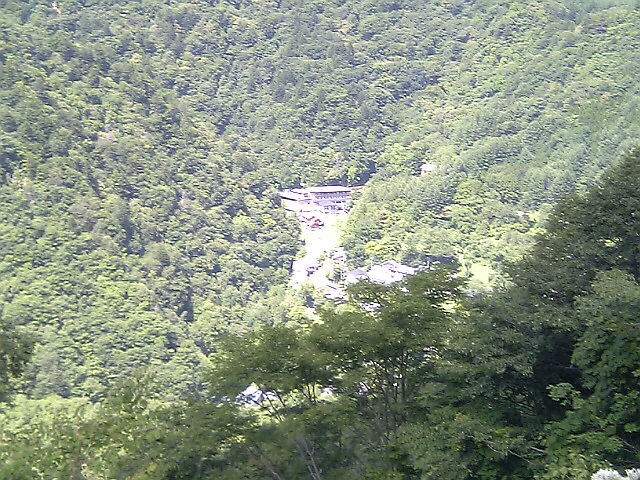
The kanji read literally as “white bone”, which sounds either spooky or marketing-perfect depending on your mood. The story locals tell is that the calcified deposits which form on the rims of the bathing pools and on the rocks downstream of the pipes look like bleached bone, and somewhere along the line that overtook the older name of Shirafune (“white boat” or “white bath”). It locked in for good after the writer Nakazato Kaizan set part of his sprawling novel Daibosatsu Toge here in the early 1900s, and the literary association is still part of how the inns talk about themselves.
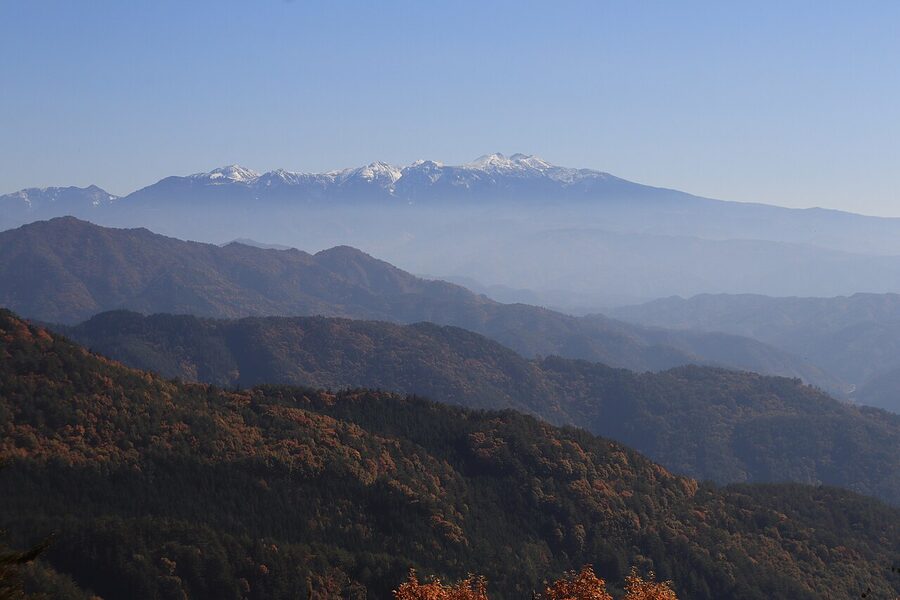
The village sits at about 1,400 metres in Chubusangaku National Park, in the Azumi district of Matsumoto, hugging the slopes above the Yu River. There’s no obvious centre. Inns are scattered along a kilometre or so of road, which means walking from one to another in the dark with wet hair is part of the texture of the place. So is the silence: aside from the river and the birds, there isn’t much else.
The chemistry, in plain language
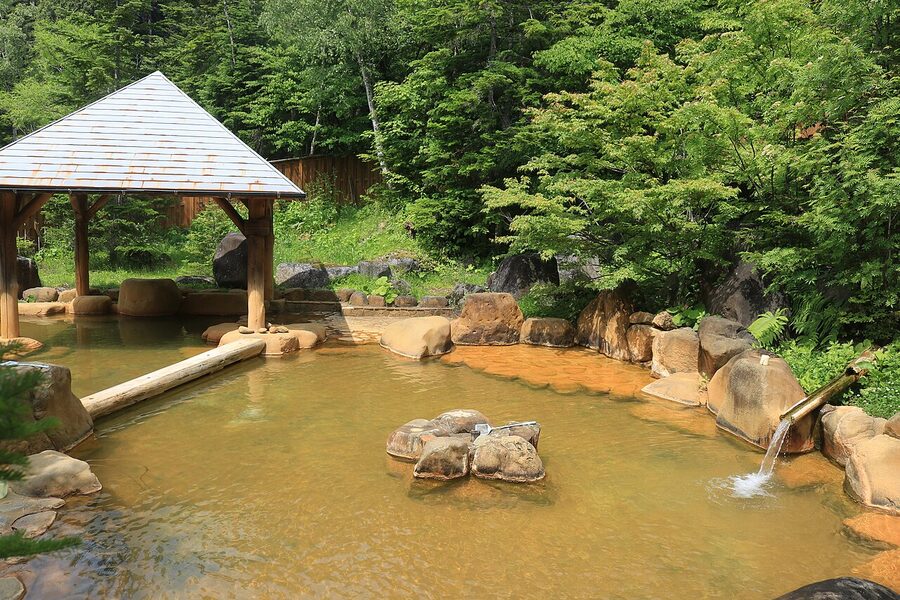
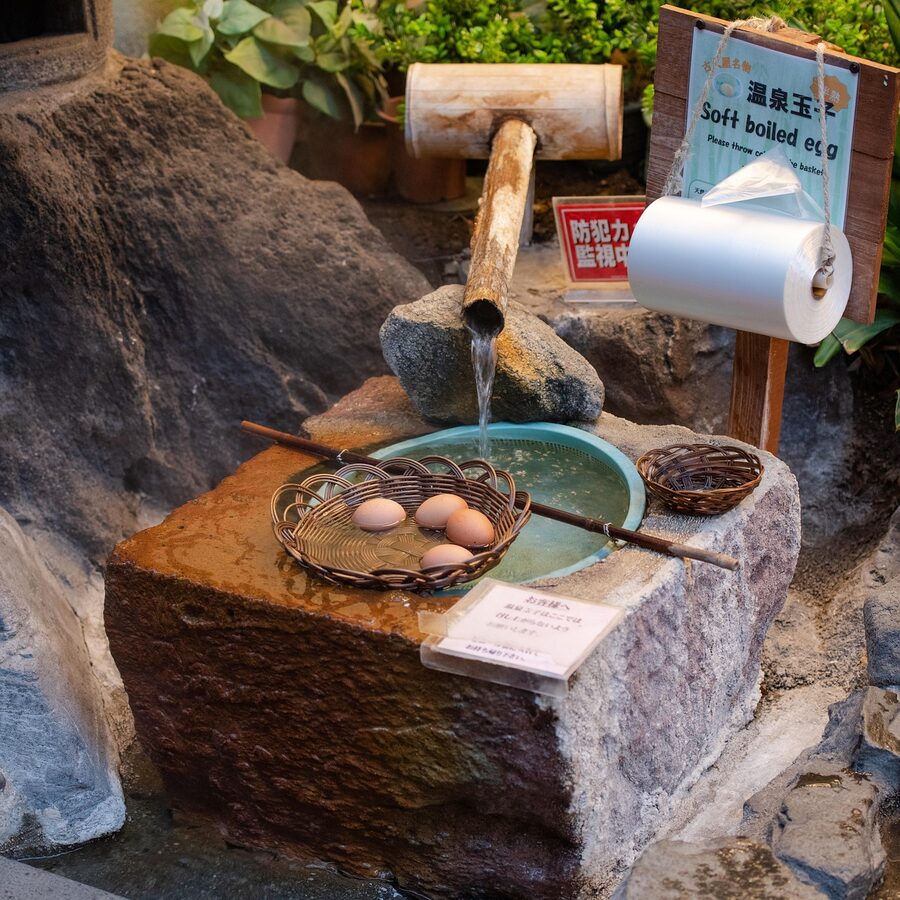
The classification on the official analysis sheet is a mouthful: simple hydrogen sulphide spring, sulphur-calcium-magnesium-bicarbonate type. In practice that means three things you’ll notice. The water is faintly sour-tasting if you sip it from the bamboo cup at the spigot (this is encouraged, said locally to help digestion). It carries a real but mild egg-shell smell of hydrogen sulphide. And the milkiness is not the water itself, it’s particulate, which is why a cup of it scooped fresh at the spring is clear and only goes opaque after it has stood for a while.
There’s an old saying attached to Shirahone, repeated on every signpost in the village: three days here and you won’t catch a cold for three years. Nobody takes that literally. What ryokan staff will say more honestly is that the springs feel gentle on the skin compared with the sharp acidic onsen at, say, Kusatsu. The water is only weakly acidic and, despite the sulphur, considered safe for children and older bathers. People with sensitive skin generally do better here than at the harsher acid baths.
One detail worth knowing before you arrive: in 2004 a national scandal broke over Shirahone, when an investigation found that several inns and the public bath had been adding bath salts to deepen the white colour after a few of the source springs faded. It was a real scandal, with the village mayor of Azumi resigning over it, and it kicked off a nationwide audit of onsen labelling. The water you’re soaking in today is the genuine article, drawn straight from the source under the now much stricter Nagano Prefecture certification scheme that the scandal forced into existence. It’s worth knowing both because it’s part of the village’s history and because the controls that grew out of it are why you can trust what’s written on the bath house signs.
The two day-use baths, and which one to choose
If you’re not staying overnight, two options are open to walk-up visitors. They’re both worth doing if you have time. They have different characters and different schedules.
Awanoyu Ryokan: the famous mixed bath
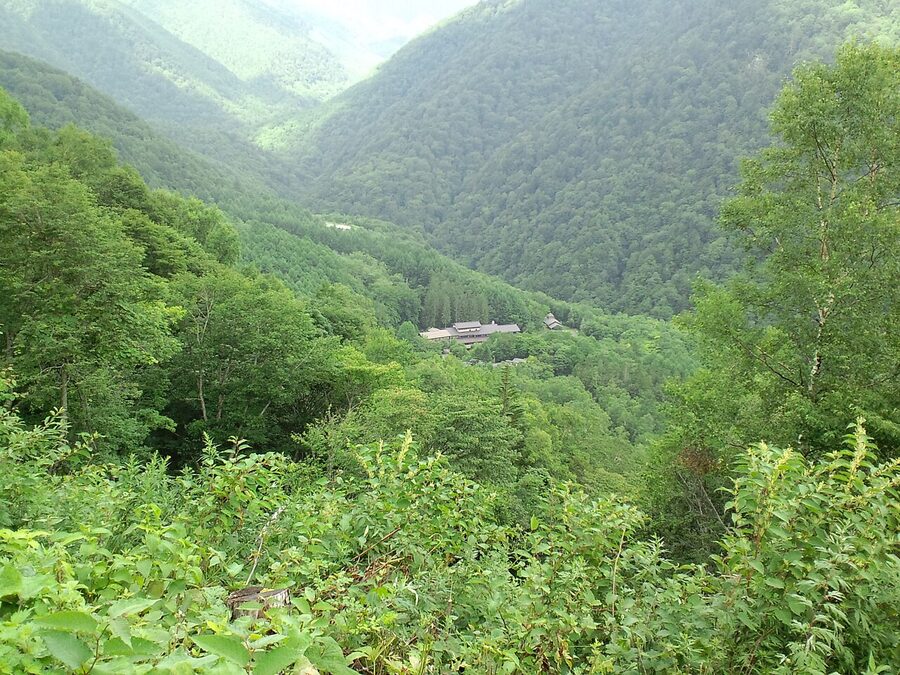
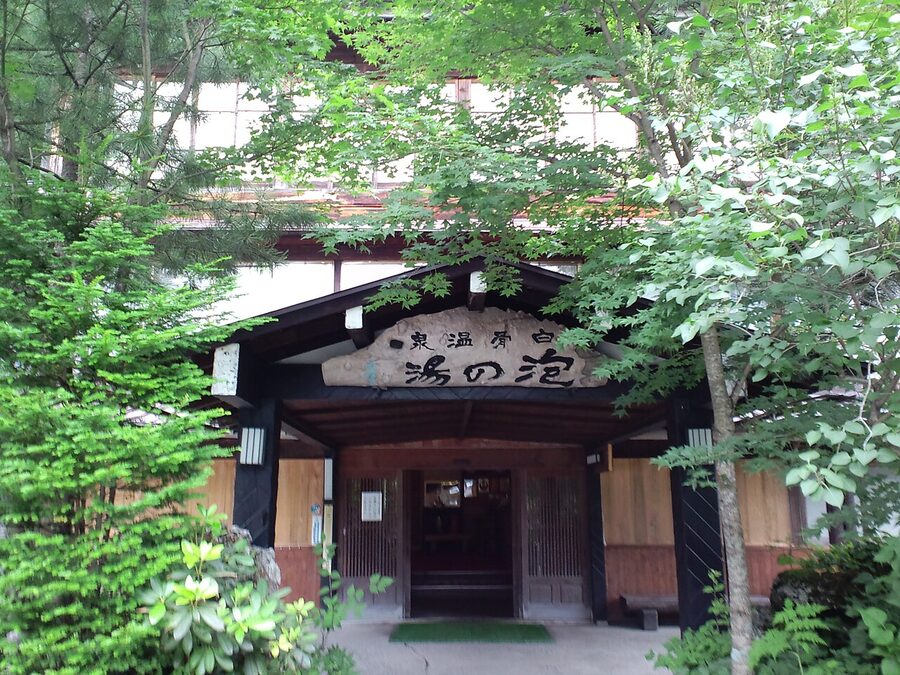
Awanoyu is the inn behind almost every photo of Shirahone you’ve ever seen. The headline draw is the konyoku rotenburo, a large mixed outdoor bath with such opaque water that modesty is genuinely not an issue, even before you factor in the wrap towels women are permitted to use here (women enter from a separate changing room). There are also gender-segregated indoor baths and a women-only outdoor bath if mixed bathing isn’t your thing. The water is the silkiest in the village, with that milky-blue tint at its strongest, and it’s only lukewarm by Japanese onsen standards, which means you can stay in long enough for it to actually do something.
Day-use admission is ¥1,000 with hours 10:30 to 14:00, last entry 13:30. Closed Wednesdays and Thursdays. There is no booking system: arrive early, especially in autumn weekends, because the changing rooms have a hard ceiling on capacity and there is genuinely no overflow.
Shirahone Onsen Kyoudou Notenburo: the public open-air bath
The village’s public bath, run by the local ryokan association, is the cheaper and more atmospheric of the two. Admission is ¥700, with weekday hours 10:00 to 16:00 and weekend hours 9:00 to 17:00. Closed Thursdays. It also closes seasonally from late November to late April, because the staircase down to it is impassable in deep snow. The baths are gender-segregated and sit right at the edge of the river, on the valley floor, with the water audible the whole time you’re in.
This is where most local Japanese visitors go if they only have time for one bath. It’s plainer than Awanoyu and the changing rooms are basic, but the location is unbeatable: rock walls on three sides, the Yu River running below, and a long enough soak window that you can do an hour without anyone hurrying you out.
If you’re undecided, my honest recommendation is to do the public bath first when it opens at 10:00, walk back up the stairs, and then walk over to Awanoyu when it opens at 10:30. You can do both in a morning, total cost ¥1,700, and you’ll see two completely different sides of the same chemistry.
The named ryokan, ranked honestly
There are roughly a dozen working inns in Shirahone, and the village is small enough that the inn you pick effectively determines your evening. The cluster has been here in some form since the Edo period, and the family name Saito is so common in the village that it appears in three of the major inn names, all separate businesses. A useful thing to know before you book.
Awanoyu Ryokan
Beyond the day-use access, Awanoyu is also a good (and hard-to-book) ryokan in its own right, with overnight stays giving you the famous mixed bath after the day visitors leave. The cooking leans traditional, the rooms are dated in a charming rather than tired way, and the post-dinner soak is the experience the village is named for. Expect to book three to four months out for autumn weekends.
Yumoto Saito Ryokan
Yumoto Saito is the literary inn, the one Nakazato Kaizan stayed in while he was writing Daibosatsu Toge, and it’s still owned by the same Saito family. Its outdoor bath is called Oni-ga-jo (“ogre’s castle”) for the towering rock formations behind it, and a separate annexe (Yumoto Saito Bekkan) sits across the valley. JTB ratings put it consistently in the top three for service quality. It’s the inn to choose if the literary connection appeals to you and you want the sense of staying in a place with a long memory.
Shirafune Grand Hotel
The largest of the working inns, with a more hotel-like operation than the smaller ryokan, two source springs feeding its baths, and elaborate kaiseki dinners that rotate seasonally. It’s the easiest of the village’s properties to actually book, and a fair pick if smaller ryokan feel intimidating. Outdoor baths face the forest. Per-person rates from around ¥22,000 with two meals.
Oyado Tsuruya
Tsuruya is a mid-sized inn with the tightest meal reputation in the village, leaning on local mountain vegetables and salmon-trout. Its outdoor bath sits a little higher than the others, with a view down the valley. This is the inn to pick if you care more about the dinner than the bath theatre. Expect ¥32,000 to 35,000 for a couple, two meals.
Shirahone Ebisuya
Ebisuya is one of the smallest properties, only a handful of rooms, and the place to stay if you want to feel like a guest in someone’s home rather than a hotel customer. The cooking is simpler and more personal, the baths smaller. Word of mouth, not visibility, is what keeps it full.
Konashi-no-Yu Sasaya
Sasaya sits a little apart from the main cluster, surrounded by birch forest, and runs as a quiet single-property inn with creative seasonal cooking. The half-outdoor bath is genuinely lovely. JTB and Jalan reviews are unusually consistent in the high 4s. If you’ve stayed in Shirahone before and want a different angle on it, this is the one.
Shirafune-so Shintaku Ryokan
Run by another Saito family branch, Shintaku is family-friendly in a way most Shirahone ryokan aren’t. The inn keeps a baby-friendly bath option and milder dinner courses for children, which is rare in this kind of remote onsen. Useful to know if you’re travelling with kids and want to do Shirahone without booking out a whole separate side.
What you actually eat here
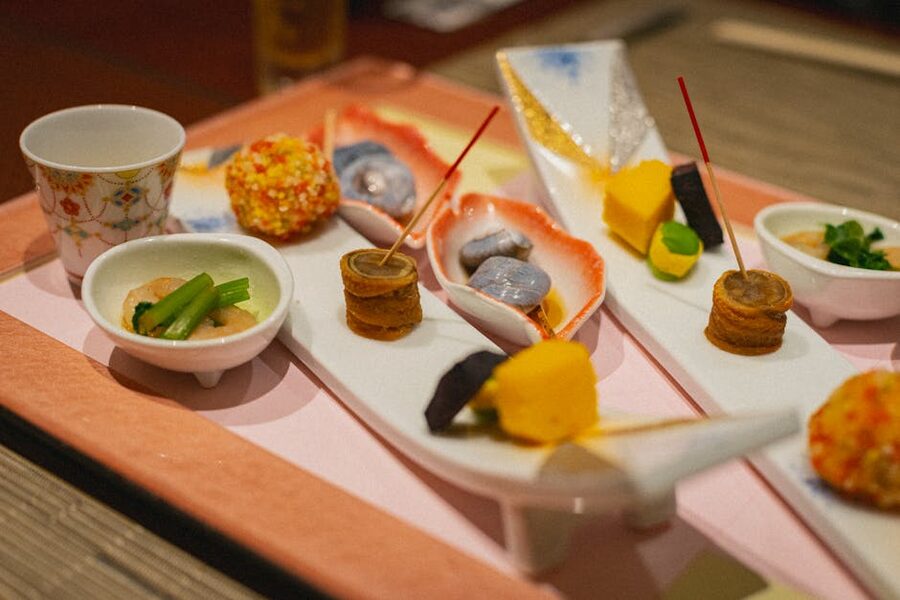
Two specifics matter at Shirahone, and both are worth seeking out even on a day visit. The first is onsen-gayu, sometimes spelled onsen okayu, a rice porridge cooked in the spring water itself. The minerals turn the rice slightly pink-grey and give it a savouriness that plain water simply doesn’t produce. Some inns serve it as a breakfast course, others as a small midday snack at the front-of-house cafe. If your inn doesn’t have it on the menu, ask, because they probably make it.
The second is the regional combination of mountain vegetables and salmon-trout sashimi. Sansai (literally “mountain greens”) get pickled, simmered, fried as tempura, and tossed with sesame, depending on the season. The salmon-trout is farmed in the cold streams of nearby Azumino and shows up at most kaiseki dinners, often as both sashimi and a grilled course. There’s also occasionally iwana, the river-caught char of the high streams, salted and grilled whole on a skewer in front of the fire.
Sake is the obvious accompaniment, and most inns stock at least one local brew from Matsumoto’s surviving small breweries. If your inn doesn’t push a particular bottle on you, ask for whatever’s from Daishin or Beau Michelle, the two local labels that consistently turn up. Beer is universal but not the right choice with this kind of food.
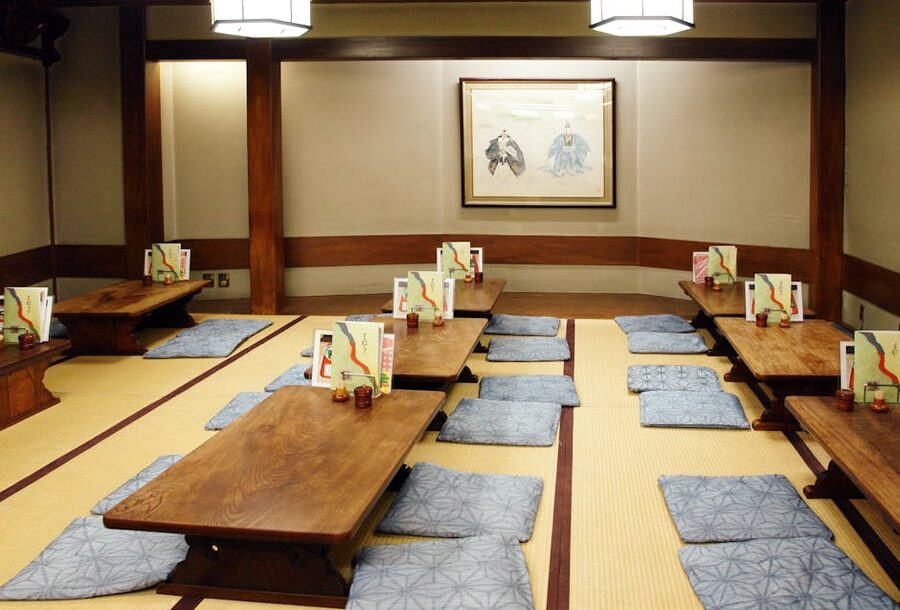
For non-overnight visitors, the small Baikoan rest house in the village serves a basic but honest set lunch with the same regional character, plus the obligatory onsen-gayu. Coffee is at Rest House Kyudo. The Saito-shoten shop sells local mountain pickles and a bottled spring water you can take home, which keeps for about two weeks before it loses the chemistry.
The day-trip option, costed honestly
A no-overnight visit works if you’re already in Matsumoto or Takayama and want to add the bath to your itinerary. The total cost looks roughly like this. From Matsumoto, train and bus return is around ¥5,800. Awanoyu admission ¥1,000, public bath admission ¥700, lunch at Baikoan around ¥1,500. So ¥9,000 per person all in for a half-day visit, both baths, and food. That’s not nothing, but it’s also less than a single night at any of the inns.
The catch is the bus schedule. There are only four daily Shirahone connections from Sawando in summer, fewer in shoulder season, and the schedule contracts hard in winter when the road tightens up. You need to plan the day around the buses, not the buses around the day. The first bus arrives around 11:00, the last bus out leaves at roughly 15:30. That gives you a four-hour window. The Awanoyu kitchen-of-bath schedule (10:30 to 14:00) and the public bath schedule both fit inside this, but it is genuinely tight, so do the public bath first when it opens, then walk over to Awanoyu.
If you’d rather not run on a bus clock, hire a car at Matsumoto Station. The drive is about an hour up National Route 158, with the last stretch on the prefectural Shirahone road. Snow tyres or chains are mandatory between roughly mid-November and mid-April. A small open-air car park sits in the middle of the village, free, but limited.
Getting there
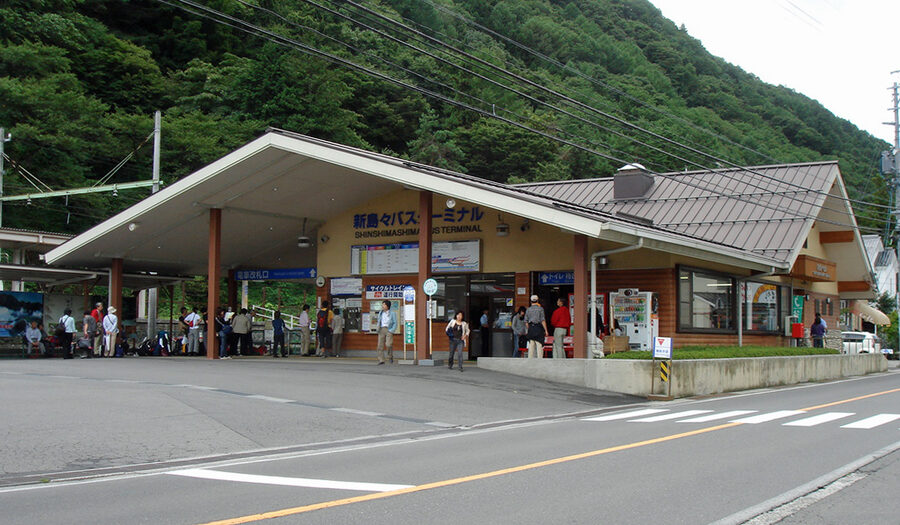
Shirahone has no train station. Every route ends with a bus. The standard approach from Tokyo or Osaka is via Matsumoto by Shinkansen and limited express, then the Alpico Kotsu Kamikochi line train from Matsumoto Station to Shin-Shimashima, then a bus up the valley with one mid-route change at Sawando. Total time from Matsumoto: 100 to 120 minutes. Fare: ¥2,900 one way. Connections: only about four per day, so plan the day around the timetable on the Alpico Kotsu site.
From Takayama on the Gifu side, the route is shorter on a map but slower in practice. National Route 158 over Abo Pass is the main road, with the Hirayu Onsen bus terminal as the changeover point. From Takayama by bus this is roughly 70 minutes including the change. By car the same drive is about an hour.
Matsumoto by train, then bus
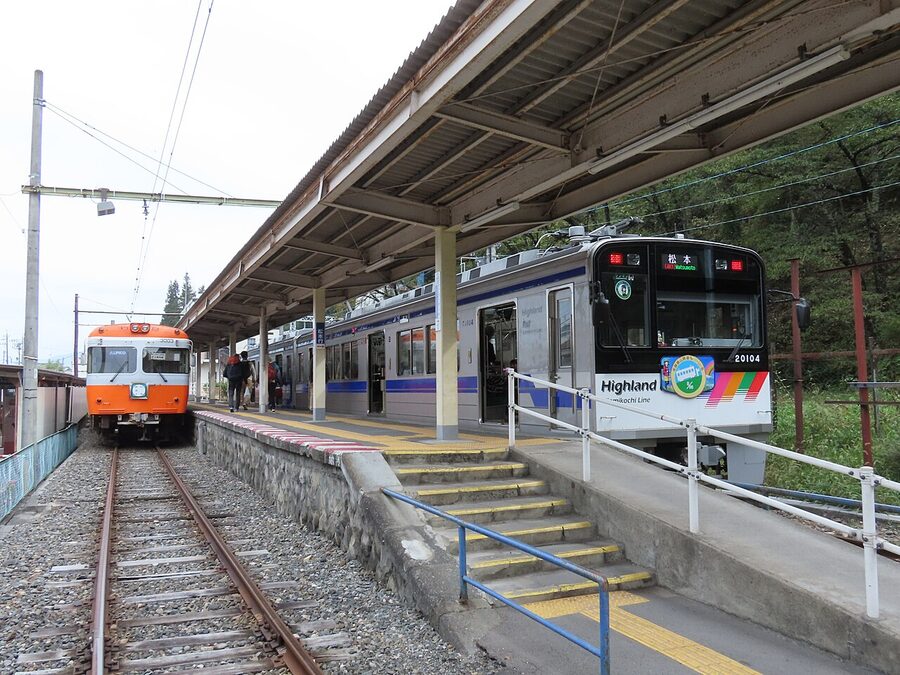
The standard journey from Tokyo: Hokuriku or Chuo limited express to Matsumoto (around 2h 30m, ¥6,800 unreserved), then Alpico Kotsu Kamikochi line to Shin-Shimashima (30 min, ¥700), then bus 70 min to Shirahone (¥1,950). Total around 5 hours door to door, ¥9,500 one-way per person. Tedious to plan, surprisingly straightforward to do.
From Osaka or Nagoya the route is via Nagoya and the Wide-View Shinano limited express to Matsumoto. Add about an hour overall.
By car
A rental car is the easier option if you’re combining Shirahone with Kamikochi, Norikura Kogen, or Okuhida Onsen-go on the Gifu side. Pick up at Matsumoto Station. Take the Matsumoto IC south to National Route 158, follow the Azusa River up the Sawando direction, and turn north on the prefectural Shirahone road shortly before Sawando itself. The whole drive is around 60 to 75 minutes depending on Route 158 traffic, which is heavy in summer due to Kamikochi-bound buses.
From the Takayama side, the same Route 158 climbs over the Abo Pass tunnel and drops down past Hirayu Onsen. The road over the pass is open year-round but driven on snow tyres in winter as a hard rule, not a suggestion. The local prefectural road into Shirahone itself was historically closed in deep winter; since 2009 improvement works it stays open year-round, but with delays after heavy snowfalls.
One small route quirk: the Kamikochi-Norikura Super Rindo, an old toll road now free, links Shirahone to Norikura Kogen directly. It’s only open mid-spring to autumn and closes in any sustained rain. If it’s open while you’re there, take it. The drive up over the ridge between the two valleys gives you views of the Hida Range that don’t really come from anywhere else.
The Senjojiki gorge walk and other nearby sights
One small note before this section: Shirahone’s Senjojiki is not the famous Senjojiki Cirque in the Central Alps. Same characters, completely different place. The Shirahone version is a small limestone gorge a few minutes’ walk from the visitor centre, with the Yu River running through a natural tunnel.
The Tsuitoshi tunnel and suspension bridge
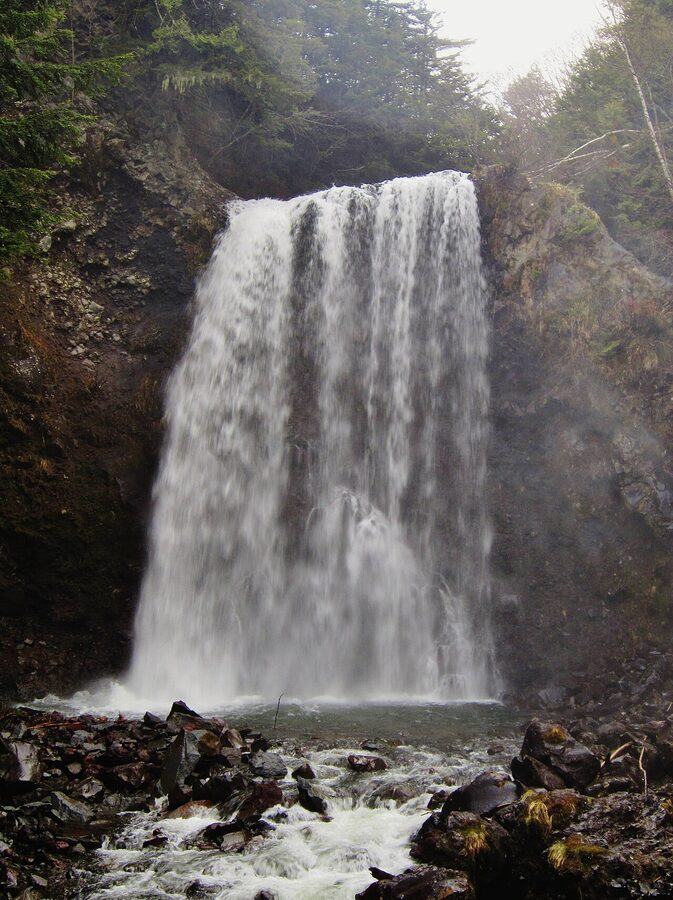
The Tsuitoshi is a 20-metre natural tunnel cut by the river through limestone bedrock over millions of years. It’s six metres high, dramatic in scale, and you can’t actually walk through it (the slope is too steep) but you can see it from the road above and from the public bath. A short suspension bridge crosses the river just downstream and is your best vantage point. The whole detour from the village centre takes 20 minutes, and you can do it before your bath as a warm-up.
Ryujin no Taki Waterfall
A few minutes from the visitor centre, the Ryujin Falls emerge directly out of a limestone cavern, with thin streams of groundwater dropping continuously from holes in the rock face. The name comes from a Shinto rain deity. It’s not a dramatic waterfall in the Iguazu sense, more an oddity, but the way the water comes out of the rock is unusual enough to be worth the five-minute walk. In winter the whole face freezes into icicle curtains.
Funto-kyu (Erupting Mounds)
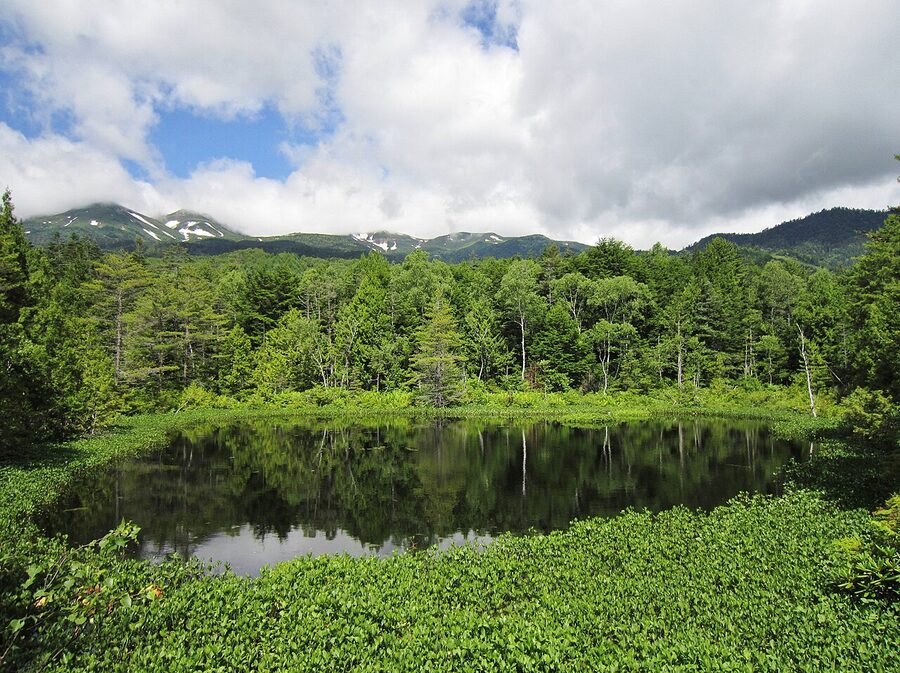
Designated a Special Natural Monument by Japan in 1952 for being one of the only sites in the world with this geological feature, the funto-kyu are calcified mounds where mineral water has erupted slowly enough to deposit limestone in domed shapes. Several are visible in and around the village. Most travellers walk past them without noticing, which is a shame. The visitor centre keeps a brochure with a small map.
Hiking from Norikura Kogen
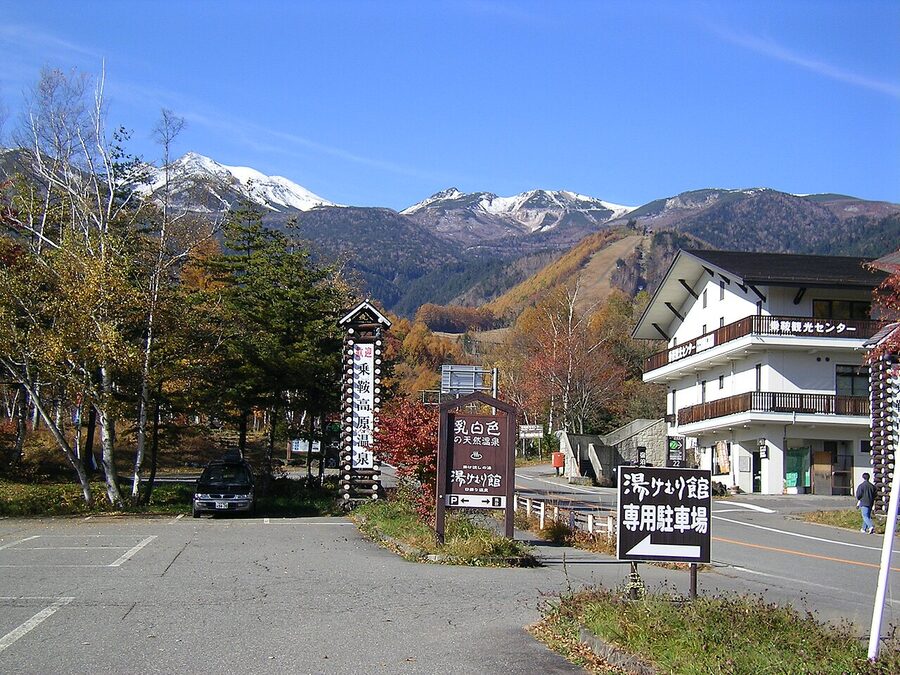
The classic walking link with Shirahone runs from the Norikura Kogen side: from the Sanbon-taki bus stop at the lower edge of Norikura Kogen, down through forest to the Shirahone visitor centre. About 6 kilometres, mostly descending, two and a half to three hours at a normal pace. The trail is well-marked and not technical. It crosses three minor falls (the eponymous Sanbon-taki, “three falls”) and ends at the head of the village. If you’re staying overnight at Shirahone, walking in from Norikura, dropping your pack at the inn, and going straight to the public bath is a particularly good day.
Going the other way (uphill from Shirahone to Norikura Kogen) is harder work but doable in three to four hours. Worth it if you want to combine an onsen night with a Norikura plateau day.
Mt Norikura itself
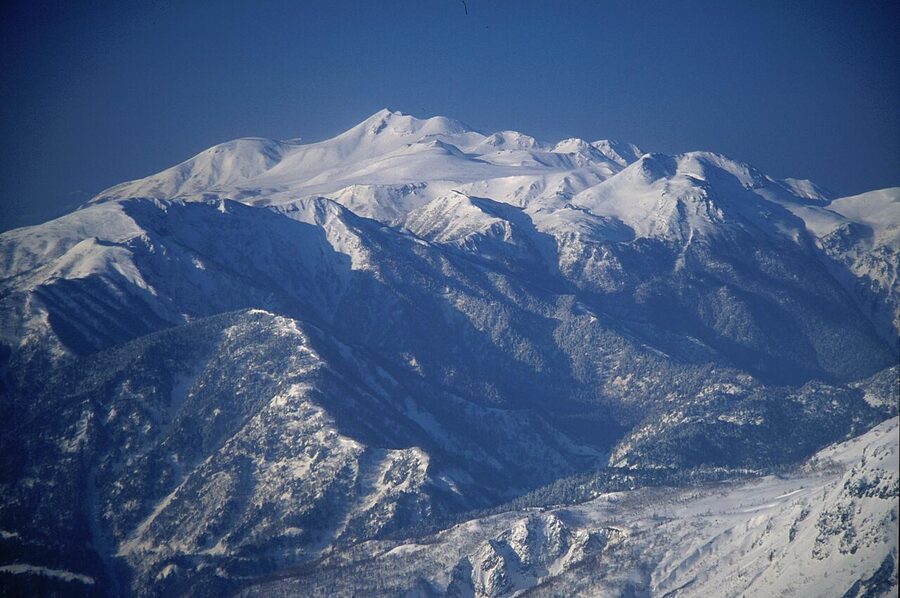
Mt Norikura summit is reachable from Shirahone with a longer day: bus or drive over the Super Rindo to Norikura Kogen, then the Echoline shuttle bus up to Tatamidaira at 2,716 m, then a 90-minute walk to the top of Kengamine (3,026 m). It’s the easiest of Japan’s hundred famous peaks, by some margin, and the only one in the Northern Alps you can summit before lunch and be back in an onsen by dinner. See our high-altitude sickness guide if you’re going up from sea level the same week, because the air at the top is thin enough to matter for some people.
When to come
Autumn (mid-October to early November)
The single best window. The gorge fills with colour, the larch needles up at the rim turn gold, and the air is cold enough to throw real steam off the baths. Book inns three months out for weekends. Mid-week is much easier.
Winter (December to mid-March)
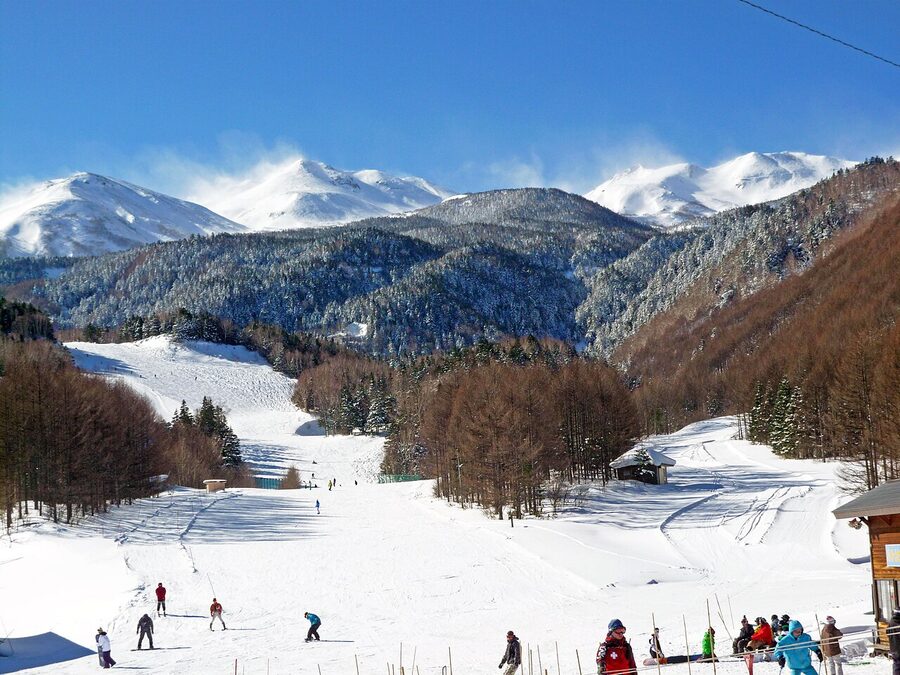
Hard but rewarding. The public notenburo is closed from late November to late April, so you’re limited to ryokan baths and Awanoyu’s day-use slot. Bus frequencies drop. The compensation is the visual: snow piled on the bath rims, frozen waterfalls at Zengoro and Ryujin, near silence at night. Drive in only with snow tyres or chains.
Spring (mid-April to June)
The shoulder. The public notenburo reopens late April. Roads fully clear by Golden Week. The forest goes from bare to fresh green within a couple of weeks, the river runs heavy with snowmelt, and rates are at their lowest. The trade-off is unstable weather, with rain often closing the Super Rindo to Norikura.
Summer (July to September)
Cooler than the lowlands by 8 to 10 degrees, which is the main draw. Day visitors are heavier than other seasons because Shirahone gets folded into Kamikochi day-trip itineraries. If you can stay overnight in summer, do, because evenings empty out by six and the village goes quiet. There’s a small annual fireworks evening in August that’s worth coinciding with if dates work.
What to combine it with
The natural pairing is Kamikochi, the protected river valley two ridges west, on the same Route 158 corridor. A typical itinerary: Kamikochi as a long day-trip from Matsumoto (early bus in, walk Kappa Bridge to Myojin Pond, late bus out), then Shirahone the same evening for the bath and dinner, then back down to Matsumoto the next day. That’s a satisfying two-night structure.
For a longer trip, link Shirahone to Norikura Kogen on the same plateau (one of the few overnight onsen-plus-hiking pairings in central Honshu) or to Okuhida Onsen-go across the Abo Pass on the Gifu side. Okuhida is the broader cluster of five hot-spring villages reaching toward Hirayu and Shin-Hotaka, with double the inns and the Shin-Hotaka Ropeway as a major draw. If you want a multi-onsen route, Shirahone-Hirayu-Shin-Hotaka over three nights is hard to beat.
For the route in and out, see our access guide, and for the broader onsen context across the Japan Alps see the onsen guide.
Practical bits
Cash
Bring it. Several inns and the public bath are still cash-only, the bus to Shirahone takes cash easily and IC cards or cards rather grudgingly, and the village shop expects yen notes. The nearest reliable ATM is at the post office in Sawando, which is on your bus route in. Withdraw what you’ll need before the bus leaves.
Towels and amenities
The day-use baths sell towels at the desk but it’s cheaper to bring your own small bath towel. Soap and shampoo are usually provided in the ryokan baths but not always at Awanoyu’s day-use slot or at the public notenburo. A small toiletries bag is worth packing.
Tattoos
Shirahone is conservative about this. The public bath and most ryokan ban visible tattoos. A few of the smaller inns are flexible, especially for guests staying overnight, but you should ask before booking rather than turn up and find out at reception. Cover-up patches can work for small tattoos at some places.
Mobile signal
Patchy. Most inns have wi-fi in the lobby, none guarantee it in the rooms. Mobile signal works at the village centre but not deep in the gorge. Don’t plan to take work calls from here, that’s not what the place is for.
Drinking the spring water
You’ll see bamboo cups at spigots around the village. Drinking the water is encouraged for digestive complaints, and you’ll see locals doing it. The taste is mildly sour with a slight egg-shell finish. Don’t fill bottles from these spigots to take home: the chemistry shifts within hours and the cloudy water you bottle up will be clear (and tasteless) by morning.
The literary footnote
Shirahone’s status as a destination owes a lot to Nakazato Kaizan’s Daibosatsu Toge, the longest novel ever written in Japanese (about 5.7 million characters across 41 volumes, unfinished at the author’s death in 1944). A central sequence is set at Shirahone, and Kaizan stayed at Yumoto Saito Ryokan while he was writing it. After other Meiji-era writers (Yosano Akiko, Saito Mokichi, Wakayama Bokusui, Mitsui Tatsuji) followed him in, Shirahone’s literary reputation was set. You’ll see the references quoted on inn signage. None of it is essential to enjoying the village, but it explains why an obscure mountain hot-spring of a dozen ryokan ended up in every Showa-era travel anthology and why the place still feels conscious of being looked at.
Walking back up the staircase from the public notenburo at dusk, with the limestone walls catching the last of the light, you can see why the writers stayed.