
This guide contains affiliate links. If you book through them, we earn a small commission at no extra cost to you. The hotels listed below are ones I’ve actually researched in depth (Japanese sources included) and would recommend to a friend.
Here’s the thing nobody tells you about Takayama: the “ryokan vs hotel’ choice that dominates the English-language guides isn’t the choice that matters. The choice that matters is which side of the Miyagawa river you sleep on, and how far from Sanmachi-suji you’re willing to walk in the dark with luggage. Get those two right and the rest of the trip falls into place. Get them wrong and you’ll spend three days walking 25 minutes each way to dinner.
I’ve spent more time than I should admit cross-referencing Booking.com slugs against Japanese hotel-ranking sites (jalan.net, ikyu, rakuten travel) for this guide. The 25 properties below are all verified, with real Booking.com URLs and a one-line summary of who they’re for. If a hotel didn’t come up cleanly in both English and Japanese sources, I dropped it. You’ll see the same five “top picks” on every blog. The interesting ones are usually two ranks down.
In This Article
- Quick reference: where to stay by traveller type
- How to choose: the questions that actually matter
- Sanmachi-suji and the Old Town side, best for first-timers
- Honjin Hiranoya Kachoan, best luxury ryokan
- Honjin Hiranoya Annex (Bekkan), best mid-range ryokan
- Sumiyoshi Ryokan, best budget ryokan
- Ryokan Tanabe, mid-range modern ryokan
- Takayama Station / Hanazaki area, best for transit
- Spa Hotel Alpina, best mid-range hotel
- Hotel Around Takayama, modern chain pick
- Hidatakayama Washington Hotel Plaza, reliable mid-range
- Tabino Hotel Hida Takayama, quiet budget option
- Super Hotel Takayama, cheapest reliable option
- Country Hotel Takayama, quirky budget pick
- Hotel Wing International Hida Takayama, reliable budget chain
- Higashiyama / temple side, best for quiet ryokan stays
- Oyado Koto no Yume, best boutique ryokan
- Ryokan Asunaro, mid-range Higashiyama
- Hotel Wood Takayama, design boutique pick
- South of the river / Kokubunji side, best mid-range central
- Hotel Ouan Takayama, best modern mid-range
- Hida Hotel Plaza, classic Showa-era resort hotel
- Tokyu Stay Hida Takayama, reliable mid-range chain
- Mercure Hida Takayama, Western chain, central
- Wat Hotel & Spa Hida Takayama, budget pick with onsen
- Takayama Green Hotel, old guard, big property
- Hirayu Onsen and Okuhida onsen-go, the night you’ll remember
- Yumoto Choza, best onsen ryokan
- Hirayu no Mori (Annex), mid-range onsen
- Okuhida Onsen Yamano Hotel, quiet alternative
- Festival-week alternatives: Hida-Furukawa and beyond
- Yatsusankan, Hida-Furukawa onsen ryokan
- Hotel Associa Takayama Resort, mountain-view alternative
- What most guides get wrong about Takayama accommodation
- Booking tips: when, where, and how cheap
- Quick recommendations by traveller type
- Combine with the rest of the Takayama cluster
Quick reference: where to stay by traveller type
| Area | Best for | Our pick | From / night | Book |
|---|---|---|---|---|
| Sanmachi-suji / Old Town | First-time visitors, ryokan experience, walking everywhere | Honjin Hiranoya Kachoan | ¥38,000 | Check prices |
| Takayama Station / Hanazaki | Day-trippers, train arrivals, business stays, families with luggage | Spa Hotel Alpina | ¥14,000 | Check prices |
| Higashiyama / temple side | Quieter ryokan stays, repeat visitors | Oyado Koto no Yume | ¥28,000 | Check prices |
| South of the river / Kokubunji | Couples, mid-range central, hot-spring hotels | Hotel Ouan Takayama | ¥22,000 | Check prices |
| Hirayu / Okuhida onsen-go | Onsen-first travellers, road-trippers, no-tourists nights | Yumoto Choza | ¥30,000 | Visit site |
| Hida-Furukawa (festival week) | Anyone who didn’t book a year ahead for the matsuri | Yatsusankan | ¥25,000 | Check prices |
How to choose: the questions that actually matter
Forget the “ryokan or hotel” question for a minute. Most of the “ryokan” in central Takayama are actually small hotels with tatami rooms and a public bath. Most of the “hotels” have a futon room option and an onsen on the top floor. The line is genuinely blurry. What separates a good Takayama stay from a mediocre one is the practical stuff:
Are you arriving by train or by car? If you’re on the JR Hida Wide View from Nagoya or Toyama, every minute you save walking from Takayama Station to your room with a suitcase counts. Aim for somewhere within 7 minutes’ walk of the east exit. If you’re driving, free parking matters more than walk-time and several of the best hotels are 10 minutes outside town.
How many nights? One night, stay near Sanmachi-suji and walk everywhere. Two nights, stay one night ryokan-style and one night at a station hotel so you can do an early-morning departure. Three or more, mix in a night at Hirayu Onsen 1 hour east, that’s the night you’ll remember.
Is dinner included? A proper kaiseki ryokan dinner with Hida beef is a 90-minute event and costs ¥8,000–¥15,000 per person on top of the room rate. Some travellers love it. Others want to walk into Sanmachi-suji and eat at whichever soba shop has space. Always check whether a quoted ¥X,000 rate is room-only (“sudomari” / 素泊まり), breakfast-only, or with the full half-board (“ichihaku-nishoku” / 一泊二食).
Do you want an in-room bath, or are you fine with the public bath? Even at ¥40,000-a-night ryokan, most rooms in Takayama use a shared men’s and women’s onsen down the corridor. Private outdoor baths attached to your room are available, but at Honjin Hiranoya Kachoan and a handful of others, and they roughly double the rate.
Festival week? If you’re here for the Sanno Matsuri (14–15 April) or the Autumn Hachiman Matsuri (9–10 October), book at least 9 months out, ideally a year. Once central Takayama is full, the next ring is Hida-Furukawa, then Gero Onsen, then Toyama City. Each step out is roughly half the price.
Sanmachi-suji and the Old Town side, best for first-timers
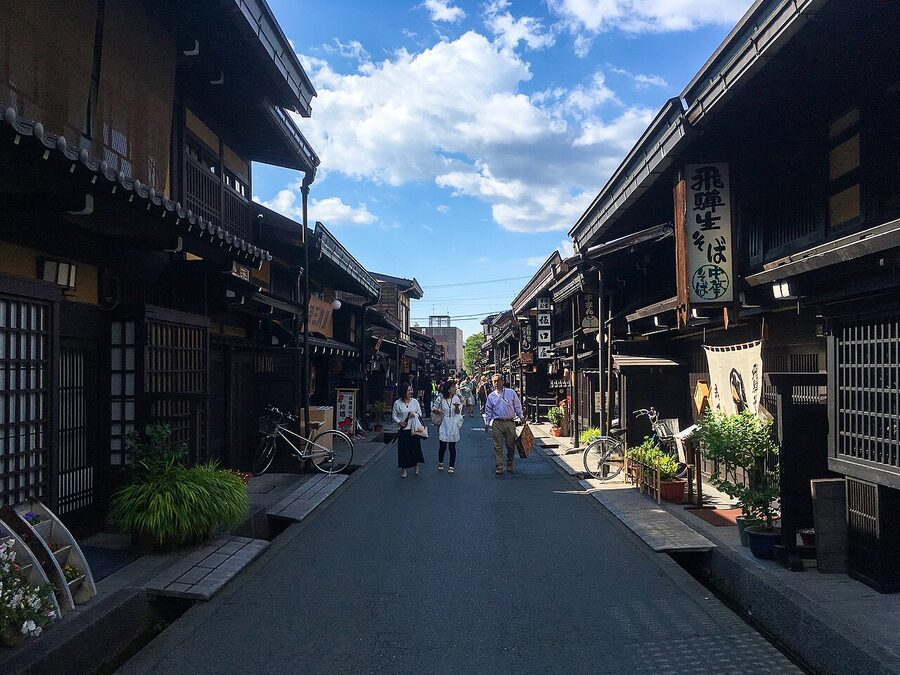
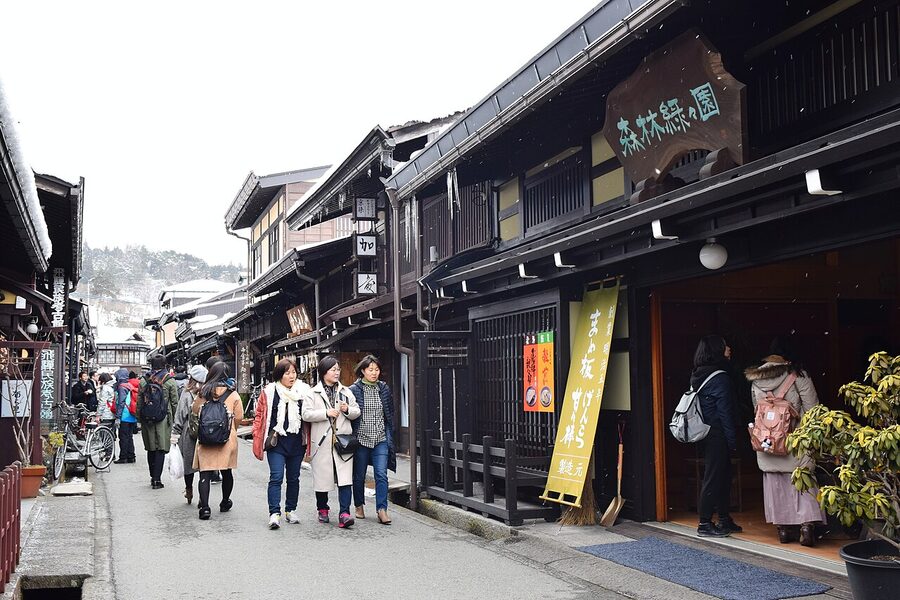
This is the area most people picture when they imagine Takayama: dark cedar facades, sake breweries with their sugidama cedar balls hanging out front, the soft chime of the trolleys at Yoshijima Heritage House down the road. Sanmachi-suji proper is one preserved Edo-period merchant street, but the wider Old Town extends about three blocks east of the river. Sleeping anywhere in this zone means you can roll out of bed and be on Kami-Sannomachi in 4 minutes flat.
The honest negative: it’s expensive. Properties with a Sanmachi address charge a 30–40% premium over identical hotels 8 minutes away near the station. It’s also the noisiest part of town in the early morning, because both morning markets set up at 7am and the delivery trucks are already on the move.
Honjin Hiranoya Kachoan, best luxury ryokan
Nearest station: Takayama (JR Takayama Line), 10 min walk
To Sanmachi-suji: 4 min walk
Best for: Couples, kaiseki dinner, first ryokan stay
From: ¥38,000/night (sudomari) / ¥55,000/night (with kaiseki dinner + breakfast)
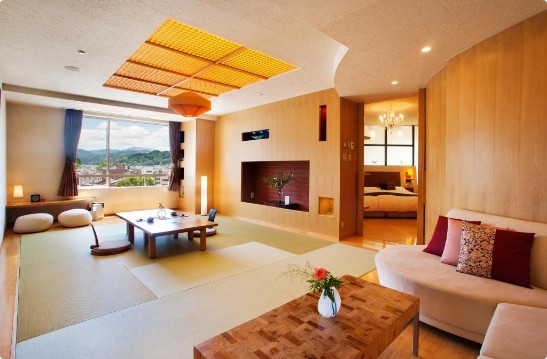
Honjin Hiranoya is the answer when someone asks “what’s the best ryokan in Takayama” on Reddit. It’s a 26-room property a single block off Sanmachi-suji, with its own piped onsen water, hinoki baths on a small rooftop, and a kaiseki kitchen that does proper Hida beef shabu-shabu and seasonal ayu sweetfish. Several of the suites have private cypress baths on the balcony fed by the same onsen line. The Japanese review sites (jalan, rakuten travel, ikyu) have it sitting at 4.7–4.8 averages with hundreds of reviews, which is a stupidly hard score to maintain at this scale.
The detail you only know from staying: the in-house breakfast includes hoba miso grilled on a magnolia leaf at your seat, with the leaf bought from a specific Hida farmer the kitchen has used since the 1980s. It’s the food memory that comes home with you.
Who it’s not for: solo travellers (rates are calibrated for two), and anyone allergic to elaborate hospitality choreography. The check-in tea ceremony, the welcome sweet, the in-room nakai-san (room attendant) explaining tomorrow’s breakfast at 9pm, some people love this. If you’d rather drop your bag and disappear, look elsewhere.
What’s good:
- Rooftop onsen baths with hinoki tubs, small but actually piping hot, not the lukewarm thing some hotel onsens give you
- Family-friendly: bouncers, child seats, and picture books for under-5s available on request (rare for a luxury ryokan)
- 4 minutes’ walk to Sanmachi-suji means you can do an evening stroll between dinner courses if the kaiseki feels long
What’s not:
- Half-board rates push past ¥55,000 quickly, this is firmly a special-occasion price
- The exterior is unremarkable from the street; if you want a dramatic gateway-style ryokan, this isn’t it
→ Check prices at Honjin Hiranoya Kachoan: Booking.com | Hotels.com
Honjin Hiranoya Annex (Bekkan), best mid-range ryokan
Nearest station: Takayama, 9 min walk
To Sanmachi-suji: 3 min walk
Best for: Mid-range couples, ryokan first-timers who want the experience without the ¥50,000 price tag
From: ¥22,000/night (sudomari) / ¥36,000/night (kaiseki half-board)
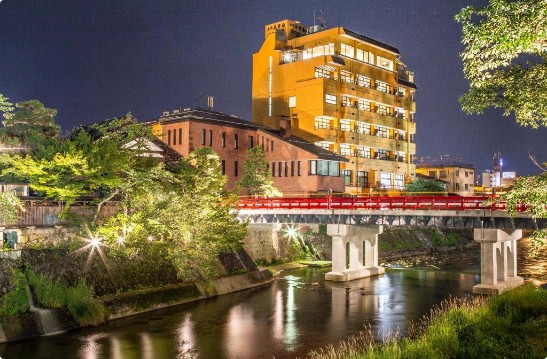
The Annex (Bekkan) is the property most travellers should actually book. Same family ownership as the Kachoan main building, same kitchen brigade, same onsen water, but the rooms are slightly smaller, the public spaces less elaborate, and the rate is a third lower. You still get the kaiseki dinner option, you still get the morning hoba miso, you still get the rooftop bath access.
One detail from Japanese reviews: the Annex tends to be less booked than the main building during shoulder seasons (mid-May to early July, mid-September to early October). If you can’t get into the Kachoan, the Annex is almost always available 2–3 weeks out.
What’s good:
- Identical kaiseki menu to the main building at a meaningfully lower price
- Closest ryokan to Sanmachi proper that’s still under ¥30,000 sudomari
- Smaller scale (12 rooms) means you’re basically the only guests at breakfast
What’s not:
- Rooms are small by international standards, typical 8-tatami room is about 13m²
- No private-bath rooms; everyone uses the rooftop public onsen
→ Check prices at Honjin Hiranoya Annex: Booking.com | Agoda
Sumiyoshi Ryokan, best budget ryokan
Nearest station: Takayama, 7 min walk
To Sanmachi-suji: 2 min walk
To Miyagawa Morning Market: 30 seconds
Best for: Budget ryokan stay, solo travellers, river-view sleepers
From: ¥9,000/night (sudomari) / ¥15,000/night (with breakfast)
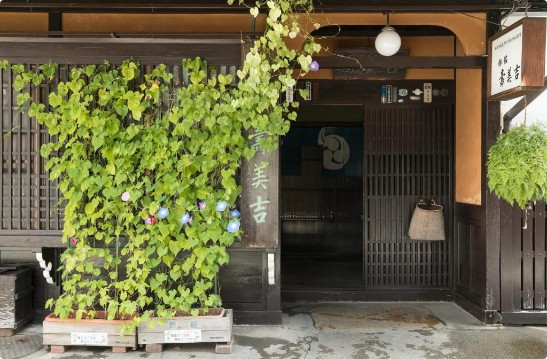
Sumiyoshi is a 100-year-old wooden ryokan on the Miyagawa, run by the same family for three generations. The rooms are pure trad, futon on tatami, a single low table, an in-room kettle, and a sliding window over the river if you book the right side of the building. The bath is a small communal hinoki, no view, but the water is a proper hot-spring source. The big draw is the location: 30 seconds from where the morning-market stalls go up at 7am.
This is also one of the few central Takayama ryokan that’ll do single-occupancy rates without doubling the price. Solo travellers get genuinely fair pricing here.
What’s good:
- Best riverside location in Takayama, book a room facing the Miyagawa, not the street side
- Family-run feel, with the okami (proprietress) personally checking you in
- Solo rates around ¥11,000 with breakfast, almost unheard of for a central ryokan
What’s not:
- The building shows its age, uneven floors, thin walls, single-pane windows that let in winter draft
- No private bath; the public bath is small and queue-able in the 7–8pm peak
- No elevator (typical for old ryokan but worth noting)
→ Check prices at Sumiyoshi Ryokan: Booking.com | Hotels.com | Official site
Ryokan Tanabe, mid-range modern ryokan
Nearest station: Takayama, 5 min walk
To Sanmachi-suji: 6 min walk
Best for: Couples, mid-range, ryokan-curious travellers who want a Western-style bed option
From: ¥18,000/night (sudomari)
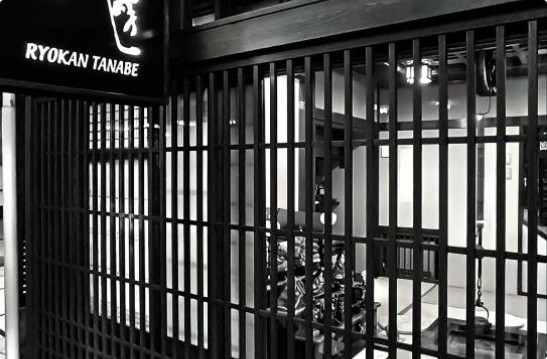
Ryokan Tanabe is the kind of place I’d send a friend who wants “a ryokan, but not the most-elaborate-thing-on-the-internet ryokan”. It’s 21 rooms, modern interior, well-kept tatami, and an indoor onsen with mineral water from a Tanabe-family well that predates the current building. They offer both futon-on-tatami rooms and Western-style bed rooms with tatami corners, useful if your back doesn’t love sleeping on the floor.
The Japanese travel sites flag this property for its kaiseki, which features a Hida beef course as standard rather than as an upcharge.
What’s good:
- Bed-room option for travellers who don’t want to sleep on a futon
- Kaiseki dinner has Hida beef included rather than as a +¥3,000 upgrade
- Walk to the JR station is 5 minutes flat, one of the shortest of any ryokan
What’s not:
- The building is mid-century concrete behind the wood facade, character is lower than at older ryokan like Sumiyoshi
- Public bath closes at 11pm, no overnight access (some Japanese guests count this as a flaw)
→ Check prices at Ryokan Tanabe: Booking.com | Hotels.com | Official site
Takayama Station / Hanazaki area, best for transit
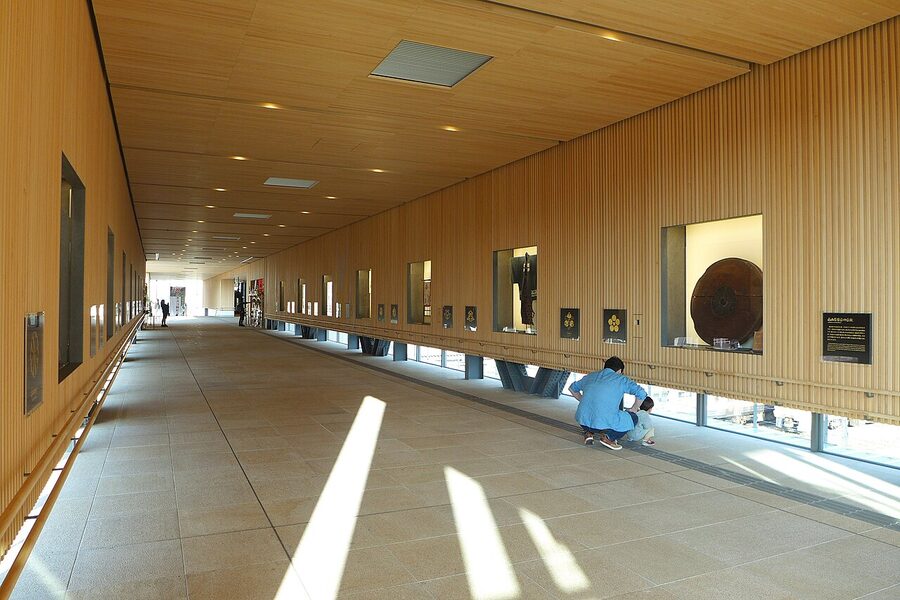
This is where the volume sits. Most international travellers arriving on the JR Hida Wide View, the Nohi Bus from Shinjuku, or the airport limo from Toyama end up in this zone whether they planned to or not, every chain hotel in Takayama is within 5 minutes’ walk of the station. Walk to Sanmachi-suji is 12–15 minutes via the Yayoibashi or Kajibashi bridges; perfectly fine in good weather, less fun in February with luggage.
What you’re trading: location for everything else. Station-area hotels are bigger, newer, have actual elevators and proper laundry rooms, take credit cards reliably, have English signage, and are 30–50% cheaper than equivalent Sanmachi-area properties. For first-time visitors with morning train departures, this is the more practical choice.
Spa Hotel Alpina, best mid-range hotel
Nearest station: Takayama, 4 min walk
To Sanmachi-suji: 13 min walk
Best for: Couples, transit-friendly stays, anyone who wants a rooftop onsen
From: ¥14,000/night (room only)
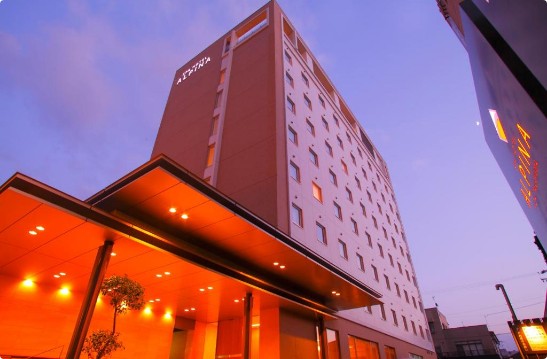
Spa Hotel Alpina earns its name. There’s a rooftop onsen on the 9th floor with separate men’s and women’s sides, and a small open-air bath looking west toward the ridge. The water is real Hida-Takayama Onsen, piped in. The rooms are bigger than the chain-hotel norm, about 18m² for a standard double, and the breakfast buffet has a Hida-beef croquette station that becomes the reason most regulars come back.
Practical detail: the hotel has a dedicated check-in pickup van that runs from the station at irregular intervals. It’s 4 minutes’ walk anyway, but useful in driving rain.
What’s good:
- Genuine onsen with rooftop open-air bath, most station hotels have a generic “public bath”, not real spring water
- Breakfast buffet (¥2,200 add-on) is the best in the chain-hotel band; the Hida-beef croquette and Takayama ramen station are excellent
- Free pickup van for guests with heavy luggage
What’s not:
- Walk to Sanmachi is a real 13 minutes, fine in good weather, miserable in heavy snow
- Building is 1990s and the lobby shows it; not a stylish stay
→ Check prices at Spa Hotel Alpina: Booking.com | Agoda | Official site
Hotel Around Takayama, modern chain pick
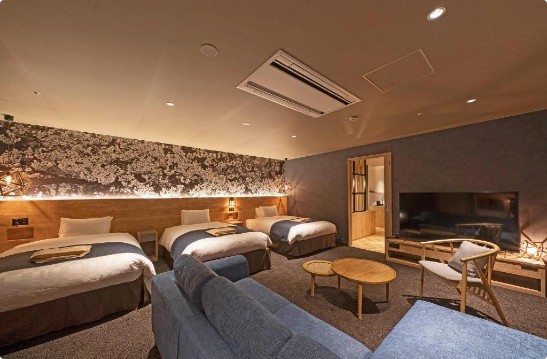
Nearest station: Takayama, 5 min walk
To Sanmachi-suji: 12 min walk
Best for: Modern-hotel preference, Western breakfast people, families with bigger rooms
From: ¥15,000/night (room only)
Hotel Around opened recently as part of the Tokyu “Around” line, which is essentially their attempt to do a regional-Japan boutique-chain category. Rooms are 22m² minimum (which is enormous by Takayama standards), with proper soundproofing and bedside USB-C ports. The breakfast leans Western, bread basket, eggs, sausage, with a small Japanese corner; if you’ve been on the road for two weeks of grilled fish breakfast and want toast, this is your hotel.
One quirky thing: the bath area is a proper sento-style setup but uses circulating bath water rather than fresh spring source, which Japanese review sites are mildly snobbish about. For most international travellers it’s indistinguishable.
What’s good:
- Largest standard rooms in the station-area cluster (22m²)
- Western-leaning breakfast is genuinely good, proper espresso, fresh bread, full eggs station
- Newest furniture, best beds in the price band
What’s not:
- Bath is circulating water, not fresh spring, fine for most, a flag for onsen purists
- The branded “design” lobby feels generic; you could be in any Tokyu hotel in Japan
→ Check prices at Hotel Around Takayama: Booking.com | Official site
Hidatakayama Washington Hotel Plaza, reliable mid-range
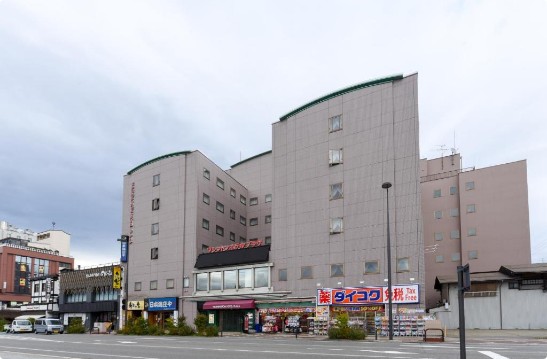
Nearest station: Takayama, 3 min walk
To Sanmachi-suji: 14 min walk
Best for: Business travellers, reliable mid-range stays, late-night arrivals
From: ¥12,000/night
The Washington Hotel Plaza is the dependable workhorse of central Takayama. It’s an 8-floor business hotel attached almost directly to the station, the walk is barely 3 minutes, with overhead cover most of the way. Rooms are standard business size (15m²), beds are firm but fine, and the public bath on the 8th floor is small but well-maintained. There’s a Family Mart in the lobby and a 24-hour Lawson 80 metres away.
It’s not exciting. Nobody goes home and tells their friends about it. But for a one-night stop on a Hokuriku-region tour, it does the job at the right price.
What’s good:
- Closest hotel to the station with reliable English check-in and credit cards
- Lobby Family Mart means you don’t leave the building for breakfast supplies
- Late-night check-in handled smoothly (last check-in 24:00)
What’s not:
- Rooms are standard business-hotel, there’s no character
- The bath is small and gets queues 8–9pm
→ Check prices at Washington Hotel Plaza: Booking.com | Agoda | Hotels.com
Tabino Hotel Hida Takayama, quiet budget option
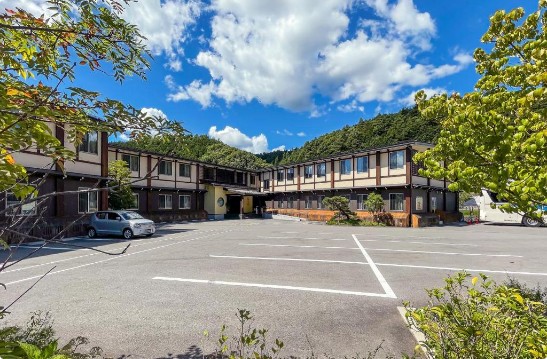
Nearest station: Takayama, 6 min walk
To Sanmachi-suji: 14 min walk
Best for: Budget travellers, breakfast-included rates
From: ¥9,500/night with breakfast
Tabino is a Mystays-group hotel that punches above its weight. The standard room is a 15m² semi-double, the bath is a public onsen on the top floor with real spring water, and the breakfast buffet is the loudest sell, they include a Hida-beef bowl (gyu-don) at every breakfast service, which most hotels in this price band don’t. Reviewers on jalan.net consistently flag the breakfast as the reason they re-book.
It’s about 6 minutes’ walk from the station along Hanazaki-dori, with a Sushiro and a Komeda Coffee within 30 seconds.
What’s good:
- Breakfast-included rates that include a Hida-beef bowl, rare in this price band
- Top-floor onsen is small but legitimate hot-spring source
- Walking distance to Sushiro and Komeda for cheap dinner / coffee
What’s not:
- Rooms are tight, 15m² semi-double is the standard, not an upgrade
- The hotel sits on a busy road, so the lower-floor rooms get traffic noise
→ Check prices at Tabino Hotel Hida Takayama: Booking.com | Agoda | Hotels.com
Super Hotel Takayama, cheapest reliable option
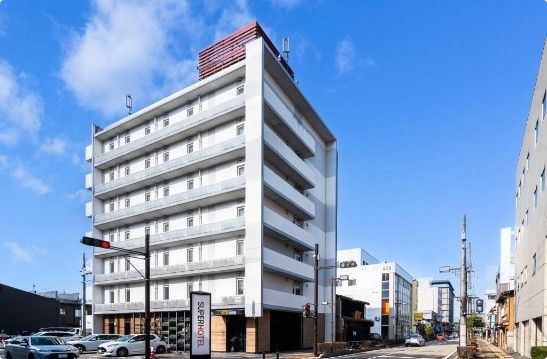
Nearest station: Takayama, 5 min walk
To Sanmachi-suji: 13 min walk
Best for: Budget travellers, solo travellers, repeat business stays
From: ¥7,500/night including breakfast
Super Hotel is a chain that runs throughout Japan and is almost identical at every property, a pillow menu, a small free breakfast buffet, a top-floor onsen with two-mode water (regular and “naturally radioactive” in some properties). It’s the cheapest reliable option near Takayama Station. The rooms are small, the walls are thin enough to hear the next room’s TV, the ¥7,500 rate is for a single room with a tiny bed.
If you’ve done one Super Hotel anywhere in Japan, you know exactly what you’re getting.
What’s good:
- Cheapest hotel in central Takayama with breakfast included
- Pillow menu (firm, soft, buckwheat-husk, neck-support) is a small detail you appreciate
- Self check-in machines mean late arrivals work without fuss
What’s not:
- Rooms are tiny, single is 11m², double is barely 14m²
- Walls are thin; if your neighbour watches late-night TV, you’ll know what they watched
→ Check prices at Super Hotel Takayama: Booking.com | Agoda | Official site
Country Hotel Takayama, quirky budget pick
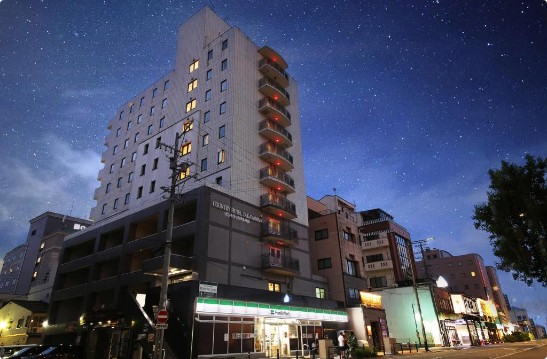
Nearest station: Takayama, 4 min walk
To Sanmachi-suji: 12 min walk
Best for: Bargain hunters, repeat visitors who don’t need a public bath
From: ¥7,800/night
The Country Hotel is genuinely small, about 60 rooms, mostly singles, with no public bath, just in-room unit baths. The breakfast is ¥1,000 add-on, basic Japanese set. The rooms are 11–15m². It’s the kind of place a Japanese salaryman books on a Wednesday for ¥6,800 single occupancy.
What you’re paying for: location and price. That’s it. No spa, no view, no charm. But for solo travellers planning to be out exploring 12 hours a day, it does the basics well.
What’s good:
- Among the cheapest hotels in Takayama under 5 minutes from the station
- Genuine single rooms (most chain hotels charge double-room rate for solo)
- Free Wi-Fi and decent desk space, fine for a half-day of remote work
What’s not:
- No public bath or onsen, only in-room unit baths
- Building is dated, lifts are slow, no real lobby to speak of
→ Check prices at Country Hotel Takayama: Booking.com | Agoda | Hotels.com
Hotel Wing International Hida Takayama, reliable budget chain
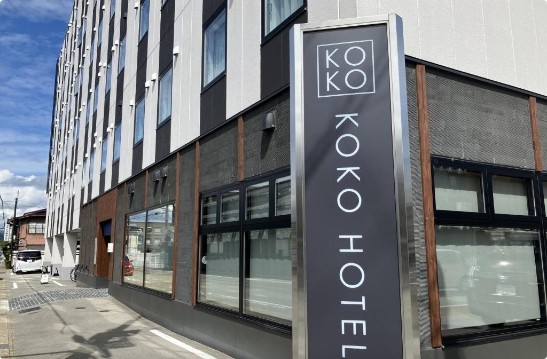
Nearest station: Takayama, 7 min walk
To Sanmachi-suji: 9 min walk
Best for: Budget travellers wanting a slight upgrade from Super Hotel
From: ¥9,800/night
Wing International is the up-tier chain of the same parent that runs Hotel Wing Premium in Tokyo. The Takayama property opened in 2017 and feels newer than the rest of the budget stock. Rooms are 14m² standard, with bigger 17m² “moderate” rooms a few thousand yen more. The on-site breakfast (¥1,500) is one of the better business-hotel buffets, proper koshihikari rice, cooked-to-order eggs, real Hida ham.
The location bonus: it’s halfway between the station and Sanmachi, which means the walking distance to either is about 8 minutes. Useful if you want a single base for both transit days and old-town days.
What’s good:
- Newer building (opened 2017) so rooms feel fresher than the older budget chains
- Halfway between station and Sanmachi, best dual-purpose location
- Breakfast quality is meaningfully above the Super Hotel / Comfort Inn band
What’s not:
- The cheapest single rate is barely 11m², easy to feel cramped
- Public bath is small, gets full at the 9pm peak
→ Check prices at Hotel Wing International: Booking.com | Agoda | Hotels.com | Official site
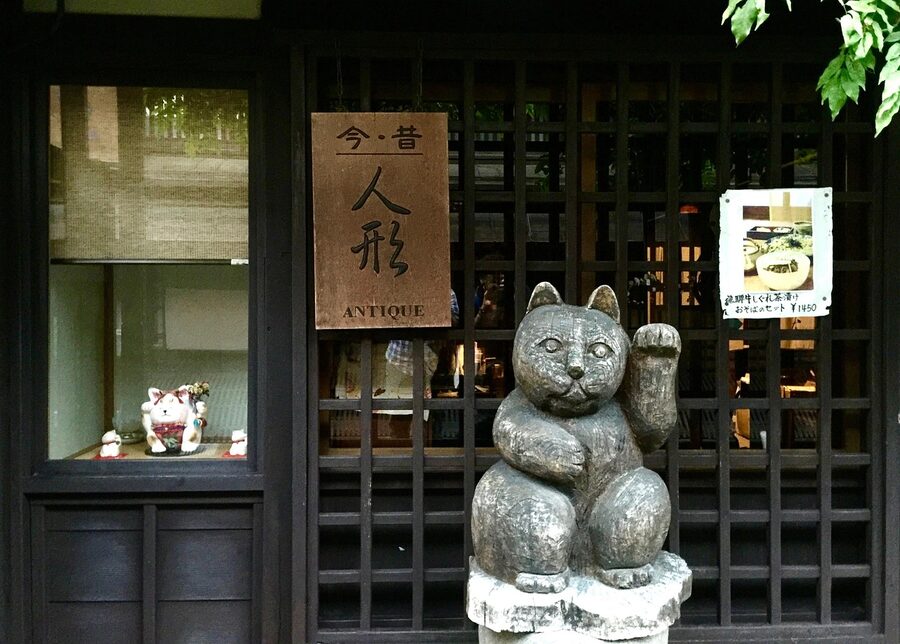
Higashiyama / temple side, best for quiet ryokan stays
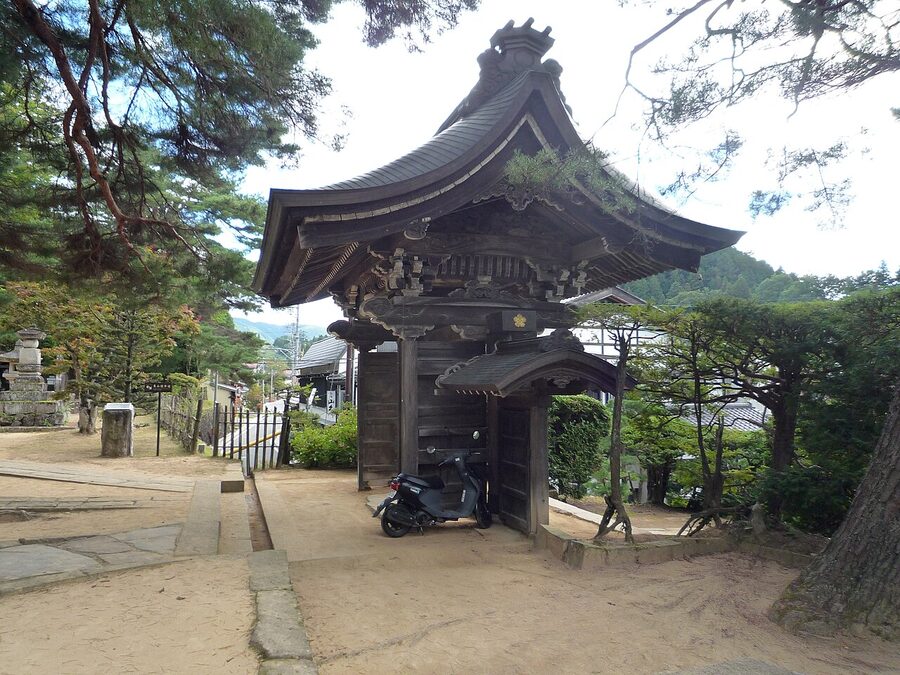
The Higashiyama side, east of Sanmachi-suji, climbing into the temple-dotted hillside, is what a second-time Takayama visitor books. It’s 8–12 minutes’ walk to Sanmachi, fully residential, and properties here are smaller and quieter than anywhere near the station. The Higashiyama Yuhodo (the temple walking course) is on your doorstep, which means a 6am temple-walk before any tour group has loaded onto a bus. That’s the appeal.
The honest negative: there’s no convenience store. The closest 7-Eleven is 8 minutes’ walk back across the river. If you’re used to popping out for a midnight snack, that’s a small adjustment.
Oyado Koto no Yume, best boutique ryokan
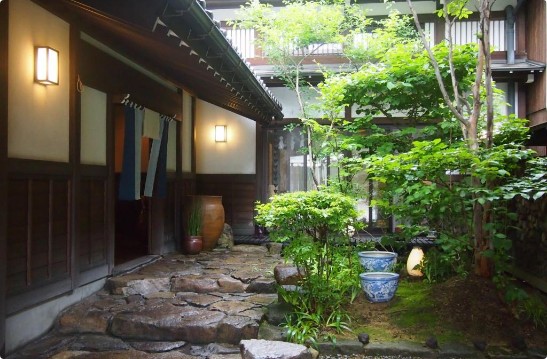
Nearest station: Takayama, 12 min walk (or free hotel pickup)
To Sanmachi-suji: 5 min walk
Best for: Couples, ryokan enthusiasts, second-time Takayama visitors
From: ¥28,000/night with breakfast / ¥42,000 with kaiseki dinner
Koto no Yume sits just east of the river, on a small lane heading up toward the temple loop. It’s an 18-room property with a Japanese-only reputation that’s starting to break out into English-language guides. Rooms are unusually large for central Takayama, most are 30m²-plus, and the public bath is a single hinoki tub with a small open-air section, fed from a private well. The kaiseki kitchen does a particularly good Hida-beef ho-ba-yaki (cooked on a magnolia leaf with miso) as the main course.
The detail you only know from staying: the lobby has a small private collection of antique obi sashes that the okami swaps out seasonally. Ask about them at check-in and you’ll get a 15-minute tour you didn’t expect.
What’s good:
- Largest standard rooms of any central-Takayama ryokan (30m²+)
- Quietest location of the ¥25,000+ ryokan tier, no car noise, no morning-market trucks
- Free pickup from Takayama Station with advance notice
What’s not:
- Walk back from dinner in central Sanmachi after dark is uphill and unlit in places
- Limited English at check-in, translation app helps
→ Check prices at Oyado Koto no Yume: Booking.com | Agoda
Ryokan Asunaro, mid-range Higashiyama
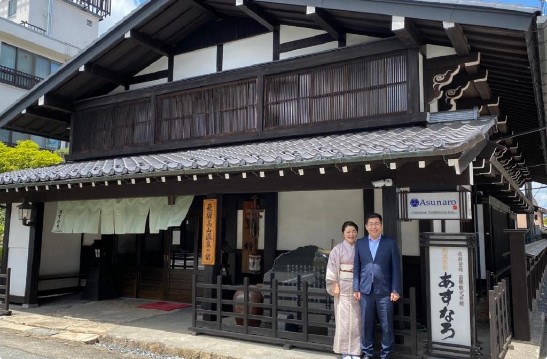
Nearest station: Takayama, 11 min walk
To Sanmachi-suji: 6 min walk
Best for: Mid-range couples, kaiseki dinner experience
From: ¥19,000/night sudomari / ¥30,000 half-board
Asunaro is a mid-sized ryokan in the lanes east of Sanmachi, with a dinner reputation that consistently scores 4.6+ on Japanese sites. The kaiseki here is built around Hida beef and seasonal mountain vegetables, sansai pickles in spring, matsutake in autumn, ayu in summer. Rooms are standard 8–10 tatami size with futons. The public bath is a small hinoki indoor tub plus a slate-tiled open-air on the second floor.
What’s good:
- Half-board kaiseki is the actual reason to book, it’s the dinner-of-the-trip for many guests
- Quiet residential lane, no street noise at all
- 5–6 min walk to either Sanmachi or the Higashiyama temple loop
What’s not:
- Sudomari rate without dinner is poor value, book the kaiseki package or stay elsewhere
- Building is older; some rooms have train-track-side window views
→ Check prices at Ryokan Asunaro: Booking.com | Agoda | Official site
Hotel Wood Takayama, design boutique pick
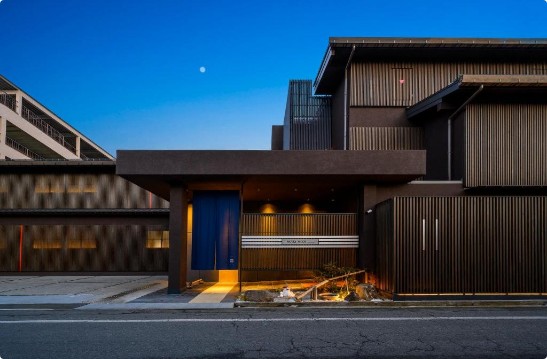
Nearest station: Takayama, 9 min walk
To Sanmachi-suji: 4 min walk
Best for: Design-led travellers, work-from-anywhere guests, slow mornings
From: ¥16,000/night
Hotel Wood is a small boutique built around the local timber tradition, exposed Hida pine beams, plywood furniture, a tiny library of Japanese architecture books in the lobby. It’s on the east side of the river, halfway between Sanmachi and the Higashiyama loop. The coffee bar in the lobby roasts its own beans and runs proper espresso, which is rarer than it should be in Takayama. The rooms are small (15–18m²) but designed around the room, not against it.
This is the hotel for travellers who like Ace Hotel-type properties more than they like elaborate ryokan ceremony.
What’s good:
- Best lobby coffee bar in central Takayama, open 7am-10pm
- Design feels intentional, not a generic chain interior
- Walk to Sanmachi is 4 minutes; walk back from a Sanmachi izakaya at 11pm is short and well-lit
What’s not:
- No onsen at all, only in-room unit baths. For some guests this is a deal-breaker
- Rooms are smaller than the rate suggests, pay for design, not square metres
→ Check prices at Hotel Wood Takayama: Booking.com | Agoda | Official site
South of the river / Kokubunji side, best mid-range central
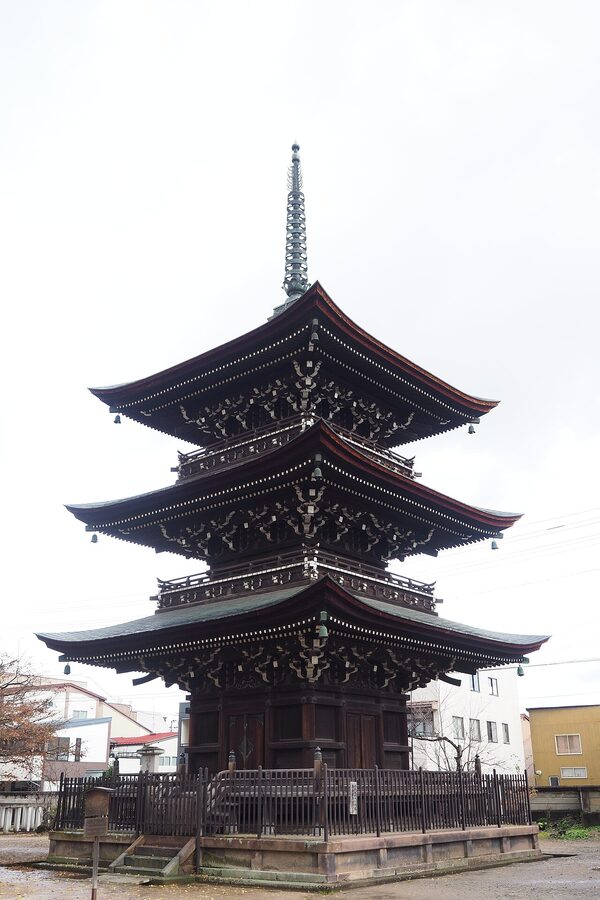
South of the Yayoibashi bridge, between the river and Hida Kokubunji temple, is where most of the larger mid-range hotels with proper onsen sit. This zone, sometimes called Hanazaki on the JR side, sometimes Kokubunji-cho on the south, is the practical sweet spot for first-time Takayama travellers who want both a real bath and a 10-minute walk to Sanmachi. Several of these hotels have been here since the 1970s when Takayama first opened up to mass tourism, which means tired buildings but also genuine spring-water plumbing.
Hotel Ouan Takayama, best modern mid-range
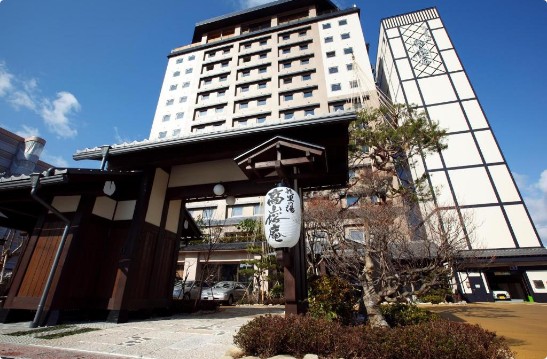
Nearest station: Takayama, 8 min walk
To Sanmachi-suji: 6 min walk
Best for: First-time Takayama, mid-range couples, sake fans
From: ¥22,000/night
Ouan opened in 2018 and quickly became the “sensible top pick” for English-speaking travellers who weren’t ready for full ryokan ceremony but wanted something better than a business hotel. The rooms are 22m² minimum with proper beds (not futons), the public bath on the top floor is real Hida-Takayama Onsen, and the lobby runs a free sake-tasting bar from 5–7pm with rotating bottles from the six working breweries in town. It’s a small thing but it’s the kind of detail you remember.
Practical detail: the laundry is free for guests after 9pm, which sounds boring but is a genuine help on a 10-day Japan trip.
What’s good:
- Free sake-tasting in the lobby every evening (5–7pm) with rotating local breweries
- Free laundry after 9pm, a real perk for longer Japan trips
- Real onsen on the top floor, not a recirculating bath
What’s not:
- Rate creeps over ¥30,000 in peak weekends, at that point you’re into ryokan territory
- Breakfast is good but expensive (¥2,800 add-on)
→ Check prices at Hotel Ouan Takayama: Booking.com | Agoda | Hotels.com
Hida Hotel Plaza, classic Showa-era resort hotel
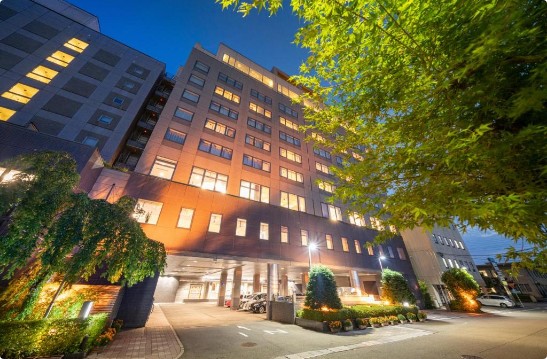
Nearest station: Takayama, 7 min walk
To Sanmachi-suji: 9 min walk
Best for: Multi-generational families, retirement-age travellers, anyone who wants an actual lobby
From: ¥19,000/night
Hida Hotel Plaza is the kind of grand hotel Japan stopped building in the 1990s, 240+ rooms, three restaurants, a banquet hall the locals still use for weddings, a rooftop onsen on the 9th floor with a panoramic view across the rooftops. It’s a Showa-era property and it shows: the marble lobby has a real grand piano, the wallpaper in some rooms is unmistakably 1990s, the breakfast buffet is enormous and slightly chaotic. None of this is a problem if you go in with the right expectations.
What it does well: families and bigger groups. Triple and quadruple rooms are easy to find at this property, which is unusual in Takayama.
What’s good:
- Largest rooftop onsen in central Takayama (separate men’s + women’s sides, both with open-air baths)
- Multi-room family options that don’t exist at most ryokan or business hotels
- Three on-site restaurants, useful when one person in the group wants kaiseki and another wants pasta
What’s not:
- Building shows its age, wallpaper, carpets, lifts all feel 25 years out of date
- Breakfast buffet is huge but quality varies; the noodle station is hit-and-miss
→ Check prices at Hida Hotel Plaza: Booking.com | Agoda | Official site
Tokyu Stay Hida Takayama, reliable mid-range chain
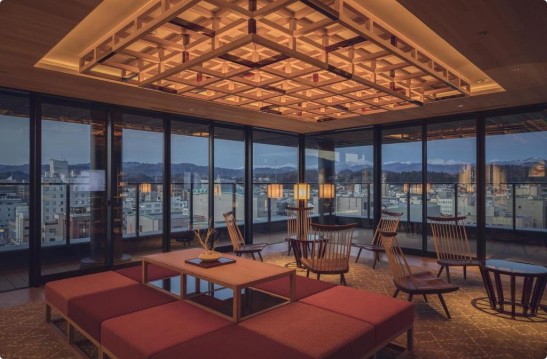
Nearest station: Takayama, 8 min walk
To Sanmachi-suji: 5 min walk
Best for: Long-stay travellers, families, anyone tired of laundromats
From: ¥17,000/night
Tokyu Stay is a chain built around a single insight: people on long Japan trips eventually need to do laundry, and dragging a bag of dirty clothes to a coin laundry is awful. So every Tokyu Stay room comes with a small drum washing machine. The Takayama property opened a few years ago, has 22m² standard rooms, and sits in a quiet spot south of the river within easy walk of both Sanmachi and the station. There’s no on-site bath, you get an in-room unit bath only, which is the only real downside.
What’s good:
- In-room washing machine in every room, the single best amenity for long-stay Japan travellers
- 22m² rooms with kitchenettes, closer to a serviced apartment than a hotel
- Quiet residential street; no nightlife noise
What’s not:
- No public bath/onsen at all
- Breakfast is set-only at ¥2,200, no buffet
→ Check prices at Tokyu Stay Hida Takayama: Booking.com | Agoda | Official site
Mercure Hida Takayama, Western chain, central
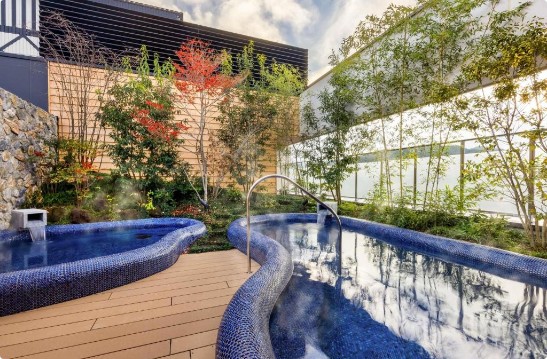
Nearest station: Takayama, 7 min walk
To Sanmachi-suji: 7 min walk
Best for: Accor loyalty members, English-language preference travellers
From: ¥18,000/night
Mercure is the Accor-group chain hotel and it does what Mercure does anywhere in the world: a clean, polished, mid-range Western hotel experience with English signage, English-speaking front desk, and a points-friendly booking flow. The Takayama property has a top-floor onsen with a small open-air section, rooms are 18–22m², and the breakfast is a Western-leaning buffet that’s perfectly fine.
The main reason to stay here is if you’re on a points run. The local independents at this price point are more interesting.
What’s good:
- Reliable English-language service throughout
- Accor loyalty points if you collect them
- Decent top-floor onsen with open-air section
What’s not:
- Generic Western-chain feel, same as a Mercure in Bordeaux or Manchester
- Local mid-range options (Ouan, Hida Hotel Plaza) feel more rooted in Takayama
→ Check prices at Mercure Hida Takayama: Booking.com | Official site
Wat Hotel & Spa Hida Takayama, budget pick with onsen
Nearest station: Takayama, 6 min walk
To Sanmachi-suji: 8 min walk
Best for: Budget travellers who want an onsen anyway
From: ¥11,000/night
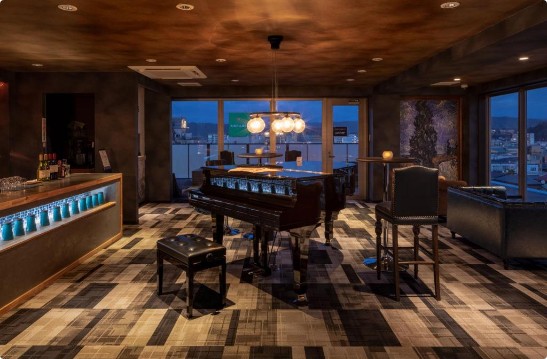
Wat is the budget-tier hotel that punches up by including an actual top-floor onsen and a properly-laid-out lobby. The rooms are 13–15m², the breakfast is an add-on at ¥1,800, and the property is about 4 years old, so finishings still look fresh. It’s the kind of hotel where you can pay ¥11,000 and still have a hot-spring bath at 11pm.
What’s good:
- Genuine onsen at the ¥11,000 price point, rare in central Takayama
- New building, modern fittings
- 24-hour bath access (most ryokan close the bath at 11pm)
What’s not:
- Rooms are tight
- Lobby is small and gets busy at the 4pm check-in window
→ Check prices at Wat Hotel & Spa Hida Takayama: Booking.com | Agoda | Official site
Takayama Green Hotel, old guard, big property
Nearest station: Takayama, 12 min walk (free shuttle from station)
To Sanmachi-suji: 13 min walk
Best for: Multi-generational families, kaiseki dinner, regulars
From: ¥19,500/night with breakfast / ¥28,000 half-board
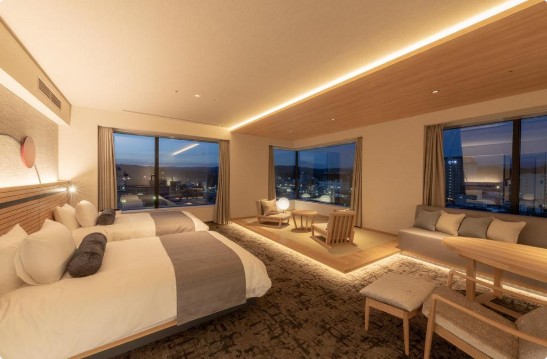
The Takayama Green is the property that keeps showing up in the Japanese ranking sites at #1 or #2 for value-per-yen, and the reason is the kaiseki kitchen. It’s a big resort hotel, about 200 rooms across multiple wings, with a proper traditional onsen, three on-site restaurants, and an evening teppanyaki experience using local Hida beef and Takayama vegetables that gets standing reviews. The location is the trade-off: it’s a real 12 minutes’ walk from the station and slightly off the central spine, but the free shuttle makes that less of an issue than it sounds.
This is the property to book if your trip is built around dinner.
What’s good:
- Best in-house teppanyaki dinner of any hotel in central Takayama
- Free shuttle to/from JR station
- Multi-room family options at reasonable rates
What’s not:
- Building is genuinely old; rooms vary wildly between renovated and unrenovated wings
- Walk to Sanmachi-suji is a real 13 minutes
→ Check prices at Takayama Green Hotel: Booking.com | Official site
Hirayu Onsen and Okuhida onsen-go, the night you’ll remember
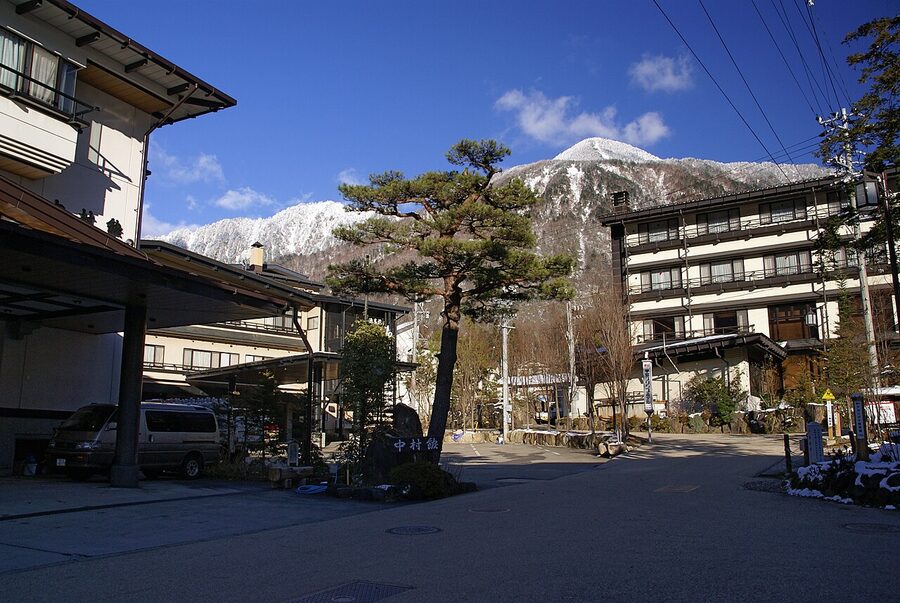
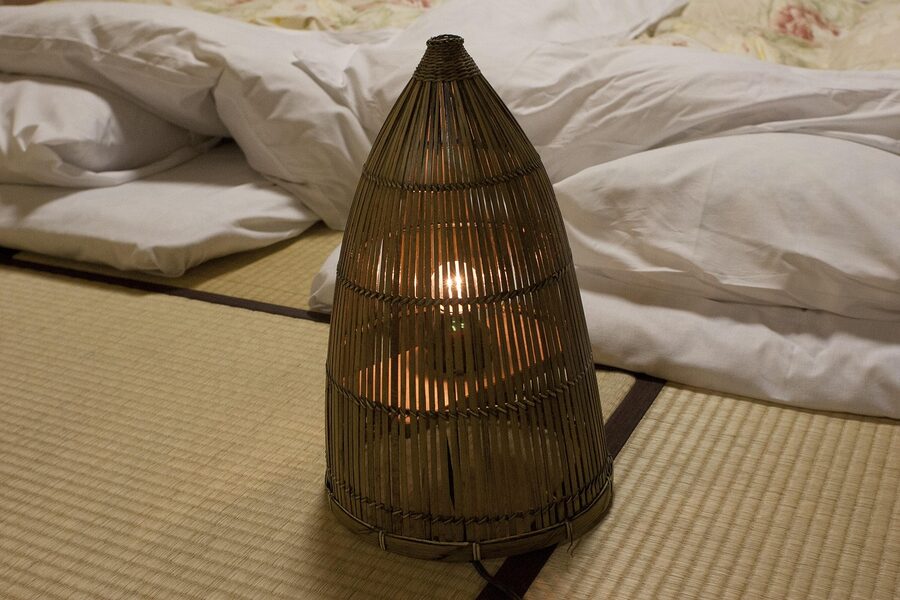
Here’s the contrarian take this guide leads with: the most memorable night of a Takayama trip isn’t in Takayama. It’s 60 minutes east, at one of the five villages of the Okuhida onsen-go (奥飛騨温泉郷), Hirayu, Fukuji, Shinhirayu, Tochio, or Shinhotaka. These are real volcanic-fed onsen villages tucked into the foot of the North Alps, with proper open-air baths in cedar forests, kaiseki menus built around mountain vegetables, and zero day-tripper traffic after 4pm.
The catch is the logistics. Hirayu is a 60-minute Nohi Bus ride from Takayama Bus Terminal (one stop above Takayama Station). The bus runs hourly. Many of these ryokan offer free pickup from the bus terminal at Hirayu. If you’ve got a rental car, the drive is faster (45 min on Route 158) and the parking is free at every property.
The reward: the open-air bath outside your room, watching snow fall on cedar branches at 10pm, in a place where the only sound is the river. That’s the trip.
Yumoto Choza, best onsen ryokan
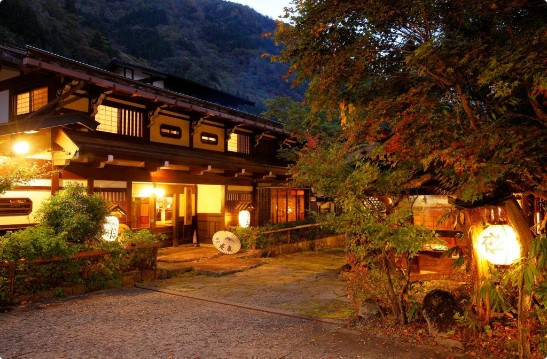
Nearest station: Hirayu Onsen Bus Terminal, 8 min walk (or free pickup)
To Takayama: 60 min by Nohi Bus / 45 min by car
Best for: Onsen connoisseurs, kaiseki dinner, the “memorable night” stay
From: ¥30,000/night with kaiseki half-board
Choza is one of those rare ryokan where the onsen is the entire point. It has 18 named baths across the property, multiple indoor cypress tubs, three outdoor riverside baths, two reservable private baths for couples or families, and a small bath in a cedar grove that opens at 5am for guests who want to soak before sunrise. The kaiseki dinner is built around Hida beef, ayu, and a sansai course that changes every two weeks. Rooms are 12–15-tatami suites with their own private balcony bath in the higher tier.
The detail that matters: the water source is 平湯大滝 (Hirayu Falls) and the temperature is hot (~62°C at source). The baths run between 41°C and 44°C, properly hot, not the lukewarm thing some onsen have to dilute to.
What’s good:
- 18 named baths, you can soak in a different one every visit for a 3-night stay
- Riverside open-air baths with the sound of the Hirayu river, best in Okuhida for atmosphere
- Kaiseki dinner is genuinely the meal of the trip for most guests
What’s not:
- An hour from Takayama is a real commitment, only worth it for 1 night minimum, ideally 2
- Limited English; bring a translation app for room service requests
→ Check prices at Yumoto Choza: Official site
Hirayu no Mori (Annex), mid-range onsen
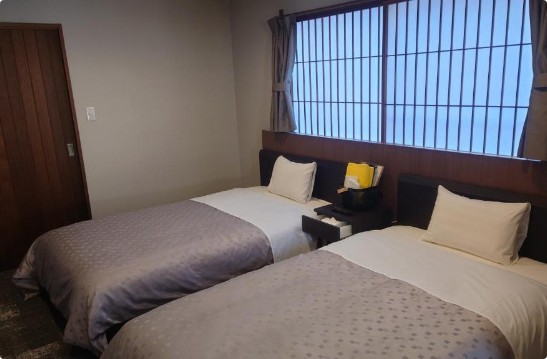
Nearest station: Hirayu Onsen Bus Terminal, 6 min walk
To Takayama: 60 min by bus / 45 min by car
Best for: First-time Hirayu visitors, mid-range couples, accessible onsen
From: ¥18,000/night sudomari / ¥28,000 half-board
Hirayu no Mori is the property most visitors actually book in Hirayu, 16 named outdoor baths across a hillside complex, with a separate Annex building (the Booking.com URL above) housing the bedrooms. The day-pass option (¥700) means you can also visit the baths without staying, which is useful for travellers basing in Takayama who want to do a half-day Hirayu trip. The kaiseki dinner is good but not the highlight; the baths are.
What’s good:
- 16 outdoor baths in different sizes and styles, the most variety of any single Hirayu property
- Mixed-gender baths available in some sections (rare for Japan; bring a yukata)
- Day-pass option (¥700) means you can visit even on a Takayama base
What’s not:
- The day-pass option means the baths are busier than at smaller ryokan
- Annex rooms are smaller than the older buildings
→ Check prices at Hirayu no Mori Annex: Booking.com | Agoda | Official site
Okuhida Onsen Yamano Hotel, quiet alternative
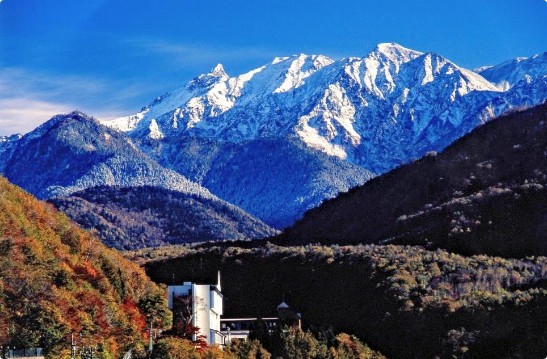
Nearest station: Shinhotaka Onsen Bus Stop, 5 min walk
To Takayama: 90 min by bus / 60 min by car
Best for: Hikers, ropeway visitors, off-the-grid onsen
From: ¥19,000/night sudomari / ¥30,000 half-board
Yamano Hotel is in Shinhotaka, the furthest of the five Okuhida villages and the access point for the Shinhotaka Ropeway up to Nishi-Hotaka (2,156m). The hotel is a single-property with about 30 rooms, an indoor onsen, and a riverside open-air bath. The rate is similar to Hirayu but the village around it is half the size, three other hotels, one konbini, no nightlife. For travellers who want to hike the alpine route from the ropeway top in summer or autumn, this is the convenient base.
What’s good:
- Closest hotel to the Shinhotaka Ropeway base station (5 min walk)
- Quietest of the three Okuhida options listed here
- Riverside open-air bath has the cleanest mountain view
What’s not:
- Furthest from Takayama, 90 minutes by bus, last bus back is 17:35
- Limited dinner options outside the hotel; you’re committed to the kaiseki package
→ Check prices at Okuhida Onsen Yamano Hotel: Booking.com | Official site
Festival-week alternatives: Hida-Furukawa and beyond
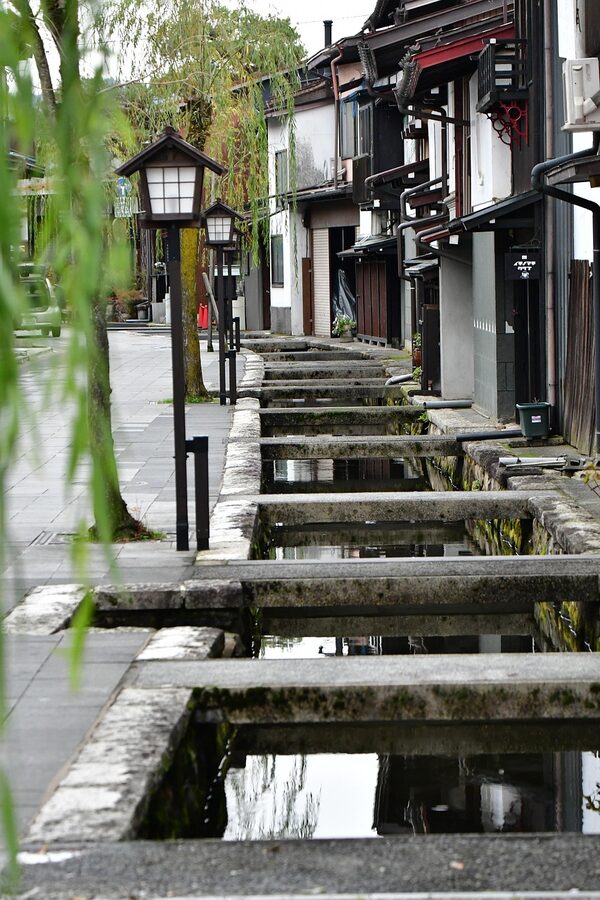
If you’re reading this in November and trying to book the spring 2026 Sanno Matsuri, the news is bad. Central Takayama has been booked for that week since roughly January 2026. The good news: Hida-Furukawa, 15 minutes up the JR line, has the same backdrop, similar ryokan stock, and a March cut-off rather than a January one. Furukawa also runs its own famous matsuri (Furukawa Festival, 19–20 April) which is worth seeing in its own right.
Yatsusankan, Hida-Furukawa onsen ryokan
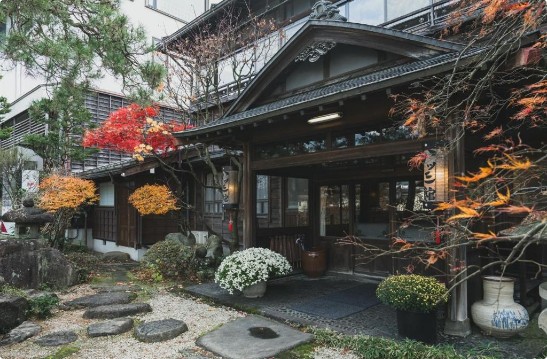
Nearest station: Hida-Furukawa, 5 min walk
To Takayama: 15 min by JR Hida Line
Best for: Festival-week alternatives, Furukawa Matsuri visitors, second-time Takayama travellers
From: ¥25,000/night half-board
Yatsusankan has been operating since 1923 in Hida-Furukawa, a 15-minute train ride north of Takayama. It’s a 35-room onsen ryokan with a kaiseki kitchen that consistently scores 4.6+ on Japanese review sites. The location puts you steps from the white-walled Setogawa canal, the Furukawa heritage area, where koi swim through the residential canals, and walking distance to the JR station for an easy day-trip back to central Takayama.
For travellers who didn’t book Takayama 9 months out for the matsuri, Yatsusankan is the answer. Train back to Takayama runs every 30–60 min during the day, last train around 22:00.
What’s good:
- Genuine 100-year-old ryokan in a heritage district that’s a destination in its own right
- 15 min to central Takayama on the JR Hida line, easy day-trip base
- Proper kaiseki kitchen, not a hotel buffet
What’s not:
- Furukawa is genuinely small, half a dozen restaurants, one konbini, limited evening options outside the ryokan
- Furukawa Festival week (19–20 April) sells out as completely as Takayama Matsuri does
→ Check prices at Yatsusankan: Booking.com | Official site
Hotel Associa Takayama Resort, mountain-view alternative
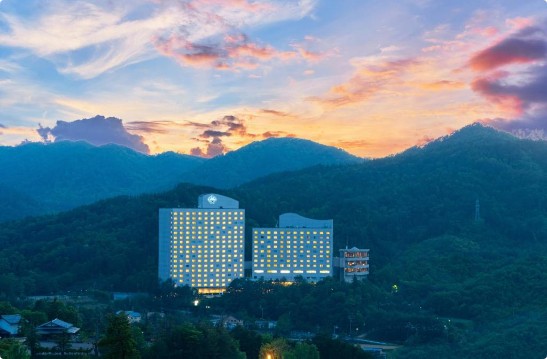
Nearest station: Takayama, free shuttle (8 min)
To Sanmachi-suji: 15 min via shuttle + walk
Best for: Mountain-view stays, families with children, relaxation-focused trips
From: ¥28,000/night half-board
Hotel Associa is technically inside Takayama city limits but it sits on a hillside south-east of the centre at 640m elevation. Eight room types, all 35m² minimum, with options that include traditional Japanese-Western combo rooms, larger suites, and kid-friendly family rooms. The big draw is the spa wing on the 5th and 7th floors with 10 different open-air baths and 2 indoor baths, all looking out at the North Alps panorama. Free shuttle bus to Takayama Station every 30 minutes during the day.
This is the property to book if you’re bringing kids, the room sizes alone are unusual in Takayama, and the resort layout means children have space to run around without disturbing other guests.
What’s good:
- 10 outdoor baths with North Alps panorama on the spa floors
- 35m² minimum room size, best for families in the Takayama region
- Free shuttle bus to/from JR station every 30 minutes
What’s not:
- You can’t walk to Sanmachi-suji from here, you’re committed to the shuttle
- Kaiseki dinner pricing pushes the half-board total over ¥30,000 quickly
→ Check prices at Hotel Associa Takayama Resort: Official site
What most guides get wrong about Takayama accommodation
A lot of the English-language Takayama hotel coverage repeats four claims that don’t hold up against Japanese-source data or against actually being there. Worth saying them out loud:
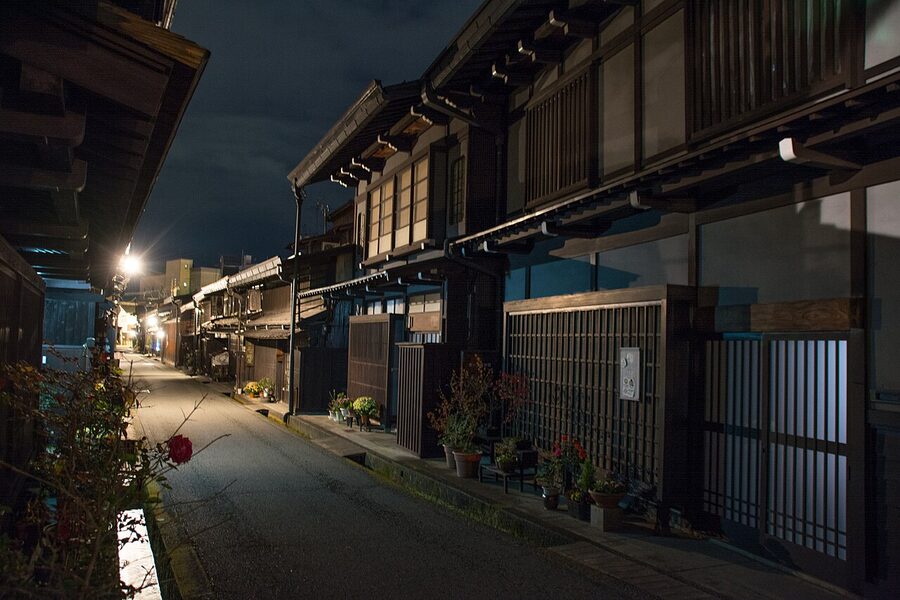
Claim 1: “You have to stay in Sanmachi-suji to get the atmosphere.” No. The atmosphere is on the streets, not in the hotel. Sanmachi at 7am has nobody on it whether you walked from Sumiyoshi (2 minutes) or from Wat Hotel (8 minutes). The 8-minute walk is not the experience-killer the guides imply.
Claim 2: “Ryokan stays are essential for first-time Takayama.” They’re not. A ryokan is a specific cultural format, futon, kaiseki, public bath, ceremony, and some travellers love it while others find the choreography exhausting. If you’ve done a ryokan in Hakone or Kanazawa, doing one in Takayama is just another version of the same thing. Save your ¥30,000 nights for the place where the kitchen is the draw, not the place where “ryokan” is the box you’re ticking.
Claim 3: “Honjin Hiranoya is the best ryokan in Takayama.” It’s the most-recommended one, which isn’t the same thing. The Japanese ranking sites consistently put it at 4.7–4.8, top tier, but tied with Hidatei Hanaougi (which doesn’t have a clean Booking.com URL, so isn’t in this guide), Yatsusankan in Furukawa, and Yumoto Choza in Hirayu. The “best” ryokan in your trip depends on what you want, kaiseki, onsen, location, or family-friendliness, not on a single ranking.
Claim 4: “Skip Hirayu Onsen because it’s too far.” Hard disagree. Hirayu is 60 minutes by Nohi Bus, which is the same time as a Tokyo metro ride to Yokohama. If you’ve come this far for the Japan Alps, an extra hour east to a real volcanic onsen village in cedar forest is the highest-leverage choice on the trip. Most guides treat it as a side-trip, it’s the headline.
The contrarian recommendation: book one night in central Takayama (Sumiyoshi if you want a ryokan, Spa Hotel Alpina if you don’t) and one night in Hirayu (Yumoto Choza if budget allows, Hirayu no Mori if not). That’s the trip that produces the home-with-you memory.
Booking tips: when, where, and how cheap
A few practical observations from cross-checking Booking.com and Japanese sites (jalan, rakuten travel, ikyu) for the same properties on the same dates over the past six months:
Booking.com vs Japanese sites. For most properties the rate is identical or within 5%. The exception is half-board ryokan packages, where the Japanese sites sometimes have meal upgrades or limited-room rates that Booking.com doesn’t list. If you read Japanese, jalan.net (jalan.net) and rakuten travel (travel.rakuten.co.jp) are worth a check. If you don’t, Booking.com works fine.
Agoda is sometimes 8–12% cheaper for the same room when you compare the same dates. Worth checking both. The catch: Agoda’s cancellation policies can be more restrictive, read carefully.
Direct booking rarely beats the OTA price in Takayama. The smaller ryokan don’t have sophisticated direct-booking systems and just match the Booking.com rate.
Peak periods. Block out: Spring Sanno Matsuri (14–15 April + 1 day either side), Autumn Hachiman Matsuri (9–10 October + 1 day either side), Golden Week (29 April–5 May), the New Year week, and the late-July Obon week. Inside these windows, rates roughly double and availability evaporates 4–6 months out.
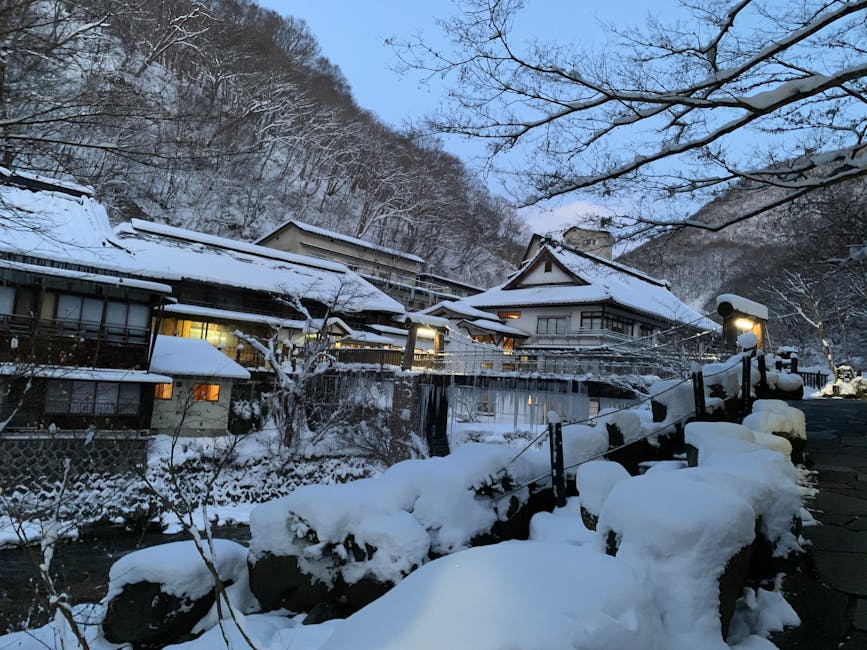
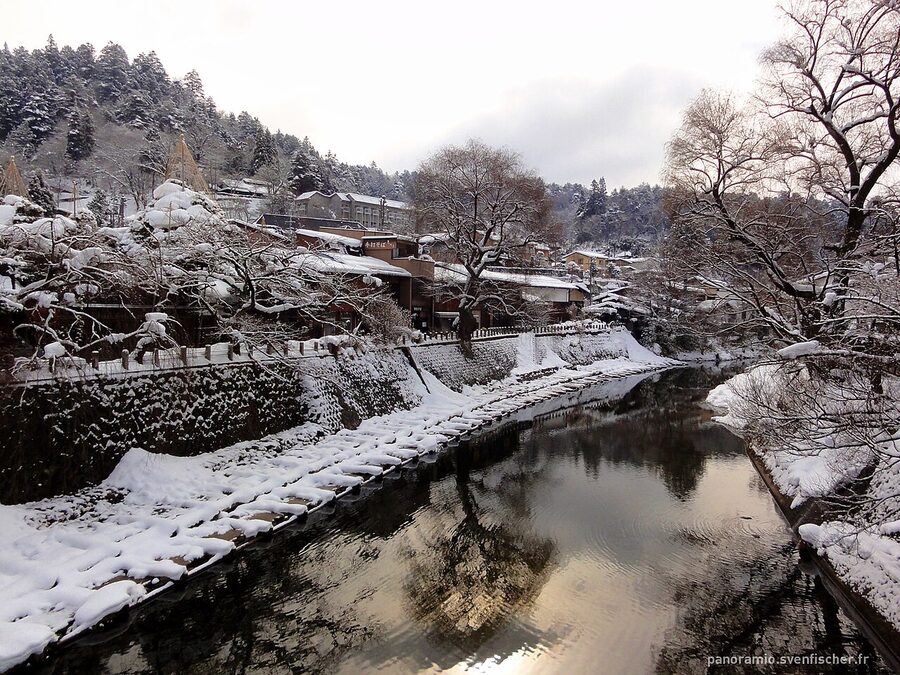
Cheap windows. Late November to mid-March (excluding New Year) is the cheapest time to be in Takayama, with rates often 30–40% lower than April or October. The trade-off is real winter, temperatures down to -8°C, snow on the ground from late December to mid-March. The upside: empty Sanmachi at 7am, snow on the cedar shrines, and breakfast at the morning markets without a queue.
Cancellation. Most Japanese ryokan have 100% cancellation 1–2 days before arrival, 50% the day before. Western chain hotels in Takayama follow standard Booking.com cancellation. If your trip is less than 100% locked in, the chain hotels are the safer bet.
Quick recommendations by traveller type
First time, two nights. One night at Spa Hotel Alpina (transit-easy, real onsen, ¥14,000) and one night at Honjin Hiranoya Annex (proper ryokan kaiseki, ¥36,000 half-board). That’s the textbook trip.
Budget, solo, three nights. Sumiyoshi Ryokan (¥9,000) for the river-side ryokan night, Super Hotel Takayama (¥7,500) for two business nights. Total under ¥25,000.
Couples, splurge, two nights. Honjin Hiranoya Kachoan (¥55,000 half-board) one night, Yumoto Choza in Hirayu (¥30,000 half-board) the second. The kaiseki dinners alone justify the trip.
Families with kids. Hotel Associa Takayama Resort, the only Takayama-area property with proper family rooms (35m²+), a free shuttle to the station, and the spa onsen with the North Alps view. Two nights minimum to use the resort properly.
Festival week (didn’t book early). Yatsusankan in Hida-Furukawa, then JR Hida Line into Takayama for the matsuri. 15 minutes each way, far less stressful than camping at the station.
Repeat visitor, off-the-beaten-path. Skip Sanmachi entirely and do Oyado Koto no Yume on the Higashiyama side for one night, then Okuhida Onsen Yamano Hotel in Shinhotaka for the second.
Onsen-first traveller. Both nights in Hirayu, Yumoto Choza for the kaiseki night, Hirayu no Mori for the bath-variety night. Day-trip into Takayama on the Nohi Bus from your ryokan.
Combine with the rest of the Takayama cluster
Where you sleep is one decision. The other decisions are what to actually do in town and around it. The Takayama deep-dive guides cover each of these in detail:
- Takayama: the full city guide, the hub piece, with itineraries, transport, and what to skip.
- Takayama Old Town walk: Sanmachi-suji, Jinya, and Higashiyama, the 3-hour walking route that links the three central walks.
- Takayama morning markets: Miyagawa and Jinya-mae, what to actually buy, when to go, what to eat at the stalls.
- What to eat in Takayama, Hida beef in five forms, Takayama ramen, the six working sake breweries, mitarashi dango.
- Takayama Matsuri guide, spring and autumn festivals combined.
- Hida Folk Village (Hida no Sato) guide, the open-air museum SW of town.
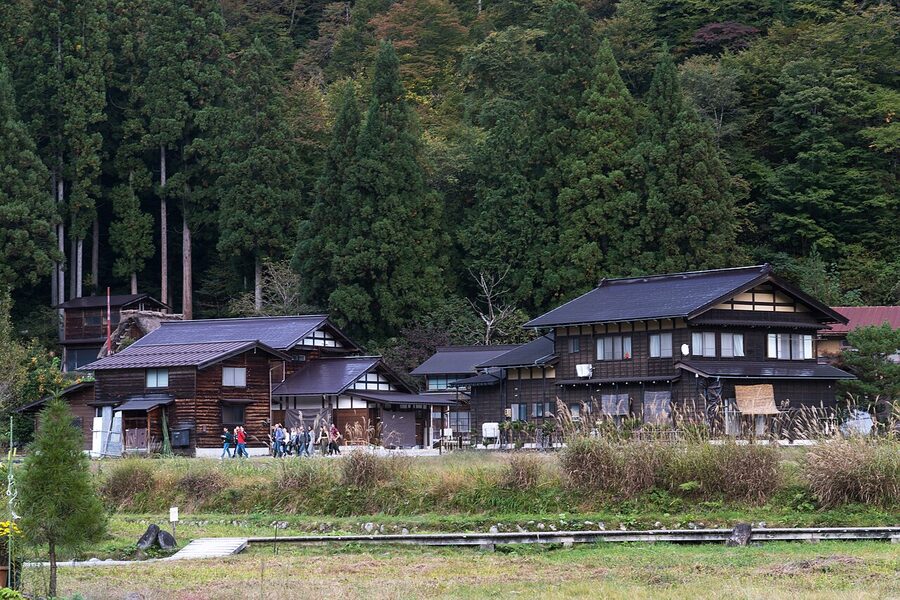
- Shirakawa-go day trip from Takayama, the gassho-zukuri UNESCO village.
- Hida City and Hida-Furukawa, the canal town 15 minutes north.
- Getting to Takayama, train, bus, and car access from Tokyo, Nagoya, Toyama, Kanazawa.
- Japan Alps itineraries, how to fit Takayama into a 7- or 10-day Honshu trip.
One last small observation, because I’ve been writing about Sanmachi-suji for too long today: walk down Kami-Sannomachi at 6:45am on any weekday. The shutters are still down, the trolleys are absent, the brewery ladies are sweeping the cedar fronts of their shops with bamboo brooms. That’s the picture you’ll keep. It’s the picture that pays for booking somewhere central enough to walk to it before breakfast.

.jpg)

.jpg)


.jpeg)
