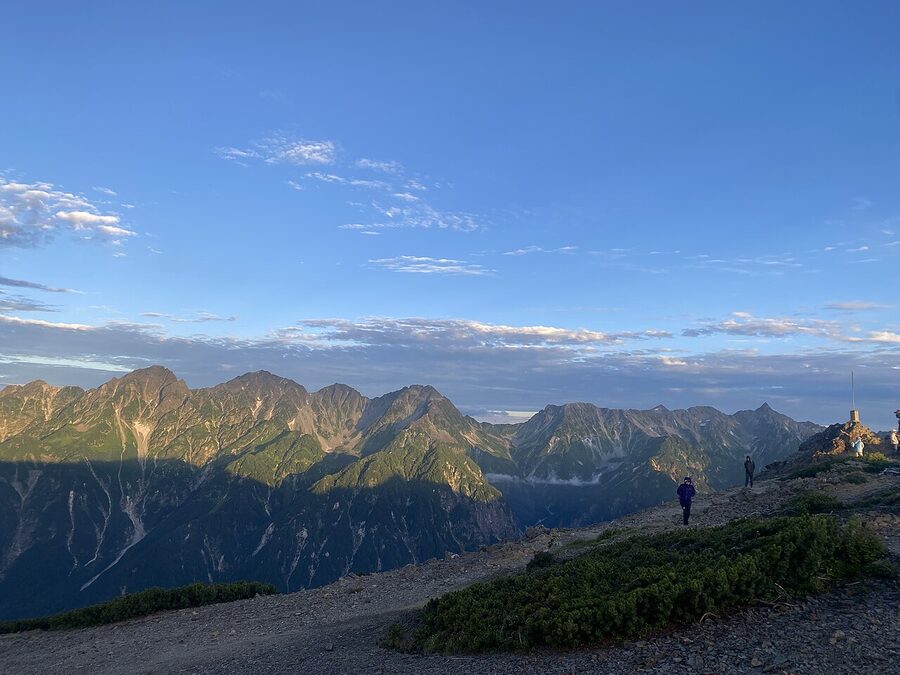
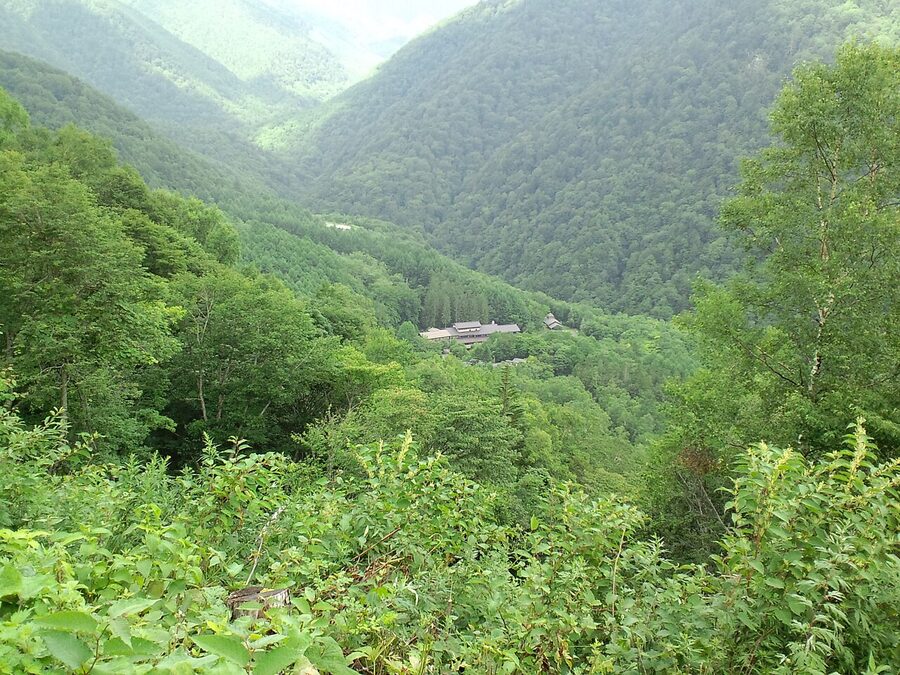
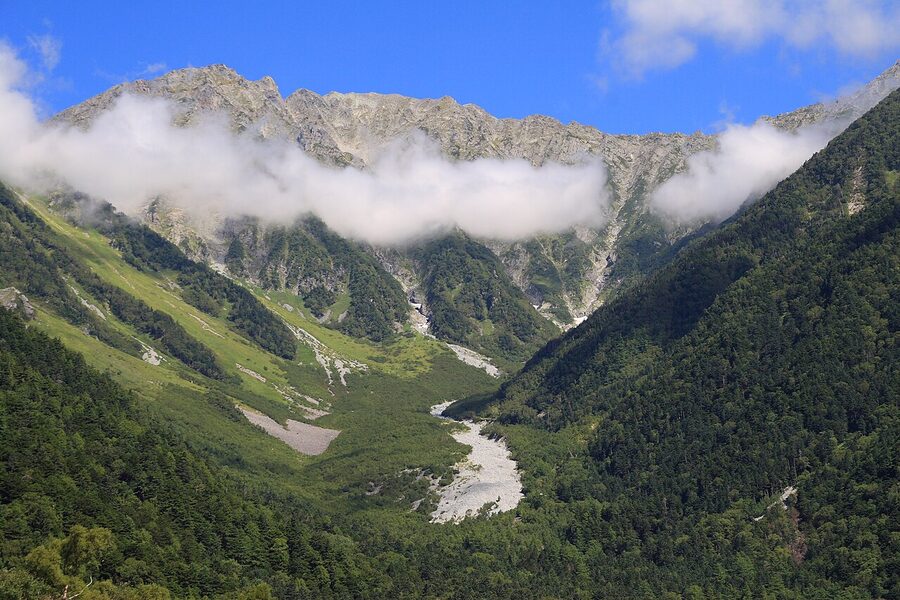
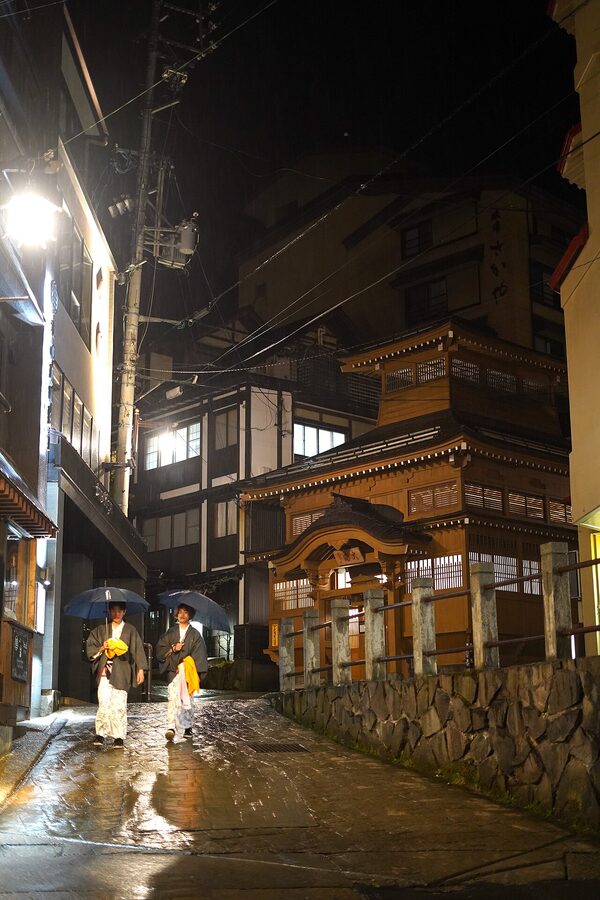
Most onsen towns are an onsen plus a town. Nozawa is the other way round. The hot water came first, has been free for a thousand years, and the village arranged itself around 13 public bathhouses still managed by a local cooperative. Edo-period townscape. Boiling springs in the middle of the street. A ski hill behind the village that hosted Olympic biathlon. A fire festival in mid-January where the village’s 25-year-old men defend a wooden shrine against the village’s 42-year-olds armed with torches, while the rest of the town drinks sake. None of that is on a Tokyo-Kyoto-Osaka itinerary, which is exactly why you should consider going.
In This Article
- Where Nozawa actually is, and why it surprises people
- A short note on the name
- The 13 free public baths, and why this is the heart of the village
- Bathhouse etiquette, briefly
- The other named baths worth a stop
- Asagama, the boiling spring you cannot enter
- Onsen tamago and where to buy them
- Furusato no Yu, the day-bath option
- The ski resort, honestly
- Snow numbers and season
- Lift passes and rentals
- The Schneider history (and why the village is a sister city of St Anton)
- The Dosojin Fire Festival, every 15 January
- What actually happens
- Practical notes for the festival
- Where to stay
- Traditional ryokan in the bath-cluster core
- Slopeside lodges and self-catered chalets
- Pension and minshuku in the Yumoto and Suso area
- Budget and hostel
- Eating in Nozawa
- Nozawana, the village pickle
- Oyaki
- Soba and the rest
- Breakfast and the morning market
- Hiking, walking, and the green season
- Mount Kenashi and the Yamabiko trails
- Mountain biking and the bike park
- Autumn colour
- Getting to Nozawa
- From Tokyo
- The Iiyama shuttle
- From Kansai
- By car
- Sending your luggage ahead
- What to combine Nozawa with
- When to come
- A few honest caveats
Where Nozawa actually is, and why it surprises people
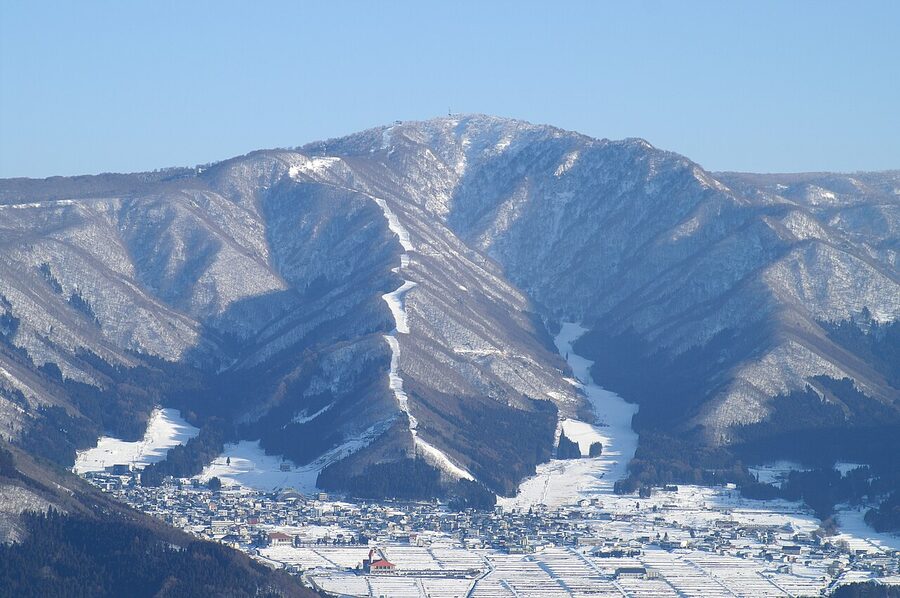
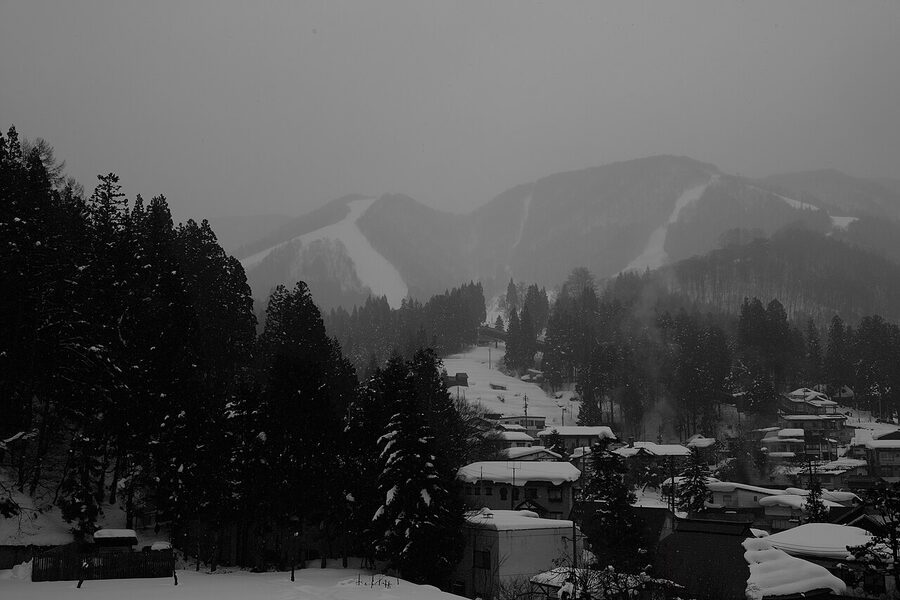
Nozawa Onsen is a village of about 3,300 people sitting at 600m on the lower slopes of Mount Kenashi (1,650m), in the far north of Nagano Prefecture. It’s an hour’s drive west of Iiyama on the Hokuriku Shinkansen, just over two hours from Tokyo Station. Geographically, it’s in the same general snow-belt as Hakuba and Myoko: heavy, dry, regular snowfall from December through March, courtesy of the Sea of Japan air mass colliding with the spine of central Honshu.
What surprises people is the density. The bath cluster, the ski runs, the ryokan, the restaurants, the fire-festival ground, the morning market, the museum, the boiling spring where villagers cook eggs: all of it is inside a 15-minute walk. You can ski to the village in your boots, soak in a free 1,200-year-old bathhouse, eat soba, drink local craft beer, and be back in your ryokan slippers within an hour. There’s no taxi-hailing, no shuttle-juggling, no checking timetables. The village is the resort.
A short note on the name
The village is officially Nozawaonsen-mura (野沢温泉村), one word. Anglophone usage has standardised on Nozawa Onsen, two words, and that’s what I use throughout. The ski resort is Nozawa Onsen Snow Resort. The original village name was Yuyama (湯山), literally “hot-spring mountain”, and that name appears in mid-Kamakura-period records. Local legend traces the springs to a discovery in the 8th century by the wandering monk Gyoki, though the more colourful versions have a wounded bear leading a hunter to the source.
The 13 free public baths, and why this is the heart of the village
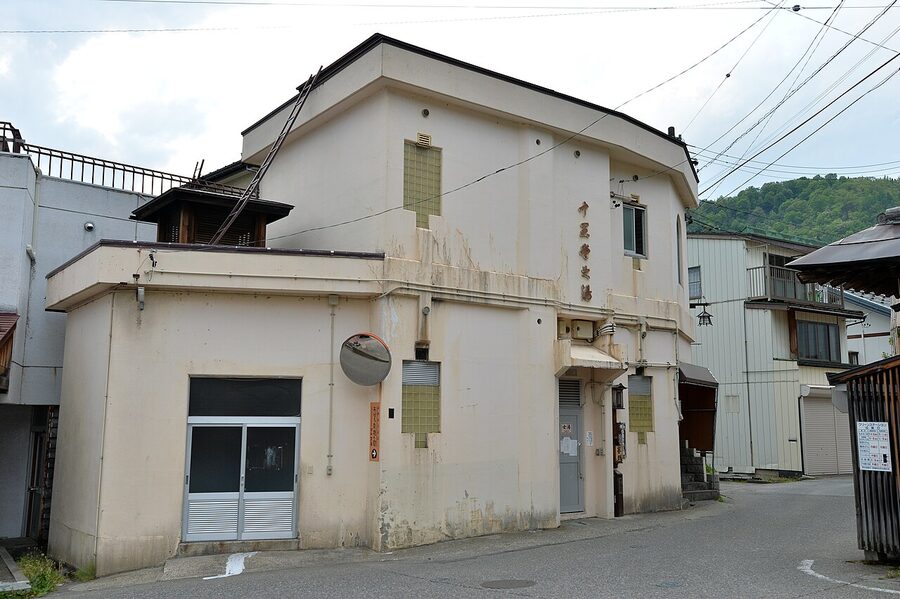
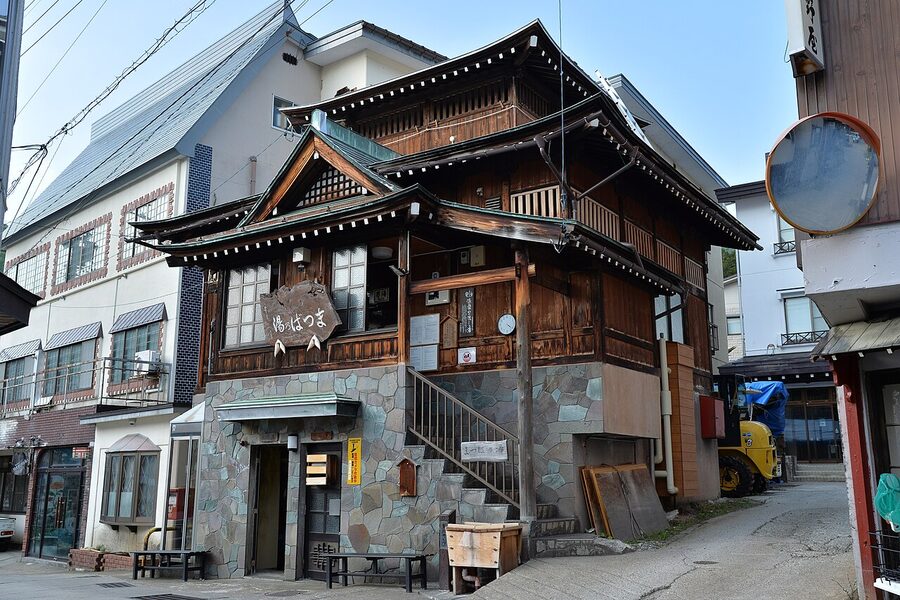
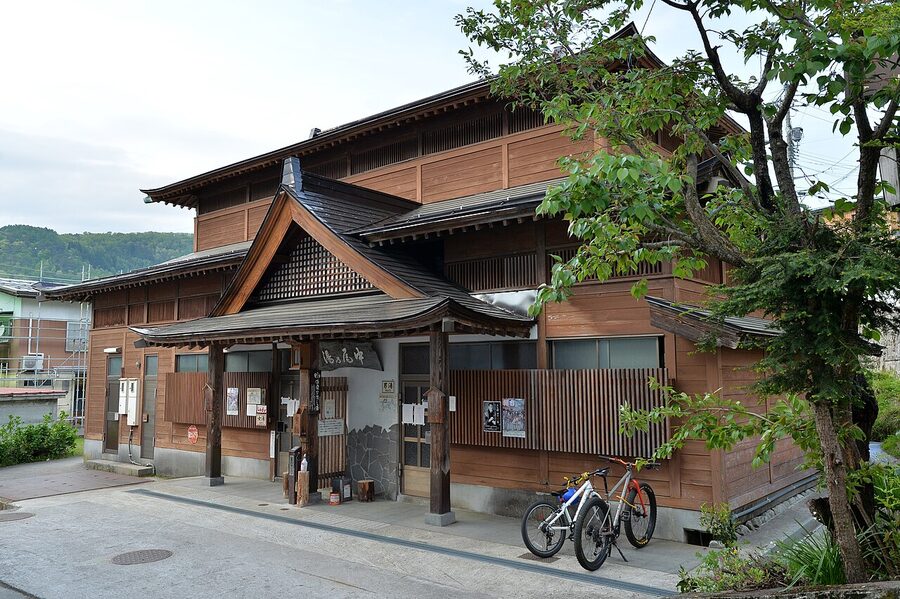
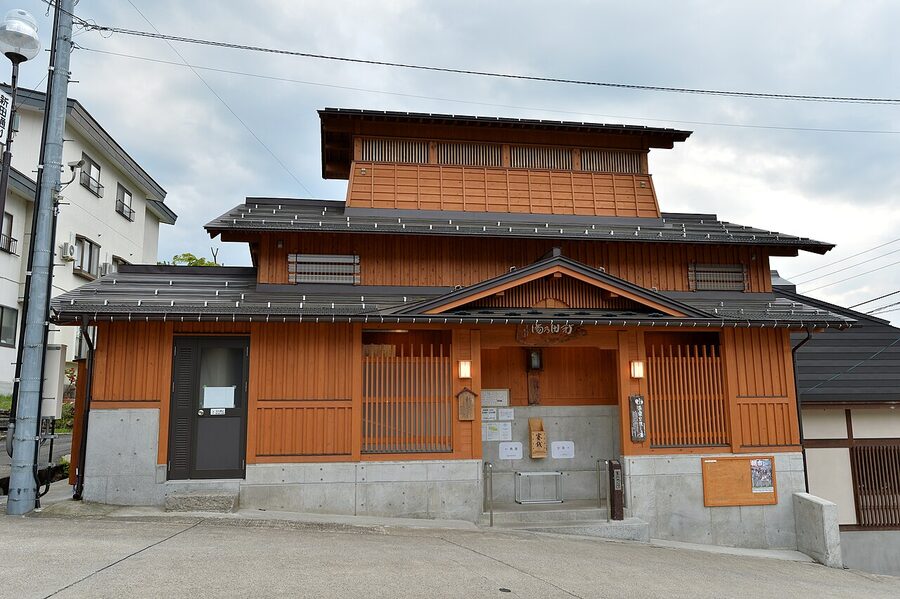
If you understand nothing else about Nozawa, understand this: the village has 13 communal bathhouses, called sotoyu (外湯), spread through its narrow streets. They’re managed not by a hotel chain, not by the village council, but by a local cooperative called the Yu-nakama, a system that has run continuously for centuries. Locals do upkeep on rotation. Each bathhouse has a small wooden donation box at the door, called a sai-sen-bako, and the suggested donation is whatever feels right (¥100 to ¥200 is normal). You bring your own towel, your own soap. You take your shoes off at the entrance.
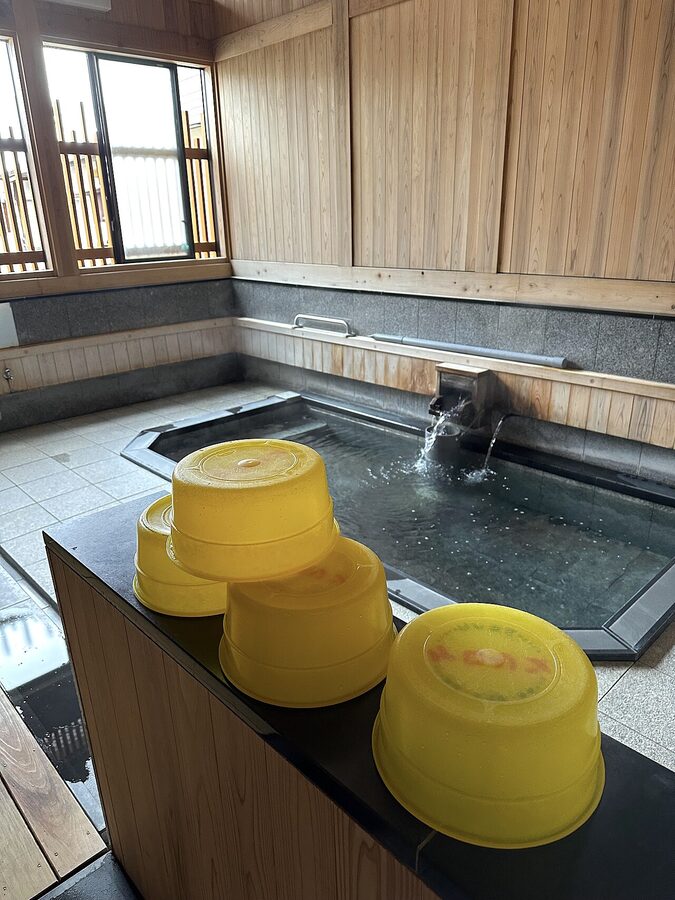
The water is sulphurous (硫黄泉), and the source temperatures range from 42°C up to nearly 90°C. Most baths are searing hot. Some, like Kuma-no-tearai-yu (the “bear’s hand-washing bath”), are gentler. There’s no mixing tap. You scoop hot water into a basin and add cold from a separate small tap, mixing it before pouring it over yourself. Get in slowly. If your toe says “no”, trust the toe.
The 13 baths, walking the village roughly south to north:
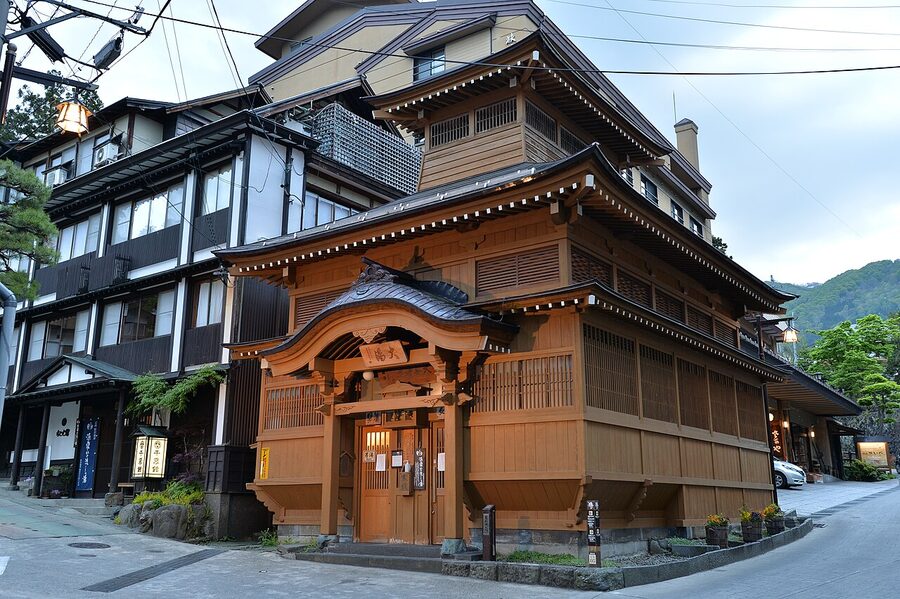
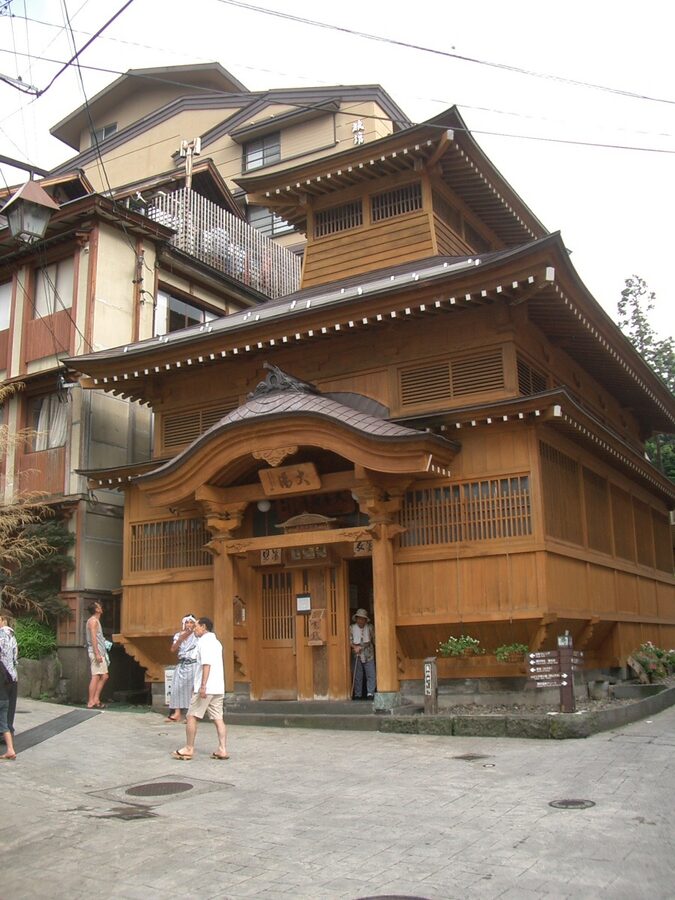
- Oyu (大湯): the central, photographed bathhouse, two-storey wooden gable, in front of a small piazza. The most ornate. Always busy in the evenings.
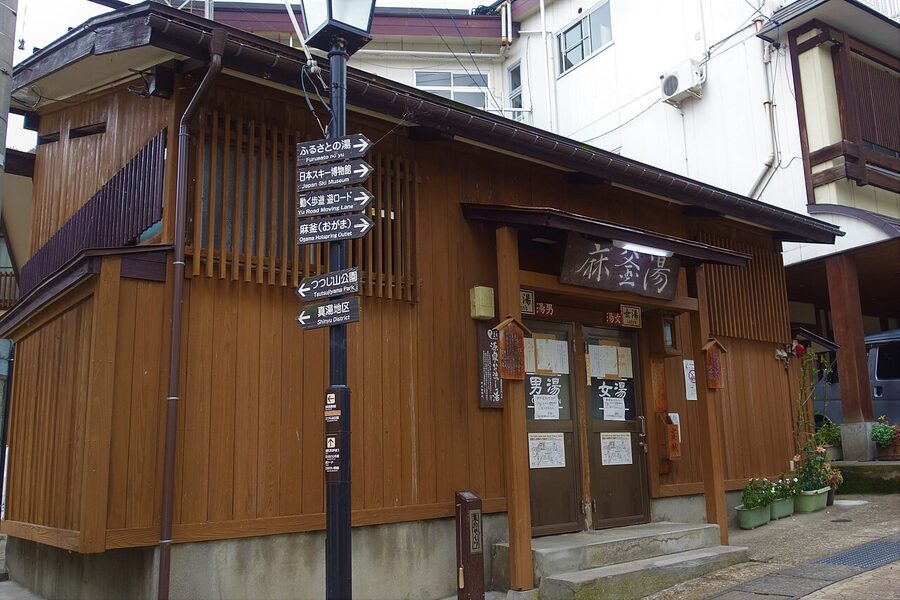
- Asagama-yu (麻釜湯): next to the Asagama boiling spring (see below). One of the hottest.
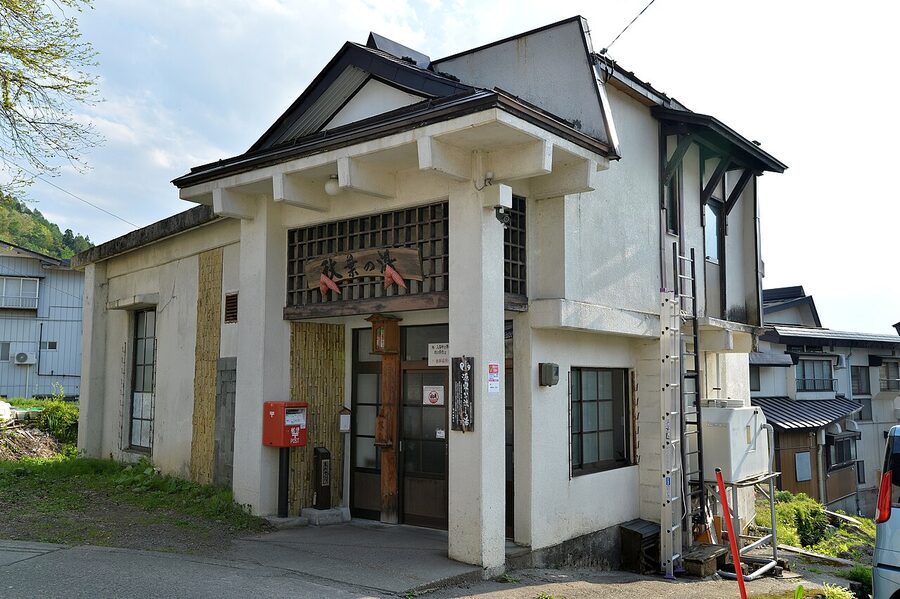
- Akiba-no-yu (秋葉の湯): at the lower end of the village, quieter, less-tourist tilt.
- Kamiterayu (上寺湯): small, traditional, behind one of the temples.
- Kawarayu (河原湯): by the small stream cutting through the lower village. Locals’ favourite.
- Kuma-no-tearai-yu (熊の手洗湯): the “bear’s hand-washing bath”, the gentlest temperature, good for first-timers.
- Juodo-no-yu (十王堂の湯): by the Juodo temple, very local in feel.
- Shinyu (真湯): uphill, slightly out of the central cluster, smaller crowd.
- Shinden-no-yu (新田の湯): east side, two stone basins.
- Taki-no-yu (滝の湯): the “waterfall bath”, with a small spout pouring hot water like a shoulder massager.
- Nakao-no-yu (中尾の湯): handsome, gable-roofed, two big rooms.
- Matsuba-no-yu (松葉の湯): east of the central cluster, quiet.
- Yokoochi-no-yu (横落の湯): the lowest bath, often warm rather than scalding.
Tokens of locality: each sotoyu has the same yellow plastic kerorin washbasin (a brand mark you’ll see in old Japanese baths nationwide), plus wooden buckets stamped with the brand mark of Taiko Pharmaceutical (the trumpet of the Seirogan medicine ad). It’s the same tiny visual joke in every bath. You’ll start to find it comforting by the third one.
Bathhouse etiquette, briefly
Sotoyu etiquette is the same as any Japanese bath, but a couple of things matter more here because the baths are small and shared with locals.
- Wash and rinse thoroughly at the small wooden bucket area before getting into the bath. Soap residue in the bath is the one thing that genuinely upsets people.
- The temperature is real. Don’t stay in too long the first time. 5 minutes is fine; you can always come back.
- Tattoos: in practice the sotoyu don’t enforce a no-tattoo rule the way some commercial onsen do, partly because there is no staff present. Be discreet. Don’t make it a thing.
- The baths used to be 24-hour. Late-night noise from outside guests led to the current 5am-to-11pm rule. Don’t push the closing time.
- No phones, no photos inside.
The other named baths worth a stop
Asagama, the boiling spring you cannot enter
Walk five minutes uphill from Oyu and you’ll reach the strangest piece of urban planning in any Japanese onsen town: a 100°C boiling spring, called Asagama (麻釜), in the middle of a small open square, fenced off and clearly labelled as off-limits to tourists. The water comes out at near-boiling temperature. Historically the village used it to soften and strip the bark off hemp (麻, asa), which is what gave the spring its name. Today the locals use it almost entirely as a public outdoor kitchen.
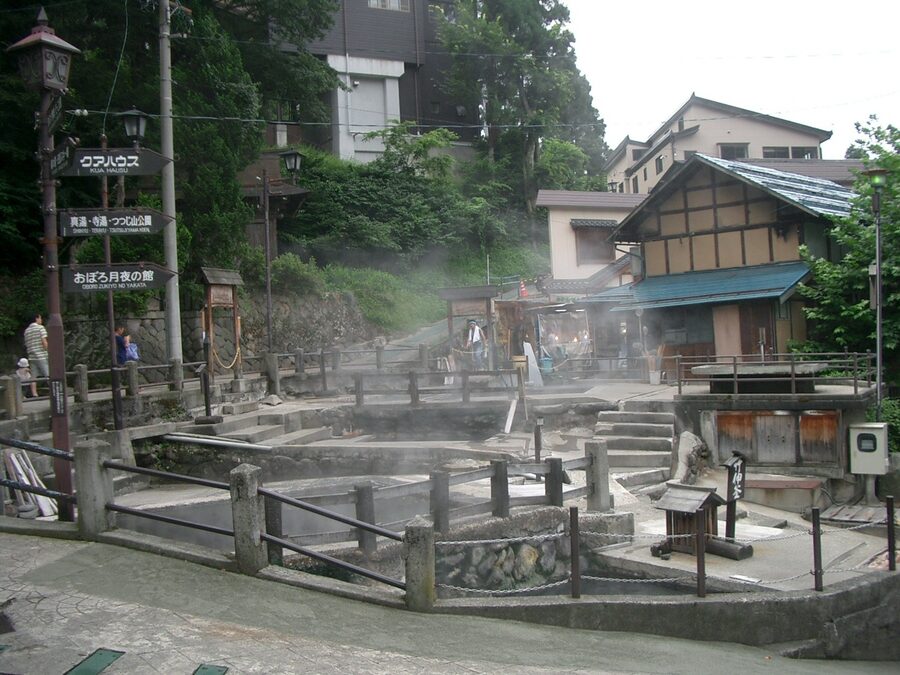
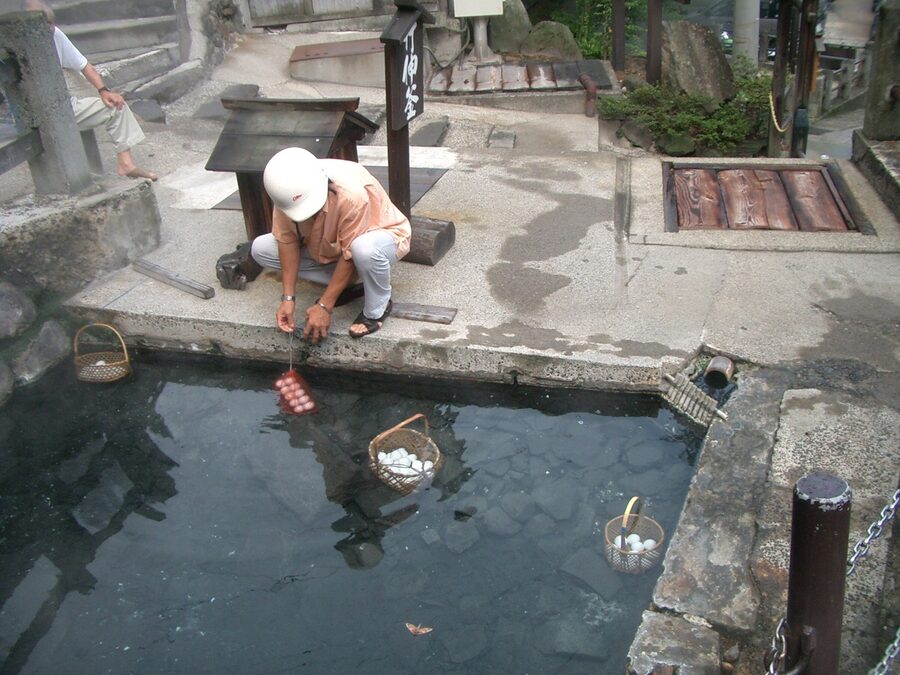
Most mornings you’ll see someone with a wire basket lowering eggs, pre-washed daikon, or bunches of mountain vegetables into the water. In the autumn pickling season, this is also where families wash the trimmed Nozawana stalks before brining them. The boiling spring isn’t a sight you go to look at for two minutes; it’s a working piece of village infrastructure that you happen to be allowed to walk past. Stand for a while. Watch what people are doing. The smell of sulphur is real.
Onsen tamago and where to buy them
You can buy onsen tamago (温泉玉子, slow-cooked hot-spring eggs) from a small stand near the spring, ¥100 to ¥150 each, sold in twos. The yolk sets to a soft custard and the white stays runny, the opposite of a normal hard-boiled egg. Eat them with a small splash of soy sauce.
Furusato no Yu, the day-bath option
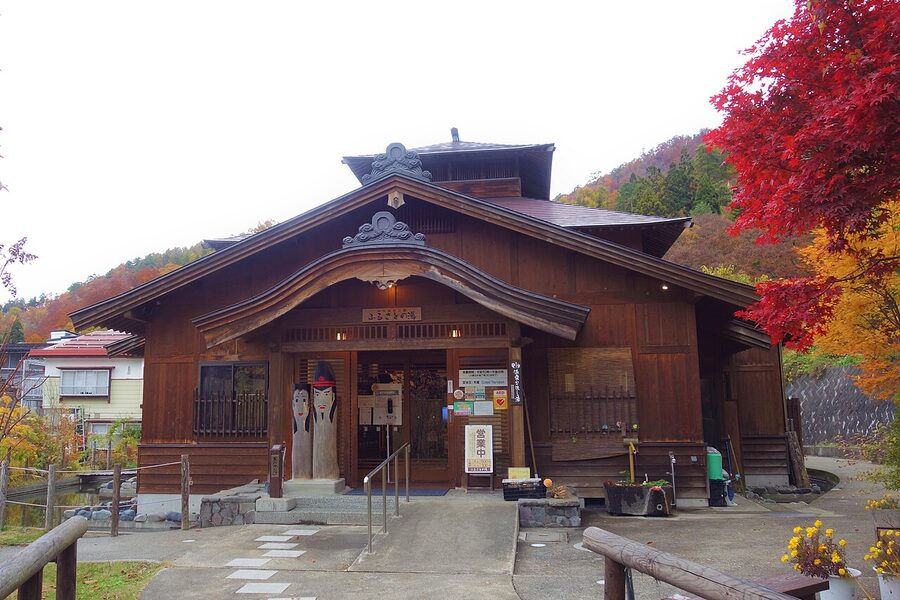
If you’re not staying overnight, or if you want a proper sit-down bath with shower stalls, lockers and a small lounge, head to Furusato-no-Yu (ふるさとの湯). It’s the village’s day-use bath, separate from the 13 free sotoyu. Open 13:00 to 21:30, around ¥500, with both indoor and outdoor baths and a view down the valley from the rotenburo. Towel hire is about ¥200. It’s the right call for day-trippers, families with younger children, or anyone who finds the sotoyu temperature too intense.
The ski resort, honestly
Nozawa Onsen Snow Resort is one of the largest single-mountain ski areas in Japan: 297 hectares, 50 km of pistes, top elevation 1,650m on Mount Kenashi, base at 565m, vertical drop a touch over 1,000m. There are 18 lifts including a long ride-in gondola from the village (the Nagasaka Gondola) and a much longer ride-up (the Yu-road moving walkway from the village centre to the Hikage base, free, six minutes covered, very useful when you’ve been drinking).
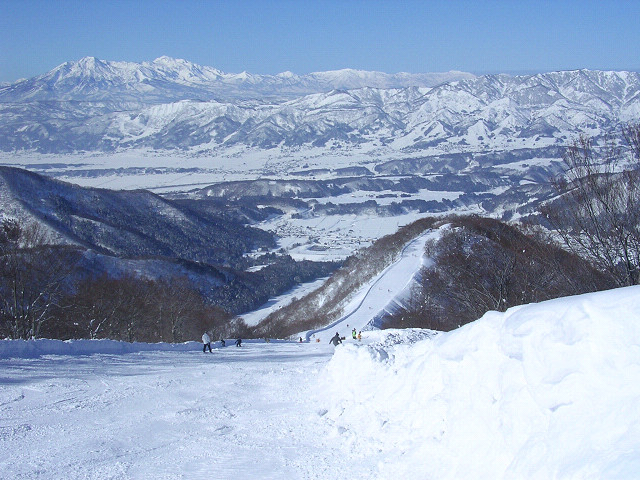
For the honest assessment: Nozawa is the most evenly-balanced major resort in Japan. It has top-to-bottom pistes for every level. The wide Paradise and Hikage runs are some of the best beginner terrain anywhere. The Schneider course and the Skyline traverse give intermediates a long, satisfying day. Yamabiko at the top, ungroomed in big snow years, has the best tree skiing on the mountain. The Schanze double-black is short but properly steep. There’s no in-bounds extreme like Cortina or Charmant, so if you’re chasing the deepest off-piste in Japan you’re better at Hakuba Cortina or Tsugaike. But for everyone else, Nozawa is a one-resort holiday with no need to bus around.
Snow numbers and season
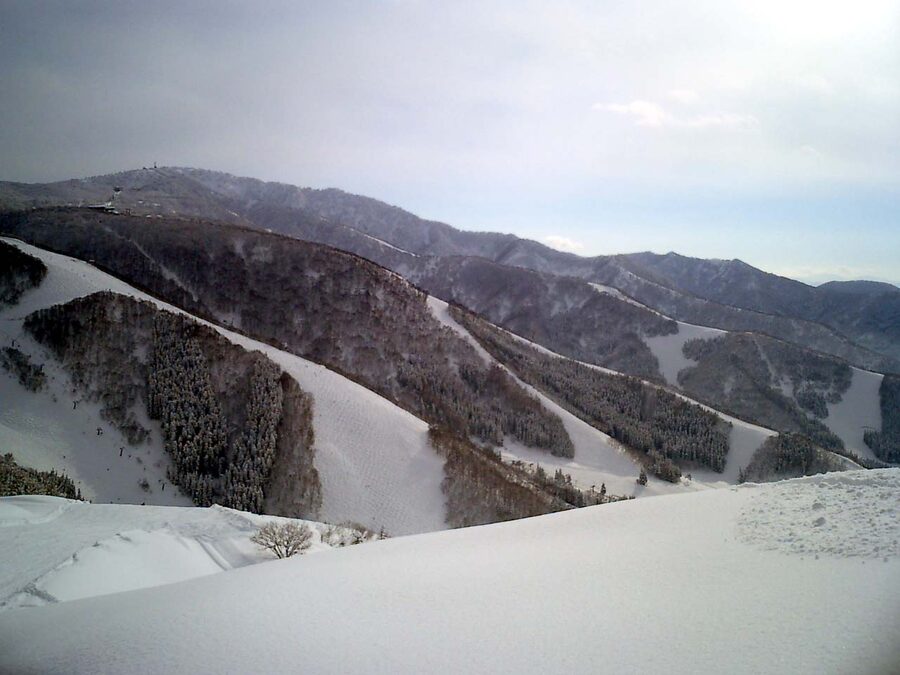
Annual snowfall at the village is around 1,087 cm. Up at Yamabiko, that figure is much higher (the locals will tell you 12 to 14 metres a season is normal). January is the deepest month, February has the coldest powder days, and early March still skis very well at altitude while the village starts to thaw. The official season usually runs late November to the first week of May (Yamabiko stays open into Golden Week with spring snow).
If you want pure powder weeks, late January to mid-February is the bullseye. If you want sunshine and a beer on the deck, late March is hard to beat. Avoid the seven days around the Lunar New Year if you can; Asian holiday demand pushes prices up sharply.
Lift passes and rentals
An adult day pass is around ¥6,500 in 2025 prices, with multi-day discounts. Children’s passes are about half. Senior and night-skiing options exist. Buy online a week ahead for the best rate. Rentals are widely available in the village; the cluster of shops near the Nagasaka Gondola is the most convenient for ski-in returns. A full ski set (skis, boots, poles) is around ¥4,500 a day, snowboard a bit less. English-language ski schools have grown rapidly over the last decade and are now genuinely good. The largest is at the foot of the Hikage area.
The Schneider history (and why the village is a sister city of St Anton)
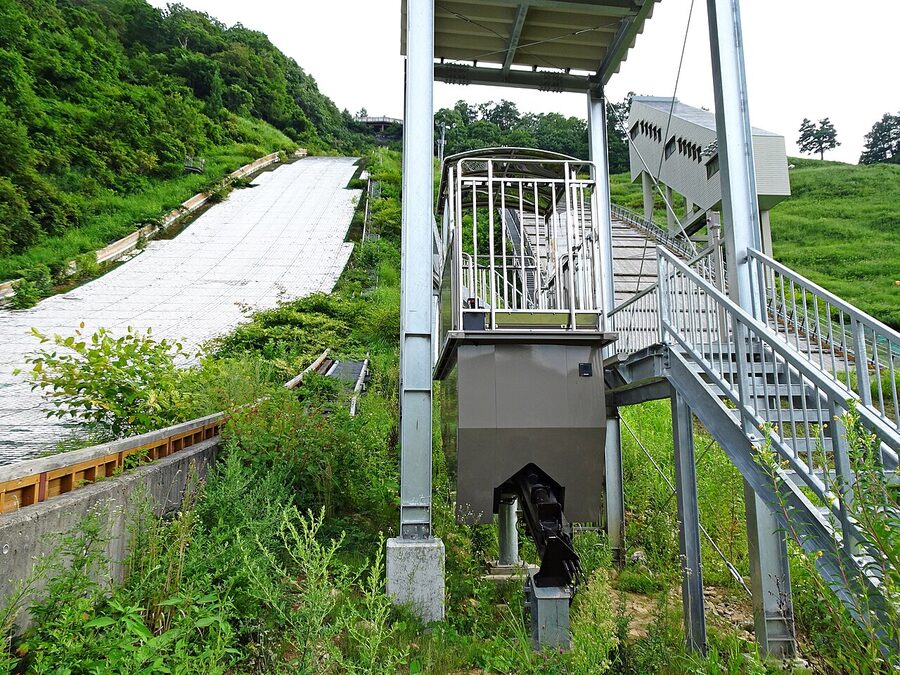
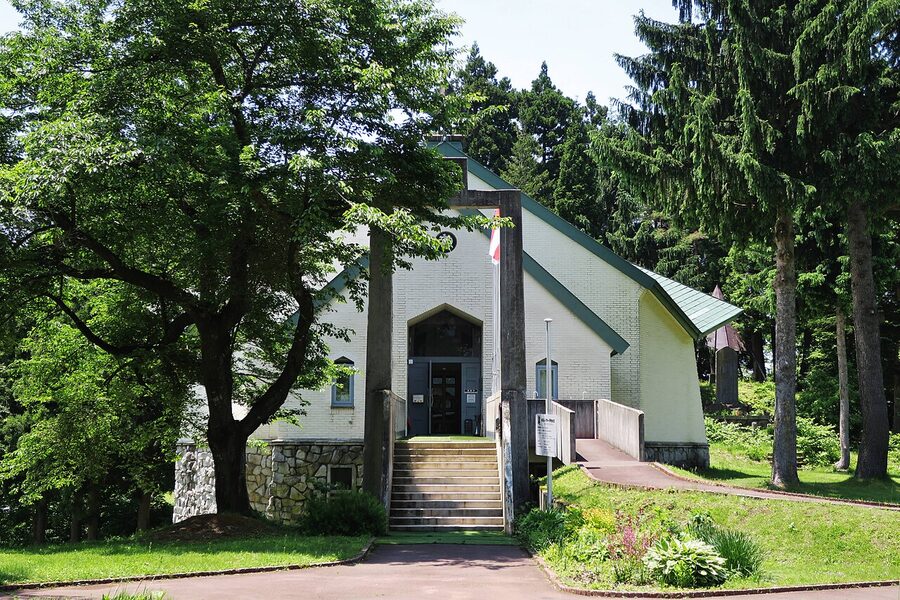
Nozawa’s reputation as a ski resort goes back further than most foreigners realise. The Austrian instructor Hannes Schneider, the founder of modern alpine ski technique, taught here in 1930, leaving his name on the Schneider course. After the war, the Yamabiko course was used for the 1972 Sapporo Olympic test events, and the village hosted the biathlon at the 1998 Nagano Olympics. Nozawa Onsen Village is the official sister city of St Anton am Arlberg in Tyrol, where Schneider also taught.
If you want a better picture of how the resort fits into the wider Northern Alps ski scene, our overview of skiing in the Japan Alps compares Nozawa with Hakuba, Cortina, Norikura Kogen and the smaller satellites. The closest other major ski destination in the same Nagano cluster is Hakuba, ninety minutes south.
The Dosojin Fire Festival, every 15 January
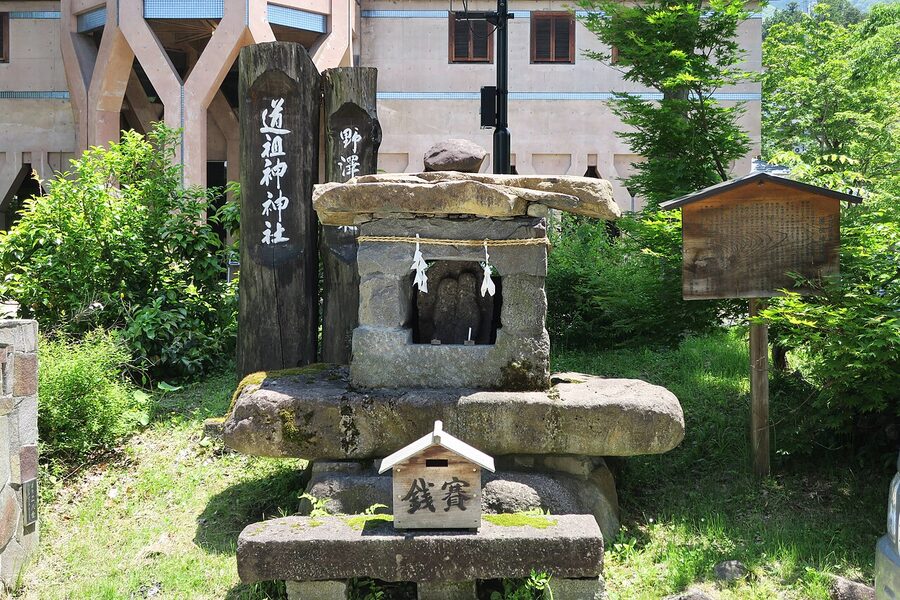
Once a year, on the night of 15 January, the village stages the Dosojin Matsuri (道祖神祭り), one of the three biggest fire festivals in Japan. It’s been running uninterrupted for centuries and was designated an Important Intangible Cultural Property in 1993. If you can travel for one event, this is the one in central Japan worth planning around.
What actually happens
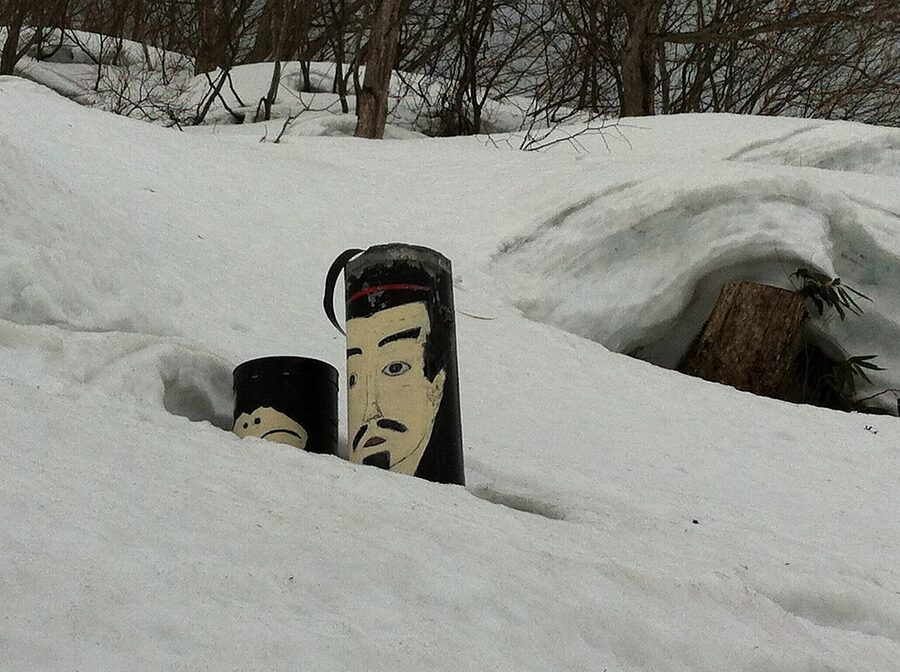
The festival is built around the village’s yakudoshi (厄年, “unlucky years”) tradition: men aged 25 and 42 are believed to need spiritual cleansing, and they are at the centre of the ritual. The 42-year-olds organise; the 25-year-olds defend. A 20-metre Japanese beech is felled in autumn, dragged by chanting villagers from the Hikage ski slopes through the village on 13 January, and used to build a 10-metre-high wooden shrine called the shadan, on the festival ground. No nails. No wire. Same construction every year.
Around 7pm on 15 January, the 42-year-old organisers ignite a fire by striking a flint that has been passed down for generations. They sing the Dosojin song, drinking heavily. Burning torches are lit and the procession heads to the temporary shrine ground at 8pm. There, a bonfire is built. From it, attackers light their own torches and run at the shadan, attempting to set it alight. The 25-year-olds are stationed at the foot of the shrine, sober (their guardians make sure of that), and physically block the attackers. The 42-year-olds sit on top. The defenders fight with their bare bodies. The attackers fight with fire.
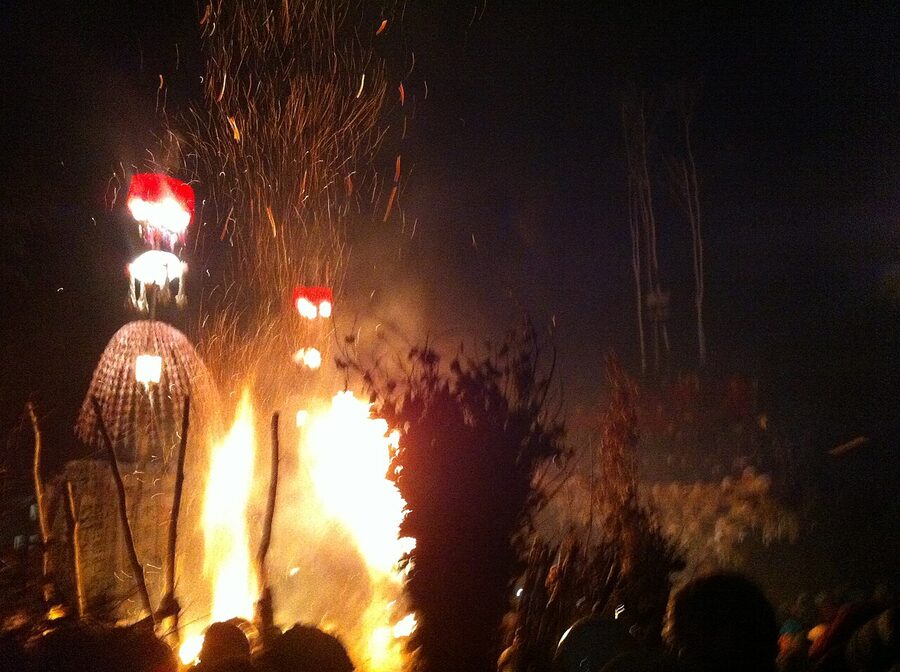
This goes on for an hour and a half to two hours. Sake is handed out continuously to onlookers (the festival’s organisers will physically place a cup of sake in your hand multiple times). At some point the attackers succeed, the shrine catches, and the whole structure burns through the night. The lanterns built by families with new-born boys go up alongside it. By morning the field is ash.
Practical notes for the festival
Accommodation in Nozawa Onsen books out a year in advance for the night of 14-15 January. If you decide late, the workaround is to base in Hakuba, Iiyama City, or Yamanouchi (snow-monkey town), and bus or drive in for the evening. The village runs extra shuttles from Iiyama Station on festival night.
Dress for cold. The festival ground is open and wind-exposed, you’ll be standing for hours, and temperatures sit around -5°C to -10°C. Wear ski gear under a long coat, gloves, hat, hand warmers. The smoke is intense and embers fly: don’t wear good outerwear that you mind getting smoky. The village provides blue tarpaulin sheets to sit on.
The crowd starts gathering on the ground from about 6pm. Get there by 7pm to find a position near the front rope line. Photography is fine; tripods are not (no room). The fire and the moving torches make autofocus unreliable; pre-focus on the shadan and shoot manual.
Where to stay
Nozawa has roughly 100 places to sleep across four broad price tiers. The village is small enough that none of them are more than a 15-minute walk from the bath cluster, but proximity to the Hikage gondola and the Yu-road moving walkway matters in ski boots, so I’ll group by area.
Traditional ryokan in the bath-cluster core
The original ryokan core is the cluster of streets immediately around Oyu and the Asagama spring. These are family-run inns, mostly two to three storeys, served by their own piped hot-spring water from the village source. Half-board (one night, dinner and breakfast included) typically runs ¥18,000 to ¥35,000 per person depending on room type.
Examples in this band include Sumiyoshiya, Kawaichiya, Kawamotoya, Tsuribashi-tei, and Sakaya, all multi-generation village inns whose names show up across the Japanese guidebooks. The Nozawa Onsen Hotel is a slightly larger semi-modern build with rotenburo, in the same central area.
The trade-off with the bath-cluster ryokan: you’re inside the village atmosphere, you can walk out in your yukata to the sotoyu in 90 seconds, but you’re a 10-minute uphill walk from the gondola in the morning. If skiing is the main reason you’re here, that walk in ski boots is the moment you’ll regret your booking choice. If onsen is the main reason, the bath cluster is exactly where you want to be.
Slopeside lodges and self-catered chalets
The newer accommodation is at the top of the village, close to the Nagasaka Gondola and the Hikage base. This is where the foreign-owned lodges and self-contained chalets sit (Lodge Nagano, Villa Nozawa, Nozawa Central, Harvest House, Nozawa Cottage, Taki-no-yu Lodge among others). These suit groups, families, anyone wanting kitchens, or anyone for whom dropping skis at the door of the gondola in the morning is the primary value.
Per-night chalet prices for the slopeside band run from around ¥80,000 (smaller cottages) up to ¥160,000 (sleeps 8-14, peak season) for the larger houses. They book out earliest. The trade-off is the village atmosphere is more spread-out; you’ll walk down to the bath cluster, and back up to bed.
Pension and minshuku in the Yumoto and Suso area
The middle ground is the cluster of small pensions and minshuku scattered along the slopes between the bath cluster and the gondola. These are the ¥9,000 to ¥14,000 per-person half-board options, run by individual families, often with two or three rooms. Names like Pension Schnee, Pension Stella, and a long list of minshuku ending in -ya. The Japanese ryokan-association directory is the best place to browse them by Japanese-language name.
The trade-off: rooms are smaller, ofuro is shared, dinner is communal. In return you eat home-style mountain food cooked by the owner, your wash hangs in the corridor, and you’ll know everyone in the building’s name by day three.
Budget and hostel
The cheapest beds in Nozawa are the international-style hostels and a small number of guesthouses with bunk rooms, around ¥4,000 to ¥6,500 a night including breakfast. They cluster near the Hikage and Suso bus stops. The most popular among foreign skiers in the last decade has been Nozawa Onsen Backpackers, but the scene rotates; check current ratings before booking.
For booking, the village ryokan association website (nozawa.jp, in Japanese and English) is the most complete listing for the family ryokan and pensions; Booking.com, Agoda, and Rakuten Travel cover the larger hotels and most chalets. For a wider treatment of how to think about Japanese ryokan vs hotels in this region, see our overview of onsen in the Japan Alps.
Eating in Nozawa
You will not run out of restaurants. The village has more than 100 places to eat during ski season: soba shops, izakaya, ramen counters, modern bistros, French-leaning bakeries, a couple of craft-beer brewpubs, and the standard mountain-village variety of “this used to be a bath, then it was a tofu shop, now it’s a wine bar.” This is what to actually look for.
Nozawana, the village pickle
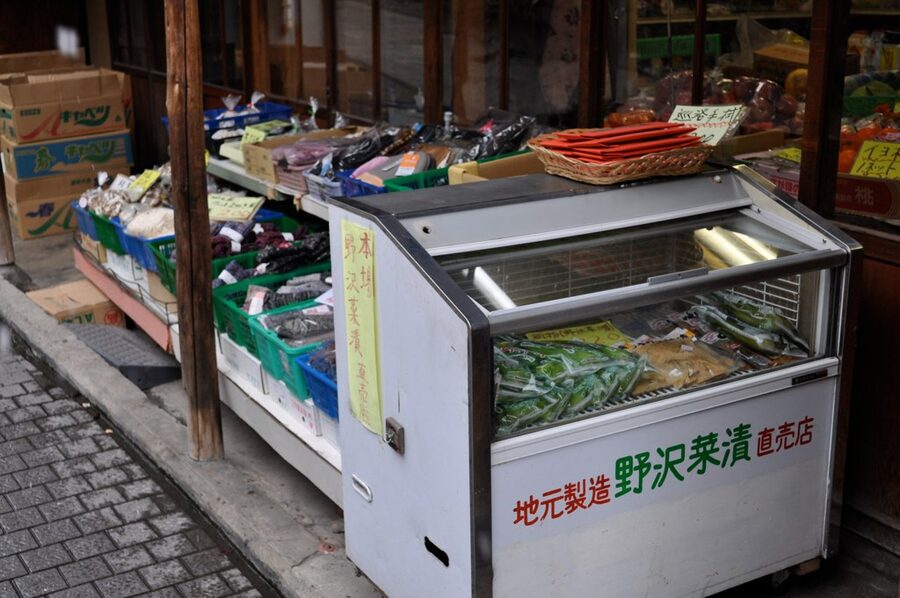
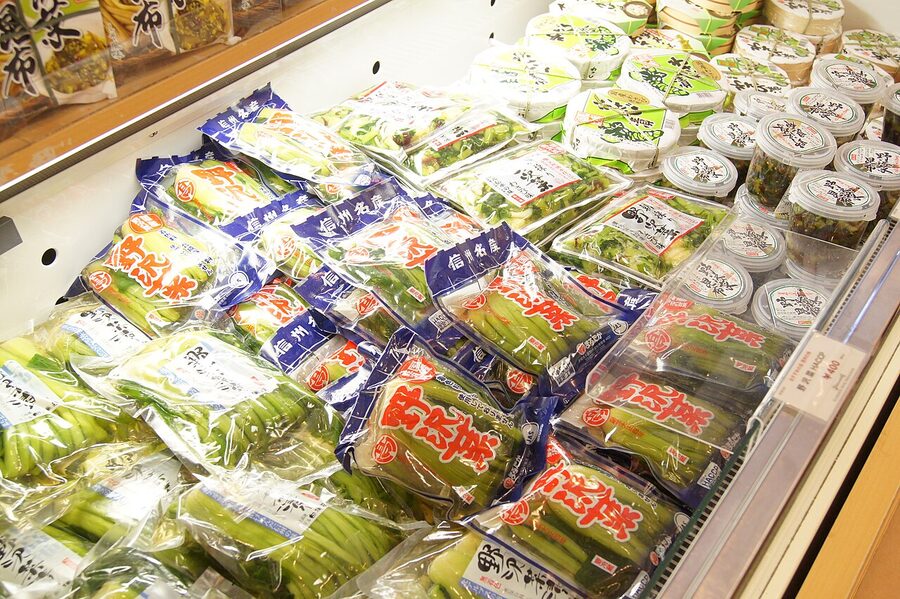
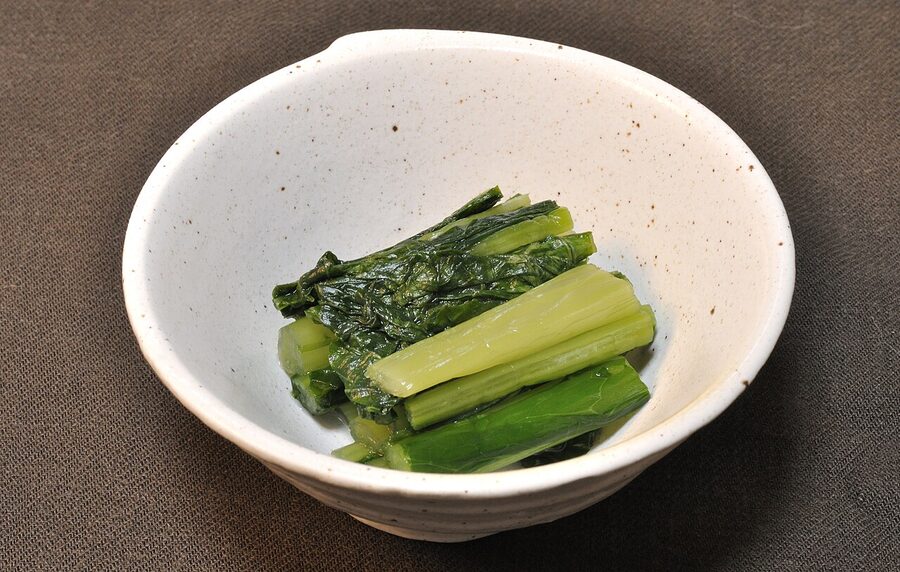
Nozawa’s most famous food is not a dish; it’s a pickle. Nozawana (野沢菜) is a kind of leaf-mustard, with thin stalks 30-60cm long and a slightly bitter peppery flavour. The story you’ll see in every guidebook says the seeds were brought back from Osaka’s Shitennoji temple by the head priest of Nozawa’s Kenmei-ji in the Edo period, though modern genetic research has now shown that the local plant is actually distinct and probably an indigenous mutation. Either way, Nozawana is the village’s signature crop, and you’ll see it on every menu in the area as oyaki filling, in soba bowls, on pizzas, on rice, even inside katsu sandwiches.
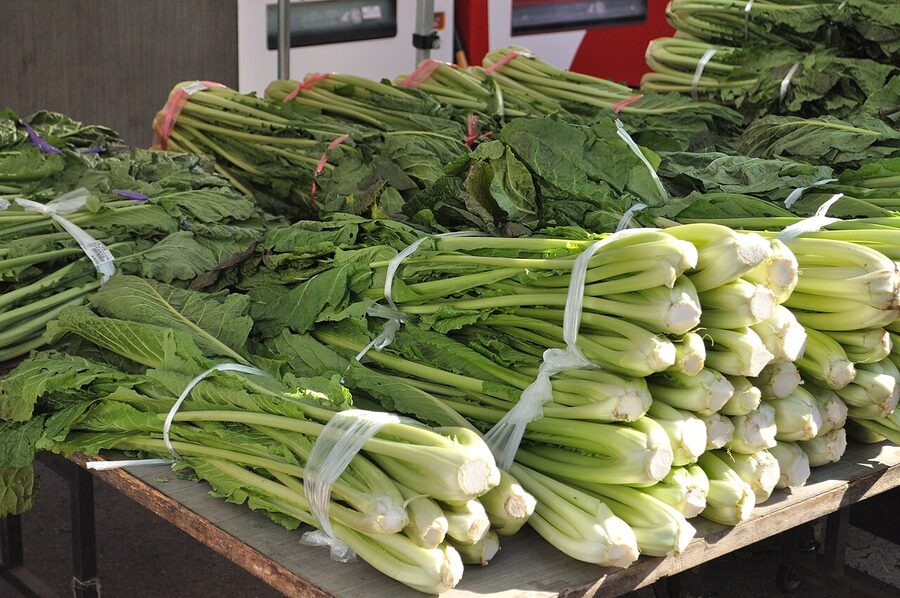
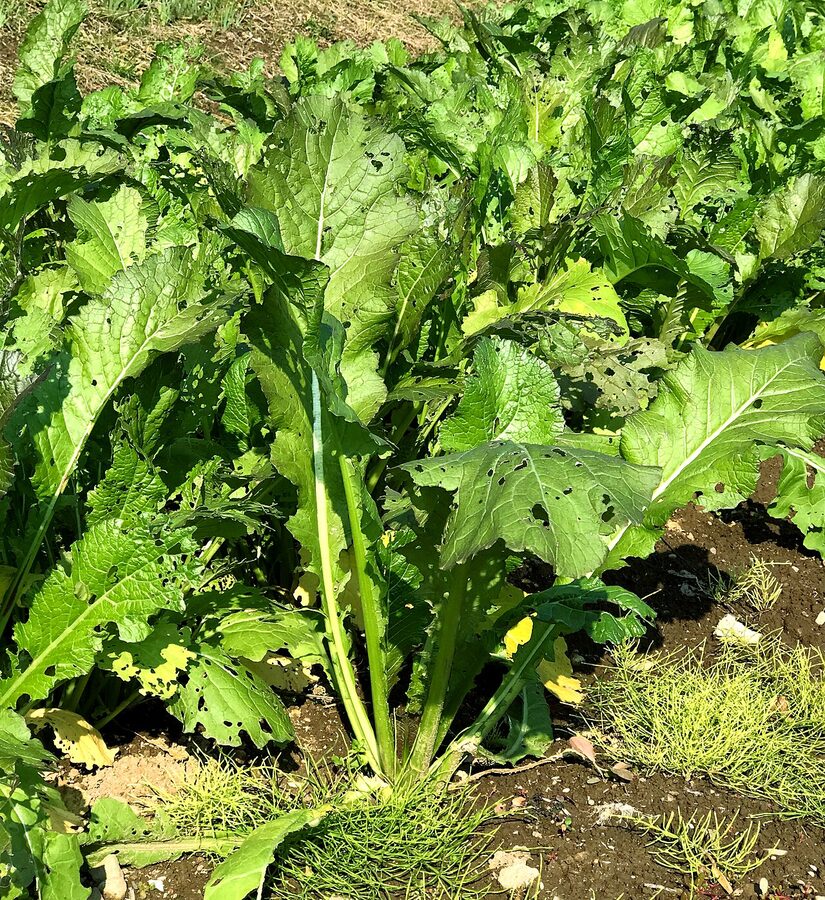
The autumn pickling season runs from late October through November. Walk through the village in those weeks and you’ll see families washing and trimming bunches of fresh Nozawana, often using the warm “laundry-spring” water attached to one of the sotoyu. It’s the village’s quiet equivalent of a wine harvest.
Oyaki
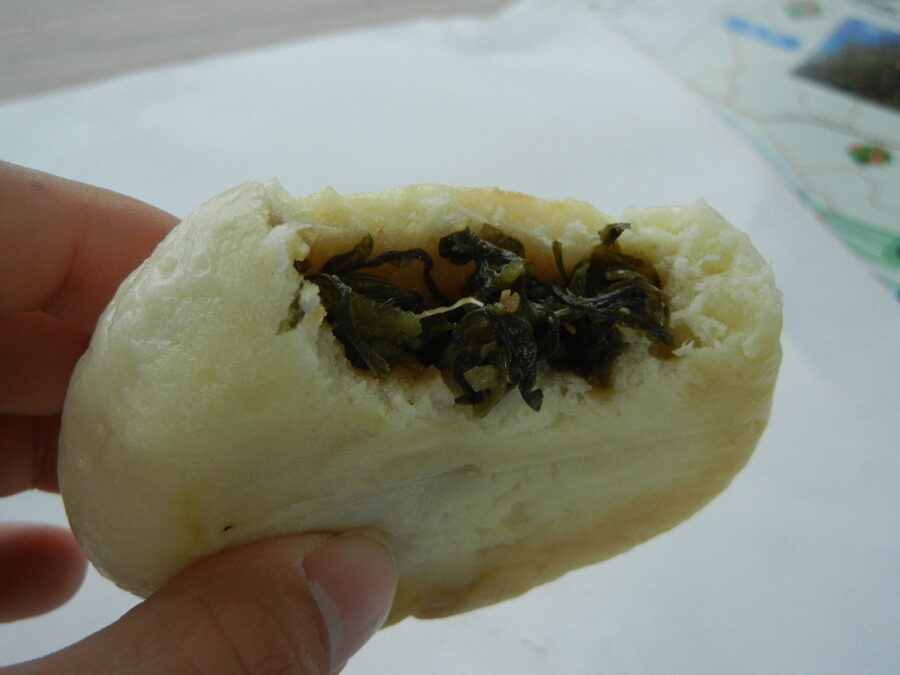
Oyaki are pan-fried buckwheat dumplings filled with seasoned vegetables, the staple snack of the wider Nagano countryside. In Nozawa, the standard filling is, of course, Nozawana. They’re sold from small wooden stalls around Oyu, ¥250 to ¥350 each, served warm. Eat them standing up, in the cold, with bare hands. This is what mountain food tastes like.
Soba and the rest
This is Shinshu (信州), the historical name for Nagano, and Shinshu means soba. The Nagano countryside has been growing buckwheat in volume since at least the 17th century, and Nozawa’s soba shops are very good. Cold zaru-soba is the summer order; warm tempura-soba and a small flask of warmed sake is the winter answer. Among local favourites, Daimon and Toyozumi-tei are reliable picks in the central area; outside the village, the soba shops along Route 117 are worth a stop if you’re driving.
Beyond soba, the standard Japanese ski-village inventory: tonkatsu, ramen (Nagano-style is lighter than Hokkaido’s miso ramen), curry-rice, izakaya plates of yakitori and pickled-vegetable dishes. The newer additions are a couple of Anglo-Japanese craft-beer pubs (the AJB taproom is the standout, brewing on-site), a wine bar with Nagano vintages, and at least three pizzerias of varying authenticity.
Breakfast and the morning market
From early May through October the village runs a Sunday morning market on the Oyu-dori street, 6:00 to 7:30am. Pickled Nozawana, akebia fruit in autumn, mountain greens in spring, fresh rice and miso, all sold from foldable tables by the families who farmed it. Out of season, the regular morning option is your ryokan’s breakfast (always set, always included, always too much), or the few cafés that open for skiers from 7am.
Hiking, walking, and the green season
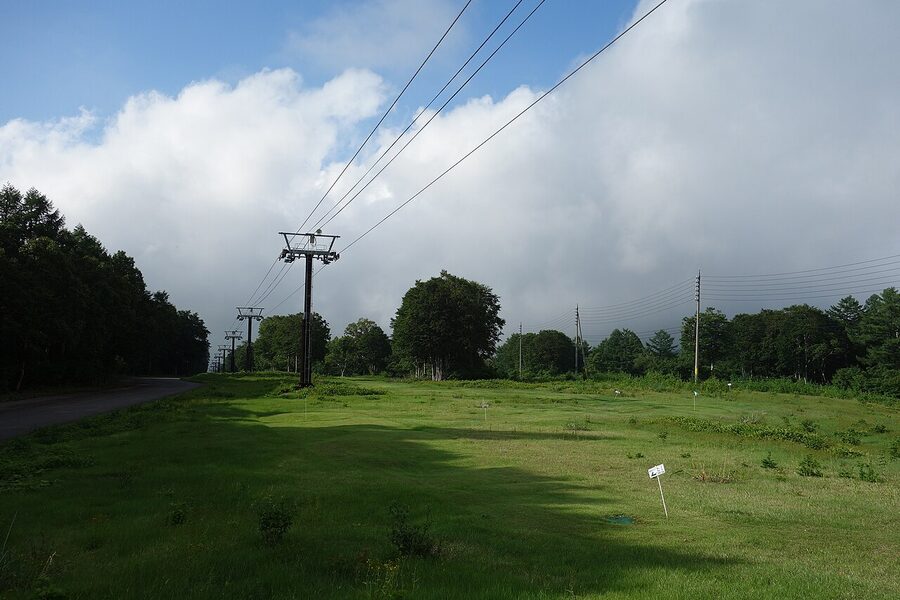
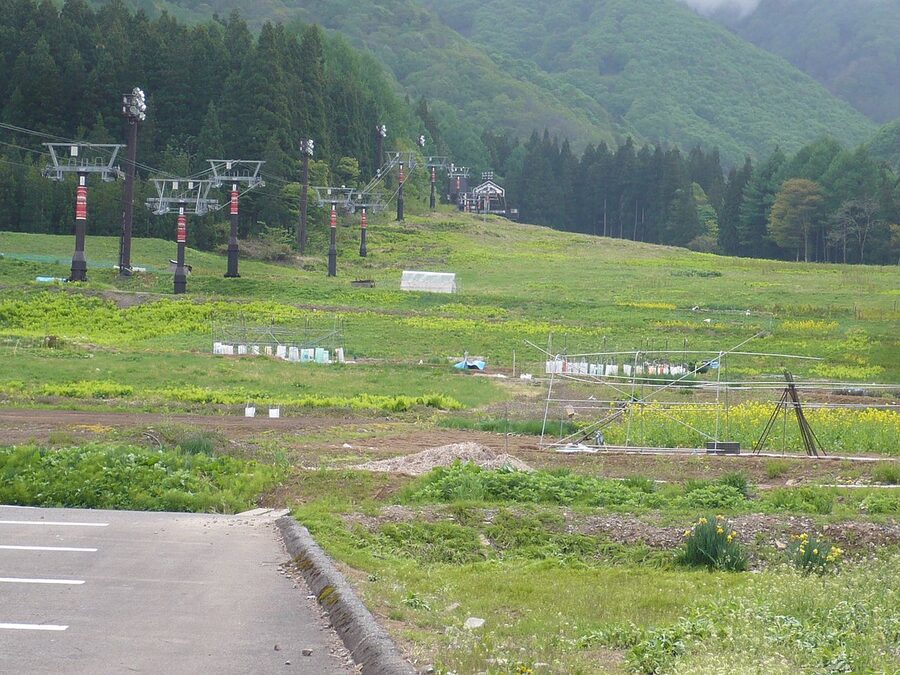
Most foreigners think of Nozawa as winter-only. The locals think of it as a four-season village, and they’d be right. From May through October the snow melts, the ski runs open as walking trails, and the mountain becomes an entirely different place. The official ski-resort lifts run summer schedules from mid-July through early November, and you can ride the Nagasaka Gondola up and walk back down through the alpine flower meadows.
Mount Kenashi and the Yamabiko trails
The classic green-season hike is up to the Yamabiko summit (1,650m on Mount Kenashi). Take the Nagasaka Gondola to the mid-station, then a short alpine walk through the rhododendron and beech zone to the summit. From the top on a clear day, you can see across the Sea of Japan to the Sado Island silhouette in the west, and the Tateyama range and the spine of the Northern Alps to the south. The walk is straightforward, well-marked, and takes 90 minutes return from the gondola top.
For longer trail days, the Shinetsu Trail (信越トレイル) is a 110km ridge route running along the Nagano-Niigata prefectural border, with a Nozawa-area trailhead reachable by short bus from the village. Section hikes of 5 to 12km are realistic day-walks. The Shinano-no-Sato visitor centre near the trailhead has English maps. For altitude considerations and what to pack on these mid-mountain walks, see altitude sickness in the Japan Alps; Yamabiko is well below the danger threshold but the Shinetsu Trail’s high points sit close to it.
Mountain biking and the bike park
The resort runs a downhill bike park in summer, with rentable full-suspension rigs at the gondola base. There’s a flow trail down the Hikage face, two technical lines down Skyline, and pump-track sessions for kids on the lower piste. Day passes are around ¥4,800. Bring your own gloves; rentals don’t include them.
Autumn colour
The koyo (autumn colour) season around Nozawa runs from mid-October to early November. Mount Kenashi turns red and gold; the lower beech forest goes copper and brown; the village ryokan bring out the autumn-menu kaiseki. It’s the second-best time of year (after deep January) to visit if your priority is the village atmosphere rather than the snow.
Getting to Nozawa
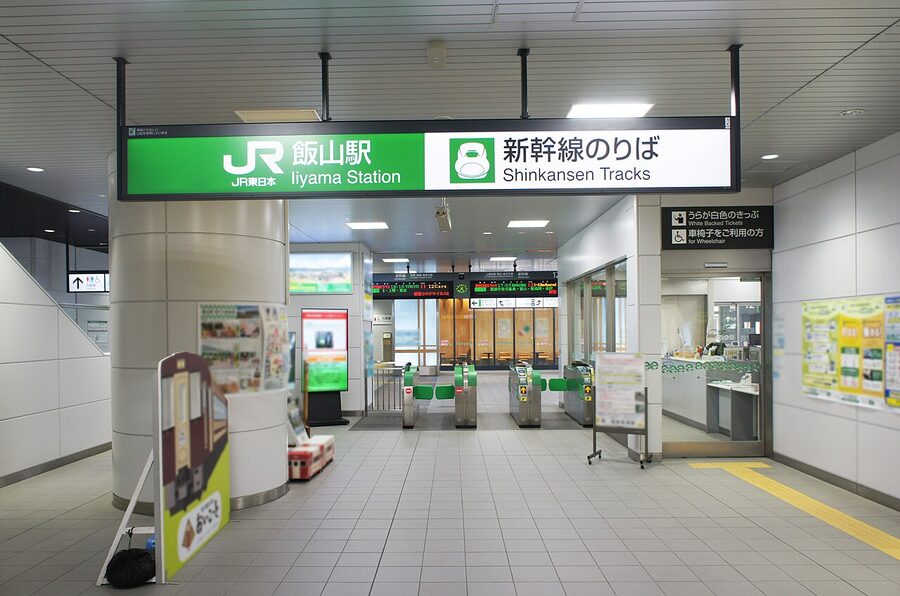
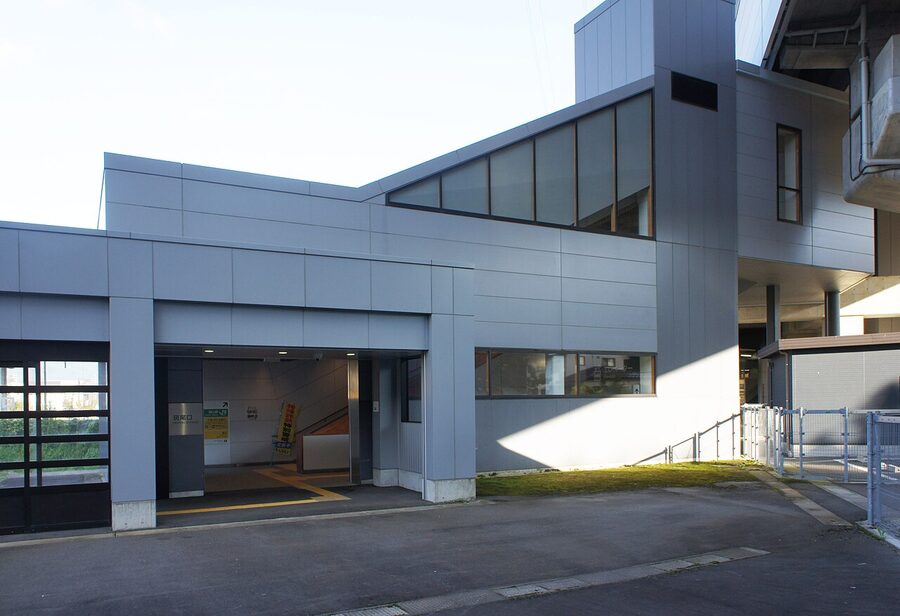
The fast answer: Tokyo to Iiyama on the Hokuriku Shinkansen (1h 45min on the Hakutaka service, 2h 10min on the slower stoppers), then 25 minutes by direct shuttle bus to the village. Total door-to-door from Tokyo Station, around 2h 30min. This is the cheapest, simplest, and most reliable route. It beats flying.
From Tokyo
From Tokyo Station, take the Hokuriku Shinkansen towards Kanazawa or Tsuruga, alighting at Iiyama. The Hakutaka service is the express; the Asama and Tsurugi services don’t reach Iiyama. Reserve seats for the morning of 14 January (festival eve) up to a month ahead. That train fills up. JR East single fare from Tokyo to Iiyama is approximately ¥8,800 reserved seat.
If you have a JR East Pass (Nagano-Niigata area), the Iiyama leg is included. The 5-day pass is ¥18,000 and pays for itself with two return trips Tokyo-Nagano-area.
The Iiyama shuttle
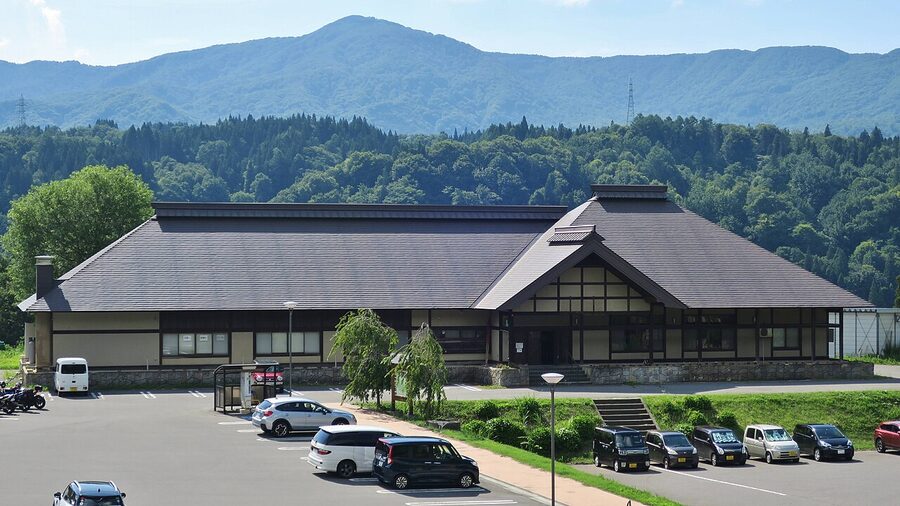
The Nagaden bus company runs the Nozawa Onsen Liner shuttle direct from Iiyama Station’s Madarao exit to the Chuo Terminal in Nozawa village. 25 minutes, ¥800 single, timed to coincide with the main Shinkansen arrivals. Pay the driver in cash on board. In peak season there’s a bus on most arrivals; off-peak, check the ryokan-association timetable before you travel. Reservation is not required.
The arrival point in the village (Chuo Terminal) was redesigned in March 2026; some older blog posts still refer to the old layout. The new terminal sits at the lower end of the village and is a 5-minute walk from Oyu.
From Kansai
From Osaka or Kyoto, the cleanest route is Tokaido Shinkansen to Nagoya, then the Shinano limited express to Nagano (3h total), then either the Iiyama Line stopper (60min) or a direct bus from Nagano Station to Nozawa (75min, ¥1,800 single, runs hourly in winter). Total Osaka-to-Nozawa around 5h.
If you’re already in Kanazawa or further west on the Hokuriku coast, take the Hokuriku Shinkansen east directly to Iiyama (Kanazawa-Iiyama is about 2h). For the wider picture of Japan-Alps access from Tokyo, Kyoto and the Kansai region, see our Japan Alps access guide.
By car
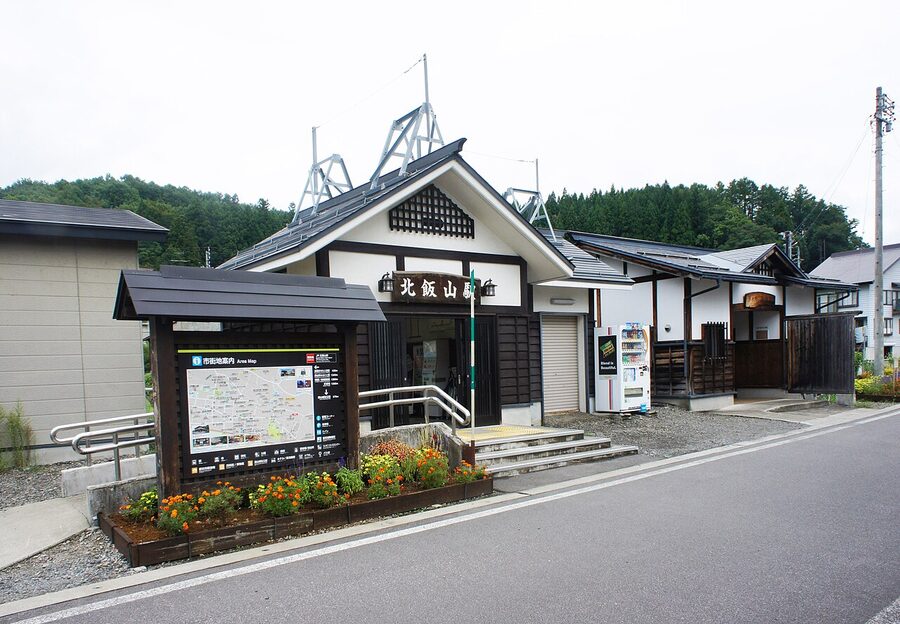
Driving from Tokyo, take the Joshinetsu Expressway to Toyoda-Iiyama IC (3h non-stop), then 25 minutes on Route 117 to Nozawa. In winter, snow tyres are non-negotiable; rentals from Iiyama Station car parks usually come with them by default in season. Parking in the village is at the central Chuo lot (¥1,000/day), the Hikage lot (free for some ryokan guests), and a couple of smaller pay-and-display options. The roads inside the bath cluster are extremely narrow and one-way; if your ryokan is in there, drop bags first and park outside.
Sending your luggage ahead
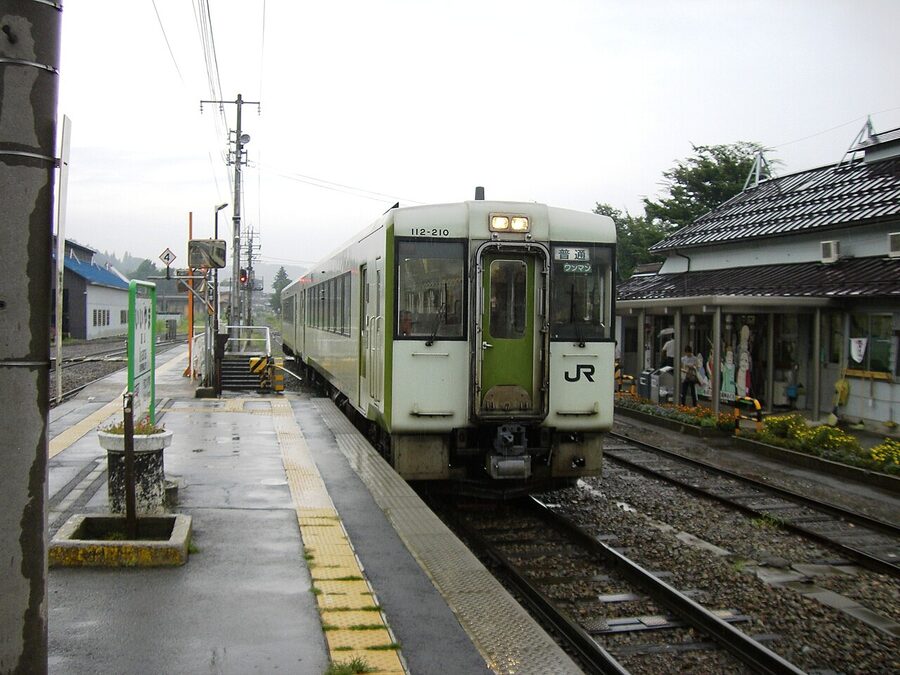
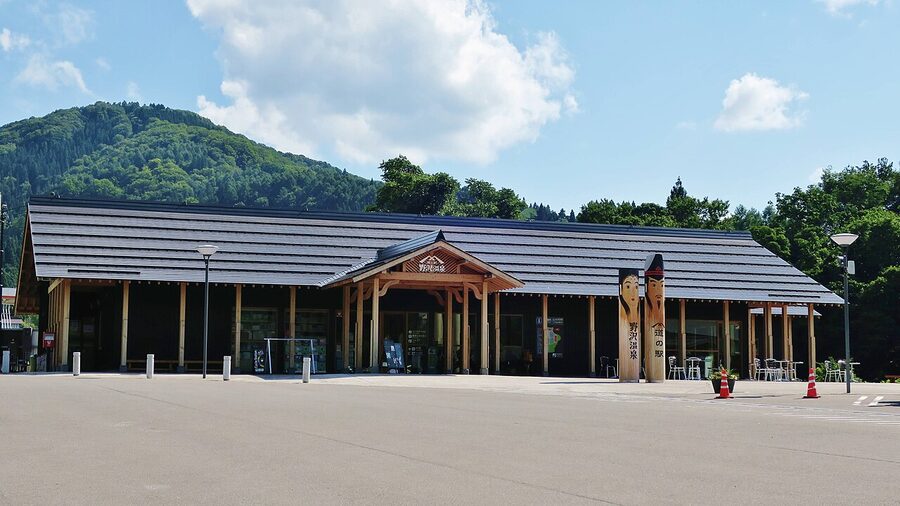
Yamato Transport’s takkyubin service (called “Ta-Q-Bin” in English) is the standard solution for ski bags. From Tokyo or Kansai, drop your bag at any 7-Eleven or hotel front desk by lunchtime, and it arrives at your Nozawa ryokan the following afternoon. ¥2,500 to ¥3,500 per bag. Travel only with a small daypack on the Shinkansen; collect the rest at check-in. This is what every experienced Japan-trip family does. It’s a small luxury that makes a big difference.
What to combine Nozawa with
Nozawa is at the northern end of the Japan Alps cluster, an awkward 90 minutes by road from Hakuba. Most multi-stop ski trips treat it as a 2- or 3-day standalone unit. The natural combinations:
- Hakuba (90min south by car or 2.5h by train via Nagano): deeper-mountain feel, more international, more variety of ski areas, less onsen-village atmosphere. The classic 7-day Nagano ski trip is 3 nights Hakuba + 3 nights Nozawa.
- Yudanaka and the snow monkeys (60min east): Jigokudani Snow Monkey Park is one of the most famous wildlife photo locations in Japan. Combines well as a half-day trip on a non-ski day.
- Iiyama City (25min south): the Buddhist temple-town of Iiyama is sometimes called “Little Kyoto of the Snow Country”. The kamakura igloo festival in February is worth a half-day.
- Shirahone Onsen and Okuhida Onsen-go: if you’re building a multi-onsen-village week, Shirahone (the milky-white baths near Norikura) and the Okuhida cluster (5 villages on the western side of the Northern Alps) are the natural counterpoints. They feel completely different.
- Nagano City and Zenko-ji (60min south): a half-day cultural stop on the way back to Tokyo. The 1,400-year-old Zenko-ji temple is one of Japan’s most important Buddhist sites.
For multi-day routes that string the Japan-Alps cluster together by Shinkansen, bus and rental car, our 5, 7 and 10-day itinerary guide walks through three template options. For broader context on onsen-soaking culture in this region, the Japan Alps onsen overview covers the difference between sotoyu, rotenburo, and the named ryokan baths.
When to come
The honest seasonal calendar:
- Late November to mid-December: opening weeks. Lower mountain only, cold air, smaller crowds, prices reasonable. Decent for first-timers.
- Late December to early January: Christmas-New Year crush, expensive, full. Locally important for the holiday but the village is loud.
- Mid-January (Dosojin Festival window): book a year ahead. Snow is deep, fire festival is the year’s biggest event.
- Late January to mid-February: the powder bullseye. Coldest, deepest, driest snow. Premium prices and crowded weekends but mid-week is manageable.
- Late February to early March: still excellent snow, prices ease. The locals’ favourite window.
- Mid-March to early April: spring skiing, sunshine, often blue skies, last weeks of village atmosphere. Underrated.
- Mid-April to early May: Yamabiko stays open with corn snow, the village is quiet, prices low. Combine with a hanami trip on the way back.
- May, June: very quiet. Shoulder season for the village. The Sunday morning market starts; no skiing.
- July, August: green-season hiking, alpine flowers, mountain biking. Cooler than the lowlands, no rainy-season hangover by August.
- September, October: autumn colour from mid-October. Harvest festival. The Nozawana pickling season opens. Beautiful and largely empty.
If you can only come once and you want the maximum variety in a single trip, late February is the answer. If you want the festival, the second week of January, accommodation booked 12 months in advance.

A few honest caveats
Nozawa is not a perfect place. A few things to flag.
The bath cluster is built on a slope. If you have mobility issues, the village’s narrow uphill streets are a real factor. The same is true in winter under ice. There’s no easy shortcut around the geometry.
The sotoyu are not large. Each accommodates maybe 6-8 people comfortably. In peak ski season, Oyu in particular gets crowded between 5pm and 8pm. If you want quiet, go before 8am or after 9pm, or use one of the smaller bathhouses out of the central cluster.
The food scene, while wide, is not as polished as in Kyoto or Tokyo. The Italian-leaning bistros that have opened in the last decade are competent but not destination-worthy. If you want a Michelin-grade dinner you’re in the wrong village. Eat the soba, eat the oyaki, drink the local sake.
And finally: this is a working village, not a manicured resort. The streets have power lines, the wooden walls show their age, the bath buildings are functional rather than picture-perfect. That’s exactly what makes the place feel real. Come for the atmosphere, not for the Instagram.
The first sotoyu I went to was Kuma-no-tearai, the bear’s bath, on a snowy afternoon when the village was quiet. An old man was already in the bath, soaking and reading a folded newspaper at the rim. He nodded once. I got in. We didn’t speak for about twelve minutes. Then he got out, dried off, said “atsui ne” (it’s hot, isn’t it), and shuffled out into the snow in his geta. That’s the village.