The first thing that surprises foreign hikers about a Japan Alps hut is that nothing about the booking system is built for them. The federation website is in Japanese. Most reservation pages open at 9am Tokyo time on a single date six months in advance, and the popular ones close within minutes. Phones get answered in Japanese only. Cancellation rules are unwritten until you read the fine print three days before your trip. And yet thousands of overseas hikers stay in these huts every year, on the spine of the Northern Alps where there is no other shelter for kilometres. The system works once you know how it works. This guide is the brief I wish I’d had before my first 槍ヶ岳 (Yarigatake) traverse.
In This Article
- What a 山小屋 actually is
- Federation huts vs independent huts
- The English-friendly booking platforms
- When reservations open: the calendar nobody publishes in English
- Deposits, cancellation and the unwritten weather rule
- Costs you should expect
- The schedule: arrival, dinner, lights-out
- Futon-sharing in peak season
- What to bring (the hut-specific list)
- The two model traverses worth booking
- Kamikochi → Yari → Hotaka → Kamikochi (3-4 nights)
- Murodo → Tsurugi → back (2 nights)
- The Hakuba ridge alternative (2 nights)
- Weather and the cancellation question
- Tent sites at huts (テント場)
- The huts with onsen (the rare ones)
- Cell signal, water, charging
- What goes wrong (and how to fix it)
- Getting to and from the trailheads
- If you only do one hut night, do this one
What a 山小屋 actually is
The Japanese word is yamagoya (山小屋), literally “mountain hut”, and the Western mental model (a stone refuge with a wood stove and bunk beds) gets almost everything wrong. A Japan Alps hut is closer to a small ryokan that happens to sit at 2,500 to 3,100 metres. It has a staffed reception desk, a kitchen turning out two meals a day, a tatami sleeping floor with futons rolled out for you, an indoor toilet (sit-down or squat, depending on the hut), and at the bigger huts a small shop selling beer, snacks and laminated postcards. A few have onsen baths. None of the high-altitude ones have showers. All of them turn the lights off at 8 or 9pm.
The other word you’ll see is sanso (山荘), literally “mountain villa”. Functionally it means the same thing as goya, Yarigatake Sanso and Karasawa Hutte are run on identical rules, but you’ll see a third term, hinan-goya (避難小屋), used for unstaffed emergency shelters. Hinan-goya are different beasts. No staff, no meals, no booking, no charge most of the time. Don’t plan a trip around them unless you know exactly what you’re walking into.
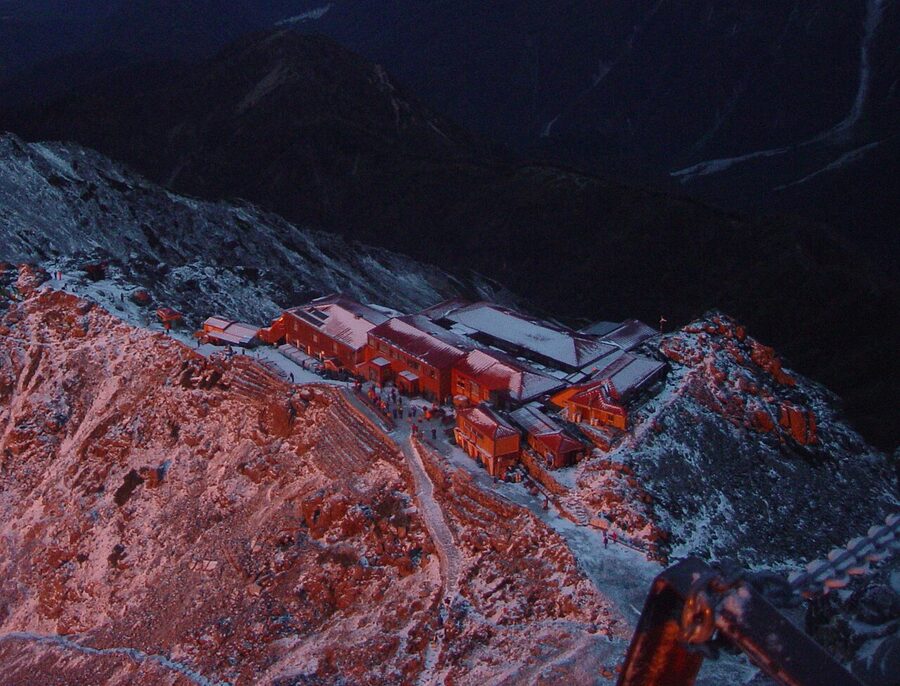
Most huts in the Northern Alps are seasonal. The standard window is late April to early November, but the high-saddle huts open later, Minamidake-goya runs only 11 July to 11 October, Hut Nishidake similar. Yarigatake Sanso, Karasawa-goya and Hotakadake Sanso open from 27 April through 3 November. Outside those dates the huts are physically dismantled in places (the panels at Murodo Sanso roll down with the snow) or sealed with one corner left as a winter shelter.
Federation huts vs independent huts
This is the bit nobody explains. The 北アルプス山小屋友交会, the Northern Alps Mountain Hut Friendship Association, is a federation that includes most of the southern Northern Alps huts: the 槍・穂高 (Yari-Hotaka) range, the Omote-ginza ridge above Kamikochi, the routes around Norikura and Hidaka. Their public-facing site is kita-alps.yamagoya.gr.jp, and it lists every member hut, opening dates, capacity and current owner. It’s the single best reference for the southern Northern Alps, even if you can’t read it, the icons and the dates are language-agnostic.
The federation does not handle bookings. Each hut takes its own reservations directly, by web form, phone, or, for the largest hut groups, a shared booking site. The Yarigatake Sanso group runs six huts (Yarigatake Sanso, Yarisawa Lodge, Minamidake, Daitenjo Hutte, Dakesawa, Sessho-goya) on a single web reservation system. The Enzanso group runs five (Enzanso, Ariake-so, Daitenso, Hutte Nishidake, Hutte Oyari) on theirs. The 双六小屋 (Sugorokugoya) group covers the ridge between Yari and Tateyama with five huts (Sugoroku-goya, Kurobegoro-goya, Kagamidaira, Wasabi-daira, Sugoroku camp). All three of those groups have decent online systems and varying degrees of English support.
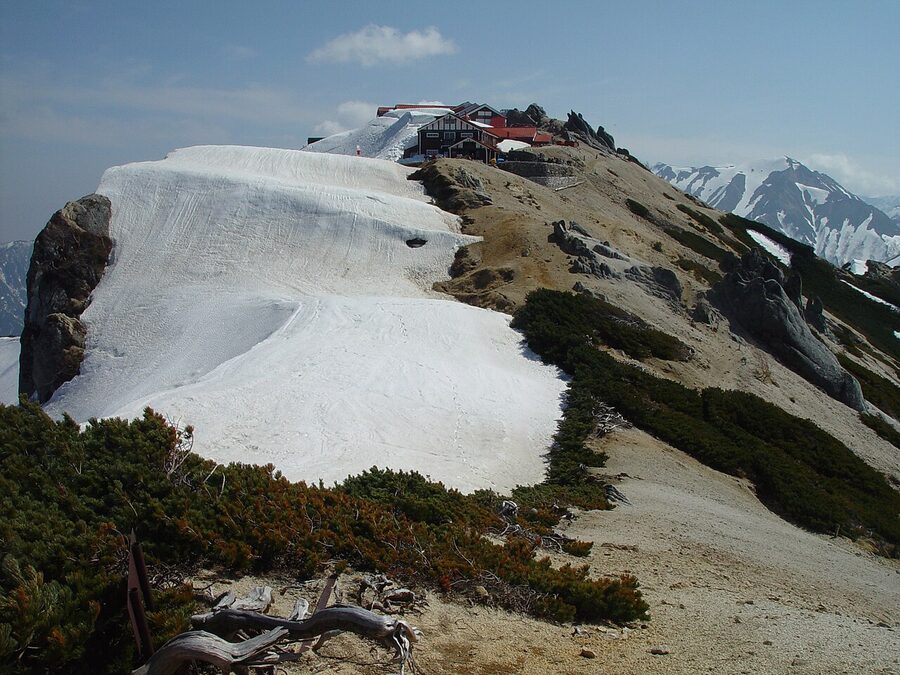
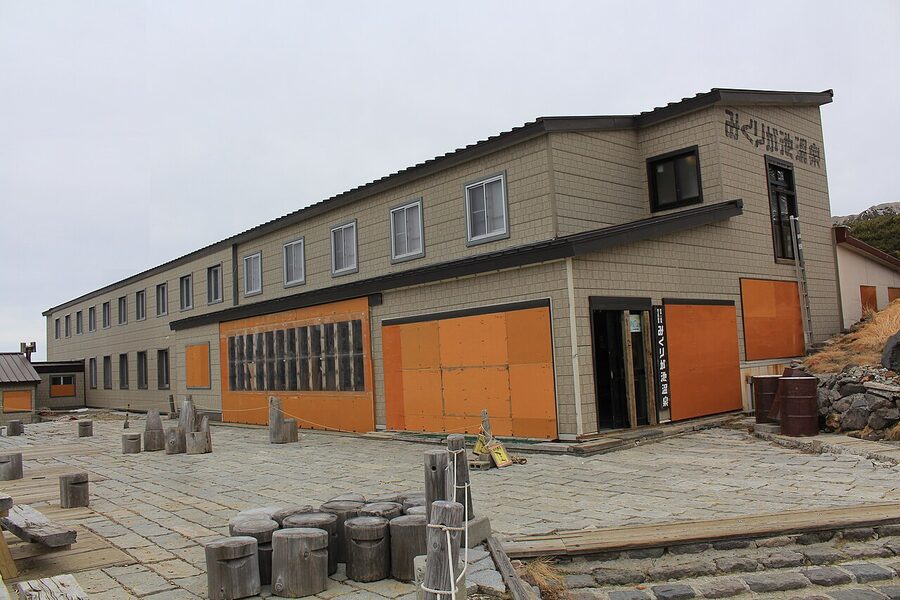
Independent huts are exactly what they sound like. Karasawa-goya, Hotakadake Sanso, Raichozawa Hyutte, Mikurigaike Onsen, these run their own websites, their own phones, their own calendars. The booking rules are different at each one. Some open the line at 8am on a fixed date; some open one month in advance on a rolling basis; one or two still take only walk-ins.
The practical takeaway: don’t try to learn one universal Japan Alps booking system. Learn the system for the huts on your specific route, then book those huts on their published dates.
The English-friendly booking platforms
Three options matter for foreign hikers:
Yamatan (yamatan.net) is the closest thing to a unified booking platform. It covers around 100 huts across Japan including big chunks of the Northern Alps, the Yatsugatake range, Tateyama-Tsurugi, Hakuba and Mt Fuji. The interface is Japanese-only, but Google Translate handles it. Coverage on the Yari-Hotaka range is patchy, you’ll often have to go direct to the hut, but for Hakuba’s main ridge huts (Hakuba Sanso, Tengu-sanso, Karamatsu Sanso) and the Tateyama-Murodo cluster, Yamatan is the cleanest path. You pay online with credit card; cancellation up to a few days out usually loses 20-30% of the deposit.
JapanHuts.com is an English-language reservation concierge. They take your dates and target huts by email, contact the hut on your behalf in Japanese, return a confirmation, and charge a small service fee. Useful if you don’t want to navigate Yamatan or call a hut. Slow, allow several days. Coverage is best for the Yari-Hotaka huts and the popular traverses.
JAA Travel (jaa.travel) is the Japan Alpine Association’s English-language booking platform, growing in coverage since 2024. It runs guided tour packages and direct hut bookings, mostly in the Northern Alps. The hut list is shorter than Yamatan’s but the interface is in actual English.
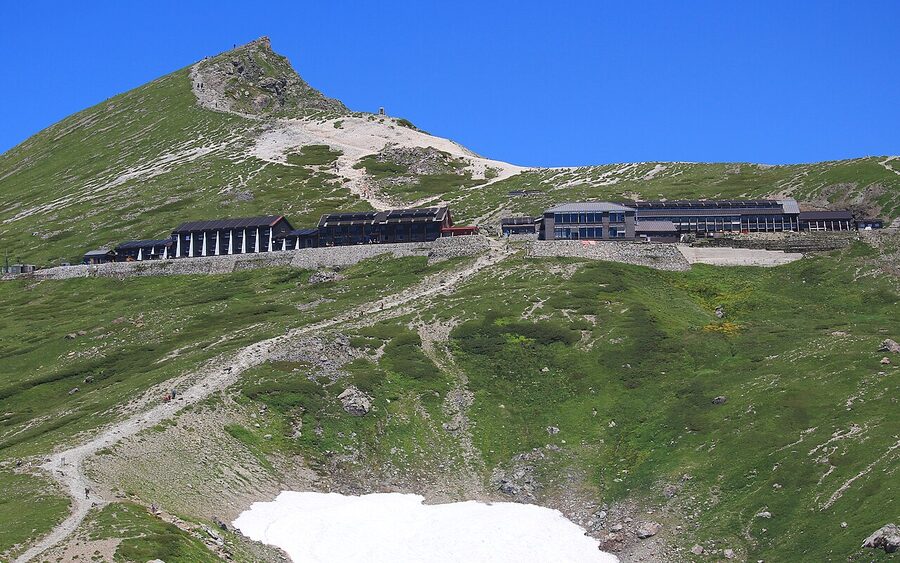
For the huts none of these cover, you book direct. The hut websites all have a 予約 (yoyaku, “reservation”) link in the navigation, and most have switched to a web form. A few of the older Kamikochi-area huts, Yamano-Hidaya at Myojin, Kamonji-goya, Sakamaki Spa Inn, still take only phone bookings. If you can’t speak Japanese, ask a Japanese-speaking friend, the JapanHuts service, or your hotel concierge in Matsumoto or Toyama to call for you.
When reservations open: the calendar nobody publishes in English
This is where most foreign hikers lose their preferred dates. Reservations don’t open at the start of the year. Each hut group has its own start date, and for popular weekends in July and August the busiest huts sell out within minutes of the line opening.
The reservation calendar shifts year to year, but the rough pattern, gathered from the FUNUP data bank that aggregates every published opening date, looks like this for the Northern Alps:
- Tateyama-Murodo cluster: Hotel Tateyama opens at 9am on 30 November of the previous year (online); 5 December for phone. Mikurigaike Onsen opens 6 January. Raicho-so Web from December, phone 10 April. Raichozawa Hyutte 15 January.
- Tsurugi area: Tsurugizawa-goya 27 December; Tsurugi-Sanso 10 February; Ichinokoshi-Sanso accepting walk-up year-round.
- Kamikochi cluster: Kamikochi Tokusawa-Lodge / Kamikochi Alpen Hotel web 29 January, phone 1 February. Kamikochi Alps Sanso (members only) 1 February.
- Omote-ginza (Yari approach via Tsubakuro): Enzanso group opens 18 March at 10am for the June and July dates; 22 April for August; 13 May for September; 17 June for October. Private rooms have separate calendars per period.
- Yari-Hotaka huts: Yarigatake Sanso opens by web on a rolling basis from late February; Hotakadake Sanso opens web bookings one month before each stay date, with phone bookings opening 20 April. Karasawa-goya opens for 27 April to 25 May arrivals on 25 April, then on a one-month-rolling basis from 26 May.
- Hakuba ridge: most huts roll over Yamatan with bookings opening late February or early March for the full season.
- Sugorokugoya group: bookings via the group’s own site; the Sugoroku-goya line typically opens late March.
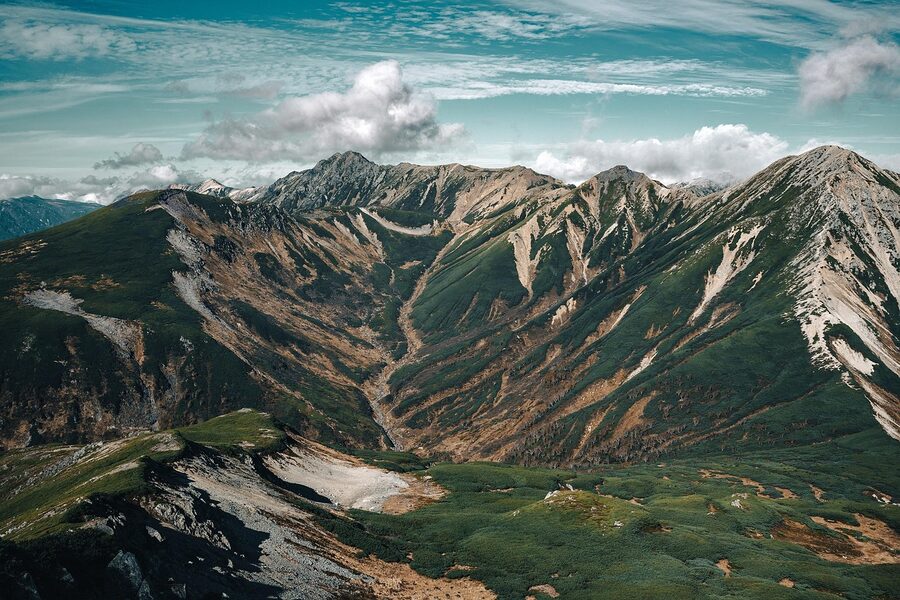
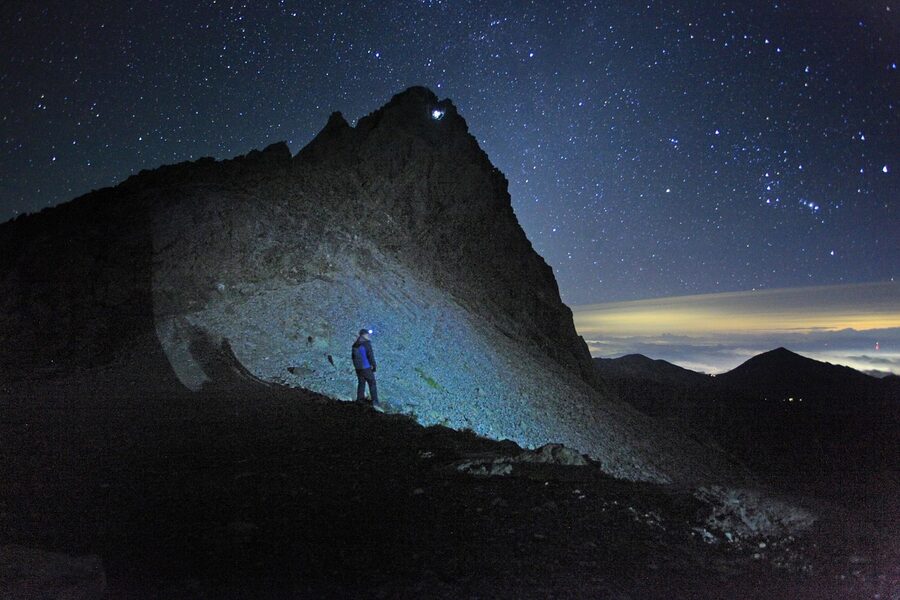
For mid-week stays in early July or late September the same huts often have space the day you ask. If your dates are flexible, swap your weekend climb for a Tuesday-Wednesday and the booking problem mostly disappears.
Deposits, cancellation and the unwritten weather rule
You’ll usually pay one of two ways: card online at the time of booking, or cash on arrival. Cash is still standard at independent huts. Bring fresh ¥10,000 notes, change is limited at altitude. A few of the bigger groups (Hotakadake Sanso, Raichozawa Hyutte) now take Square mobile-POS card payments, but don’t bet on signal at 3,000m.
Cancellation rules vary, but the typical Northern Alps hut charges no fee until 7 days out, 20% from 7-3 days out, 50% from 2 days, and 100% on the day. Some huts publish stricter terms in peak season. Read each hut’s 宿泊約款 (terms) page before booking, Yarigatake Sanso, Enzanso, Hotakadake Sanso all have them online.
The unwritten rule: if a typhoon is coming, hut owners are realistic. Phone or email the day before; if the route to the hut is genuinely dangerous they will usually waive the fee and re-book you for a new date. They have no interest in your stuck on the wrong side of a closed gully. But this is goodwill, not policy. Don’t assume.
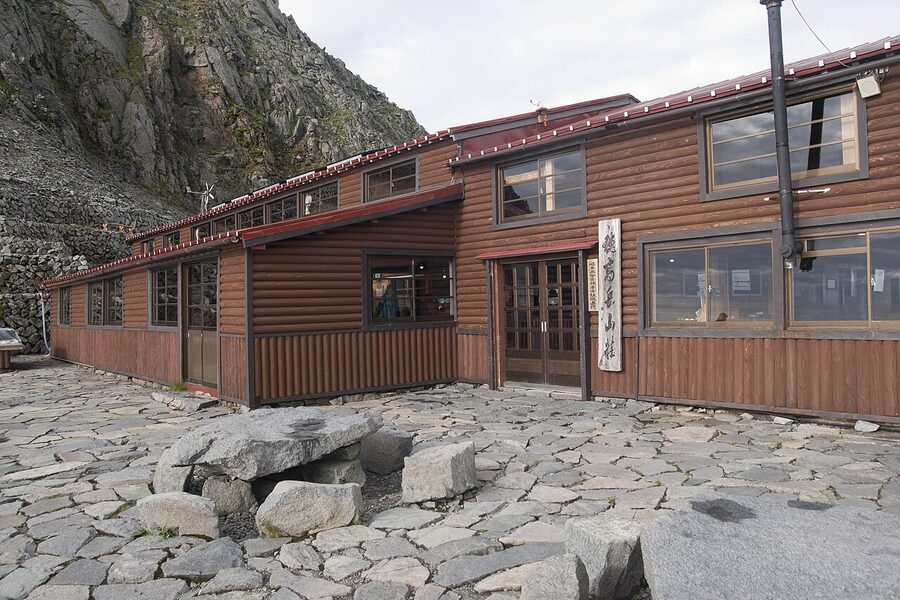
Costs you should expect
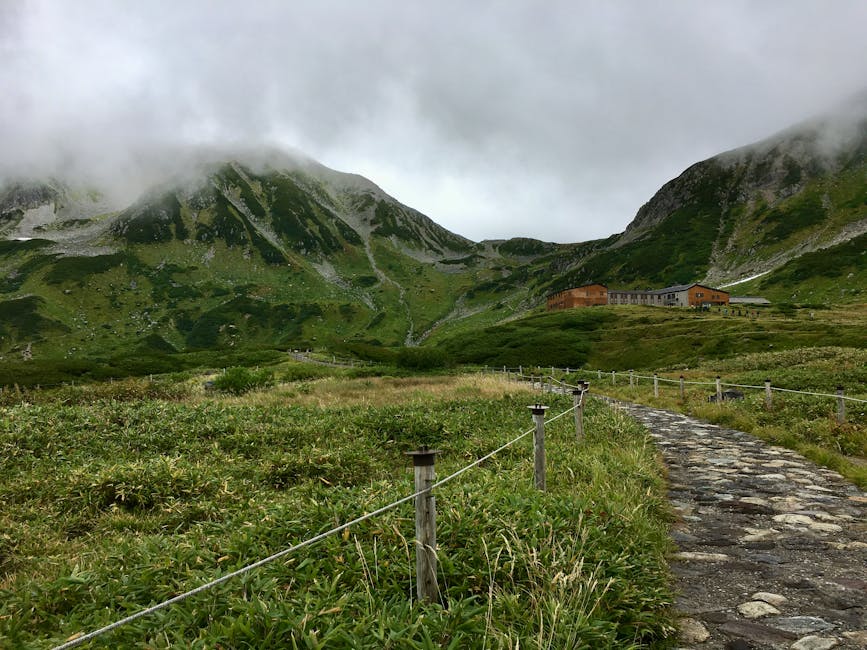
The 2026 sample, from published rates at five Northern Alps huts:
- Raichozawa Hyutte: dorm with two meals ¥13,000; private double ¥16,000 per person; sudomari (sleep-only, no meals) ¥9,000; bento lunch ¥1,000; bath ¥1,000.
- Yarigatake Sanso: typical ¥14,000-15,000 with two meals.
- Karasawa-goya: ¥13,000-14,000 with two meals; weekend supplements in autumn.
- Hotakadake Sanso: similar range; private rooms add ¥3,000-4,000 per person.
- Enzanso: around ¥14,000 with two meals; the private rooms go separately and are the hardest reservations to get on the entire ridge.
Add a per-night onsen tax of ¥150 at the few huts that have hot springs, and roughly ¥200-500 per 500ml bottle of water if the hut isn’t on a spring. Expect to spend ¥4,000-6,000 per day on top of the room rate if you’re buying drinking water, snacks and the occasional beer.
The schedule: arrival, dinner, lights-out
The Japanese hut day runs to a tight clock and breaking it makes you the foreigner everyone tells stories about for the rest of the season.
Arrival: by 3pm if you can, 4pm at the absolute latest. Hut rules and federation guidance both say 4pm. Many hut owners have complained openly in the past two years about overseas hikers arriving after dark, sometimes triggering search-and-rescue calls. If you’re going to be late, ring the hut from anywhere with signal, the ridge above the trees usually gets a Docomo or AU bar, and they’ll hold your dinner. Showing up unannounced after dark is the single rudest thing a hiker can do here.
Check-in: at the genkan (entrance), shoes off after the desk. You’ll fill out a 宿泊カード with your name, address, age, phone, and your route the next day. Write in capitals if you can’t write Japanese; staff would rather have legible English than guessed kanji. Pay if you haven’t already. The staff will tour you through: futon block, toilets, drying room, water tap, dining timeslot.
Dinner: usually two seatings, 5:00 and 6:00pm. You’re assigned one at check-in and given a paper ticket. Dinners are set menus, no substitutions. Some variation of rice, miso soup, a meat or fish main, pickles, occasionally tempura or the hut’s signature dish (Enzanso’s curry rice is famous; Yarigatake Sanso runs a Chinese-style stir-fry). Vegetarian options aren’t usually possible, bring your own dinner if you don’t eat meat or fish, and tell the hut at booking time you’ll skip dinner. Refills of rice and miso soup are generally unlimited; everything else is what’s on the tray.
Beer and drinks are sold separately at the small shop, mostly Asahi Super Dry in 350ml or 500ml cans for ¥600-800. Sake by the cup is around ¥800. Soft drinks ¥300-400.
Lights-out: 8:30pm at most huts, 9:00pm at a few. After lights-out the building goes quiet, quiet enough that the rustle of someone’s down jacket carries. Talk in whispers if you must, in the dining hall not the dorm. If you have a head torch, use the red mode.
Wake-up: the building wakes itself between 4:00 and 4:30am. Phone alarms, packing zippers, the clatter of stove lighters in the dining room. Breakfast 5:00-5:30. By 6:30 most hikers are out the door for the day’s ascent. If you want to skip breakfast, ask for the bento lunch instead, usually two onigiri, sometimes proper rice and fish in a box, ¥1,000-1,200. It’s a better breakfast than the seated one.
Futon-sharing in peak season
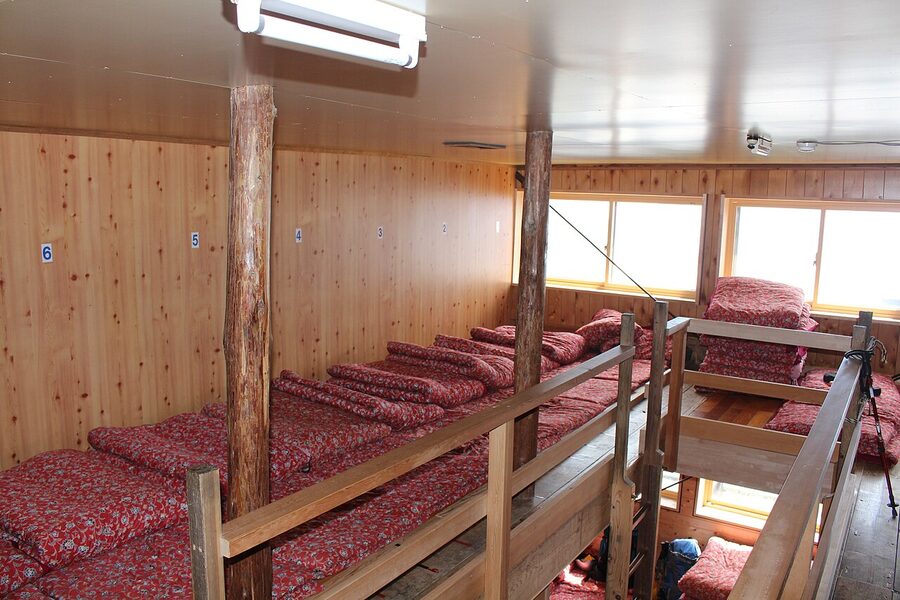
This is the part the brochures don’t tell you. On a peak August Saturday at Yarigatake Sanso or Karasawa-goya, the dorm is packed. Pre-Covid you could end up sharing a single futon with a stranger, two adults across a 90cm-wide mat, head to head with a plastic divider. Capacity caps brought in during 2020-2021 mostly stuck, so the worst of it is gone, but on a fully-booked weekend you’ll still be elbow-to-elbow with neighbours along the row.
Women are typically grouped together in one section. Plastic head dividers, sometimes curtain partitions, are now standard. Some huts have built proper bunk-style cubicles in the past few years (Yarigatake Sanso, Hotakadake Sanso), they cost a few thousand yen extra and are the only way to get genuine personal space on a busy night.
The fix is logistics, not gear. Book midweek when you can. If you must hike on a weekend, book the second day at a smaller, less famous hut (Sugoroku-goya, Daitenso) where the crowd thins.
What to bring (the hut-specific list)
Your normal three-season pack plus a few hut-specific items:
- Sleeping bag liner: a silk or polycotton liner, 200g, around ¥3,500 from a Japanese outdoor shop. Required at some huts since 2020, recommended at all of them. The futons aren’t washed between guests; the liner is your hygiene layer.
- Cash: ¥30,000-50,000 in fresh notes for a three-day traverse covering bed, drinks, water, lunches, the toilet donation at huts you’re passing through (¥100-200 each). Card readers exist but signal doesn’t.
- Head torch: for the toilet at 2am and the 4am pack-up. Red mode is the polite mode.
- Earplugs: non-negotiable on a weekend. Snoring at altitude is louder than at sea level.
- Down jacket: even in summer, the dorm at 3,000m hovers around 8-12°C overnight. Sleeping bag liners aren’t warm.
- Wet wipes / face cloth: most huts have no shower. Wipes plus a small towel get you 80% of the way to feeling human.
- A second t-shirt and clean socks for sleeping: the single biggest comfort upgrade.
- Power bank: charging at huts is patchy. Some have free outlets, some charge ¥200, some have nothing. Bring 10,000mAh and assume nothing.
- Garbage bag: every hut is “carry it in, carry it out”. There are no bins for hiker rubbish.
Slippers are usually provided at the genkan; you don’t need to bring them. Toilet paper is provided but goes in a separate bin. Toothpaste should be packed out at huts that ask, the high-altitude ones with composting toilets are sensitive about anything that interferes with the bacteria.
The two model traverses worth booking
If you want a single hut traverse to learn the system on, book one of these.
Kamikochi → Yari → Hotaka → Kamikochi (3-4 nights)
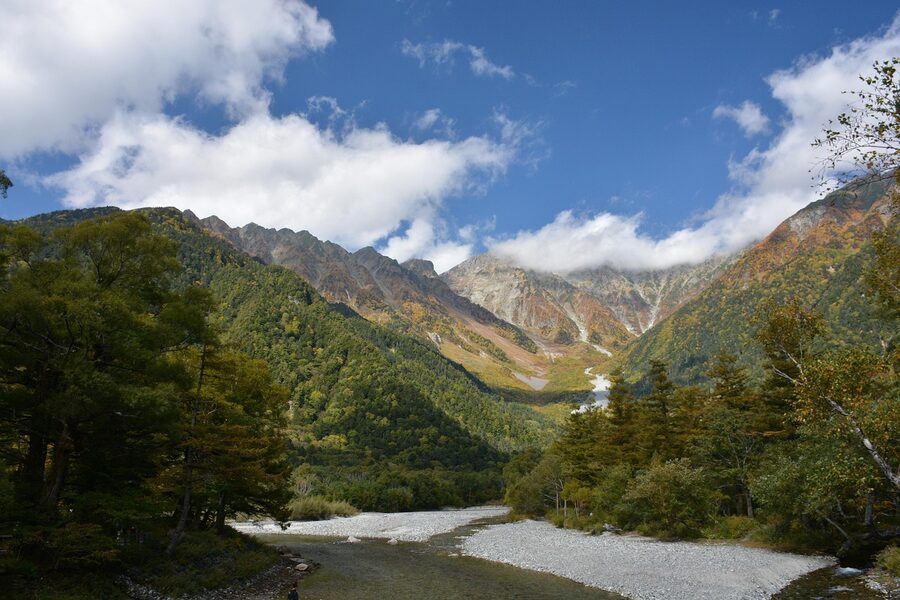
The classic. Bus from Matsumoto into Kamikochi in the morning. Day 1, walk up to Yarisawa Lodge or Yarigatake Sanso (8-10 hours). Day 2, summit Yari at dawn and descend the Daikiretto ridge to Minamidake-goya (a long technical day, helmets and chains). Day 3, traverse Kita-Hotaka and Oku-Hotaka to Hotakadake Sanso. Day 4, drop down through Karasawa cirque to Karasawa-goya for lunch, then out to Yokoo and back to Kamikochi. This is the headline route in the Northern Alps and the one every Japanese climber does once. The Daikiretto stretch is for confident scramblers only; the alternative is to drop into Karasawa from Yari and skip it.
Murodo → Tsurugi → back (2 nights)
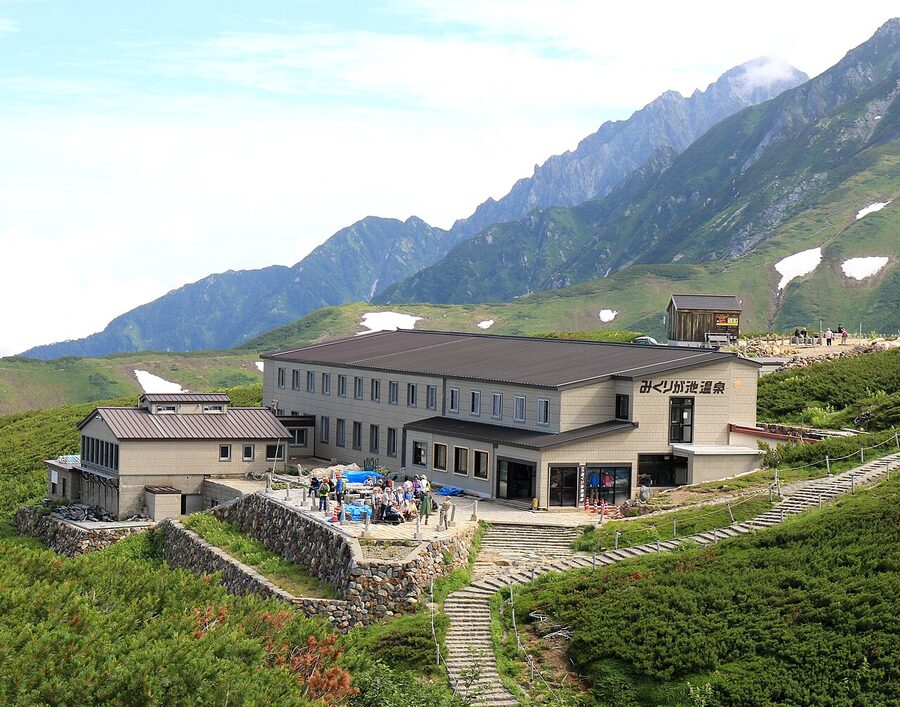
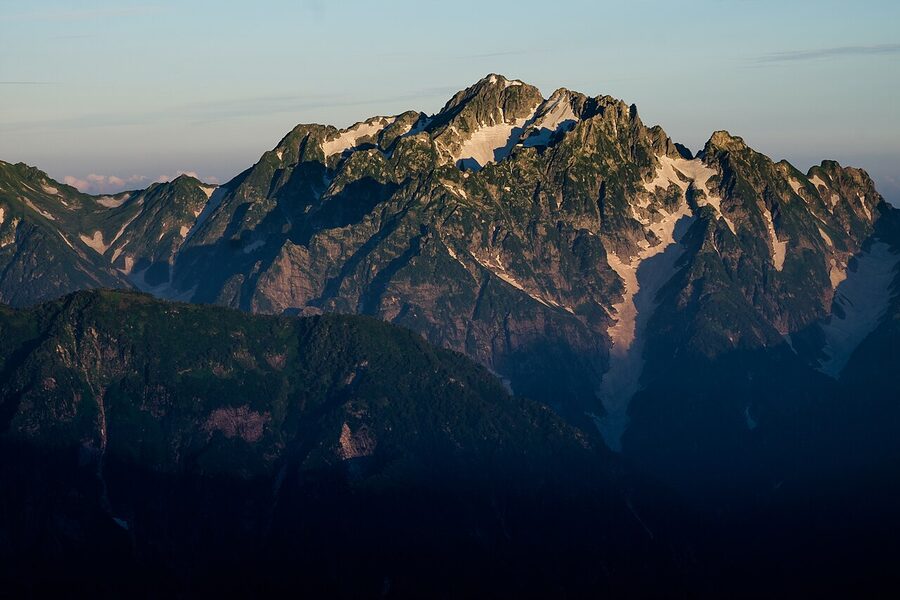
The Tateyama side, accessed from Toyama via the Tateyama-Kurobe Alpine Route. Day 1, ride up to Murodo at 2,450m, walk 40 minutes to Raichozawa Hyutte and use the afternoon to acclimatise (read the altitude sickness guide before you book, Murodo is a real altitude jump). Day 2, traverse the Tsurugi-Tateyama ridge to Tsurugi-Sanso or Tsurugizawa-goya. Day 3, climb Tsurugi-dake (helmet, chains, occasional rope), back across the ridge, descend to Murodo. The trickiest reservation in this loop is Tsurugi-Sanso. The line opens 10 February at noon and the August dates are gone in days. Yamatan handles it.
The Hakuba ridge alternative (2 nights)
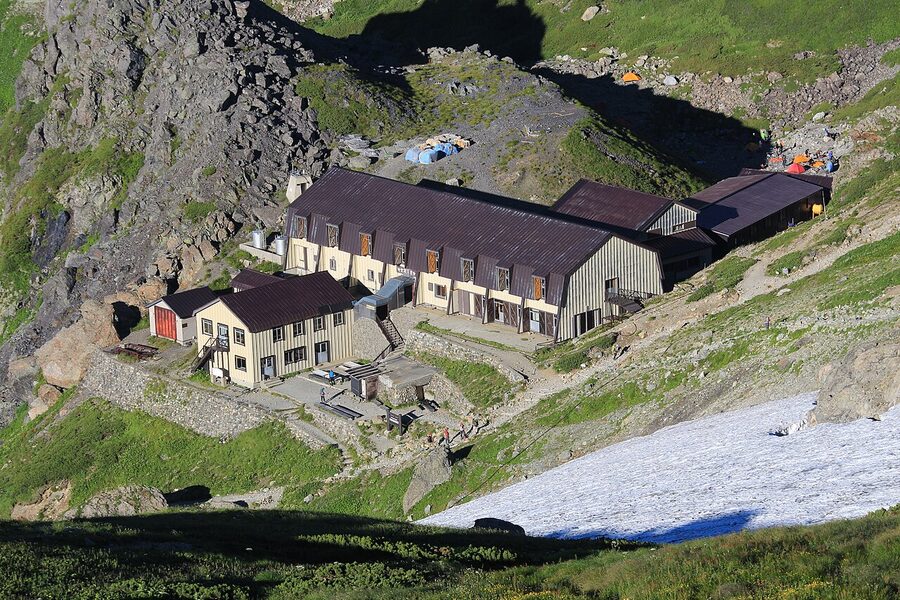
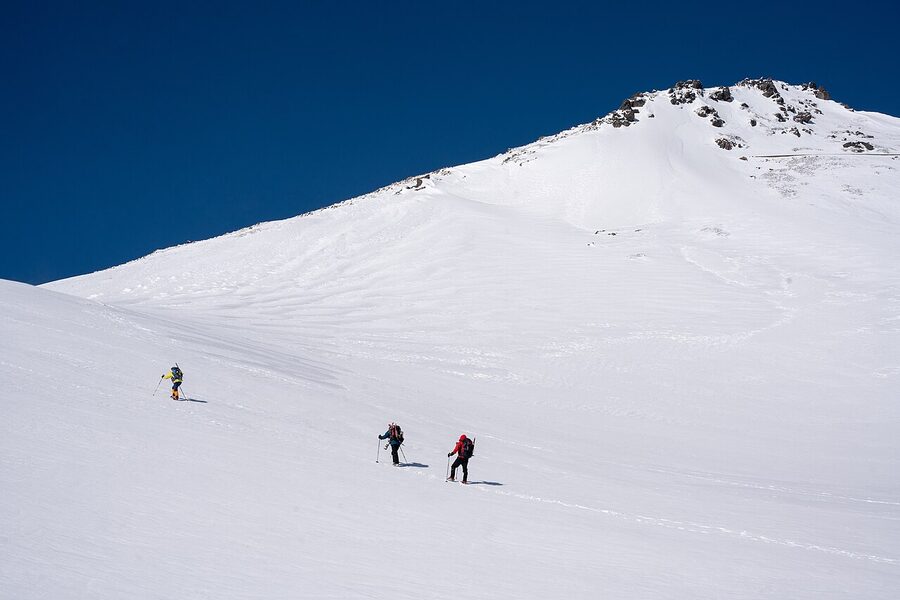
If snow patches in early summer matter to you, the Hakuba ridge from Sarukura up the Daisekkei snow gully to Hakuba Sanso, across to Karamatsu Sanso, and out via Hakuba-yari-onsen is the route. Easier reservations than Yari (Yamatan covers the whole ridge), shorter days, and an actual onsen at Hakuba Yari. Trailhead access from Hakuba village or via Otari for the northern approach to Asahi-dake. The Daisekkei needs an ice axe and crampons until late July most years.
Weather and the cancellation question
Weather in the Japan Alps in summer is unstable. Mornings clear, afternoons thunderstorm, evenings clear again, repeat. The hut owners read the forecast obsessively, JMA, Yamatenki, Mountain-Forecast, and they’ll happily tell you whether to keep walking or hold a day. A typhoon north of Honshu is the standard cancellation trigger; locally heavy rain rarely is, because the trail to the hut is usually still passable.
If you’re at a hut and the next day’s forecast looks bad, the decision tree is:
- Stay another night at the same hut if it has space, most huts will let you, with the second night charged at the regular rate. Phone the hut at the next stop to extend by a day.
- Reverse direction and walk back the way you came if the original route is exposed.
- Go down. There are emergency drop-out points along most ridges; the hut staff will draw them on a map for you.
The single rule: don’t push on through bad weather above the treeline because you’ve got a non-refundable booking the next night. Nobody at the hut will respect you for it. They’ll respect you for cancelling, paying the fee and going down.
Tent sites at huts (テント場)
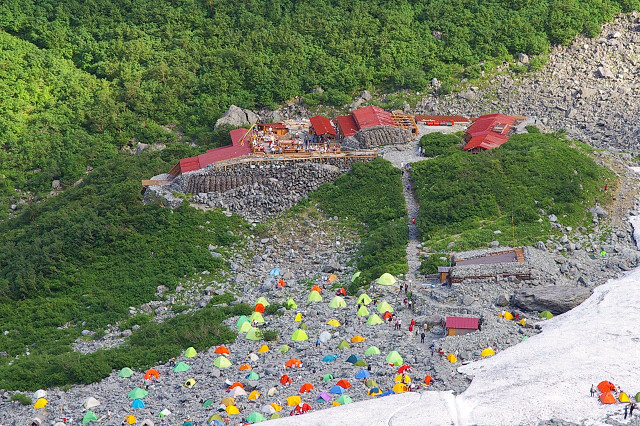
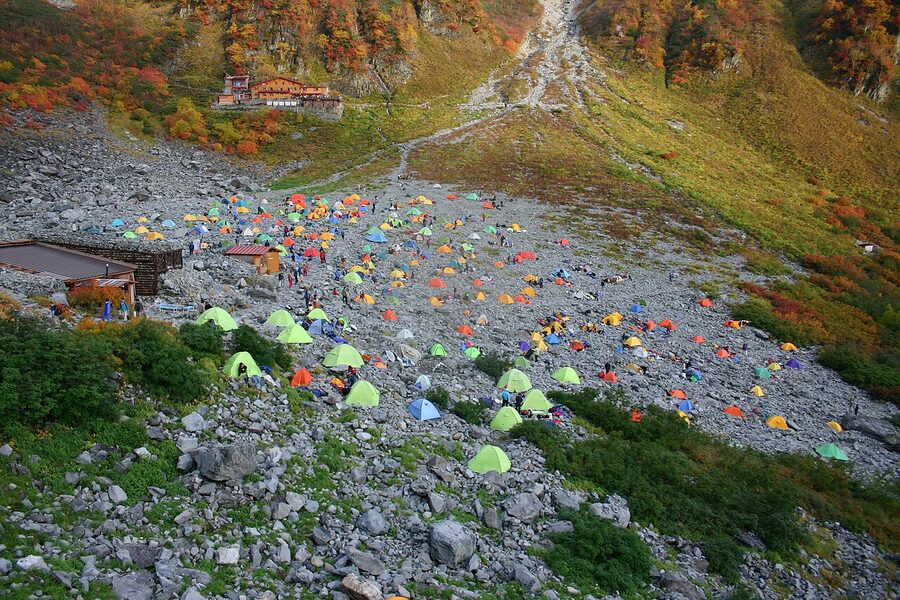
Most Northern Alps huts have a tent site (テント場) within a few minutes’ walk. Camping there is around ¥1,000-2,000 per person per night, usually paid at the hut reception. Since 2020 most tent sites also require a reservation in advance, it’s not just walk-up anymore. The federation page lists which huts run reserved sites; Karasawa, Yarigatake, Sugoroku, Murodo and the big Hakuba sites all do.
Tent campers can usually buy lunch at the hut (ramen, curry, ¥1,200-1,500), use the toilets for ¥100-200, and refill water for a fee. Dinner inside the hut is sometimes restricted to staying guests at busy huts, sometimes not. Ask at check-in.
The huts with onsen (the rare ones)
Most Japan Alps huts don’t have showers, and they don’t have baths either. The exceptions, all worth detouring for:
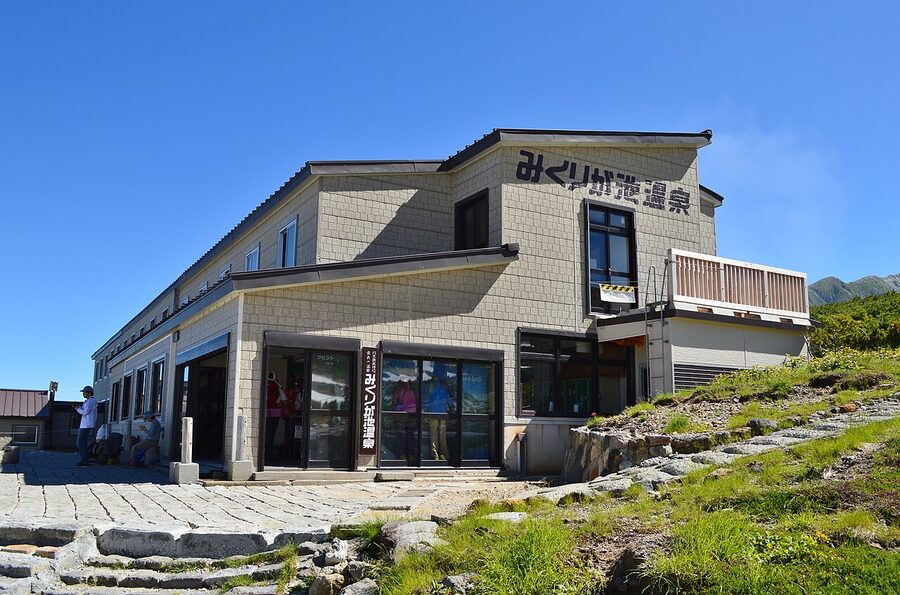
- Mikurigaike Onsen: at Murodo, 2,410m. Sulphur water from Jigokudani, indoor and outdoor baths. Highest natural hot spring in Japan. Web booking opens 6 January.
- Raichozawa Hyutte: 2,260m, 40 minutes’ walk from Murodo bus terminal. Big indoor and outdoor baths, milky onsen water, panoramic views over the cirque. ¥1,000 for non-staying day-bathers.
- Yokoo Sanso: Kamikochi, on the way to Karasawa. Lower altitude (1,615m) but a proper hot bath in the basement. Cash only, dorm-style.
- Hakuba Yari Onsen: 2,100m on the Hakuba traverse. Outdoor onsen with a view. Open July to early October only.
- Honzawa Onsen: Yatsugatake range, not Northern Alps, but worth knowing about: highest open-pool onsen in Japan, 2,150m, runs all year.
Cell signal, water, charging
Docomo (and the Ahamo subsidiary) has the best coverage in the Northern Alps, usable signal at most ridge huts, patchy in deep valleys. Au is second. Softbank and Rakuten are unreliable above 2,500m. If you’re on a foreign SIM, check your carrier’s roaming partner before relying on signal.
Wi-Fi at huts is spotty. A few of the Yarigatake group huts have paid Wi-Fi (¥500-1,000 for a session). Most don’t. Don’t plan on uploading photos until you’re back in Matsumoto.
Drinking water is a budget item. At huts on a spring (Karasawa-goya, Sugoroku-goya, Yarisawa Lodge) refills are free or cheap. At ridge huts that pump from a tank or melt snow, expect ¥200-500 per litre. Carry a 2-litre reservoir filled at the start of the day; treat anything from a stream with iodine or a Steripen if you absolutely must.
Charging is patchy. Most huts have a few outlets in the dining hall after dinner; some charge a coin, some are free. Solar farms on hut roofs power the lights but rarely cover guest devices. Bring a 10,000mAh power bank and you’ll never have to ask.
What goes wrong (and how to fix it)
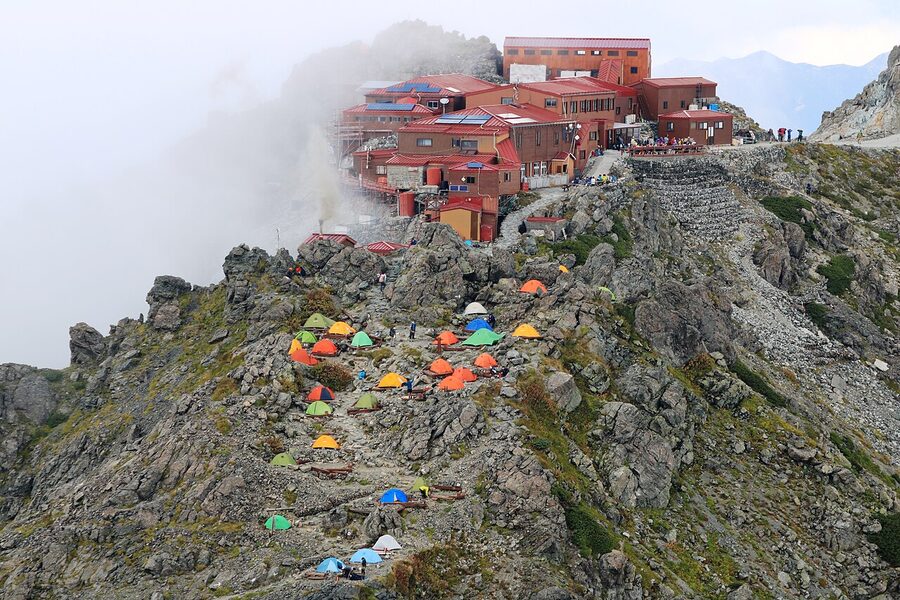
The five mistakes that keep recurring in hut owners’ end-of-season write-ups:
1. Showing up later than 5pm. If you’re going to be late, ring. Phones at most huts pick up between 8am and 7pm. The hut reception number is on every hut’s website; the federation page also lists them. Owners would much rather hear “I’m running 90 minutes behind” at 4pm than dispatch a search team at 8pm.
2. No-shows without cancelling. Same problem from the other end. Not arriving and not phoning gets you flagged as missing. Search and rescue costs the hut money and trouble. If your plan changes, ring or email the hut, even if it costs you the deposit.
3. Walking on without a reservation. Most huts now refuse walk-ups in peak season. A few huts allow walk-ups at a 30% premium and only if there’s space. If you’re caught between two huts at 5pm without a reservation at either, knock on the closer one, you’ll usually get a slot in the dining-hall corner with a futon out at midnight, but it’s their decision, not your right.
4. Booking dinner then deciding to skip it. The hut prepares your portion at 4pm, hours before service. Decide at booking time, stick to it. If you genuinely need to skip, tell the hut at check-in not at 5pm.
5. Treating the hut like a hotel. Speaking at normal volume in the dorm after lights-out. Charging six devices on the one shared outlet. Spreading wet gear over the dining-hall benches. The huts are run by families on tiny margins; the rules are there because everything is harder above 2,500m.
Getting to and from the trailheads
Three main approach networks for the Northern Alps:
- Kamikochi side: Matsumoto Bus Terminal to Kamikochi by Alpico bus, ¥2,710 one-way, around 100 minutes. Last bus out at 17:30 in summer; book the morning service the day before in peak weeks. From Kamikochi, walk in to Yokoo (3 hours), Yarisawa Lodge (5 hours), or Karasawa (6-7 hours).
- Shin-Hotaka side: bus from Takayama or Hirayu Onsen to Shin-Hotaka Ropeway. Cable up to 2,156m, then walk in to Sugoroku-goya (6 hours), Wasabi-daira (4 hours), or down to Kasagatake.
- Tateyama side: Tateyama-Kurobe Alpine Route from Toyama (cable, bus, trolleybus) to Murodo. Last service down at 17:00. Murodo to Raichozawa is a 40-minute walk; further huts add hours.
Train + bus combinations are explained in the Japan Alps access guide. For ski-season hut openings (a handful of huts run a winter shoulder season around New Year for the Tsurugi area and the Norikura ski tour) see the skiing guide.
If you only do one hut night, do this one
Book Enzanso for a Tuesday-Wednesday in mid-July. The Tsubakuro ridge is one of the gentlest entries to a 2,700m Northern Alps experience. The hut wins reader polls every year for a reason: the food is genuinely good, the view of Yari from the dining hall is the best in the range, the staff are patient with English. The line opens 18 March at 10am for the June and July dates; you can usually get a midweek room a few weeks later. Walk in from Nakabusa Onsen (4 hours up the Kassen-one trail), spend an afternoon on the ridge, climb Tsubakuro at sunrise, walk down. Your pack is light. Your sleep is reasonable. The Northern Alps come into focus.
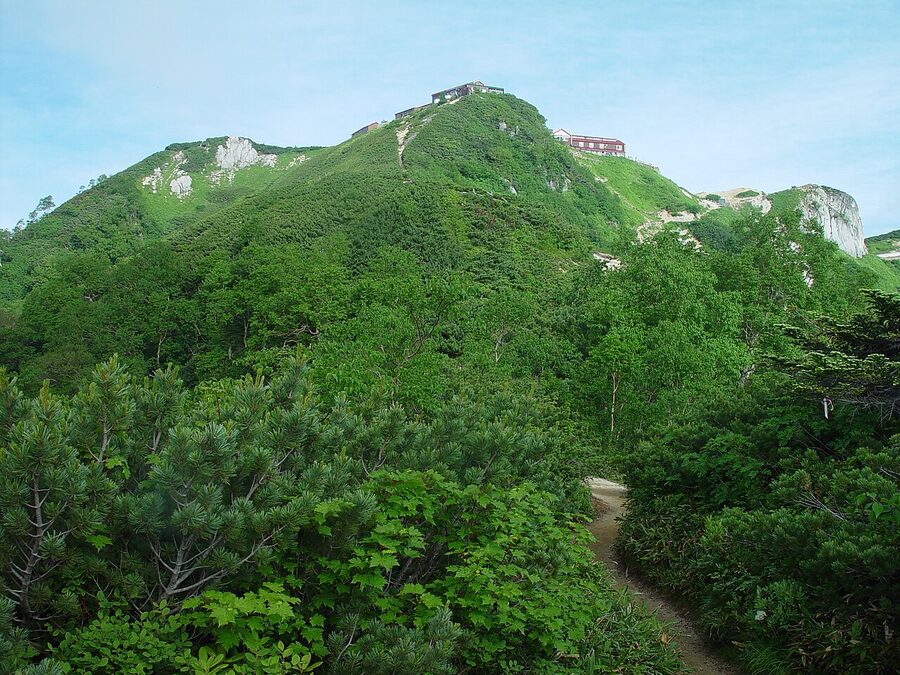
One small thing nobody mentions: the morning view from Enzanso’s deck at 5am, with Yari catching the first sun and the cloud-sea filling the valleys below, is the postcard image of the Northern Alps. The hut’s own staff sit on that deck with their coffee. So should you.