Five villages, five different waters, one valley road. So which of the Okuhida Onsen-go villages do you actually book? It depends on what you want from the trip: a 30-minute soak between buses, a quiet wood-built minshuku where dinner is the main event, a big modern bath complex with separate cottages, or a riverside ryokan where the bath looks straight up at Yarigatake. They are all in the same 15-kilometre stretch of the Takahara River valley, but the answer changes the trip.

Okuhida Onsen-go (奥飛騨温泉郷) is the formal name for a cluster of five small hot-spring villages tucked into the western flank of the Northern Japan Alps, in the old Hida country of northern Gifu prefecture. The five are Hirayu, Fukuji, Shin-Hirayu, Tochio, and Shin-Hotaka, listed in the order you reach them as you drive north up the Takahara River from Route 158. Together they put out more than 44,000 litres of hot water every minute, which makes the cluster the third-most productive onsen system in Japan after Beppu and Yufuin. You feel that abundance everywhere: most baths run 100 percent natural source water with no recirculation, and several of the village rotenburo are free to use, with a small donation box and nothing else.
In This Article
- What is Okuhida Onsen-go, exactly?
- Which village suits which kind of trip?
- Hirayu Onsen: the gateway and the busy one
- Hirayu no Mori, the modern bath
- Hirayu Minzokukan, the museum-bath
- Where to actually stay in Hirayu
- Fukuji Onsen: the small wood-built one
- Day-bath options in Fukuji
- Where to stay in Fukuji
- Shin-Hirayu Onsen: the modern hotel one
- Garden Hotel Yakedake day-bath
- Shin-Hirayu day-trip extras
- Tochio Onsen: the working village
- Kojin no Yu, the donation rotenburo
- Taruma Falls and the icicle forest
- Shin-Hotaka Onsen: the wild end of the road
- Shin-Hotaka no Yu, the riverside free bath
- Yarimikan, the river-view ryokan bath
- Where to stay in Shin-Hotaka
- The Shin-Hotaka Ropeway
- Tickets and timing
- Walking from the upper station
- Going up in winter
- The day-bath circuit if you only have one afternoon
- Etiquette quick-reference
- Where to eat
- Getting there and getting around
- Around the cluster itself
- Kamitakara, the roadside station, and the auto-camping village
- Auto-camping in Okuhida
- Mountains: where Okuhida sits in the Northern Alps
- Mt Hotaka via the Shin-Hotaka short route
- Mt Yarigatake from Shin-Hotaka
- Kamikochi via Hirayu
- Tateyama-Kurobe alternative
- Norikura side trip
- When to come
- What to bring
- The 6.26 free-bath day
- Picking the right base, one more time
What is Okuhida Onsen-go, exactly?
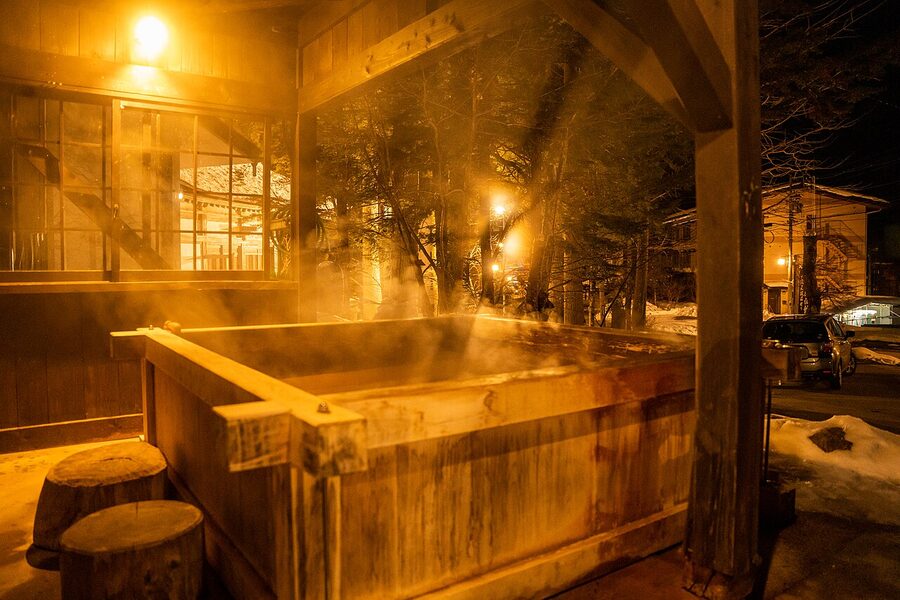
Two facts to anchor the geography. First: this is a ribbon, not a town. Hirayu sits at the southern end at the junction of routes 158 and 471, the bus terminal is here, and almost every visitor passes through this point at least once. Drive 5 km north and you are in Fukuji, a tiny 13-ryokan minshuku village. Another 4 km gets you to Shin-Hirayu and Tochio, paired across the river. The road carries on along the Gamada-gawa for another 6 km and dead-ends at Shin-Hotaka, with the Shin-Hotaka Ropeway a short walk further on. Total drive top to bottom is about 25 minutes if nobody is in the way.
Second: each village has its own water source, not just its own name. Hirayu is sulphur-heavy and slightly green; Fukuji runs clear and gentle; Shin-Hirayu has water tinted yellow with sulphur; Tochio is calm and old-style; Shin-Hotaka is mineral-strong and the most varied of the five, with several baths sitting right on the riverbank. The Northern Japan Alps drop almost straight off the eastern wall of the valley, so the rotenburo views are the real thing, not staged.
The whole cluster has been a designated National Health Resort (国民保養温泉地) since 1968, which means a few practical things. There is a real attempt to keep over-development out, the village ryokan associations co-ordinate things like joint-bath passes and the autumn 6.26 free-bath day, and the public infrastructure (toilets, footbaths, signage) is better than it looks for somewhere this remote.
Which village suits which kind of trip?
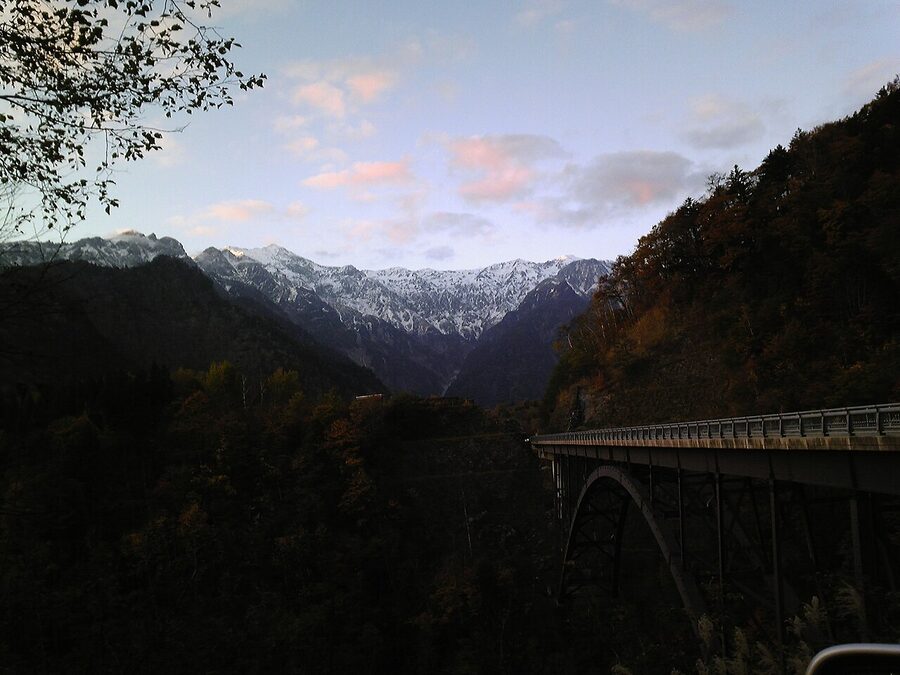
Before the village-by-village walkthrough, a fast decision tree based on what travellers actually optimise for:
- You are passing through and want one good day-bath. Hirayu, almost always. The bus terminal is here, there are at least four day-baths within five minutes’ walk, and you don’t have to commit to a night.
- You want a small, atmospheric ryokan with kaiseki dinner. Fukuji. Thirteen ryokan, all wood-built, food is the point, you eat in your room.
- You want a modern hot-spring hotel with separated bathing complexes and views. Shin-Hirayu. The big sulphur baths at Garden Hotel Yakedake are the cluster’s most photographed.
- You want a quiet, working-village minshuku for less than ¥14,000 a night with two meals. Tochio. This is where the budget actually sits, and the riverside donation-box rotenburo (Kojin no Yu) is free.
- You want the wildest baths and the closest ropeway access. Shin-Hotaka. The Yarimikan and Suimeikan-Karukaya rotenburo are the ones people fly across the country for.
- You are using the trip as a Kamikochi base. Hirayu, every time. The Kamikochi shuttle bus leaves from here in season; nowhere else in Okuhida has direct access.
The villages are 5-15 minutes apart by car, and the Nohi Bus runs between most of them, so you don’t have to be religious about the choice. But you do have to pick somewhere to put your bag.
Hirayu Onsen: the gateway and the busy one
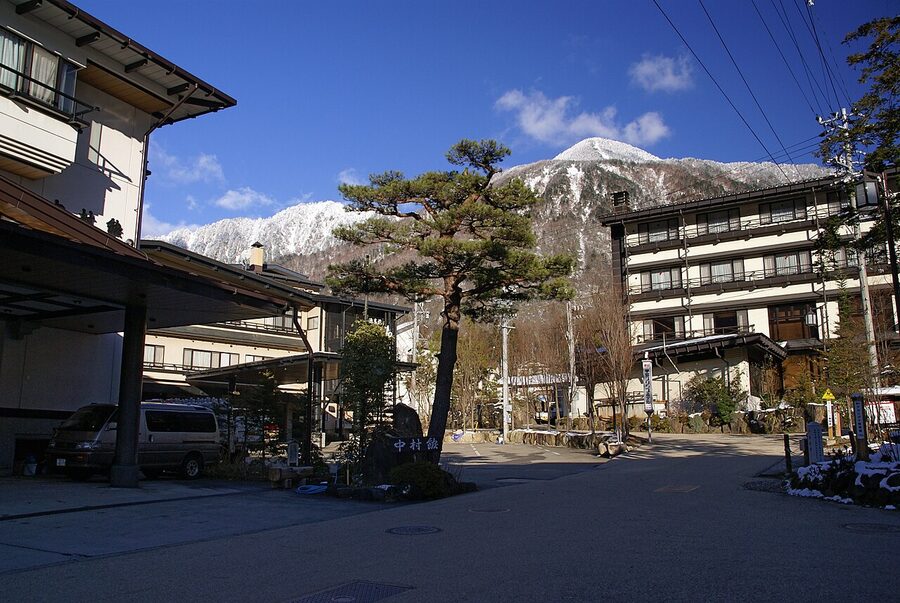
If you only have time for one Okuhida village, this is the one. Hirayu sits at 1,250m at the junction of two national highways and is the regional bus hub: Takayama buses, Matsumoto buses, Kamikochi shuttles, and onward services to the other Okuhida villages all leave from the same terminal. There are around 30 ryokan, four large public-bath complexes, free footbaths in town, and a quiet nature trail that climbs to the 64-metre Hirayu Grand Waterfall (Hirayu O-taki) in about 30 minutes.
Hirayu no Mori, the modern bath
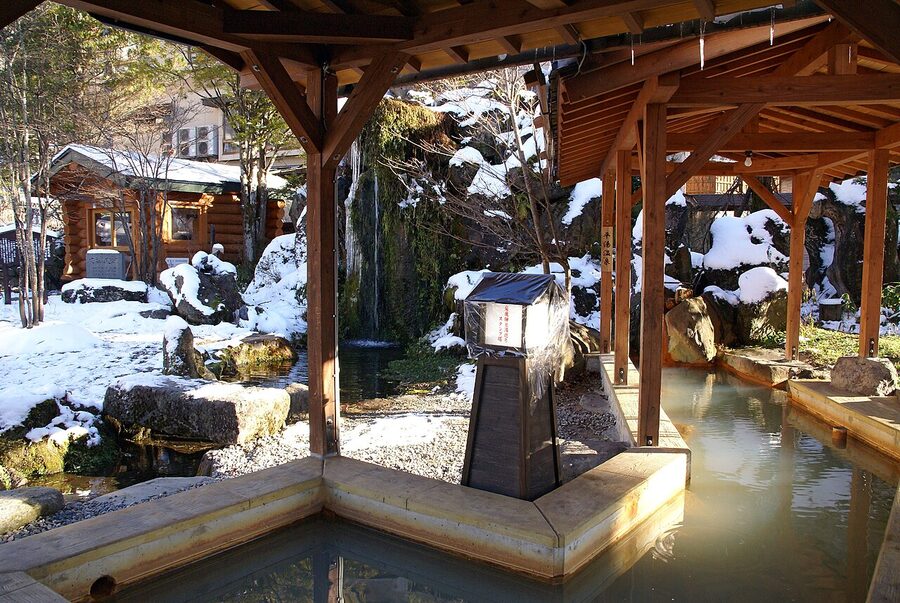
Hirayu no Mori (ひらゆの森) is the obvious choice if your bus connection gives you 90 minutes in town. It opened in the 2000s but was built deliberately in old farmhouse style, so the entrance hall has a thatched gassho-zukuri roof, and the bath complex is set in a small forest. Sixteen separate outdoor baths, gender-segregated, plus indoor baths and private (kashikiri) baths bookable for 45 minutes at ¥3,000. The water is sulphur-rich and the colour shifts from clear to milky-green depending on temperature and the day.
Pay at the front desk on the way in, leave shoes in the locker, towels are sold or rented if you don’t have one. The rest area at the back has a small restaurant doing soba and Hida-beef bowls, which is genuinely good after a soak. If you are arriving by car you can park in the gassho-house lot and use the toilets without paying for the bath, which is useful on a Kamikochi day.
Hirayu Minzokukan, the museum-bath
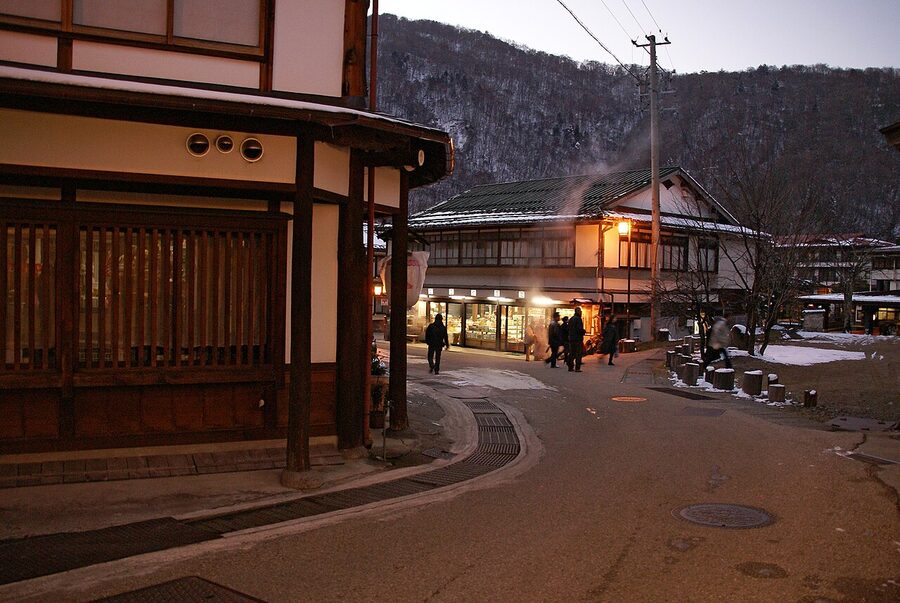
This one is for people who already understand onsen etiquette. There is no attendant, the ¥300 donation goes in a wooden box, and the bath itself is an open rotenburo behind a few traditional thatched farmhouses that display old farming tools. It is not for first-timers (no shower, no shampoo, gender-separated but very basic facilities), but if you have done a few onsen and want the simplest possible Okuhida experience, this is closer to the original idea than anything else in the cluster.
Where to actually stay in Hirayu
Hirayu has the broadest range. At the upper end, Mozumo (もずも) is the famous one, a small ryokan with seven rooms each with its own private rotenburo, dinner is full kaiseki, and rooms run ¥40,000 to ¥65,000 per person with two meals. Check availability on Booking.com. Mid-range, Okada Ryokan / Warakutei sits central with two rotenburo and dinner served in the room. Budget, Hirayu no Mori also rents cottages and dorm-style rooms from around ¥9,000 per person.
Fukuji Onsen: the small wood-built one
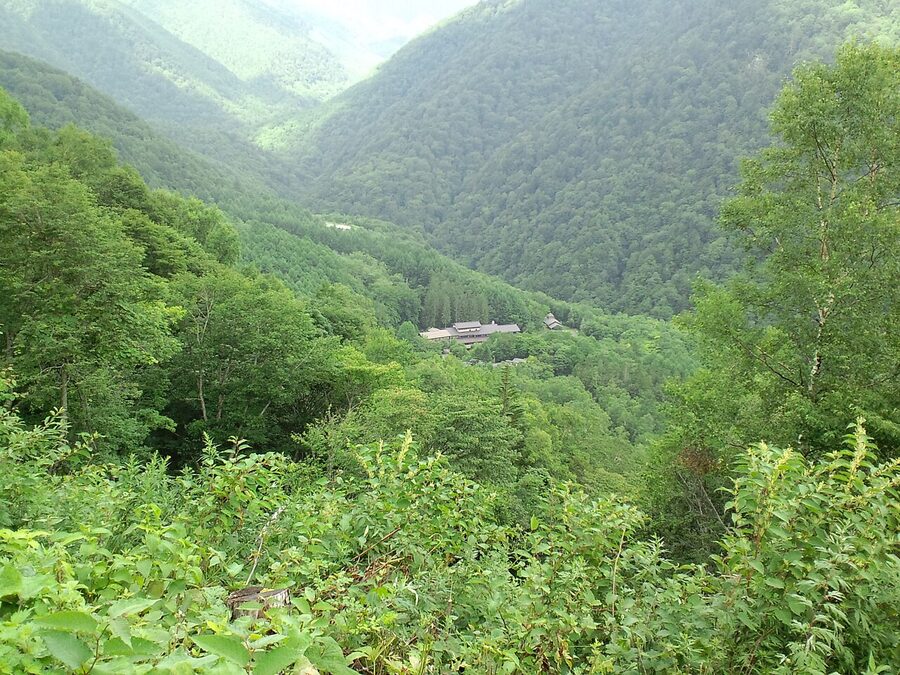
Fukuji is the connoisseur’s choice. The village is barely 40 years old in its current form, but the ryokan were built using reclaimed timber from old Hida farmhouses, so the buildings look much older than they are. There are no day-trippers in the centre of the village (no terminus, no bus pick-up), and almost every booking is hanshokutsuki, meaning overnight with two meals included.
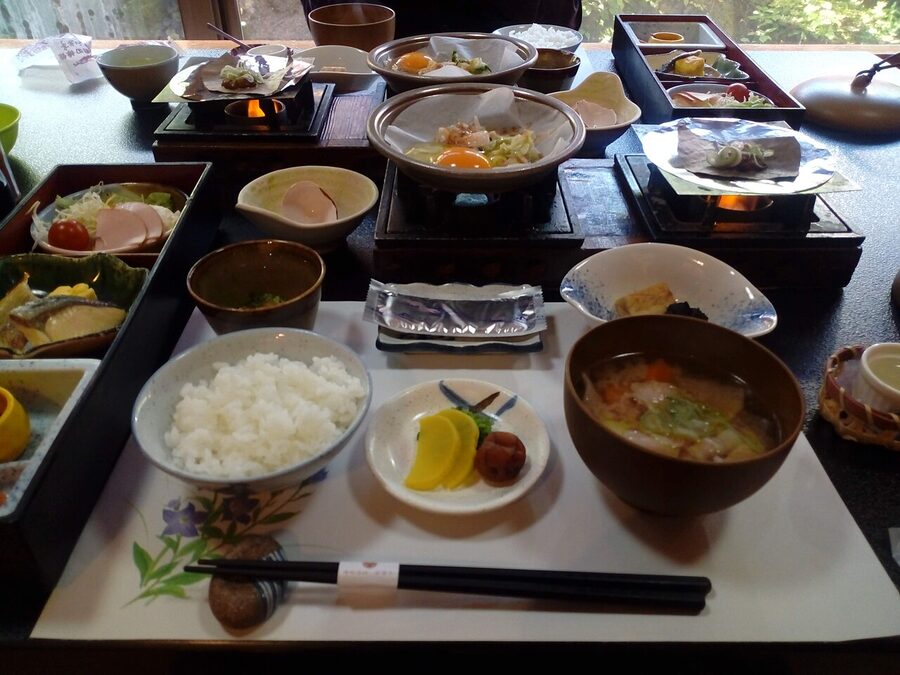
The standard Fukuji evening is a sequence: arrive late afternoon, change into the yukata in your room, soak for an hour before dinner, eat a 10-course Hida-beef-and-river-fish kaiseki at a low table either in your room or in a private dining nook, return to the bath, sleep. Breakfast is the standard regional spread of grilled fish, hoba-miso, and rice. There is also a small morning market (asaichi) by the riverside, open 8:30 to 11:00 between April and November, where local farmers sell pickles, dried mushrooms, and sansai mountain vegetables.
Day-bath options in Fukuji
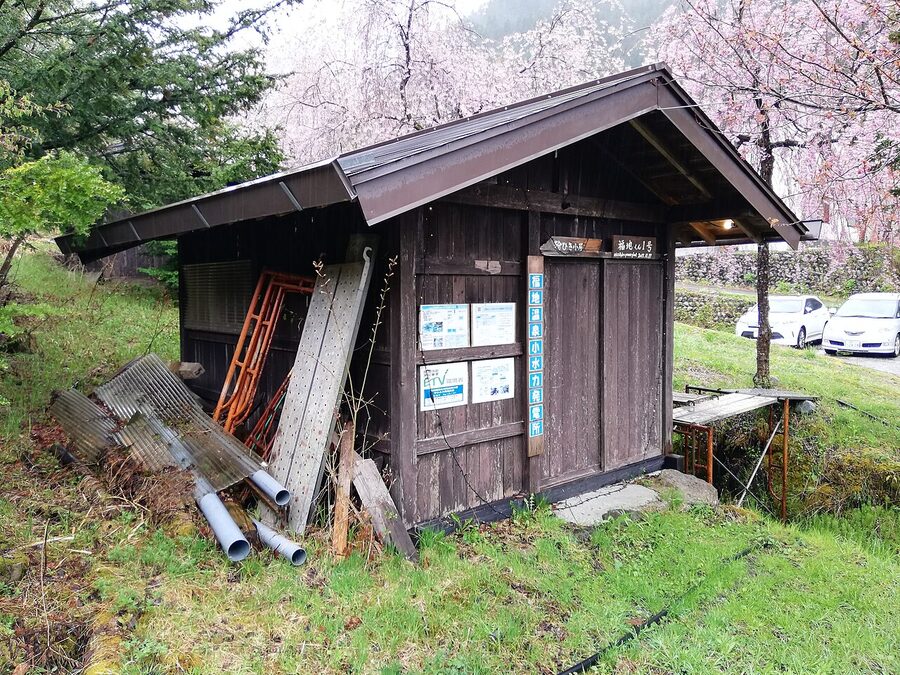
If you are staying elsewhere and want to come in for a soak, Isuruginoyu (石動の湯) is the public day-bath, open 12:00 to 16:00, ¥500 entry, outdoor wooden bath surrounded by trees. It’s a 5-minute walk from the morning-market site. Most of the ryokan also open their baths to non-staying guests during the early afternoon for around ¥800 to ¥1,200. Yumotokan and Yumoto Choza are the two that travellers most commonly use, but check times by phone since hours change with the season.
Where to stay in Fukuji
Yumoto Choza (湯元長座) is the village benchmark: old-farmhouse architecture, riverside outdoor bath, full kaiseki, around ¥30,000 per person with two meals. Check rates on Booking.com. Tochinoki (栃の木) and Kakurean Hidatei are the two other commonly-recommended ryokan in the ¥25,000-35,000 range. There are no real budget options in Fukuji; if your number is below ¥15,000, look at Tochio.
Shin-Hirayu Onsen: the modern hotel one
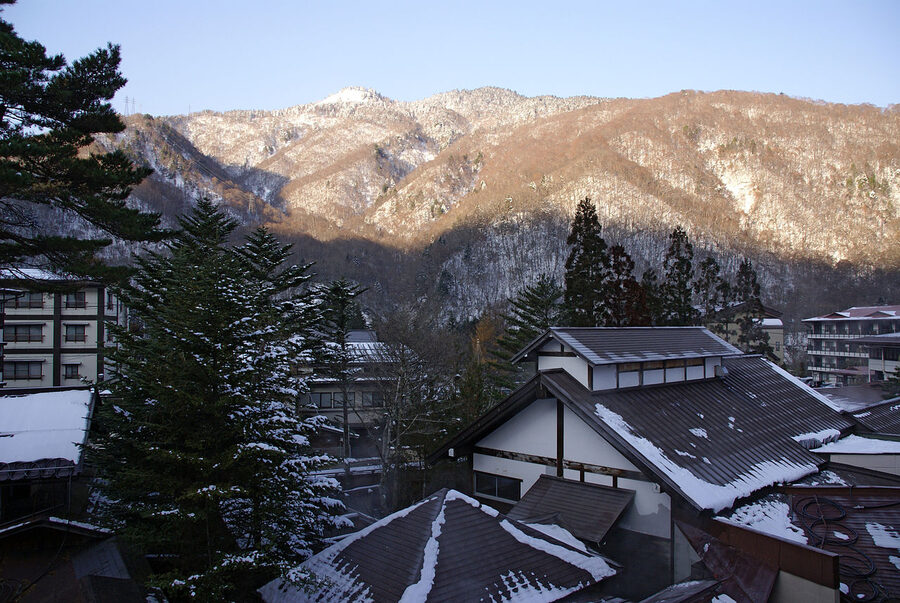
Shin-Hirayu is what people who don’t quite want a ryokan often book. It is built around a few large hot-spring hotels rather than dozens of small ryokan, the rooms are western-bed Japanese-style hybrids, and the baths run to scale. Okuhida Garden Hotel Yakedake is the headline property: a sulphur-yellow open-air bath measured in tens of metres, with cave baths and waterfall sections, plus a separate gender-segregated indoor zone.
Garden Hotel Yakedake day-bath
The Yakedake day-bath is open 12:00 to 22:00 (last entry 21:00), ¥900 entry, no closing days. The water has visible yellow tint from a high sulphur content, the mixed-gender outdoor section uses provided towel-wraps (yugi), and the cave bath is genuinely a tunnel cut into the hillside. It is the most spectacular day-bath in the cluster if you don’t mind sharing space with hotel guests.
Shin-Hirayu day-trip extras
From Shin-Hirayu the Mt Fukuji ridge walk and the Hirayu Grand Waterfall are both 20 minutes away by car. There is also a small ryokan-museum village called Banshokan a few minutes north, which displays old hand-built scrolls and folk art from the Hida region. None of these is a destination on its own, but they fill a wet morning.
Tochio Onsen: the working village
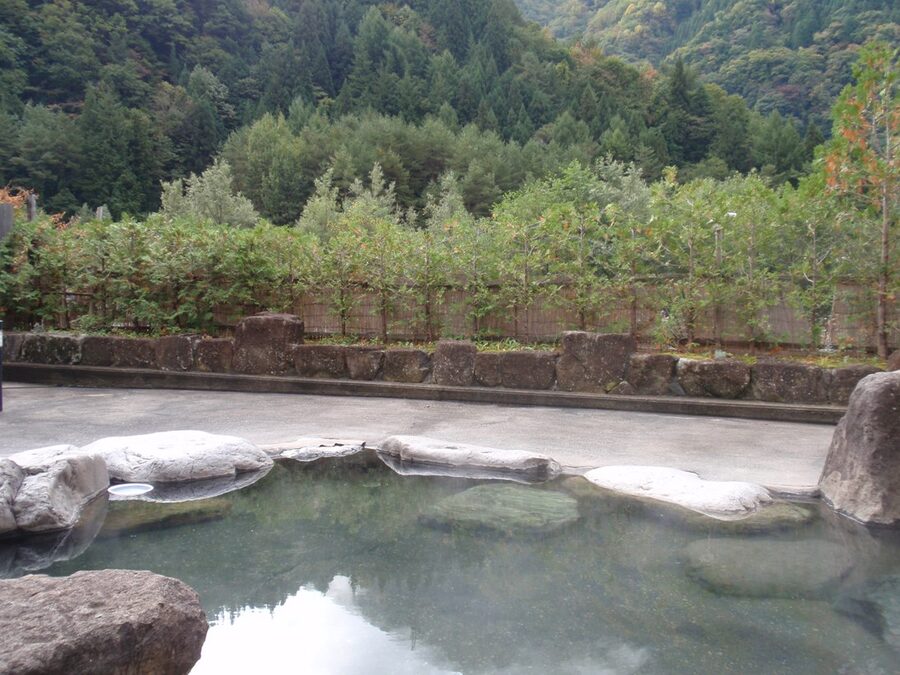
Tochio is the workaday village of the cluster. Most accommodation is minshuku: small family-run inns where you eat with the family, in the ¥9,000 to ¥14,000 per person range with two meals. Day-trippers don’t really stop here; the shops and restaurants face the road but most of the action is along the riverbank where the public rotenburo and the Taruma-no-taki (Taruma Falls) park are.
Kojin no Yu, the donation rotenburo
The Kojin no Yu (荒神の湯) is the village’s free-and-honest bath. Mixed-gender (swimsuits ok if you bring one), open from morning until late evening, gender-separated changing tents, no shampoo or rinse, and the donation box at the entrance asks for around ¥200 in coins. It sits right by the river with the mountain wall behind. The water is hot enough that you cannot stay in for long; there is a small wooden bench area where people cool down between dips.
Taruma Falls and the icicle forest
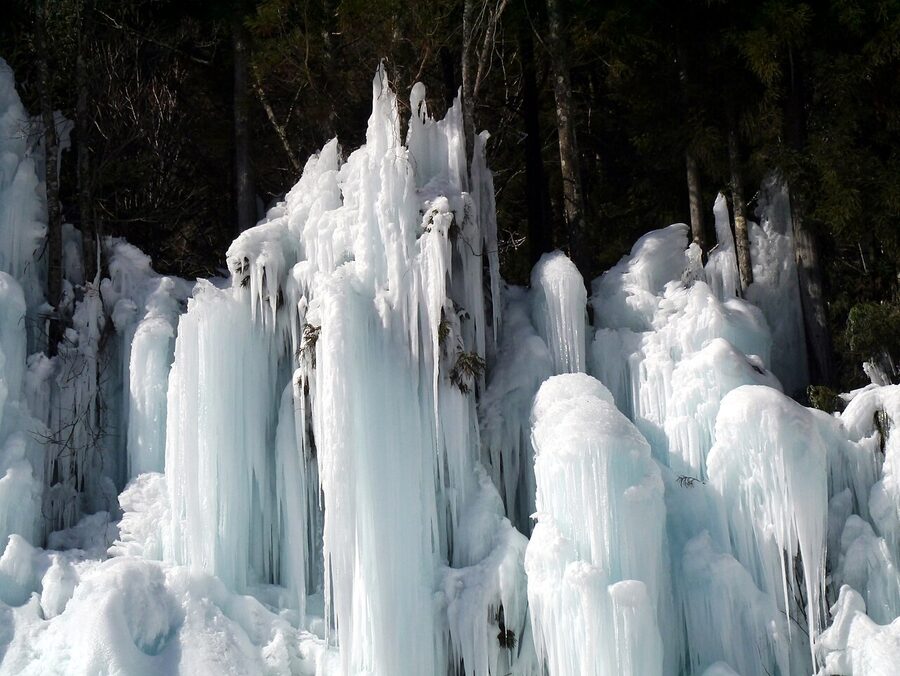
The Taruma-no-taki park is a 5-minute walk upstream from the centre. In summer it is a small, easy waterfall walk with a hanging bridge. In late January through February the falls and the surrounding trees freeze into a column of ice, and the village runs a “Tarumae Hyobaku Forest” event with evening illumination and a small entry fee. It is one of the better non-bath things to do in Okuhida in deep winter.
Shin-Hotaka Onsen: the wild end of the road
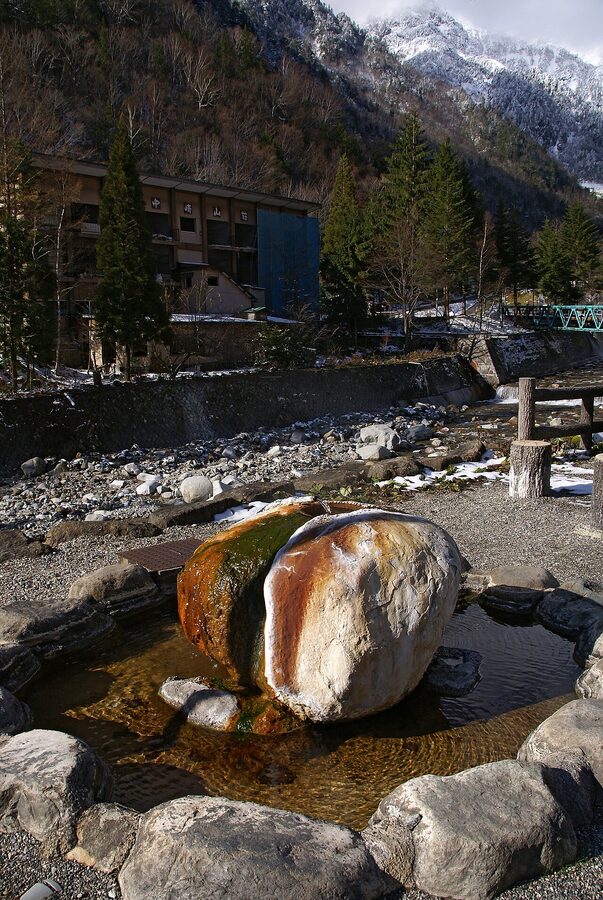
Shin-Hotaka is the one a lot of regulars secretly think is the best. It sits 10 km up the Gamada-gawa from Tochio at the absolute end of the road, the Shin-Hotaka Ropeway base station is here, and the baths run on a different scale: bigger, wilder, often river-edge, and several of them mixed-gender by Okuhida tradition rather than by accident. You also feel the altitude change: the village sits around 1,100m, and in early winter the road sometimes closes for a day after fresh snow.
Shin-Hotaka no Yu, the riverside free bath
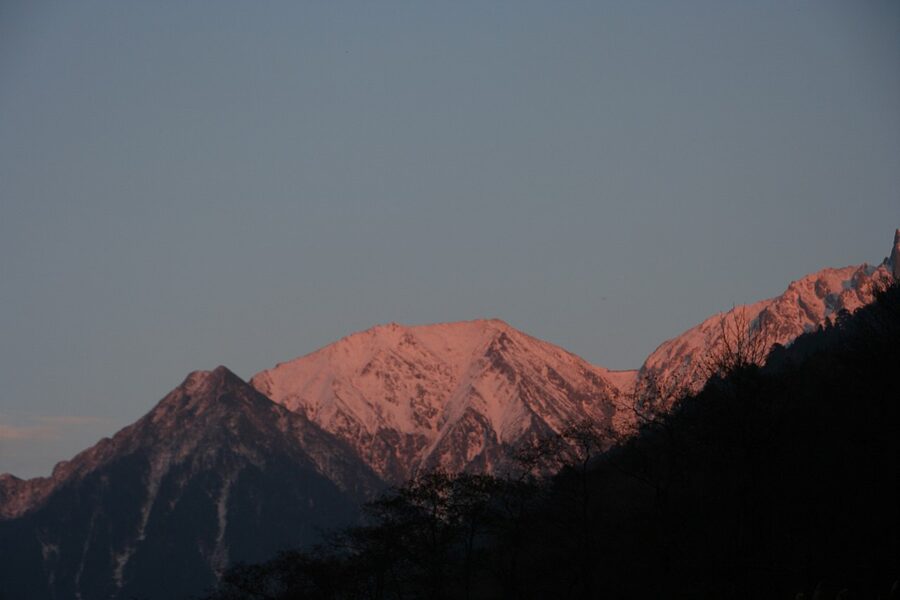
The Shin-Hotaka no Yu (新穂高の湯) is a wide stone-lined rotenburo built into the riverbank itself. It opens for the season in mid-April and closes again in late October. Outside that window the snow makes it impractical. Mixed-gender, swimsuits or yugi towel-wrap accepted, donation box at the entrance, no facilities beyond the changing tent. The view is straight upstream toward the Hotaka range. This is the one to do if you only do one Shin-Hotaka bath.
Yarimikan, the river-view ryokan bath
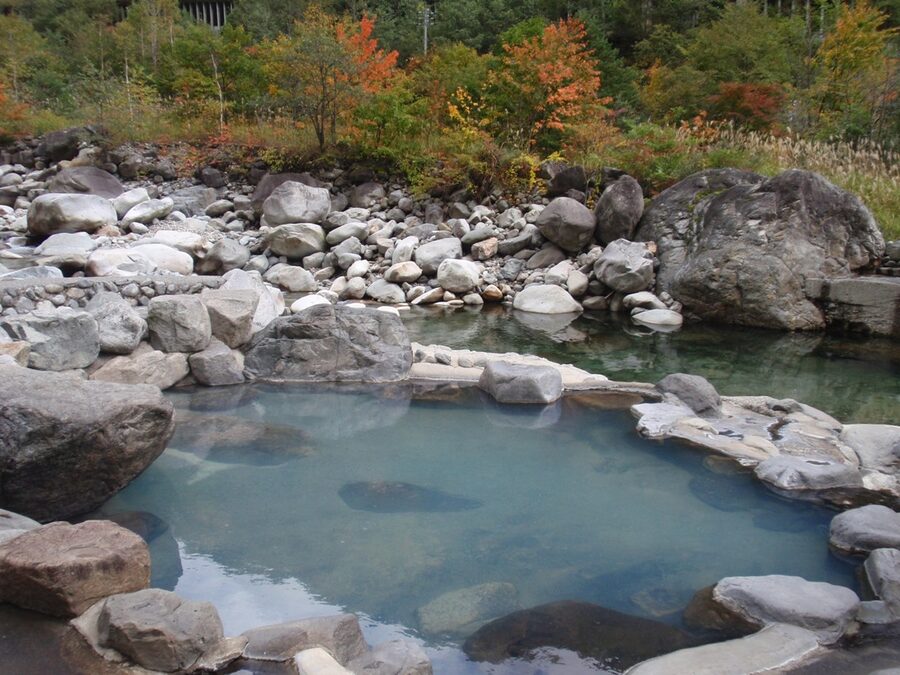
The Yarimikan baths are the photogenic ones. Two large mixed-gender rotenburo carved into the rock beside the river, plus a women-only outdoor and an indoor. Hot water is fed in via a small waterfall along one side of each bath. The day-use indoor and private baths are restricted to overnight guests only. If your trip overlaps with the Suimeikan Karukaya closure (the other famous river-bath ryokan, currently closed indefinitely as of 2026), Yarimikan is the obvious substitute.
Where to stay in Shin-Hotaka
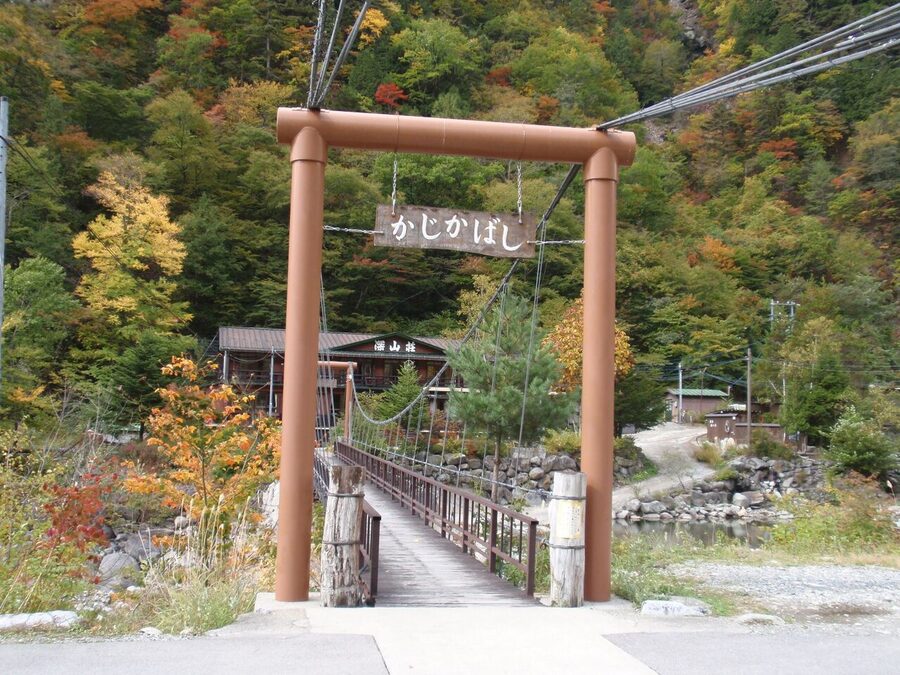
Sui Mei Kan Karukaya (closed indefinitely from 2024, so check before booking), Yarimikan, Hotaka-so Yamanoiori, and the Hotaka Garden Hotel are the names you see most. Hotaka Garden Hotel is the largest and the easiest to book on standard platforms. availability on Booking.com. For the rest, the official Okuhida Onsen-go reservation site (okuhida.or.jp/stay/) handles direct bookings.
The Shin-Hotaka Ropeway
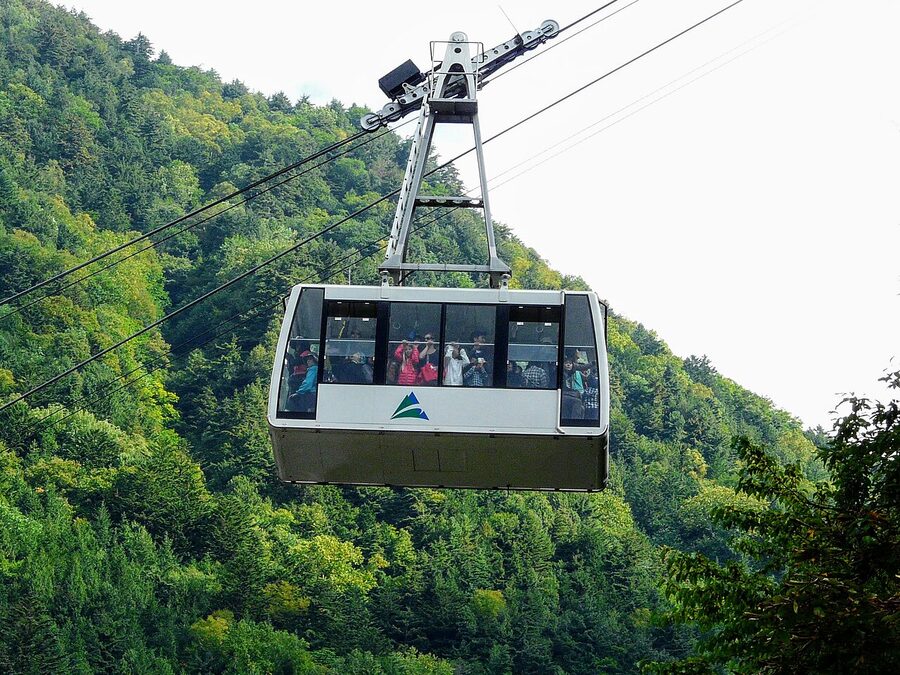
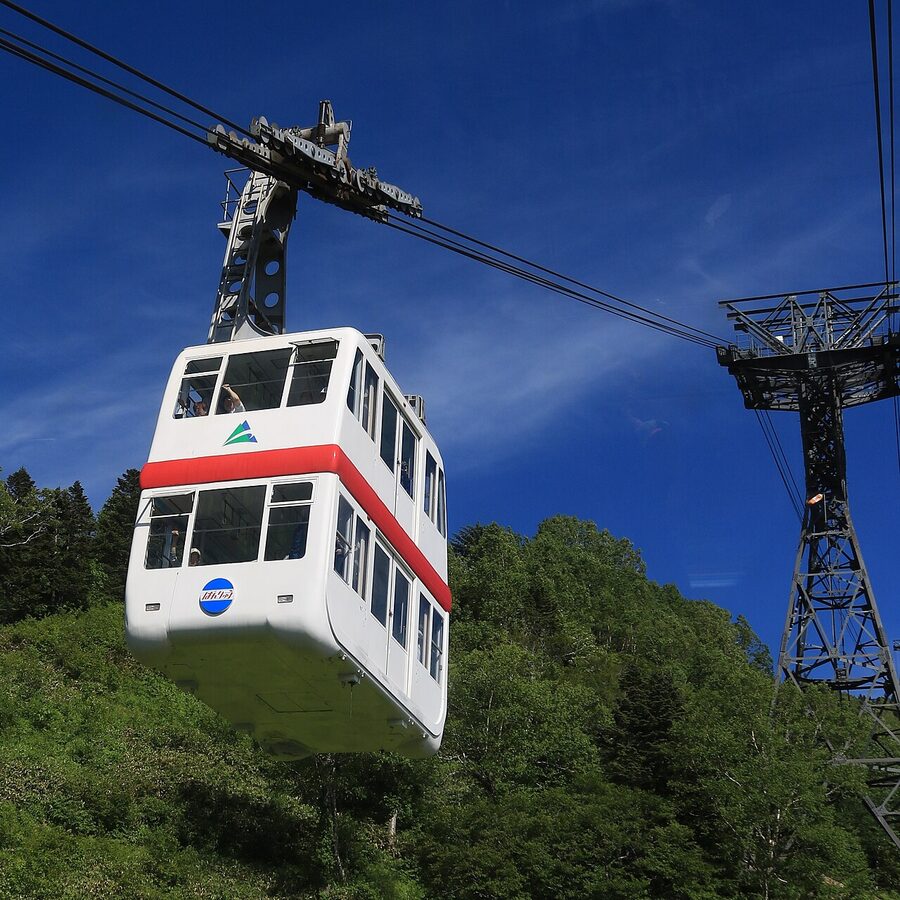
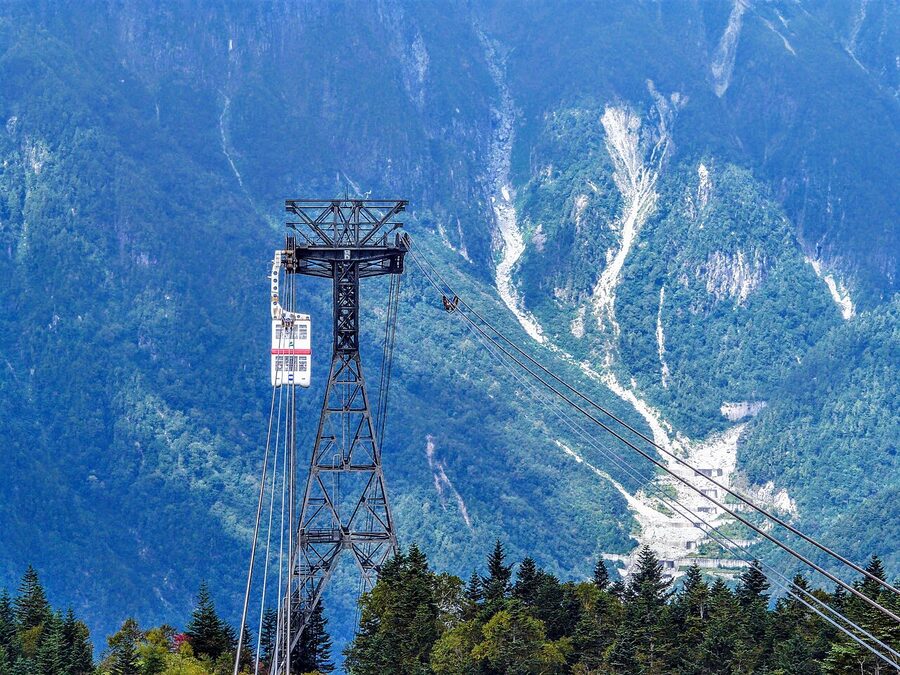
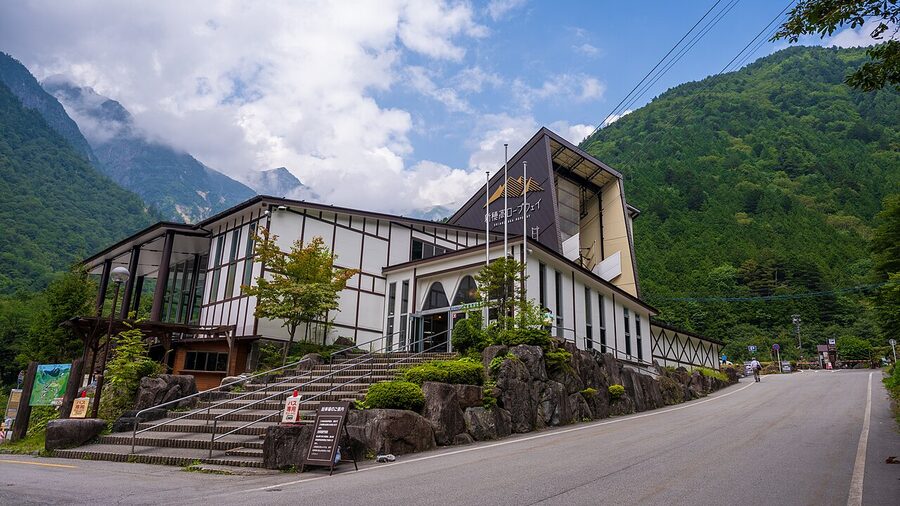
Even people who care nothing about onsen come to Okuhida for this. The Shin-Hotaka Ropeway is a two-stage cable car, the second stage of which is the only double-decker gondola in Japan, and it lifts you from the village floor to the Nishi-Hotakaguchi observation deck at 2,156m in about 11 minutes total ride time. On a clear day the deck looks straight across at Yarigatake (3,180m) and the long ridge toward Oku-Hotaka. It received two stars in the Michelin Green Guide Japan, and it earns them.
Tickets and timing
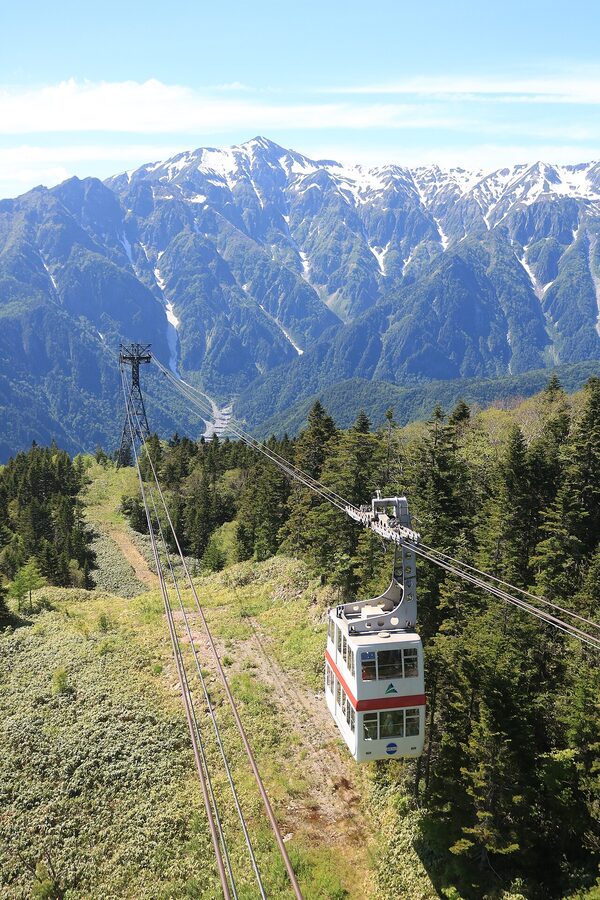
Round-trip tickets are ¥3,000 adult, ¥1,500 child as of the 2026 season; one-way is ¥1,900. Buy at the booth at Shin-Hotaka Onsen station on arrival; reservations are not normally required outside the autumn-colour week. Operating hours run 8:30 to 16:30 in summer, 9:00 to 15:00 in winter, with the last down-cabin 30 minutes after the last up. They also run an evening “Starlit Sky” service in late summer and early autumn weekends, with the upper deck staying open into the night for star-watching at 2,156m.
Two practical points. First, gondola windows had anti-fog film added in 2020 and the ventilation was upgraded, so the photo-from-the-window thing now actually works. Second, the upper deck is genuinely cold even in July; bring a fleece or you will spend ten miserable minutes outside before retreating to the cafe.
Walking from the upper station
If you have time and reasonable shoes, the Nishi-Hotaka Sanso mountain hut is a 60-minute walk from the upper deck and serves coffee and curry rice. Beyond that the trail climbs another 90 minutes to Nishi-Hotaka-dake summit (2,909m). That is a real hike, not a ropeway extension, with chains and rocky scrambling near the top. We’ve covered the full route in our Mt Hotaka hiking guide. If you are even thinking about going further than the deck, read the altitude-sickness guide first; you go from 1,117m to 2,156m in 11 minutes and your body will notice.
Going up in winter
The Shin-Hotaka Ropeway is one of the few alpine ropeways in central Japan that runs through January and February. The upper deck in deep winter is one of the best snow-mountain views in the country: white peaks, cold blue sky, and an almost empty observation platform. The catch is the temperature. Wear what you would wear to ski (insulated shell, gloves, beanie), pack handwarmers, and budget about 30 minutes total at the top before your fingers stop working.
The day-bath circuit if you only have one afternoon
Plenty of people come to Okuhida for a day rather than a night. The day-bath cluster (日帰り入浴, higaeri-nyuyoku) is genuinely well-organised, and almost every village has at least one no-overnight option. The clean six-stop circuit looks like this:
- Hirayu no Mori: ¥700, modern, 16 baths, easiest first stop from the bus.
- Hirayu Minzokukan: ¥300, tiny, basic, atmospheric.
- Isuruginoyu (Fukuji): ¥500, wood-built, the small village option.
- Garden Hotel Yakedake (Shin-Hirayu): ¥900, the spectacular yellow-sulphur cave and waterfall baths.
- Kojin no Yu (Tochio): ¥200 donation, riverside, mixed-gender, swimsuit fine.
- Shin-Hotaka no Yu or Yarimikan: ¥300 or ¥500, the wild river-edge end.
You will not do all six in one afternoon (your skin won’t allow it), but a sensible day picks two from different villages plus the ropeway. A good rhythm: ropeway in the morning while it’s clear, lunch back at Shin-Hotaka, soak at Yarimikan, drive back to Hirayu for a second soak at Hirayu no Mori before catching the last bus to Takayama.
Etiquette quick-reference
Most baths are gender-segregated, fully naked, no swimsuits. The exceptions in Okuhida are most of the river-edge mixed baths (konyoku) at Tochio and Shin-Hotaka, where swimsuits or the provided yugi cotton wrap are accepted. The general onsen rules apply everywhere: shower thoroughly before entering the bath, no towels in the water, no photos in the bathing area. If you have visible tattoos, Hirayu no Mori is the safest bet, since they’re explicitly tattoo-friendly.
Where to eat
The honest answer is most overnight visitors eat at their ryokan, because the food is the reason they paid the ¥25,000 in the first place. The Hida-region kaiseki is genuinely good: Hida-gyu sashimi or grilled, river fish (iwana, ayu) salt-grilled with the head still on, hoba-miso warmed at the table on a magnolia leaf, mountain vegetable tempura, and a hand-cut soba course in summer.
For day-trippers and people on a budget, the short list:
- Hirayu no Mori restaurant: Hida-beef bowls and soba, around ¥1,800-¥2,500 a dish, open through the bathhouse hours.
- Anki (Hirayu): small soba shop near the bus terminal, hand-cut buckwheat, hoba-miso teishoku for around ¥1,400.
- Nakao (Shin-Hotaka): old-style soba and a Hida-gyu rice bowl, useful for the ropeway lunch slot.
If you stay in Tochio or Fukuji, do not plan to eat out. There is essentially nowhere; the ryokan is the dining room.
Getting there and getting around
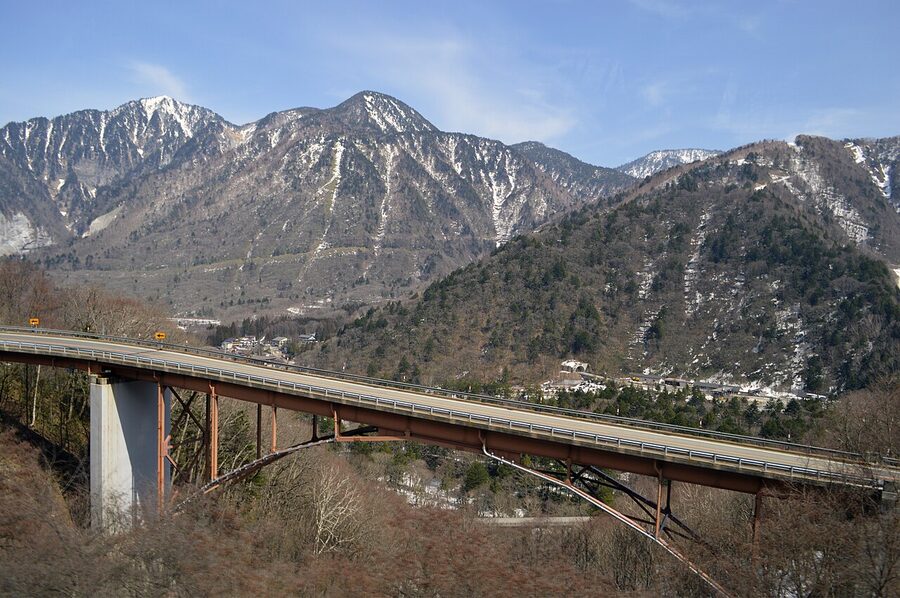
Most travellers arrive by bus from Takayama, which is the regional hub and the nearest place with a JR station. The Nohi Bus Shinhotaka Line runs from Takayama Bus Center direct to Hirayu Onsen (one hour, ¥1,600 one way), then carries on north to Tochio, Shin-Hirayu, and Shin-Hotaka. There are roughly 8 services a day in summer, half that in winter. The reverse direction (from Matsumoto) takes about 90 minutes via the Abo Tunnel and runs roughly 4 times a day.
By car, the drive from Takayama is 50 minutes via Routes 158 and 471. From Tokyo it is around 4.5 hours via the Chuo Expressway and Matsumoto. Snow tyres or chains are required between mid-November and early April; this is non-negotiable, and the police do check at roadside stops in heavy weather.
For the Kamikochi connection, Hirayu is the only village in the cluster with direct shuttle access. The Kamikochi shuttle bus (April to mid-November only) runs roughly every 30 minutes from Hirayu Bus Terminal to Kamikochi-Taisho-ike, taking 25 minutes and costing ¥1,180 one way. Private cars are not allowed beyond Hirayu in the Kamikochi season, which is why everyone parks at Akandana parking lot in Hirayu and takes the shuttle in. See the Kamikochi guide for the full sequence.
Around the cluster itself
The local Nohi Bus runs the full length of the valley, so you can move between villages without a car. But the timetable is sparse outside the morning and afternoon peaks, so if you are doing a multi-bath afternoon, plan around the bus times rather than the other way round. Some ryokan also run free shuttle vans to the bus terminal on request, which is worth asking about when you book.
If you are driving, the local roads are easy and signposted in English. Parking is free at almost every bath and ryokan. The exception is the ropeway base station in peak autumn, when the lot fills by 9am and you may end up parking down the road and walking 10 minutes back.
Kamitakara, the roadside station, and the auto-camping village
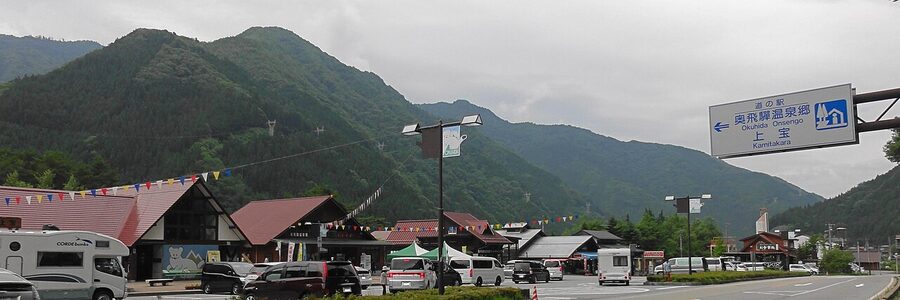
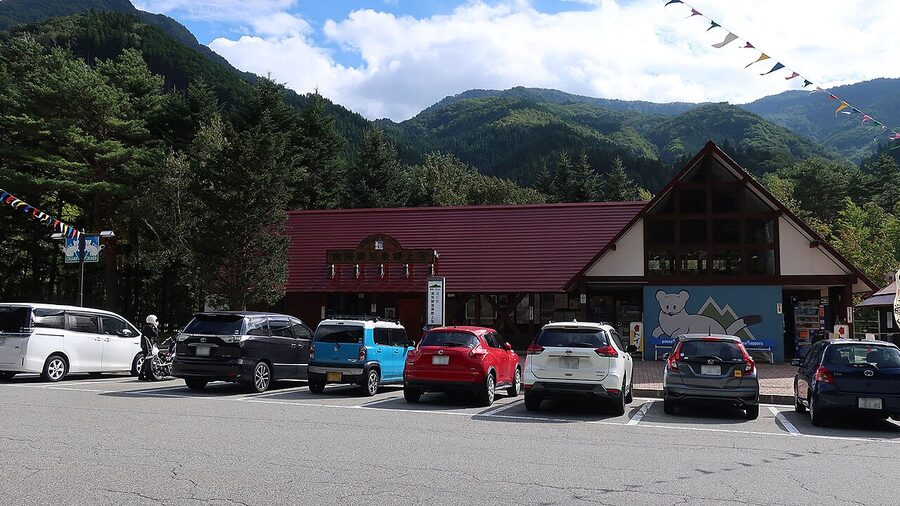
Okuhida is one of the few onsen regions in Japan that genuinely works as a road-trip destination, and the practical waypoint is the Michi-no-Eki Kamitakara (奥飛騨温泉郷上宝). Roadside stations are a well-loved Japanese institution: a small free-parking shop-and-restaurant complex run by the local government, designed to give drivers a clean toilet and a place to buy local food. This one is better than most. Inside there’s a fresh-vegetable counter selling whatever was picked locally that morning (sansai mountain greens in spring, mushrooms in autumn, jersey-cow milk year-round), a restaurant doing Hida-beef rice bowls and the regional kaki-no-ha-zushi, and a free outdoor footbath fed by the onsen system. The shop sells the cluster’s joint-bath pass at a small discount.
Auto-camping in Okuhida
The valley has three or four working auto-camp sites along the river, and they fill up fast in summer. The big one is Okuhida Onsengo Auto-Camp Ground (奥飛騨温泉郷オートキャンプ場), with around 60 powered car-pitches set among the trees beside the Gamada-gawa. Pitch fees run ¥5,000 to ¥7,000 a night depending on season, and the on-site bath uses water from the same source as the village ryokan. There is also a small inn-style cabin option around ¥15,000 a night for groups who don’t want a tent.
If you are arriving in a campervan, this is genuinely one of the better road-trip stops in central Japan: free roadside parking at the michi-no-eki, a working bath complex 50 metres away, and the Hotaka range straight out the front window in the morning. Reservations are necessary in July, August, and the first half of October.
Mountains: where Okuhida sits in the Northern Alps
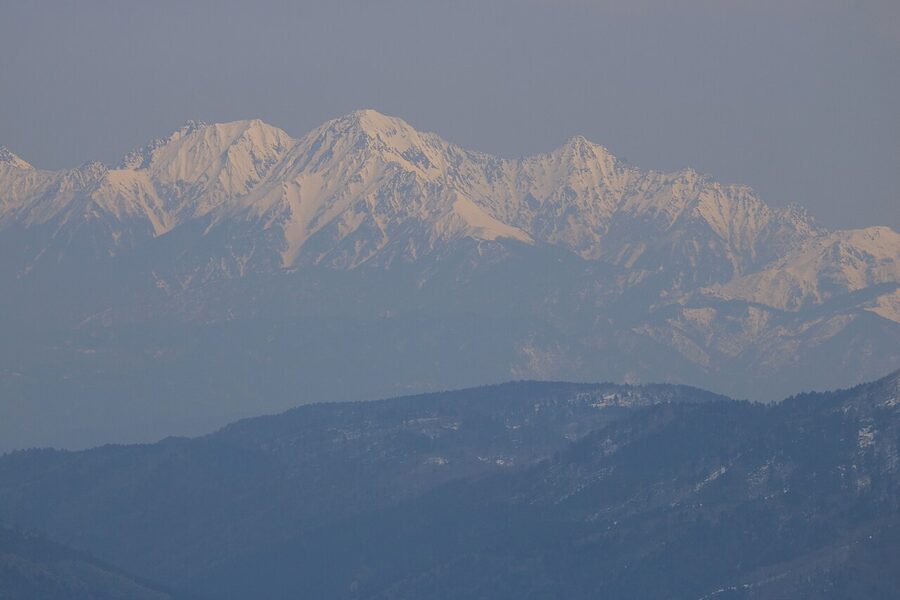
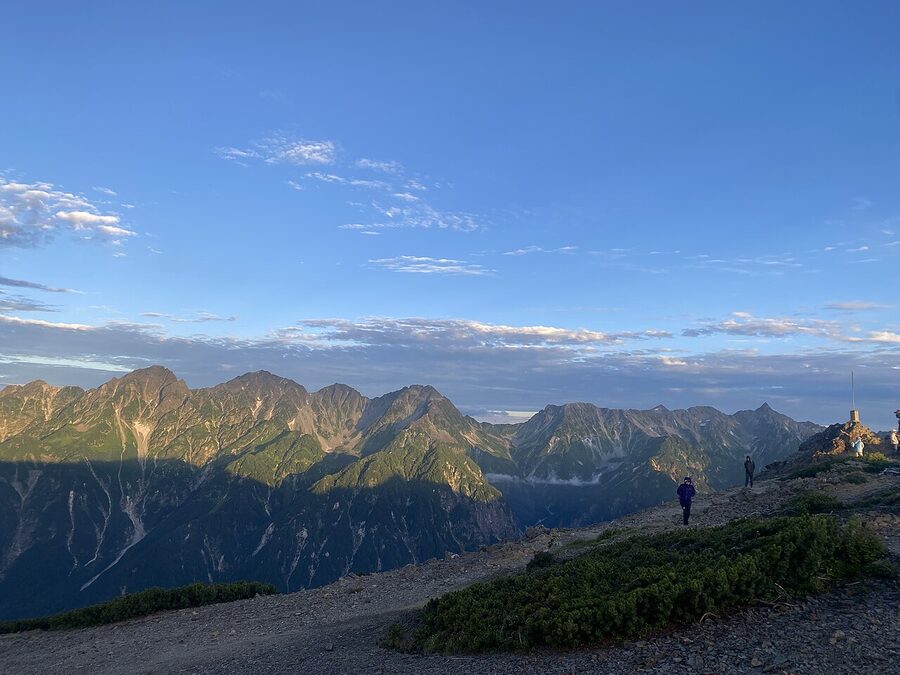
Okuhida is genuinely the best soft entry into the Northern Japan Alps. The Hotaka range rises directly off the eastern wall of the valley, the Yari-Hotaka traverse line is visible from the upper ropeway deck, and several major hike trailheads start within ten minutes of a bus stop. If you have any interest in the alpine side of central Honshu, build at least one full day of mountain time into your Okuhida trip rather than treating it as a bath-only stop.
Mt Hotaka via the Shin-Hotaka short route
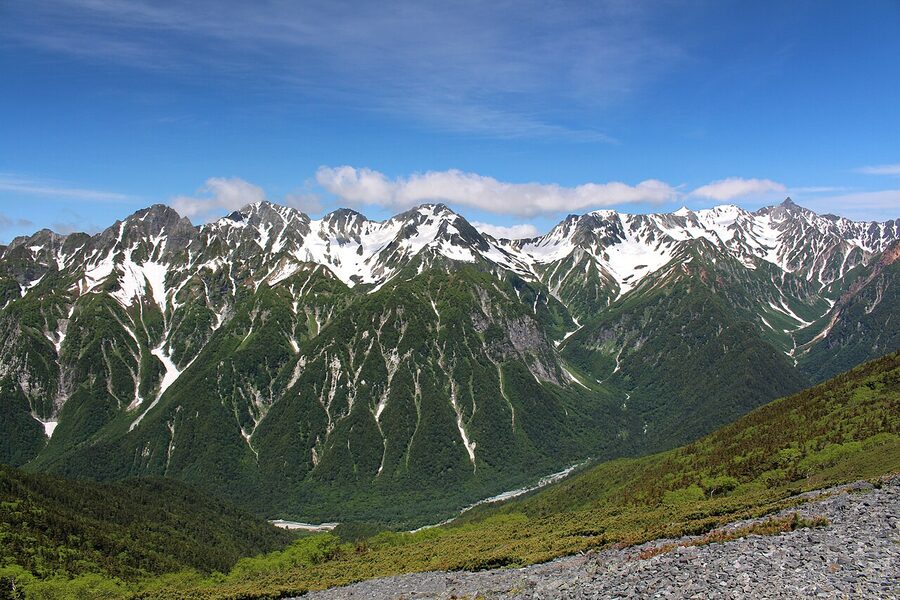
The classic Mt Hotaka ascent runs from Kamikochi up through Karasawa, but the Shin-Hotaka Ropeway gives you a much shorter alternative: ride to 2,156m, walk west and south along the Nishi-Hotaka ridge to Nishi-Hotaka Sanso (1 hour), then climb to Nishi-Hotaka summit (another 90 minutes). It cuts the day’s vertical from 1,500m down to about 750m. Full route detail in our Mt Hotaka hiking guide.
Mt Yarigatake from Shin-Hotaka
Yarigatake (3,180m), the spear of the Northern Alps, has a Shin-Hotaka-side approach that is shorter than the famous Yarisawa route from Kamikochi. From Shin-Hotaka, the Sugorokudake / Sugoroku Hut route delivers you to Yarigatake-Sanso in about two days; it is a real expedition, not a day hike, and you book the Sugoroku and Yarigatake huts months ahead in summer. We’ve covered the booking process and the route alternatives in the Yarigatake hiking guide.
Kamikochi via Hirayu
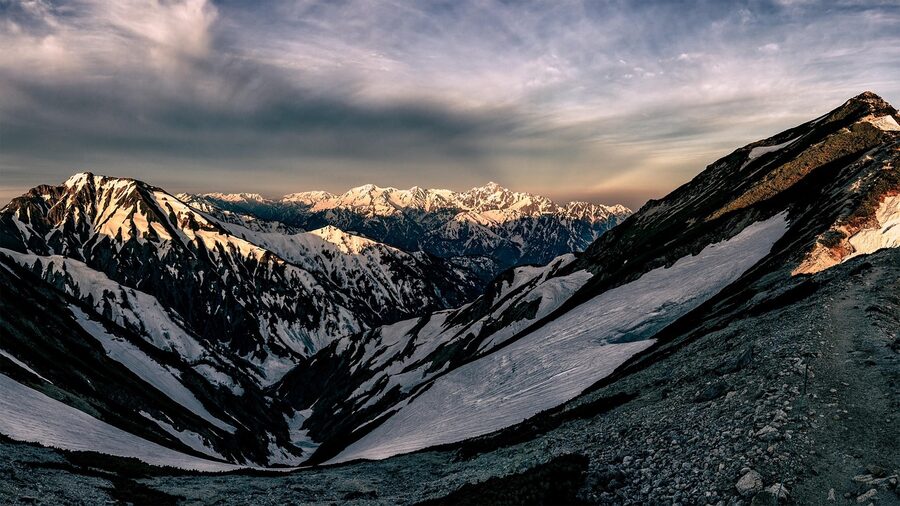
From Hirayu, the Kamikochi shuttle is the easiest way in. Get up early, take the 7am bus, you’re in Kamikochi for 7:30, and you have the entire day in the most photographed alpine valley in Japan before the afternoon return. Pair it with a Shin-Hotaka soak on the way home. We’ve written the access logistics in detail in the Japan Alps access guide.
Tateyama-Kurobe alternative
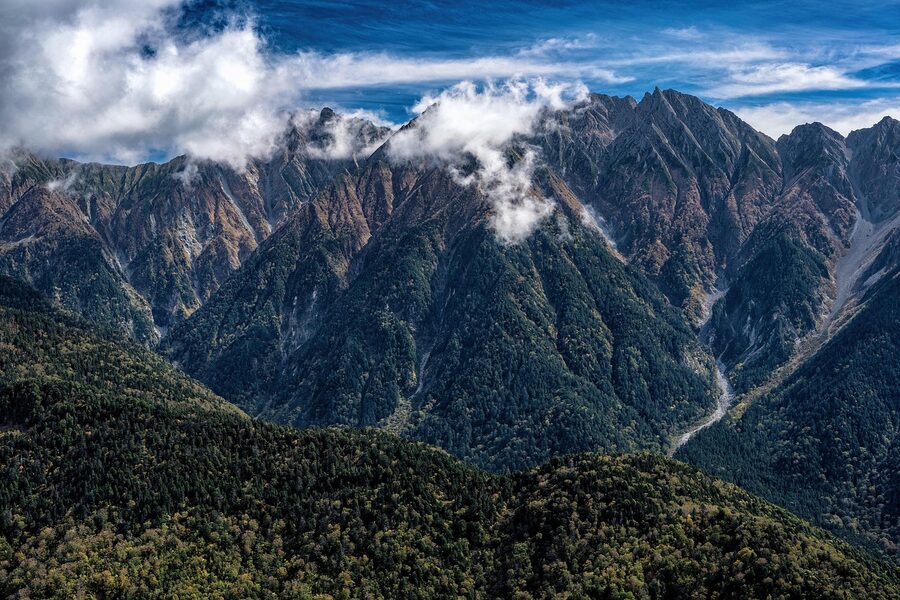
If you have already done Tateyama-Kurobe (or are planning it as a separate trip), Okuhida is the natural southern complement: Tateyama is the great north-Alps alpine traverse, Okuhida is the great onsen base. Many travellers do the Tateyama-Kurobe Alpine Route over two days from Toyama and continue through Matsumoto down to Hirayu for an onsen night to recover. The two trips slot together easily.
Norikura side trip
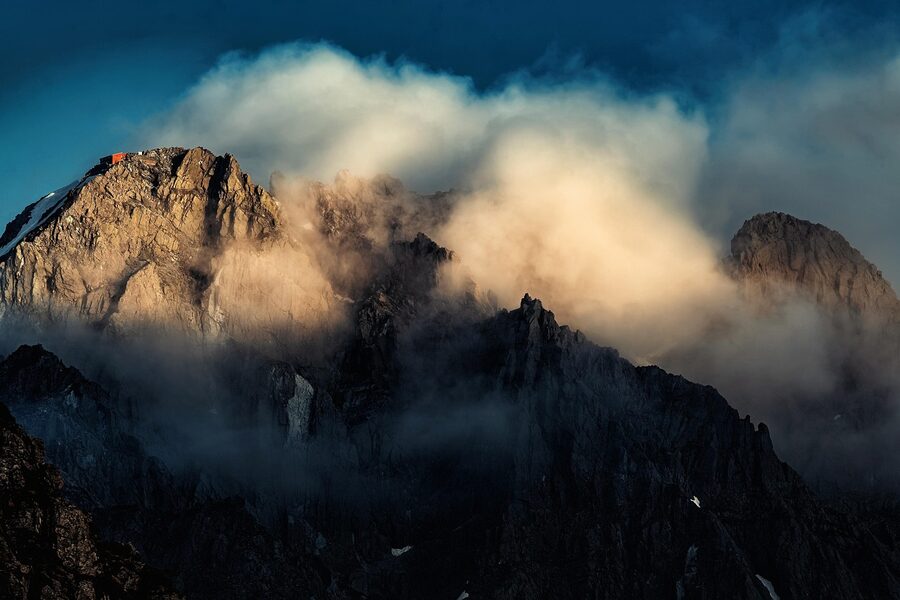
The Norikura plateau (Norikura Kogen) sits 25 km south of Hirayu and is the obvious side trip if you have a car or the half-day to spare. Same valley system, different mountain. The Norikura skyline drive is closed to private cars but the shuttle bus runs from Hirayu in summer, and the alpine ridge walks above 2,700m are some of the best easy-altitude hikes in Japan. If your trip is built around onsen plus mountains, doing both Okuhida and Norikura over four days is a strong itinerary.
When to come
Each season delivers something distinct, and the right answer depends on what you want.
Late April to early June: snow on the high peaks, fresh green in the valley, the Shin-Hotaka rotenburo reopens for the season, and the camp grounds wake up. Cool mornings (5-10C), pleasant afternoons. Crowds are minimal until Golden Week (late April to early May), which is the one fully-booked window of the season.
July and August: the climbing season for Hotaka and Yari. Hot days (25-28C in the valley, much cooler at the ropeway deck), busy ryokan, but never crowded the way Hakone or Kusatsu are. This is the season to do the alpine trips and treat the bath as a recovery.
Mid-September to late October: the best time. Autumn-colour week peaks around 15-25 October at the ropeway top, drops down into the valley over the following two weeks. Cool to cold (5-15C), clear skies, the rotenburo air at ¥700 is the best value in Japan.
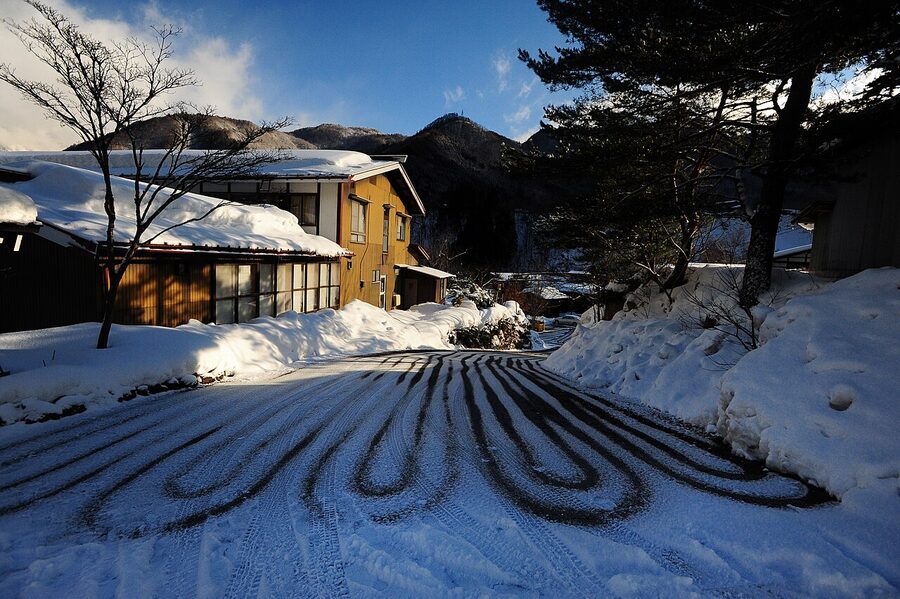
December to early March: deep winter. Snow piles up on the village roofs, the steam from the rotenburo is theatrical, and the Tochio icicle forest event runs in February. Most ryokan stay open year-round but a few of the smaller minshuku close mid-winter, so check before you book. Snow tyres or chains required.
What to bring
The cluster sits around 1,000-1,200m, so it’s always cooler than the lowland city you flew into. A rough packing list: a small towel for the donation-box rotenburo, swimsuit if you want to use the mixed-gender baths, a fleece for the ropeway deck even in summer, comfortable sandals for the village walk between baths, ¥5,000-¥10,000 in cash (the smaller baths and the morning markets do not take cards), and a backpack big enough to hold all of the above plus a wet towel.
The 6.26 free-bath day
Every 26 June, the Okuhida cluster runs an event called Roten-buro no Hi (露天風呂の日), reading the date as Ro-Ten-Bro. About 10 of the cluster’s named outdoor baths open to the public for free that day, including normally guest-only ryokan baths. If you can build the trip around it, do: the queue is short, the atmosphere is local, and you get inside places you would otherwise pay ¥1,000 to visit.
Picking the right base, one more time
If you only stay one night in Okuhida, stay in Hirayu, since the bus access alone justifies it, and the day-bath density means you can soak in three different waters in 24 hours. If you stay two nights, do one in Hirayu and the second in Shin-Hotaka, so you also get the wild-end ryokan experience and the ropeway is right there in the morning. If you stay three nights and want the food-first quiet trip, swap one of those for Fukuji and do not plan to leave the room except for breakfast and the bath. Tochio is the one to book if your budget is tight or you genuinely want to feel like you’re staying in a working village rather than a tourism cluster. Shin-Hirayu is the modern-hotel comfort choice that suits people who don’t quite want the kneel-on-the-tatami experience.
The river runs faster after rain. If you do go in the wet, pause for ten seconds on the bridge between Tochio and Shin-Hirayu and listen to it: that’s the same Takahara that’s been pulling sulphur out of the mountain for a thousand years, and the bath you’re about to get into is essentially the same bath everyone here has been getting into the whole time.