Half the people who hike up to the Jigokudani monkey pool in Yamanouchi go home disappointed, and they all left at the wrong time. Mid-afternoon, late season, no snow on the ground, the macaques wandering up the slope to forage. The pictures they took look nothing like the National Geographic shot they came for. The pictures other people took, two hours earlier on the same morning, look exactly like it. The single biggest factor in whether you love or loathe Jigokudani Yaen-koen is being there in the first hour after the gates open. Everything else is a footnote.
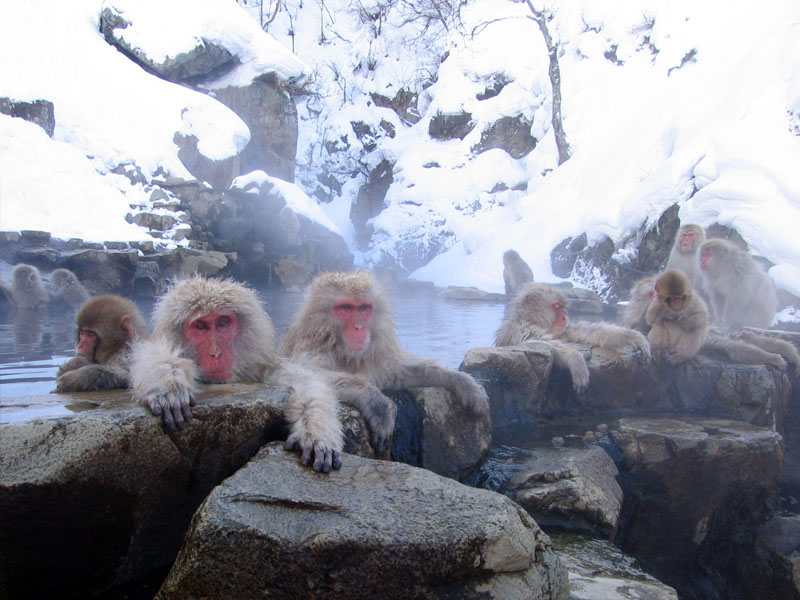
Jigokudani isn’t strictly in the Japan Alps. The monkey park sits in Yamanouchi, on the eastern slope of the Shiga Kogen massif, in the upper Yokoyu valley. That’s outside the Hida–Kiso–Akaishi range that defines the region. But virtually every itinerary I write for the Alps now includes it, because the train infrastructure works. From Nagano City the bus runs in 45 minutes. From Hakuba it’s a 90-minute hop on the same Hokuriku Shinkansen line. The monkeys are the icon. The Yudanaka–Shibu onsen towns at the trail base are the reason to stay overnight. And the Shiga Kogen ski resort 30 minutes higher up is where the winter combo trip earns its keep.
In This Article
- The headline, briefly
- How to get there from Nagano City
- The express bus, all-in-one (winter only, mostly)
- The slow train via Yudanaka
- From Hakuba
- From Tokyo as a day trip
- The walk in
- What to wear in winter
- What you actually see
- Why this troop bathes and others don’t
- The honest part: the food and the timing
- When to go
- December to early March (the iconic version)
- Late March and April (the shoulder)
- May to August (the green season)
- October and November (autumn colour)
- Photographing them
- Yudanaka and Shibu Onsen: the towns at the base
- Shibu Onsen: the nine-bath circuit
- Where to stay in Shibu
- Yudanaka Onsen: the practical alternative
- Combining with Shiga Kogen
- The mating season nobody warns you about
- The geography around the park
- What to combine on a longer Nagano trip
- Practicalities, tightly
- Two things that catch people out
- Should you go
The headline, briefly
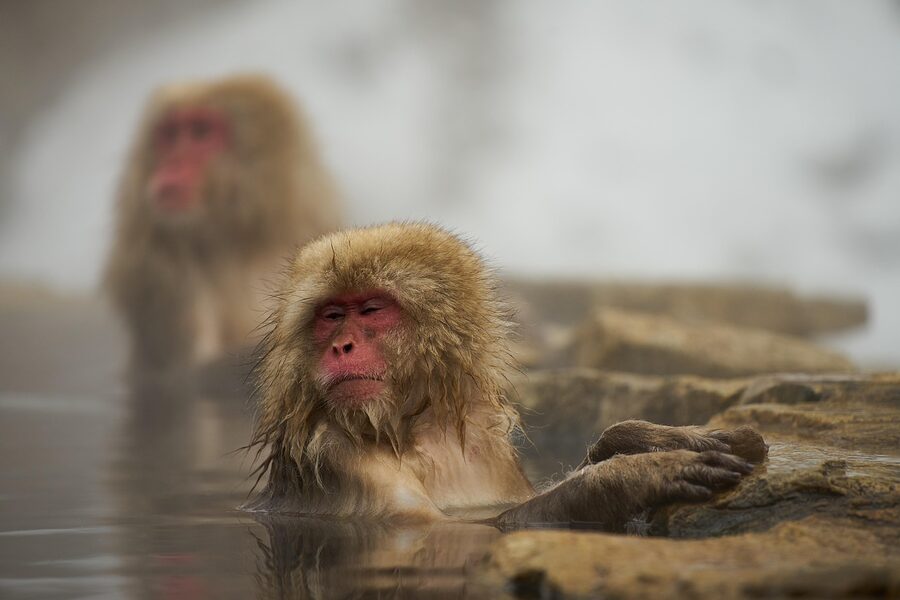
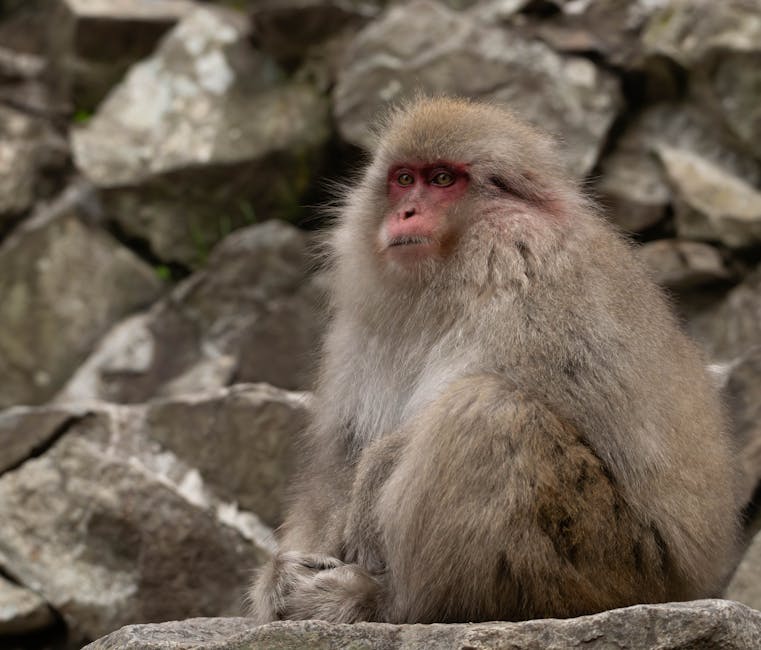
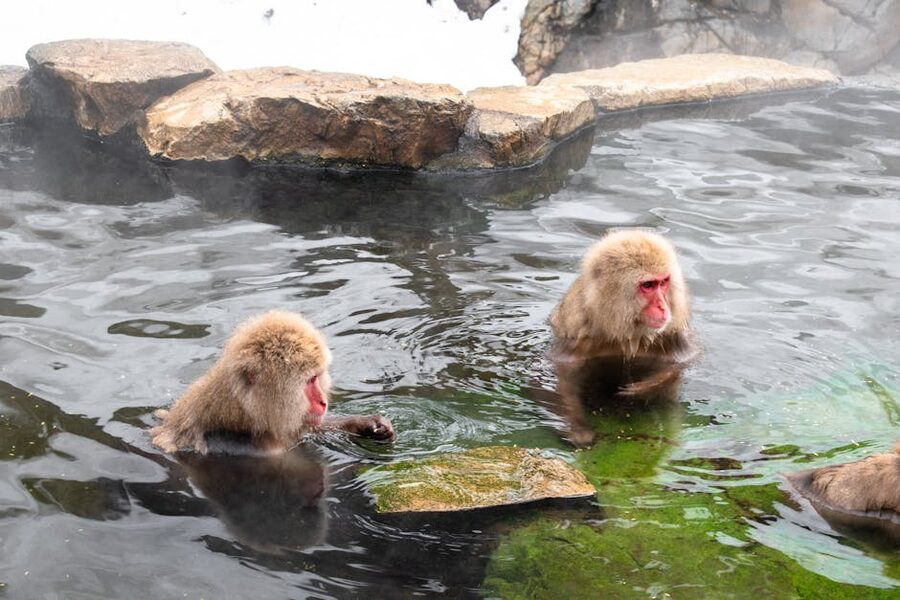
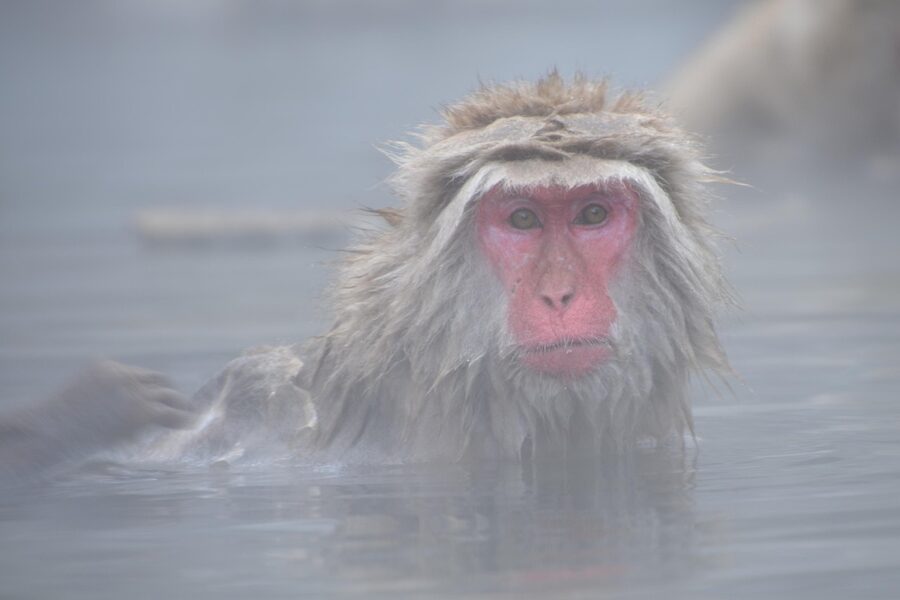
The Jigokudani Yaen-koen (地獄谷野猿公苑) protects a wild troop of Japanese macaques (Macaca fuscata) that come down from the mountains to bathe in a man-made hot-spring pool beside the Yokoyu River. The pool was built in 1964. The behaviour has been observed in this specific group only: of roughly 20 troops in the wider Shiga Kogen area, this one alone bathes. They’re free to leave. Most days in winter they stick around because the water is warm and the park staff scatter food. In summer they often skip the bath entirely and forage in the valley.
Admission is ¥800 for adults, ¥400 for school-age children, free under six. Hours are 8.30 to 17.00 from April to October, and 9.00 to 16.00 from November to March. There’s no closing day. Cash only at the gate.
How to get there from Nagano City
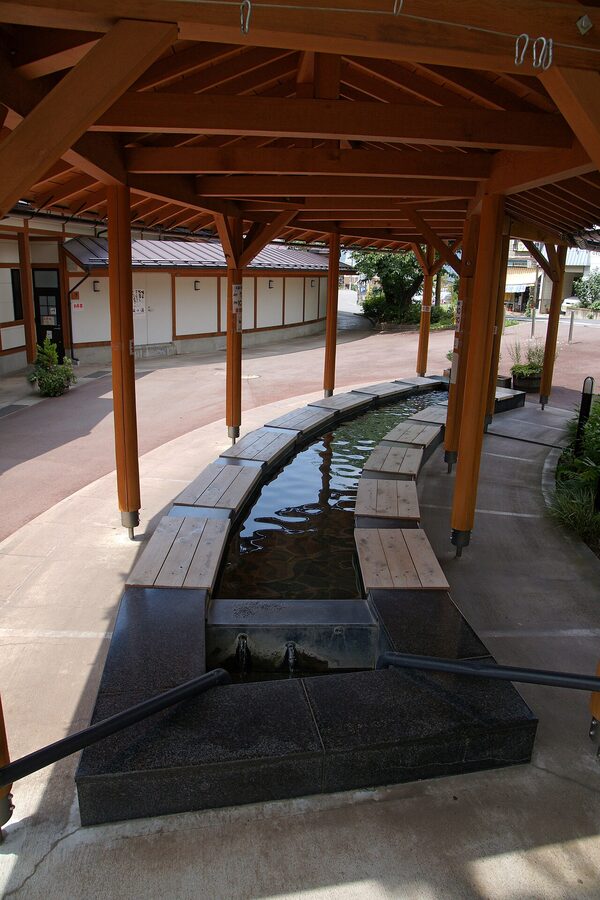
There are two routes from Nagano Station and a strong case for picking the right one based on what time of year you’re going.
The express bus, all-in-one (winter only, mostly)
From Nagano Station’s east exit, the Nagaden Express Bus runs direct to the Snow Monkey Park bus stop. About 40 minutes, ¥1,800 one way. In winter it goes hourly. Outside winter it drops to every two or three hours, which is when the route stops being convenient. From the bus stop you walk a flat 1.6km forest trail (about 30 minutes) to the park entrance. This is the route to take if you want the absolute simplest day trip.
If you’ll combine the monkeys with anything else in Nagano, the Nagaden also sells a “Snow Monkey 1-Day Pass” that bundles the express bus, local trains, and Yudanaka onsen-area buses for ¥3,500. Worth it if you’ll also visit Zenko-ji or stay overnight in Shibu.
The slow train via Yudanaka
The other route uses the Nagano Dentetsu private line. From Nagano Station (it’s underground, follow the orange signs to “Nagaden”) take the limited express “Yukemuri” or “Snow Monkey” train to Yudanaka. About 50 minutes, ¥1,290, one limited-express surcharge. JR passes don’t cover this line. Yudanaka is the last stop, and a small one. From there a local bus goes to the Snow Monkey Park bus stop in 10 minutes for ¥310, or you can walk it in about 30.
I usually take the train. The carriages are vintage Tokyu and Odakyu hand-me-downs in good shape, the route climbs through orchard country in the Chikuma River valley, and Yudanaka itself is more interesting than the bus stop on the highway. If you’re staying overnight you almost certainly want the train.
From Hakuba
The most common Japan Alps combo. There’s no direct bus, so you backtrack through Nagano. From Hakuba the Alpico Highway Bus to Nagano takes 70 minutes, ¥2,400. Then pick up either the express bus or the Dentetsu train as above. Total door-to-door from a Wadano lodge to the monkey pool: about three and a half hours. Most ski-week visitors pencil in a “monkey day” between resort sessions and rent a car for the round trip instead.
From Tokyo as a day trip
Possible but punishing. Tokyo Station to Nagano on the Hokuriku Shinkansen is 1h 35m and ¥8,340 each way (covered by the JR East Pass and the Hokuriku Arch Pass). Add the Dentetsu line and the trail walk and you’re looking at roughly four hours each way. Realistic only if you leave Tokyo by 7am, accept that you’ll be in the park for a tight 90 minutes, and reverse the journey before dark. The “snow monkeys from Tokyo” day-tour packages with van transport are about ¥19,800 and skip the train choreography.
The walk in
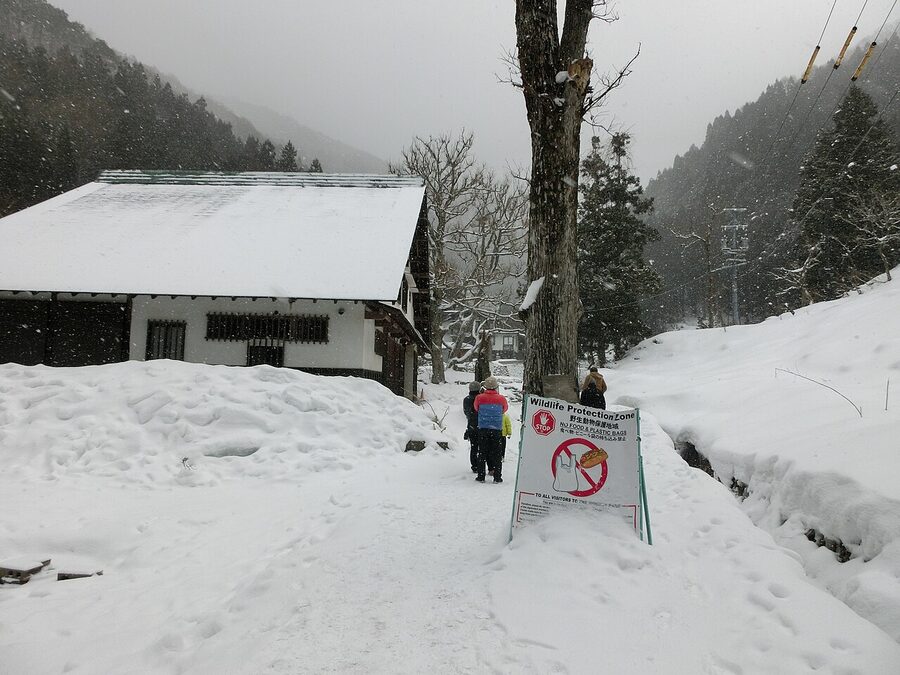
From the Snow Monkey Park bus stop, the path follows the Yokoyu River up the valley. It’s well marked, single-file in places, mostly flat with a stair section at the start and a longer stair climb at the very end. Allow 30 to 40 minutes one way. Most visitors do it in 25 in good weather and 45 in snow.
The trail passes the Korakukan Ryokan: a 150-year-old wooden inn beside the river that originally had the only hot spring in the valley. The macaques first started bathing in the Korakukan’s outdoor pool in the early 1960s after apples fell into the water. Korakukan is still operating, takes overnight guests, and offers day-use bathing from noon to 4pm for ¥1,200. The mixed outdoor bath is famously the only place where you might share a soak with the monkeys. They don’t usually get in with you, but it has happened, and it puts every other onsen story you’ve ever told permanently in second place.
What to wear in winter
The single most useful item is micro-spikes or chain-style ice cleats. The path freezes hard from late December through to mid-March, and the section near the park entrance is on a sloped hillside above the river. People have broken ankles on it. The Snow Monkey Resorts Info Shop at the trailhead rents a kit (cleats, gloves, an umbrella to keep snow off the camera) for around ¥1,000. Or buy disposable adhesive ones from a Yamanouchi convenience store the night before. Sneakers will get you up the trail in light snow but become a lottery in icy conditions, and high heels (which I have, somehow, seen) are a dare.
Layer for the cold rather than for movement. You walk briskly, sweat, then stand in zero-degree air watching monkeys for 90 minutes. Bring a thin layer to add at the pool, not just the heavy parka you’ll roast in on the way up. A pair of kairo (the cheap stick-on heat patches sold at any 7-Eleven) inside the gloves is worth more than gear.
What you actually see
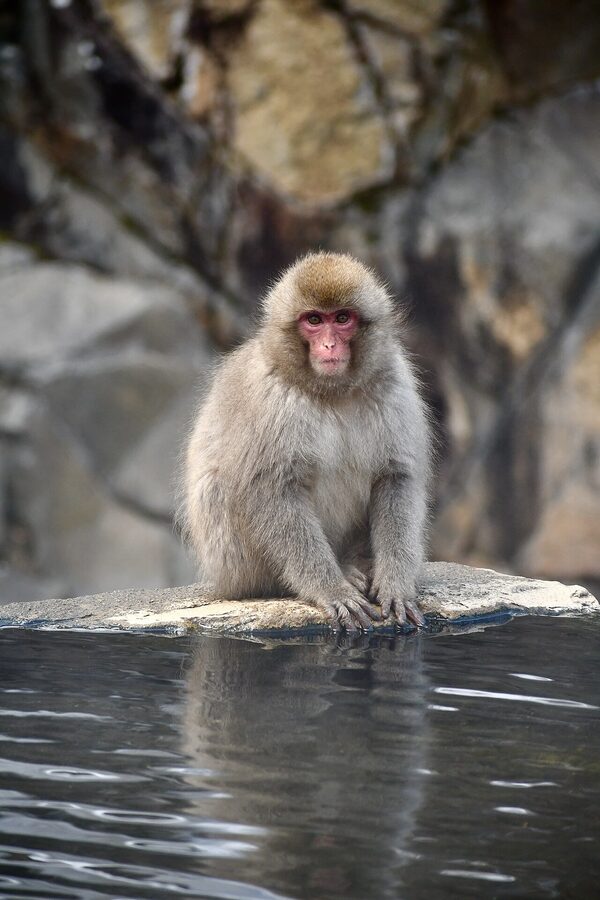
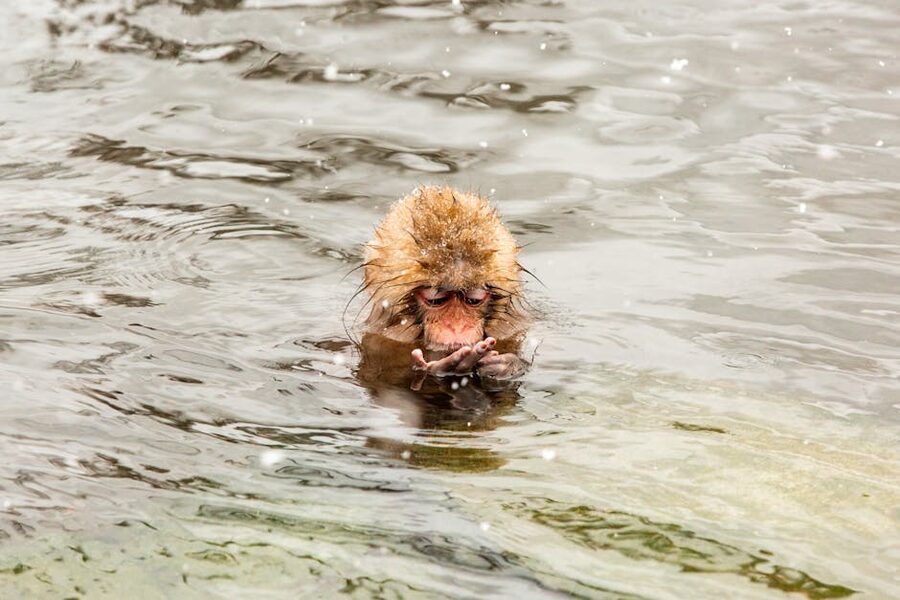
Past the ticket office is a single wooden boardwalk that loops around the bathing pool. The pool itself is modest. A flat stone-edged basin maybe 4m across, fed by a hot-water inflow that keeps it around 41 degrees. There’s no railing between you and the monkeys, no glass, no ranger directing your steps. You’re on the same level as the macaques. They will walk past your feet, sit a metre away, ignore you almost entirely.
How many monkeys you’ll see depends on the day, the season, the weather, and the time. The park’s webcam at jigokudani-yaenkoen.co.jp updates every few minutes and posts a daily forecast for when the troop will arrive. Use it before you commit to the train. On a cold January morning you might see 30 to 40 macaques, half in the water, half hanging on the rocks. On a warm October afternoon you might see five, foraging on the boardwalk and ignoring the bath completely.
Why this troop bathes and others don’t
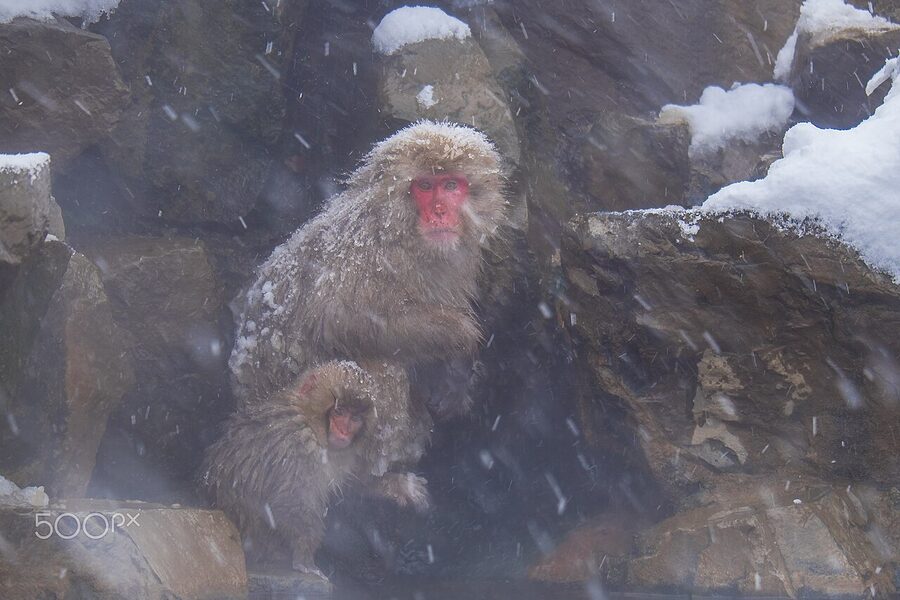
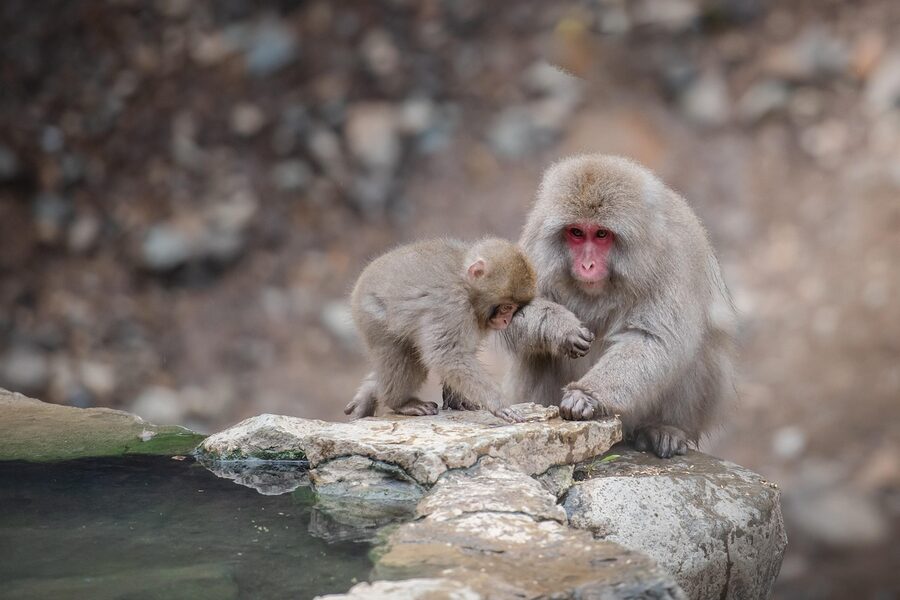
Japanese macaques live as far north as Aomori and as far south as Kagoshima. Roughly 20 troops live in the wider Shiga Kogen area alone. Only the Jigokudani group bathes in hot water. The behaviour is what biologists call a learned social tradition: in 1962 a single juvenile female (named Mukubili in the park’s records) reached into the Korakukan ryokan’s outdoor bath after a fallen apple, found the water warm, and stayed. Other young macaques copied her. Adults didn’t take it up themselves but saw their offspring doing it, tolerated it, and within a generation the entire troop bathed routinely. Other troops in the same valley, separated only by ridgelines, never picked it up. Researchers from Kyoto University have been tracking the social-learning angle since the 1970s.
The first photographs were taken by Akira Suzuki in the late 1960s. The image went on the cover of LIFE magazine on 30 January 1970, which is when the place became internationally famous. The 1998 Nagano Winter Olympics put it on the second wave of itineraries. By 2010 international visitors outnumbered domestic ones, and the park stopped translating its signage from Japanese into anything else because everyone arrives knowing what they’re looking at.
The honest part: the food and the timing
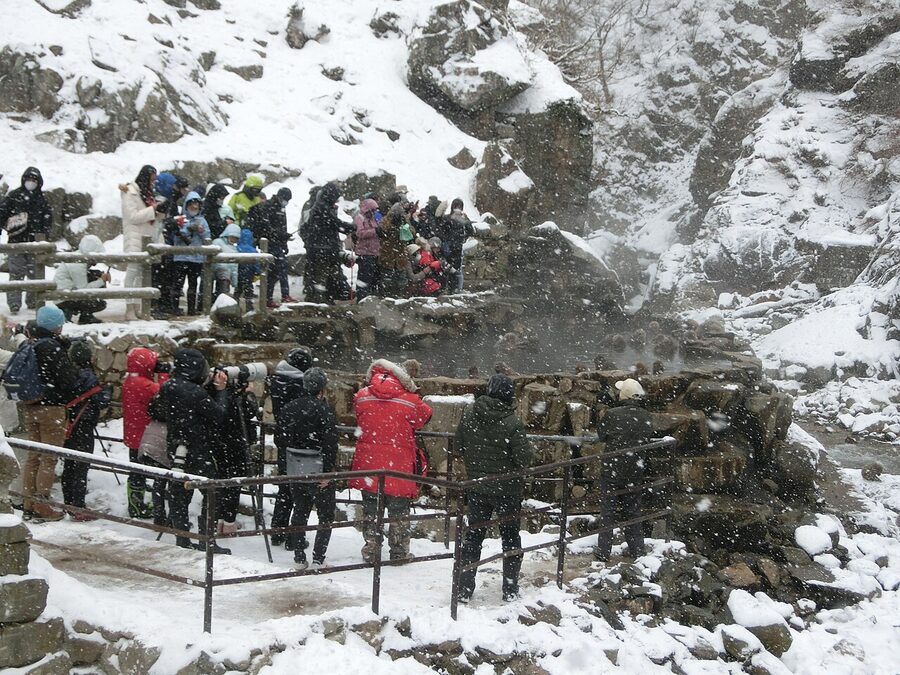
The park staff scatter food (apple, barley, sometimes corn) several times a day to keep the troop in the area. The exact times aren’t published. In winter the food brings them in early and keeps them until mid-afternoon. In the warmer months they’re as likely to wander off after the morning feed and come back at dusk, or not come back at all. The staff don’t feed visitors, and visitors aren’t allowed to feed the monkeys.
This is the bit some visitors find awkward. The “wild” monkeys are wild, but they’re being supplemented enough that they centre their day on the pool. Without the supplementation the troop would scatter back into the mountains for whole stretches of the year and the bathing behaviour would probably collapse. With it, the macaques are loosely habituated to humans and to a daily rhythm that conveniently aligns with the gate opening hours. Whether that crosses your line is a personal call. I think the way it’s run is roughly the cleanest version possible of the trade-off, but I notice the trade-off is there.
One observation that matters: in late afternoon, particularly outside snow season, you can sometimes see the staff working harder to keep the monkeys around the pool when paying visitors are still arriving. If you’re sensitive to that, go at opening and leave by 11am. You’ll see the macaques behaving more naturally and the park feels more like a research station than a show.
When to go
December to early March (the iconic version)
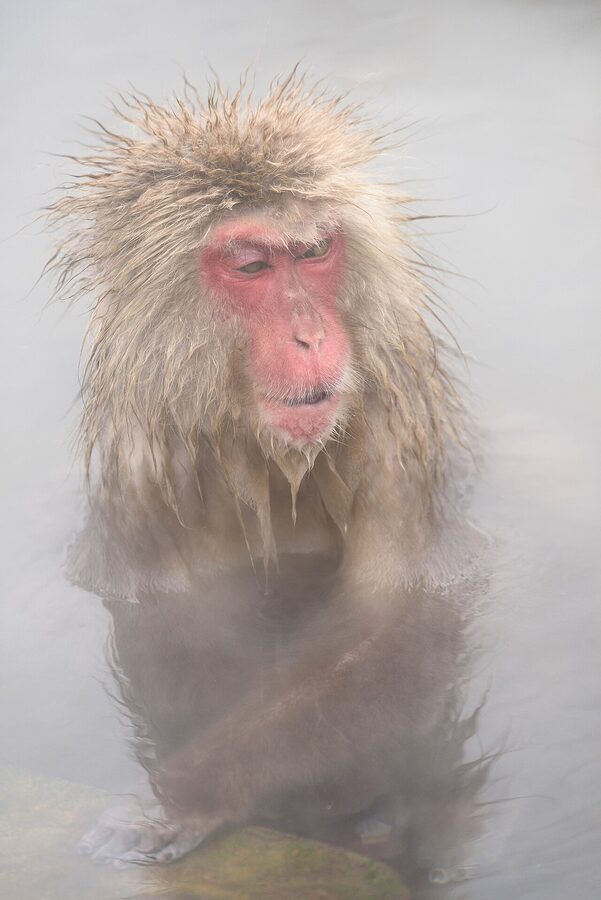
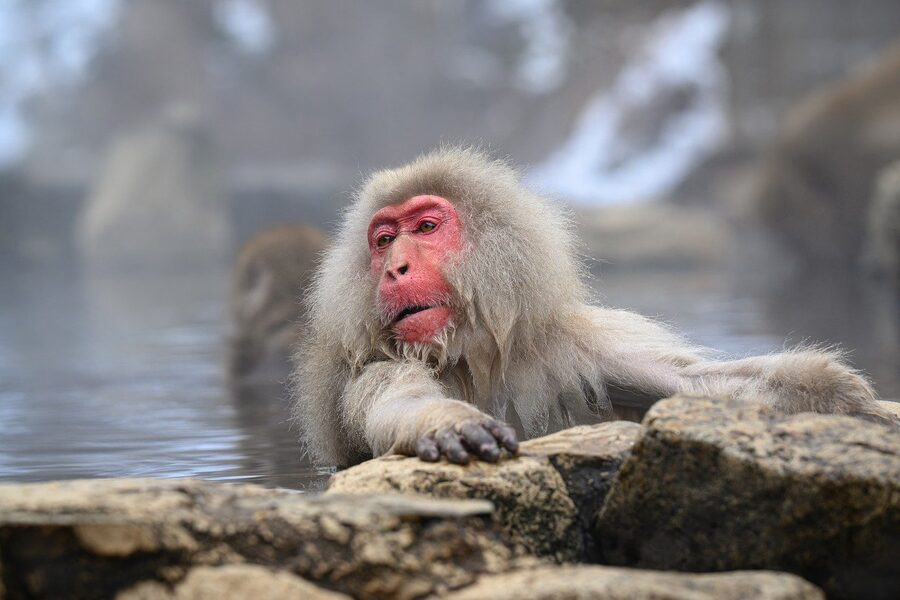
This is the season the place is famous for. Snow on the ground from mid-December to mid-March in a normal year, peak depth in late January and early February. The macaques have full winter coats by then: the dense double-layer fur that gives the species the “snow monkey” nickname. They spend long stretches in the bath because the air is below freezing and the water is 41 degrees, and the contrast in the photos works because of the steam.
Within winter, the best three weeks are usually mid-January to early February. Crowds peak in the first week of January (the New Year holiday) and the second weekend of February (Chinese New Year). If you can travel midweek, do.
Late March and April (the shoulder)
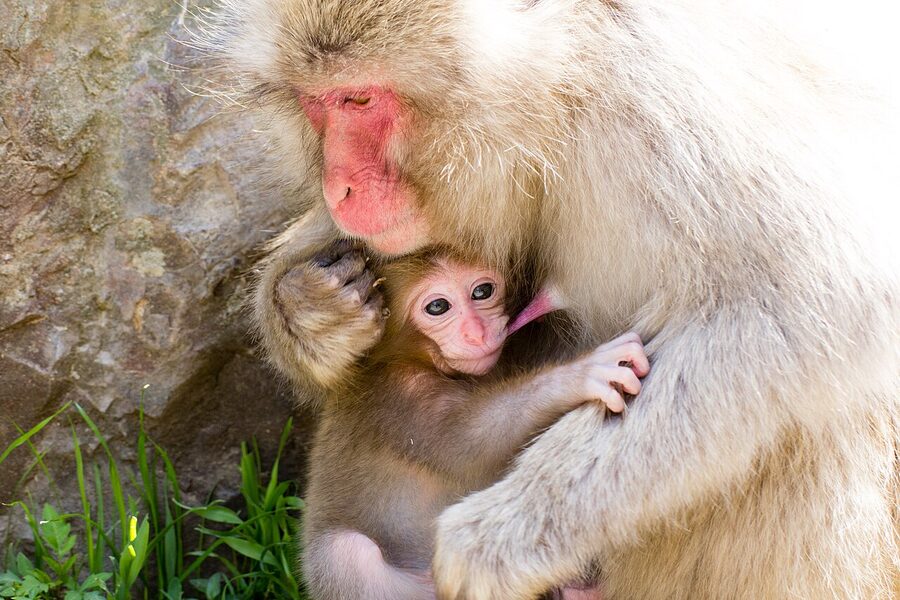
Snow patches still on the trail, but the bath behaviour starts dropping off as the air warms. You’ll still see macaques, but fewer of them in the water. April brings something better in compensation: birth season. Most of the troop’s babies arrive between mid-April and early May. Tiny pink-faced infants riding on their mothers’ backs is a good consolation prize for missing the snow shot.
May to August (the green season)
The trail is at its prettiest, lush and damp under cedar canopy. Bath behaviour is rare. The macaques may dip a hand in for cooling. Mostly they sit on the rocks or forage in the valley. If you want monkeys plus comfortable hiking, this is the season. Bring rain gear: the rainy season runs mid-June to mid-July and the trail gets slippery on a different basis from winter.
October and November (autumn colour)
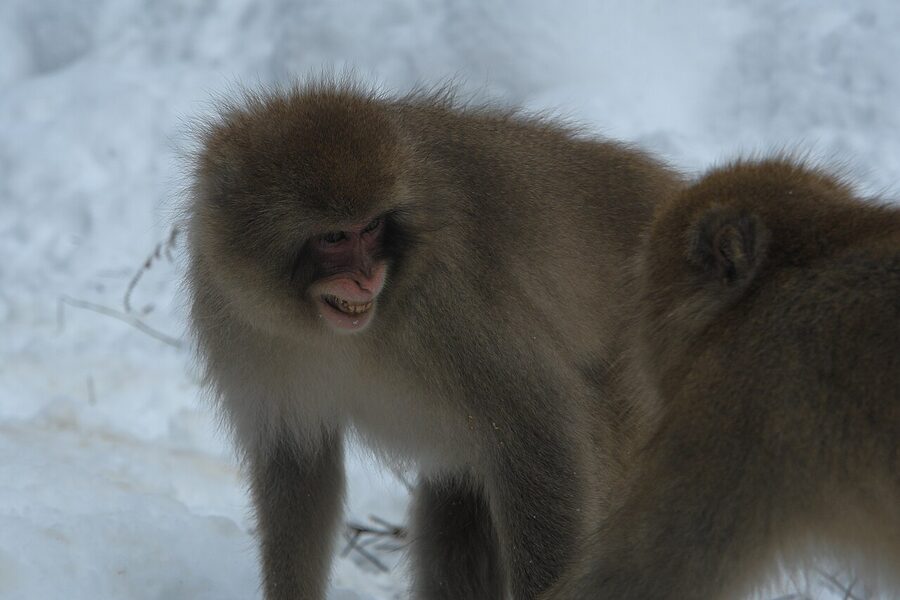
The valley is striking when the maple turns. Early November is peak colour at this elevation. The macaques are entering their mating season (which runs roughly October to December), so behaviour gets noisy and territorial. Adult males chase each other along the rocks and you’ll hear vocalisations all over the valley. Bath use creeps back up as nights cool, but isn’t reliable until the first proper snowfall.
Photographing them
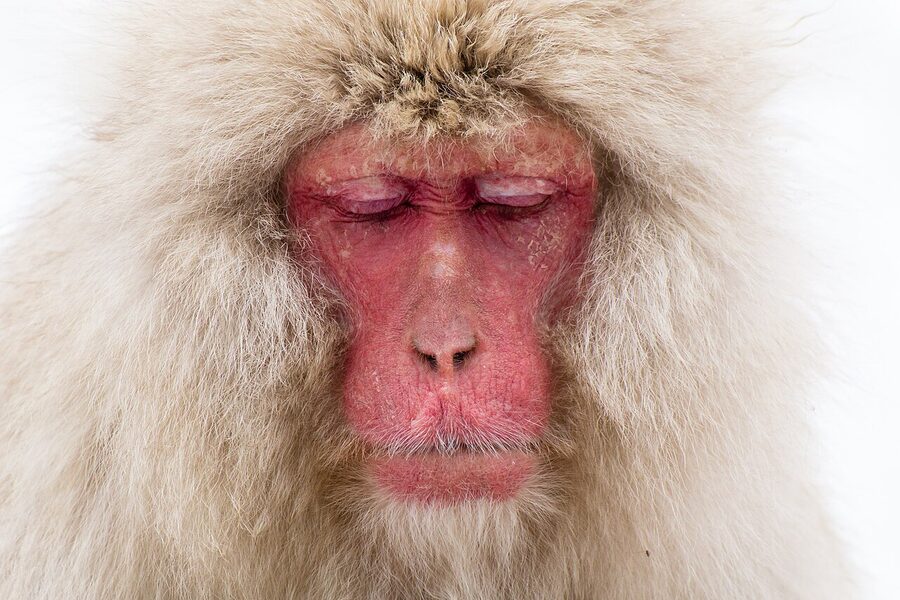
You don’t need long glass. The macaques are often within arm’s reach. A 24-70mm zoom on a full-frame body or the equivalent on an APS-C is more than enough. The longer reach (a 100-400 zoom or a 70-300) helps for the meditative head-only shots from across the pool, but isn’t essential. A modern phone can produce a publishable image here. Anyone who tells you otherwise is selling lenses.
Three small things that make the difference:
- Steam fogs autofocus. Tap-to-focus on a face every shot, don’t rely on tracking. The mist is constant in winter.
- Go low. Crouch or sit on the boardwalk. Eye-level with a bathing macaque transforms the picture from a tourist snap into something you’d hang on a wall.
- Bring two batteries. Sub-zero air halves your runtime. Keep the spare in an inner pocket where your body warms it.
Drones, selfie sticks, and any “extended pole” cameras are banned inside the park. So is putting cameras in or above the water. The staff enforce these and will ask you to put the gear away.
Yudanaka and Shibu Onsen: the towns at the base
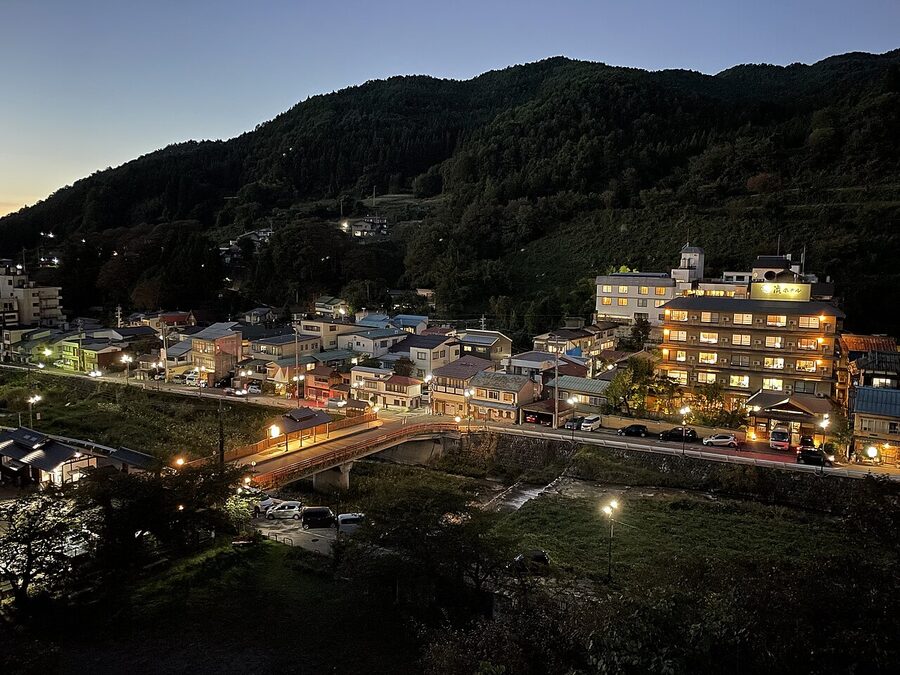
If you do nothing else with this article, treat the monkey park as the half-day excuse for an overnight stay in Yudanaka or (better) Shibu Onsen. Both villages are within a short bus or shuttle of the trailhead, both have hot-spring infrastructure that predates the monkey-park tourism by 1,200 years, and both will give you a more interesting evening than any city hotel.
Shibu Onsen: the nine-bath circuit
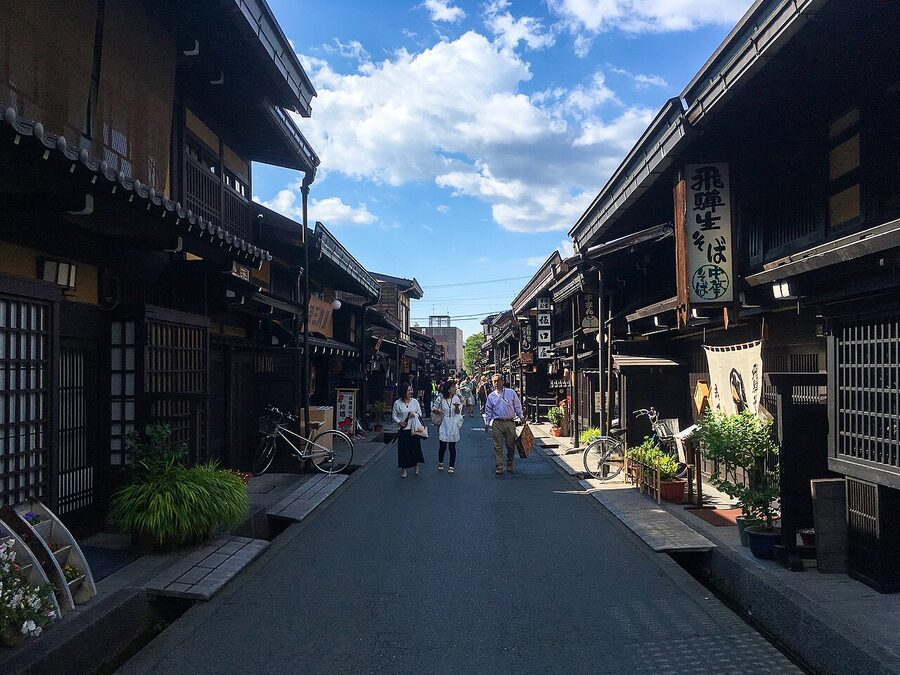
Shibu (渋温泉) is small. Nine narrow lanes between wooden ryokan, a single river running through, and a circuit of nine public bathhouses (the soto-yu, 外湯) that have been in continuous use since at least the Kamakura period. Stay overnight at any Shibu ryokan and you’re given a key on a wooden tag that opens all nine baths. You wear yukata and geta, you carry a small towel, and you walk between them in any order, soaking five or ten minutes in each.
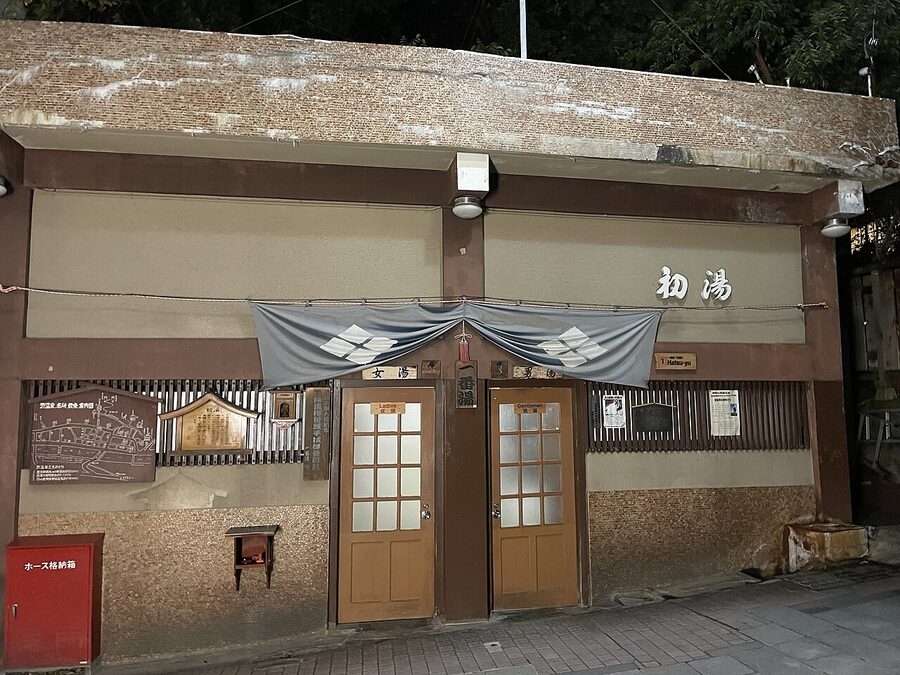
The nine baths each have a name and a folk-medicine speciality. Hatsu-yu (No. 1) for skin. Sasa-no-yu (No. 2) for skin healing. Take-no-yu (No. 4) for stomach. Matsu-no-yu (No. 5) for nerves. Mearai-no-yu (No. 6) for eyes. Nanakuri-no-yu (No. 7) for trauma and bruises. Shinmei-daki-no-yu (No. 8) for women’s health. Shibu-Oyu (No. 9) is the climax. The biggest bath, the hottest water, and the one where you stamp your towel and offer a prayer at the small shrine on the hill above town.
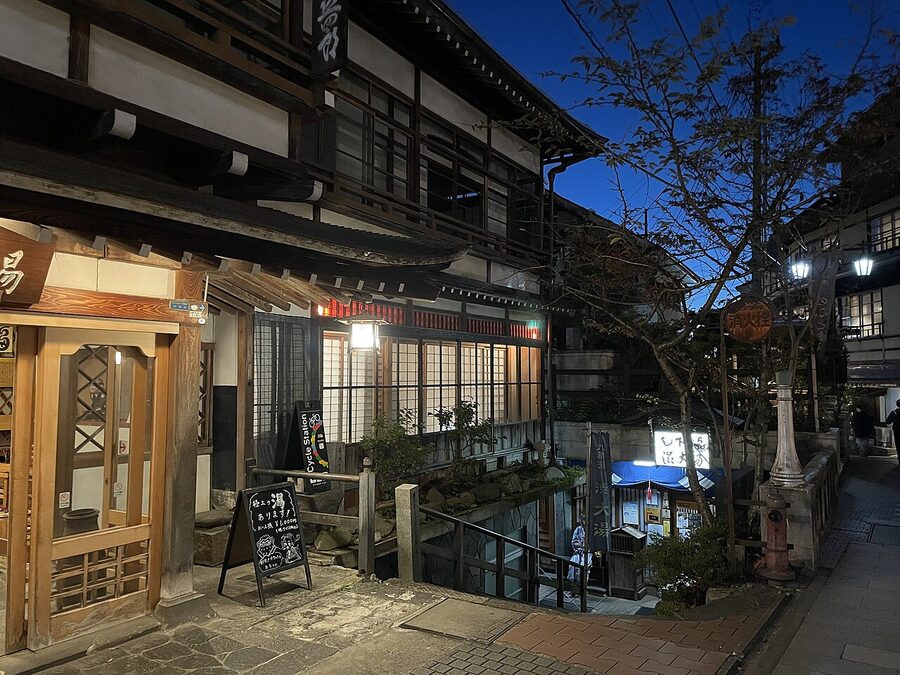
The circuit takes between two and three hours if you do all nine. The traditional bit is the cloth tenugui towel you carry: each bath has a stamp at the door and you collect them as you go. Shops in Shibu sell the blank towels for around ¥1,000. The legend says all nine stamps bring “good health and fortune.” Whether or not you buy that, the ritual focuses the experience and gives you an excuse to walk a town that almost nobody visits without staying overnight.
Where to stay in Shibu
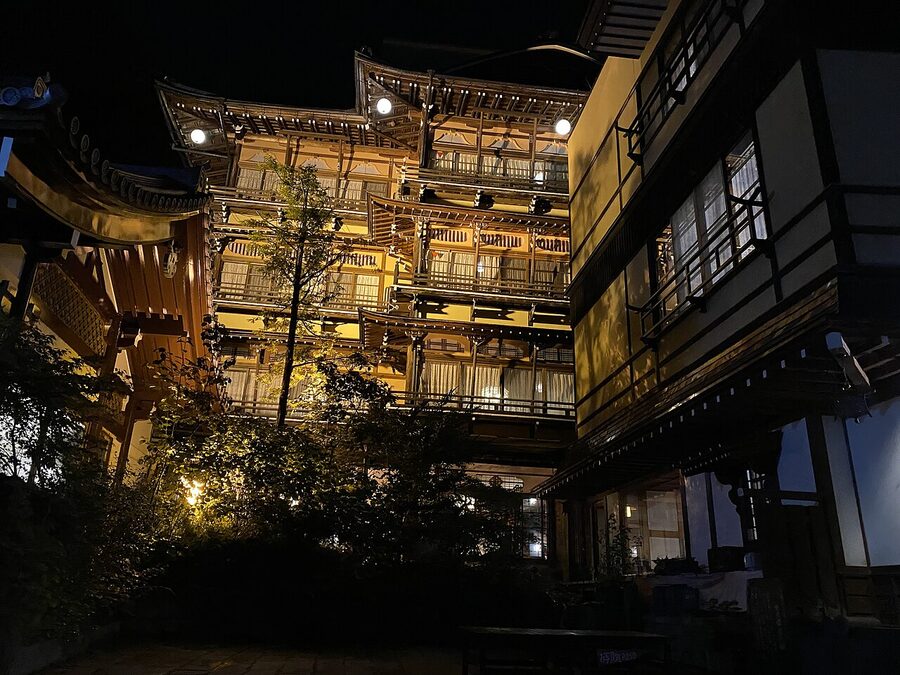
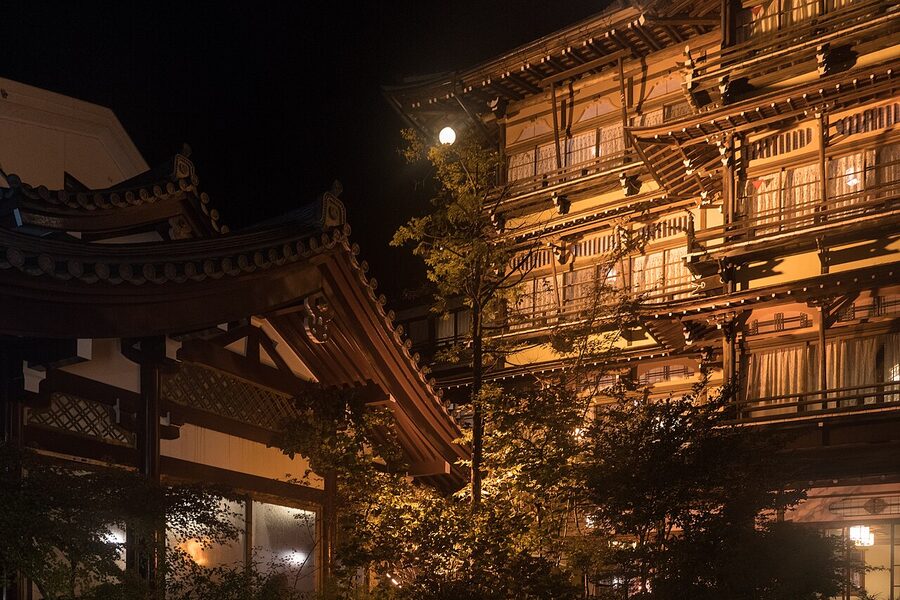
The famous one is Kanaguya (歴史の宿金具屋), four storeys of dark wood built between 1758 and 1936, currently in the hands of the 17th generation of the Kobayashi family. The main building is a registered Tangible Cultural Property. The bathhouse tower has nine private baths drawn from four separate hot-spring sources on the property. Rooms range from ¥25,000 to ¥55,000 per person per night including the kaiseki dinner and breakfast. Book months ahead: the place sells out year-round and the international demand has only grown since the Spirited Away association took hold. Check availability on Booking.com.
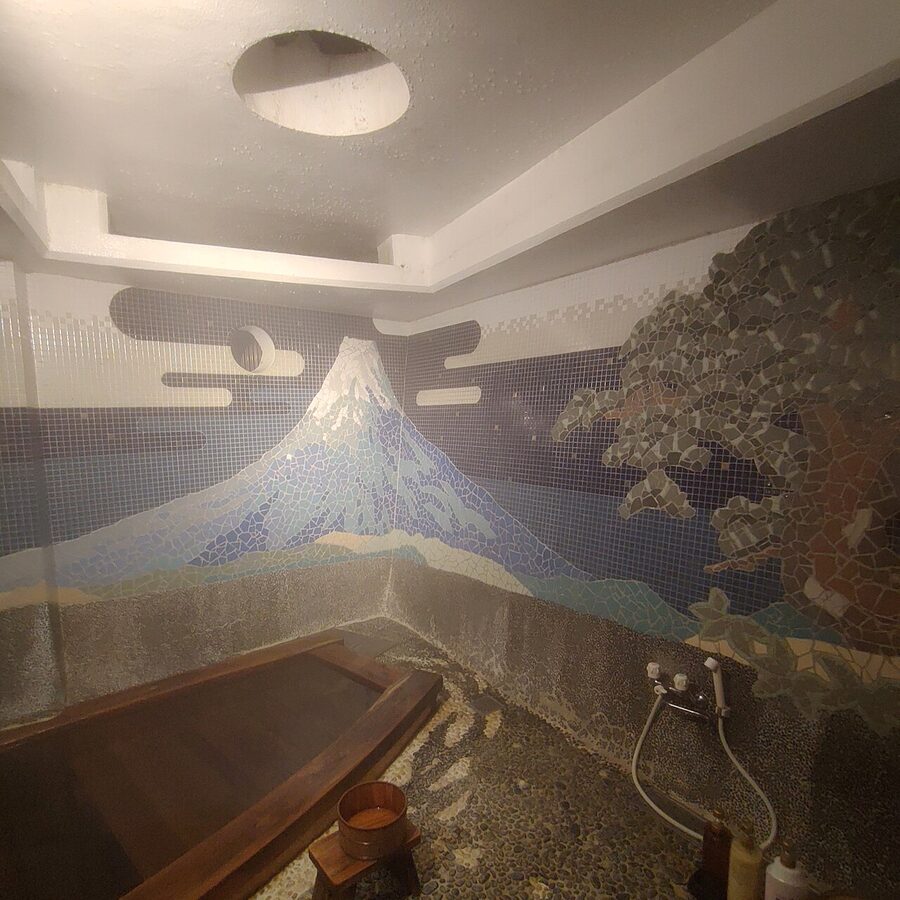
The other Shibu standard is Senjuan (千寿庵), older still (founded 1685, currently in 18th-generation hands), smaller than Kanaguya, with a quieter approach. Rooms run ¥30,000 to ¥45,000 per person with meals. Less crowded than Kanaguya in summer, comparable in winter.
If neither budget works, Kokuya, Sakaeya, Suminoyu, and Onyado Hishiya Torazo all sit between ¥15,000 and ¥25,000 per person with meals and offer the same nine-bath access. Shibu has roughly 20 ryokan in total: the village is small enough that staying anywhere here works.
Yudanaka Onsen: the practical alternative
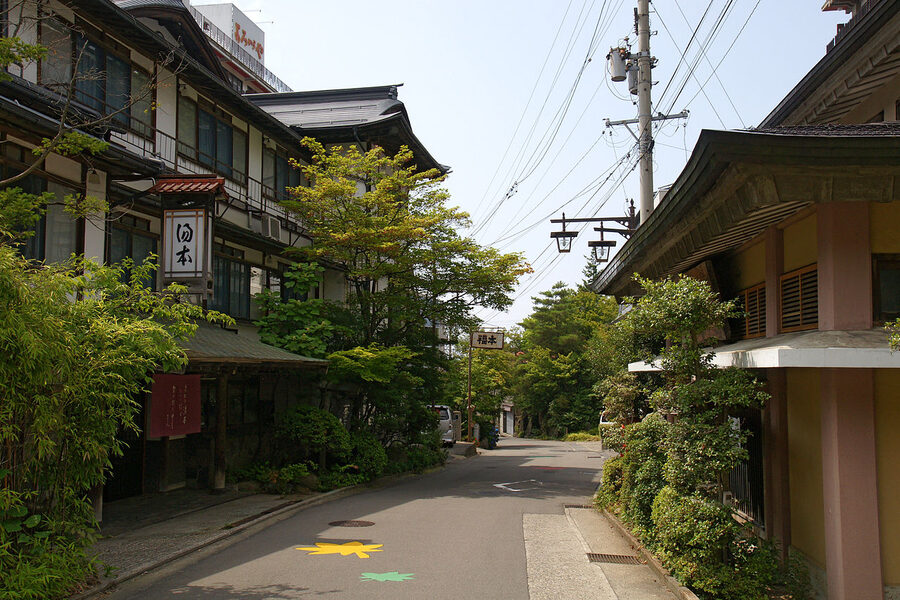
Yudanaka (湯田中温泉) is the next village south, on the Dentetsu line. Bigger than Shibu, less atmospheric, more practical. You don’t get the nine-bath circuit (that’s Shibu only), but the ryokan in Yudanaka tend to have bigger private baths and you’re a 3-minute walk from the train station rather than a 10-minute taxi ride.
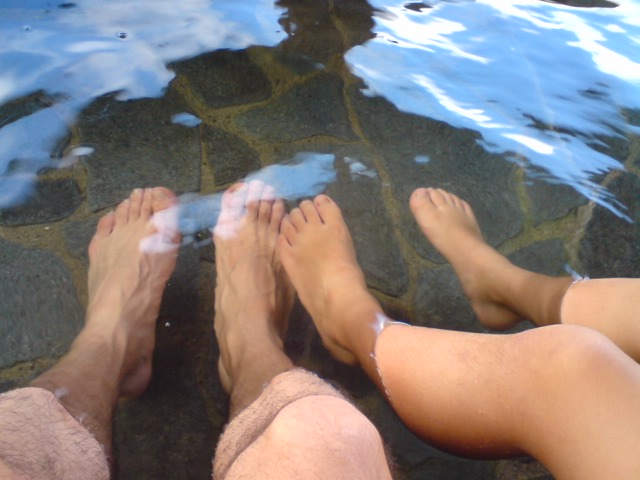
Pick Yudanaka if your priorities are price (rooms from ¥12,000 per person with meals at properties like Yorozuya and Yamazakiya), train access, or having a few restaurants within walking distance after dinner. Pick Shibu if you want the cobblestones, the wooden architecture, and the nine-bath ritual.
Both villages have free ryokan shuttle services to the monkey-park trailhead, usually morning departures around 9am and afternoon pickup around 2pm. Confirm at check-in.
Combining with Shiga Kogen
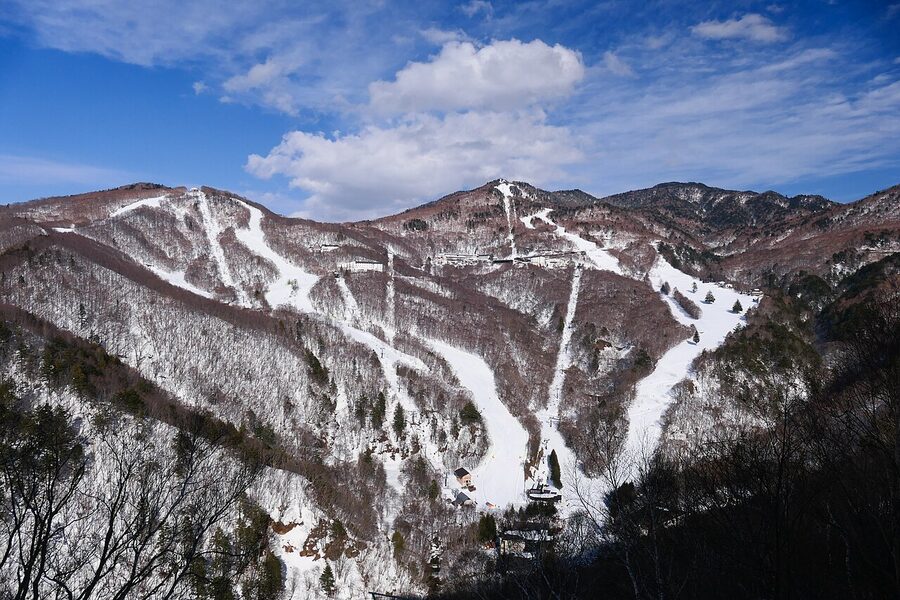
Half an hour up the road from Yudanaka, Shiga Kogen is the largest single ski area in Japan: 18 sub-resorts linked by a common lift pass, sitting between 1,300 and 2,300m, with the longest ski season in central Honshu (mid-November to early May, with spring lapping at the Yokoteyama lift into Golden Week). For a winter monkey trip, two nights at Shiga Kogen with a half-day “monkey morning” is the strongest itinerary.
Lifts open from late November in a typical year. The full-mountain pass runs ¥6,500 a day, with multi-day discounts that bring it under ¥5,000 per day for a 3-day ticket. Equipment rental from the Shiga Kogen base village runs ¥5,000-7,000 a day for a full kit. The Nagaden bus from Yudanaka to Shiga Kogen Sun Valley is ¥1,300 each way, 35 minutes.
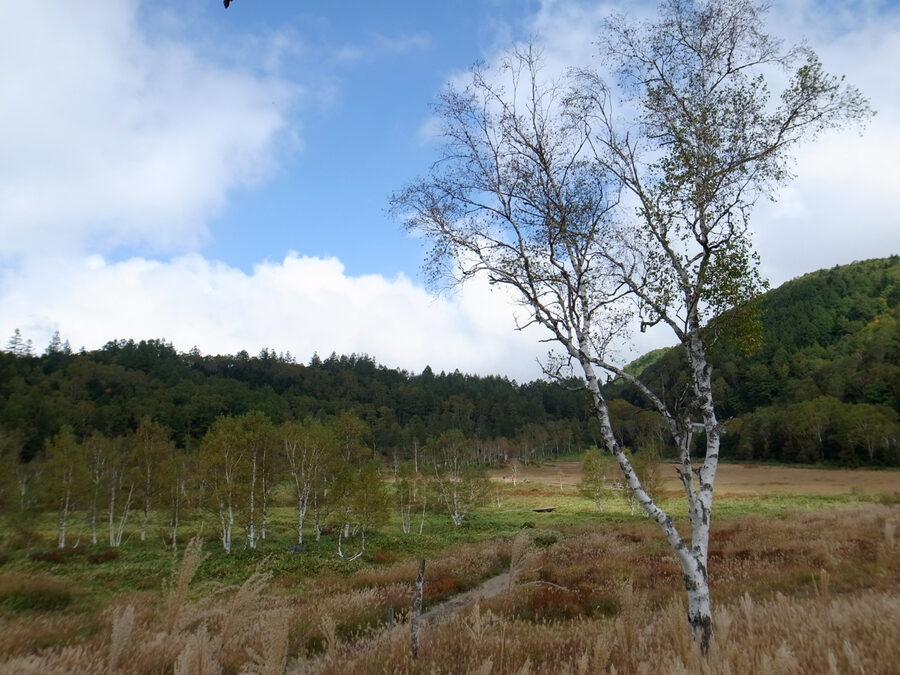
Outside ski season Shiga Kogen turns into a high-altitude wetland reserve. The Hasuike pond circuit, the Tashiro and Maruike trails, and the Shiga-Yokote ridgeline lift (which runs in summer too) are all worth a half-day. Late September to mid-October is the autumn-colour window, and Shiga at 1,700m turns red about three weeks before the cities below.
For more on the wider regional ski scene see our guide to skiing in the Japan Alps, and for context on the bath culture you’ll be soaking in afterwards, our guide to onsen across the region covers the water-chemistry differences between Yamanouchi and the rest.
The mating season nobody warns you about
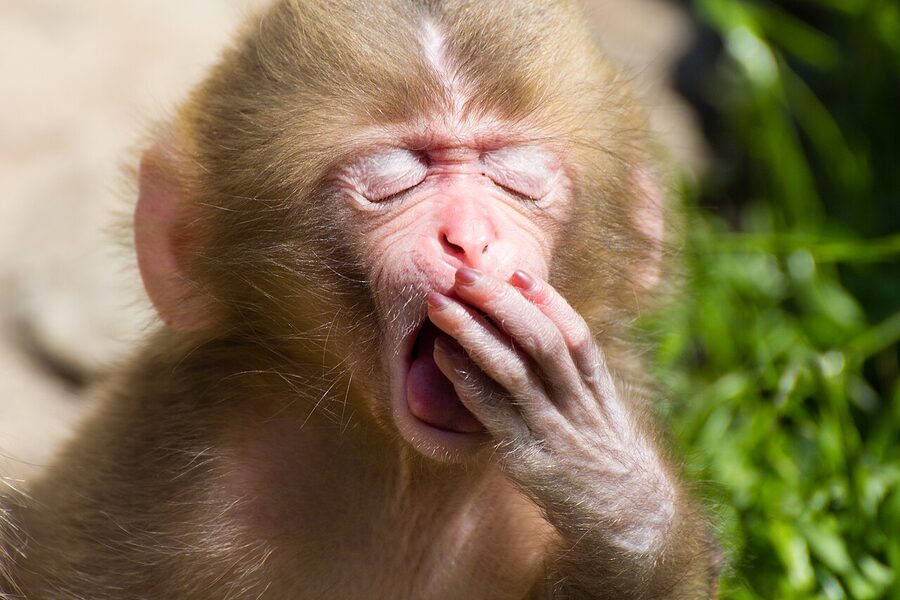
Mating season runs from October to December, with a peak in late November. The macaques are noticeably more vocal and physical at this time. Adult males chase rivals through the boardwalk area, females present openly, and the alpha-male hierarchy is on full display: this troop has a single dominant male at any time, and the park’s information centre keeps portraits of the line of succession back to the 1960s on the wall. For wildlife-behaviour interest, October and early November are arguably more interesting than the postcard winter window.
The geography around the park
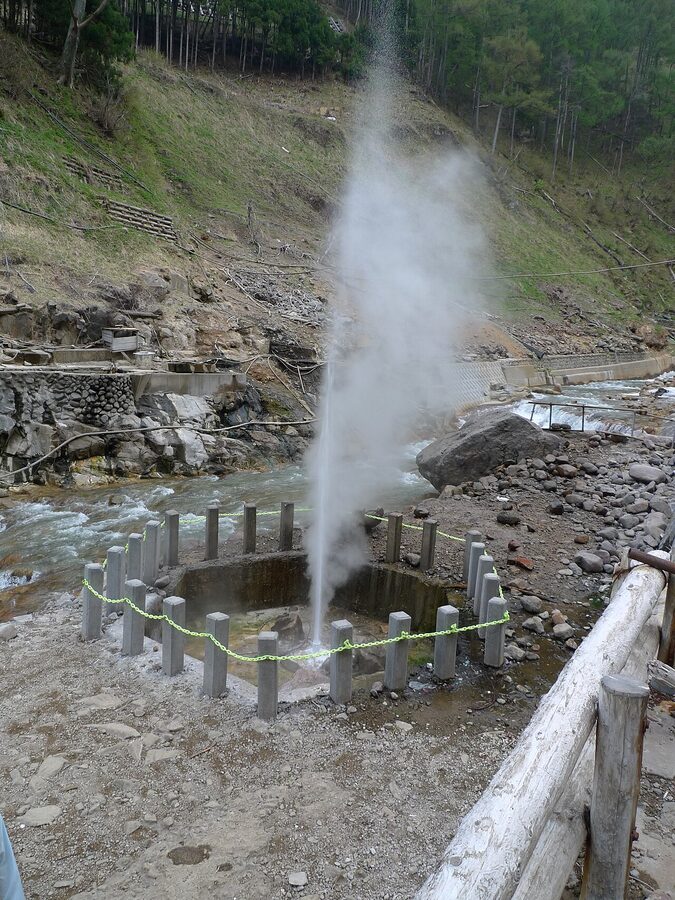
“Jigokudani” (地獄谷, “Hell Valley”) is the standard Japanese name for any volcanic valley with active geothermal vents, and there are several around the country (the most famous is in Noboribetsu, Hokkaido). The Yamanouchi version is small but reliably active: a handful of geysers and steam vents scatter the upper Yokoyu valley, the river runs warm year-round, and the valley walls hold heat well enough that there’s a noticeable thermal microclimate around the bath even before you factor in the spring water itself.
The wider area sits inside the Joshinetsu-Kogen National Park, which extends north to the Echigo border and west to the Tateyama range. The monkey park itself is at 850m elevation. Shiga Kogen above starts at 1,300m. The Kusatsu-Shirane volcano (an active stratovolcano with intermittent eruption alerts since 2018) sits 25km west across the ridge.
What to combine on a longer Nagano trip
Within Nagano Prefecture the obvious additions are Nagano City and Zenko-ji (the 7th-century temple at the prefectural capital, an hour by train from Yudanaka), Karuizawa (an 80-minute Shinkansen south, see our Karuizawa guide), and the central Alps trio of Matsumoto, the Tateyama-Kurobe Alpine Route, and Kamikochi. The macaques fit naturally into a 5-7 day east-Nagano route that overnights in Shibu, then moves to a Karuizawa or Matsumoto base.
For the full set of regional options see our Japan Alps itineraries and the access guide, which covers the Hokuriku Shinkansen and the Alpico Highway Bus connections in detail.
Practicalities, tightly
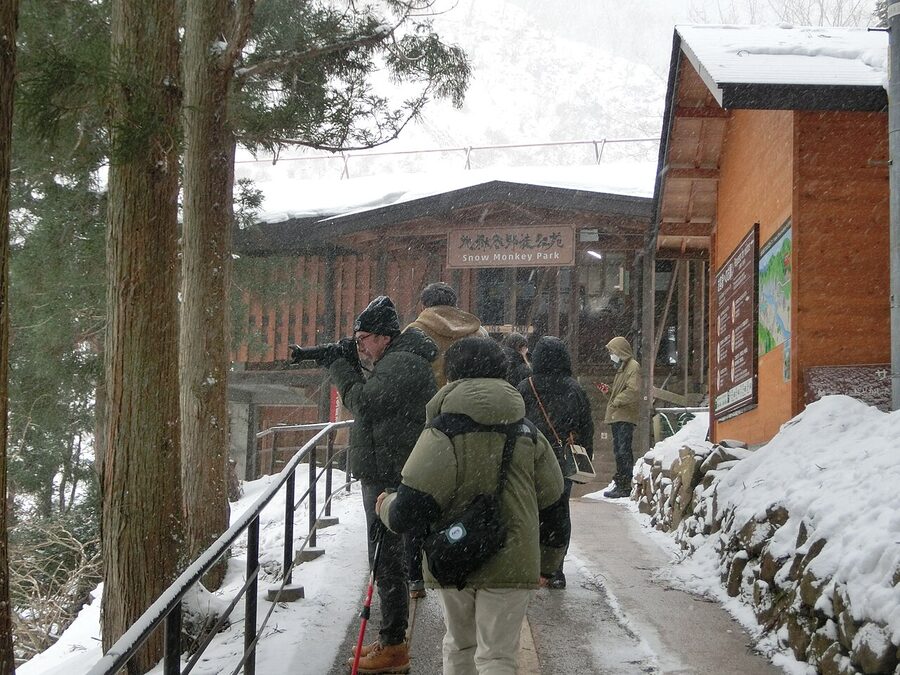
Cash only at the gate. The park doesn’t take cards or IC chips. The Snow Monkey Resorts shop at the trailhead does, but they don’t sell tickets.
Toilets are inside the park (after the gate) and at the Snow Monkey Resorts shop at the trailhead. There’s nothing in between, so use one before you start the 30-minute walk in.
Coin lockers exist at the souvenir shop next to the bus stop. Yudanaka Station also has small lockers. Carrying a wheeled suitcase up the trail is impossible and pushing one is a recipe for ankle injury.
No food or drink for sale at the park. There’s a small museum-style information room with a few displays, English signage on the main panels. The Korakukan ryokan at the foot of the park entrance sells bottled water and small snacks if you’re desperate, but no real food.
No pets allowed past the trailhead. Strollers and wheelchairs can’t make the stair sections. The walk is genuinely not suitable for children under three.
The official park line for any altitude or trail concerns is the same as the wider region: wear proper footwear, layer for temperature contrast, watch your footing. None of this is high-altitude territory in the Northern Alps sense, so the altitude-sickness guide doesn’t really apply here, but the icy-trail bit absolutely does.
Two things that catch people out
First: tattoos. Public baths in Yamanouchi are mostly traditional and either ban tattoos outright or require them covered. Shibu’s nine bathhouses are unstaffed but signed as no-tattoo. Most ryokan private baths are fine. Bring waterproof tattoo cover stickers if you have visible tattoos and want to use the soto-yu.
Second: the macaques in Shibu town. The same Jigokudani troop occasionally wanders down into the village, particularly in late autumn before the pre-winter feeding cycle ramps up. They will steal food if you carry it visibly, and they will defend it aggressively if challenged. Don’t carry takeaway food in your hand on Shibu’s main street between October and December. If a monkey grabs at a bag, let go.
Should you go
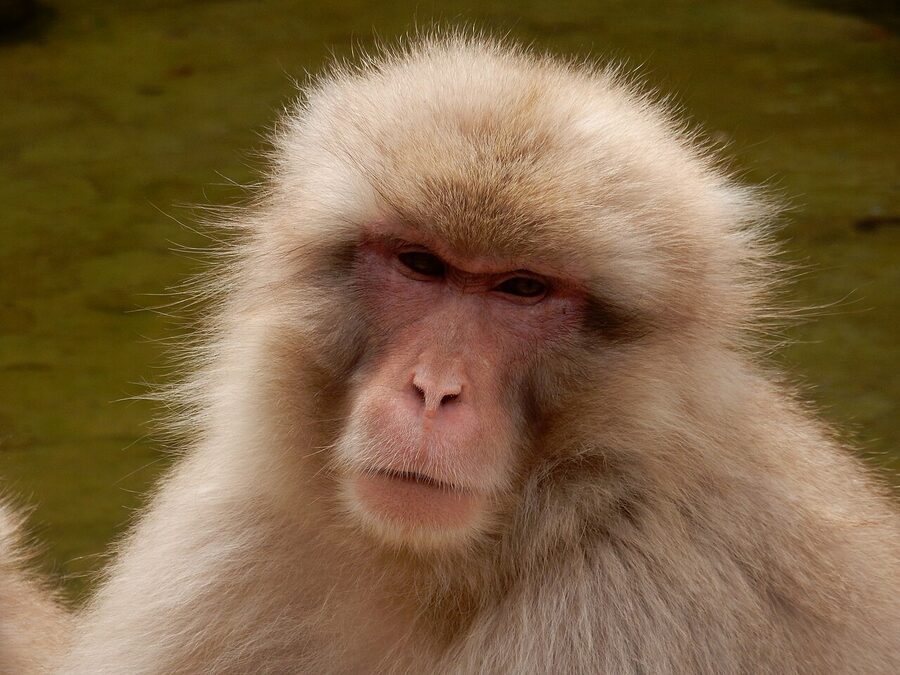
Yes, with two conditions. Go in winter, ideally between mid-January and mid-February, and arrive when the gates open. Out of those two windows the experience drops in quality, and from the second one in particular it can drop sharply. The afternoon visits, the warm-month drop-ins, and the day-trip-from-Tokyo dashes are the reason you read so many disappointed reviews. The first-hour winter visit is the reason the place is on every Japan list ever written.
The other thing the trip-reports don’t say enough: the monkeys are 30 to 40 percent of what makes the day. The walk in along the Yokoyu River, the Korakukan ryokan, the geyser steam, the village evening at Shibu or Yudanaka, the nine-bath circuit, the kaiseki dinner you’ll roll out of bed for the next morning. These add up to one of the strongest single overnights in the Japan Alps catchment, even if every macaque went on holiday for the week.
Webcam check the morning of, micro-spikes from a Shibu konbini, 8am from the trailhead, two hours at the pool, lunch at the Enza Cafe on the way back. Then a long afternoon of soaking in town. That’s the trip.