
Most guidebooks file Hida Folk Village under “Shirakawa-go lite”, the consolation prize you visit if you can’t get out to the World Heritage village an hour away. That framing is wrong, and it has been wrong for the half-century the museum has existed. Hida no Sato isn’t a smaller, easier Shirakawa-go. It’s a different kind of place doing things Shirakawa-go can’t do, and treating it as a substitute is how you end up disappointed in something that should have been one of the best two hours of your trip.
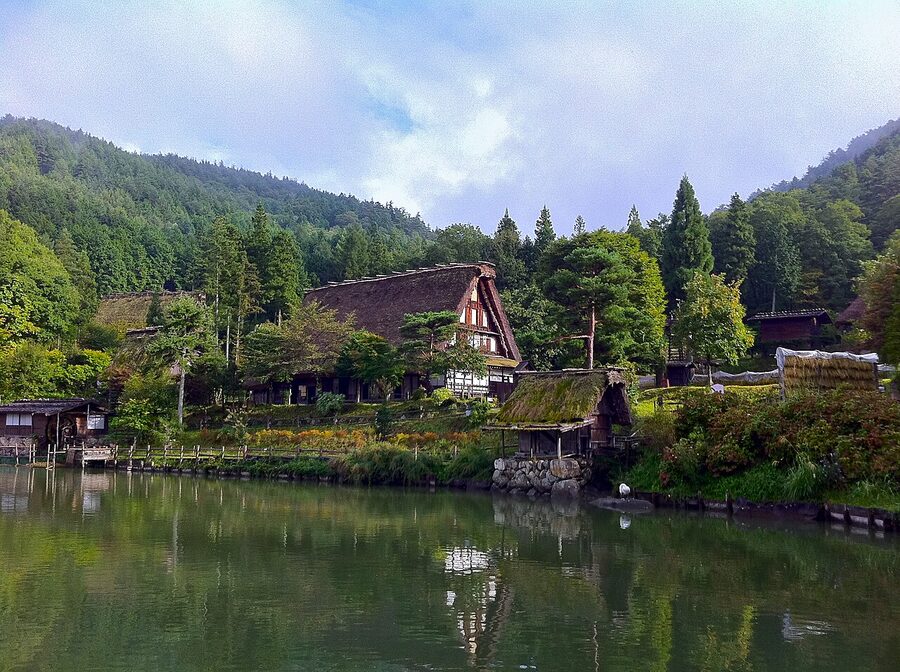
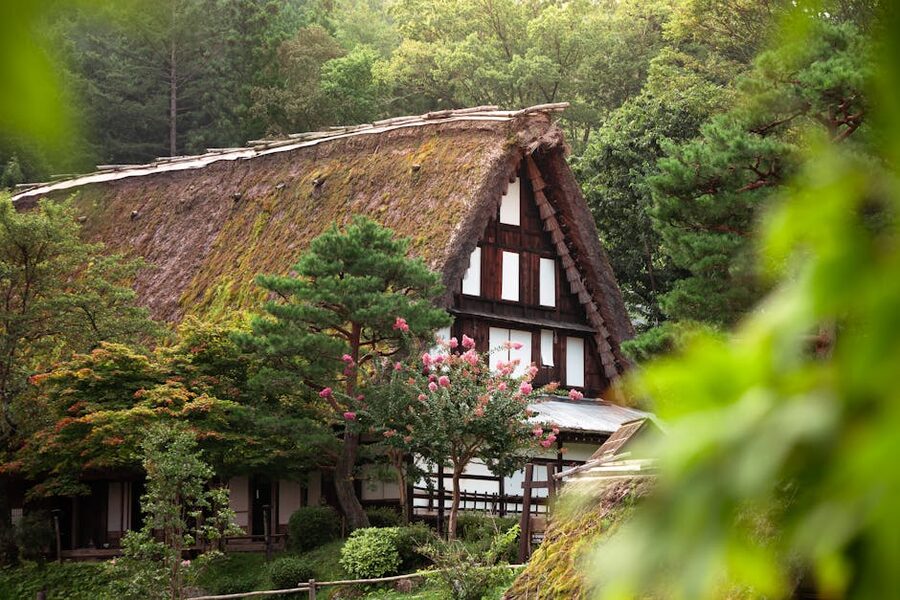
Shirakawa-go is a living UNESCO village where people still live in the gassho farmhouses, where you push past tour groups for the iconic viewpoint, where the experience is the place itself. Hida Folk Village is a working open-air museum on a hillside outside Takayama. Thirty buildings rescued from across the Hida region, four of them designated Important Cultural Properties, all of them open to walk into, several with working artisans inside. The smoke is real. The ceilings are low. The wood under your bare feet has been polished by 200 years of farming families.
Both places matter. They’re not the same project. If you’re spending a single day in Takayama, this is the case for keeping Hida no Sato in your plan even if Shirakawa-go is also on the list, and a stronger case for keeping it if Shirakawa-go isn’t.
In This Article
- Why “Shirakawa-go lite” gets it wrong
- What you’ll actually walk through
- The Goami pond and the entrance view
- The gassho farmhouses: what makes each one different
- The interiors: smoke, low ceilings, and the bare-foot rule
- Takumi Shrine and the chidori lattice
- The kurumada, a wheel-shaped rice paddy
- Rokujizo and the small details most visitors miss
- Working artisans and the crafts you can try
- Practical information
- Hours and admission
- Getting there from Takayama Station
- When to go, by season
- How to combine it with the rest of Takayama
- Hida no Sato vs Shirakawa-go: what to do if you have one day
- What to bring, what to skip
- Things people miss, and how not to
- One small observation, then I’ll stop
Why “Shirakawa-go lite” gets it wrong
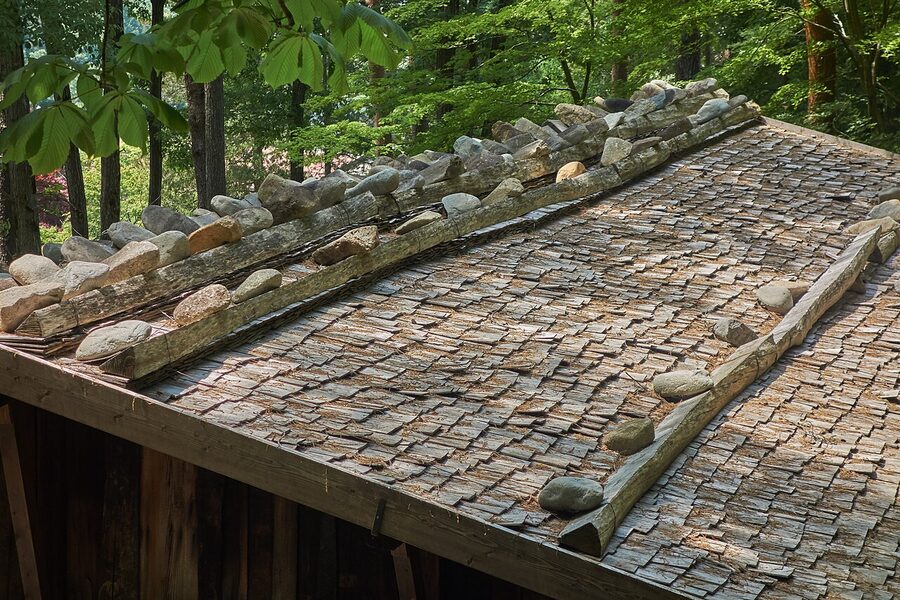
The two things share an architectural tradition. Steep thatched roofs angled like joined hands in prayer, that’s where the word gassho comes from. Both regions sit deep in the snow belt of central Honshu, and both worked out the same answer to the same problem: the roof has to shed three metres of snow without the house caving in.
The differences start there. Shirakawa-go is one settlement, in its original valley, with families still living in the houses. Hida no Sato is thirty buildings from across the wider Hida region, gathered onto a hillside on the southwest edge of Takayama. They came from villages that disappeared, partly because rural Japan was depopulating fast in the 1950s and 60s, partly because dam projects on the Sho River were about to flood several gassho settlements. The buildings you walk through here would mostly be at the bottom of a reservoir if the museum hadn’t been founded in 1971.
That’s the thing the “lite” framing misses. Shirakawa-go preserves a place. Hida no Sato preserves the buildings themselves, and the diversity of regional sub-styles you can’t see anywhere else, because they came from villages that no longer exist. There’s a roof from Shirakawa, a roof from Shokawa, a forked-pillar earthquake-survivor from a 19th-century quake, a chestnut shingle that was deliberately switched back to from ceramic tile after the tiles cracked in winter. The whole hillside is a working catalogue of how the Hida region kept houses standing in the mountains.
What you’ll actually walk through
Three official routes are marked on the map, plus an off-piste extension if you have legs left.
- 15 minutes, wheelchair accessible. Loops the pond, takes in a head-of-village house and a storehouse. Honest version of “I have other plans today.”
- 30 minutes, short loop. Eleven of the thirty buildings, the western half of the site.
- 60 minutes, full loop. All thirty buildings, the climb up to Takumi Shrine, the Rokujizo, the kurumada wheel-shaped paddy.
The 60-minute estimate is wrong if you actually go inside the houses. Plan two hours. Plan two and a half if you want to sit on the floor by an irori for a few minutes, which you should, because the smoke is the thing.
The Goami pond and the entrance view
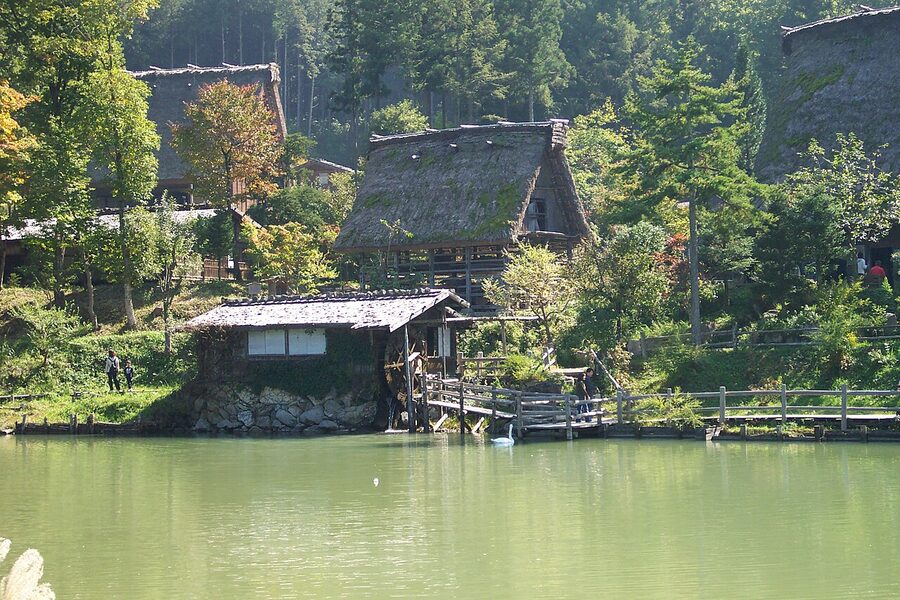
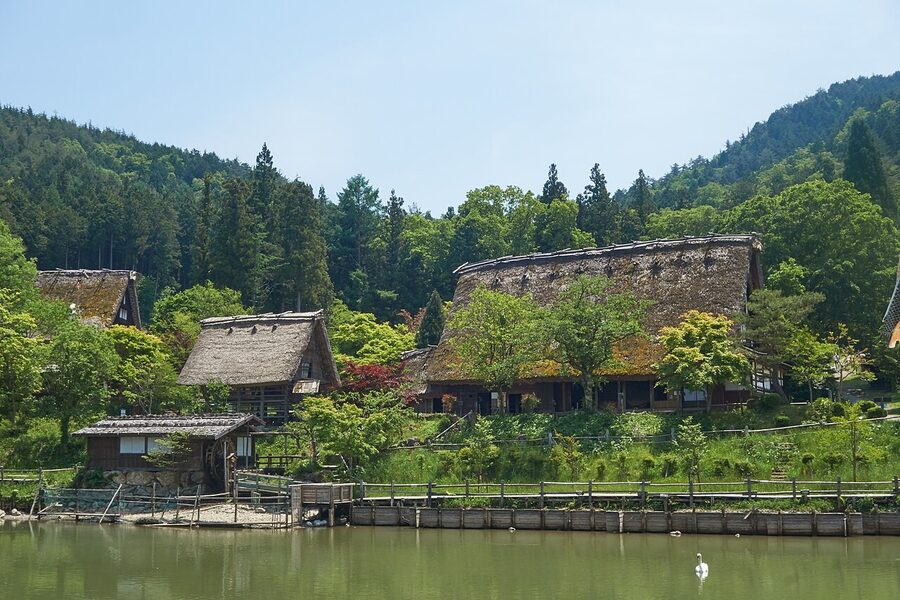
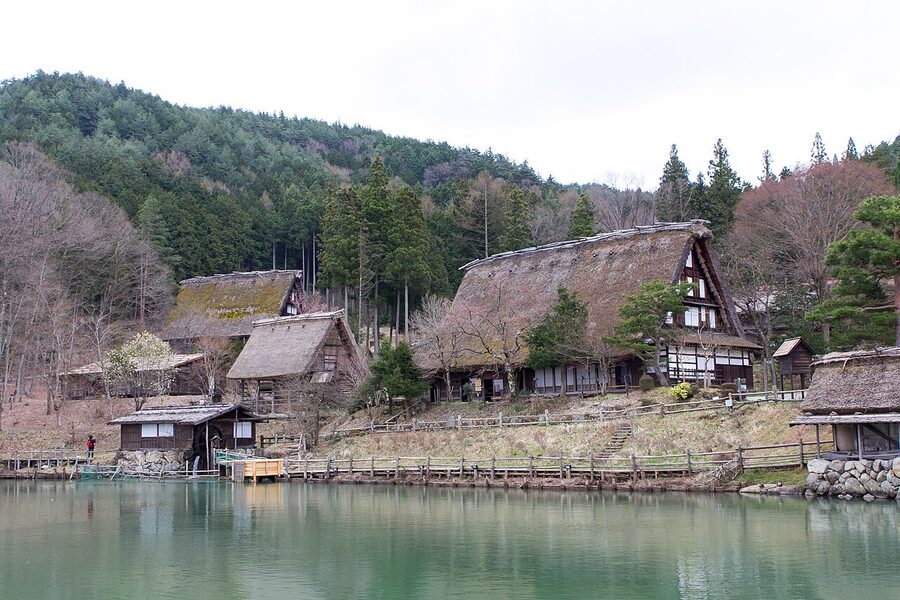
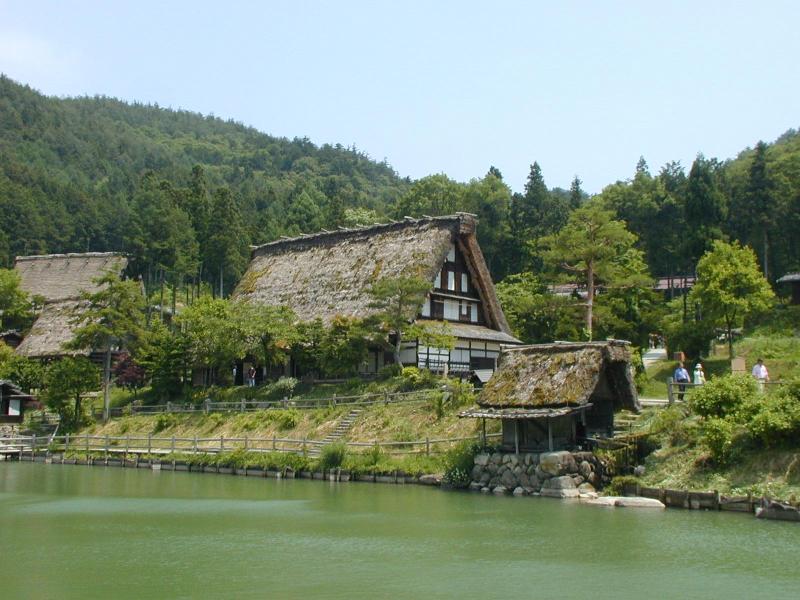
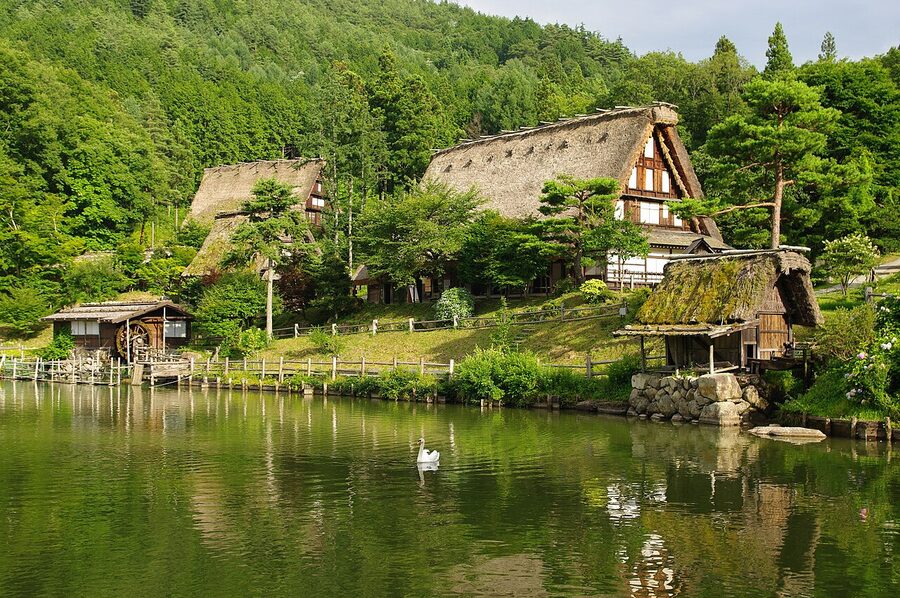
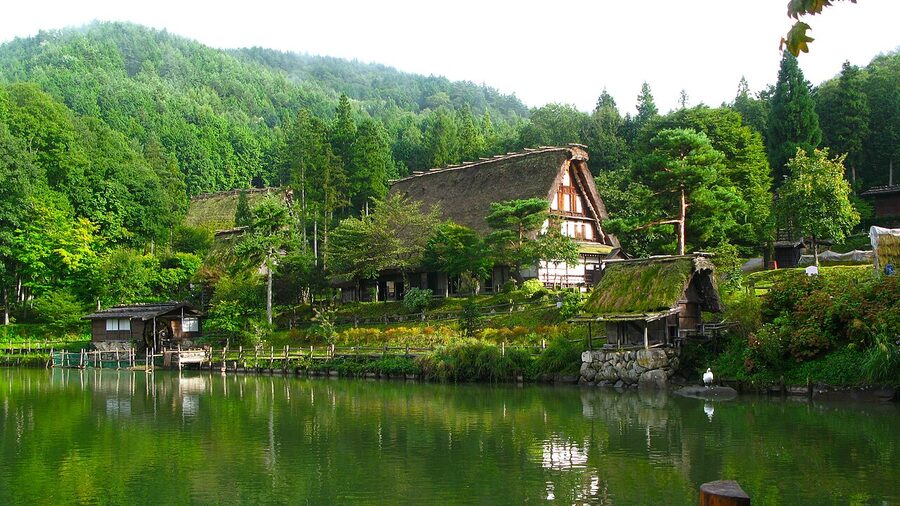
You walk past the ticket gate and the path opens onto the pond. Built in 1931 to feed water to rice paddies, it predates the museum by 40 years and was kept when the buildings were brought in. Locals remember swimming in it in summer and skating on it in winter. There’s an open-sided shelter alongside where old wooden toys are laid out, kendama, spinning tops, stilts, that anyone can have a go at. Children will take the bait. Adults usually do too.
Stand on the pond edge for a minute before you start moving. The thatched ridges across the water are about to be inside-of-the-frame for the next two hours. From here they read as a village.
The gassho farmhouses: what makes each one different
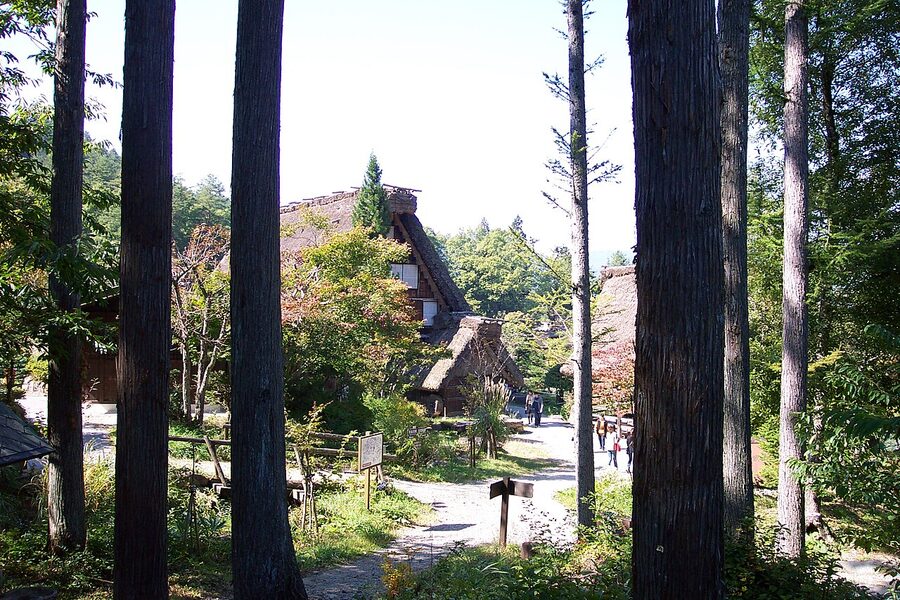
This is the real strength of the place, and it’s why the “lite” framing collapses on contact. Shirakawa-go has gassho-zukuri houses, the same variant. Hida no Sato has gassho plus a dozen other regional roof types, all from different parts of the old Hida province, all sharing one hillside. You learn what a gassho is by comparing it to what it isn’t.
The four buildings designated Important Cultural Properties anchor the route. The houses to look for:
- Wakayama’s House, the one with two roof systems on the same building. Gassho thatch from the Shirakawa side, a hipped-gable shingle roof from neighbouring Shokawa village. You can read the regional border in the silhouette. (The roof has been under restoration on recent visits, the renovation is itself part of the exhibit.)
- Tanaka’s House, the chestnut-wood shingle roof, the one that holds the regional collection of nearly 1,000 daily tools. Ceramic tiles were tried here once and cracked under the winter cold; the village went back to chestnut shingle and stayed there.
- Yoshizane’s House, the only house in its original village to survive an 1858 earthquake. The reason is structural: a forked-pillar system that absorbed the lateral movement. The other houses fell. This one didn’t.
- Taguchi’s House, the village-head residence, the polished beams, the formal entrance, the layered status of a wealthy farming family. The contrast with the smaller storehouse beside it makes the rural class system visible.
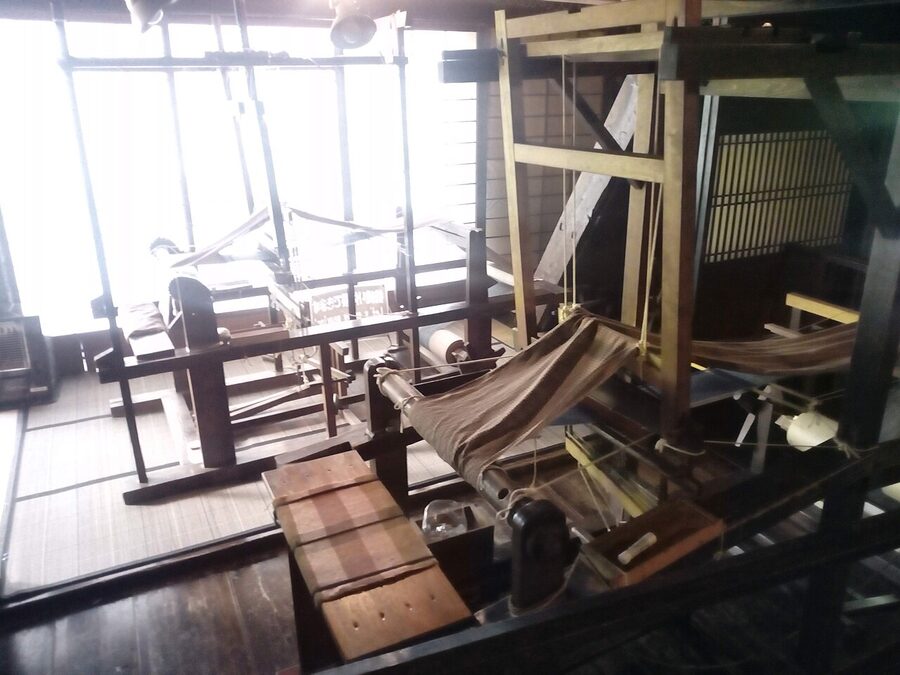
Then the supporting cast: Hozumi’s House, with its 23-strong sledge collection, the ones used to drag granite boulders out of the alpine ravines. Nishioka’s House, which holds 230 silkworm-rearing items and is itself a textbook gassho. Arai’s House, where there’s usually a woman at a wooden loom. Michigami’s. Each one is open. Each one you go into.
The interiors: smoke, low ceilings, and the bare-foot rule
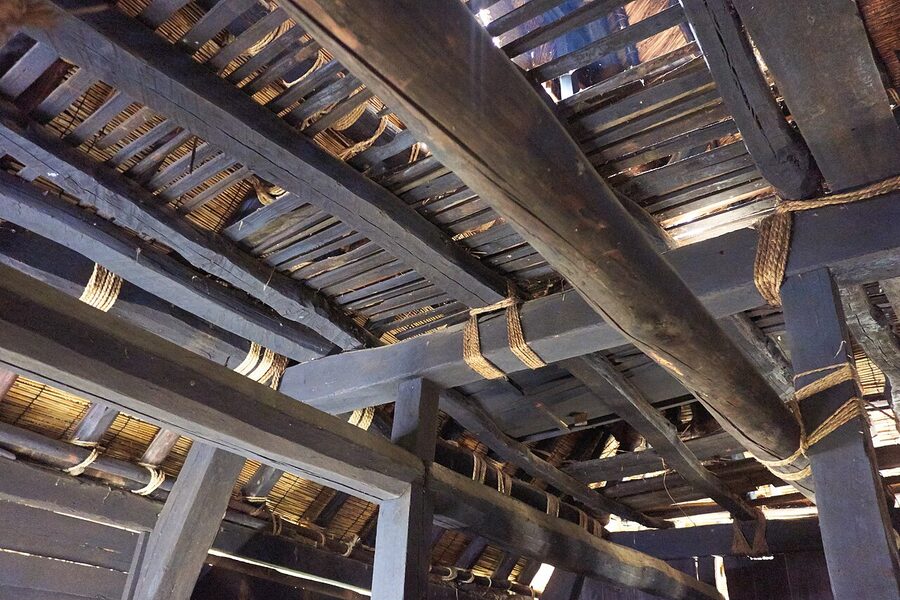
You take your shoes off at every house. The floors are mostly polished wood with the occasional tatami room, and the ceilings are noticeably low, these were homes built for a smaller average human under a heavy snow load. Furniture is sparse: an irori hearth set into the floor, a built-in altar cupboard, a few low tables and tools laid out for context. Historically these houses had almost nothing else. Tatami, futons rolled away during the day, cushions, an altar. That was it.
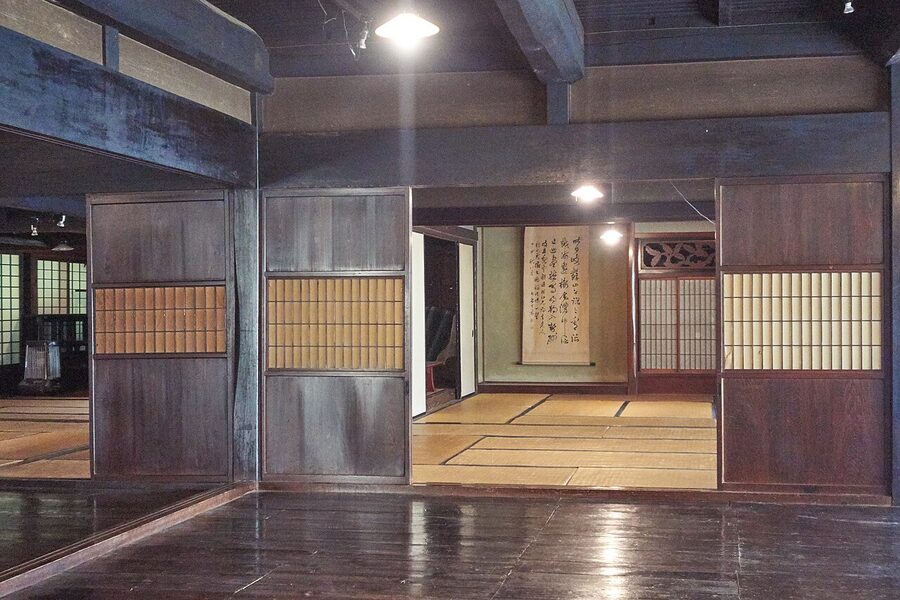
The thing nobody warns you about is the smoke. Every irori in every open house is lit every morning. The fires keep insects and mould away, and they’re a real reason the timber has lasted, but the cumulative effect is that the whole hillside smells like a 200-year-old kitchen. If you’re sensitive to woodsmoke you’ll notice. By the third house you’ve usually stopped noticing.
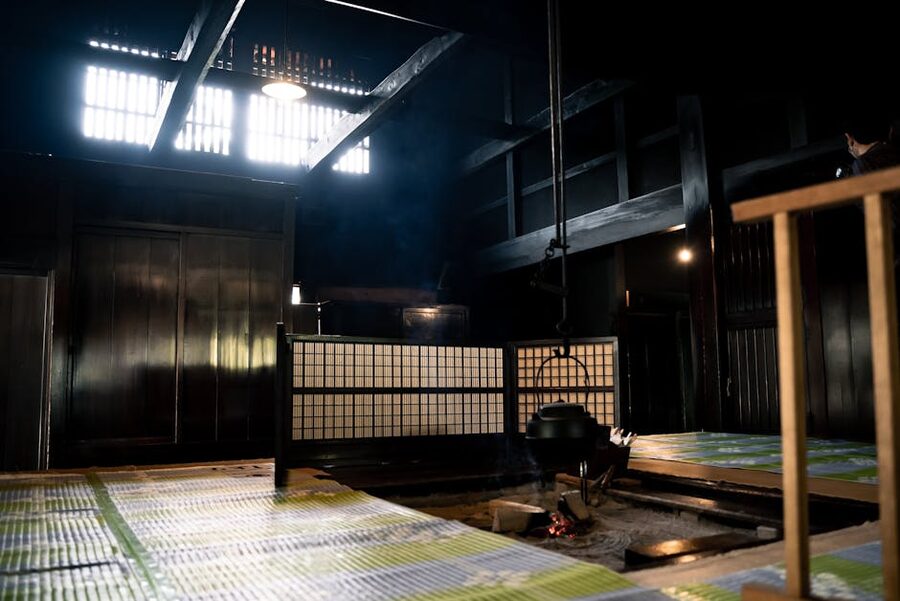
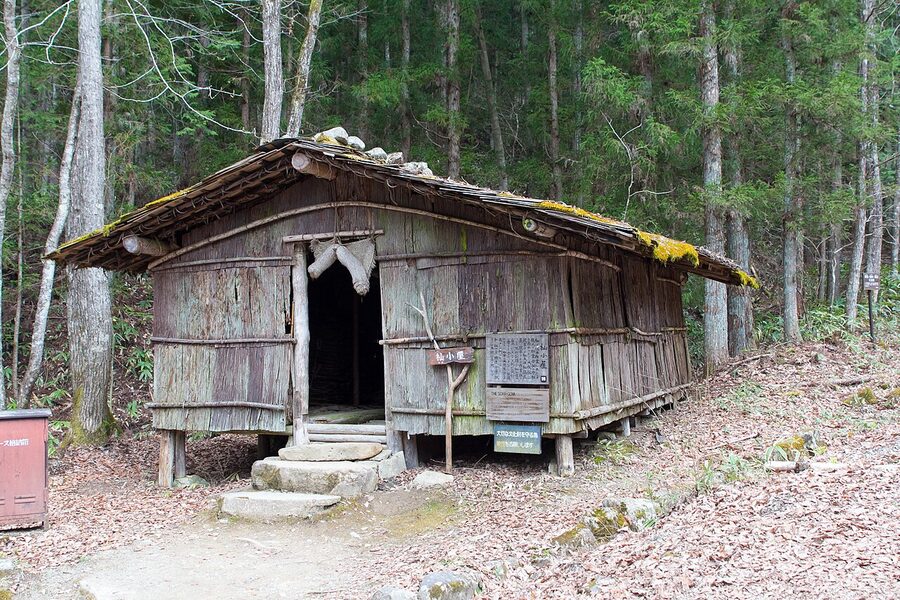
The kettle and pot hang from a height-adjustable wooden hook above the hearth. There’s no chimney. The smoke rises through the roof space, draws across the underside of the thatch, and seasons it from the inside out. That’s how a thatched roof in a region that gets three metres of snow lasts for centuries.
Takumi Shrine and the chidori lattice

The path climbs to a small shrine called Takumi-jinja, dedicated to the master carpenters of the Hida region. Takumi means “skilled artisan”, a word with weight here, because Hida’s carpenters were so highly regarded in the Nara and Heian periods that the central court taxed the region in carpenters rather than rice. They built temples in Nara and Kyoto.
The shrine doors carry a lattice called chidori, named for the foot-prints of plover birds. It’s a four-century-old technique that fits the latticework together without nails, screws, or glue, pure interlocking joinery. Locals will tell you it was kept secret for generations specifically because nobody could work out how it was done from the finished door.
The painted ceiling inside the shrine, botanical decorations done by 42 different local carpenters when the shrine was relocated here, is only opened to public view for one week a year, to protect the colours. Most visits will not coincide. Don’t expect it to be open. If you’re lucky the door is propped, and you stand and crane your neck for a few minutes.
The kurumada, a wheel-shaped rice paddy
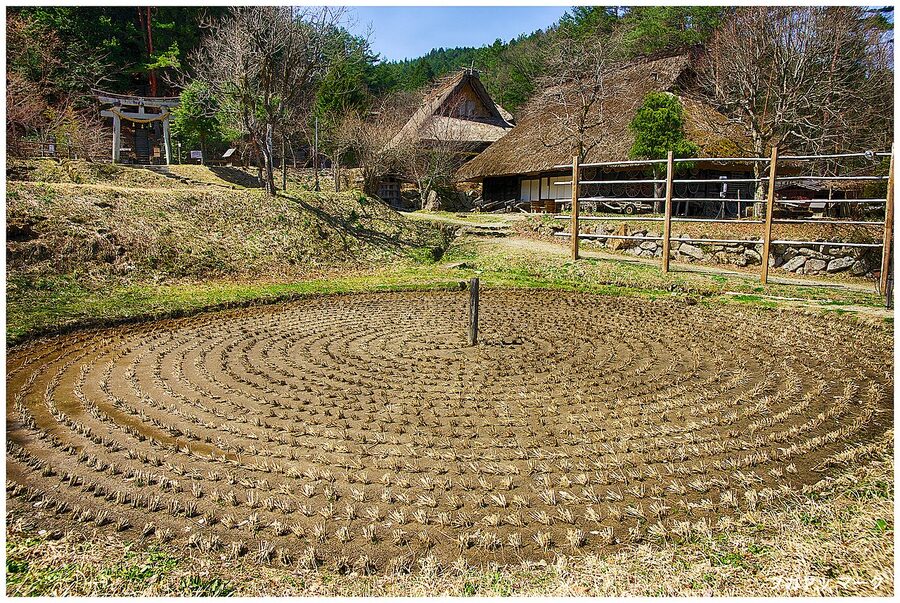
Up the path beyond the shrine you’ll come across a small circular paddy, a kurumada, “wheel paddy.” It’s a working field. Rice is planted here in May and harvested in September, both with traditional hand tools and with the gates open so visitors can watch. Most paddies in Japan are rectangular grids; the kurumada is the older form, used where the topography wouldn’t accept a square. There aren’t many surviving examples anywhere in the country. This is one.
Rokujizo and the small details most visitors miss
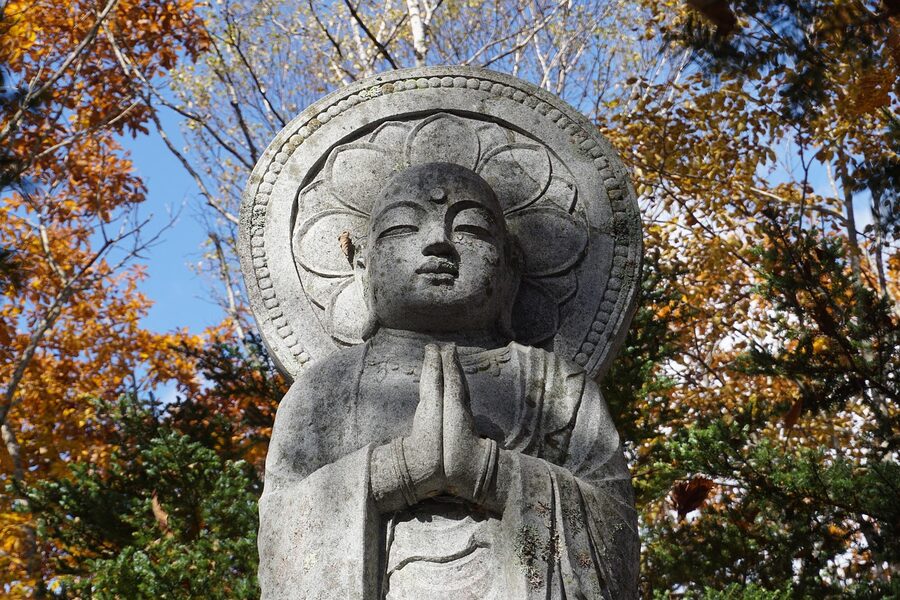
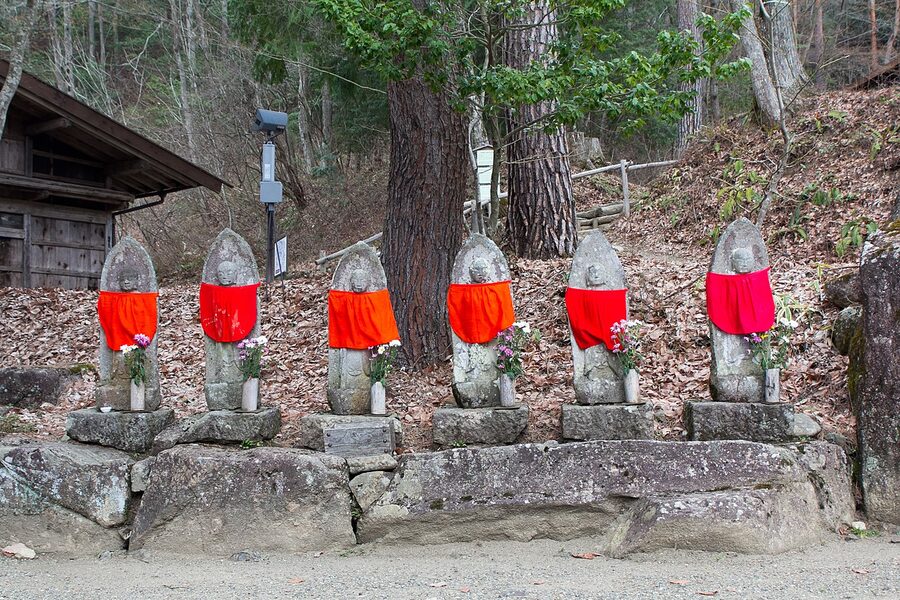
Near the upper edge of the route is a row of six weathered stone Jizo, carved around 1740. In Buddhist iconography each one stands for one of the Six Paths of Transmigration, Hell, Hunger, Beasts, Carnage, Humans, Heaven. People worshipped them to ward off suffering across all six. They were rescued from a hillside elsewhere in Hida and re-set here.
Just below them is a stone torii gate with two large round stones lying on the ground. The heaviest is around 70kg. Local men in the original village used to test their strength by lifting them at festival time. Almost nobody pays attention to those stones, there’s no sign making it obvious. If you ask the museum staff, they’ll tell you the story.
Working artisans and the crafts you can try
This is the second thing the “lite” framing misses. Shirakawa-go has gassho houses you photograph from outside. Hida no Sato has artisans inside the houses, working, straw-weaving sandals, operating a wooden loom, carving wood, doing lacquerware. They look up, nod, and go back to it. You can stand in the doorway and watch as long as you like.
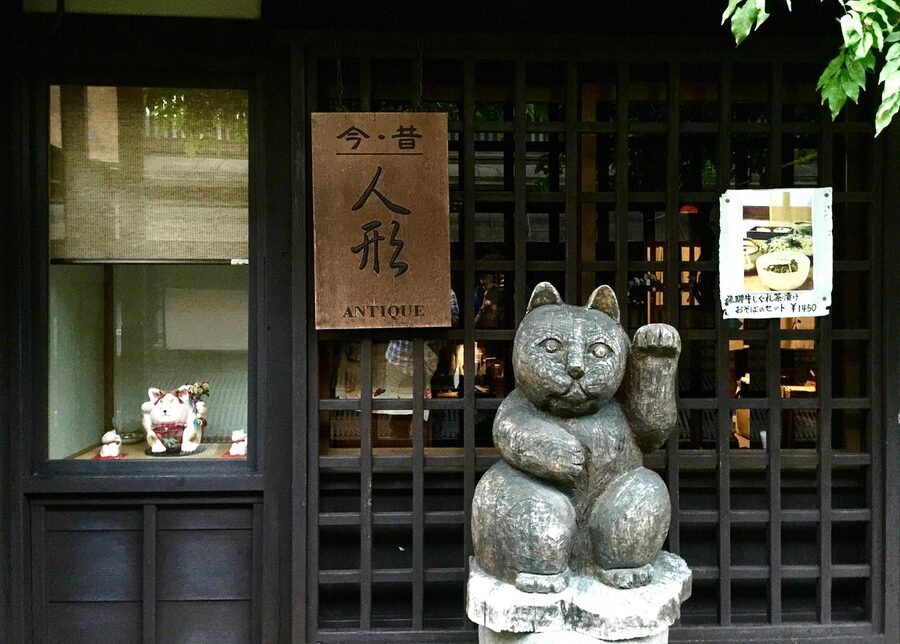
If you want to make something yourself, the Hida Takayama Crafts Experience Center sits across the road from the museum entrance, beside the bus stop. Walk-in, no booking needed. Workshops run from 15 minutes to about an hour and cost between ¥600 and ¥3,000 depending on what you choose. Sarubobo dolls (the limbless red Hida talisman), beaded keychains, hand-thrown ceramic cups, glass wind chimes, dyed fabric, sashiko embroidery, woodcarving, lacquer. Show your Hida no Sato ticket for a small discount. The hours run 10:00 to 16:00 with last admission at 15:30, closed Thursdays except on national holidays. If a Thursday is the only day you have, the Folk Village itself stays open, you’ll miss the workshops but not the buildings.
This is also where the school groups go. Mid-morning on a weekday in term time, the centre will have classrooms of nine-year-olds making sarubobo and the village will be quiet. That’s not an accident, schedule accordingly.
Practical information
Hours and admission
- Open: 8:30–17:00 daily, year-round. No closing days.
- Adult: ¥700 (groups of 20+ ¥600).
- Child: ¥200 (groups of 20+ ¥150).
- Parking: ¥300 cars / ¥250 motorbikes / ¥1,000 buses.
- Phone: 0577-34-4711.
Allow two hours minimum if you’re doing the full loop. Half a day if you’re combining it with a workshop at the Crafts Experience Centre.
Getting there from Takayama Station
The village sits about 2.5km southwest of central Takayama, on a hillside above the Hida River. There are three sensible ways to reach it, and one impractical one.
- Sarubobo Bus (the ¥210 single-fare community bus). Departs from the Nohi Bus Center next to JR Takayama Station, runs about twice an hour, takes 10 minutes. Get off at “Hida no Sato Shita”, the entrance is across the road. A ¥500 1-day pass pays for itself if you’re also planning the morning markets and the old town. The bus colour is bright blue with a sarubobo doll painted on the side, hard to miss.
- Walk. About 30 minutes from the station, mostly on a sidewalk along the main road. There’s no big shade until you start climbing the museum hill, so it’s a sweaty walk in summer. In winter the same walk is icy and uphill, take the bus.
- Taxi. About 10 minutes, around ¥1,200 from the station. Worth it if you’re tight on time or with kids.
- Drive. The car park is fine if you’ve already got a rental, but renting one just for this is overkill, the bus exists for a reason.
Going back into town is the same Sarubobo route in reverse. The bus stop on the return side is signed in English. If you’ve been to the morning markets first and the Folk Village second, you’ll be back in central Takayama by lunchtime.
For a wider read on Takayama’s bus and rail layout, the Japan Alps access guide covers the trains in from Nagoya and Toyama and which passes are worth it.
When to go, by season
There’s no bad season here, but the seasons aren’t equal.
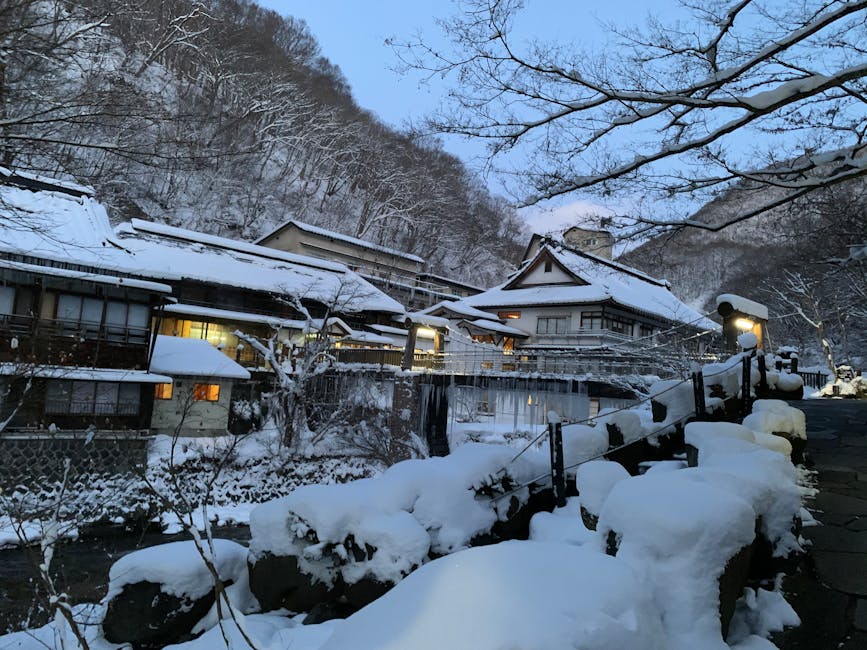
- Winter. Mid-December to mid-March is the snow window. The roofs accumulate the heavy thatch-with-snow look that drove the design. The annual winter illumination event runs from around 9 January to the end of February, 17:30–20:30, when the museum stays open after dark and the buildings are floodlit through the snow. Admission during the light-up drops to ¥300 adult / ¥100 child. There’s a dedicated shuttle bus from town in the evening for ¥250 each way (Nohi Bus runs it).
- Spring. Cherry blossoms hit the ridge in mid-April, alongside the Spring Sanno Matsuri in town. The Hina Doll Festival runs through March and April inside several of the houses, small dolls laid out on tiered stands.
- Early summer. May is rice planting in the kurumada paddy. June is the iris bloom around the pond. The mosquitoes also arrive. Pack repellent.
- Summer. The smoky farmhouses are cool inside on hot days. Tanabata in early August. Bears do occasionally come down to the woodland edge of the property, the staff manage it, but it’s why the wooded boundaries are fenced.
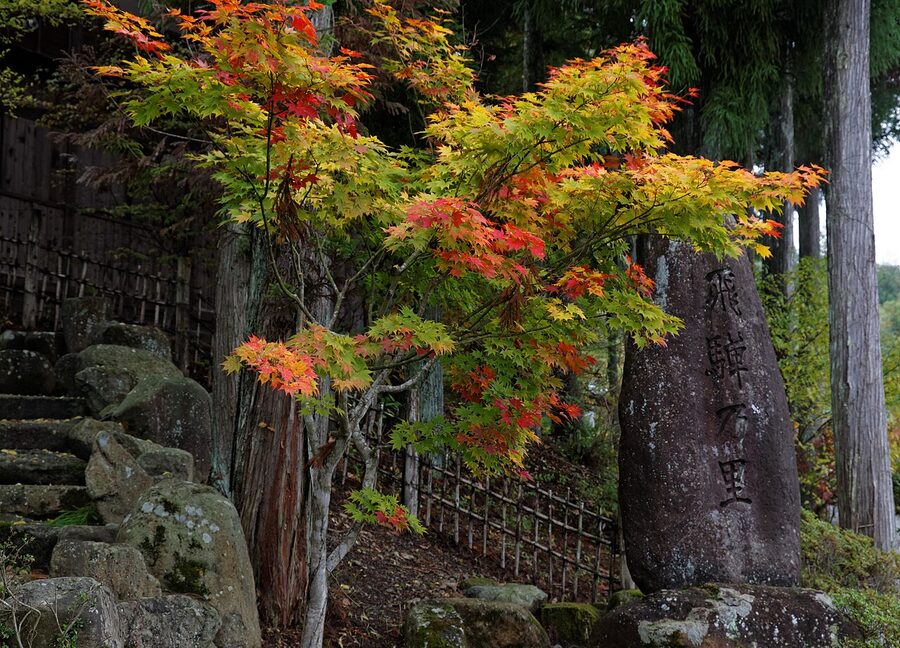
- Autumn. Late October into early November the maples around the pond turn. There’s an autumn illumination event in October, fewer people than the winter version, just as good for photographs.
If you can only pick one, the answer depends on your priorities. Snow on the gassho roofs is the iconic image, and the winter illumination is the strongest evening experience in town, but it draws crowds. A weekday morning in late October has fewer people, the rice harvest is happening, and the maple colour is at its peak. That’s the version most travellers don’t plan for.
How to combine it with the rest of Takayama
The Folk Village is on the southwest edge of town. The historic old-town areas, Sanmachi-suji and the Jinya, are central. That geography sets the day:
- Morning: Morning markets from 7:00 (8:00 December–March), then Sanmachi-suji as the shops open around 9:00.
- Lunch in central Takayama: Hida beef somewhere on Sannomachi street. See the Takayama food guide for specific picks.
- Afternoon at Hida no Sato: bus over at 13:00, two hours on the route, optional 30–45 minutes at the Crafts Centre, bus back by 17:00.
That’s a reasonable single day. The bus ride between the two, 10 minutes, is a small enough seam that the day doesn’t feel split. If you have two days, do the morning markets and Sanmachi on day one and the Folk Village on day two, with the Yatai Kaikan festival float exhibition hall in between.
The Japan Alps itinerary guide has the longer multi-city framing if Takayama is part of a wider central Honshu route through Matsumoto, Kanazawa, or the Tateyama-Kurobe Alpine Route.
Hida no Sato vs Shirakawa-go: what to do if you have one day
The realistic question for a lot of travellers passing through Takayama on a single full day. The honest answer:
- Pick Shirakawa-go if you want the dramatic landscape view (the Shiroyama observation deck, the snow-blanketed valley, the river crossings) and you’re willing to spend two and a half hours of the day on bus transit. You’re going for the place, not the buildings as objects.
- Pick Hida no Sato if you want to walk inside the buildings, talk to the artisans, see the regional roof variations side by side, and not lose two hours to transit. You’re going for the architecture and the craft, not the panorama.
- Pick both if you have two days in Takayama. Morning at Hida no Sato to learn the architectural vocabulary, afternoon Shirakawa-go bus the next day to see it as a working settlement. The two read better together than either alone.
If you’re genuinely splitting hairs, Hida no Sato wins on practical grounds for most one-day visitors: it’s cheaper, closer, easier to plan around, and you actually go into the houses. Shirakawa-go’s big advantage, landscape, is also its big downside on a damp day or in poor visibility. The viewpoint is the experience, and if the view is in cloud you’ve spent ¥5,000 on bus tickets for nothing. Cross-reference the Shirakawa-go guide if you’re weighing the two seriously.
What to bring, what to skip
A short practical list:
- Slip-on shoes. You’ll take them off and put them back on at most of the open houses. Lace-up boots are a misery here.
- Socks without holes. The polished wood is cold in winter and you’ll be on it.
- A jumper for summer interiors. The smoky farmhouses are noticeably cooler than outside, and you’ll want it.
- Mosquito repellent for May to September. The pond is photogenic and full of insects.
- Cash. The ticket booth takes cards, the Crafts Centre may not for smaller workshops. ¥3,000 in coins and small notes covers most contingencies.
- A printed map or phone offline map. The bilingual signs are minimal once you’re past the entrance. The paper map you get at the gate is fine; don’t lose it.
Skip the audio guide. It exists, it’s available in English, and the houses speak for themselves once you’ve read the placards. You’re better off with the silence.
Things people miss, and how not to
The two areas the average visitor under-walks:
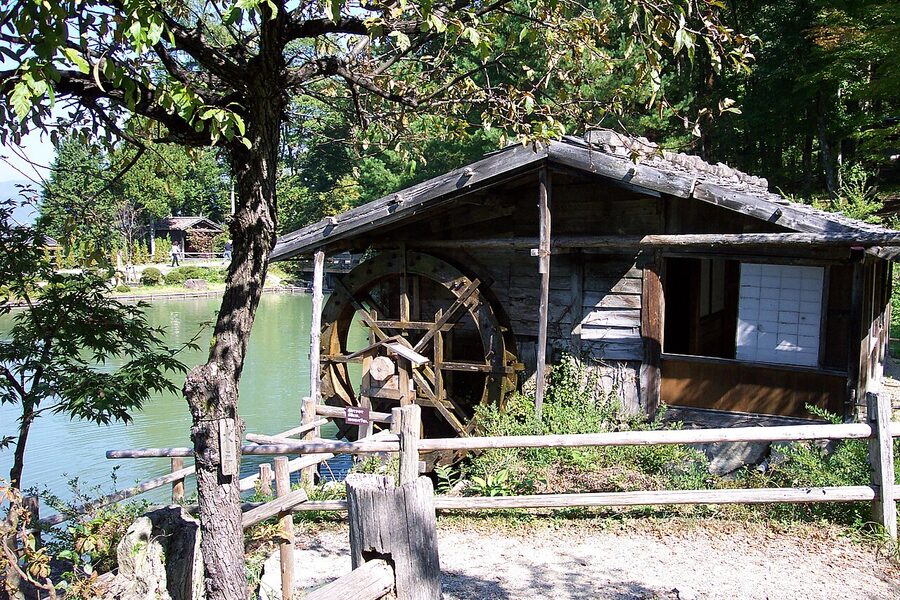
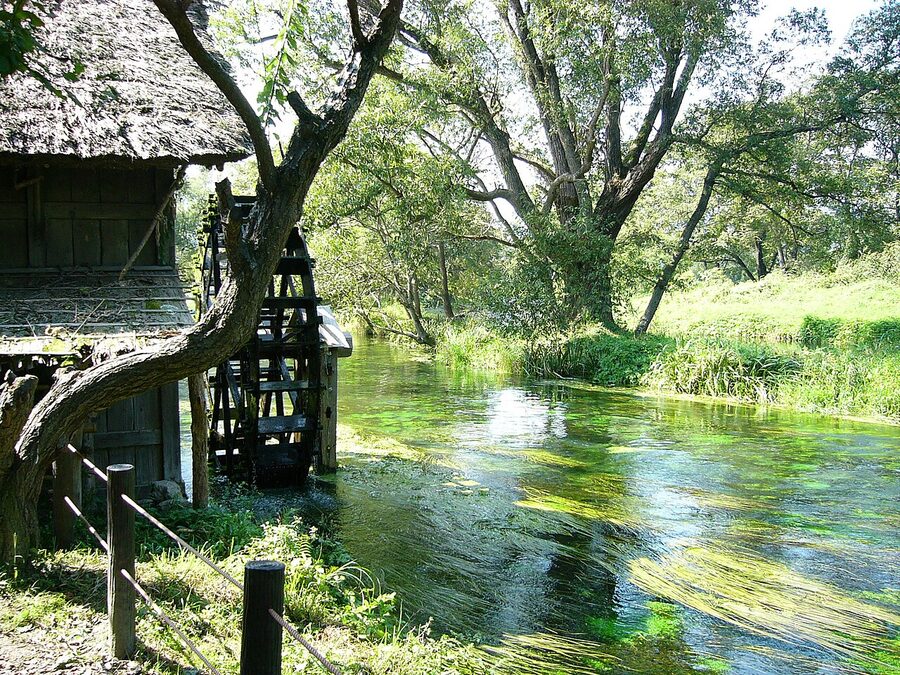
- The water mill on the upper terrace. It’s a working hydraulic reconstruction, set on a small stream. You can stand inside and watch the wooden gears turn. Most people are too far through the route by this point and breeze past.
- The storehouses behind the main farmhouses. Smaller, plainer, easy to ignore, but they hold the working tools, the silkworm trays, the rice-husking equipment. They’re where the day-to-day labour happened. Skipping them and only seeing the farmhouses gives you a half-version of the place.
Time the visit so you’ve got a clear hour-and-a-half on the route, not a tight 45 minutes before you have to be back at the bus. Rushing here is the easy mistake.
One small observation, then I’ll stop
The thing I keep coming back to about Hida no Sato is the fire. Every irori in every open farmhouse is lit every morning by the staff, not for atmosphere, although it is atmospheric, but because that’s how the buildings have always been kept. The smoke goes up through the unsealed roof space, the soot blackens the rafters from beneath, the salt and oil from the cooking penetrate the timber. That’s not a museum re-enactment. That’s the maintenance that keeps the structures standing. The buildings here aren’t being preserved despite being lived-in objects; they’re being preserved because somebody is still treating them as lived-in objects every morning before the gates open. You feel it the moment you step inside the first one. You leave smelling of woodsmoke. That’s the point.
.jpg)

.jpg)


.jpeg)


.jpg)

.jpg)