
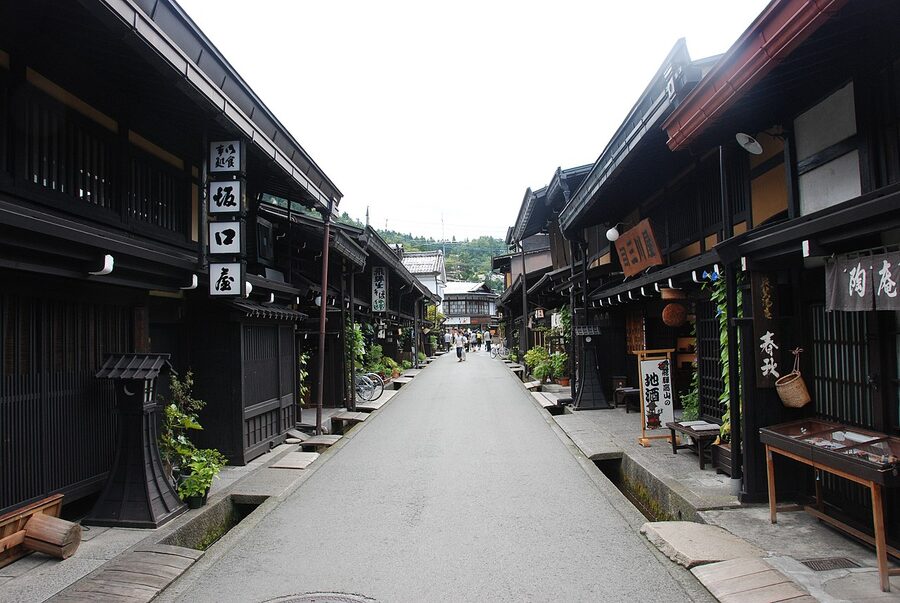
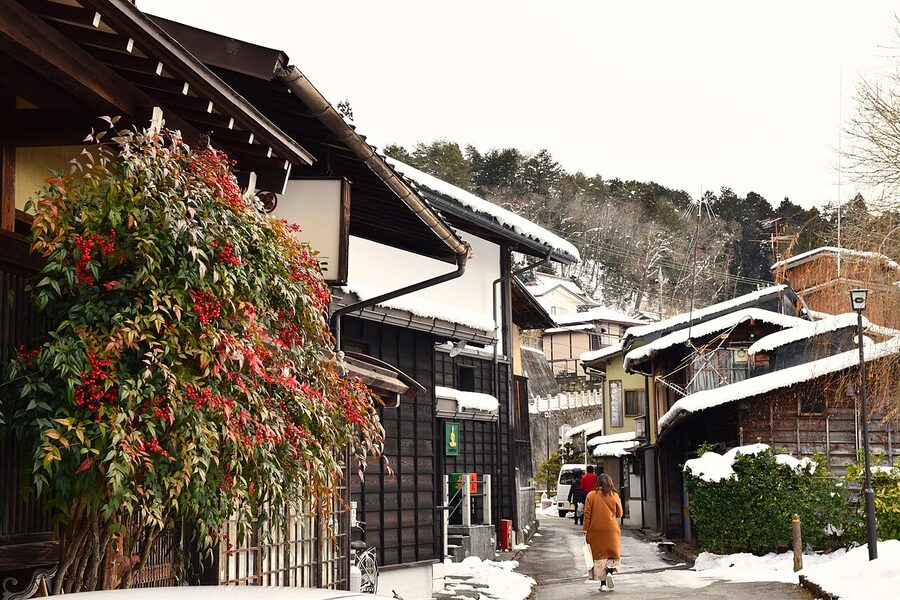
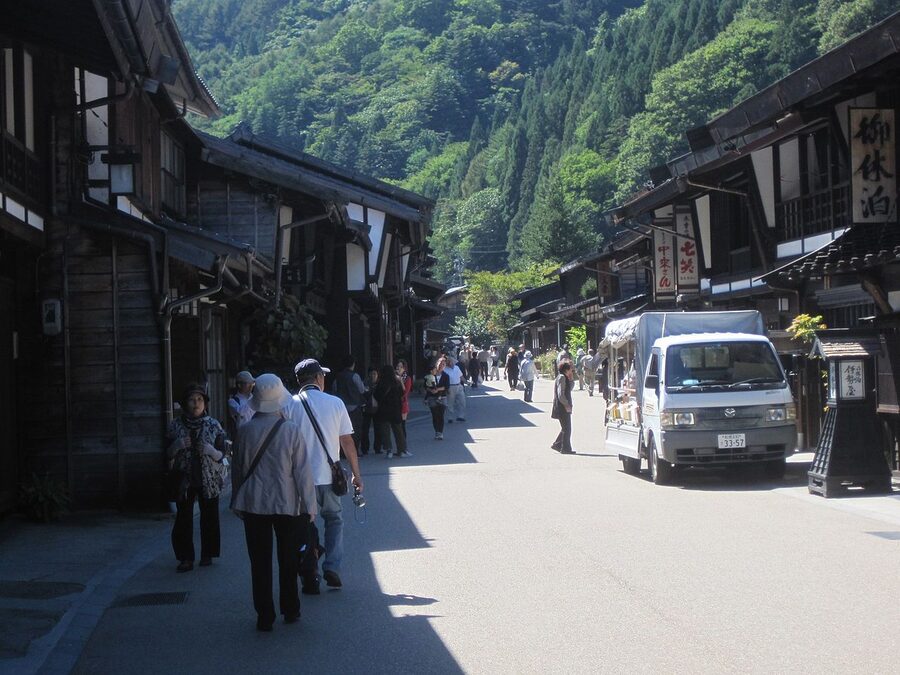
Sanmachi-suji at 7am is the version of Takayama nobody photographs. Shutters down. Two postal carriers on bicycles. A delivery driver from one of the sake breweries unloading wooden crates. The black-brown lattice fronts that look so dressed-up in the brochures are just walls again, with their owners moving around behind them. If you can be on Kami-Sannomachi street before the first tour bus rolls in around 9am, you get an Edo-period merchant town doing its morning routine, not a film set.
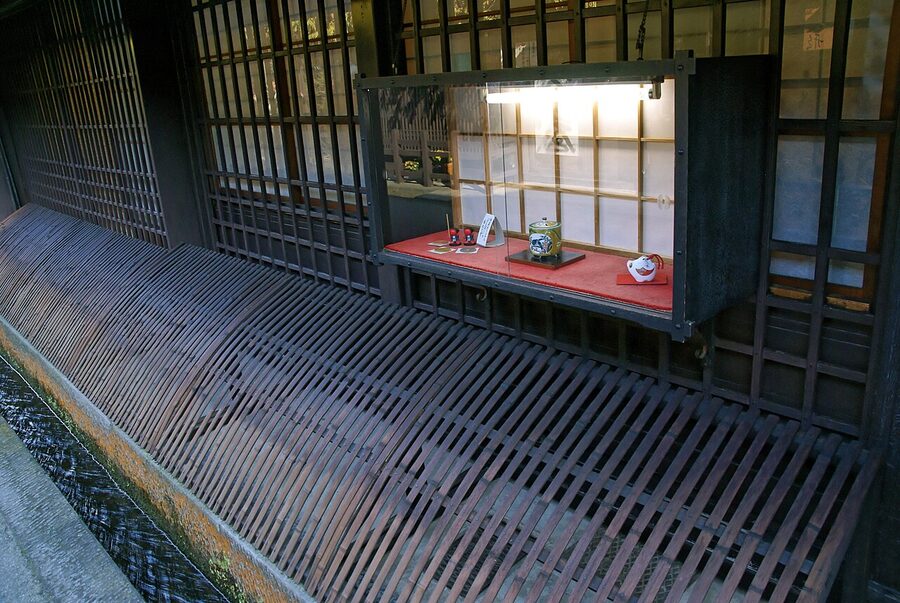
This is a guide to the three central walks of Takayama, treated as one route. Sanmachi-suji, Takayama Jinya, and the Higashiyama Yuhodo temple loop sit close enough together that you can do them in three to four hours of walking, with stops, on the same morning. Most itineraries treat them as separate boxes to tick. They aren’t. Walked in order, they tell one story: a merchant town that grew rich on Hida timber, came under direct shogunate rule because of that wealth, and built temples on the eastern hillside to manage what came next. You feel the logic of it on foot.
I’ll give you the route, the opening hours, the entry fees, and the named shops worth stopping for. I’ll also flag the two stretches most visitors skip, which I think are the best parts.
In This Article
- The shape of the walk
- Sanmachi-suji: three streets, not one
- Kami-Sannomachi: the headline street
- Kami-Ninomachi: the quiet middle
- Kami-Ichinomachi: where the working breweries cluster
- The sake breweries worth stopping at
- Hirata Kinenkan
- Yoshijima and Kusakabe Heritage Houses
- The two stretches most itineraries skip
- Crossing Nakabashi
- Takayama Jinya: the only one left
- Why the shogunate took Hida directly
- Inside: what to look for
- The Onkura rice storehouse
- Practical: getting in
- The Jinya-mae market connection
- Higashiyama Yuhodo: the temple loop nobody talks about
- Where to start
- Unryu-ji and Eikyo-in
- Higashiyama Hakusan Shrine
- Daio-ji
- Sogen-ji and Tensho-ji
- The two spots most itineraries skip
- Higashiyama Shinmei Shrine and the Jūnishin-do
- Where to eat as you walk
- When to walk it
- Practical: pacing the day
- Combine with the rest of Takayama
The shape of the walk
From JR Takayama Station the route runs east, then south, then east again, then north. Total walking distance is about 3.5km. With a slow look round Sanmachi, a full visit to the Jinya, and the temple loop, you should plan for three and a half hours minimum, four if you stop for a coffee, five if you’re the type who reads every plaque.
Here’s the order I’d walk it:
- Station to Nakabashi (the red bridge): 10 minutes east on Kokubunji-dori.
- Across Nakabashi, then up into Sanmachi-suji: 60 to 90 minutes for the three streets, with the Yoshijima and Kusakabe houses if you want them.
- Down to Takayama Jinya (south of Nakabashi): 60 minutes for a proper visit.
- East across the river again, up to the Higashiyama Yuhodo: 60 to 90 minutes for the temple loop.
- Back to the station via the eastern foot of the temple hill: 15 minutes.
That’s the practical version. If you only have two hours, drop Higashiyama and do the Sanmachi + Jinya loop. If you only have one hour, walk Kami-Sannomachi street, cross Nakabashi, and call it. Don’t try to fit the temple walk in if you’re rushed; it asks for the time it asks for, and rushing it strips out the point.
Sanmachi-suji: three streets, not one
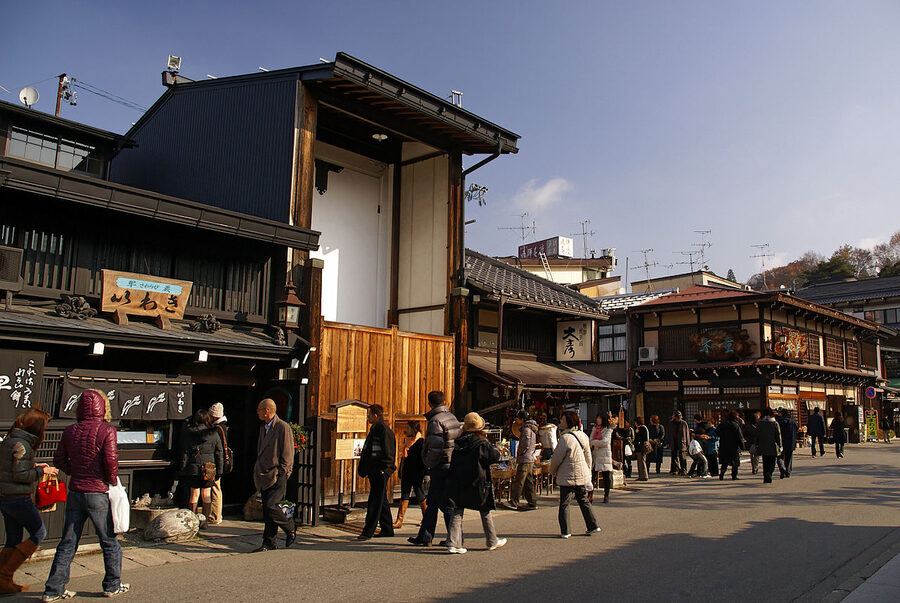
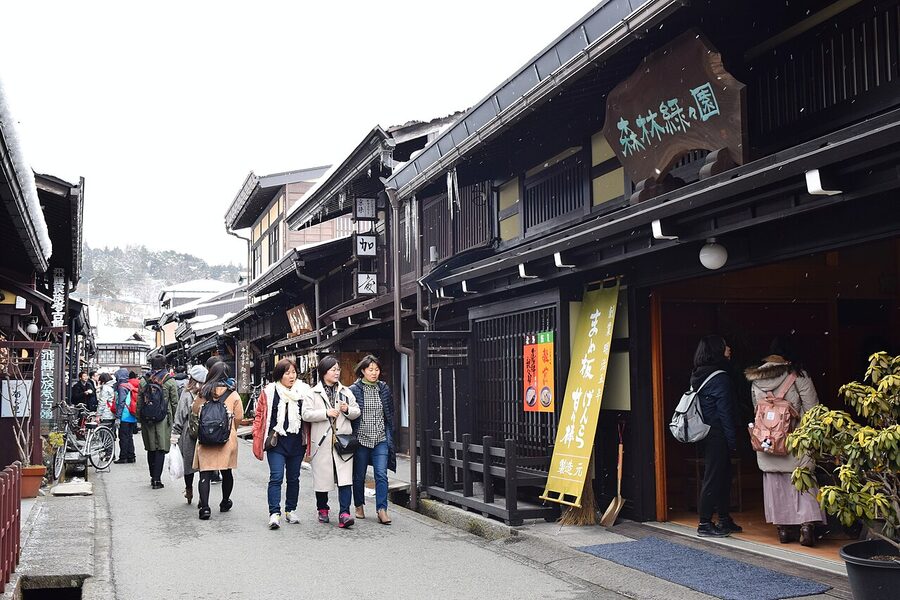
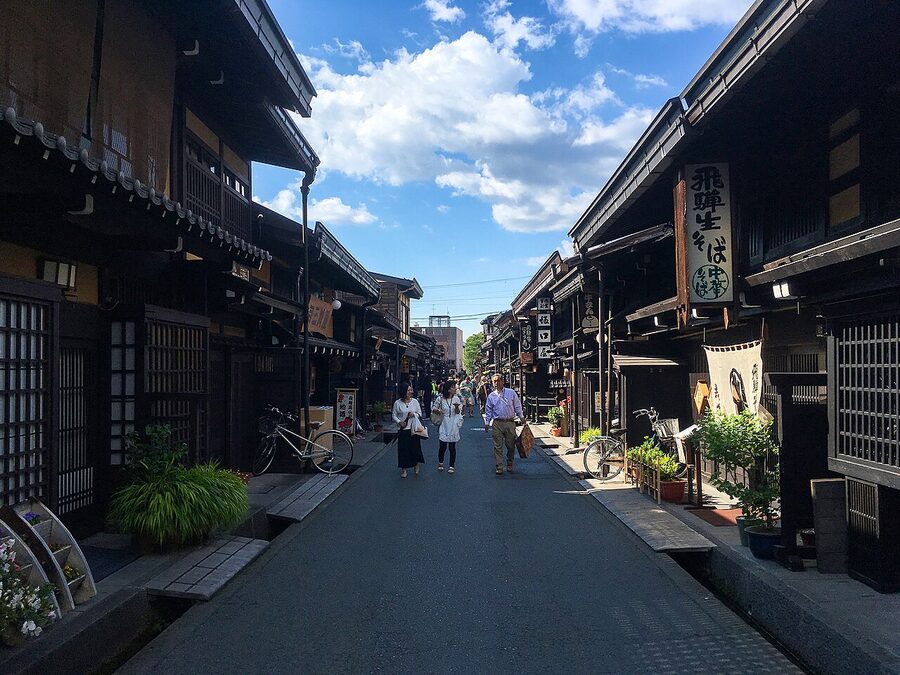
Sanmachi-suji means “three streets,” and that’s exactly what it is: three parallel lanes north of Yasugawa-dori, running roughly north-south on the east side of the Miyagawa river. From west to east they are Kami-Ichinomachi, Kami-Ninomachi, and Kami-Sannomachi. They were the commercial heart of Takayama from the early 1600s onward. The whole zone is a nationally designated Important Preservation District for Groups of Traditional Buildings, which means very strict rules about what owners can change. The cables get buried. The signs get carved into wood. Air-con units get hidden behind grilles. It’s not a museum street, but it’s the closest thing Japan has to one.
The three streets feel different from each other and most guides paper over that.
Kami-Sannomachi: the headline street
Sannomachi is what people mean when they say Sanmachi-suji. It’s the easternmost lane and it has the highest density of working sake breweries, craft shops, and old merchant houses still trading. If you only walk one street, walk this one. The shopfronts are typically open from 9:00 to 17:00. The whole strip is about 350 metres long, with buildings on both sides. You can do it slowly in 30 minutes, or stretch it to a full morning if you stop into shops.
Kami-Ninomachi: the quiet middle
The middle street is the one most people skip. It has fewer shops, more residences, and a couple of cafés that lean local rather than tourist. If Sannomachi feels too packed by mid-morning, slip one block west into Ninomachi and the crowds essentially evaporate. The buildings are the same age and style; the visitor density is a third.
Kami-Ichinomachi: where the working breweries cluster
Ichinomachi is the westernmost of the three, closest to the river, and it’s where most of the working sake breweries are. You spot them by the sugidama hanging over the entrance, a ball of cedar branches tied tight and gone brown over the year. A green one means new sake has just been pressed. A brown one means the sake is mature and ready to drink. Tradition says the colour change marks the readiness of the brew.
The sake breweries worth stopping at
There are six working breweries in central Takayama. Five of them have the classic merchant-house frontage and you can usually walk in for a tasting between roughly 10:00 and 16:00. Funasaka and Hirase are on Kami-Sannomachi, Niki is on Kami-Ichinomachi. Tasting fees run ¥300 to ¥500 for a small set of three or four cups. Don’t try to do all six in one go. Pick two, sip slowly, and ask about the local rice (Hida-homare is the local variety used by most of them) and the soft mountain water that gives Hida sake its famously clean finish. There’s a longer dive into the breweries in the Takayama food guide, which I’d save for after you’ve actually visited a couple.
Hirata Kinenkan
The Hirata Memorial Museum (Hirata Kinenkan) is on Kami-Ninomachi and it’s the right size of museum: small, focused, in the actual house of the Hirata family who ran a candle-and-pomade business here from the early 1800s. The first floor preserves the shop. The back rooms are the living quarters. Admission is ¥300. Allow 20 minutes. It opens 9:00 to 17:00, closed on irregular dates listed at the entrance. they’re idiosyncratic so always check the day-of sign.
Yoshijima and Kusakabe Heritage Houses
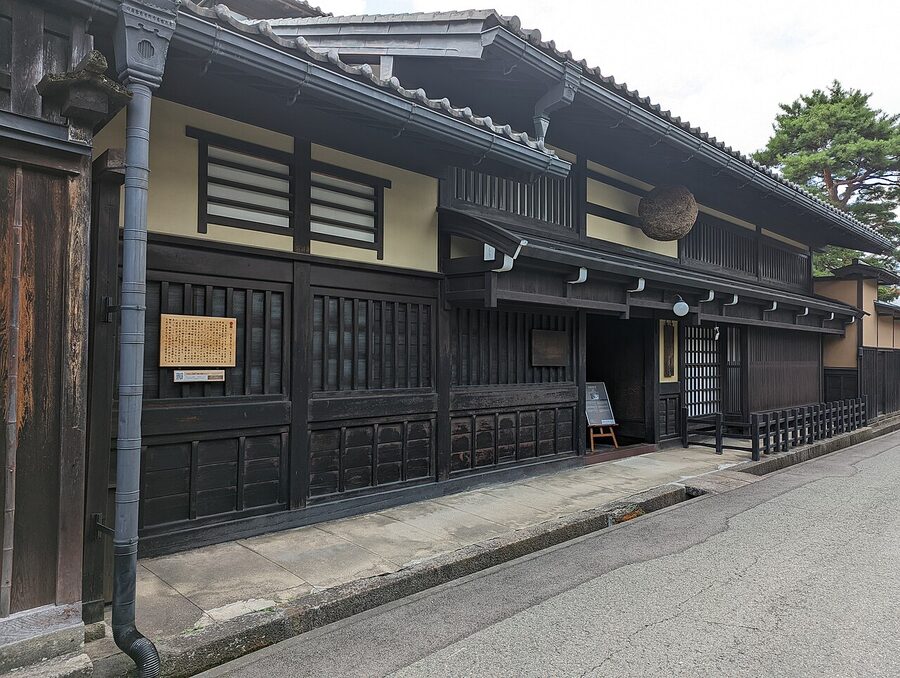
Both heritage houses sit slightly north of the main Sanmachi grid, on the same block. They are the deep-cut option for anyone who likes architecture, and they reward an hour each.
Yoshijima Heritage House (吉島家住宅) is the one with the dramatic skylight and the dark, soaring timbers. The Yoshijima family were sake brewers and the building was rebuilt in 1907 after a fire, but using late-Edo joinery and proportions. Hours: 9:30 to 17:00 March to November, 9:00 to 16:30 December to February. Closed Tuesdays year-round, plus Wednesday to Friday in winter. Admission ¥500.
Kusakabe Heritage House (草田部民芸館) is right next door and was rebuilt in 1879 after the same fire. The Kusakabe family were licensed money lenders working for the shogunate. The interior is darker and lower-ceilinged than Yoshijima, with a denser collection of household goods and folk craft on display. Hours: 9:00 to 16:30 March to November, 9:00 to 16:00 December to February. Closed Tuesdays. Admission ¥500.
If you have to pick one, pick Yoshijima for the architecture, Kusakabe for the artefacts. The right answer is to do both. They’re 50 metres apart and the ¥1,000 combined will be the best ¥1,000 you spend in Takayama.
The two stretches most itineraries skip
Two parts of the old-town walk almost never make it into print, and both reward the small detour.
The first is the north end of Kami-Ichinomachi, where the street narrows past Funasaka and slopes up toward Yasugawa. The shops thin out, the houses get more residential, and the slope opens up a long view back down the lattice fronts. There’s a 200-jizo folk shrine on a corner here that nobody photographs.
The second is Uramachi, the back lane that runs immediately east of Kami-Sannomachi. It’s a service alley for the shops on Sannomachi: bicycles propped against woodpiles, an occasional cat, the back doors of the same buildings you saw from the front. It’s the version of the old town that the Yoshijima or Kusakabe families would have used to get home with the shopping. Five minutes of Uramachi changes how you read the headline street.
While I’m in the back-lane mood, you can also pick up the Miyagawa Morning Market at the river end of Sanmachi if you started early enough; it runs until noon.
Crossing Nakabashi
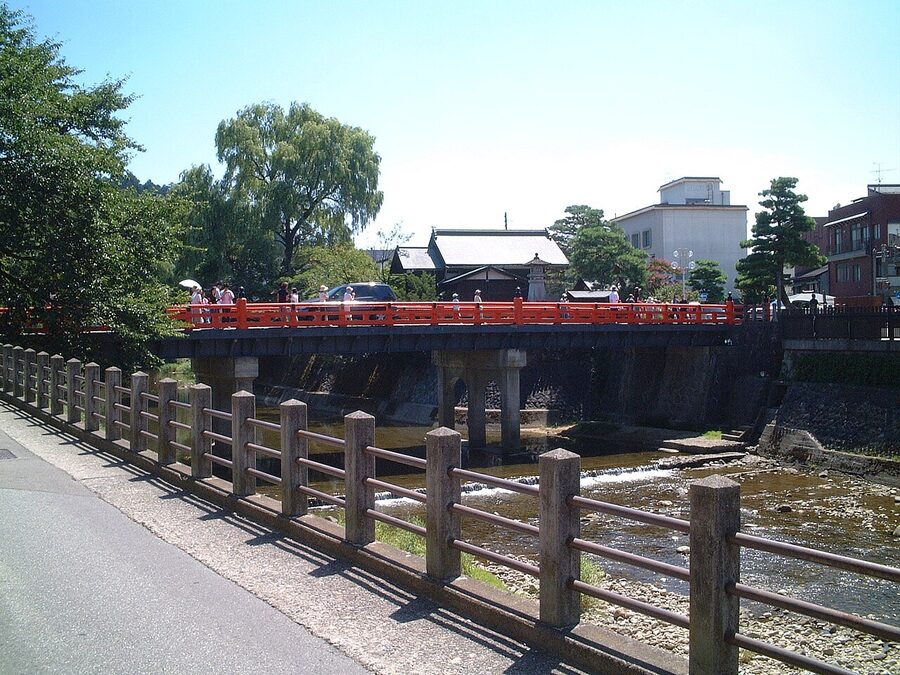
Nakabashi is the red wooden bridge across the Miyagawa, halfway between Sanmachi-suji and the Jinya. It’s been there in some form since 1690s Takayama. The current version was rebuilt in 2002 in vermilion lacquer to match the Edo-period original. In April and October it’s where the festival floats stop on their way through the city; the rest of the year it’s just a useful bridge with very nice views in both directions.
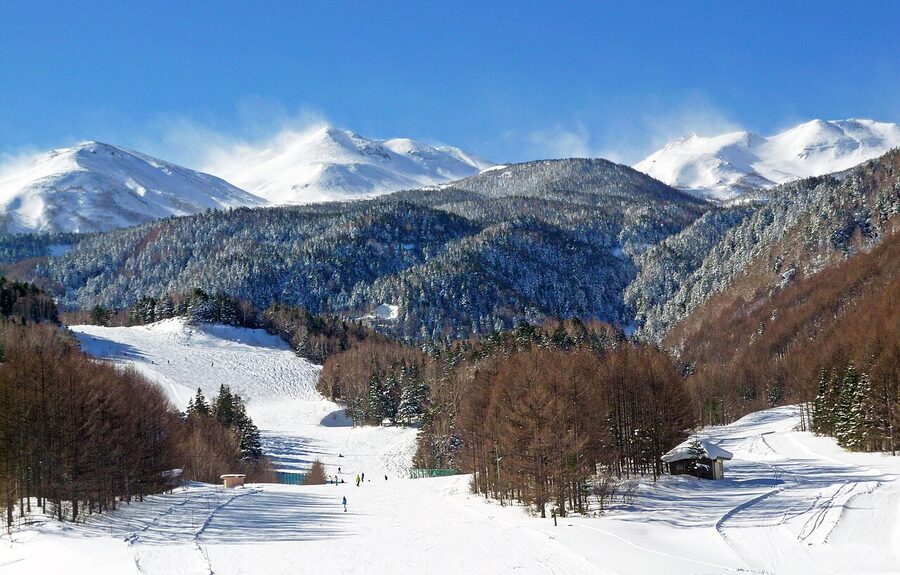
Stop on the bridge. Look upstream and you get the riverside view of the old town buildings on the east bank. Look downstream and you can sometimes see the snowmelt water running fast and clear in the spring. In winter it freezes at the edges and you understand why this part of the Hida basin gets called Hida-no-kuni. the snow country.
Takayama Jinya: the only one left
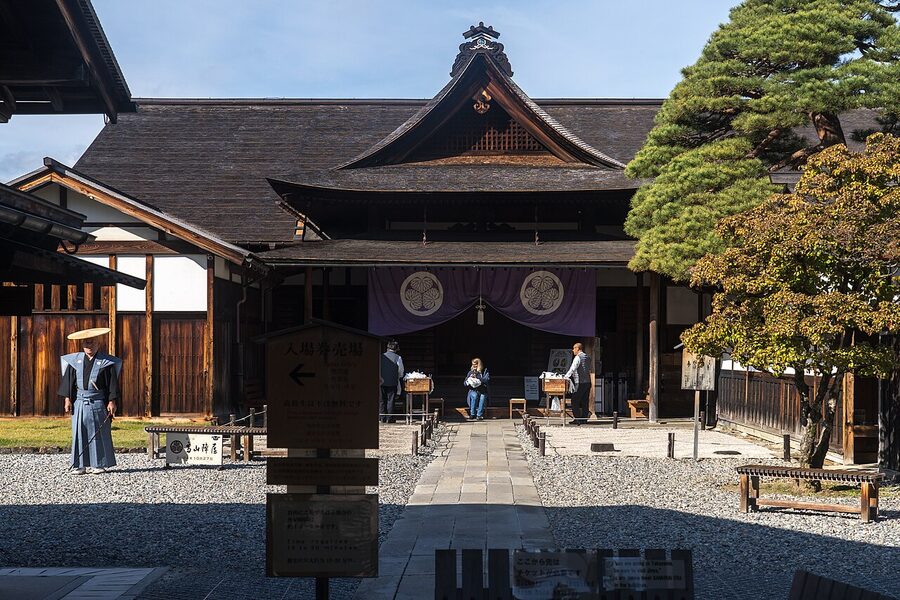
Of the roughly sixty provincial governor offices the Edo Shogunate ran across Japan in the late 1600s, exactly one still has its main building standing. That’s the Takayama Jinya. Everything else is foundations or replicas. The Jinya was a working government office for 277 years, from 1692 when the shogunate took Hida under direct control until 1969 when the local administration moved out. You walk through actual rooms where actual provincial governors lived, judged, and stored the rice that was paid as tax.
That uniqueness is why it gets a Michelin Green Guide two-star “worth a detour” rating, and why I’d put it ahead of any of the heritage houses if you only have time for one indoor visit.
Why the shogunate took Hida directly
Most domains were ruled by feudal lords (daimyo). Hida was different. In 1692 the Edo Shogunate moved the local Kanamori clan out and put Hida under direct shogunate control. The reason was the timber. Hida’s mountains produce some of the best construction-grade conifer in Japan, and the shogun wanted that wood for building Edo and rebuilding shrines and castles after fires. So the shogunate sent in twenty-five generations of governors and magistrates over 176 years to administer the felling, the sawmilling, and the tax. The Jinya is the building they ran it from.
Inside: what to look for
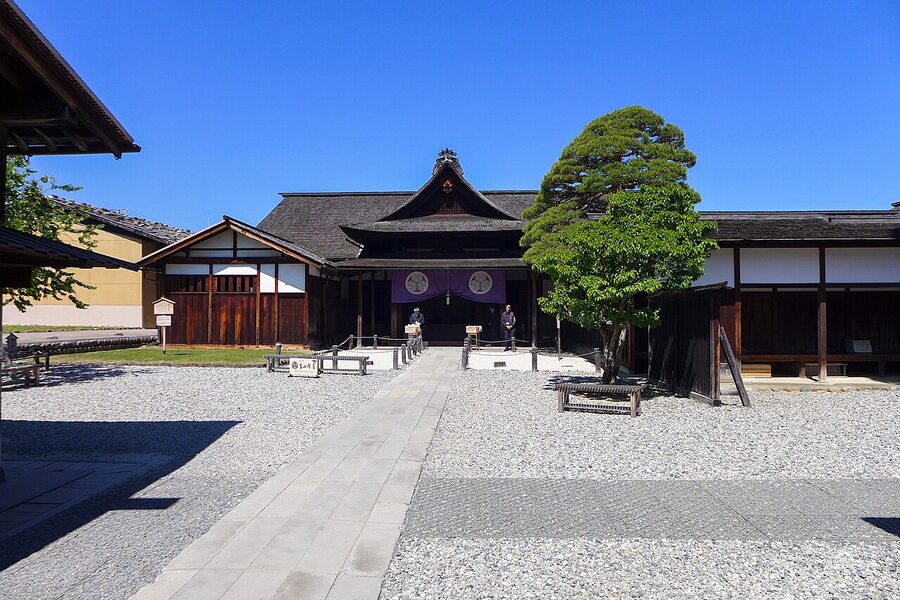
The visit follows a one-way route through the building. There are roughly a dozen named rooms; these four are the ones I always slow down for.
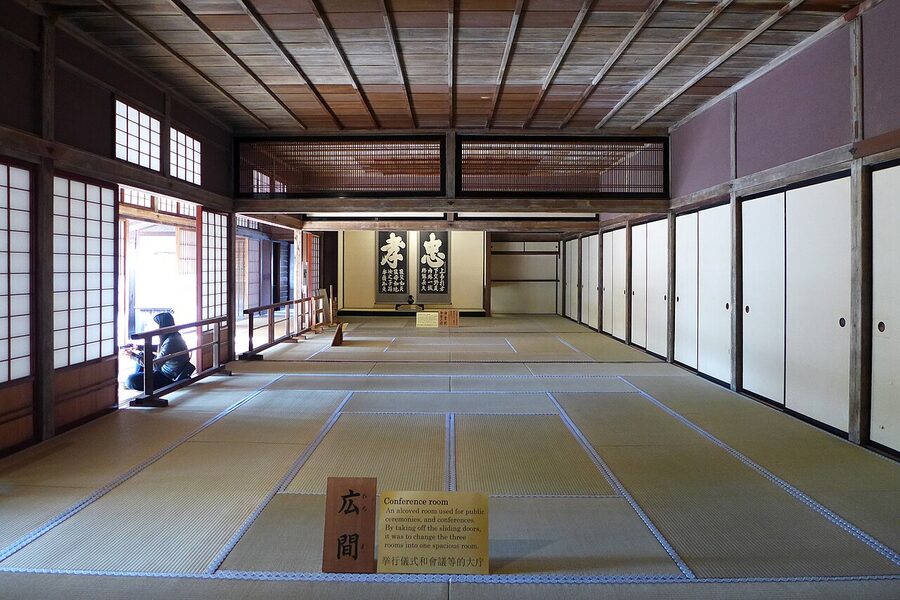
The Ohiroma reception hall: three connected tatami rooms totalling 49 mats. This is where the governor received officials at New Year and during the major annual events. The wood-grain panels above the alcove are seigaiha, an ocean-wave pattern that signified peace and prosperity in Edo design. The view onto the garden changes with the season; in late October it’s framed by red maples.
The Oshirasu courtroom: a low gravel-floored room where investigations were carried out and judgments announced. It’s small and bare and slightly cold even in summer. The display behind the bench includes the original rope-and-stone interrogation tools used in the Edo period. They’re displayed without commentary, which I think is the right call. the artefacts make the point.
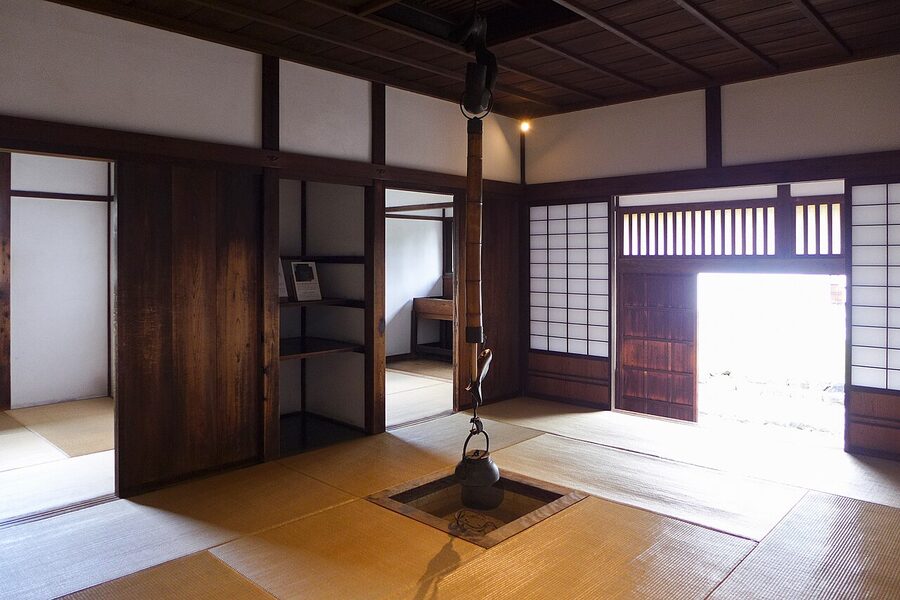
The Arashiyama-no-ma: the governor’s private living quarters, named for the painted maple leaves on the inner panels. There’s a small tea room at the back, slipped behind a sliding panel, that you’d walk past if you didn’t know to look for it. Ask the guide and they’ll show you.
The mamuki-usagi rabbits: above the wooden cross-beams (nageshi) you’ll see small carved rabbits used to hide the heads of the structural nails. Rabbits were considered fire-protection charms because they reproduce quickly and were associated with fertility. It’s the kind of detail you can spend ten minutes finding once you know to look.
The Onkura rice storehouse
At the back of the Jinya complex sits the Onkura, the rice storehouse. It’s a separate building, relocated to the Jinya in 1695 from the outermost ring of nearby Takayama Castle (which was demolished a few years later). The storehouse predates the castle move. it’s believed to have been built around 1600. That makes it one of the oldest and largest standing rice granaries from the Edo period anywhere in Japan. The thick earthen walls were designed for fire protection. The interior now holds an exhibition on the Hida tax system and how the rice was measured and shipped.
It’s the second visit, the part visitors miss because they think the garden is the end. Don’t miss it. It’s also where the building feels coldest, which gives you a sense of why provincial governors complained in their letters home about the Hida winter.
Practical: getting in
- Hours: 8:45 to 17:00 (closes 16:30 from November to February).
- Closed: 29, 31 December and 1 January.
- Admission: ¥500 for adults from April 2026 (was ¥440 until end of March 2026; the rate increased on the official revision). High school students and under: free.
- Time needed: 60 to 90 minutes. The building is bigger than it looks from outside.
- English: free volunteer English tour service runs roughly hourly between 10:00 and 15:00. Ask at the entrance.
- Address: 1-5 Hachikenmachi, Takayama. Ten minutes’ walk from JR Takayama Station, immediately south of Nakabashi.
The Jinya runs a small free guidebook in English at the entrance. Pick one up; it has a layout map that’s far better than the ones reproduced in third-party guides. The website is the official source for any closure dates: jinya.gifu.jp.
The Jinya-mae market connection
The plaza in front of the Jinya hosts the smaller of Takayama’s two morning markets, the Jinya-mae Asaichi, every day from around 7:00 to noon (8:00 in winter). If you’re walking the Jinya around opening, you can do the market first, the Jinya second, and then move on. Both markets are worth a separate post. see the morning markets guide if that’s the real reason you came to Takayama.
Higashiyama Yuhodo: the temple loop nobody talks about
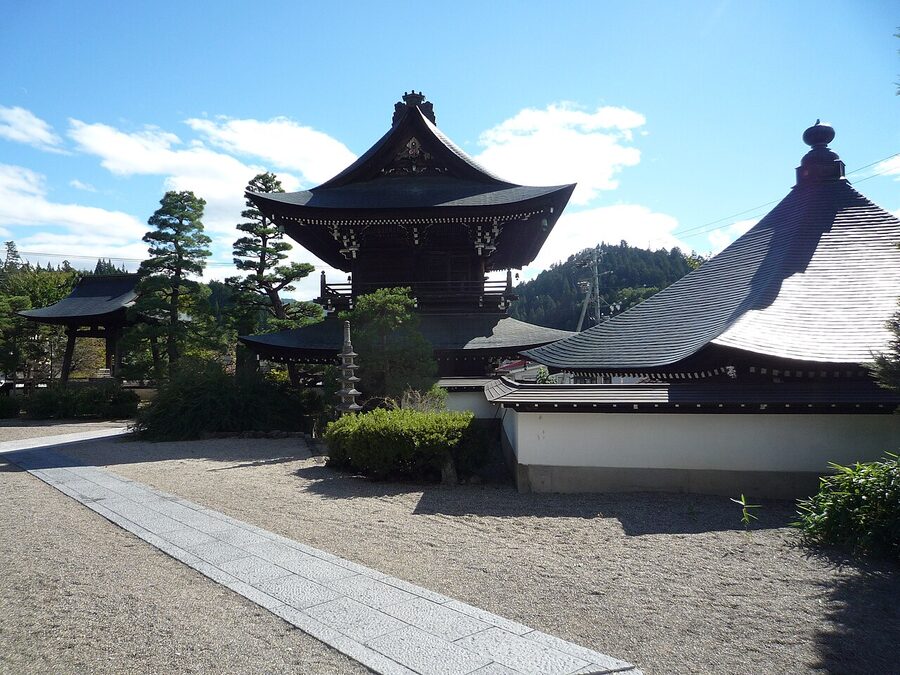
This is the part of the central Takayama walk that gets ten visitors where Sanmachi-suji gets a thousand. The Higashiyama Yuhodo (東山遊歩道, “Higashiyama promenade”) is a 3.5km walking course connecting roughly sixteen temples and shrines on the eastern hillside above the old town. It was set up by the Kanamori clan in the late 1500s in conscious imitation of Kyoto’s Higashiyama temple district. the same name, the same idea, the same eastward-facing slope. When the shogunate took Hida in 1692 the temples stayed.
You don’t need to visit all sixteen. Most people visit two or three. The route is what matters: a quiet slope, stone lanterns, mossy walls, a couple of long flights of steps, and views back over the old town that nobody else has bothered to climb up for.
Where to start
Walk east from the Jinya, cross back over the Miyagawa, then head another ten minutes east to the foot of the hillside. The Kankosho-kan parking lot at the corner of Soyu-ji-dori is the conventional start. From there the marked Yuhodo path runs roughly south, but the temples are scattered, and the most rewarding way to do it is to pick three or four and skip the rest. These are mine.
Unryu-ji and Eikyo-in
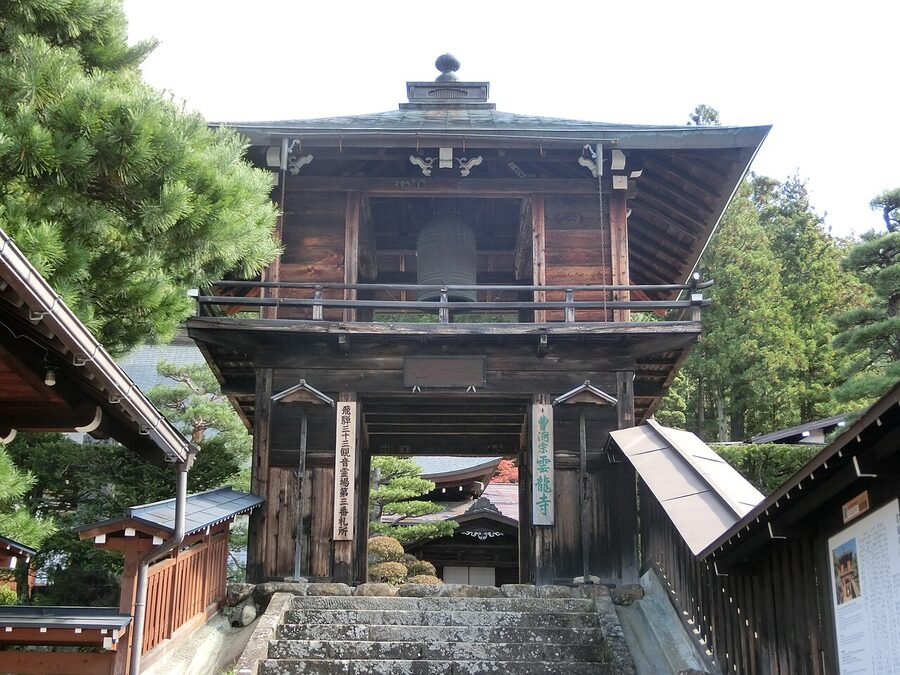
Unryu-ji is the first significant stop. Its shōrōmon (bell-gate) is the major architectural feature of the whole Higashiyama walk: a temple gate with a hanging bell in the upper storey. The current gate is believed to have been moved from the second bailey of Takayama Castle when the castle was dismantled in 1695, which makes the wood older than most of the temple buildings on the route. Eikyo-in sits next door and shares the same approach path. Quick visit, no admission, count on 15 minutes for both.
Higashiyama Hakusan Shrine
This is the oldest shrine in Takayama and reputedly the oldest religious site in the city, claimed to be 1,300 years old. Modern reconstruction, but the foundations and the steps up are not. There’s a serious flight of stone steps up to the haiden (worship hall). count on a hundred. There are tree-stump benches halfway up if you need them. The shrine proper sits on a small platform with cool air running through even in August. Free, no time-of-day restrictions.
Daio-ji
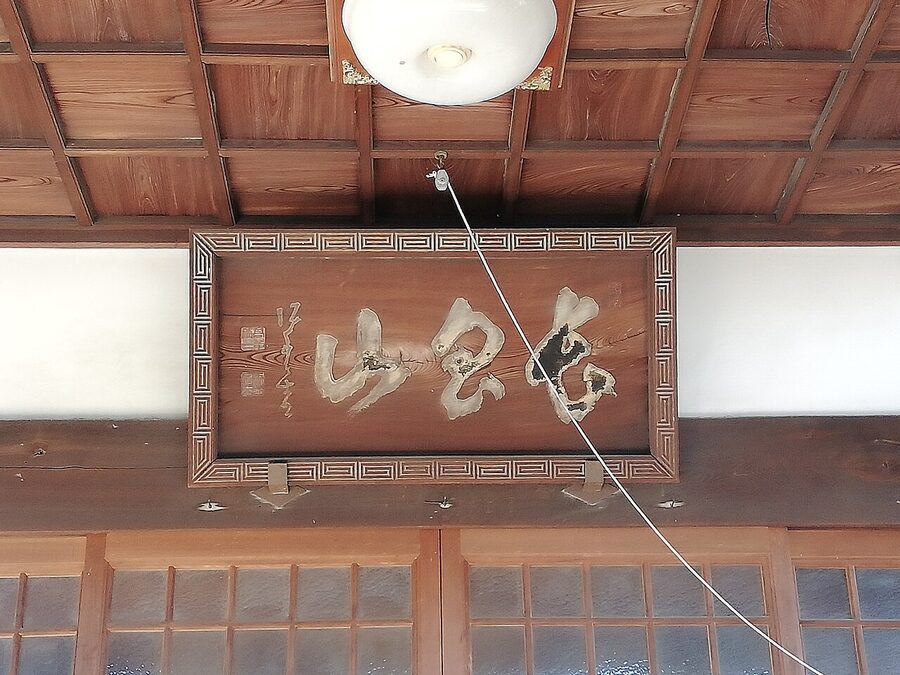
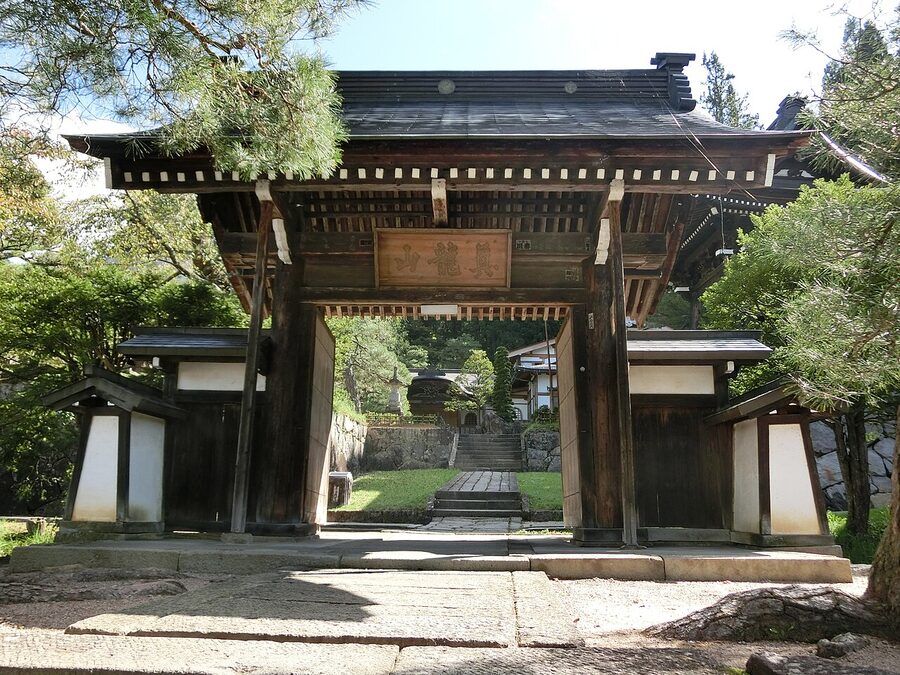
Daio-ji has the most theatrical entrance on the route: a two-storey rōmon (gate-tower) with a pair of Niō guardian figures inside. The bell tower behind the main hall is reputed to be the oldest in the Hida region and is a Gifu Prefecture–designated cultural property. Inside the Jūō-dō (Hall of the Ten Kings) hang screen paintings of the Buddhist hells (jigoku-zu); they’re explicit and very specific about what happens to liars, thieves, and people who killed for sport. Free admission, around 25 minutes.
Sogen-ji and Tensho-ji
Sogen-ji is the family temple of Kanamori Nagachika, the first lord of Takayama Castle and the man who laid out the original castle town in the 1580s. The main hall is a relocated Edo-period council chamber from the castle’s third bailey. The garden behind it is a designated city scenic site and is at its best in late October when the maples turn. Tensho-ji is right next door and the path between them is one of the prettiest stretches of the whole Yuhodo. a tunnel of trees that turn red in mid-November.
The two spots most itineraries skip
Here are the two stretches of the Higashiyama walk I’d argue hardest for, and that I almost never see in print.
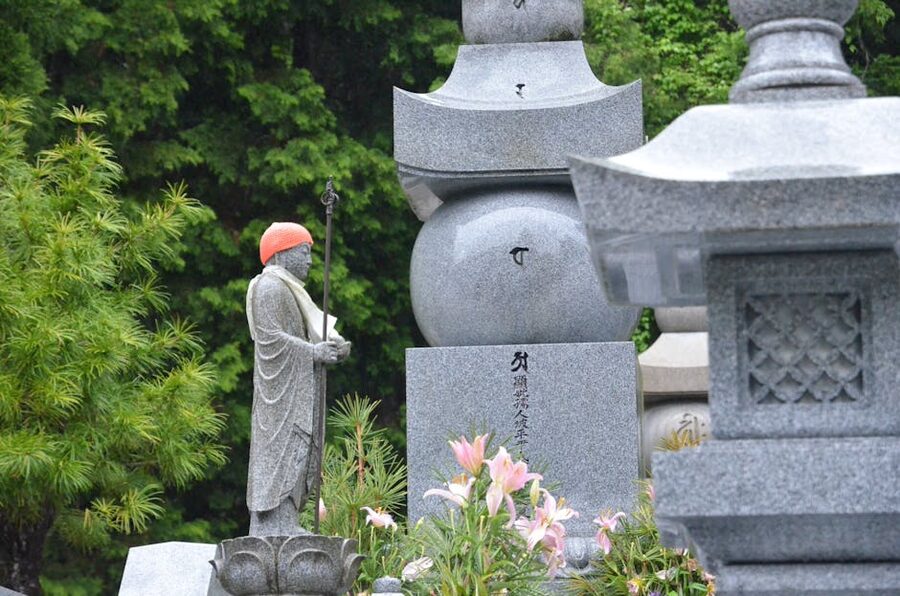
The cemetery viewpoint at the top of Higashiyama Hakusan Shrine. Walk past the shrine’s haiden and follow the path another fifty metres up. The path opens into the back-side cemetery for the temple complex. Stone lanterns, weathered headstones, a clear view west across the town to the snow-capped Norikura range on a clear day. Most visitors turn back at the haiden. The viewpoint is another two minutes’ walk above it.
The path between Sogen-ji and Tensho-ji. Three minutes long. A line of tall cryptomeria. A drop on the right that you don’t notice until you stop. In November it’s the best autumn-colour shot in the city, better than the more crowded views at the temples themselves. Locals know it. Most guidebooks don’t mention it.
Higashiyama Shinmei Shrine and the Jūnishin-do
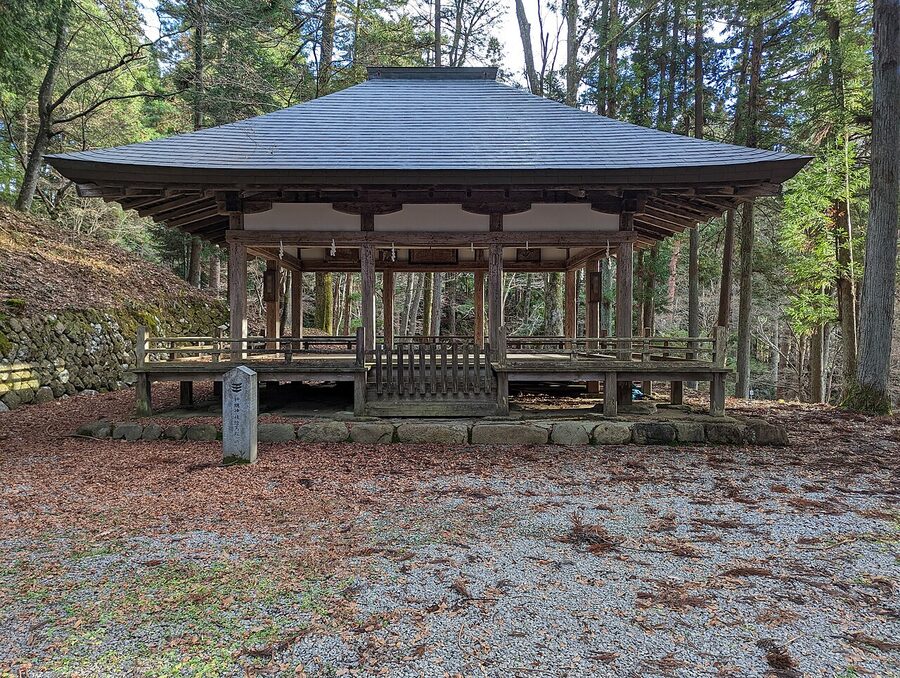
If you have time for one more shrine, Higashiyama Shinmei is the one. The Ema-den is a relocated piece of Takayama Castle and is a Gifu Prefecture–designated cultural property. The shrine festival on 5 May is when the village’s children parade around the grounds with lacquered drums; if you’re in town that day, this is the local festival worth catching, more than any of the bigger ones.
Where to eat as you walk
Don’t try to plan a sit-down lunch in the middle of the route. The shops close early, and the queues at the popular ones can swallow an hour. Pick up handheld food from the street stalls instead. Mitarashi dango (grilled rice balls in a soy glaze) at the small stall on Kami-Sannomachi, Hida-beef nigiri sushi at Kotteushi (one piece is enough), a kabocha croquette from one of the corner shops. Eat as you walk. Save the proper meal for after the walk. the Takayama food guide covers where to sit down for it.
When to walk it
Sanmachi-suji is open all year. The Jinya closes for three days at New Year. The Higashiyama temples are accessible 24/7 (the shrines and outdoor gates), with the main halls of the larger temples open during daylight hours.
By season:
- April: cherry blossom along the river and the festival. If you’re here for the Sanno Matsuri (14–15 April), expect Sanmachi to be packed. book your ryokan a year out.
- May to September: the longest opening hours, the most stalls open, the largest tour-bus pulses (peak around 10am to 2pm). Aim for a 7am Sanmachi visit and a late-afternoon temple loop.
- October to mid-November: maple season. The Higashiyama temples are at their best. Slightly cooler walking weather. Crowds bunch on weekends.
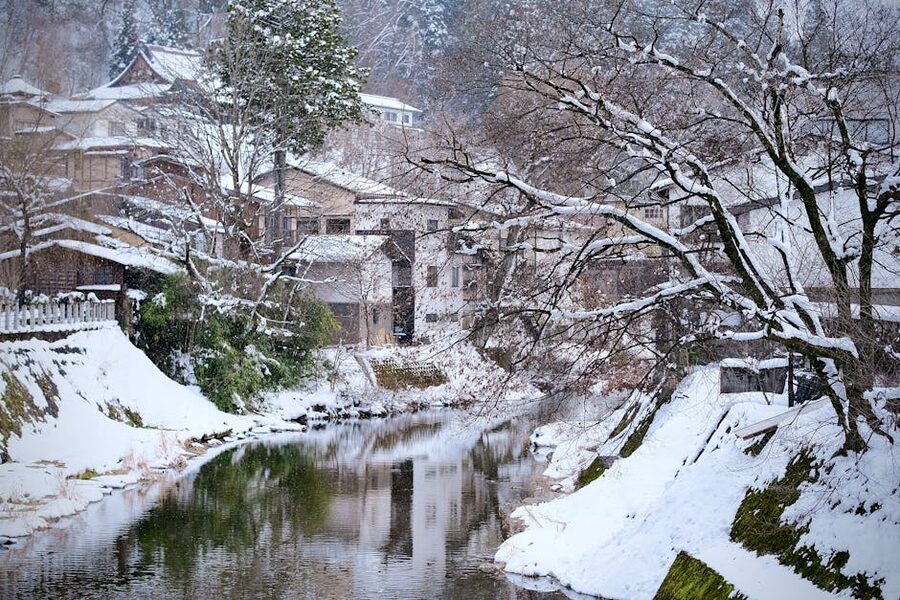
- December to early March: snow. The old town under snow is genuinely beautiful, fewer visitors, but the Higashiyama steps are slippery and the temple halls can be cold. Wear proper winter shoes with grip.
The Hida basin sits at about 600 metres elevation. Summer days run hot and humid; mountain air gets cool fast in the evening. Winter lows go to about minus eight, and there can be snow on the ground from late December to mid-March. Pack layers in any season.
Practical: pacing the day
If you only have one full day in Takayama for the central walks, here’s how I’d shape it:
- 06:30: Out of your ryokan or hotel with breakfast in your bag. Walk to the Miyagawa Morning Market for an hour.
- 07:30: Walk Sanmachi-suji while the shutters are still down. Long-lens shots, no people in frame.
- 09:00: Doors open. Yoshijima and Kusakabe Heritage Houses (1.5 hours).
- 10:30: Sake brewery tasting. Two breweries, slowly.
- 11:30: Cross Nakabashi. Sit-down lunch near the Jinya (if you must), or street food on the move.
- 12:30: Takayama Jinya. 90 minutes if you take the English tour.
- 14:00: Coffee break. Cross back over the river.
- 14:30: Higashiyama Yuhodo loop. Three or four temples. Aim for Daio-ji, Higashiyama Hakusan, Sogen-ji, and Higashiyama Shinmei.
- 17:00: Back to the ryokan. Long bath. The walk earns it.
The whole thing is doable in one day. It’s also better in two: half a day for Sanmachi and the Jinya, half a day for Higashiyama, with the festival floats museum or Hida Folk Village in between.
Combine with the rest of Takayama
If the central walk has whetted your appetite for the wider Hida region, here’s how it slots into a longer trip. The Hida Folk Village is a 10-minute bus ride south-west and gives you the rural-architecture half of the story (gassho-zukuri farmhouses) that the merchant houses on Sanmachi don’t cover. The Takayama Matsuri in April or October is when the floats parade through the same streets you’ve just walked. Shirakawa-go is an hour by bus from Takayama Station and is where you go to see a working gassho-zukuri village. Hida-Furukawa, twenty minutes north on the JR Hida line, is what Takayama looked like before tourism. quieter, fewer shops, the same canal-and-warehouse aesthetic without the queues.
For broader context on Takayama itself. the city’s history, the major sights outside the old town, the food scene. see the main Takayama city guide. The central Honshu itineraries page has full multi-day routes that work the old town in around the rest of the Japan Alps.
Walk the Sanmachi early. Take the Jinya slowly. Climb the Higashiyama steps even when you don’t feel like it. The view from Hakusan Shrine, with the morning fog still in the river valley and the snow on the Norikura range to the west, is the picture I keep coming back to.

.jpg)


.jpg)


.jpg)

.jpg)
.jpg)
