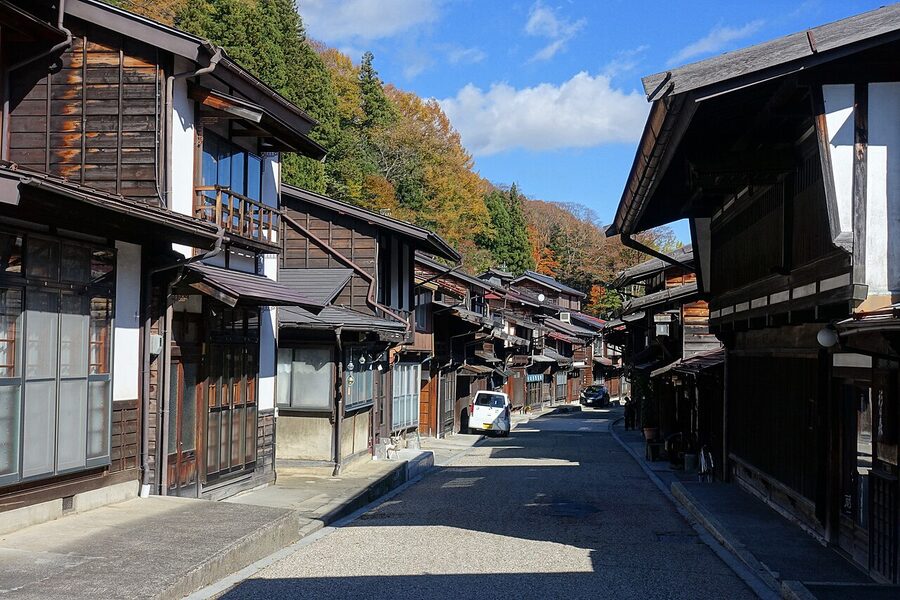
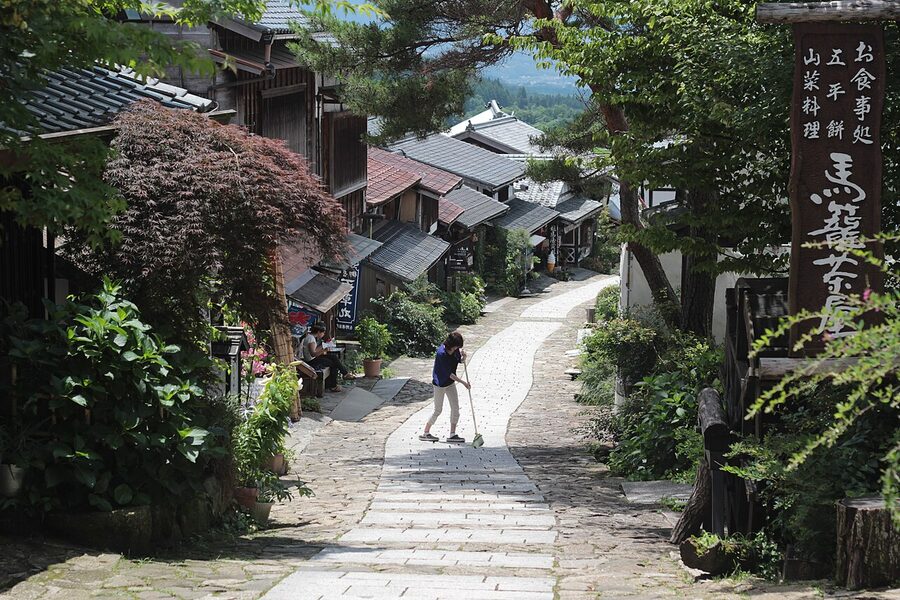
The bus pulls into Magome at 11:42, and the half-dozen day trippers who get off scatter immediately into the souvenir shops at the foot of the slope. I keep walking. Past the masugata corner, past the first waterwheel, past the woman setting up her gohei-mochi grill for lunch service, until the pavement runs out of polite gradient and turns into a proper little climb. From here you can see the whole length of the post-town stacked up the hillside in slate and timber, with Mount Ena hanging blue in the gap at the top of the road. It is the same view someone walking from Edo would have had in 1750, give or take the tarmac car park behind the bus stop.
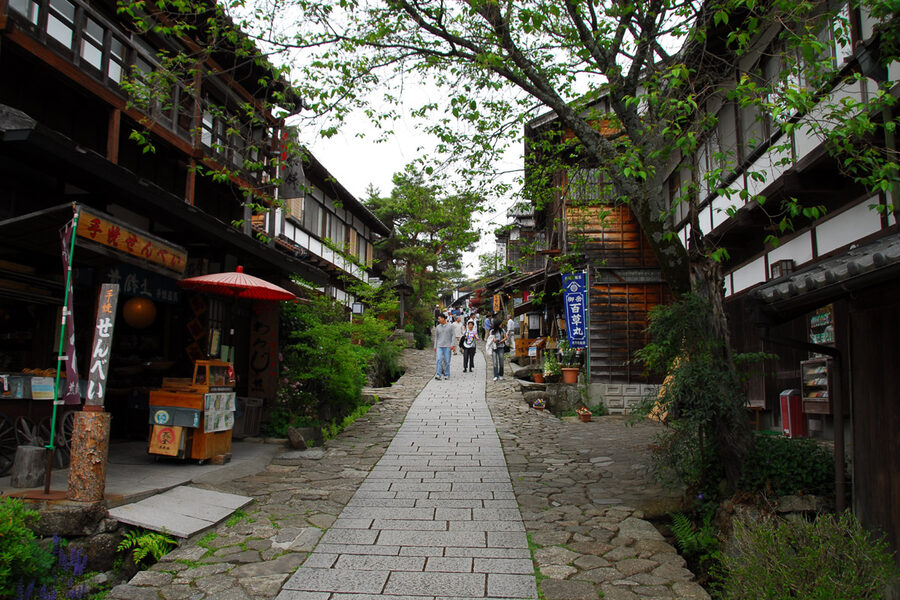
Magome-juku is the 43rd of the 69 post-stations on the old Nakasendo, the Edo-period highway that linked Tokyo and Kyoto along the inland route. It sits 326.7 kilometres from Nihonbashi, on the Gifu side of the Kiso Valley, at 600m above sea level. From its upper edge, the trail crosses the Magome-toge pass at 801m and drops down into Tsumago, the next post-town and Magome’s quieter, stricter sibling. The 8km walk between the two is the most-walked stretch of the Nakasendo and the reason most foreign travellers know the name Magome at all.
This guide is for both kinds of visitor: the one who plans to walk straight through Magome on the way to Tsumago, and the one who wants to actually stop and stay.
In This Article
- What is Magome, and why does it look like this?
- A potted history (the bit that matters)
- The literary connection (Toson Shimazaki)
- How to get to Magome
- From Nakatsugawa: the bus everyone takes
- From Tsumago: the local bus and the better walk
- The post-town itself: what to actually see
- The masugata and the lower waterwheel
- The Toson Memorial Hall (Fujimura-kinenkan)
- The Wakihonjin Museum
- The Tsuchimaya and Shimizuya museums
- The kosatsuba notice board
- The Magome-juku Honjin
- The Jinbaue Observatory at the top
- Suwa Shrine and the lower Nakasendo
- The walk to Tsumago: 8km, 3 hours, the famous one
- Baggage forwarding
- The trail itself
- The trail signs and the bears
- Beyond Tsumago: the Yogawa-michi alternative
- Where to eat in Magome
- Gohei mochi: the regional staple
- Sansai soba and where to eat it
- Kuri-kinton in autumn
- Cafes and breakfast spots
- Where to stay
- Tajimaya
- Magome Chaya
- Motomiya
- Sakanomichi
- Tawaraya
- Manpukuan-Eishoji Temple
- Hotel Hanasarasa (the bigger-hotel option)
- When to go
- The Magome Shukuba Matsuri
- Hyosetsu no Tomatsuri
- Magome alone, or Magome as a stop?
- Combining Magome with the rest of the Kiso Valley
- The bits everyone forgets
- One last thing
What is Magome, and why does it look like this?
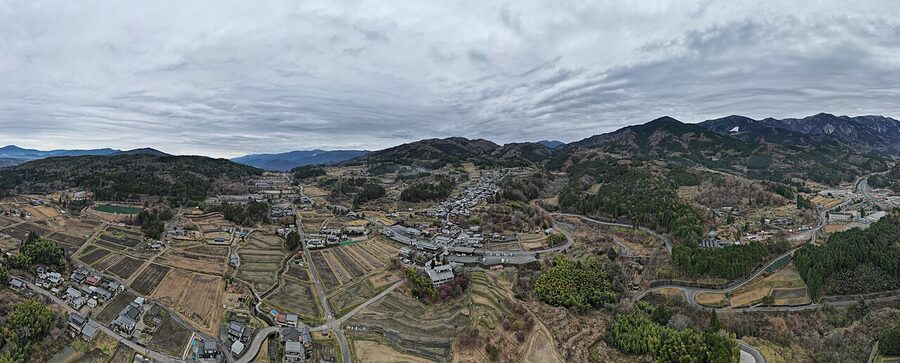
The short version: Magome was a service station for samurai and merchants on a 530km mountain highway, and almost none of the buildings you see are original. Most of the post-town burned down twice, in 1895 and again in 1915, and what stands now was rebuilt in the 20th century to look like the Edo-era Magome that earlier travellers would have known. That is not the secret it sounds like. Tsumago, 8km away, is the post-town that did keep its original Edo timber. Magome’s job is something subtler: it shows you what the post-town looked like, in the kind of polished form that tells well in photos but does not pretend to be a museum piece.
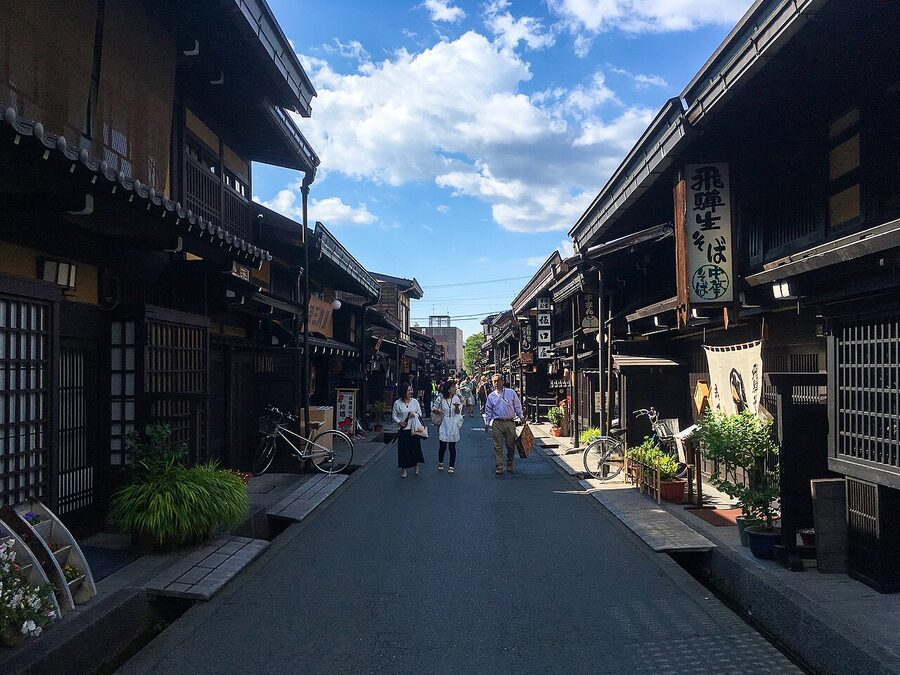
Magome’s main street runs up a hillside on a slate-and-stone surface, lined with two-storey wooden merchant houses, all of them now soba shops, gohei-mochi grills, sweet shops, lacquerware sellers, minshuku, or small museums. Cars are kept out. The slope is steep enough that buggies and wheelchairs do not work at all, which the local tourist board says outright on their official site. Walk it slowly. Drink things. Stop on benches.
The town belongs to Nakatsugawa City in Gifu Prefecture, even though the trail it anchors runs east into Nagano. That detail matters when you’re booking transport: the closest station is JR Nakatsugawa, on the Chuo Line out of Nagoya, not somewhere in Nagano.
A potted history (the bit that matters)
The Tokugawa shogunate formalised the Nakasendo’s post-station system in 1602. Magome’s job was to provide horse exchanges, food, and beds to feudal lords on their sankin-kotai journeys to Edo, plus the merchant traffic. By the 1843 official register, Magome had 717 residents in 69 houses, including one honjin (the principal inn), one waki-honjin (the secondary inn), and 18 hatago (commoners’ lodgings).
The Chuo Line railway opened in 1909, the post-town’s purpose evaporated, and the village stagnated for the next sixty years. The two great fires finished off most of the timber. The Showa-era restoration started in earnest in the 1960s, and by the early 1980s Magome looked roughly the way it does now. The slate-flagged main street, in particular, was rebuilt deliberately steep and deliberately car-free.
The literary connection (Toson Shimazaki)
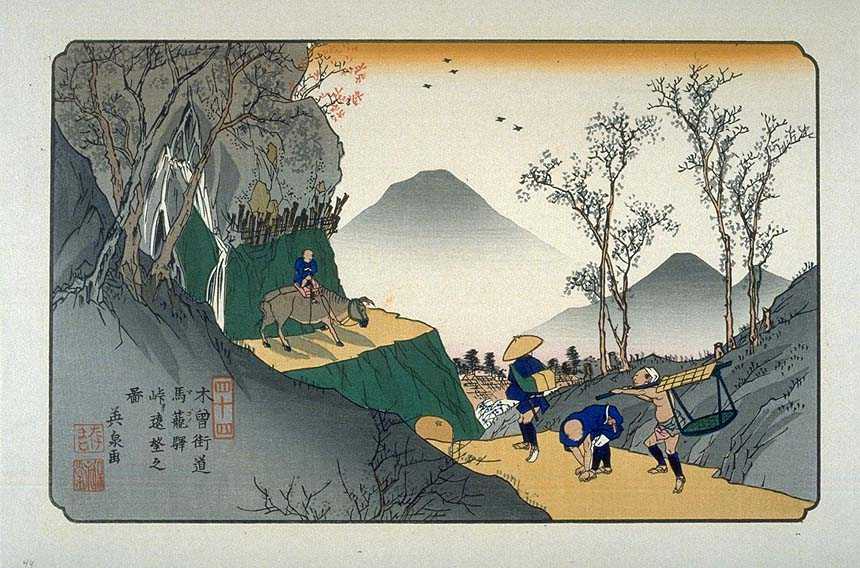
You cannot walk twenty metres in Magome without hitting a sign about Toson Shimazaki, and the village makes no apology for it. Toson (1872 to 1943) was born in Magome in the family honjin, became one of Meiji-era Japan’s most-read novelists, and made the post-town the setting for his giant historical novel Yoakemae (Before the Dawn), serialised between 1929 and 1935. The opening line, “The whole of the Kisoji lies in the mountains”, is engraved into the surface of the village’s self-presentation.
The novel’s significance to the place is harder to overstate than it sounds. Toson’s father was the last person to oversee the Magome honjin before the post-town system collapsed; Yoakemae is essentially a 1,300-page elegy for that collapse, written by his son. Today, the rebuilt site of the Shimazaki family honjin is the Toson Memorial Hall, the village’s most-visited museum.
How to get to Magome
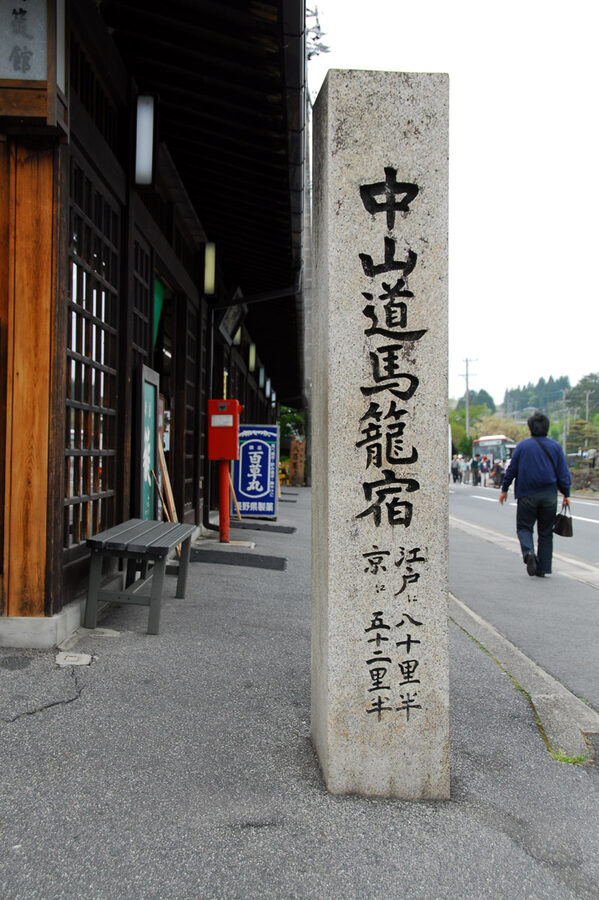
The simple version: Nagoya to JR Nakatsugawa Station on the Limited Express Shinano (about 50 minutes), then the Kitaena Kotsu bus from terminal 3 in front of the station to Magome (about 25 to 30 minutes, ¥570 one way). Buses run roughly hourly. The last bus from Nakatsugawa back from Magome leaves at 18:15. Plan around that, especially in winter when daylight gives out by 16:30.
Coming from Matsumoto, the same Limited Express Shinano runs in the opposite direction in about 1 hour 25 minutes. Coming from Tokyo, the cleanest route is Hokuriku Shinkansen to Nagoya via the Tokaido Shinkansen, then onto the Shinano. Tokyo to Magome end-to-end is roughly four hours.
If you’re driving, Magome has a free car park at the upper (Nagano-side) end of the village and a paid one at the lower (Gifu-side) bus terminal. The Chuo Expressway exit is at Nakatsugawa IC, 10 minutes by road. For the full driving treatment, see the Kiso Valley driving loop.
From Nakatsugawa: the bus everyone takes
From JR Nakatsugawa Station, the Kitaena Kotsu Magome-line bus departs from terminal 3, signposted in English. It costs ¥570 in coin or IC card. The schedule is in Japanese only, so if you’re cutting it fine, use Google Maps or Apple Maps for the live timetable. There is a souvenir hall and tourist information centre right next to the bus stop, which is a useful place to wait if your train arrives in the no-man’s-land between buses.
One small warning: the bus drops you at the bottom of the slope, not in the middle of the post-town. You then climb the cobbled main street on foot. If you have luggage with you, the baggage forwarding service can take it onward to Tsumago for ¥1,000 a piece (more on that under the trail section).
From Tsumago: the local bus and the better walk
If you’re approaching from Nagiso (the JR station for Tsumago), there are infrequent buses between Magome and Tsumago that take roughly 25 minutes. They run only a handful of times a day; the timetable is on the Kitaena Kotsu site. Almost everyone skips the bus and walks. The trail from Tsumago up over the pass and down into Magome is described in detail below.
The post-town itself: what to actually see
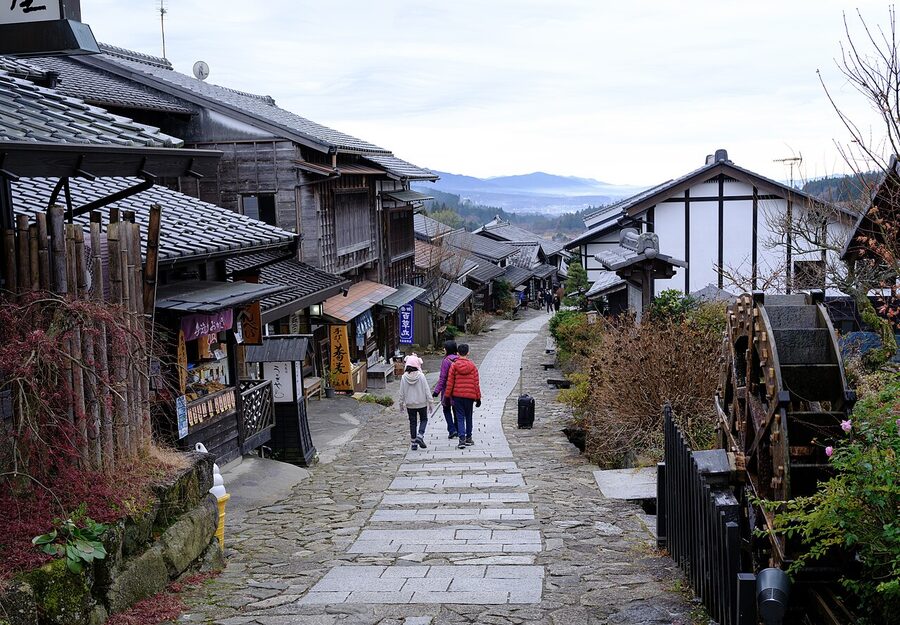
Magome’s structure is unbelievably simple. One street, going up. Side alleys are short and only worth wandering down for a particular shop or shrine. The points below are walked in the order you would meet them coming up from the lower bus stop, which is how almost everyone does it.
The masugata and the lower waterwheel
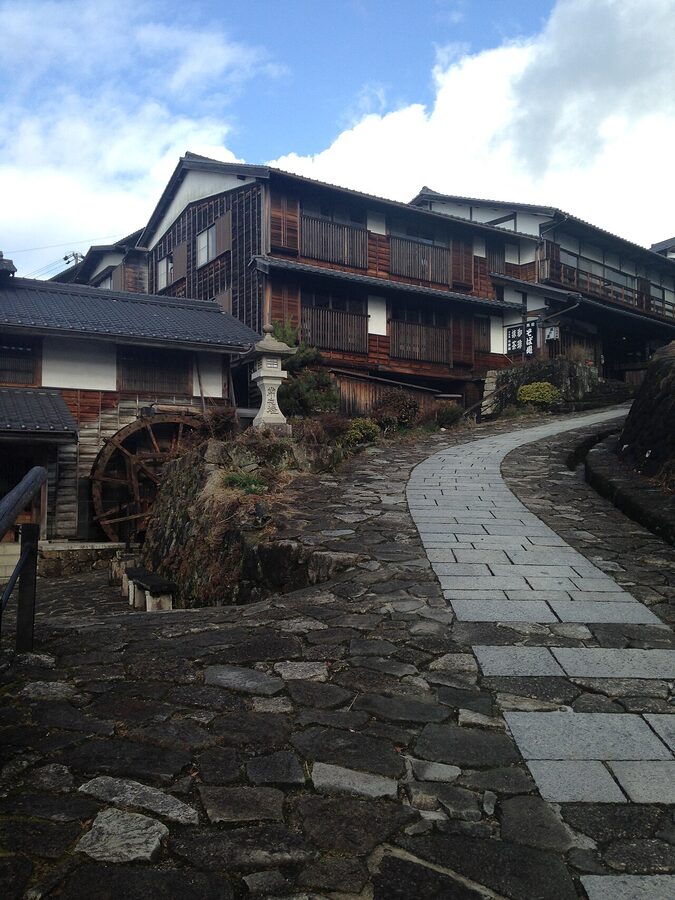
The masugata is the deliberate L-shaped kink in the road just inside the lower entrance. Edo-period highway engineers used these square dog-legs to slow incoming armies and break a charging horse’s stride. The Magome version was straightened a bit during the 1905 highway works, so it’s gentler on the eye than, say, the masugata at Narai, but the geometry is still legible.
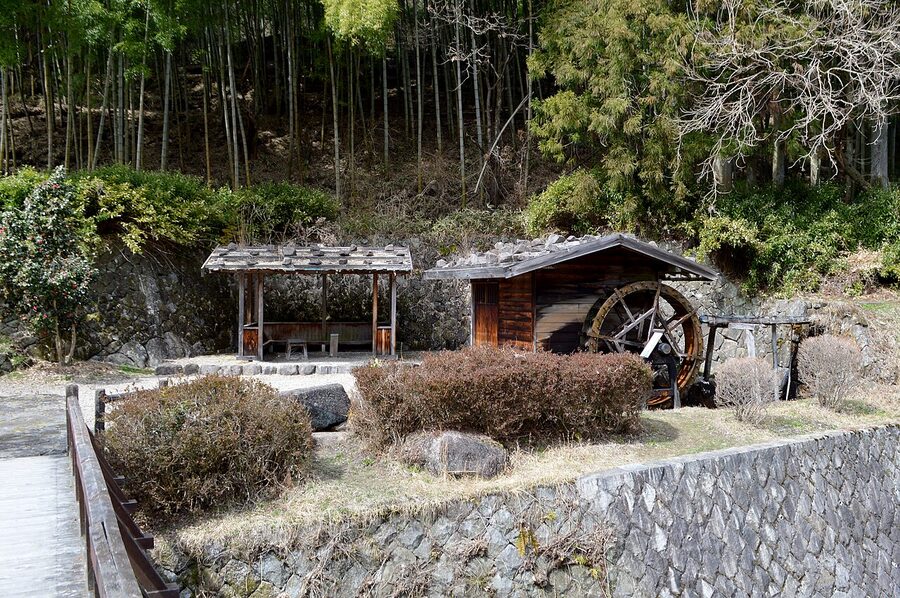
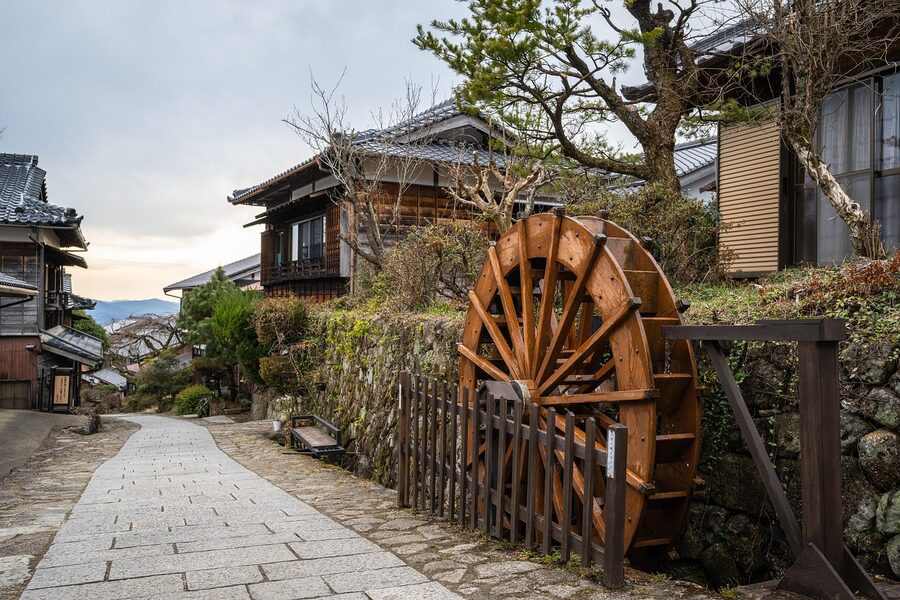
Right at the masugata is the Masugata Rest House, a reconstructed traditional building with the post-town’s largest functioning waterwheel out front. It’s one of the few places where you can step inside an Edo-style sunken-hearth room without paying a museum fee. The waterwheel turns a micro-hydro generator that lights the building. Free entry, you sit on the tatami, you make a small donation if you take the green tea.
The Toson Memorial Hall (Fujimura-kinenkan)
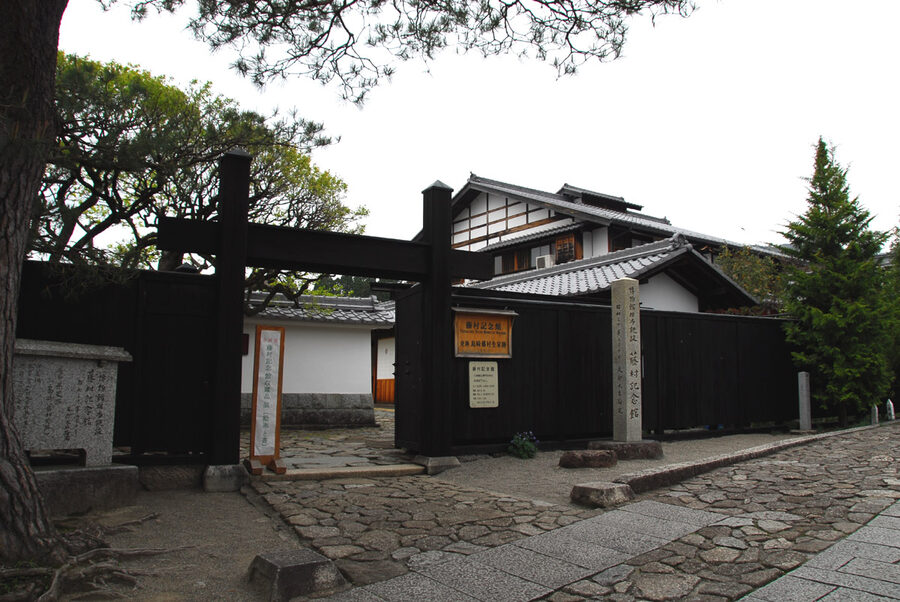
If you only enter one museum in Magome, this is it. The site is the rebuilt Magome honjin, where Toson Shimazaki was born in 1872. The original burned down in the 1895 fire, but the family’s inkyojo (the grandparents’ retirement house in the back garden) survived, and that single building gives the museum its only piece of physical-original honjin furniture.
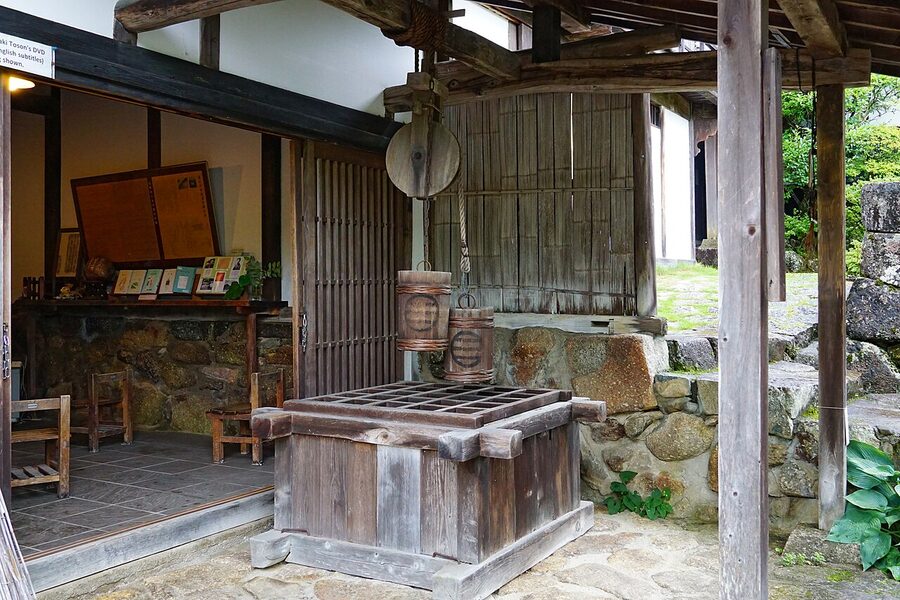
Inside, the holdings include around 6,000 items: original manuscript pages, first editions of Yoakemae, Toson’s school reports, family photographs, and his typewriter. There’s an English brochure at the desk and a 25-minute documentary film about Toson’s life that loops in one of the side rooms (subtitles available). Even with no Japanese-literature background, the building gives you a sense of the post-town’s social hierarchy: this is the house the village headman’s family lived in, and the spatial gulf between the front reception room and the working kitchen at the back is visible immediately.
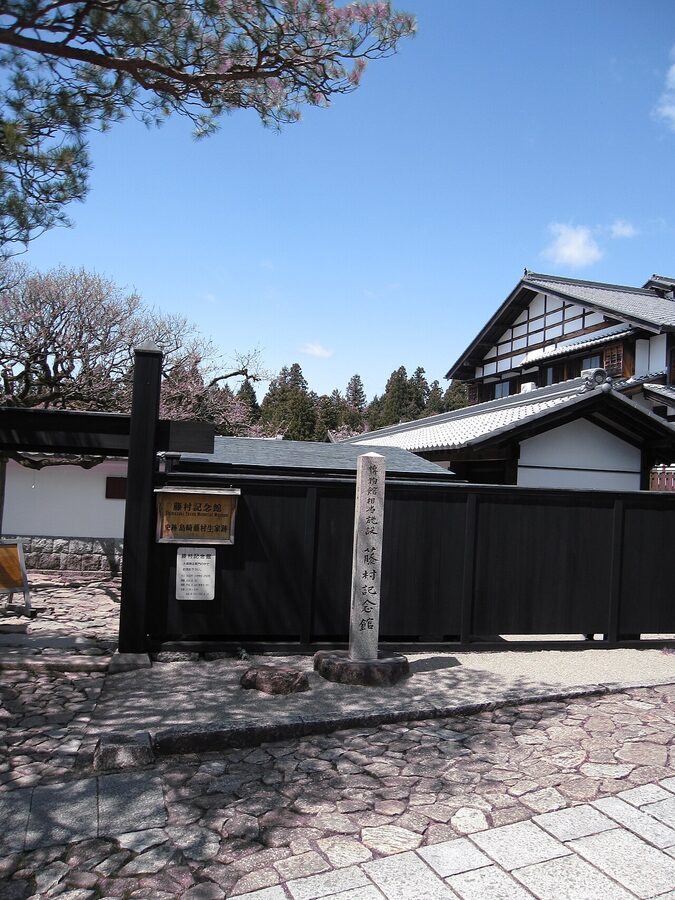
Hours: 9:00 to 17:00 (16:00 in December to March). Closed Wednesdays in winter (December to February). Admission ¥500.
The Wakihonjin Museum
Half a minute up the road, the Wakihonjin Museum sits on the site of Magome’s former secondary inn. Wakihonjin were the overflow lodgings: spaces big enough to host a daimyo’s deputy, junior officials, and lower-ranked retainers when the principal honjin was full. The current building is a 1964 reconstruction, but the contents include genuine Edo-period furniture, a working irori hearth, and tools from the Shimizuya merchant family who ran the wakihonjin for generations.
This is the smaller of Magome’s two main museums and frequently empty. If you want fifteen minutes alone with an Edo-period sword rack and a thirteen-room reconstruction of an Edo official’s lodging, it’s quietly excellent. Admission ¥300. Hours 9:00 to 17:00, irregular winter closures.
The Tsuchimaya and Shimizuya museums
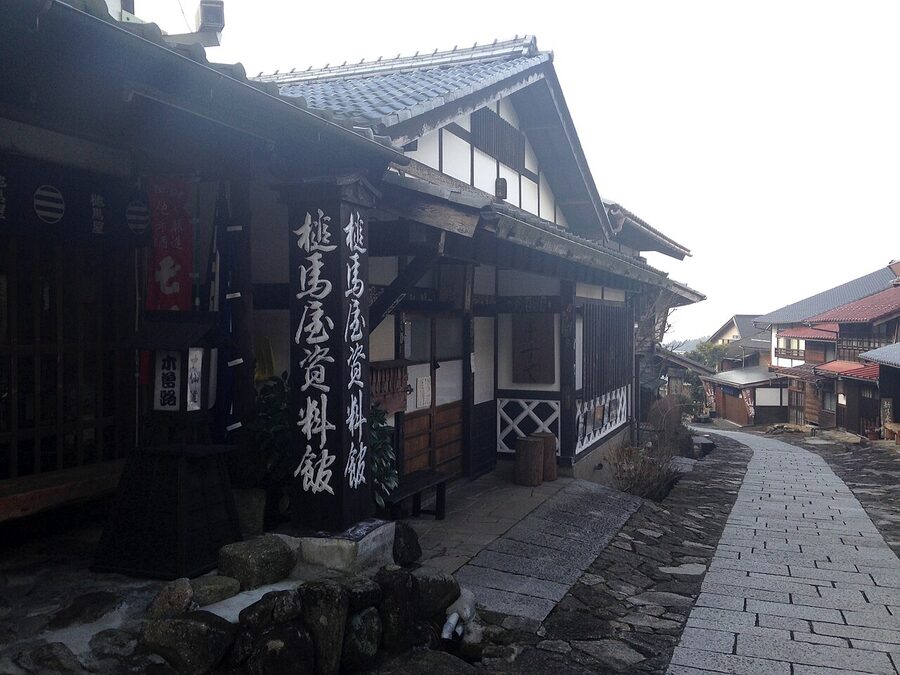
The Tsuchimaya Shiryokan is a small museum on the second floor above a shop and restaurant, with a focused Toson-era collection (¥200, 9:00 to 18:00). The Shimizuya Shiryokan is a third small museum, with hanging scrolls, Imari and Kutani ceramics, and the room where Toson is said to have worked through the structure of Yoakemae at the home of his friend Hara Ippei (¥300, 8:00 to 17:00).
Honest take: if your Japanese-literature interest is mild, the Toson Memorial Hall does the job and the other three are filler. If you actually care about the Meiji-Taisho literary scene, all four reward the time.
The kosatsuba notice board
About two-thirds of the way up the slope, on the left, is the rebuilt kosatsuba: the village notice board where the shogunate’s edicts were posted. The current displays are facsimile reproductions of three actual documents from around 1700, including a kirishitan-han ban-on-Christianity notice and a list of forbidden behaviours for travellers (no carrying firearms, no transporting silver, no harbouring runaway labourers). Free, outdoors, two minutes.
The Magome-juku Honjin
Confusingly, the Toson Memorial Hall is technically on the honjin site, but the walking route also passes a separate honjin viewing point further up. The honjin role at Magome belonged to the Shimazaki family for around 250 years, ending with Toson’s father, Shimazaki Masaki, in the 1880s. The viewing point is essentially a marker, not a museum, but it’s where the village’s ceremonial daimyo-procession reenactment forms up during the November Magome Shukuba Matsuri.
The Jinbaue Observatory at the top
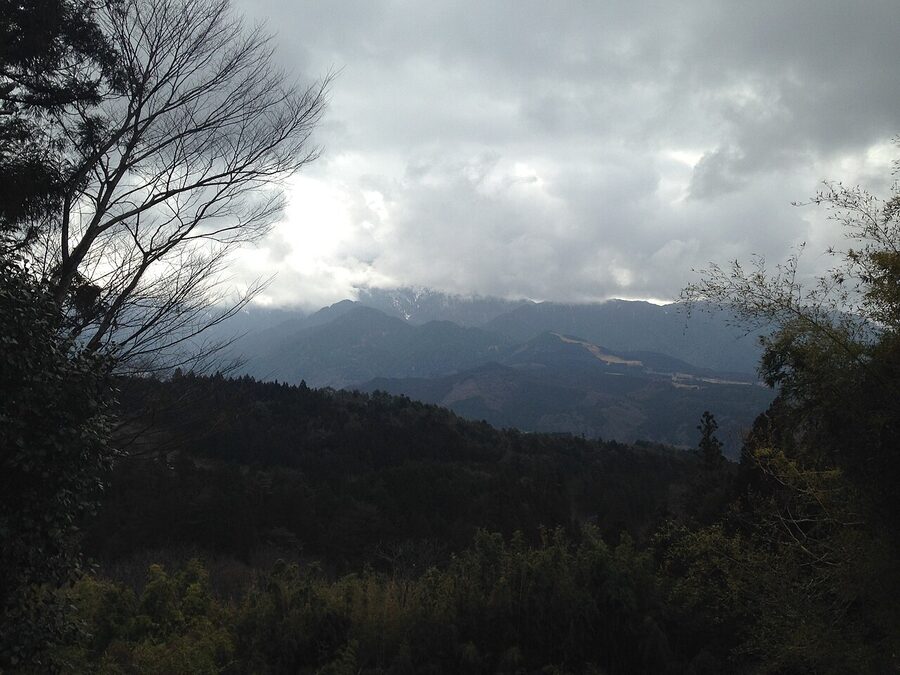
Above the upper bus stop, the Jinbaue (sometimes Romanised Jinbakami) viewing platform looks south over the Kiso Valley to Mount Ena, the 2,191m peak that the village uses as its calendar. The site marks where Oda Nobuo and Tokugawa Ieyasu’s combined army camped in 1584 during the campaign to take Magome Castle, in the lead-up to the Komaki-Nagakute battle. Today it has benches, a viewing rail, and roughly the best picnic angle in the post-town.
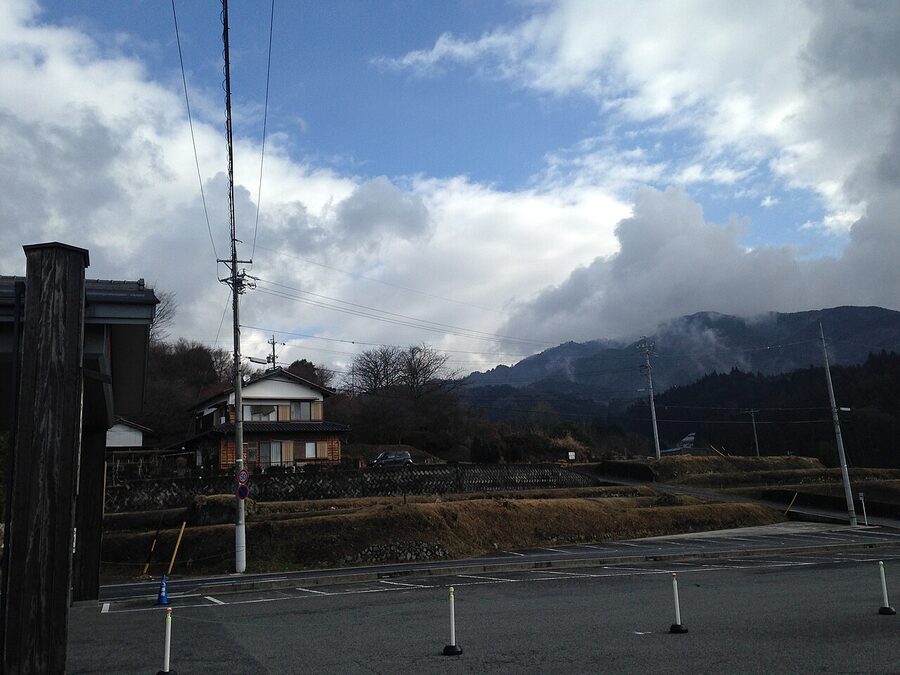
Twenty paces beyond the platform, the road becomes the Magome-Tsumago trail proper. Many people who ride the bus up to Magome and never intended to walk find themselves at this point seriously considering it. The first kilometre is the steepest part, going up to the pass; if you turn back at the trailhead, you’ve lost nothing.
Suwa Shrine and the lower Nakasendo
Ten minutes’ walk from the lower bus stop, downhill in the direction of Nakatsugawa, is Suwa Shrine, a quiet Suwa-sect shrine in cedar woods. The 1583 stele to Toson’s father, Shimazaki Masaki, is fifty metres further along. It is essentially nobody’s first-time stop and worth a small detour on a return visit, when the post-town’s main street feels too polished.
The walk to Tsumago: 8km, 3 hours, the famous one
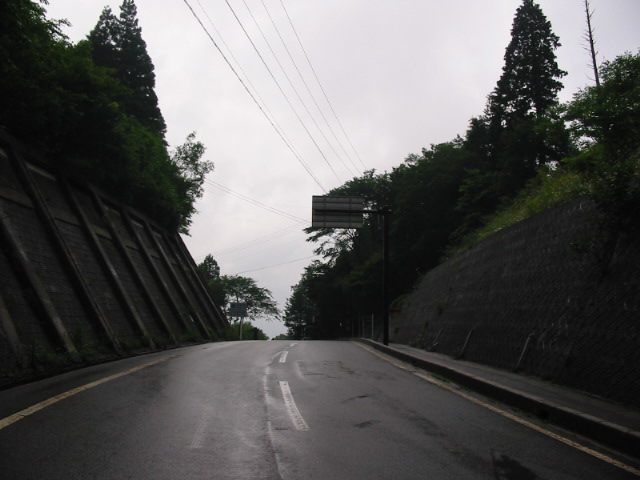
The Magome-Tsumago section is the most-walked stretch of the entire 530km Nakasendo. It’s 8km (some sources call it 8.5km), takes 2 hours 30 to 3 hours at a steady pace, and is well marked with bilingual English-and-Japanese signs the whole way. The path is a mixture of original Edo-era stone-flagged track, modern asphalt where it crosses local roads, and a few sections of compressed forest dirt. Trainers are fine. Hiking boots are nice but not necessary.
Walking from Magome to Tsumago is about 200m of climb up to the pass at 801m, then 400m of descent to Tsumago at around 420m. Walking the other direction reverses that, and is markedly harder for the same distance. Whatever the guidebooks say, the Magome-to-Tsumago direction is the one your knees will thank you for.
Baggage forwarding
This is the bit nobody mentions until you’ve already lugged your suitcase through the first kilometre. The Magome and Tsumago tourist information centres run a same-day baggage forwarding service from late March to late November, allowing you to walk the trail with a day pack while your luggage is delivered to the other end.
- Cost: ¥1,000 per piece
- Drop-off: 8:30 to 11:30 at the tourist information centre at either end
- Collection: 13:00 to 17:00 at the other end
- Year-round option: ¥4,500 for up to three pieces (book in advance)
If you’re staying in Tsumago that night and you’ve got your big bag, this service is the difference between a pleasant 3-hour walk and a cursing-yourself slog.
The trail itself
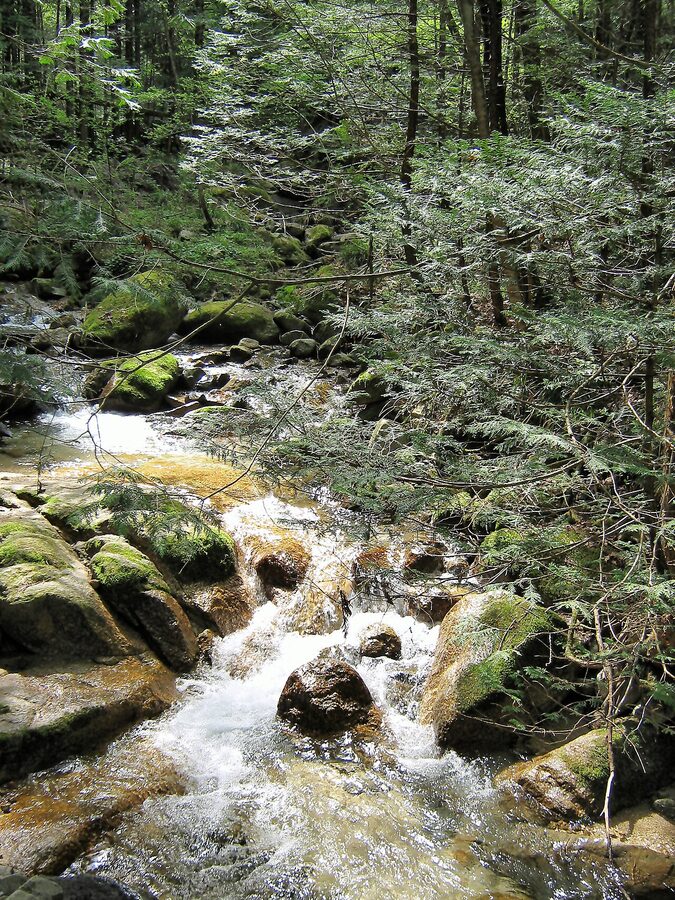
The first 1.5km out of Magome is the steepest, climbing through cedar plantation to the Magome-toge pass. There’s a teahouse at the pass that serves green tea and amazake, donations encouraged. Past the pass, the trail descends gently for the next 5km, through villages so small they don’t look like villages, past the Odaki and Medaki waterfalls (a small detour signposted on the right), and through a couple of stretches of preserved ishidatami stone-flagged road.
About halfway down, in the hamlet of Tsumago-tochu, an old farmhouse has been converted into a free rest house with an irori hearth, where volunteer-staffed in traditional dress serve tea and snacks. The expectation, again, is a small donation. Bears live in these woods, but they’re rarely seen on the trail itself; bear bells hang at the trailhead and many walkers ring them out of politeness as much as caution.
The trail signs and the bears
Bilingual signage is a quiet local achievement. Every junction is marked with English, Japanese, and a distance-to-Tsumago figure. The bear-bell stations have replacement bells and a sign in English saying “please ring as you walk”. Solo walkers in the late afternoon should take this seriously; sightings are uncommon but real, and dusk is when bears move.
Beyond Tsumago: the Yogawa-michi alternative
If you have an extra half-day in Tsumago, the trail continues from Tsumago to JR Nagiso Station along a separate 3.5km section called the Yogawa-michi. It’s an hour’s walk through more populated paddy-field country, with no original cobblestones but a pleasant rural atmosphere. Locals use it as the daily commute on foot from village to station. It’s a calmer cousin of the famous bit.
Where to eat in Magome
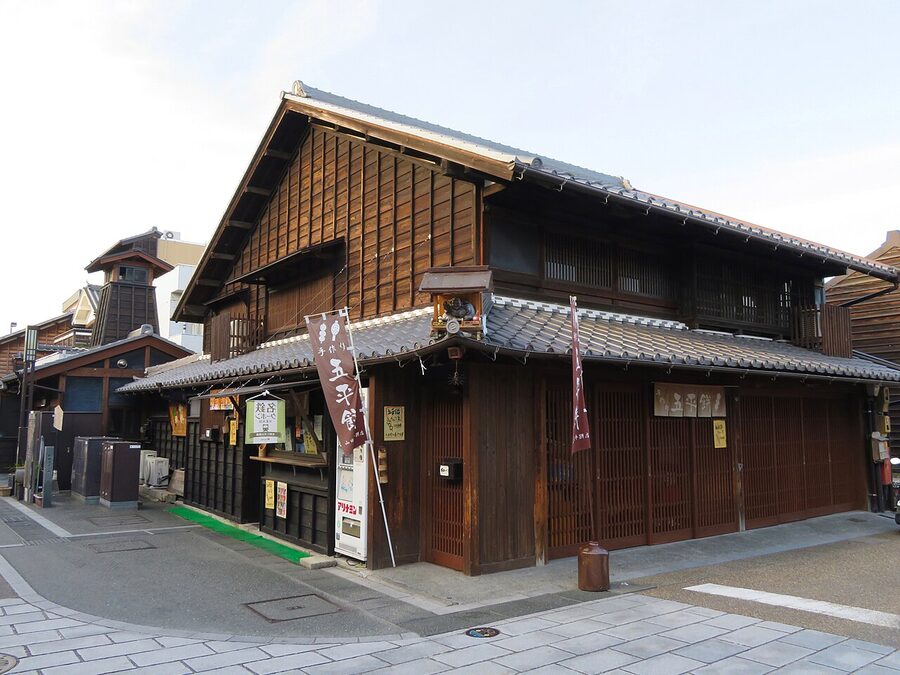
Two foods define Magome: gohei mochi and Shinshu soba. A third, kuri-kinton (chestnut sweet), is more strictly a Nakatsugawa-area autumn speciality, but it’s everywhere in the village in October and November and worth queueing for.
Gohei mochi: the regional staple
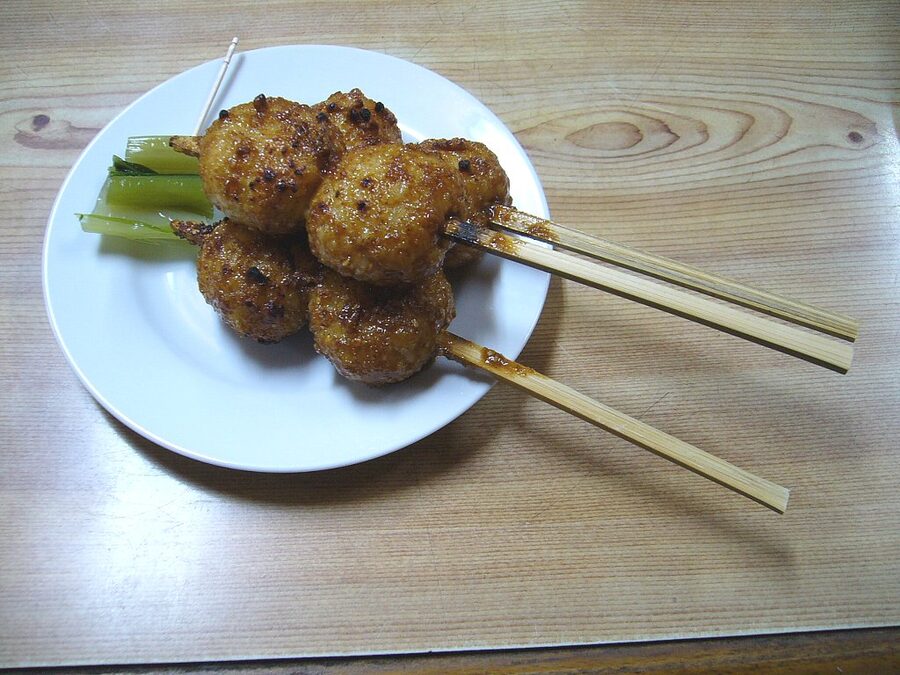
Gohei mochi is pounded rice formed onto a flat wooden stick, brushed with a sweet-savoury kurumi (walnut) and miso paste, and grilled until the surface chars. It’s a Kiso Valley speciality, traditionally made by Edo-era post-town women for their own families and sold to passing travellers. Magome’s version uses the walnut-and-miso paste; further up the Nakasendo at Narai they brush it with sansho-pepper miso instead.
Kanameya, in the middle of the slope near the Shimizuya Museum, is the obvious choice for gohei mochi. Skewers cooked to order on a bench-side grill, two shapes (round dango or flat waraji), about ¥350 each. Eat them on the wooden stool outside; takeaway loses the warmth that is half the point.
Sansai soba and where to eat it
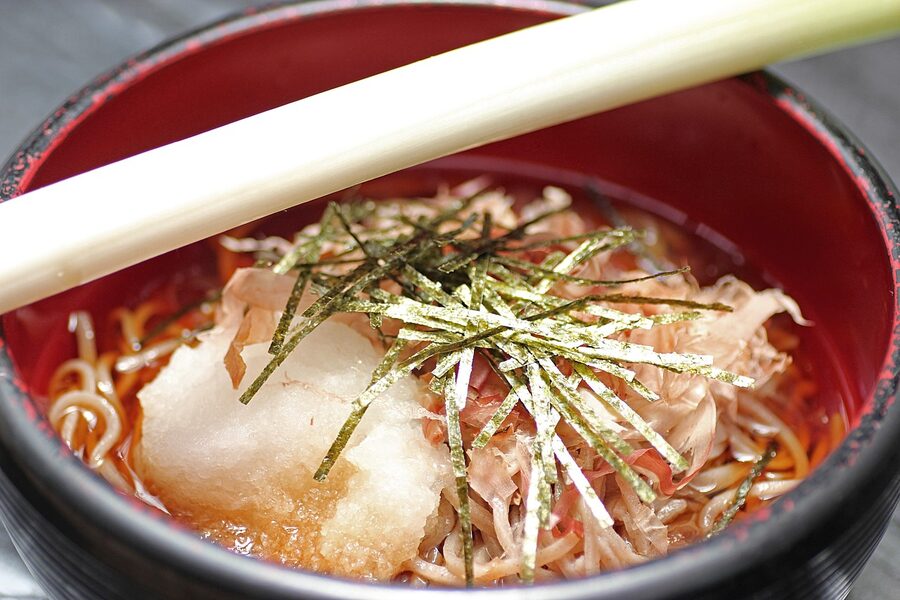
The Kiso Valley is a soba region by water and climate. Cold streams, low-protein soil, and short summers all favour buckwheat. Magome has at least six soba places. The two worth queueing for:
- Keiseian, at the top of the slope just below the Jinbaue platform. Stone-mill on site, single-portion hand-cutting, irregular noodle widths that are the visible sign of authenticity. Open 11:00 to 14:30 only, sells out by 13:30 in season. Cash. Try the zaru soba (¥1,200) or the sansai kake soba (¥1,300). The queue forms before opening.
- Daikokuya Sabo, in the middle of the slope, in a beautifully restored old building with literary credentials. Daikokuya was an Edo-period sake brewery, and its daughter was Toson’s first love. The set lunch built around the area’s kuri-kowa-meshi (chestnut steamed rice with sansai vegetables) is the signature.
- Magomeya, the larger casual restaurant inside the Magome-kan complex. 280 seats, expansive views of Mount Ena from the window seats, helpful for groups, families, and anyone who wants the regional dishes without queueing. Try the Shinshu beef rice bowl set if you want something heavier than soba.
Kuri-kinton in autumn
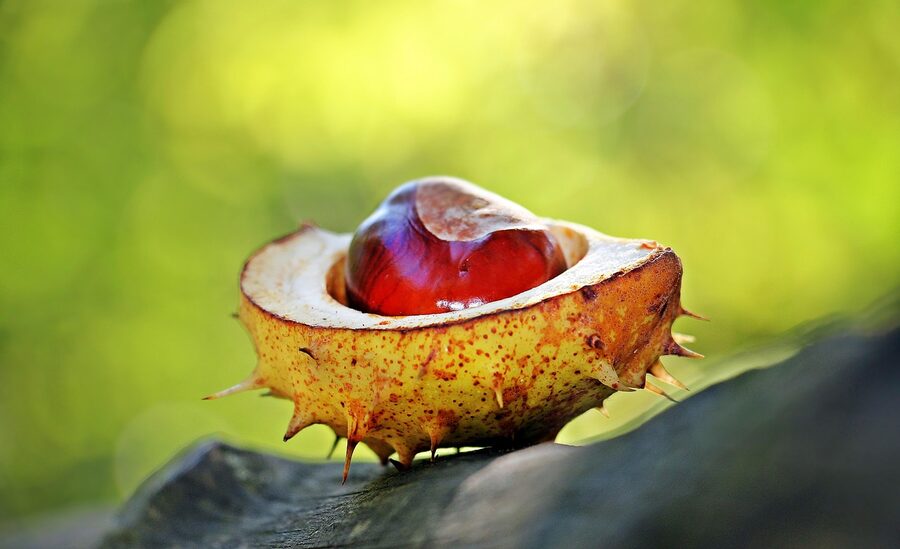
If you visit between mid-September and mid-November, kuri-kinton is the seasonal sweet you’ll see in every shop window. Sweetened mashed chestnut, formed in a folded tea-cloth into a small egg shape. Nakatsugawa is the historical centre of kuri-kinton-making in Japan, and the Magome shops sell the same product as the famous Nakatsugawa confectioners do. ¥300 to ¥450 each, individually wrapped, ideal as a takeaway.
Cafes and breakfast spots
Magome shuts down early. Most restaurants close at 17:00, and outside the seasonal peaks of cherry blossom and autumn colour, finding dinner outside your minshuku is genuinely difficult. Two morning options worth knowing:
- Hillbilly Coffee sits on the lower part of the slope and opens at 9:00 (sometimes earlier). Bilingual owners, thick Japanese-style toast, good chai. Useful if you arrived on the first bus and want a slow start.
- Cafe Kappe, opposite the Tsuchimaya museum, does Japanese-style dorayaki, shaved ice in summer, and chestnut-flavoured ice cream in autumn. The benches outside catch the morning sun.
For dinner, plan to eat at your accommodation’s two-meals-included plan, or book a counter at Haginoya, the village’s only proper kaiseki restaurant. Haginoya takes reservations only and the menu is fixed.
Where to stay
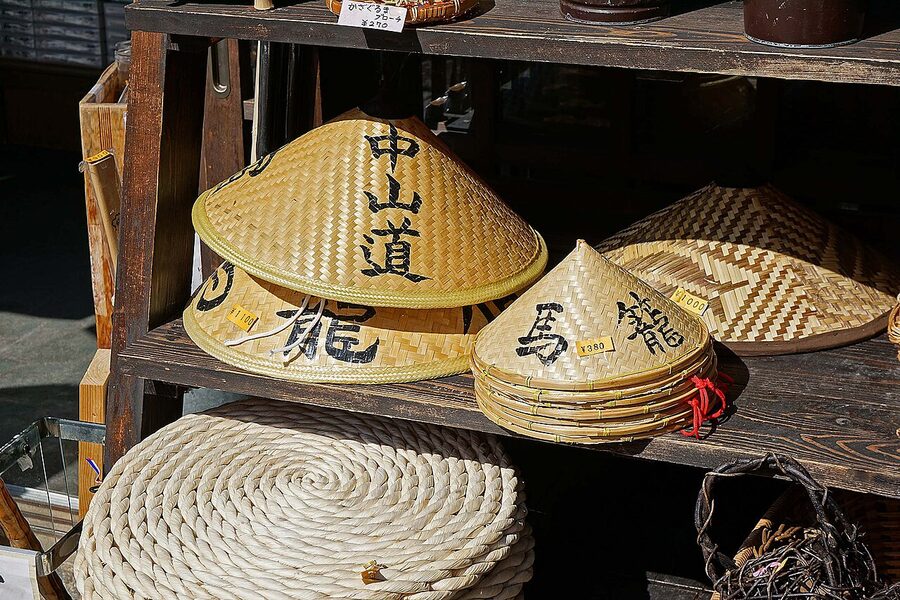
Two truths about staying in Magome. First, demand outstrips supply: the named minshuku tend to be booked four to eight weeks ahead in the spring and autumn shoulders, longer over public holidays. Second, almost every accommodation defaults to two-meals-included, because so few restaurants are open after 17:00 that the half-board model is the practical solution. Build that into your budget rather than fighting it.
Prices below are typical 2026 per-person rates with two meals included, from booking platforms and operator sites. The named places are picked for being either old, distinctive, or both.
Tajimaya
Tajimaya (但馬屋) sits in the middle of the slope and is one of the post-town’s signature minshuku. The ground-floor entrance is a working irori hearth where the host serves tea on arrival. Rooms are small tatami doubles and triples, traditional futons, shared baths. Two-meals-included around ¥11,000 to ¥13,000 per person. Book through Booking.com.
Magome Chaya
Magome Chaya (馬籠茶屋), at the top of the slope just below the upper car park, is the cheap-and-cheerful option. Mix of dormitory beds and private tatami rooms in old timber buildings, breakfast and dinner available with prior reservation. International crowd, a communal lounge that doubles as a swap-stories spot, the kind of inn where you’ll trade trail tips with someone who walked Narai-to-Magome the day before.
Motomiya
Motomiya (本三屋) is a guesthouse a few hundred metres outside the post-town centre, sitting among the rice fields. Quieter than the inns on the main slope, two-meals-included around ¥11,000 per person. The location matters in autumn, when the rice paddies turn gold the week before harvest.
Sakanomichi
Sakanomichi (坂の道) opened in 2024, run by a young couple who renovated an old Magome merchant house into a stylish guesthouse. Modern bedding, traditional shell, helpful with English questions. New on the scene, and worth booking before word spreads further.
Tawaraya
Tawaraya (俵屋) is the upmarket pick: a tastefully restored Edo-period building run by a long-standing local family. Smaller and more private than the bigger minshuku, with a higher per-person rate. Booking via Booking.com.
Manpukuan-Eishoji Temple
The temple lodging at Eishoji is the most singular option in the village. Toson Shimazaki is buried in this temple’s grounds; the building itself appears in Yoakemae under the fictional name “Manpukuji”. The married couple who run the lodging serve Buddhist vegetarian meals, accommodate dietary restrictions, and offer a morning zazen meditation session for guests. It rarely shows up on English booking sites; book by phone or via Really Rural Japan.
Hotel Hanasarasa (the bigger-hotel option)
Five minutes by car from Magome and 40 minutes on foot (along a road not particularly designed for walkers), Hotel Hanasarasa is a larger onsen-style ryokan that solves the where-to-stay problem if everywhere in Magome itself is booked out. There’s one daily shuttle from Magome and several from Nakatsugawa Station. Two-meals-included plans, a proper hot-spring bath, family-friendly. Book via Booking.com.
When to go
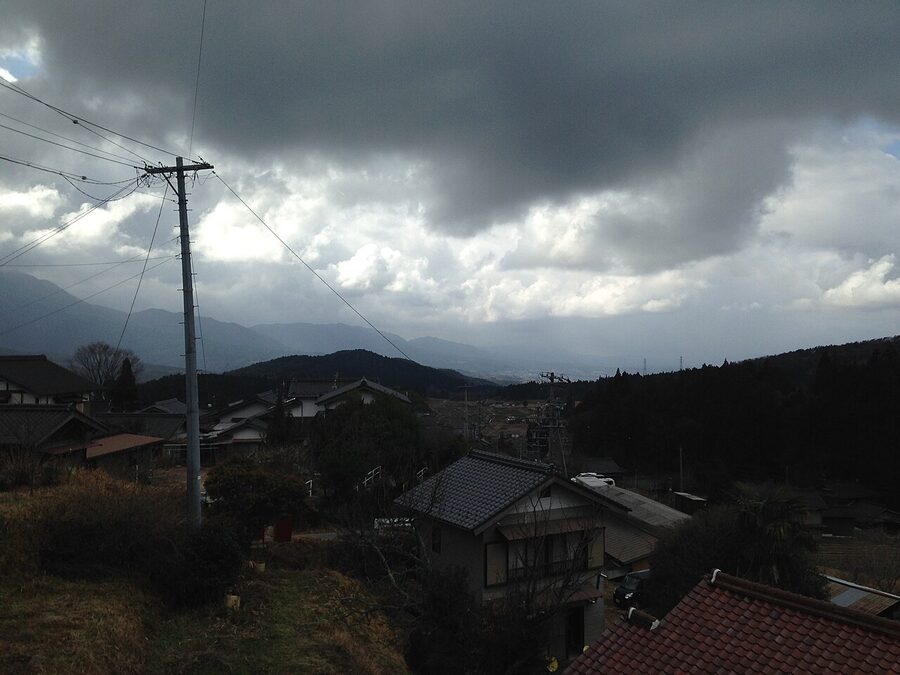
Magome is a four-season village, but the four seasons are not equal.
- Late April to mid-May: cherry blossom is gone by the time it reaches Tokyo’s first weekend, but in Magome the late-flowering varieties hold until early May. The slope is at its quietest. Day temperatures 12 to 18 degrees, nights single digits.
- Mid-October to mid-November: the autumn-colour peak. Mount Ena turns first, the Magome valley follows by the first weekend of November. This is also when the Magome Shukuba Matsuri runs (see Festivals below). Crowds are noticeable but the village is large enough to absorb them in midweek.
- December to mid-March: off-season. Shorter daylight, occasional snow, several restaurants and at least one museum on reduced hours. The Hyosetsu no Tomatsuri ice-candle festival in mid-February is the only winter event. Solo walkers should not attempt the Magome-Tsumago trail in fresh snow without proper gear.
- July to August: hot and humid by Japanese mountain standards, day temperatures pushing 30 degrees, but cooler than Nagoya by 5 to 8 degrees. The valley sees afternoon thunderstorms; start the trail early.
The annual mean temperature is around 11 degrees, with a harsh seasonal range. Pack layers; the slope holds shade well into the morning even in summer.
The Magome Shukuba Matsuri
The post-town’s main festival runs across the weekends of 3 to 23 November, with the main daimyo-procession reenactment and the akari-no-kaido (lantern-lit street) on the central weekend. Volunteer-tied paper-and-bamboo andon lanterns line the slope from dusk; the procession recreates the 1861 passage of Imperial Princess Kazunomiya through Magome on her way to her wedding in Edo.
Hyosetsu no Tomatsuri
For exactly one evening in mid-February, the slope is lit by hand-made ice candles. The wider Kiso Valley does this in rotation, one post-town per night, so the Magome turn is once a year. Free amazake is poured at the lower end. It’s a small, perishable, photogenic event; one of the few reasons to come to Magome in winter at all.
Magome alone, or Magome as a stop?
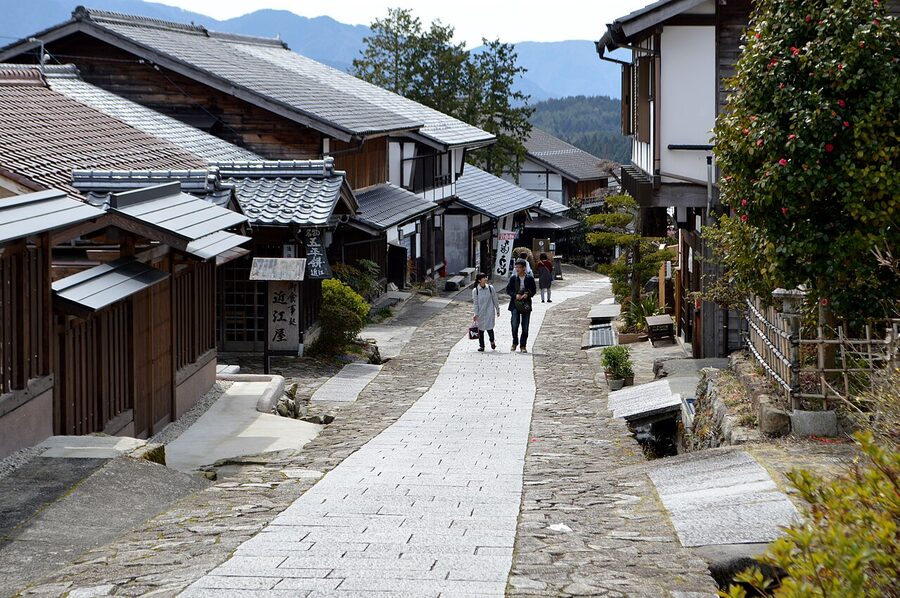
The honest answer: Magome on its own is a half-day. Two hours to walk the slope properly, an hour for a museum and lunch, half an hour for a coffee. As a stop, that’s enough. The village is more interesting at the start and end of the day than in the middle, when day-tour groups concentrate between 11:00 and 14:00.
Magome plus Tsumago, walked end-to-end, is a proper day. Three hours on the trail, the post-towns at either end with their respective museums and slopes, lunch at the trail’s halfway rest house if you don’t want to wait until Tsumago. This is the version most people who’ve heard of Magome are actually picturing when they say they want to visit. Do this if you only have one day.
Magome plus Tsumago plus a night at one of them is the version that pays back. Walk the trail one direction, stay overnight at the destination end, walk back the next morning before the day-trippers arrive. Tsumago is the better night, by a small margin: it’s stricter about preserving its evening atmosphere (no shop signs lit, very few cars), and the morning light hits its slope while Magome is still in shadow.
If you’ve only got Magome and you’ve already been to Tsumago, the next-best add-on is the half-hour walk to Suwa Shrine and the lower Nakasendo, where the village transitions into farmland. Almost no day visitors do this. The lower Magome cobblestone section, restored from buried 17th-century paving, is one of the village’s most quietly impressive sights.
Combining Magome with the rest of the Kiso Valley
Magome’s geographic position makes for several useful combinations:
- Magome and Tsumago in one day: the standard. See above.
- Magome, Tsumago, and Narai-juku in two days: the deeper version. Walk Magome to Tsumago day one, train to Narai on day two. Narai is bigger and quieter than Magome, with a different visual register: longer, flatter, more lacquerware shops than soba.
- The Kiso Valley by car: if you’d rather drive than train, the Kiso Valley driving loop covers all the post-towns plus the Akasawa hinoki-cypress forest and the Ne-no-ue waterfalls.
- Magome and Matsumoto in two or three days: Magome by day from Nagoya, then Limited Express Shinano up to Matsumoto the same evening. Two completely different sides of central Honshu in 36 hours.
- Magome on a 5-7 day Japan Alps loop: see the Japan Alps itineraries page for full multi-day plans.
If the post-towns are your main interest and you only have one slot, Tsumago is the more atmospheric choice. If you want an easy half-day with food, museum content, and a clear viewpoint, Magome is. Walking the trail between them is what makes the trip make sense.
The bits everyone forgets
Some practical asides that don’t quite fit elsewhere:
- The slope is brutal in winter. Slate cobble and wet snow do not get on. Local minshuku stock walking sticks at the door for guests. Take one. The fall risk on the steepest section between the masugata and the Wakihonjin is not nothing.
- There’s no proper convenience store inside the post-town. The closest 7-Eleven is at Nakatsugawa Station. Bring snacks and cash if you’re staying overnight.
- Cash matters. Several minshuku, all the gohei-mochi grills, and the smaller museums are cash-only. ATMs in the post-town are rare; the post office at the top of the slope has one but closes at 16:00.
- The bus from Magome to Magome-toge. A small handful of buses a day make the climb up to the pass itself, useful if you want to walk only the descent into Tsumago and skip the ascent. Check the Kitaena Kotsu Tsumago line timetable.
- Mobile signal is patchy on the trail. Magome and Tsumago themselves have full 4G; the middle 4km of the trail drops to one or two bars. Download offline Google Maps before you start.
- The “Samurai Road” branding you may see in some marketing material refers to the wider preserved Edo-era highway between Magome and Tsumago, not anything specific to Magome itself. The samurai didn’t typically walk; they rode in kago palanquins. The horsemen did.
One last thing
The bus back to Nakatsugawa leaves at 18:15, and the woman with the straw horses has packed up by then. The grills are cooling. The slope is empty enough that you can hear the waterwheel from the masugata corner all the way up to the pass. The tea-house volunteers on the trail will already be home. This is the Magome that the day visitors don’t quite see, and it’s the one most worth the second trip.