
Most foreign coverage paints Karuizawa as a summer escape from Tokyo and stops there. That’s the version every English guide will sell you. The locals know better: the town is busiest in winter for skating, the autumn fortnight at Kumoba Pond is the most photographed week of the year here, and the John Lennon family used to come back every spring just to walk the empty Ginza before the season started. The summer pitch is real, but it’s roughly a third of the story.
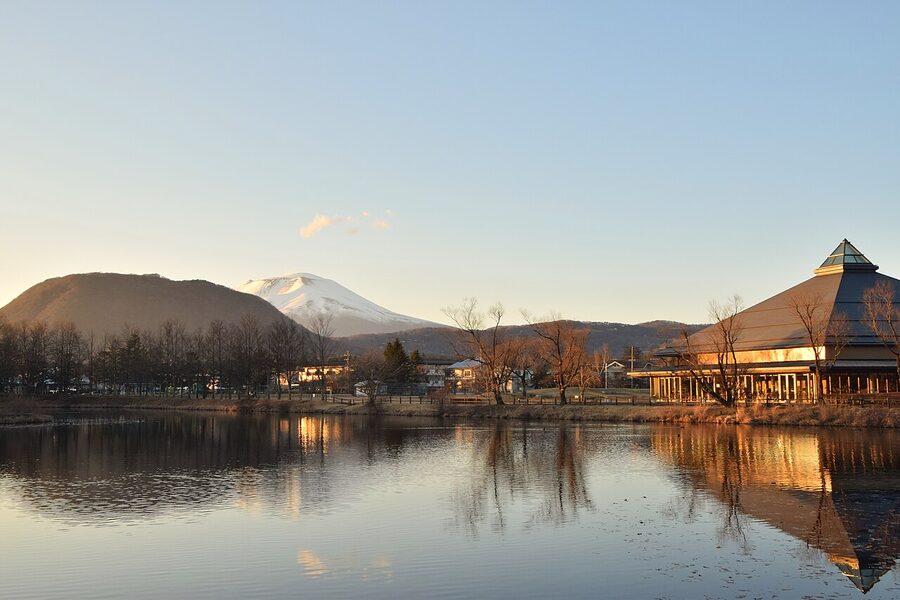
Karuizawa sits at 940m on the eastern edge of Nagano Prefecture, right against the Gunma border. The Hokuriku Shinkansen runs the route from Tokyo Station in 70 minutes, which is why the town is technically commutable for the wealthier Tokyo set who keep second homes here. The altitude is the whole point: even in mid-August when Tokyo is 35 degrees and humid, Karuizawa rarely climbs above 25 and the nights drop into single digits. That’s why the town exists in its current form. A Canadian missionary called Alexander Croft Shaw walked up here in 1886, decided it reminded him of summer Scotland, and started telling other foreigners. Within a decade Karuizawa had become the official summer retreat of the diplomatic corps.
In This Article
- Getting there
- Getting around once you’re there
- Old Karuizawa: the missionary district
- Shaw Memorial Chapel
- St Paul’s Catholic Church
- Mampei Hotel
- Mikasa Hotel
- Naka-Karuizawa and the Hoshino area
- Harunire Terrace
- Tonbo-no-Yu and the Hoshino onsen
- Stone Church (Uchimura Kanzo Memorial)
- Karuizawa Kogen Church
- Kumoba Pond and the in-town walking circuit
- Shiraito Falls
- Mount Asama and Onioshidashi Park
- The Prince Shopping Plaza
- Cycling
- The winter side: skating, skiing and the curling rink
- Karuizawa Taliesin and the museum stretch
- Where to stay
- Hoshinoya Karuizawa
- Mampei Hotel (revisited as a stay)
- Kyukaruizawa Kikyo, Curio Collection by Hilton
- Bleston Court
- BEB5 Karuizawa
- Karuizawa Prince Hotel East / West / South
- Tsuruya Ryokan
- Where to eat
- Sawamura Roastery
- Kawakami-an
- Mikado Coffee Kyu-Karuizawa
- Sonmin Shokudo
- Maruyama Coffee Harunire Terrace
- Modesto
- French Bakery (Lennon’s)
- Kumobatei
- When to come
- Day-trip vs overnight
- What to combine with
Getting there
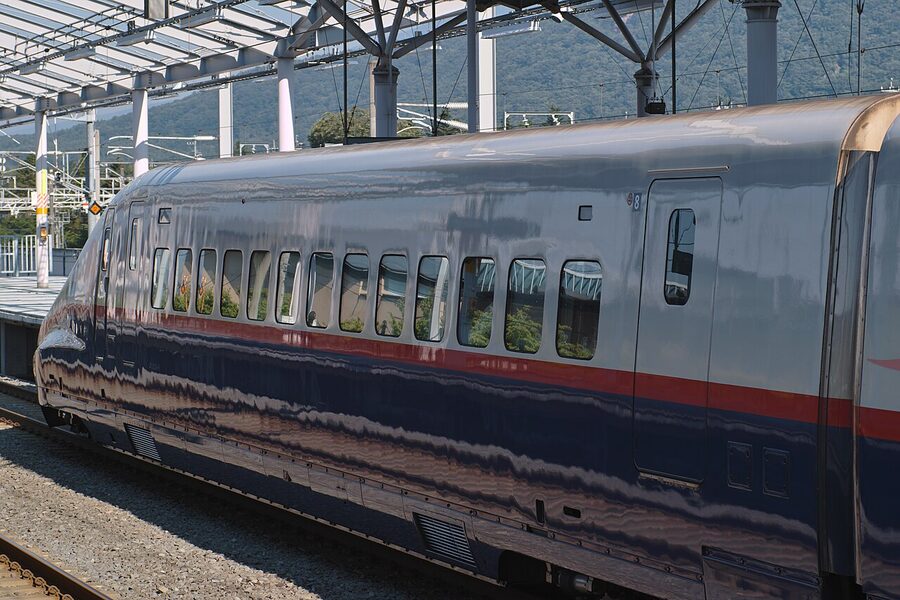
From Tokyo Station, the Hokuriku Shinkansen Asama service runs to Karuizawa in around 70 minutes. The faster Hokuriku Kagayaki services skip Karuizawa entirely on their way to Kanazawa, so check the timetable: you want an Asama or a Hakutaka, not a Kagayaki. The fare is ¥5,490 for an unreserved seat, ¥6,020 reserved. The full ride is covered by the JR Pass, the JR East Nagano-Niigata Pass, and the JR Tokyo Wide Pass, which makes Karuizawa one of the easiest day-trips on any of those tickets.
If you’re saving money, Willer Express and the highway buses run from Shinjuku and Ikebukuro for around ¥2,500 to ¥3,500. The journey takes 3.5 hours each way, which makes a day-trip from Tokyo by bus genuinely unpleasant. Take the Shinkansen and use the bus only if you’re staying overnight.
By car, it’s roughly 2.5 hours via the Joshin-etsu Expressway. The Usui-Karuizawa IC exit is about 35 minutes from Karuizawa Station. Parking is plentiful but tight at the famous spots in summer. From November through March you need snow tyres or chains north of the town.
Getting around once you’re there
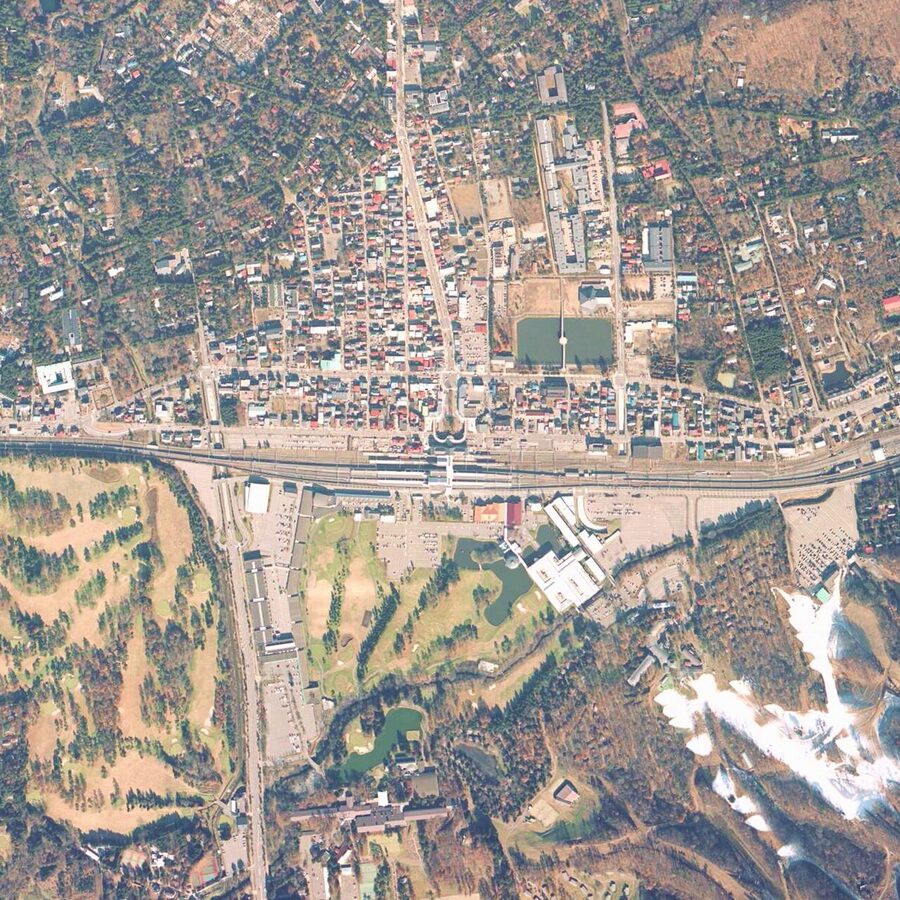
The town spreads out. Old Karuizawa (Kyu-Karuizawa) is roughly 25 minutes on foot from the station, or a 4-minute bus or 5-minute taxi ride. Naka-Karuizawa, where the Hoshino Resort, Harunire Terrace and Stone Church sit, is one stop on the local Shinano Railway from Karuizawa Station, or a 20-minute bus. Shiraito Falls is 25 minutes by Kusakaru bus from Karuizawa Station (¥720 one way) and runs roughly hourly, less in winter.
Renting a bike is the local solution and the right one if it isn’t raining. Several rental shops cluster around Karuizawa Station with rates from ¥500 for a couple of hours and around ¥1,500 for the day. The town’s residential streets are flat, tree-lined, and quieter than you’d expect for somewhere this famous. If you’re tackling the climb to Old Usui Pass, take an electric-assist bike or accept that the last 30 minutes will hurt.
For the route in by train, the longer story sits in the Japan Alps access guide. Most Karuizawa-bound visitors come direct from Tokyo, but the Hokuriku Shinkansen also makes Karuizawa a sensible stop on routes through to Nagano City (30 minutes further), or onward to Toyama and Kanazawa.
Old Karuizawa: the missionary district
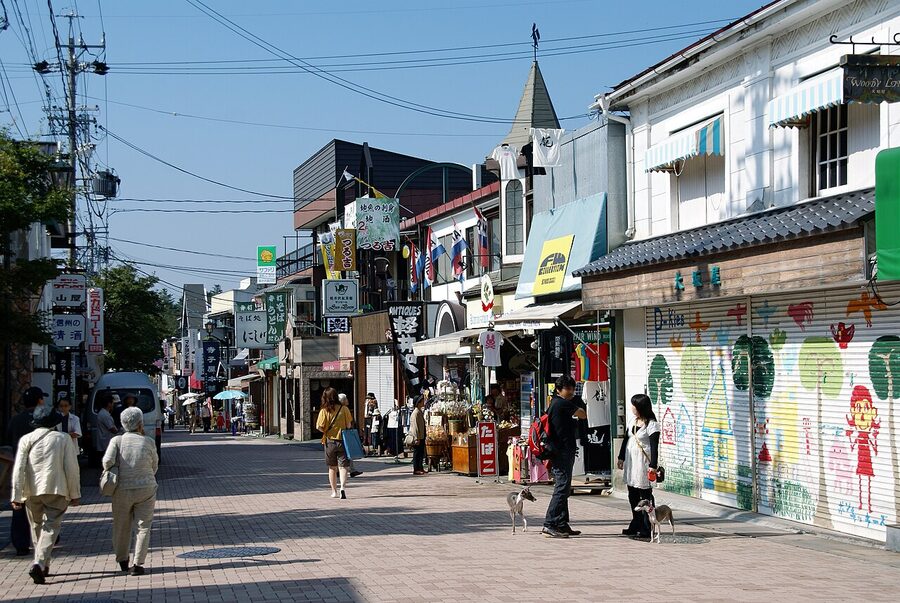
Old Karuizawa, or Kyu-Karuizawa, is where the resort started. Walk 25 minutes from the station along a tree-lined road of holiday villas and you reach the rotary, then the long sloping stretch of Kyu-Karuizawa Ginza-dori. The street runs about 600 metres uphill, lined with bakeries that have been there since 1948, jam shops dating back to the missionary era, ceramic galleries, and lacquerware specialists. Among the touristy souvenir stalls there are still a handful of genuinely old shops worth slowing down for.
French Bakery, halfway up the street, was John Lennon’s regular bread stop in the 1970s. The family came every summer through 1979 and Lennon famously cycled the back streets each morning. The bakery still sells the same long crusty loaves the Lennons ordered. Mikado Coffee, opened on Ginza-dori in 1952, runs a famous coffee soft-serve in summer. Tsuruya supermarket, which sounds dull but isn’t, is what every Tokyo holidaymaker stops at on the way out. Their Karuizawa-only branded jams, breads, and dressings have a quietly serious cult following.
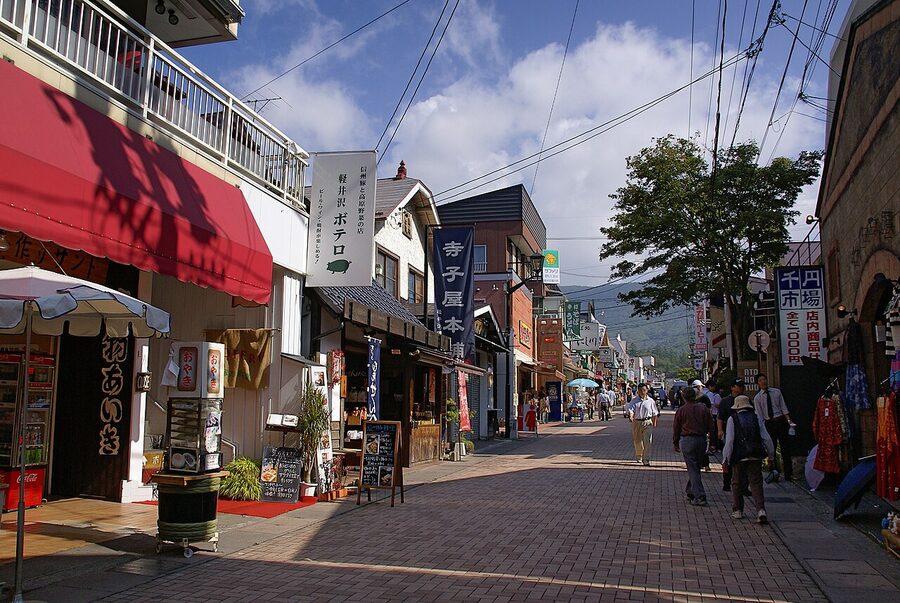
Shaw Memorial Chapel
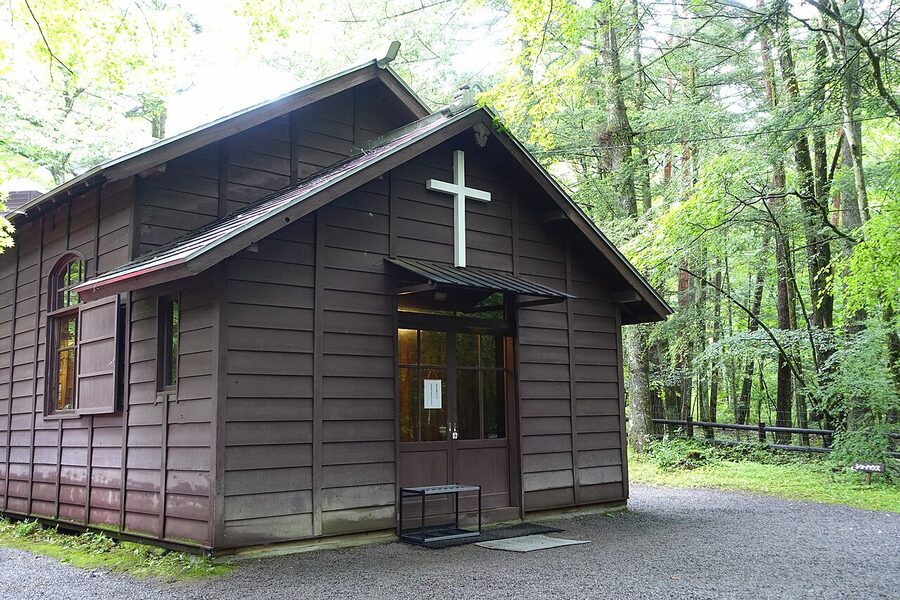
A short uphill walk from the top end of Ginza-dori brings you to the Shaw Memorial Chapel, built in 1895 and named after Alexander Croft Shaw, the Canadian missionary who started the whole resort idea. The chapel is small, dark-timbered, set among tall pines, and free to enter. Shaw’s restored cottage stands behind it: a tiny one-room timber house that was the first foreigner’s villa in Karuizawa. There’s a little explanatory display in Japanese only. Allow 15 minutes for both.
St Paul’s Catholic Church
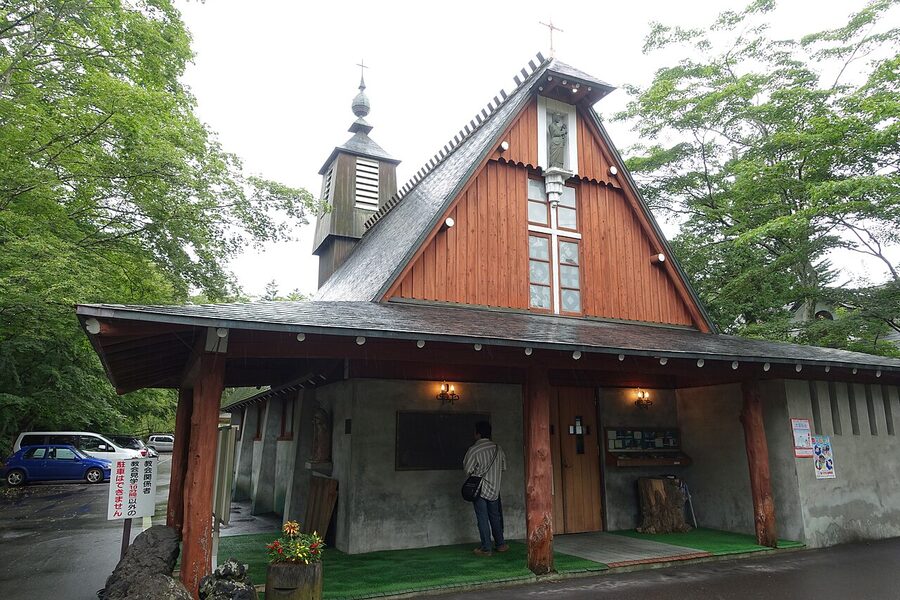
One street back from Ginza-dori on Suisha-no-michi, you’ll find St Paul’s Catholic Church, designed in 1935 by the Czech-American architect Antonin Raymond. It’s a simple steep-pitched timber building with a sharp wooden cross above the entrance, deceptively modest from the road. Inside, the dark beams and pale plaster do the work. Yasunari Kawabata wrote about it in his short stories and Tatsuo Hori set scenes here. Both novelists summered in Karuizawa in the 1930s.
Mampei Hotel
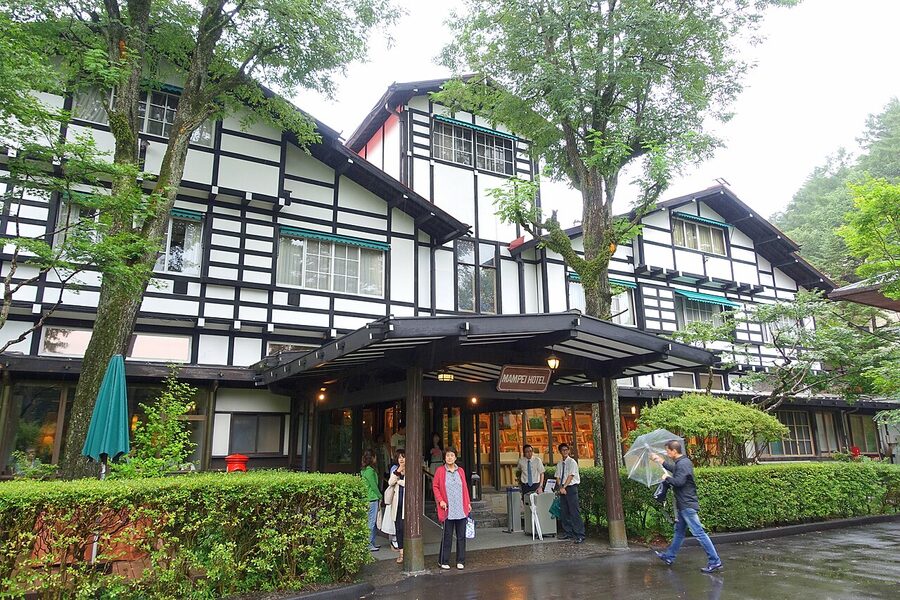
A ten-minute walk from Ginza-dori, half hidden in a stand of pines, sits the Mampei Hotel. The current building was completed in 1936, replacing an earlier inn that had been operating since 1894. It’s the most famous classical hotel in central Honshu and the headline accommodation for anyone who cares about the Lennon connection: John, Yoko, and Sean stayed every summer from 1976 through 1979 in the same suite. The cafe terrace is open to non-guests from 9:30 to 18:00 daily. The royal milk tea is ¥1,300 and the apple pie with drink is ¥2,400, both with the 10 percent service charge included. The pie comes with Shinshu kogyoku apples in autumn, which is when it’s actually worth ordering.
If you want to stay, the rooms aren’t cheap and the building is loved more for the public spaces than the bedrooms. Look at it the way British people look at the old Eastern hotels: you’re paying for the layered history rather than the thread count.
Booking link: Mampei Hotel on Booking.com.
Mikasa Hotel
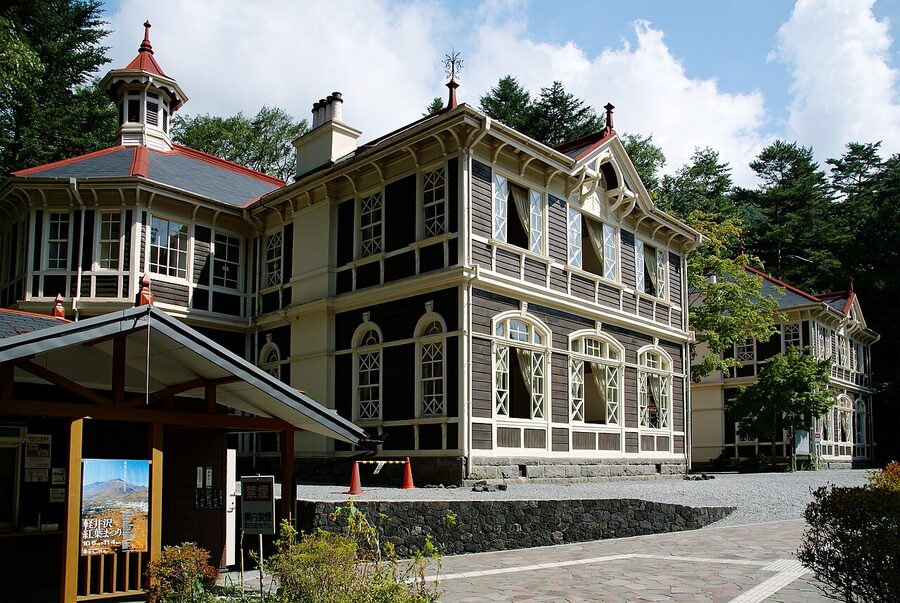
About 10 minutes by bus from Karuizawa Station, the old Mikasa Hotel is a 1905 timber building in the American Stick architectural style, designated an Important Cultural Property in 1980. It operated as a hotel until 1970 and is now an open museum. After a long preservation works closure that ran from 2020, it reopened in autumn 2025. Adult admission is ¥400, child ¥200. The interior gives you the clearest sense of what the original Karuizawa hotel scene looked like in the years between the missionary era and the war.
Naka-Karuizawa and the Hoshino area
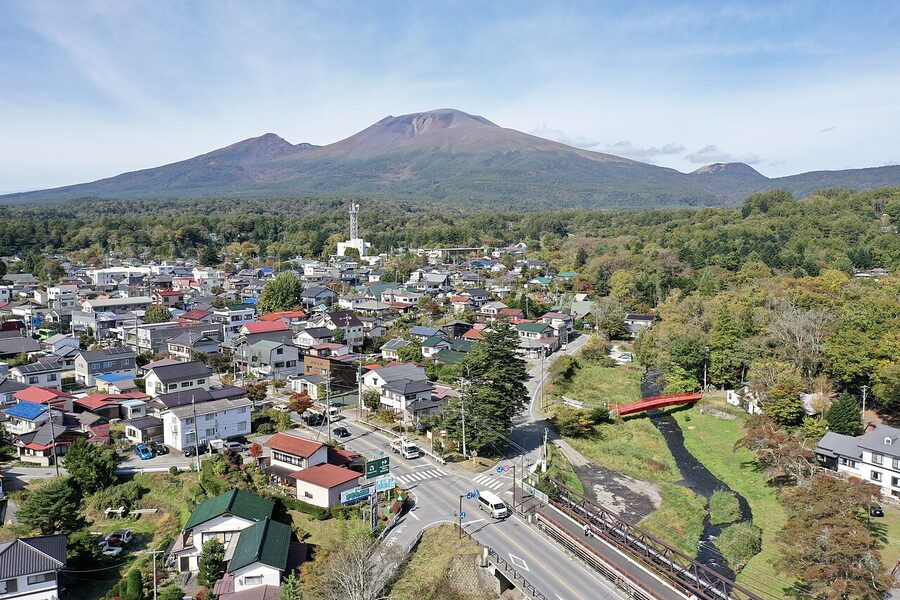
Naka-Karuizawa, or Middle Karuizawa, is the second of the town’s two centres. It’s a single stop west of Karuizawa Station on the local Shinano Railway, and a much shorter run by car. The Hoshino Resort group has reshaped the whole eastern half of Naka-Karuizawa over the past 25 years, building Hoshinoya (the headline luxury ryokan), the Harunire Terrace shopping deck, the Tonbo-no-Yu day onsen, the Stone Church, and the Karuizawa Kogen Church into a single walkable cluster. It’s a great half-day, with or without an onsen soak built in.
Harunire Terrace
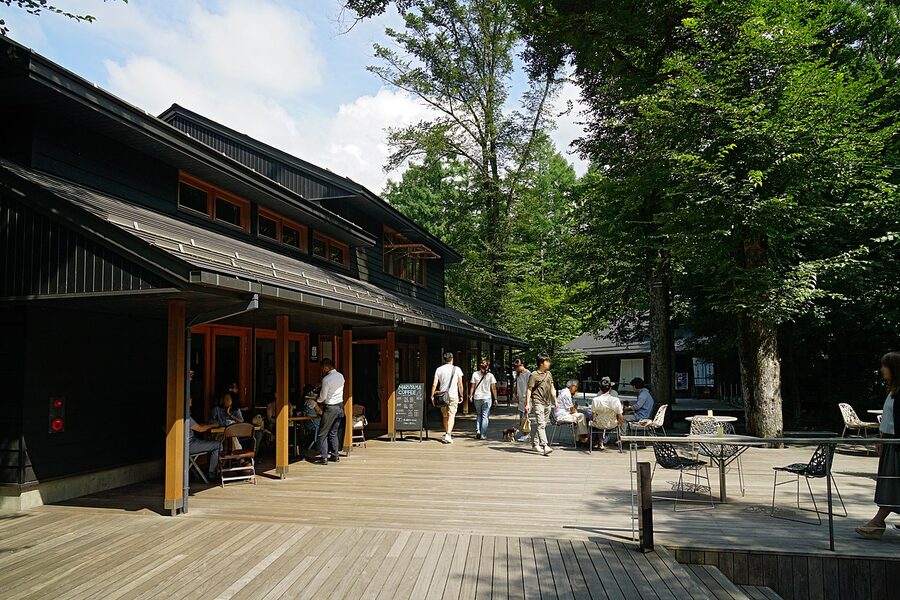
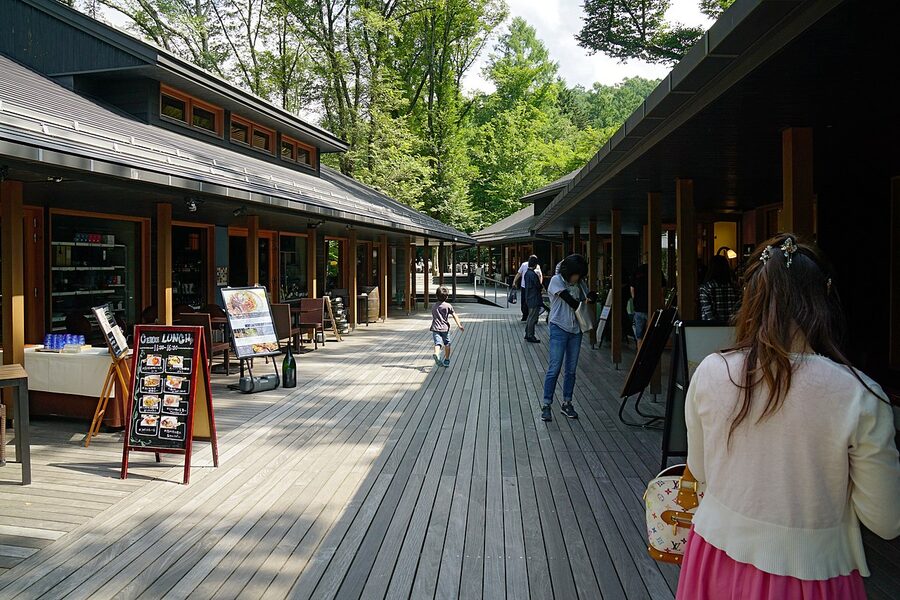
Harunire Terrace is a deck-and-stream complex of 16 boutiques, restaurants and cafes built into the forest along the Yu River. Hoshino Resorts opened it in 2009 and it set a tone the rest of the town has since copied. The architecture is wood-on-wood, the trees are taller than the buildings, and the whole thing was deliberately laid out to follow the existing elm grove rather than clear it. Sawamura, the Karuizawa-founded bakery and bistro, has its flagship here. Maruyama Coffee runs a roastery cafe with the speciality-grade beans that have made the Karuizawa branch a destination for Tokyo coffee nerds.
Tonbo-no-Yu and the Hoshino onsen
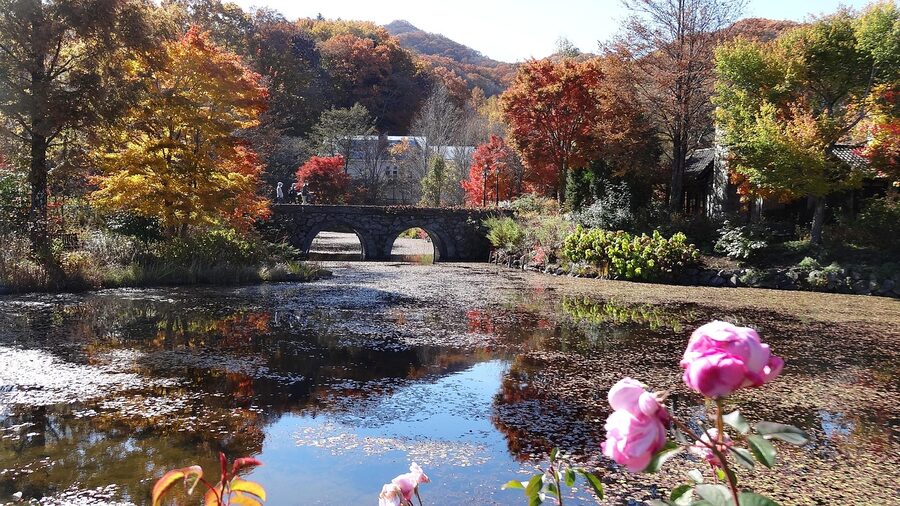
Hoshino Onsen has been a working hot-spring source since 1915. The day-use facility, Tonbo-no-Yu (Dragonfly Bath), sits next to Harunire Terrace and is open 10:00 to 22:00, with last entry at 21:15. Adult entry is ¥1,350 December to March and ¥1,550 April to November. Children aged 3 to elementary school are ¥800. The water is the soft alkaline kind described locally as bihada-no-yu, beauty bath, and you’ll feel it in your skin for an hour after.
The onsen is small but unhurried. The outdoor rotenburo sits in the forest. Tattoo policy is permissive: small tattoos under 8 by 10cm are OK with the cover stickers (¥250 each, sold at reception). Bigger tattoos aren’t allowed even with covers. If you want a longer onsen day, look at the dedicated Japan Alps onsen guide for the deeper soaks at Shirahone and Nozawa.
Right next to Tonbo-no-Yu is Sonmin Shokudo, the Hoshino-run casual restaurant. The mushroom hot pot with soba is the order locals send people to. Expect a 30-minute queue on weekends, and pull a numbered ticket on arrival.
Stone Church (Uchimura Kanzo Memorial)
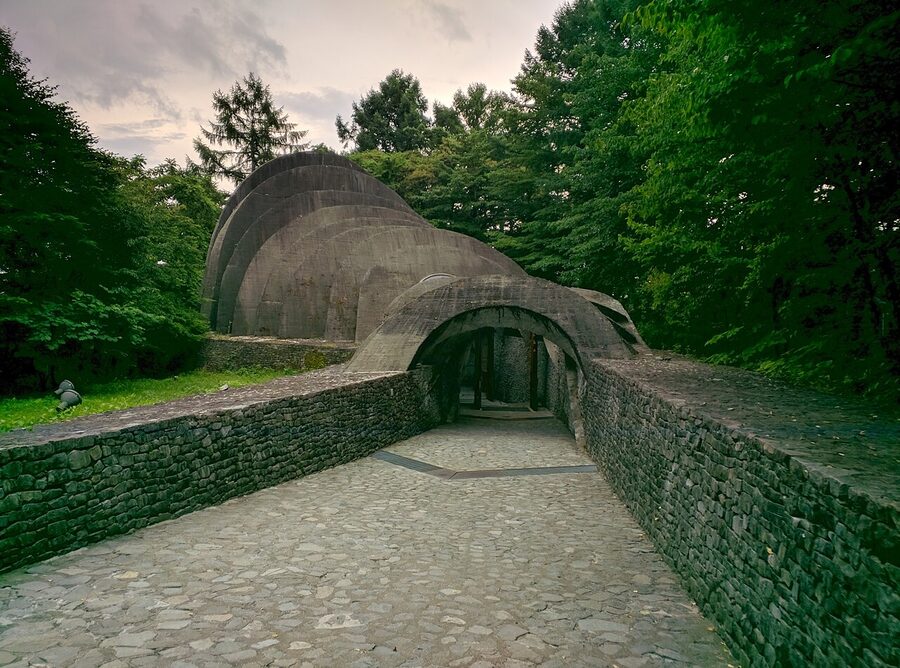
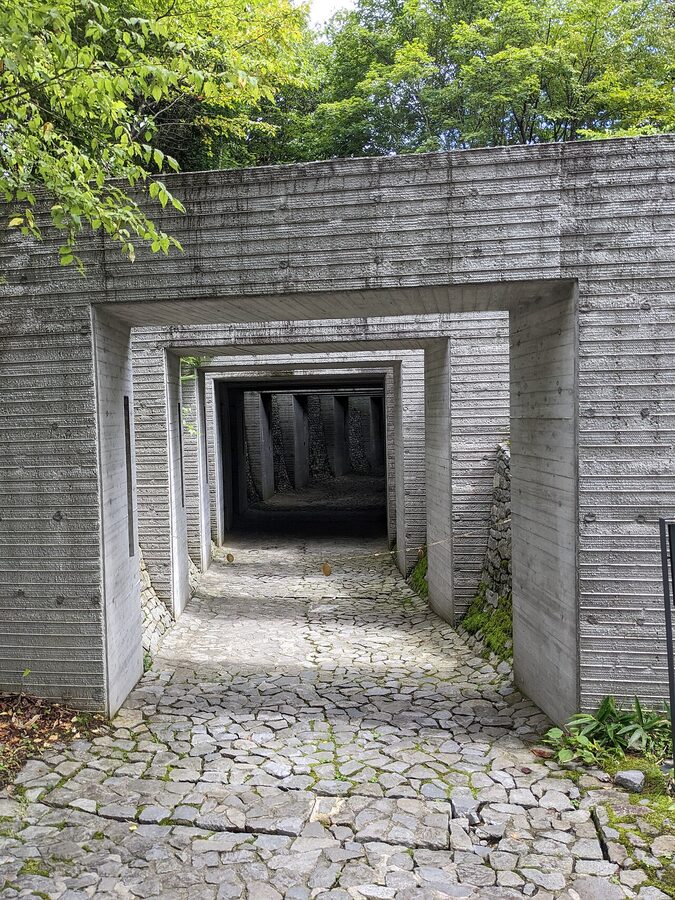
A 12-minute uphill walk from Harunire Terrace, the Stone Church is the most quietly impressive building in Karuizawa. American architect Kendrick Kellogg designed it in 1988 in his organic style: a series of arched stone vaults that look as if they grew out of the hillside. The chapel is light, airy and entirely without symmetry; the lower memorial hall, dedicated to the theologian Uchimura Kanzo, is darker and more contemplative. Photography is not allowed inside the chapel itself. Entry is free, 10:00 to 17:00, but the chapel closes during Friday-to-Sunday weddings, so check the website if you’ve travelled specifically to see it.
Karuizawa Kogen Church
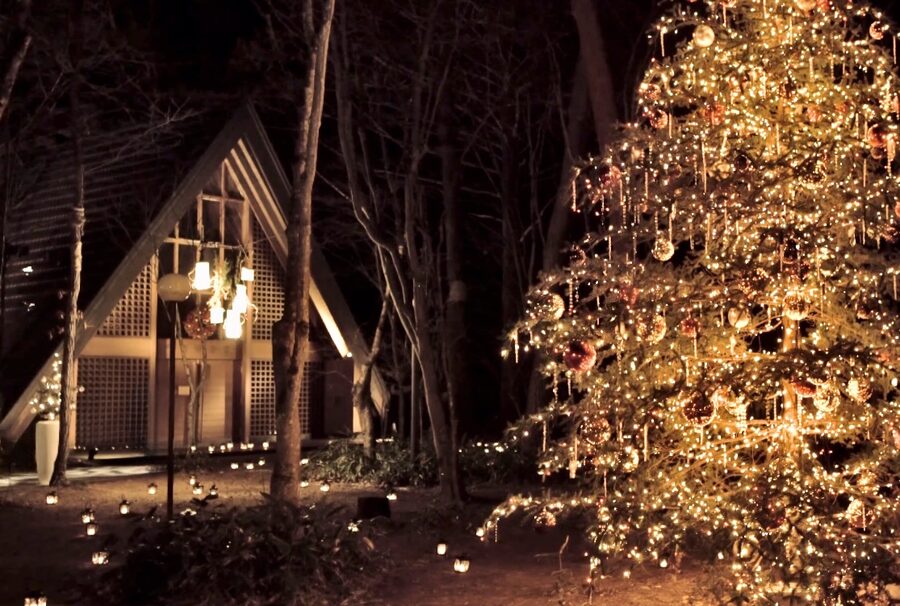
Five minutes from the Stone Church on the same Hoshino site, the Karuizawa Kogen Church is the older and warmer of the two. It traces back to a 1921 cultural seminar where the writers Hakushu Kitahara and Toson Shimazaki led summer discussions about literature and theology. The triangular timber frame and the soft stained glass make it the standard Japanese wedding-magazine cover shot. They run a Summer Candle Night in August and the Christmas illumination Holy Forest event each December, both worth the trip if you’re nearby.
Kumoba Pond and the in-town walking circuit
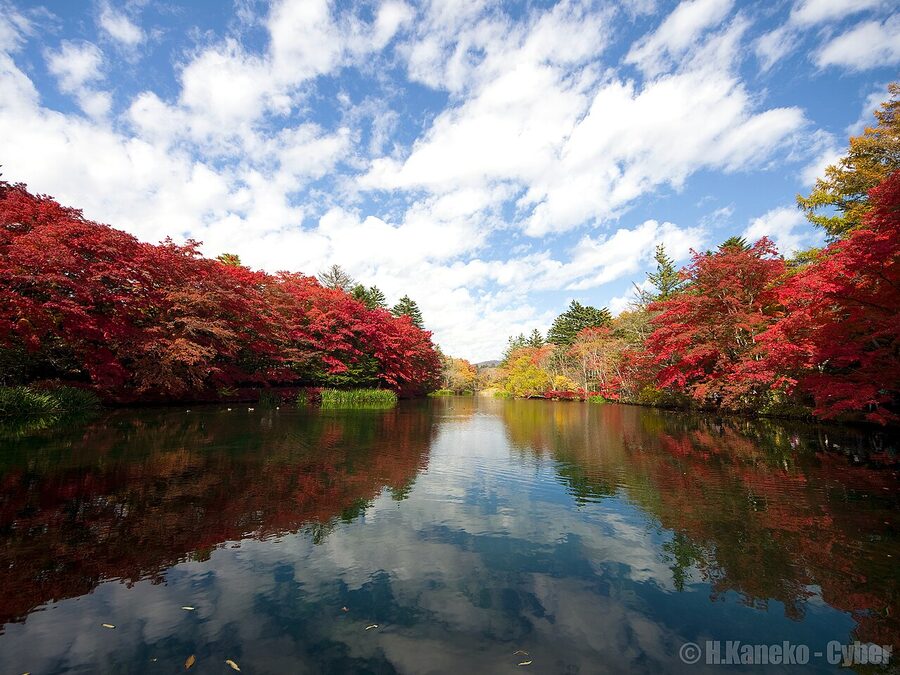
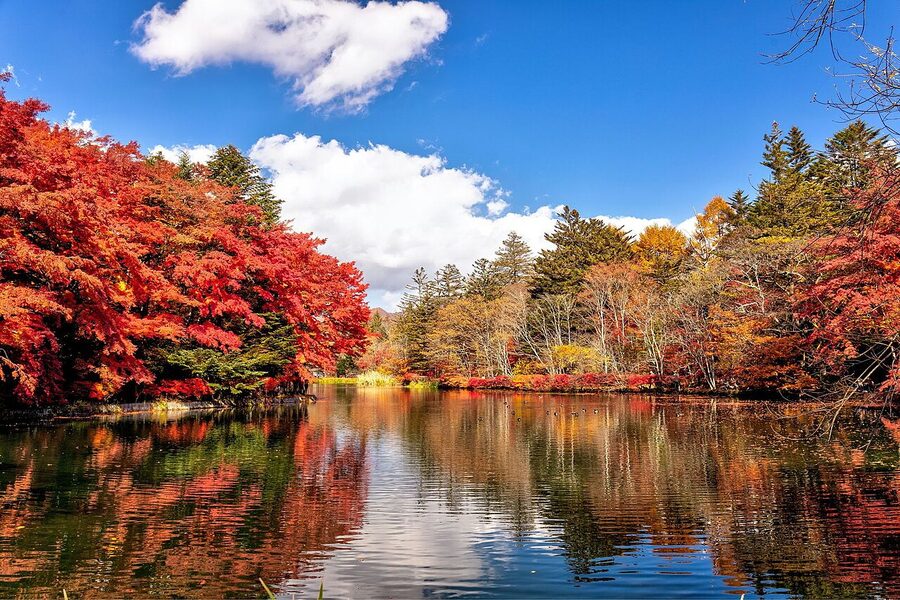
Kumoba Pond, sometimes called Swan Lake by the foreign community since the early 1900s, is a small spring-fed pond about 20 minutes on foot from Karuizawa Station and 10 minutes from Old Karuizawa. The full loop walk is 1km, takes around 30 minutes, and is paved and easy. There’s a bus-tour problem here in autumn: the two-week peak window is the busiest fortnight of the year for the entire town. If you’re here in late October, walk in from Old Karuizawa Ginza first thing in the morning rather than driving.
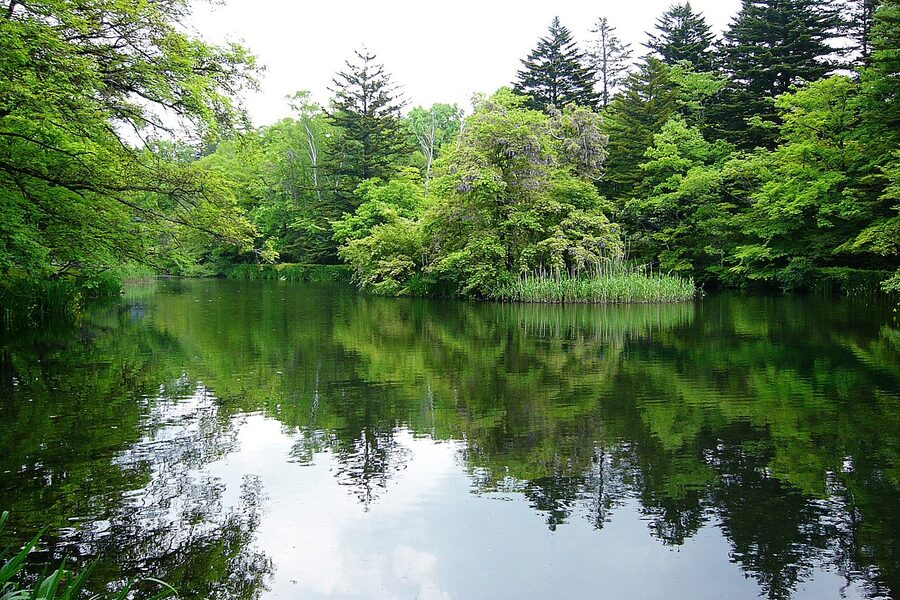
From Kumoba Pond, a marked walking trail continues 4km uphill to the Old Usui Pass observatory at around 1,200m, on the boundary with Gunma Prefecture. The path is easy at first, then steep for the last 30 minutes, and follows the original Nakasendo post road that connected Edo with Kyoto. It’s the same route the wider Nakasendo walking guide covers in detail across the rest of central Honshu.
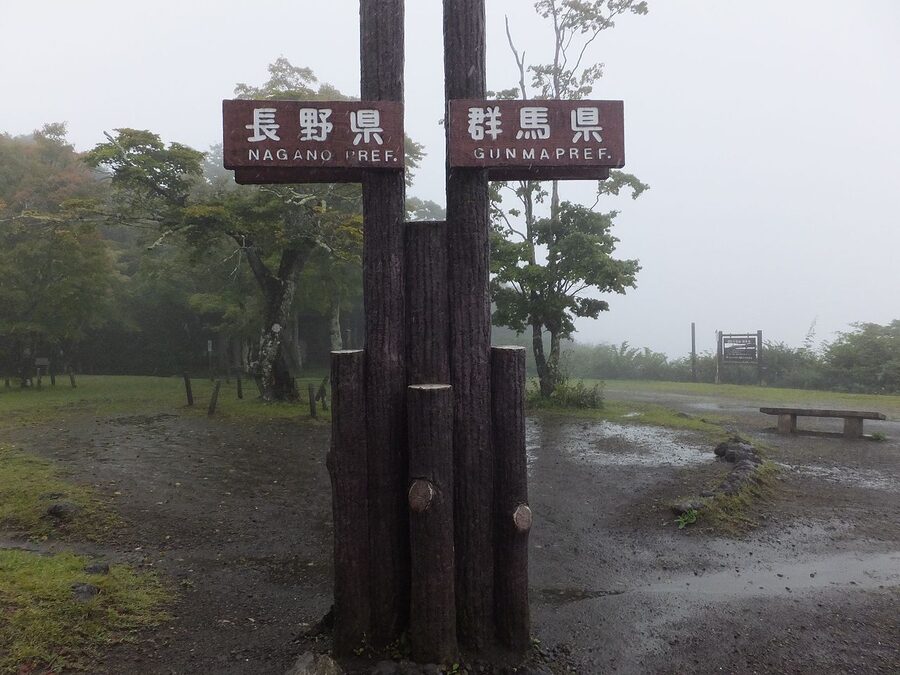
From the Usui Pass observatory, the view drops south across both Nagano and Gunma. Mt Myogi’s serrated profile is to the south-east. Bring water; there’s a small kiosk at the top in season but no reliable food. The retro red bus that runs the route from late April to late November makes the trip easy if you’d rather not climb.
Shiraito Falls
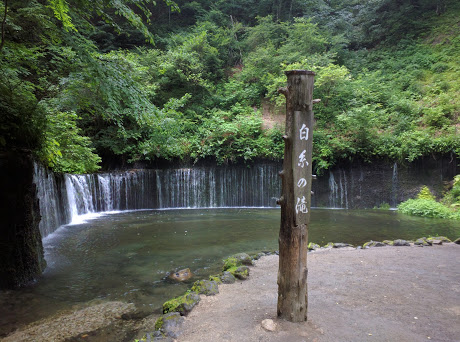
Shiraito Falls (Shiraito-no-taki, white-thread waterfall) is the most photographed natural site in the area and a 25-minute Kusakaru bus ride from Karuizawa Station. The falls are only 3 metres high but 70 metres wide, fed by groundwater filtering through the volcanic layers of Mt Asama, which is why there’s no river running into them. Hundreds of fine threads of water emerge directly from the cliff face and curve down into the same shallow pool. It’s quieter than the photos suggest because the volume is low; the effect is more like light rain on rock than a normal waterfall.
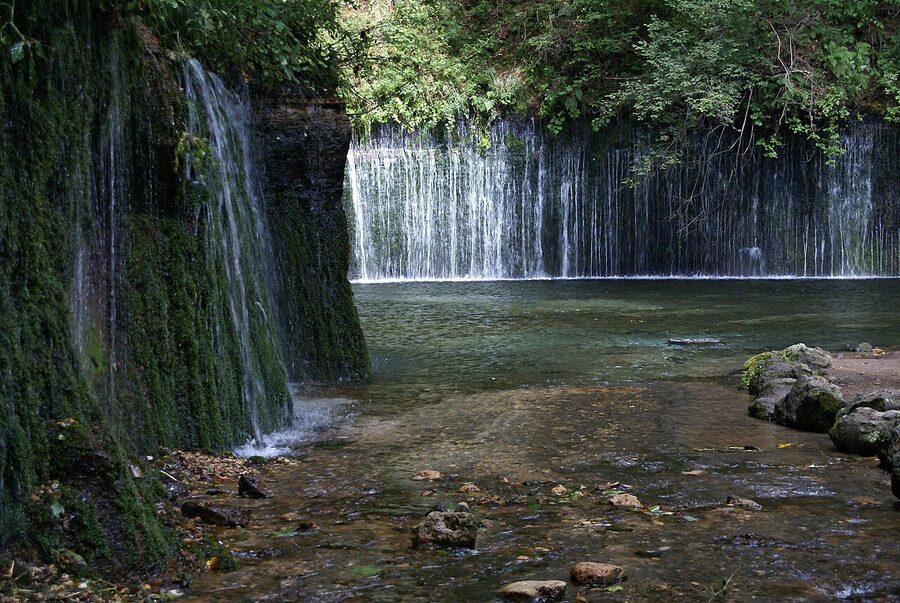
The bus from Karuizawa Station costs ¥720 each way and runs once or twice an hour, less in winter. Check the timetable carefully when you arrive at the bus stop because miss-timing the return adds 50 minutes to your wait. From late July to mid-August the falls are lit at night with a projection mapping show called the Shiraito Illusion. Mid-December to March, the rock face freezes into a strange artificial pillar arrangement.
If you’re driving, take the Hakuito Highland Way and pay the road toll. Heading on towards Kusatsu Onsen afterwards is the natural extension; the same Kusakaru bus runs that route in another 80 minutes.
Mount Asama and Onioshidashi Park
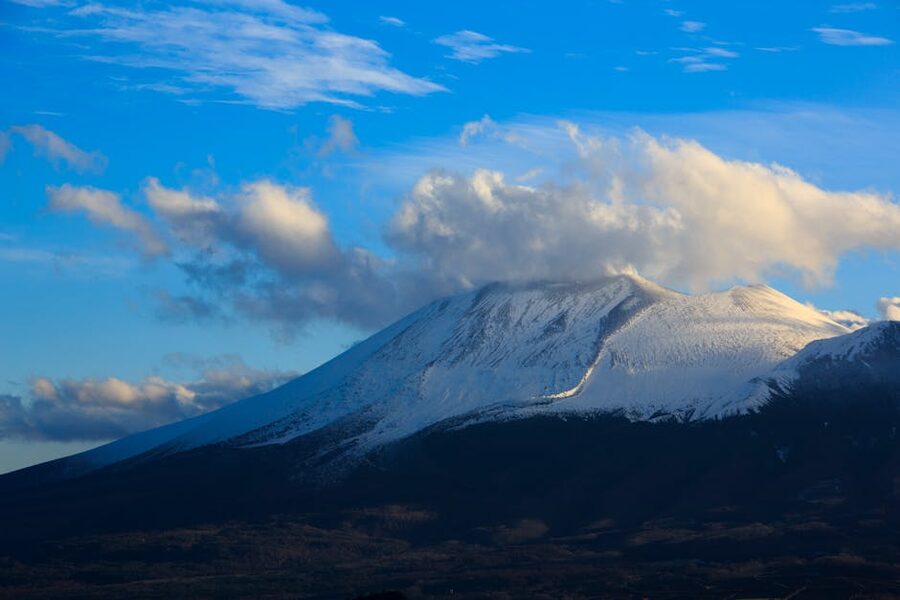
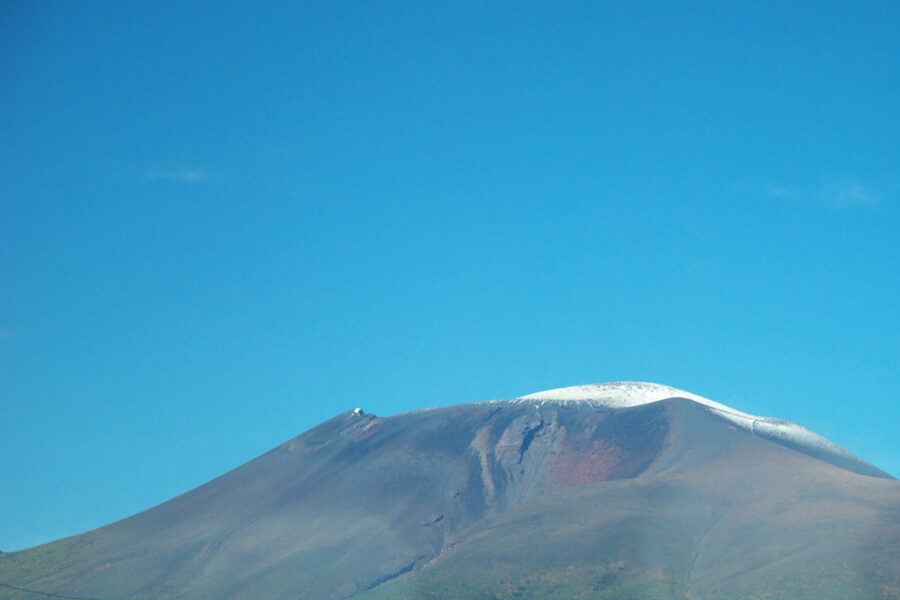
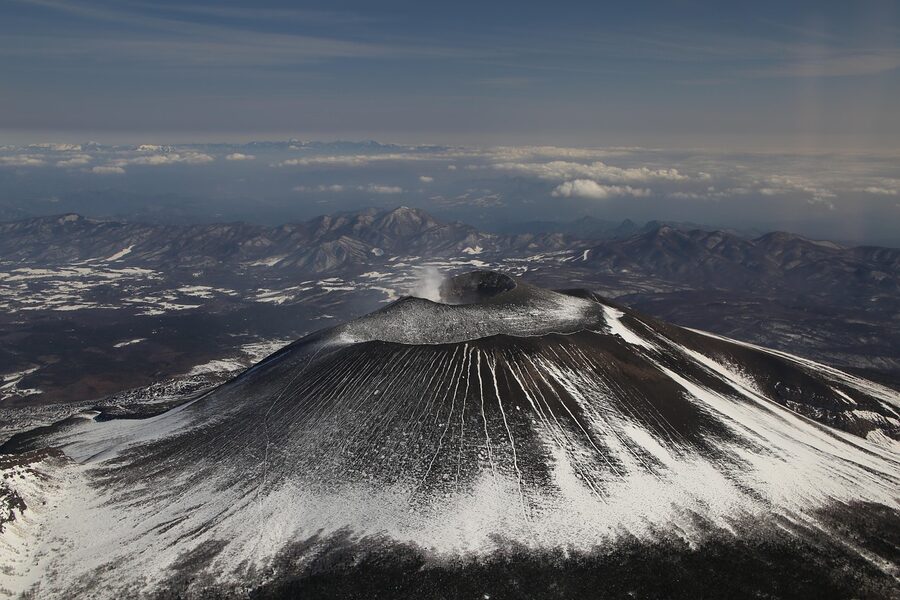
Mt Asama is the 2,568-metre stratovolcano that defines the northern horizon from anywhere in Karuizawa. It is currently classed as Level 1 (or Level 2 when activity climbs) on the JMA volcanic warning scale, and the standard climbing routes are restricted depending on conditions. The 1783 Tenmei eruption is the one most often cited locally: it flattened villages on the Gunma side, redirected the Agatsuma River, and laid down the lava field that is now Onioshidashi Park.
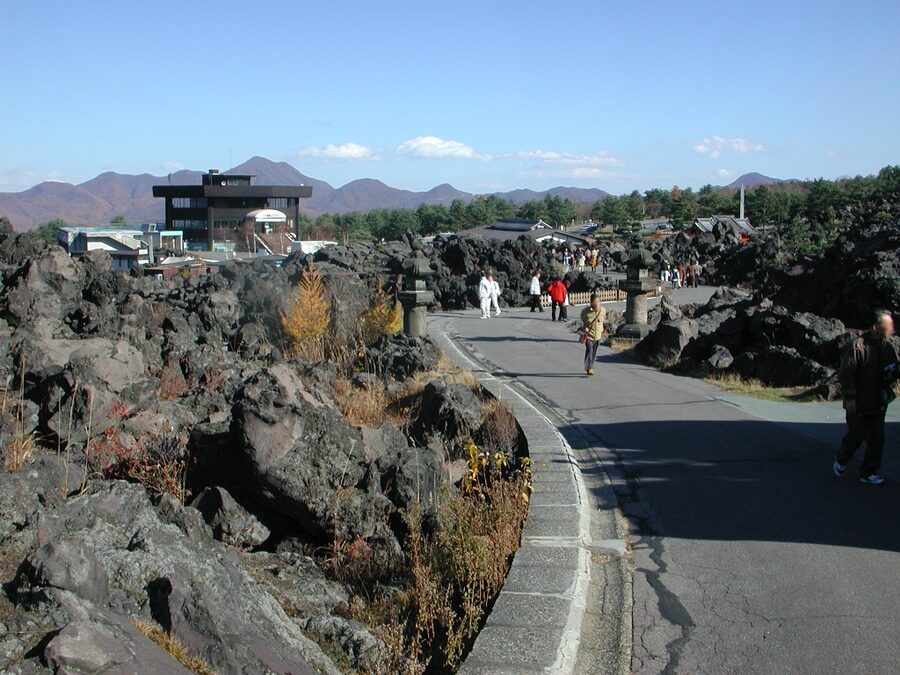
Onioshidashi Park is a 30-minute drive (or hourly bus) north of Karuizawa, on the Gunma side. The 1783 lava field is now an open park with marked walking paths, takes about an hour to walk in full, and includes Kannon-do Temple in the centre. On clear days the smoke plume off Asama is visible directly above. There are restaurants, souvenir shops and parking at the entrance. Adult admission is ¥700.
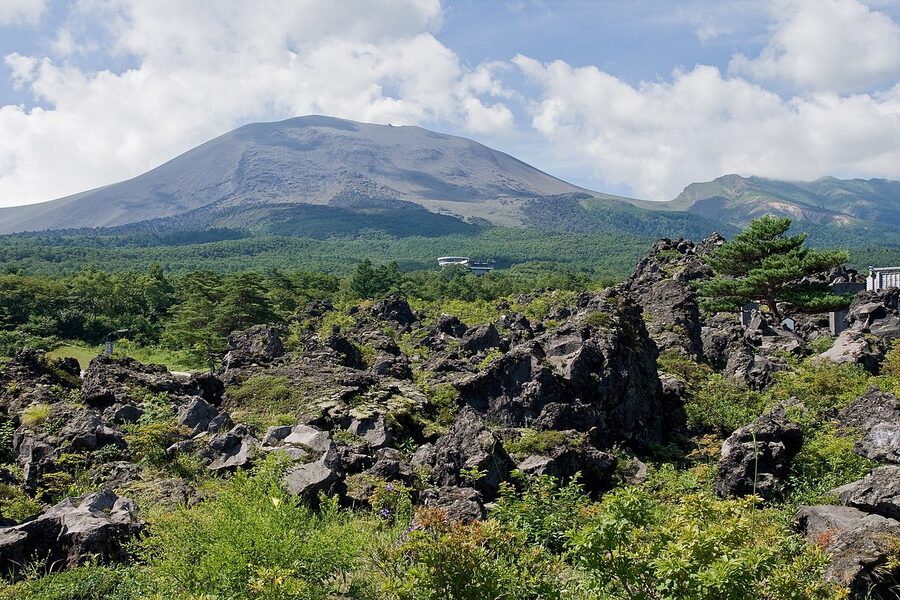
If Asama is on a quiet alert, the climb up to the lower crater rim from the Mineno-chaya trailhead is a 6-7 hour return trip; the upper summit is permanently restricted. For more serious mountain hikes in the wider region, the Hakuba approaches and the Yarigatake route are better targets. Karuizawa itself is more about the volcano view than the climb.
The Prince Shopping Plaza
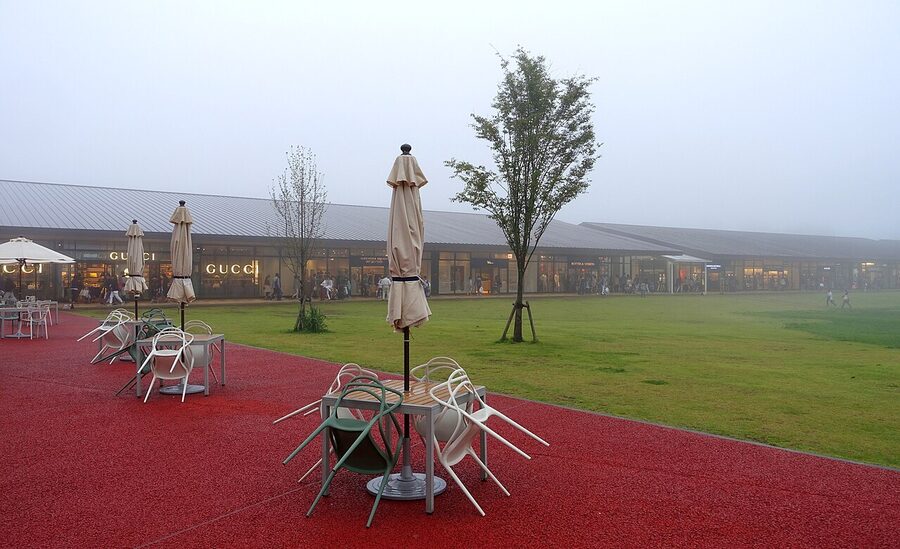
You can ignore the foreign guidebooks on this one. The Karuizawa Prince Shopping Plaza, three minutes’ walk from the south exit of Karuizawa Station, is one of Japan’s largest premium outlet malls and the single biggest visitor pull for the inbound Asian market. There are 240 stores spread across ten themed zones, including the international luxury houses (Gucci, Prada, Bottega Veneta), the Japanese mid-market labels, outdoor specialists, food halls, restaurants, and a bowling alley. Hours are 10:00 to 19:00, varying by season. Entry is free; weekday parking is free.
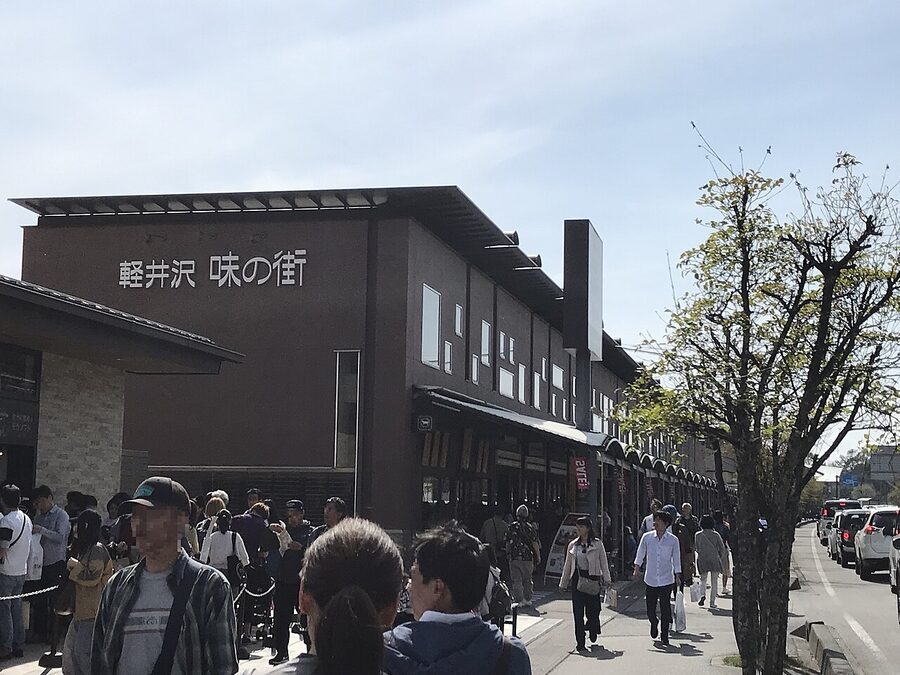
Skip if shopping bores you. Spend an hour if it doesn’t. The Japanese consumer market often carries season-only or region-only stock from the international brands, which is the reason you’ll see Hong Kong and Singaporean shoppers fly here for a long weekend. The Plaza is also where the day-trippers congregate to fill an hour before their return Shinkansen, so the food court gets a lunchtime queue.
Cycling
Karuizawa was a cycling town long before it became a luxury one. The flat residential streets, the canopy of larch and birch, and the dedicated bike lane along the old Nakasendo route all make it a soft place to ride. From spring through autumn, the morning cycling routes through the villa district behind Old Karuizawa are the closest you’ll come to the original 1890s vision of the resort: empty roads, wooden cottages, dog walkers, the occasional French Bakery delivery van.
Several rental shops sit at both Karuizawa Station exits with rates around ¥500 for two hours and ¥1,500 for a full day. Electric assist is ¥500 extra and worth it if you plan to climb to the Usui Pass. The most-recommended fixed routes are the Sengataki loop (12km, mostly flat, takes in Tonbo-no-Yu), the Picchio bird sanctuary loop (8km, includes the Hoshino area), and the Old Karuizawa to Mikasa Hotel and back (6km, easy).
The winter side: skating, skiing and the curling rink
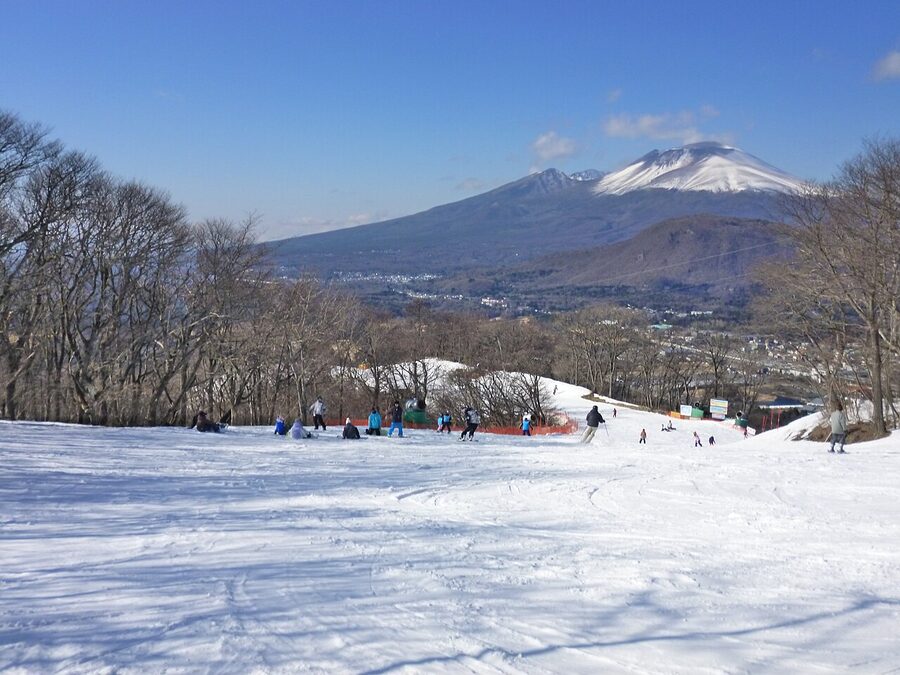
This is the part most foreign coverage misses entirely. Karuizawa is one of Japan’s most active winter resorts, and not just because of the ski hill. The town’s altitude, dry continental winters and reliable snowfall let it sustain a serious year-round ice culture. Karuizawa Prince Snow Resort, on the south side of the station, was the earliest-opening Japanese ski hill of the season for many years and still tries to fire the guns in early November. There are 16 runs, mostly green and red, friendly to beginners and families. The wider Japan Alps skiing guide covers the bigger powder destinations like Hakuba, but if you want to ski the same day as a Shinkansen ride from Tokyo, this is where you do it.
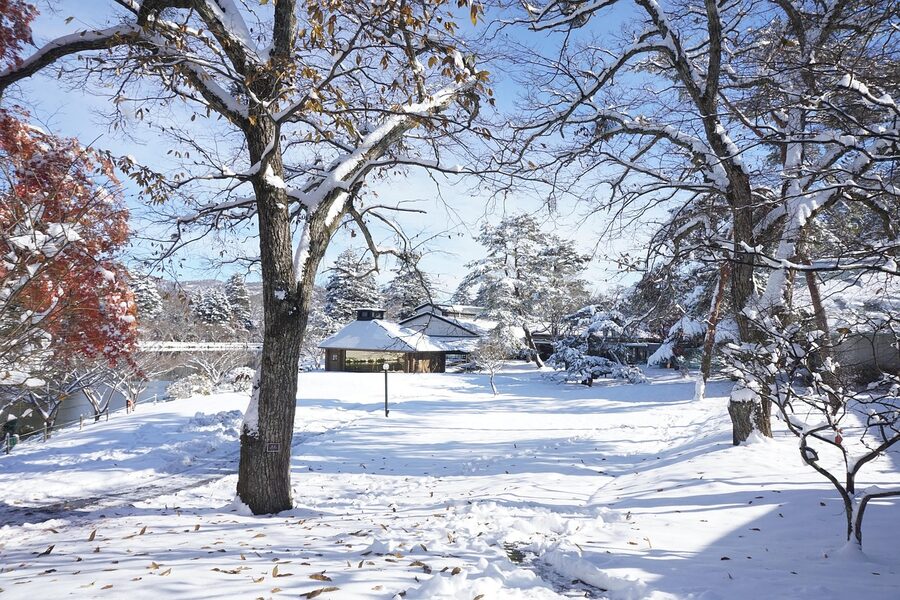
The Kazakoshi Park complex, 25 minutes by bus south of the station, has the Karuizawa Ice Park curling rink (host to international tournaments and the venue for the Japanese national championships) and the Kera-ike skate rink. Curling lessons are run for casual visitors at ¥800 per adult per hour. Skating from December through March is at the open Kera-ike rink near the Picchio Visitor Centre, ringed by snowy trees and easily the most atmospheric public skating in central Japan.
Sledding is available throughout winter at the Prince Resort. If you’re in town for Christmas, the Karuizawa Kogen Church Holy Forest event runs the candle-lit illumination through the Hoshino site for the second half of December. The Stone Church takes part in the same event.
Karuizawa Taliesin and the museum stretch
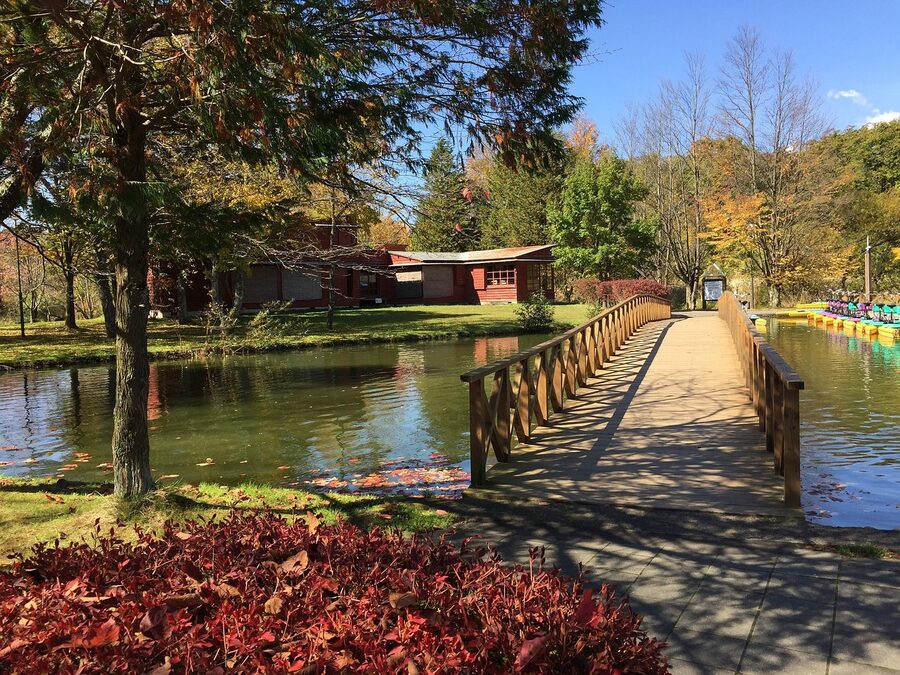
South of central Karuizawa, around Lake Shiozawa, sits Karuizawa Taliesin. It’s a complex that wraps a small natural lake with the Paine Museum (Raymond Peynet’s amorous-couple watercolours, France’s gift to romantic Karuizawa), the Fukazawa Koko Field-flower Museum, the Karuizawa Highland Library, and the relocated Suikyu-so villa, regarded as one of the finest examples of pre-war villa architecture in Japan. There’s an English Rose garden, paddle boats, and a couple of lakeside restaurants. Adults ¥900 entry, child ¥400. December and January are free entry but most facilities are closed.
Closer to central Karuizawa, the Hiroshi Senju Museum sits in a serene Ryue Nishizawa-designed gallery with a sloping floor and floor-to-ceiling glass walls onto the surrounding birch forest. Senju’s water-and-waterfall paintings against the gallery’s natural light are worth the trip even if you’ve never heard of the artist before. Adult entry ¥1,500, closed Tuesdays and through December and February.
If contemporary art is more your line, the Karuizawa New Art Museum on Naka-Karuizawa’s main street has rotating exhibitions and a permanent display of the Birch Moss Chapel, designed by Kuma Kengo with the French artist Jean-Michel Othoniel.
Where to stay
Karuizawa runs the gamut from cottage minshuku at ¥6,000 a head to Hoshinoya at ¥90,000 a person. The split between the Old Karuizawa side, the station-and-Prince side, and the Naka-Karuizawa Hoshino site really matters: pick the wrong one and you’ll spend half your trip on buses or in taxis. The wider Japan Alps itineraries piece sets out which area suits which kind of trip.
Hoshinoya Karuizawa
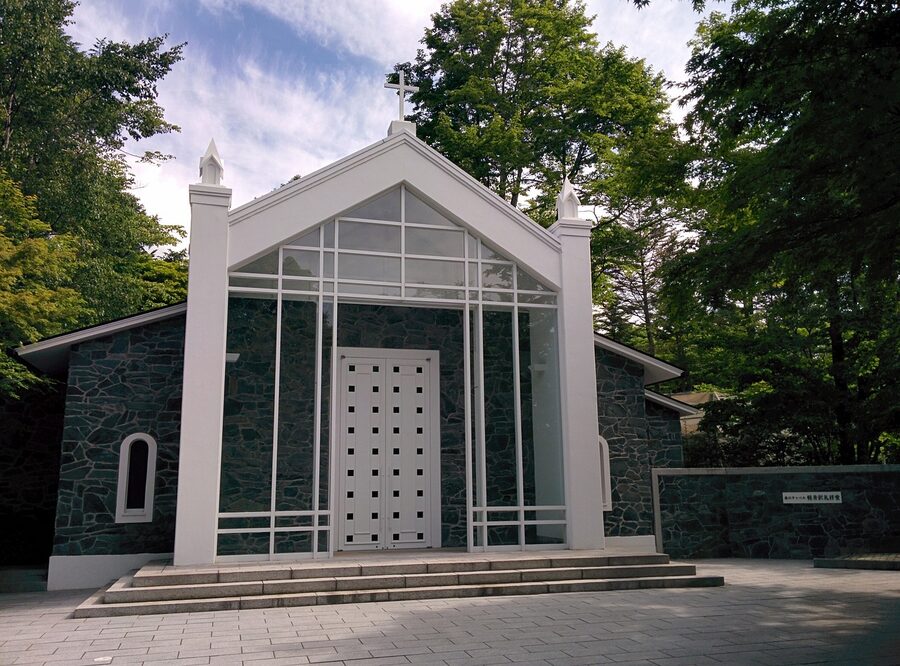
The headline of the headline. Hoshinoya Karuizawa is the original Hoshino Resorts flagship, opened in 2005, designed by Rie Azuma to integrate with the river-and-forest landscape rather than dominate it. Rooms are individual riverside villas with private hot-spring baths. Rates start from around ¥90,000 per person per night with breakfast and dinner. The on-site Kasuke restaurant serves a refined Shinshu tasting menu, and the Meditation Bath is open only to guests. If you’re going to splurge once on a luxury ryokan in central Honshu, this is the strongest single argument.
Booking link: Hoshinoya Karuizawa on Booking.com.
Mampei Hotel (revisited as a stay)
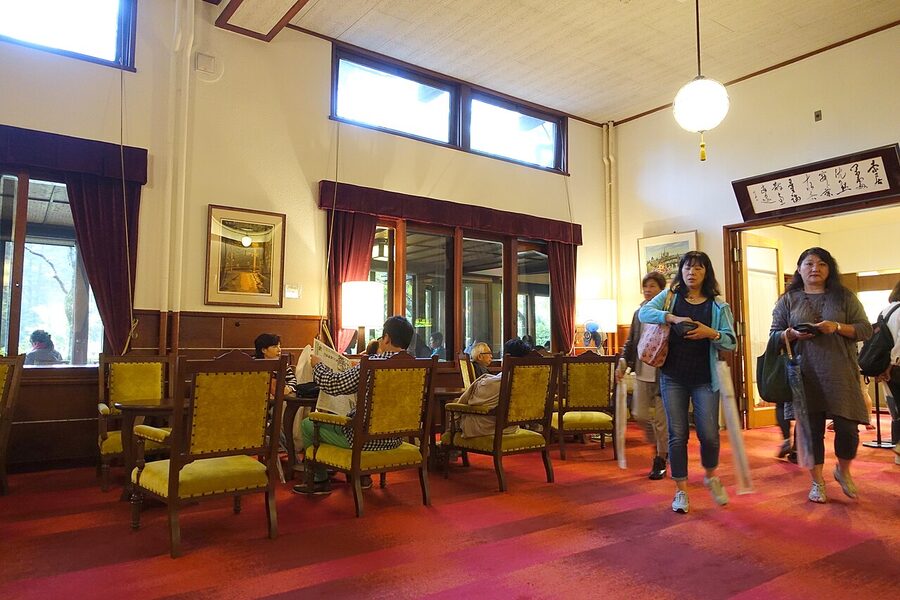
Covered above as a daytime stop, but it’s also an actual hotel. Stay if you care about the building, skip if you want a modern room. The Alps Wing rooms are larger and have the original architectural detail. The newer Sakura Wing rooms were renovated in 2019 to a higher modern standard but lose the character. Booking sites often list both as the same property without separating; ask explicitly when reserving.
Kyukaruizawa Kikyo, Curio Collection by Hilton
A 6-minute walk from the south end of Kyu-Karuizawa Ginza, this is the Hilton sub-brand’s Karuizawa property. Modern rooms, contemporary art on the walls, complimentary shuttle to Karuizawa Station 1.2km away. A useful bridge between modern hotel comfort and Old Karuizawa walking distance.
Booking link: Kyukaruizawa Kikyo on Booking.com.
Bleston Court
A small Hoshino-run boutique within the Hoshino site, more affordable than Hoshinoya, individual cottages in the forest at around ¥25,000 to ¥40,000 per person depending on season. Use the same on-site restaurants and the same Tonbo-no-Yu access.
BEB5 Karuizawa
The Hoshino group’s youth-targeted budget brand. Bunk-style rooms, communal bar, designed for groups in their 20s and 30s. Rates from around ¥7,500 per person.
Karuizawa Prince Hotel East / West / South
Three properties on the same Prince site directly south of the station. Convenient if shopping or skiing is the priority. Rooms are dated but the location is unbeatable for a station-walk-and-go schedule.
Booking link: Karuizawa Prince Hotel East on Booking.com.
Tsuruya Ryokan
A long-running ryokan in Old Karuizawa offering tatami rooms and a kaiseki-style dinner. Family-run, mid-range, walking distance to Ginza-dori.
Where to eat
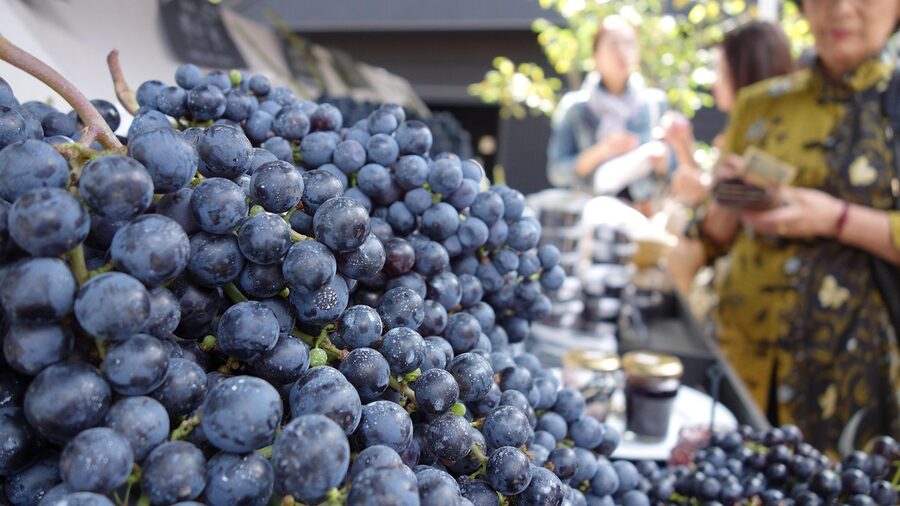
Karuizawa eats well, but the food scene runs a particular line: high-end European, Italian villa-restaurant style, French-Japanese hybrids, and the local Shinshu soba tradition. Carb-heavy or street-food this is not. Several of the names below have queues at peak times. Plan ahead.
Sawamura Roastery
The Karuizawa-founded bakery and bistro now has multiple branches in town and in Tokyo. The Old Karuizawa branch and the Harunire Terrace flagship are both reliable. Bread, sandwiches, single-origin coffee, croissants worth queueing for. Open from 7am at Old Karuizawa, which is unusual for the area.
Kawakami-an
A Shinshu soba specialist set into a stylish jazz-bar interior near the Old Karuizawa rotary. Soba flights, cold soba in summer, hot soba and tempura in cooler months, regional sake by the glass. Locals send people here. Pets allowed on the terrace.
Mikado Coffee Kyu-Karuizawa
The 1952 original branch of the Mikado Coffee chain, on Ginza-dori. The coffee soft-serve (mokka soft) is the signature, available to take away. Cheesecake and the Old Town blend coffee are the sit-down picks.
Sonmin Shokudo
The Hoshino Resorts casual restaurant next door to Tonbo-no-Yu. Local seasonal dishes including the famous mushroom hot pot with soba, and the miso karaage chicken. Numbered queue ticket on arrival; expect 30 minutes on weekends.
Maruyama Coffee Harunire Terrace
The Karuizawa-founded speciality roastery’s Harunire Terrace branch. Around 20 single-origin coffees rotating; the Harunire Blend is the on-site limited offering.
Modesto
An Italian set into the trees off the main Naka-Karuizawa road. Highland-vegetable Italian cooking, pasta and small plates, often booked out for dinner. Lunch easier to walk in for.
French Bakery (Lennon’s)
The 1951 bakery on Ginza-dori where the Lennon family bought their daily loaves. Long crusty French-style bread, simple pastries, no seating. Buy and walk.
Kumobatei
A small Western-Japanese fusion restaurant near the Kumoba Pond entrance. Corn soup, Japanese curry, dishes built on the local highland vegetables. Useful lunch stop on the pond walk.
When to come
Summer (July to August). The original reason Karuizawa exists. Tokyo escapees fill the cottages, the Hoshino site runs the Summer Candle Night, the Shiraito Falls Illusion projection event runs evenings, and the temperature stays around 22 to 25 by day. Bring a light jacket for evenings even in August. Book accommodation in advance: rates double on summer Saturdays.
Autumn (mid-October to mid-November). The most photographed two weeks of the local calendar. Kumoba Pond is the headline shot but every street in Old Karuizawa changes colour. Roughly 25 October to 5 November is the peak window, with significant year-to-year variation depending on early frost.
Winter (December to March). The quietest and cheapest season for most accommodation, but the Prince Snow Resort, the Kera-ike skate rink and the Karuizawa Ice Park curling all open. The Christmas illuminations at the Hoshino site are worth a December trip. Snow tyres needed for any driving north of the town.
Spring (April to June). Cherry blossoms come late, mid- to late April, around two weeks behind Tokyo. The new green of mid-May is locally rated as the best week of the year for cycling. Fewer crowds than summer or autumn.
Day-trip vs overnight
It’s an 80-minute Shinkansen each way. A day-trip is genuinely doable and many Tokyo residents treat Karuizawa as a Saturday outing. You can walk Ginza-dori, see Kumoba Pond, take the Tonbo-no-Yu onsen and be home for dinner.
But if you’ve come from further than Tokyo, stay one or two nights. The town only really opens up at the time the day-trippers leave. Old Karuizawa’s evening shop-lights, the empty Stone Church paths after the wedding crowd has gone, the Hoshino candle nights in summer, all sit outside the daylight visiting hours. Two nights is the right length for a first trip; three if you’re cycling or splitting time between Old and Naka-Karuizawa. The fuller Japan Alps itineraries page sets out how Karuizawa fits into a longer route through Nagano.
What to combine with
The natural pairings are easy. Nagano City is 30 minutes further west on the same Hokuriku Shinkansen line; Zenko-ji Temple and the Snow Monkeys are both day-trip extensions from there. The post-town walks of Matsumoto and the Kiso Valley are 90 minutes south. Omachi and the Tateyama-Kurobe Alpine Route open up for an extra day in early autumn or late spring. If you’re heading further west into the snow country, Hakuba is the next major stop and a much harder ski destination.
Kusatsu Onsen, in Gunma Prefecture, is 80 minutes by direct bus and the most-recommended Karuizawa-plus-onsen extension. Combine the two over a long weekend if you want both.
The town surprises you twice. First with how thoroughly the missionary-resort polish has held up, second with how alive the place is once the day-trippers go home. Skip the assumption that Karuizawa is a summer-only place. Catch a winter morning at the Kera-ike rink with steam on the trees, or an autumn dawn at Kumoba Pond when the water is still glass, and the case writes itself.
.jpg)


,_Karuizawa.jpg)


_26_Oct,_2014_-_panoramio.jpg)


.jpg)

