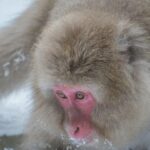
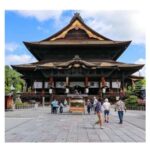
One bus. Two icons of Nagano. This day trip links Jigokudani’s hot-spring snow monkeys with Zenkoji’s famous temple story going back to 642. I like the way the day feels practical: you’re not guessing your way between nature and culture, and the guide keeps the flow tight.
I especially like the close-up monkey experience and how much the tour helps you do it safely. The winter lunch also lands well. Expect a comforting meal that spotlights seasonal Nagano flavors, with vegetarian and gluten-free options.
One thing to factor in: the snow monkey walk is real walking. You’ll cover about 1.6 km on an unpaved forest trail, and this tour is not set up for wheelchair users or people with mobility issues. If you’re visiting mid-December through early April, plan for snow and ice, with rental boots and shoe spikes available.
In This Review
- Key Things You’ll Like
- Entering Hell’s Valley at Jigokudani Snow Monkey Park
- Getting From Myoko Kogen and Madarao: Bus Pickups That Actually Work
- Walking the 1.6 km Unpaved Trail With Snow and Shoe Spikes
- Lunch in Nagano: A Winter Hotpot Reset (With Real Dietary Options)
- Zenkoji Temple Dating to 642: First Buddha Statue Legends in Action
- Guided Sake Tasting at Yoshinoya Sake Brewery (Plus Non-Alcoholic Choices)
- What the Best Guides Do on This Tour
- Time, Comfort, and Who This 8-Hour Tour Fits Best
- Should You Book the Myoko Kogen Snow Monkey and Zenkoji Tour?
- FAQ
- How long is the Snow Monkey Park and Zenkoji Temple tour?
- Where do pickups happen?
- Is admission to Jigokudani Snow Monkey Park included?
- How much walking is involved?
- Is the inner sanctuary of Zenkoji Temple included?
- What is lunch like, and can I get dietary options?
- Is the sake tasting included, and do you have non-alcoholic options?
- Is this tour suitable for wheelchair users or limited mobility?
- What should I wear in winter?
- When is the latest time I can book?
Key Things You’ll Like
- Wild snow monkeys in natural hot springs at Jigokudani, with minimal barriers
- A scenic 1.6 km unpaved trail, plus winter traction help (boots and shoe spikes)
- Nagano winter hotpot lunch with vegetarian and gluten-free options
- Zenkoji Temple dating to 642, with the first Buddha statue connection
- Guided sake tasting at Yoshinoya Sake Brewery, with non-alcoholic options and a 20+ rule
- Small group capped at 10 people, with an English-speaking guide and skip-the-line entry
Entering Hell’s Valley at Jigokudani Snow Monkey Park
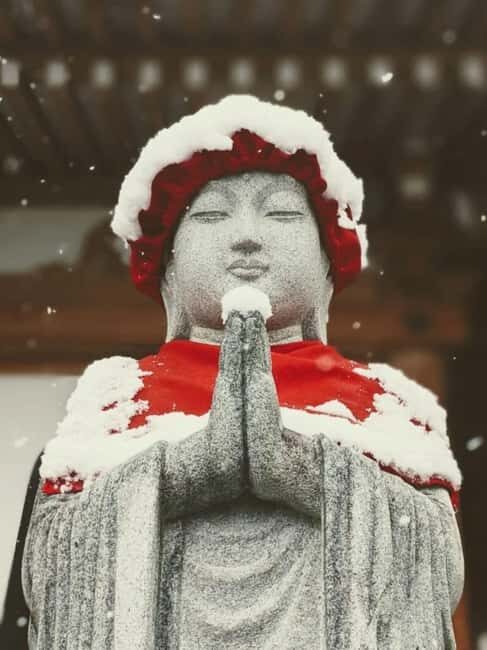
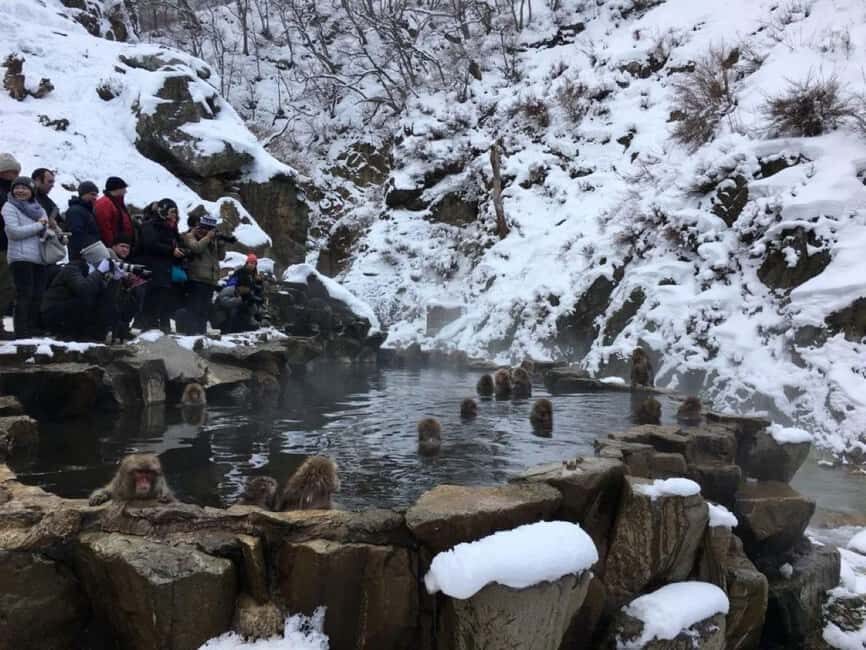
Jigokudani Snow Monkey Park is one of those places that feels oddly cinematic in winter. The setting is volcanic and steamy, and the famous snow monkeys warm themselves in hot springs right in front of you. There are no big sightseeing fences separating you from the action, so it feels more human and less like a zoo stop.
You’ll arrive around 10:30, then follow your guide along a forest trail into the park. The walk is about 1 mile (1.6 km) and on an unpaved surface, so your shoes really matter. The good news: even if you’re not an expert photographer, the lighting in winter and the steam make it easier to get dramatic shots.
Here’s the important reality check: the monkeys are wild. You often see them bathing, but sightings in the water aren’t guaranteed. That’s not a problem with the tour; it’s just nature doing nature things. You’ll still get the best chance by going early, walking in with your group, and following park rules closely.
Other snow monkey tours we've reviewed in Yamanochi
Getting From Myoko Kogen and Madarao: Bus Pickups That Actually Work
This tour is built for convenience if you’re staying in the Myoko Kogen and Madarao Kogen area. It’s not a rent-a-car day. Instead, you get round-trip transportation and multiple morning pickup points, which makes the start of the day feel smooth.
Morning pickup times work like this: the first bus leaves at 08:40 from Akakura Hot Spring Sightseeing Information Center, then stops at 08:50 at Akakura Kanko Resort bus stop, and also picks up at Hotel Madarao. From there, you head toward Jigokudani Snow Monkey Park, with the arrival around 10:30.
The return is organized too. You’ll head back at about 16:45 and the drop-offs happen in reverse order, arriving back by around 19:05. That matters because Zenkoji is busy and the day moves fast. When transport is tight and timed, you spend more time seeing and less time worrying.
Small-group size also helps. This runs with a maximum of 10 people. That usually means the guide can keep track of everyone on trails and during temple transitions without losing the rhythm.
Walking the 1.6 km Unpaved Trail With Snow and Shoe Spikes
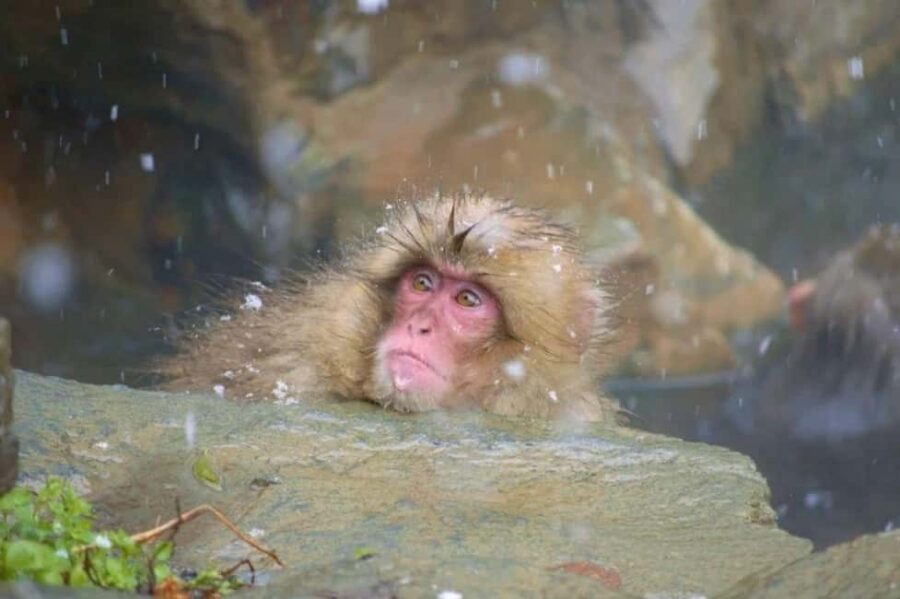
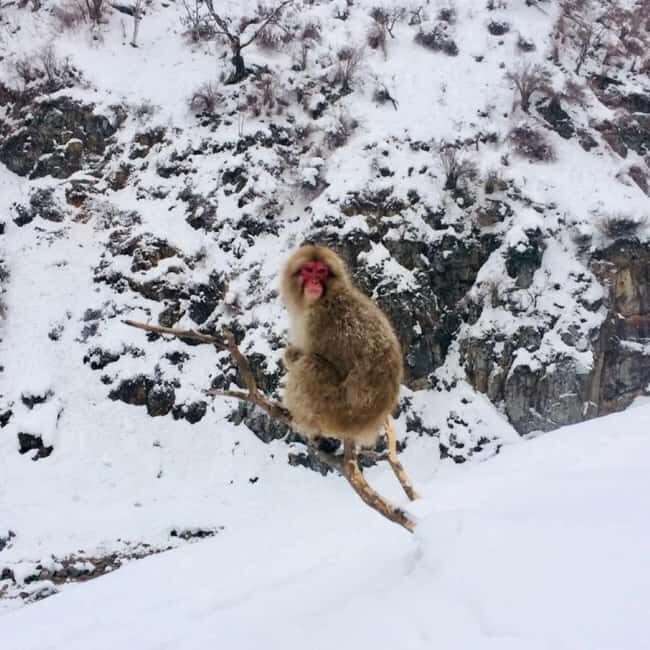
The park walk is short on paper and still serious in real life. You’ll cover about 1.6 km on an unpaved forest trail, and in the cold months (mid-December to early April) snow and ice are likely. The tour helps here with rental boots and shoe spikes available on-site.
What I’d do if you want to feel steady: wear warm layers and traction-first footwear. You’ll be stopping for photo moments, and you don’t want to rush while your feet are unsure. Also, bring a camera strap that can handle cold hands. Winter makes fingers clumsy fast.
Your guide will lead the way into the park and help you follow the rules. Since the monkeys are wild and close to visitors, you’ll want to avoid sudden moves or anything that disrupts the animals. The payoff is worth it: watching them hop, steam, and interact in their own rhythm feels rare because you’re not far away.
And one more practical note: park conditions can change. If the monkeys decide to disappear deeper into the hot-spring areas, you may get more “monkey behavior” than “monkey in the water,” and that’s okay. Your best approach is to keep your attention on the whole area, not just one pool.
Lunch in Nagano: A Winter Hotpot Reset (With Real Dietary Options)
After Jigokudani, you’ll head for lunch. This is the part of the day that keeps it comfortable. Instead of pushing straight from cold outdoor time into more walking, you get a warm meal designed for winter.
The meal is described as a winter hotpot-style lunch made with fresh local ingredients. It’s also designed to highlight seasonal flavors of Nagano, so it’s not just “something to eat.” Vegetarian and gluten-free options are available, which is a big deal for a day that otherwise runs on a tight schedule.
Do note that the restaurant location and menu can change by season. The lunch you get may be different from what you might see in photos. I actually like that, because winter food in Nagano tends to lean into what’s available right now.
There’s also a nice add-on option. If you want local wine, sake, or beer, you can often order at the counter and pay directly there. That’s separate from the included tasting later at the brewery, so you can control how many drinks you want during the day.
Zenkoji Temple Dating to 642: First Buddha Statue Legends in Action
Zenkoji Temple is the culture shift that makes the day feel like more than just sightseeing. It dates back to 642, and it’s tied to Japan’s first Buddha statue. Your guide will explain the temple’s history and legends, which helps you understand what you’re looking at without feeling lost in religious architecture and symbolism.
You’ll also get free time to explore the surrounding district. That usually means browsing local shops and picking up small treats or trying regional snacks while you’re in the area. This is the part where you can slow down for a bit, catch your breath, and reset after the outdoor cold.
One detail that matters: optional entry to the inner sanctuary of Zenkoji is not included. So if you want that deeper access, you’ll need to treat it as an extra choice, not something automatically covered. The tour still gives you the key guided experience plus time to wander around the neighborhood around the temple.
If you come in with even a basic curiosity about why places stay important for centuries, Zenkoji is a strong stop. The guided history helps you connect the dots between what feels ancient and what you can still see and do today.
Guided Sake Tasting at Yoshinoya Sake Brewery (Plus Non-Alcoholic Choices)
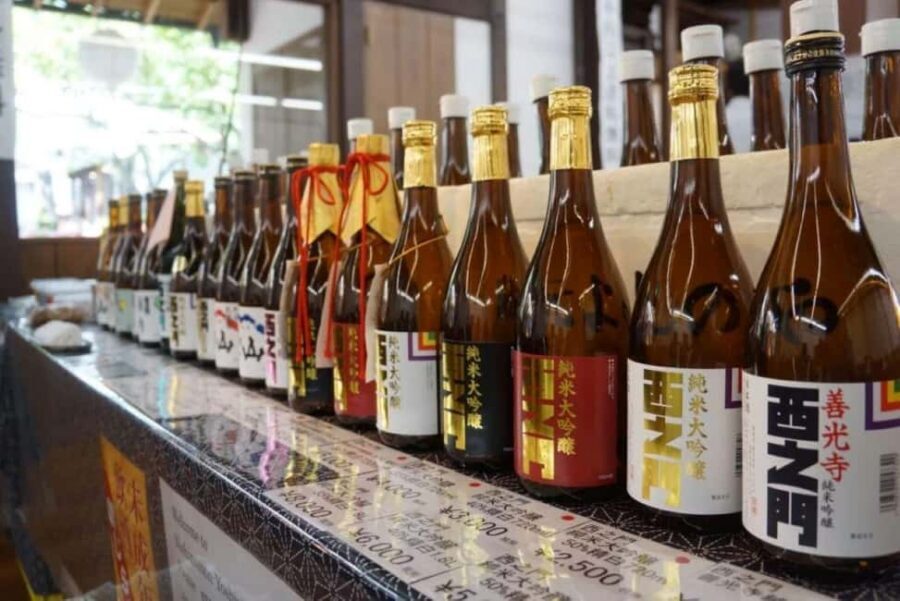
The day caps with a guided sake tasting at Yoshinoya Sake Brewery near Zenkoji. This is included, and it’s timed so you don’t have to rush through the temple district and then sprint back for the tasting.
One key rule: you must be at least 20 years old to consume alcohol in Japan. That’s the legal part. The practical part for you is that non-alcoholic options are available, so even if you’re not drinking, you can still join the tasting session format.
This is a good moment to ask the guide questions. A good English guide can translate what you’re tasting into simple language, like how sake styles differ and what to look for beyond taste alone. You’ll also get more context because the tasting is placed right after the temple visit, so the day’s theme shifts from “history and nature” to “local craftsmanship.”
Also, pace yourself. You’ve walked, you’ve eaten hot food, and you may have been outside in cold air. If you do drink, take it slow and treat it like a guided cultural sampler, not a full night out.
What the Best Guides Do on This Tour
This is a day trip where the guide matters. You’re moving between cold nature, a major temple, and a brewery, and that takes timing and clarity. On past departures, guides such as Endo, Dillon, and Kieron have led the experience, and the common thread in their approach is straightforward: clear direction plus real local context.
What you’ll likely notice with a great guide: they explain what you’re seeing while you’re actually there. In Jigokudani, that can be how to navigate the area and interpret monkey behavior without pushing the animals. At Zenkoji, it can be how the site’s age and legends connect to the visuals you’re looking at. The best part is the way it makes the day feel understandable, not just scheduled.
If you want the day to feel like a story instead of a checklist, pay attention to the guide’s timing cues. They often set you up to see the highlights with less hassle.
Time, Comfort, and Who This 8-Hour Tour Fits Best
At about 8 hours, this tour is a good use of one day if you’re staying in the Myoko Kogen or Madarao Kogen area. It’s structured around the seasons: you start in the morning, you see the snow monkeys during the window when the conditions are best, you warm up with a Nagano lunch, then you shift to Zenkoji before finishing with the brewery tasting.
Comfort-wise, the big factors are:
- Cold-weather footing on an unpaved forest trail
- Walking distance of about 1.6 km total for the monkey area
- Temple time where you’ll explore in and around the area at your own pace
- Small-group flow that tends to feel easier than big buses
Who it suits: people who want a guided, efficient day combining nature and culture, especially if you don’t want to manage transit yourself. It’s also ideal if you want an English guide because Zenkoji’s history and legends land better when explained plainly.
Who should skip it: anyone who needs wheelchair-friendly access or has mobility limitations. The walk to the park and the park setting aren’t designed for that.
A couple more notes you might care about:
- Babies and infants aged 0–5 can join for free, but they won’t receive lunch.
- You can cancel up to 24 hours in advance for a full refund, which helps if weather or snow conditions change your plans.
- Booking deadlines are set to one hour before the first pickup time, so don’t wait until the last minute.
Should You Book the Myoko Kogen Snow Monkey and Zenkoji Tour?
I’d book this when you want one day that hits the big winter icons of Nagano without stress. The combination is smart: hot-spring snow monkeys at Jigokudani, a guided stop at Zenkoji Temple with context, and then a cultural finish with sake tasting at Yoshinoya Sake Brewery. The small-group size also makes the day feel more personal.
I’d hesitate if you hate winter walking or have mobility concerns. The trail is short, but unpaved and snowy can still be slippery. If you’re comfortable with traction and cold-weather walking, you’re in good shape.
If you’re after a memorable winter day that balances nature, history, food, and a little local drink culture, this is a strong pick for Nagano. Just come prepared for the walk, keep your expectations flexible for wild monkey behavior, and let the guide do what guides do best: make the day easier and more meaningful.
FAQ
How long is the Snow Monkey Park and Zenkoji Temple tour?
The tour lasts about 8 hours, with return drop-offs timed to arrive back by around 19:05.
Where do pickups happen?
Pickups vary by option, but one stated route starts at 08:40 from Akakura Hot Spring Sightseeing Information Center, then stops at 08:50 at Akakura Kanko Resort bus stop, and includes pickup at Hotel Madarao.
Is admission to Jigokudani Snow Monkey Park included?
Yes. Entry to the Snow Monkey Park is included.
How much walking is involved?
Walking to and from the Snow Monkey Park covers about 1.6 km (1 mile) along an unpaved forest trail.
Is the inner sanctuary of Zenkoji Temple included?
Optional entry to the inner sanctuary is not included.
What is lunch like, and can I get dietary options?
Lunch is included and designed to highlight Nagano flavors in winter. Vegetarian and gluten-free options are available, and the menu can change by season. Infants (0–5) join free of charge but do not receive lunch.
Is the sake tasting included, and do you have non-alcoholic options?
A guided sake tasting is included at Yoshinoya Sake Brewery near the temple. Non-alcoholic options are available. Alcohol consumption requires you to be at least 20 years old in Japan.
Is this tour suitable for wheelchair users or limited mobility?
No. It is not suitable for those with mobility issues, and it is not suitable for wheelchair users.
What should I wear in winter?
Snow and ice are likely from mid-December to early April. Rental boots and shoe spikes are available, which can help with traction.
When is the latest time I can book?
The booking deadline is one hour before the first pickup time.