Few experiences feel this hands-on.
In Karuizawa, you’ll learn soba noodle making at Shinshu Soba Restaurant Yamahei, a short walk from Karuizawa Shinkansen Station. What makes it fun is that it’s not just watching. You get guided kneading, stretching, and cutting, then you eat what you made with walnut soba sauce right there at the restaurant.
I especially like two things: first, the chance to taste Nagano-style soba after working the dough yourself, which makes the flavor feel earned. Second, the class includes the full meal setup with tempura and walnut soba soup, so you finish with a complete, local lunch rather than a snack. The one thing to consider is that this is a tight two-hour experience, so if you want long sightseeing stops afterward, plan your day with some breathing room.
In This Review
- Key Highlights You’ll Actually Care About
- Karuizawa Soba Lab: Where the Class Starts and Why Location Matters
- Nagano Soba Background: The Mountain-Food Logic Behind the Flavor
- From Dough to Noodles: What You’ll Do Step by Step
- The Walnut Soba Moment: Your Meal Builds on Your Work
- Price and Value at $91.21: What You’re Really Paying For
- Practical Logistics: Timing, Tickets, and Group Size
- Who Should Book This Soba Class (And Who Might Skip It)
- Should You Book: My Straight Answer
- FAQ
- What’s included in the soba noodle making class?
- How long does the experience take?
- Where does the class meet?
- Is the class offered in English?
- What’s the maximum group size?
- How does confirmation work after booking?
Key Highlights You’ll Actually Care About
- Near Karuizawa Shinkansen Station: easy access from the Prince Outlets area
- From husk to noodles: you get hands-on work around the soba flour process
- Walnut soba focus: you can grind walnuts and build the flavor in the mortar
- All-in meal included: tempura plus walnut soba soup after cooking
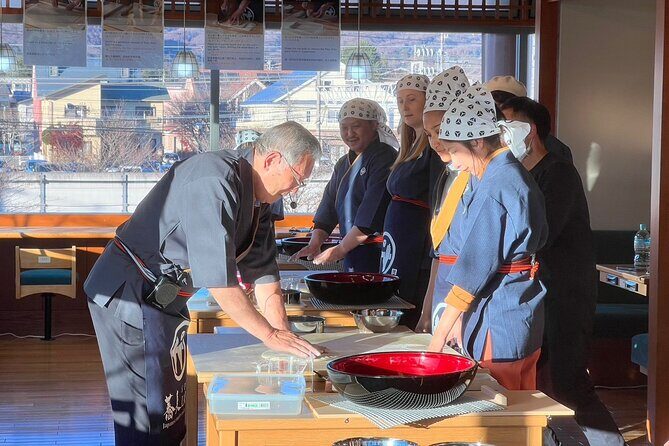
- Costume-friendly vibe: you’ll wear traditional samue and apron while making noodles
- Small class size: capped at 32 people for a more guided feel
Karuizawa Soba Lab: Where the Class Starts and Why Location Matters
This class happens in Karuizawa, a place that’s easy to reach even if you’re moving around Japan by train. The meeting point is at 1178-161 Karuizawa, Kitasaku District, Nagano, and it’s described as about a five-minute walk from Karuizawa Shinkansen Station. That matters because soba-making can be time-sensitive. You don’t want to burn your best travel energy hunting down a location.
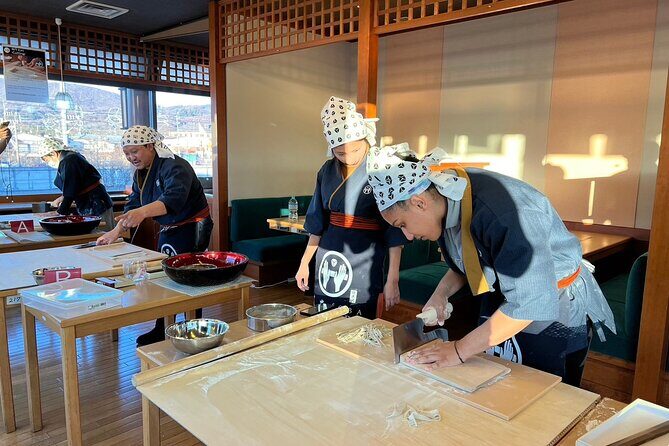
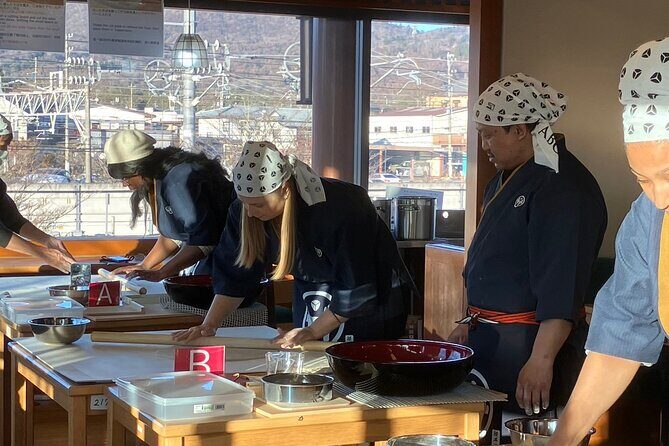
Also, you’re doing this in the Karuizawa Prince Outlets zone, so you can pair it naturally with a shopping walk before or after. The restaurant setup is the kind that works well for first-timers: you’re not expected to already know Japanese cooking. The instructor guides you through the steps, and you’ll wear rental traditional work clothes (samue) and an apron (maekake) so you feel like you’re really part of the process.
One practical point: this is sold with a mobile ticket, so have your confirmation ready on your phone. If you prefer not to rely on a phone screen, keep a backup plan (like saving a screenshot) so you don’t have to worry about connectivity.
If you're still narrowing it down, here are other tours in Karuizawa we've reviewed.

Nagano Soba Background: The Mountain-Food Logic Behind the Flavor
This class isn’t “generic noodle making.” It’s built around soba from Nagano, and that context makes your meal taste different. Nagano is mountainous and cold, with fewer flat fields. That matters because soba thrives in high-and-cold conditions. So when you eat soba here, you’re connecting to a crop that fits the land, not just a dish that spread anywhere.
In the restaurant experience, you also get to understand the flour side of the story. The class includes peeling the soba husk yourself and grinding the soba flour using a millstone and water mill. That’s a big deal for people who care about where food comes from. You feel the difference between flour that’s been handled by a machine and flour you processed by hand with the tools in front of you.
Then comes the Karuizawa signature twist: walnut soba. This is tied to Shinshu (the old name for Nagano), where walnut-based flavors show up as a way to eat soba in a distinct local style. The basic idea is that you put ground walnuts into the soba soup, turning the bowl into something nutty, aromatic, and more complex than plain broth.
From Dough to Noodles: What You’ll Do Step by Step
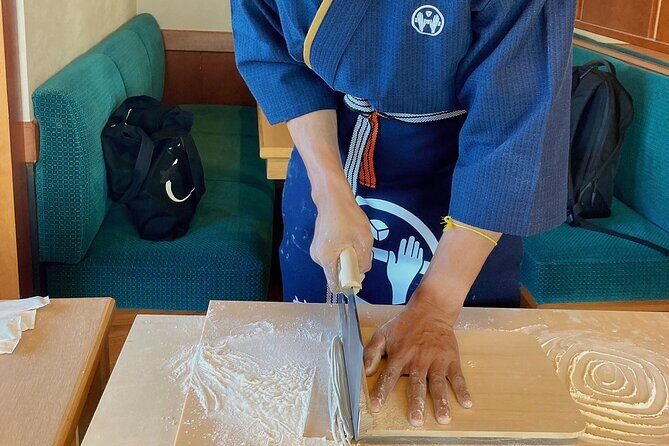
The core of the class is what you’d hope it would be: kneading, stretching, and cutting soba noodles with an instructor guiding the technique. It’s very “learning by doing,” not “watch and hope.”
Here’s the sequence you should expect to work through:
- Prepare and handle the soba flour: you peel the husk yourself and grind flour using the millstone and water mill setup.
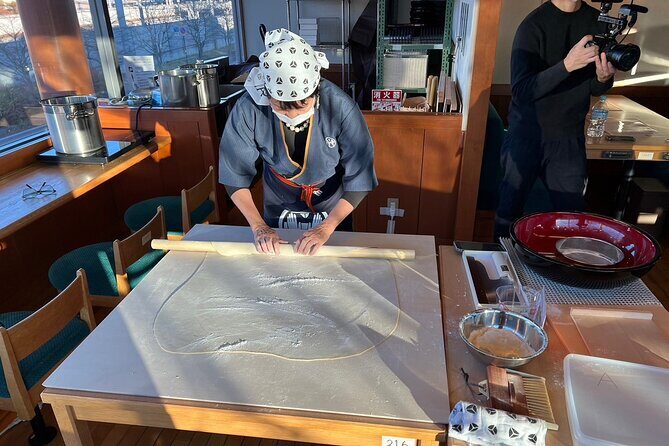
- Knead the dough: you’ll work the dough until it has the right feel for shaping.
- Stretch and cut: the instructor shows how to stretch and cut to get noodles you can enjoy at the table.
Even if you’ve never made noodles, the class is designed to help you succeed. One review specifically notes that instructions are available in English and Japanese, which is huge for non-Japanese speakers. You won’t be stuck guessing what the next hand motion should be.
There’s also a practical rhythm to the whole thing. The steps build on each other, so you’re not learning one random technique. You’re learning how soba dough behaves, how it changes as you handle it, and what cutting looks like when you’re aiming for actual eating portions.
If you’re traveling with kids, this format tends to work well because you’re not just seated. There’s also mention of soba-making costumes and pedestals for elementary school students, so younger participants can join in without feeling like they’re too small for the setup.
The Walnut Soba Moment: Your Meal Builds on Your Work
After you’ve made your noodles, you don’t just take home ingredients or a raw pack of dough. You get to eat what you made, served with tempura and the walnut sauce on the spot.
The walnut part is where Karuizawa really earns its reputation. You can grind the walnuts yourself and add them to the soba soup. The class includes the meal presentation using a small mortar, so you’re not just dumping a sauce from a bottle. You’re participating in the flavor-building process.
Then the plate comes together:
- Your finished soba noodles
- Tempura on the side
- Walnut soba soup as the signature local pairing
This is also where you’ll understand why the class feels worth it. A lot of cooking classes teach technique but leave you hungry or leave you eating something that doesn’t reflect the skill. Here, your effort lands directly in your bowl. And because you’re eating soon after making, the noodles taste like noodles, not like a project that waited too long.
Price and Value at $91.21: What You’re Really Paying For
At $91.21 per person, this isn’t a bargain-priced activity. But it also isn’t just “someone teaches you cooking.” You’re paying for a lot of included elements that normally cost money separately:
- Instructor-led hands-on noodle making
- Tools and traditional clothing rentals (samue and maekake)
- Brunch-style soba noodles you make yourself
- Tempura
- Walnut soba soup
- A tenugui (traditional towel) gift
- All fees and taxes included
So the real value is that you’re buying a full half-meal experience tied to a skill you can talk about later. If you’d otherwise spend money at an outlet food stop, this is a more memorable way to use your time and appetite.
It also helps that the class is capped at a maximum of 32 travelers. That doesn’t mean you get a personal tutor, but it does suggest you’ll be in a manageable group size rather than a huge assembly line.
Practical Logistics: Timing, Tickets, and Group Size
The class lasts about two hours. That timing is a plus if you’re visiting Karuizawa for a day and don’t want a half-day sinkhole. It’s also long enough to cover meaningful steps like dough work and the meal at the end.
You’ll get a confirmation received within 48 hours of booking, depending on availability. The activity also uses a mobile ticket, and the meeting point is close to public transportation.
Group size is listed as a maximum of 32 travelers. In practice, that usually means you can ask questions without feeling completely lost, especially since the instructor supports English and Japanese instruction.
And yes, you do get an option of traditional work clothes and apron rental, so you don’t have to show up dressed for a hands-on food project. You’ll leave looking like you participated in something real, not like you stopped by for a quick demo.
Who Should Book This Soba Class (And Who Might Skip It)
This is a great fit if you:
- want a hands-on food experience instead of a simple tasting
- like Nagano flavors and want to understand walnut soba in a practical way
- travel with kids and want an activity that includes a “kid-friendly” setup like pedestals and costumes
- want something close to the station, so your day stays efficient
It might not be your top choice if you:
- hate structured classes or want free-form cooking
- only care about eating and aren’t interested in the prep steps like grinding and cutting
- are looking for a long, slow experience with lots of sightseeing built in
For most people, though, this hits a sweet spot: it’s short, it’s guided, and it ends with a satisfying meal that connects directly to what you learned.
Should You Book: My Straight Answer
Yes, you should book if you want a real skill you can connect to a real meal. The combination of noodle-making from scratch, tempura plus walnut soba soup, and the ability to participate in grinding walnuts makes this more than a photo opportunity.
If you’re in Karuizawa and you’re already near the station, the location alone helps. You won’t lose time. And the class includes enough food and context that you’re not left wondering what the point was.
If you only have one food activity, make it this. Just plan your day knowing it’s about two hours, and you’ll get the best version of the experience without rushing yourself at the start or after the meal.
FAQ
What’s included in the soba noodle making class?
You’ll get soba noodles you make yourself, served with tempura and walnut soba soup. The class also includes an experienced instructor, rental of soba noodle making tools plus traditional samue clothing and a maekake apron, and you receive a tenugui towel gift. All fees and taxes are included.
How long does the experience take?
The class lasts about 2 hours (approx.) and ends back at the meeting point.
Where does the class meet?
The meeting point is at 1178-161 Karuizawa, Kitasaku District, Nagano 389-0102, Japan. It’s described as about a 5-minute walk from Karuizawa Shinkansen Station.
Is the class offered in English?
Instruction materials are available in English and Japanese, which makes it easier to follow the steps if you’re not fluent in Japanese.
What’s the maximum group size?
This activity has a maximum of 32 travelers.
How does confirmation work after booking?
Confirmation is received within 48 hours of booking, subject to availability.