Some days in Japan feel engineered for wonder. The Tateyama-Kurobe Alpine Route is one of them: in a single day you stack big views, serious engineering, and a surprisingly fun mix of mountain transport that climbs to 2450 meters. I especially like the way the day is built around clear waypoints—Kurobe Dam first, then the scramble-free approach to the high point. And I love the prize at the end: the snow corridor that rises about 20 meters above you, plus museum time if you want a break from the cold.
Two things that really sell this outing for me are the sheer variety of vehicles (bus to trolley to ropeway to another trolley) and the fact that you’re not left to sort out the mountain logistics alone—an English-speaking guide keeps the flow moving. The main drawback is that it’s a long, physically busy day in thin air and cold wind if conditions are rough, and the snow corridor routes can close with extreme weather.
If you want one classic mountain day from Nagano that feels like Japan at full volume—technology, weather, and scenery—this fits the bill. Just plan for comfort: good shoes, sunglasses, and patience during handoffs between transport legs.
In This Review
- Key Highlights You’ll Actually Feel
- A Mountain Day Built on Five Different Ways Up
- From JR Nagano Station to Ogisawa: The Ride Before the Payoff
- Kurobe Dam: Why Japan’s Highest Dam Gets the First Big Moment
- Ropeway to Daikanbo and the Final Trolley to Murodo
- Murodo at 2450m: The Snow Corridor and the 1.5–2 Hour Window
- Ogisawa and the Return: How the Day Ends (and What to Do Then)
- Price and Logistics: Is $232 Good Value for This One-Day Climb?
- Who Should Book This and Who Might Skip It
- Should You Book the Tateyama-Kurobe Alpine Route from Nagano?
- FAQ
- What time do I meet the guide at Nagano Station?
- How long is the Tateyama-Kurobe Alpine Route day trip?
- What’s included in the tour ticket?
- Is lunch included?
- What should I bring for the mountain conditions?
- Is the tour wheelchair accessible?
- Are pets allowed?
Key Highlights You’ll Actually Feel
- Kurobe Dam scale and guided context: A huge structure (built 1956–1963) that’s Japan’s highest dam, with time to look over the surrounding peaks.
- Vehicle variety that makes the climb fun: bus, Kanden Tunnel trolley bus, ropeway, then another trolley to Murodo.
- Daikanbo and Murodo at altitude: the route tops out at 2450 meters with a dramatic high-station feel.
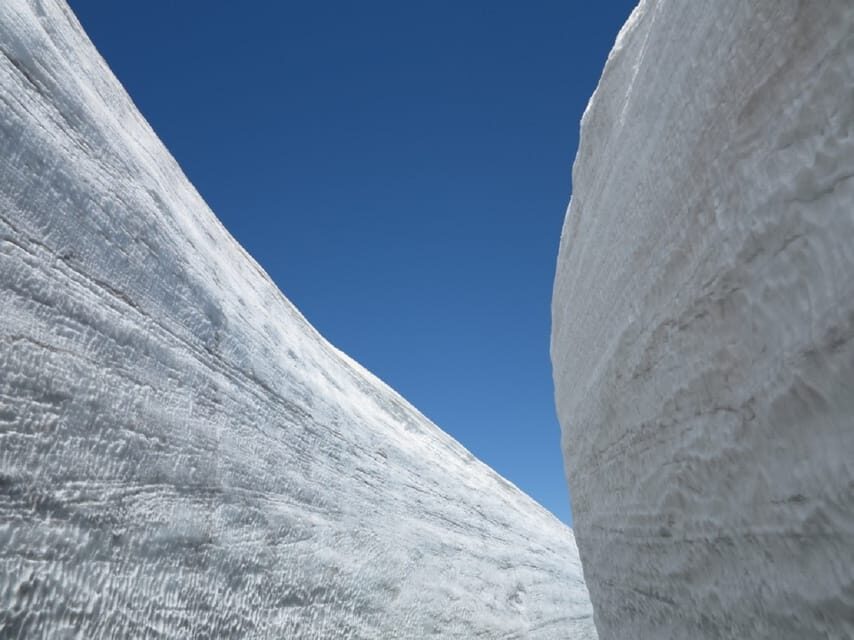
- The snow corridor experience: a famous walkway where the snow rises around 20 meters above you—when conditions allow.
- A guide-led pace with real free time: about 1.5–2 hours at the top to wander and use the museums.
- Orderly, schedule-focused day: multiple reviews mention guides keeping things on track despite the number of transfers.
A Mountain Day Built on Five Different Ways Up
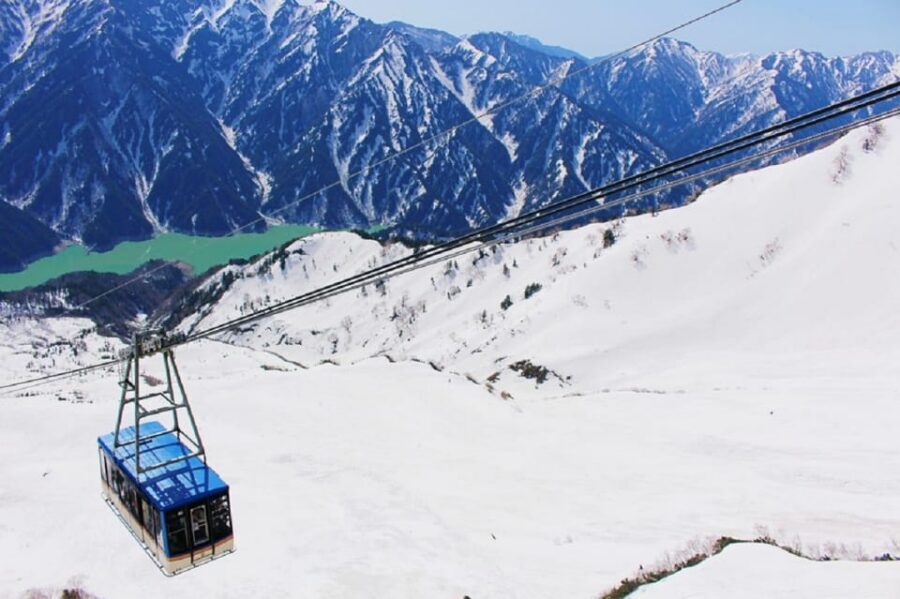
This is not a “sit on a train and watch out the window” day. The Alpine Route is a sequence, like switching tracks on purpose: you move from town roads to mountain roads, then into tunnel-adjacent trolley service, then up by ropeway, and finally to the highest stop.
That mix matters because it changes how the route feels. When you take only one kind of lift, the day can blur together. Here, every handoff resets your brain: you arrive at a new station, you get oriented, you walk a bit, and you move again. Even the timing gives you natural breaks—dam sightseeing before you commit to the final altitude push, and then a dedicated window to explore at Murodo.
You also get guided structure at key moments, not just transport. At Kurobe Dam you’ll get a guided tour plus time to walk and look around. At the high station, you’ll have both guided elements and then room to roam at your own speed. That balance is why this outing works for both first-timers and people who want more than a quick photo stop.
One more thing: the day is built around altitude and weather. Murodo is isolated and chilly at 2450 meters, so you’re heading into real mountain conditions even if it’s a “tour bus” day on paper. The best version of this trip is the one with clear skies—when visibility is good, the views do what the marketing promises. When weather closes parts of the route, you adapt fast, because the plan is already checkpoint-based.
Other Tateyama-Kurobe Alpine Route tours from Nagano
From JR Nagano Station to Ogisawa: The Ride Before the Payoff
You start early: meet your guide at JR Nagano Station at 08:15 (in front of the information board, across from the Shinkansen gates). From there, you board a coach/bus for the drive toward Ogisawa. The transfer time is about 1.5 hours, and it’s your warm-up—grab water, use the restroom if available, and set expectations that this is a full-day commitment.
Around 10:15 you arrive at Ogisawa Station. This matters because Ogisawa is a transition point, not a “final destination.” You’ll have guided time there as part of the route flow, and it’s also where the day’s transportation system starts to feel real: you’re moving from road travel into mountain lifts.
A practical note: the day is designed so you don’t have to buy multiple separate tickets to reach the summit. Your tour includes the Tateyama Kurobe Alpine Route ticket that covers transport to and from the summit. With that in mind, don’t get flustered if you see people holding different paper tickets around you. If you need to pay anything, confirm with your guide first. One review mentioned confusion with ticket purchases at Ogisawa, so I’d treat that as a red flag for double-checking before handing over money.
Also, group size and timing can mean the coach ride gets lively. One review noted it could be noisy, especially with kids. If you’re sensitive to long rides, pack small comfort items: earplugs or headphones can make that first segment feel much easier.
Kurobe Dam: Why Japan’s Highest Dam Gets the First Big Moment
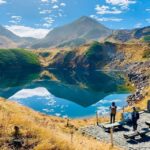
Kurobe Dam is where the trip goes from travel to story. You’ll spend about 2.5 hours here with a guided tour, sightseeing, and time to walk around and take in the views.
This dam isn’t a random stop—it’s one of Japan’s big engineering symbols. It was constructed between 1956 and 1963, and the scale is frankly wild: up to 10 million people were involved in the effort. It’s also Japan’s highest dam. Those facts change how you look at it. Instead of thinking, oh, that’s a big wall, you start thinking about labor, logistics, and the idea of trying to reshape nature with human planning.
The dam stop is also practical. It comes before you rise to the highest parts of the route, so it gives you time to orient yourself while you’re still at a more comfortable elevation. You also get a chance to slow down. High stations are cold and busy. Dam time is steadier.
What I’d watch for: the schedule is tight enough that you won’t get to linger for hours, but you’re not rushed through either. Most people will be able to do the walk, get photos, and still have time to absorb the guided explanation. If you’re the type who loves details, listen during the tour—those engineering facts are exactly what make the photos look better afterward.
When you leave the dam and head toward the ropeway portion, the day begins to feel like a climb with momentum. You’re not just moving upward. You’re building toward the “highest station” moment in a way that makes sense.
Ropeway to Daikanbo and the Final Trolley to Murodo
After Kurobe Dam, the route climbs via Tateyama Ropeway. The ropeway spans 1700 meters and lifts you toward Daikanbo, which is the next staging stop before the final trolley bus. From Daikanbo, you take the last trolley ride to Murodo.
This is a good part of the itinerary to know about because it explains why the Alpine Route is so famous: the transport isn’t one trick. You’re riding different systems built for different angles and environments. That variety helps the day feel like an experience rather than just a commute uphill.
Daikanbo is important because it’s the last “buffer” before the high-station environment at 2450 meters. You’ll feel the air and the temperature changing. Even if the climb looks smooth from the outside, the high-altitude reality is part of why this feels special.
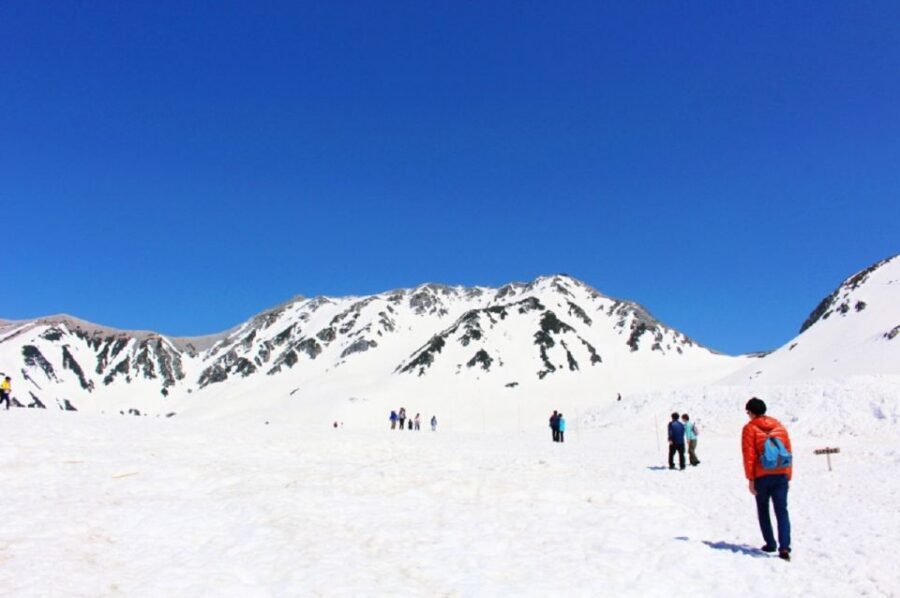
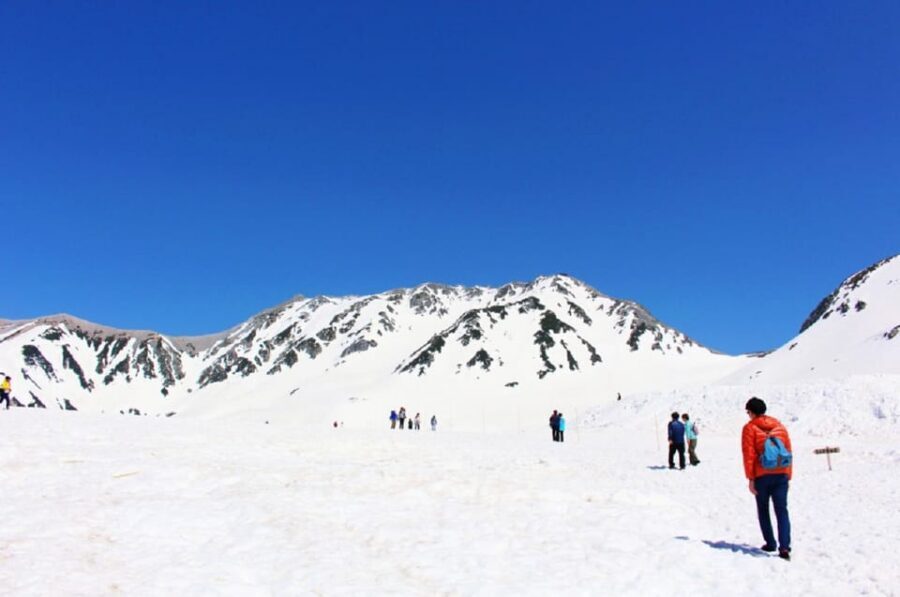
Then you arrive at Murodo, the end-game: Japan’s highest station at 2450 meters. At this altitude, the setting becomes austere and dramatic in a very functional way—you’re in an outpost designed to support people moving through harsh conditions. That changes the vibe. Instead of exploring a town, you’re exploring a mountain facility.
One review summarized it with a simple truth: it can be tiring because of multiple transport changes and crowding. That’s accurate. But it’s also why staying mentally prepared helps. If you accept it as a “day of moving,” you’ll enjoy it more than if you expect a calm, leisurely sightseeing loop.
Murodo at 2450m: The Snow Corridor and the 1.5–2 Hour Window
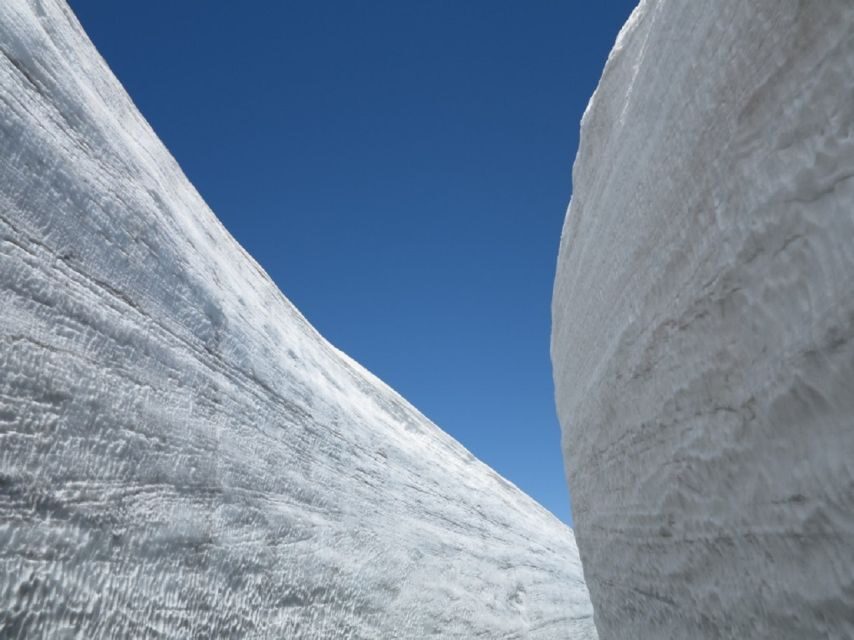
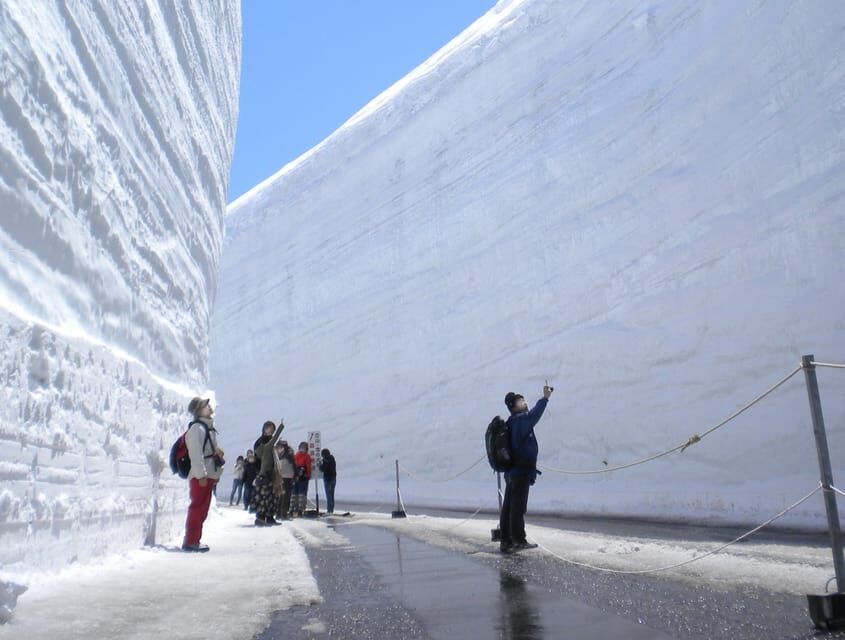
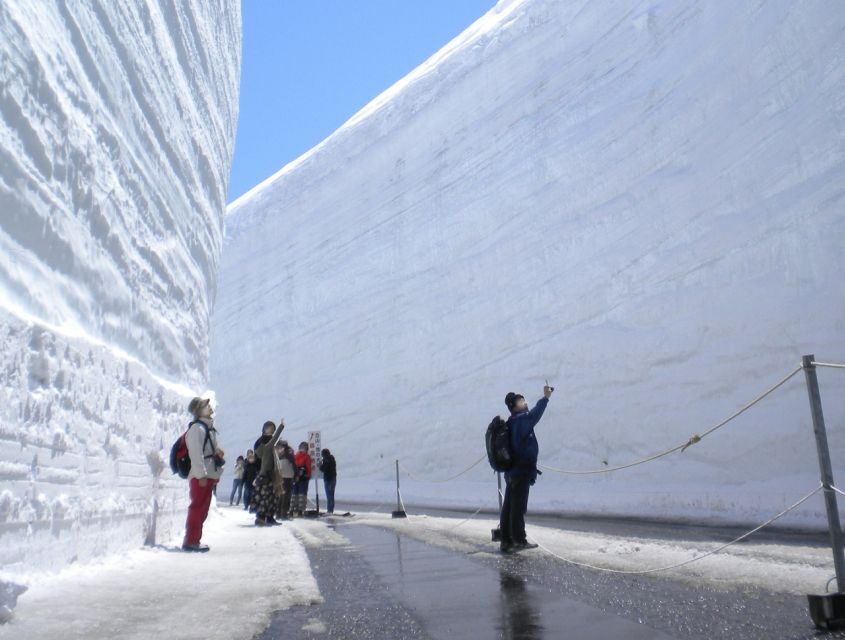
At Murodo, you get the signature moment: the snow corridor. This is the stretch where snow rises about 20 meters above you, creating a tunnel-like walkway. It’s the kind of scene that turns your camera from optional into mandatory.
The good news is that you don’t just get a quick peek. You’ll have about 1.5 to 2 hours of free time to stroll around the area. That window is key. You can take your time with photos, walk the corridor, and still have time for indoor options like the museums (there’s time planned for them).
Here’s the balanced part: the snow corridor is also the part most affected by weather. If conditions are extreme, routes to the snow corridor can close. So don’t build your day around a single photo in a single weather window. The route is still worth it for the dam, the high-station atmosphere, and the guided mountain transport experience—but your “snow tunnel” moment depends on the day’s conditions.
What about the cold? The route info specifically calls out comfortable shoes and sunglasses, and notes that you should wear suitable footwear for possibly snowy trails. I’d add one practical approach: dress in layers you can adjust. Even if the forecast looks fine, the temperature at 2450 meters can feel sharper.
Crowd reality: Murodo is famous, so you will be sharing the corridor with other groups. That’s why your time block matters. If you rush to the corridor, you’ll lose the best use of the day. If you treat the 1.5–2 hours as your personal exploration window, you’ll get the best mix of photos, walking, and museum time.
Also, listen to your guide when they set expectations. Multiple reviews praise guides for keeping the schedule tight across transport changes and ensuring you get enough time where it counts. Names that came up included Orlando and Teddy, both mentioned for good timing and patience, and Endo and Aiko (Joyce) for keeping things running well despite the number of legs.
Other Nagano tours and day trips

Ogisawa and the Return: How the Day Ends (and What to Do Then)
After your Murodo time, you work your way back down. The itinerary includes Ogisawa again with about 2 hours for guided time, sightseeing, and walking. This portion can feel like anticlimax if you expected to spend the whole day at the top. But it’s also useful: you reset before the final bus drive.
Then the return coach takes about 1.5 hours back toward Nagano, and you finish back at Nagano Station.
I like this ending structure because it gives your legs a second chance to move gently. After a lot of stairs and snow-corridor walking, a slower station-based stop in Ogisawa helps you avoid that classic mistake: sprinting through the last minutes with sore feet, then feeling exhausted on the bus.
It’s also worth remembering that the itinerary may be slightly adjusted based on traffic and group pace. That’s normal in mountain systems where timing can wobble. The best move is not to over-plan your onward evening. Keep dinner flexible. Give yourself a buffer so you don’t feel rushed once you’re back in town.
Price and Logistics: Is $232 Good Value for This One-Day Climb?
The price is listed as $232 per person for a 1-day outing. The value question is simple: are you paying for scenery alone, or are you paying to remove friction?
Inclusions do a lot of the heavy lifting. You get:
- Return transportation between Nagano and Ogisawa
- The Alpine Route ticket including transport to and from the summit
- An English-speaking guide
For a route like this, the friction is the hard part. Multiple vehicle types, multiple stations, and timed connections can turn your day into stress if you’re DIY. Here, your ticket coverage and guided timing do the work. You’re paying for convenience, yes, but also for reduced decision fatigue.
What’s not included is also part of the value math: lunch and additional snacks/drinks. You’ll likely want to plan ahead so you’re not hungry during your fixed free time at Murodo. Also, Shinkansen/bullet train tickets are not included, so this day trip is best when you already have your rail plan in place.
When I look at it as a “transport-heavy day with guided structure,” $232 starts to make sense. You’re getting far more than a simple sightseeing bus ride. You’re paying for the whole mountain system to deliver you to a high station, with the main iconic feature (snow corridor) built into the timing.
So if you hate logistics and you want the classic route experience without second-guessing, this price is easier to swallow. If you love self-planning and you’re confident navigating on your own, you might question it. But for most visitors, the guided, ticketed setup is the point.
Who Should Book This and Who Might Skip It
This tour fits best if you want a single-day hit of what people talk about when they say Japan has both grand engineering and dramatic mountain scenery. It also works well if you’re in the Nagano area and you don’t want to spend time planning vehicle transfers on your own.
It’s a great choice for:
- First-timers who want the iconic Alpine Route without piecing together transport
- People who like guided pacing but still want free time at the top
- Visitors who appreciate engineering context, not just photos
- Anyone who benefits from an English-speaking guide to keep the day moving
It may be less ideal if:
- You’re easily worn out by a day of moving between vehicles and walking
- You’re very sensitive to cold weather or if snow conditions look uncertain for your dates
- You hate crowds (Murodo and the snow corridor are popular)
Practical note: pets are not allowed. If that affects you, plan an alternative day.
Wheelchair accessibility is listed as available. Still, remember this is a mountain environment with walking segments and snow-related conditions. If mobility is a concern, it’s smart to consider your comfort level with uneven ground and stairs.
Should You Book the Tateyama-Kurobe Alpine Route from Nagano?
Yes, if you want one day that feels like a full experience: dam scale, high-station altitude, and that famous snow corridor—wrapped in an organized transport system. The top reason to book is the combination of included summit transport and an English-speaking guide, which keeps the day from turning into a timing puzzle.
If you’re on the fence, I’d make your decision based on weather tolerance. The snow corridor can close in extreme conditions, and a few minutes of weather luck can strongly affect how magical that top segment feels. If you’re flexible, pack warm layers, wear proper shoes, and bring sunglasses for the glare, you’re set up for a memorable day.
FAQ
What time do I meet the guide at Nagano Station?
You meet your English-speaking guide at 08:15 at JR Nagano Station, in front of the information board directly opposite the Shinkansen ticket gates.
How long is the Tateyama-Kurobe Alpine Route day trip?
The duration is 1 day.
What’s included in the tour ticket?
The tour includes return transportation from Nagano/Ogisawa, the Tateyama Kurobe Alpine Route ticket (including transport to and from the summit), and an English-speaking guide.
Is lunch included?
No. Lunch is not included, so you’ll want to plan for food and snacks.
What should I bring for the mountain conditions?
Bring comfortable shoes (for possibly snowy trails) and sunglasses.
Is the tour wheelchair accessible?
Yes. Wheelchair accessible is listed for this activity.
Are pets allowed?
No. Pets are not allowed.