A spoon gets a gold makeover.
This lacquer workshop in Uozu, Toyama turns a small piece of wood into something quietly impressive, using gold and silver powder plus traditional brushes. It is run by a long-running family studio where lacquer, tools, and woodcarving are the real show, and you get hands-on time to paint and decorate your own design.
What I love most is the way the craft is both serious and beginner-friendly: they use a substitute lacquer (not real lacquer), so you can try the technique without the usual worries about allergic reactions. Another thing I really appreciated is how patient the instruction feels in a small group of up to 8.
One consideration: this is a focused 2-hour class where you make one teaspoon, so if you want a deep, multi-item project or lots of free time wandering the workshop, you may feel a bit limited.
In This Review
- Key highlights from this Uozu lacquer teaspoon session
- Toyama lacquer: a teaspoon class with real workshop weight
- Inside a 100+ year altar shop in Uozu
- What you actually make: keyaki teaspoon, lacquer brush, and gold/silver finish
- The 2-hour flow: painting, powder, and a guided workshop tour
- Tools, brush-making, and why the workshop tour is more than filler
- Price and value: what $55.28 buys you in real terms
- Who this suits best (and who might want a different style of class)
- Practical notes for your visit to Uozu
- Should you book this lacquer art class in Toyama?
- FAQ
- How long does the lacquer art experience take?
- Where is the experience located?
- What will I make during the workshop?
- Is real lacquer used?
- Are gold and silver materials included?
- Do you have an English-speaking guide?
- How many people are in a group?
- What is included in the price?
- Is free cancellation available?
Key highlights from this Uozu lacquer teaspoon session
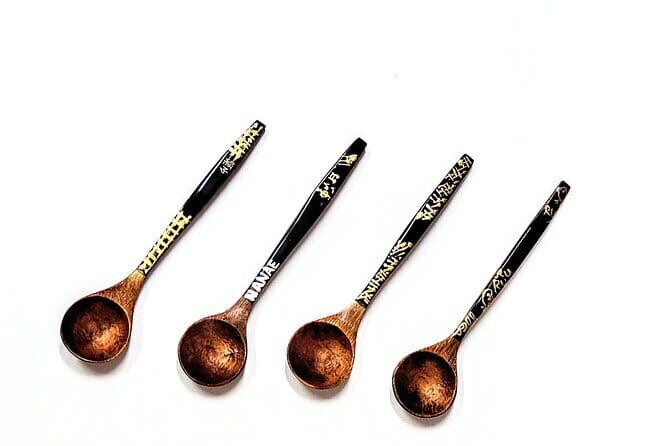
- Substitute lacquer for safer participation, while keeping the materials authentic
- Real maki-e-style tools, including maki-e brushes
- Pure gold and silver powder used to finish your design
- Keyaki wood teaspoon as the base for your artwork
- Workshop tour built into the experience, with explanations in clear lay terms
- Small class size (max 8) with a guide in English and Japanese
Toyama lacquer: a teaspoon class with real workshop weight
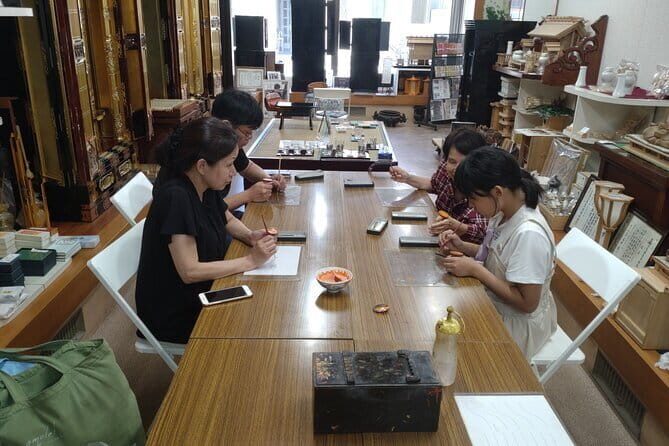
If you think lacquer art sounds intimidating, this is the kind of experience that makes you rethink that. The point here is simple: you create a lacquer design on a small keyaki teaspoon, then bring it to life with gold and silver powder. That is the whole arc of the session, and it is paced so you can actually follow what’s happening.
What also makes it click is the setting. You are not in a generic craft shop. You are visiting a Buddhist altar workshop that has been operating since 1913 (Taisho 2). That matters because altar work in Japan traditionally goes with careful making: tools are respected, processes are practical, and details get explained for a reason. You feel that in the room.
One other detail I liked: the family approach is described as unchanging principles in a changing world. You see that balance in the method. They keep authentic materials in the process, but they choose safer options for participation by using substitute lacquer instead of real lacquer.
If you're still narrowing it down, here are other tours in Toyama Prefecture we've reviewed.

Inside a 100+ year altar shop in Uozu
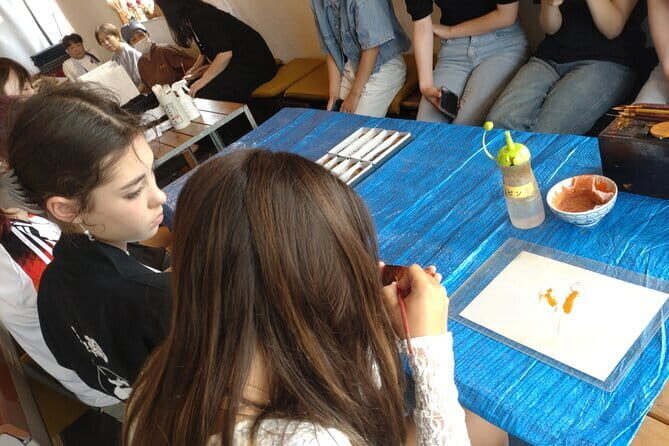
The workshop you visit is run by brothers in the fourth generation, lacquer artist Satoru Tsuji and sculptor Ryo Tsuji. The tradition goes back through earlier generations too, so it’s not a one-off hobby. It is a family craft business that has kept going long enough to build habits, tool skills, and ways of teaching.
You might wonder why a Buddhist altar shop is part of a modern experience like a lacquer class. In practice, that background is exactly what you want. Altar pieces demand durability, precision, and repeatable technique. That means the workshop view you get is not just decorative. It is a working studio where delicate woodcarving and lacquer application are done in the same space.
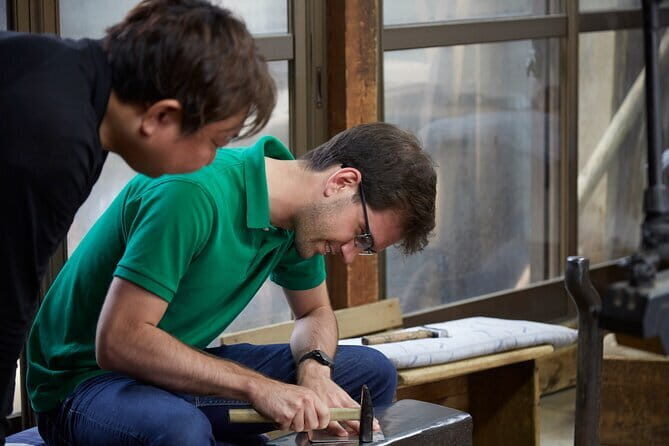
The visit also works as a behind-the-scenes lesson. You see tools and you get explanations in terms that make sense fast. Instead of leaving you to guess, the guide’s job is to translate the process: how brushes are made, what carving tools are used, and what happens in between the visible steps. Even if you are not a “craft person,” this gives you a real understanding of how the work is supported by the workshop itself.
What you actually make: keyaki teaspoon, lacquer brush, and gold/silver finish
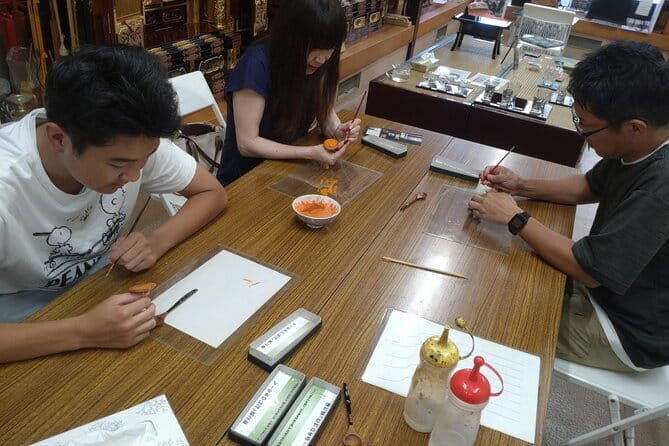
This is a hands-on maki-e style project focused on one item: a teaspoon. The base is a keyaki teaspoon, and your design starts with a picture painted using a lacquer brush. After that, gold and silver powder gets applied to complete the look.
That sequence is the core of what makes lacquer art feel special. First you lay down the pattern, line by line, with controlled brushwork. Then you add the powders that catch light and create texture. The result is not just color. It is a surface effect—something that feels closer to traditional decorative art than to a casual painting class.
Also, the experience is built for safe participation. You are told they use substitute lacquer instead of real lacquer. That is the safety layer: it lets even small children participate without risk of allergic reactions. The key point for adults is that you are still using authentic materials where it matters: real maki-e brushes and pure gold and silver powder are part of the process.
One practical tip for you: treat the first stage as practice time. Your job is to get comfortable with the brush and the way the design should be placed. Then let the gold and silver powder stage be the exciting finish.
The 2-hour flow: painting, powder, and a guided workshop tour
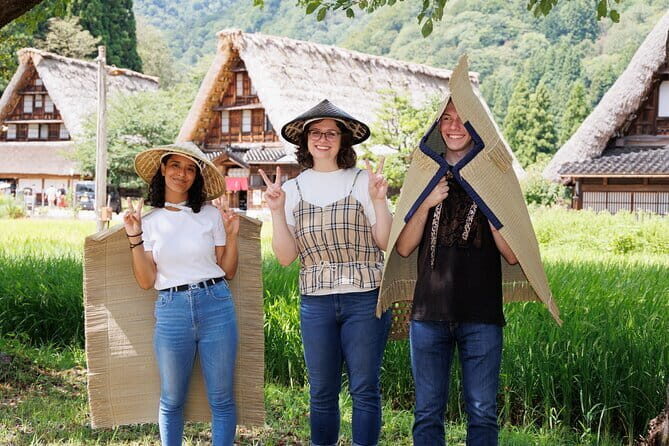
The session runs about 2 hours and is capped at a maximum of 8 participants. That small group size changes how the class feels. You are not lost in a crowd. You can ask questions and get guidance while you are working, not after the fact.
Here’s how the time typically feels when you step in:
- Orientation and explanation. You meet in Uozu, Toyama and get a clear introduction from an English and Japanese speaking guide. The explanations are geared to plain language so you can understand the why, not just the how.
- Workshop tour alongside the teaching. Before or during your hands-on work, you get a look at tools and methods behind the scenes. The studio view includes the delicate parts: woodcarving work and how lacquer application is done. The guide also explains the work processing and the tools themselves.
- Painting the picture on the teaspoon. You apply the design using a lacquer brush. This is the moment where the craft stops being abstract. It becomes tactile: you see how your hand controls lines and spacing.
- Applying gold and silver powder to finish. This is the stage where the piece starts looking like something you’d actually want to keep on a shelf. The powders are pure gold and silver powder, and they bring the surface to life.
- Wrap-up. You end back at the meeting point, with the experience concluding where you started.
If you like a steady rhythm—learn, watch, do, finish—you’ll probably enjoy this format. If you are the type who wants long unstructured roaming time through tools and materials, you may feel the schedule is tightly designed.
Tools, brush-making, and why the workshop tour is more than filler
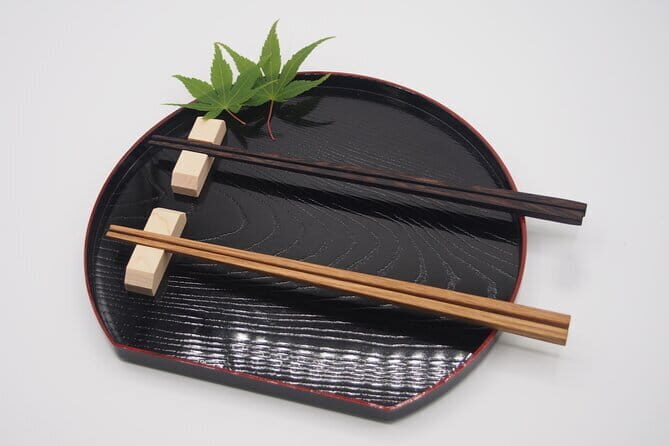
Some craft tours use the workshop tour as a backdrop. This one treats the workshop as part of the lesson. You get to see the workspace where delicate woodcarving and lacquer application happens, and you hear explanations that connect tools to results.
Two things stand out here:
- Tool understanding. You learn about the brushes and carving tools used in the craft. That matters because lacquer work is controlled. If you only copy the final look, you miss why the finish is possible.
- A behind-the-scenes view you don’t usually get. A Buddhist altar shop is not the first place people plan to visit. Here, you get access to the working area and the technical side of how traditional items are actually made.
This is also where the family legacy shows up. When a fourth-generation lacquer artist and sculptor are involved, the craft comes with a practical system: tools are maintained, techniques are transmitted, and the workshop floor is part of the final product.
Price and value: what $55.28 buys you in real terms

At $55.28 per person, this is not a cheap impulse activity. It also isn’t priced like a big-ticket museum experience. For your money, you get a package:
- the experience fee
- a workshop tour fee
- an English and Japanese speaking guide
You also get access to real craft inputs: lacquer technique with substitute lacquer for safety, plus real maki-e brushes and pure gold and silver powder for your finished design.
What makes the value feel fair is the combination of instruction plus materials. If you’ve ever taken a “try it” class where supplies are limited or explanations are shallow, you can feel the difference here. The class includes both hands-on work and behind-the-scenes context, and it caps at 8 people, which usually means more attention per person.
If you are paying from abroad, the price also reads as good relative to the time investment: you spend about 2 hours, you get guided teaching, and you create something small but genuinely special.
Who this suits best (and who might want a different style of class)

This is a strong fit for:
- First-timers who want a real craft lesson without needing advanced skills
- People who like understanding tools and process, not only making a pretty object
- Anyone interested in Japanese traditional crafts beyond the usual postcard stops
- Families or groups where the substitute lacquer choice matters for comfort and safety
It is also a good fit if you enjoy learning through a mix of watching and doing. The guide explains in plain terms, and then you replicate the artistry step by step with support.
If you might want to think twice, it’s mostly about expectations. This is not a long studio residency. You are in and out in about 2 hours, and the focus is one teaspoon project. If you want multiple rounds of painting, a larger piece, or lots of extra free time to browse the workshop, this may feel short.
Practical notes for your visit to Uozu
You’ll start at 4-10 Kanauramachi, Uozu, Toyama 937-0054, Japan. The activity ends back at the meeting point, so plan your onward plans around a straightforward return.
Bring your confirmation when it arrives. You get confirmation within 48 hours of booking, subject to availability. They also use a mobile ticket, so have it ready on your phone.
One more small planning point: since it’s a limited-size class (max 8), it’s the kind of experience that can fill up when interest is high. If you are traveling during a popular season, don’t wait until the last minute.
Should you book this lacquer art class in Toyama?
I’d book it if you want a memorable craft experience with real traditional technique and a strong workshop background, not a quick souvenir activity. The best reasons are practical: the substitute lacquer safety approach, the authentic tools and powders, and the fact that the session includes a guided tour with clear explanations.
Skip it only if your goal is more about broad sightseeing than hands-on making, or if you need a longer project format than a single 2-hour teaspoon session.
If you like the idea of seeing lacquer work up close in Uozu, and you want to leave with a piece of craft knowledge you can actually use to appreciate the real thing, this one fits.
FAQ
How long does the lacquer art experience take?
It lasts about 2 hours.
Where is the experience located?
It takes place in Uozu, in Toyama Prefecture, Japan.
What will I make during the workshop?
You will create a teaspoon, painting a picture on a keyaki teaspoon with a lacquer brush and then finishing it with gold and silver powder.
Is real lacquer used?
They use a substitute lacquer instead of real lacquer, so participation is safer and helps avoid risk of allergic reactions.
Are gold and silver materials included?
Yes. The process uses pure gold and silver powder.
Do you have an English-speaking guide?
Yes. There is an English and Japanese speaking guide.
How many people are in a group?
The maximum group size is 8 travelers.
What is included in the price?
The price includes the experience fee, the workshop tour fee, and the English and Japanese speaking guide.
Is free cancellation available?
Yes. You can cancel for a full refund up to 24 hours before the experience’s start time.