Matsumoto hits hard in three hours. You’ll start with a close look at Matsumoto Castle—a well-preserved feudal landmark—and then switch gears to hands-on soba noodle making with a soba-making master. It’s a smart pairing: history you can walk through, then food you actually shape with your own hands.
I especially like how the soba class is step-by-step and tool-focused. You get a short video intro, then guidance through dough prep, shaping, and cutting, and finally you eat what you made—hot or chilled. Another plus: the tasting part is built to show you the soba in different forms, not just one plain bowl.
One thing to consider: the class includes soba and tasting, but side dishes and drinks aren’t included, so you may want a little extra budget if you want tempura or extra add-ons.
In This Review
- Key things to know before you go
- Matsumoto Castle First: walking a feudal landmark in about an hour
- Soba Making With a Master: tools, dough prep, and cutting noodles correctly
- Tasting Your Hand-Cut Noodles: hot or chilled and what to expect with add-ons
- Group Size, Timing, and Mobile Tickets: how this runs day-of
- Price and value: is $93.93 worth it?
- Who should book this Matsumoto Castle + soba tour
- Should you book this tour?
- FAQ
- How long is the Matsumoto Castle and soba tour?
- What’s included in the price?
- Are side dishes or drinks included with the soba tasting?
- Do I need to print anything, or is there a mobile ticket?
- How big is the group?
- Where do I meet for the tour?
- What is the cancellation window?
Key things to know before you go
- Matsumoto Castle entry is included, so you can focus on the visit instead of figuring out tickets.
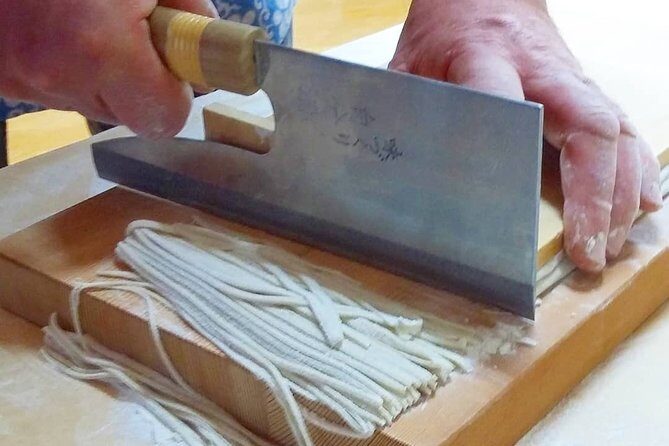
- Hands-on soba tools and cutting are the main event, with instruction during the prep stage.
- You eat your noodles—the master cooks your hand-cut soba at the restaurant.
- Hot or chilled tasting plus extras means you can taste soba in more than one style.
- Small group setup (activity works around groups of two; max 15 travelers overall) keeps it personal.
Matsumoto Castle First: walking a feudal landmark in about an hour
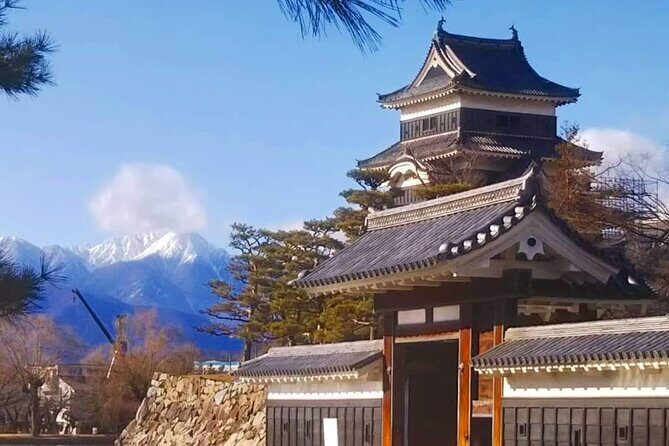
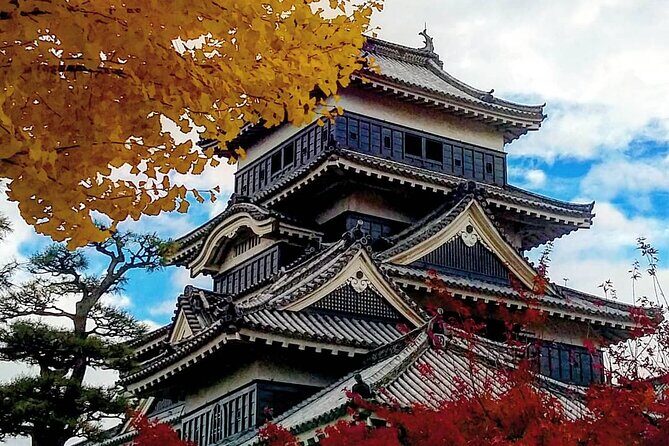
This tour moves fast in a good way. After meeting at the Matsumoto Castle admission ticket counter (4-1 Marunouchi, Matsumoto), you’ll begin with the castle visit that runs about one hour. Even with limited time, it’s long enough to get oriented and actually see how the place works instead of just snapping photos at the gate.
Matsumoto Castle is famous because it’s one of Japan’s best-preserved feudal castles, and it’s part of what makes this stop feel more than just a tourist checkbox. You’ll be walking through the kinds of spaces visitors look for when they come to see how feudal-era life and defenses were laid out. The experience is also great if you like context: the tour guide helps connect what you’re seeing to Matsumoto’s story, so the castle doesn’t feel like a set piece.
A practical note: castle timing matters. If you’re arriving in Matsumoto and want this tour to be your first big activity, it can give you a sense of place early. You’ll know what you’re looking at when you explore on your own later.
If there’s a drawback, it’s simply pacing. You only have about an hour here, so if you’re the type who likes to linger in every room, you may feel the schedule is tight.
Other Matsumoto Castle tours and samurai experiences
Soba Making With a Master: tools, dough prep, and cutting noodles correctly
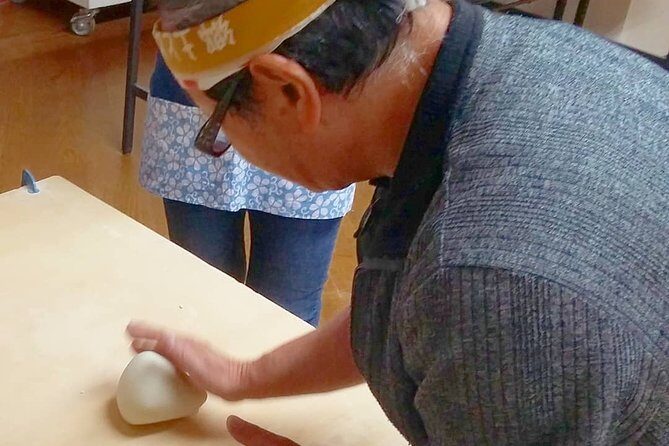
After the castle, the tour splits into two soba-focused stages, each about one hour. The first stage is the hands-on prep and cutting. This is where the tour turns from sightseeing into something you can take home—skills, confidence, and a new respect for how much work goes into noodles that look simple.
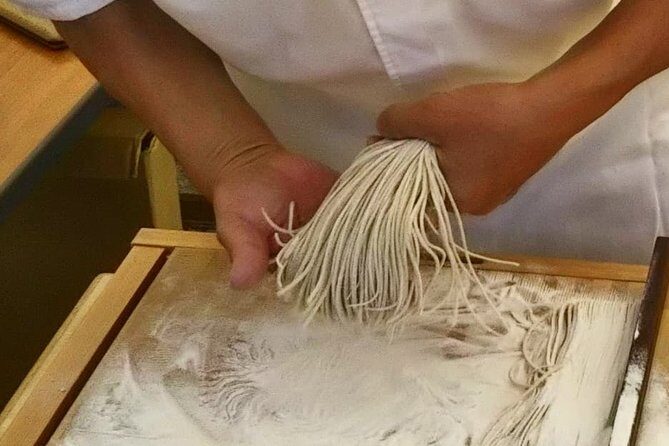
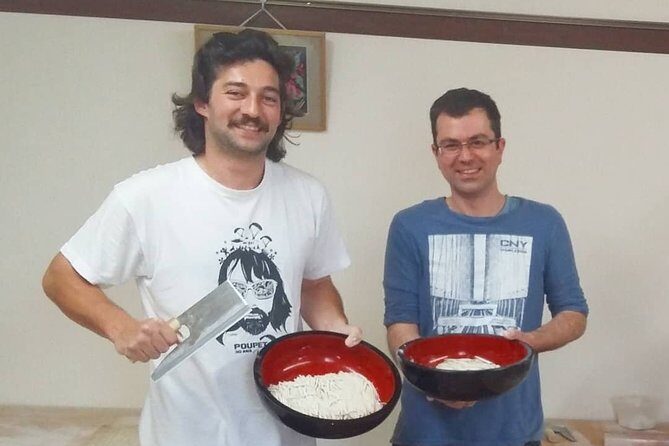
You start with a short video introduction that outlines the process from dough prep to how the noodles get cut. Then you’re guided through the steps while using different soba-making tools under the watchful eye of the soba master. The tools matter here. It’s not just cooking in theory; you’re learning the physical rhythm of making soba—what you do with your hands, and what changes when you handle dough and cut noodles a certain way.
One detail I really like: the class is organized around a practical production need. The experience requires a minimum of 500 grams of soba to work with, so the noodle-making setup includes a shared serving that’s suitable for two or three people. The materials are arranged as one bucket = 2 people, so you’ll likely feel the activity is paced to what you can realistically produce in a group of this size.
This is also why the tour works well for beginners. You don’t need to know soba history or noodle techniques beforehand. You just need to show up ready to try, and follow the steps.
Potential consideration: language levels can vary by guide. The tour is led by different guides, and while instruction is clearly structured, English comfort may not be the same across all guides. If you rely on perfect clarity, having a translation app on your phone can make the whole experience smoother.
Tasting Your Hand-Cut Noodles: hot or chilled and what to expect with add-ons
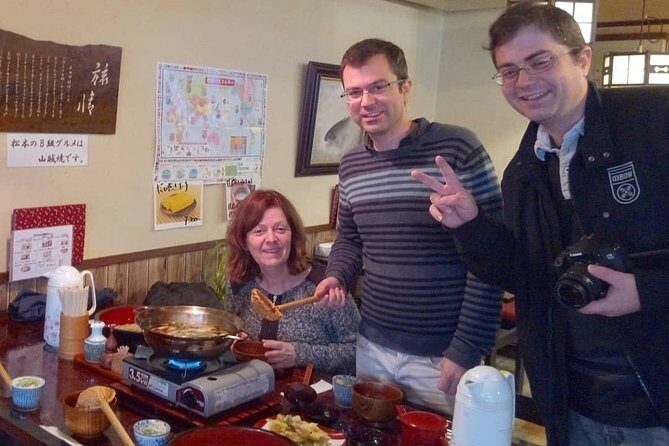
Once you cut the soba, the tour shifts again. In the second stage, you move to the restaurant area where the soba master cooks the noodles you made. This part feels like the payoff—because you get to taste what you shaped, not just what someone prepared earlier.
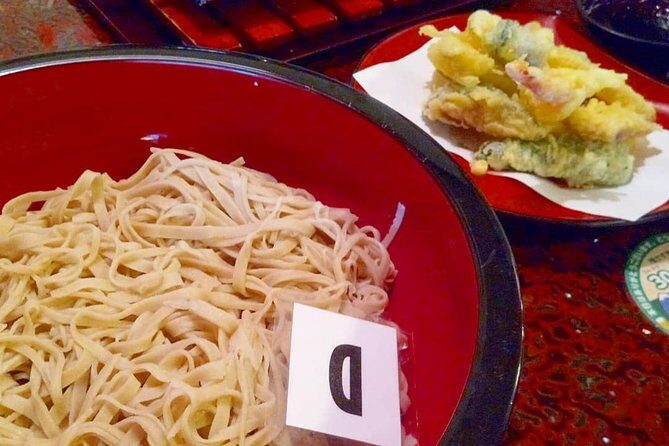
The tasting is built around variety. You can enjoy soba in different forms: hot or chilled, and it can come with options like tempura (fried vegetables) and other side dishes. That said, side dishes and drinks are listed as not included, so treat tempura and extra sides as optional extras rather than guaranteed included items.
What you’re really paying for here is the “learning + reward” cycle:
- You make the noodles (effort).
- The master finishes them (expert cooking).
- You taste them in multiple styles (real comparison).
That comparison piece is underrated. Store-bought soba can taste fine, but freshly prepared soba has an earthy buckwheat character that feels more alive. Even if you don’t call it “earthy” in your own notes, you’ll likely notice a difference in aroma and texture when it’s made right before eating.
If you’re sensitive to timing, keep in mind the tasting stage still runs about an hour. You’ll likely eat while the group is moving through the same flow.
Group Size, Timing, and Mobile Tickets: how this runs day-of
This is a three-hour tour (approx.) with a mobile ticket. That matters if you’re trying to keep your day simple—no paper ticket juggling, and you can show up ready.
The activity format is also fairly intimate. The soba-making experience works in a setup designed for two people, and the overall tour has a maximum of 15 travelers. For you, that usually means fewer people to manage, less waiting, and more chance to get hands-on help during the cutting stage.
It’s also scheduled as a straightforward meet-up and return:
- You meet at the Matsumoto Castle admission ticket counter.
- You return back to the same meeting point at the end.
This tour is near public transportation, which helps if you’re bouncing between castle, station, and nearby neighborhoods.
One more planning detail: the average booking window is 71 days in advance. That’s a hint that this combo (castle + hands-on soba) can be in demand, especially during busier travel periods. If Matsumoto is on your itinerary, booking earlier is usually the easiest way to avoid time-slot stress.
Price and value: is $93.93 worth it?
At $93.93 per person, the price looks steep until you break it down. You’re paying for three things at once:
- Matsumoto Castle admission (included)
- A guided castle visit around one hour
- A structured soba experience with an instruction stage and a tasting stage (about two hours total), led by a soba master
If you were to do castle entry and then find a separate cooking class, the total cost typically climbs quickly. Here, the two experiences are stitched into one schedule, so you’re not spending the middle of your day trying to connect plans.
Also, you’re not just watching a demonstration. You’re actively cutting noodles and then eating them. That’s a meaningful difference from many food “classes” where the participation is mostly observation.
The main reason some people might feel it’s not perfect value is the add-on reality. Since side dishes and drinks aren’t included, you may spend more once you’re hungry and tempted by tempura or extra extras. Still, if you treat the included soba tasting as the main meal and keep extras optional, the cost-to-experience ratio makes sense.
Other Matsumoto tours and city walks


Who should book this Matsumoto Castle + soba tour
This tour is a strong fit if:
- You want a two-part day that mixes history and food without feeling like a long grind.
- You like hands-on cooking, especially learning from someone who makes soba as part of daily craft.
- You enjoy trying regional food and comparing it in more than one form (hot and chilled).
You might skip it if:
- You hate short-scheduled pacing and prefer long museum-style wandering.
- You’re not interested in cooking at all—this is hands-on, not just a tasting tour.
- You’re watching every yen and prefer meals where everything is clearly included. Some additions aren’t.
It also works well for couples or small groups. The soba-making setup around pairs, plus the overall cap of 15 travelers, tends to keep the experience from feeling crowded.
Should you book this tour?
Yes—if you want the best kind of “Matsumoto intro”: one hour inside a major feudal landmark, then one hour of making soba with real guidance, and one hour eating the results. The value is strongest when you’re happy with the included soba tasting as your focus, and you’re okay with optional side dishes and drinks costing extra.
If you’re booking soon, do it early. And on the day, show up ready to participate during the prep and cutting stage. That’s where the tour earns its price.
FAQ
How long is the Matsumoto Castle and soba tour?
It’s approximately 3 hours in total, with about 1 hour at Matsumoto Castle and about 2 hours for soba preparation/cutting and tasting.
What’s included in the price?
The tour includes Matsumoto Castle entry, soba noodle making with the soba master, and soba tasting + 1 extra.
Are side dishes or drinks included with the soba tasting?
No. Side dishes (like oyaki and other snacks) and drinks are not included, even though different tasting styles may be offered.
Do I need to print anything, or is there a mobile ticket?
You’ll use a mobile ticket.
How big is the group?
The soba-making experience works in a group of two people, and the overall tour has a maximum of 15 travelers.
Where do I meet for the tour?
Meet at the Matsumoto Castle Admission Ticket Counter, 4-1 Marunouchi, Matsumoto, Nagano 390-0873, Japan.
What is the cancellation window?
You can cancel for a full refund up to 24 hours before the experience start time.