Wasabi in Nagano is not what you expect. This tour takes you to Daio Wasabi Farm near the Japanese Alps, where you’ll see how the plant is grown and learn the story behind one of the country’s biggest wasabi operations.
What makes it work so well is the English-speaking guide and the practical pace: you get a guided walk through the grounds, then sit down for a Shinshu lunch built around wasabi. The result feels less like a quick photo stop and more like a real food-and-farm lesson you can actually use.
My two favorite parts are the farm walk itself (it’s easy to miss what matters without someone explaining it) and the wasabi meal that shows up ready to taste, not just discussed. One thing to keep in mind: lunch timing can hit a wait during peak season, so be ready for a little patience.
In This Review
- Key points to know before you go
- Daio Wasabi Farm in Azumino: what you’re really seeing
- A guided walk with English commentary: how the tour stays interesting
- Stop 1 at Daio Wasabi Farm: history, fields, and the practical “why”
- Stop 2 at Daio Wasabi Farm: Shinshu lunch built around wasabi
- Wasabi ice cream tasting: the fun test (and what it teaches)
- Guides make or break it: what excellent English commentary feels like
- Price and value for a 2-hour Nagano food experience
- Best for: who this tour suits (and who might skip it)
- Should you book this Wasabi Farm Walking Tour & Lunch?
- FAQ
- FAQ
- How long is the Wasabi Farm Walking Tour & Lunch?
- What time does the tour start?
- Where does the tour begin and end?
- Is the guide available in English?
- Is the tour private?
- What’s included with the lunch?
- Is wasabi ice cream included?
- Can the lunch accommodate vegetarians or vegans?
- What happens if weather is poor?
Key points to know before you go
- Daio Wasabi Farm, Azumino (Hotaka, Nagano): your whole experience stays at one site, which keeps the timing simple.
- Private tour feel (max 12 people): it’s small-group friendly, and you’ll have room to ask questions.
- English commentary by a guide: you’re not left to guess what you’re seeing in the museum area or fields.
- You get a wasabi lunch set: the menu is designed around local Shinshu flavors like soba and miso.
- Wasabi ice cream tasting: it’s part of the experience, but extra snacks and drinks are not automatically included.
- Weather matters: the tour is weather-dependent, and you may be offered a different date or a full refund if canceled.
Daio Wasabi Farm in Azumino: what you’re really seeing
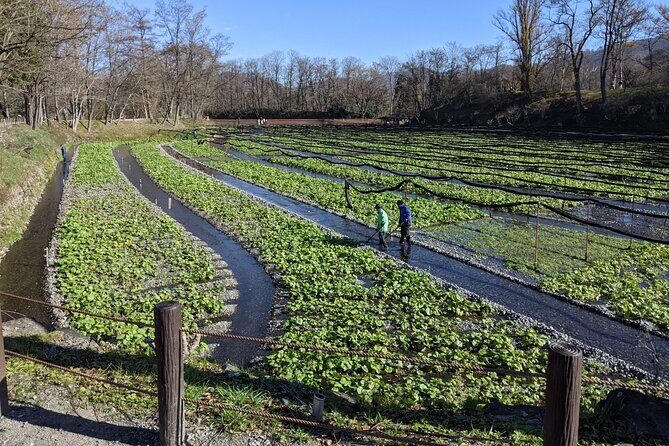
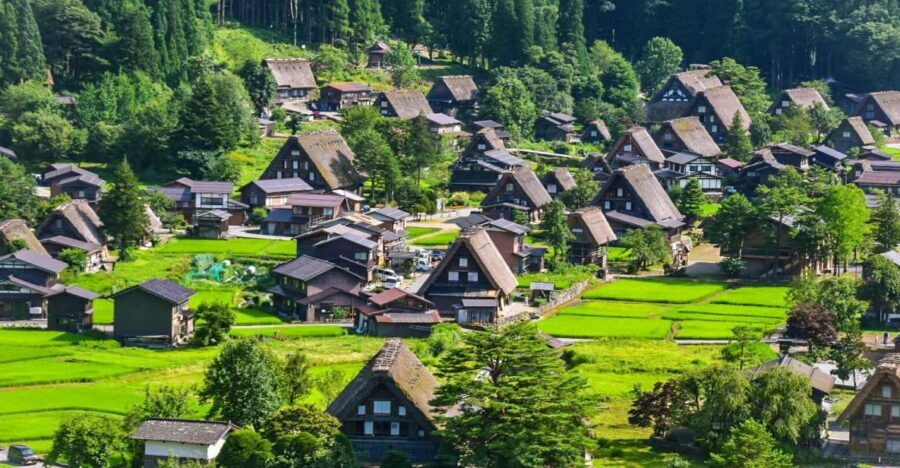
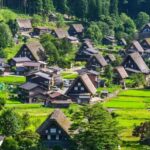
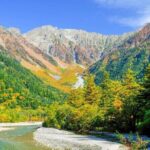
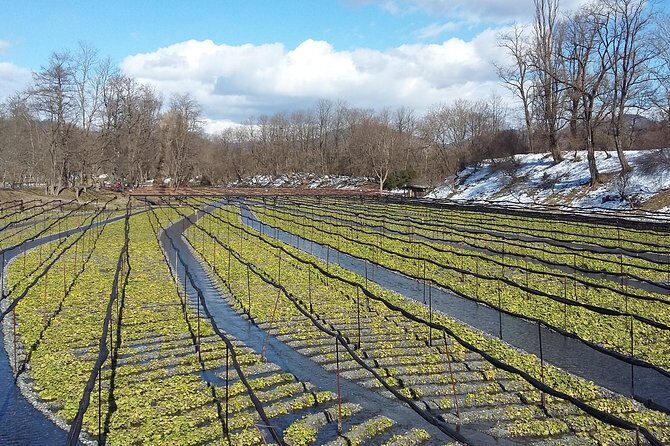
The tour’s base is Daio Wasabi Farm in Hotaka, Azumino. It sits in a countryside setting at the base of the Japanese Alps, where multiple wasabi farms share the area—from small plots tucked near rice fields to Daio, which is described as Japan’s largest wasabi farm.
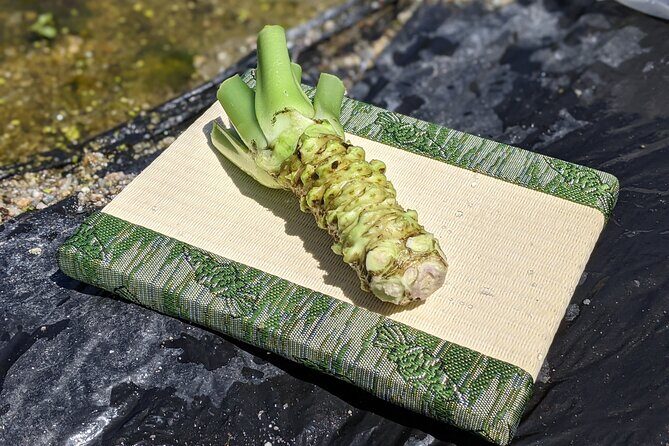
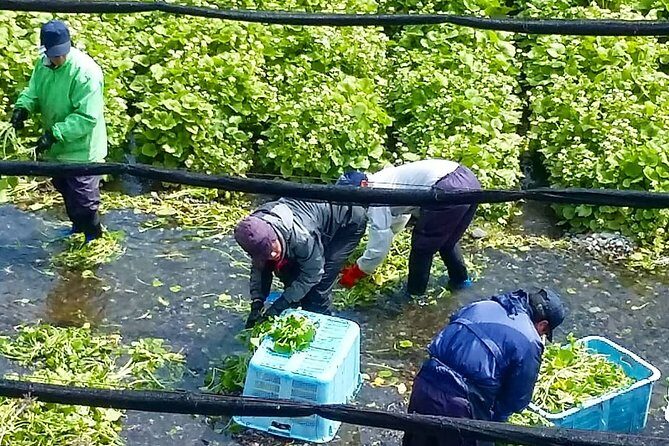
This matters because wasabi isn’t just a condiment to taste. On this tour, you get to watch it as a crop—how it’s cultivated, where the farm fits into local history, and why this green plant became essential to Japanese cuisine. If you like food, you’ll start connecting the dots between the farm and what you usually see on a sushi plate.
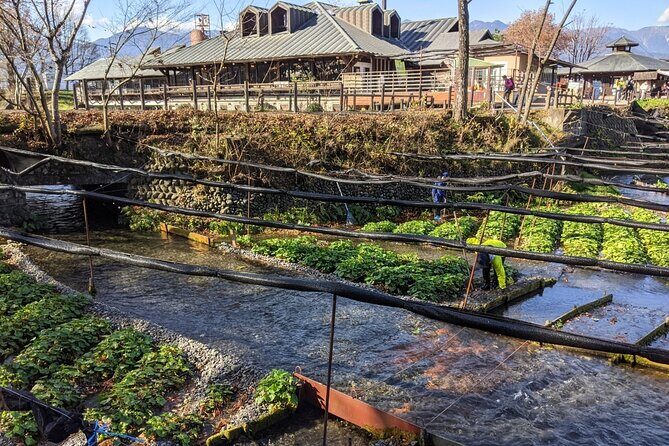
A big part of the experience is the guided walk. Daio Wasabi Farm was established in 1915, and the farm is described as photogenic, so yes, there are plenty of photo moments. But the real value is in the commentary: you’ll hear what the farm does, what makes this growing region special, and the kinds of details that help your photos turn into memories with context.
You also benefit from going with a guide who can explain things clearly in English. Several guide names show up in the experience record—Akiko, Naomi, Tim, Tom, and Carole—which is a useful clue that the tours are handled by people who focus on communication. In practice, that means you’re less likely to feel lost around the museum info and more likely to understand what you’re seeing.
If you're still narrowing it down, here are other tours in Nagano we've reviewed.


A guided walk with English commentary: how the tour stays interesting
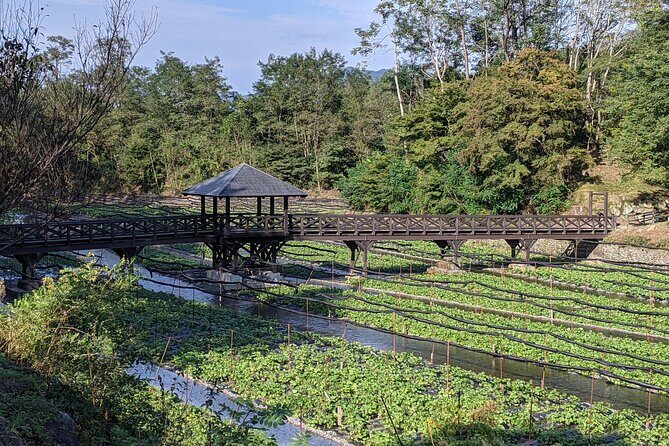
The walking portion is about an hour, and it’s built around interpretation, not just movement. The tour starts at Daio Wasabi Farm, and you’ll stay there, learning as you go. Since the farm is established, cultivated, and organized, a guide can point out what’s meaningful—like the history and how the production process fits together.
This is also where you get the most payoff from having someone lead. Without guidance, a wasabi farm can feel like rows of green plants. With guidance, it becomes a story: why this plant is grown here, how it’s connected to Shinshu (Nagano’s old name), and what’s special about Daio’s approach.
One detail I really appreciate is that guides don’t just talk at you. You’ll hear examples of guides sharing extra cultural context—like Tom being open to Japanese culture conversation and offering tips for what to do next in Japan. That kind of human talk turns the walk from instruction-only into something more like a conversation with a local.
Also, the group size stays small. The experience lists a maximum of 12 travelers, and the overview emphasizes having a private tour for your group. Either way, you’re not stuck in a long line. That makes it easier to ask questions when something catches your eye.
Stop 1 at Daio Wasabi Farm: history, fields, and the practical “why”
Your first stop is Daio Wasabi Farm itself, and the tour’s opening hour is where the “how wasabi happens” story begins. The farm sits in a region where nature supports this kind of agriculture, and the tour frames the setting as part of the reason wasabi cultivation is possible here.
You’ll also get the historical anchor: the farm’s establishment in 1915. That’s not just trivia. For food-focused visitors, it helps you understand how long this has been part of Nagano’s identity rather than a new trend.
Expect your guide to connect the plant to daily life in Japan. Wasabi is described as an essential element in Japanese cuisine, especially as an accompaniment for sushi. So even if you’re arriving with a general idea of what wasabi is, this part helps you separate the flavor you know from the plant itself.
There’s also a museum component mentioned in the experience notes, where guides may translate or explain the museum content, often mostly in Japanese. That’s the kind of service that can genuinely change your visit: you can read signs, sure, but translation turns the visit into understanding rather than guessing.
Stop 2 at Daio Wasabi Farm: Shinshu lunch built around wasabi
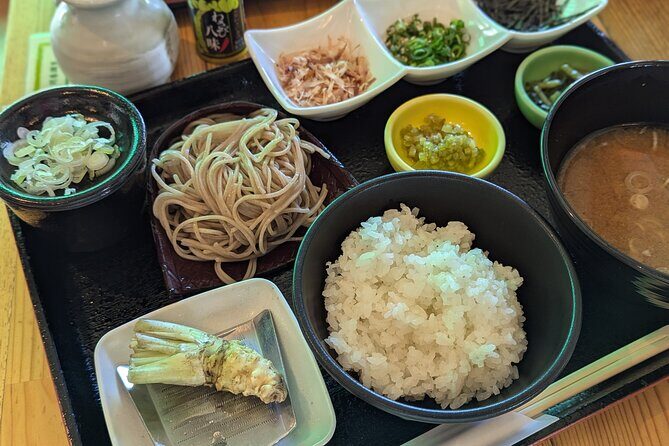
After the walk, you shift into the tasting part—lunch. The second segment is about another hour, and it’s designed specifically to highlight wasabi flavor using real wasabi, not just wasabi seasoning.
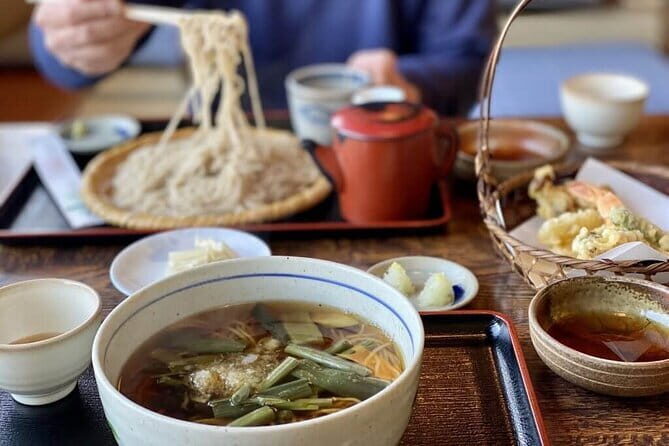
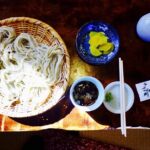
The lunch is presented under the Shinshu branding, which ties the meal back to Nagano’s old name. You’ll typically see Shinshu soba and Shinshu miso as part of the set, along with other local treats. For me, this is where the tour proves its value: it doesn’t leave you with theory only. You get a plate that matches what you learned outside.
This is also where I like that the tour takes your dietary needs seriously. The information explicitly states they can cater to vegetarian and vegan guests and families with young children. If you’re traveling with people who don’t eat the same way you do, it’s comforting that the tour acknowledges this ahead of time.
There is one operational consideration. During peak season, reservations at the restaurant can be limited due to visitor volume, and you may face a wait to enter. That doesn’t mean the lunch won’t happen—it just means the time can stretch. If you’re on a tight schedule, plan a little buffer around your day.
Wasabi ice cream tasting: the fun test (and what it teaches)
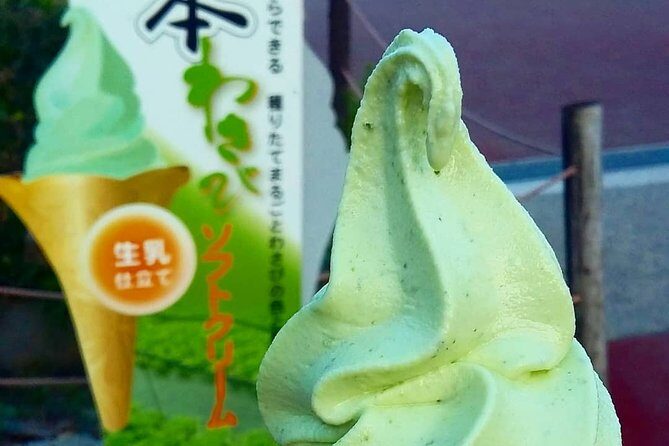
The tour includes a wasabi ice cream tasting. This is one of those choices that sounds quirky until you experience it and realize it’s a controlled way to taste wasabi in a completely different form than you’d get at sushi.
The experience notes back up that the ice cream is a highlight for many people. It works as a comparison tool: you can judge how wasabi’s character changes when it’s used in a sweet format, and it often becomes the kind of story you remember later because it’s so unusual.
One practical tip: the tour information says certain snacks or drinks are not included (and it even lists things like ice cream and other items in the non-included category). So think of the scheduled tasting as part of what you paid for, but don’t assume you can order extra goodies on top without paying separately.
Other walking tours we've reviewed in Nagano
Guides make or break it: what excellent English commentary feels like
This tour leans heavily on the guide experience, and that’s a good thing if you pick your priorities right. The tour notes repeatedly point out guides with excellent English and strong knowledge—Akiko and Naomi are named, and Tim, Tom, and Carole also appear as examples.
What I take from those specifics is that you should go in expecting real explanation, not generic facts. Guides are described as helpful, knowledgeable, and willing to talk beyond the strict farm script. You’re not just watching plants—you’re being guided through history, farm life, and the logic behind how wasabi is produced and served.
Also, because the visit includes farm grounds plus a restaurant meal, the guide helps connect the dots. When you taste wasabi with soba noodles or see how fresh wasabi flavor is showcased, you’re more likely to understand what you ate and why it matters.
Price and value for a 2-hour Nagano food experience
At $70.94 per person for about 2 hours, this isn’t a bargain-basement activity. But it also isn’t overpriced for what you get—especially if you care about food and you want guidance.
Here’s the simple value math as I see it:
- You pay for an English-speaking guide.
- You get entry to the farm (entry is listed as free of charge).
- You get a traditional lunch set with wasabi, featuring Shinshu soba and Shinshu miso.
- You get a wasabi ice cream tasting as part of the experience.
The private-tour framing helps too. When you’re with a small group (maximum 12) and guided at a farm site, the guide time matters. If you were to visit the farm on your own, you’d likely still see the plants and take photos—but you might miss the production context and the historical background that makes the meal taste smarter.
If you’re a casual visitor who just wants a quick walk and a snack, you might feel the price. If you’re a food traveler—especially one who eats sushi and loves learning what ingredients really are—this price starts to look reasonable.
Best for: who this tour suits (and who might skip it)
This tour fits best if you like:
- Food experiences that lead to actual eating, not just tasting a tiny sample
- Learning with an English guide on-site
- Small-group pacing and question time
- Visiting a specific Nagano countryside attraction without juggling multiple stops
It’s also a good call if you want a straightforward half-day plan. The timing is compact, the meeting and end point are the same farm location, and you don’t need to coordinate transfer chaos.
You might consider skipping if:
- You hate guided tours and would rather wander without explanation
- You’re extremely sensitive to schedule changes during peak season lunch waits
Should you book this Wasabi Farm Walking Tour & Lunch?
I’d book this if you’re heading to Nagano and you want one very specific, very local experience with a clear food payoff. The combination of guided walk at Daio Wasabi Farm, a lunch set designed around wasabi, and the wasabi ice cream tasting makes it more than a photo stop.
If you care about understanding what you eat, this tour is doing the work for you. Just go in with the right expectation: it’s about learning and tasting, with some waiting possible in busy periods, and weather can affect the plan.
FAQ
FAQ
How long is the Wasabi Farm Walking Tour & Lunch?
It runs for about 2 hours.
What time does the tour start?
The start time is 10:30 am.
Where does the tour begin and end?
It starts and ends at Daio Wasabi Farm, Hotaka, Azumino, Nagano 399-8303, Japan.
Is the guide available in English?
Yes. The tour includes an English-speaking guide.
Is the tour private?
The experience is described as having the luxury of a private tour for just your group, and the maximum group size is 12 travelers.
What’s included with the lunch?
You’ll receive a Japanese lunch set featuring wasabi, with Shinshu soba and Shinshu miso mentioned.
Is wasabi ice cream included?
Yes, the tour includes a wasabi ice cream tasting. Additional snacks or drinks are listed as not included.
Can the lunch accommodate vegetarians or vegans?
The tour notes that they can cater for vegetarian and vegan guests, and also for families with young children.
What happens if weather is poor?
The experience requires good weather. If it’s canceled due to poor weather, you’ll be offered a different date or a full refund.
If you tell me your exact travel dates and whether you’re doing Nagano on a day trip or staying overnight, I can help you fit this into a smooth food-and-nature plan.