Two villages in one long day.
This day trip ties together Takayama’s old townscape and Shirakawa-go’s UNESCO gassho-zukuri houses, plus a guaranteed ride up to the Ogimachi Castle Observation Deck for iconic panoramic views. I especially like how the Takayama walk is about details you can actually spot—canals under the eaves, cedar-leaf sakebayashi signs, and traditional doorways with noren curtains—so it feels more like a guided stroll than a checkbox tour.
One thing to plan for is the time on your feet and on the bus. The schedule is tight (about 10 hours total, with multiple transfer stretches), and the tour has clear suitability limits—so comfortable shoes and realistic expectations matter a lot.
In This Review
- Key highlights at a glance
- One-day route: Nagoya to Takayama, then UNESCO Shirakawa-go
- Takayama old townscape walk: canals, sake breweries, noren curtains
- Shirakawa-go Gassho-zukuri Village: more than 100 steep-roof houses
- The Shirakawa-go Observation Deck payoff: Ogimachi Castle panoramic views
- Timing, transfers, and the reality of a 10-hour day
- Price and value: what you’re paying for at about $50
- Food, breaks, and the buffet breakfast/dinner confusion
- Pickup reality at Nagoya: how to avoid the wrong bus
- Practical rules for photos and walking
- Who should book this trip (and who should skip it)
- Should you book Hida Takayama, Shirakawa-go + Observatory from Nagoya?
- FAQ
- How long is the day trip?
- What’s included in the price?
- Are meals included?
- Do I get to visit the observation deck?
- What languages are available for the live guide?
- What should I bring and what’s not allowed?
Key highlights at a glance
- Guided old-town walk in Takayama with classic streetscape details like eaves canals and sakebayashi cedar-leaf signs
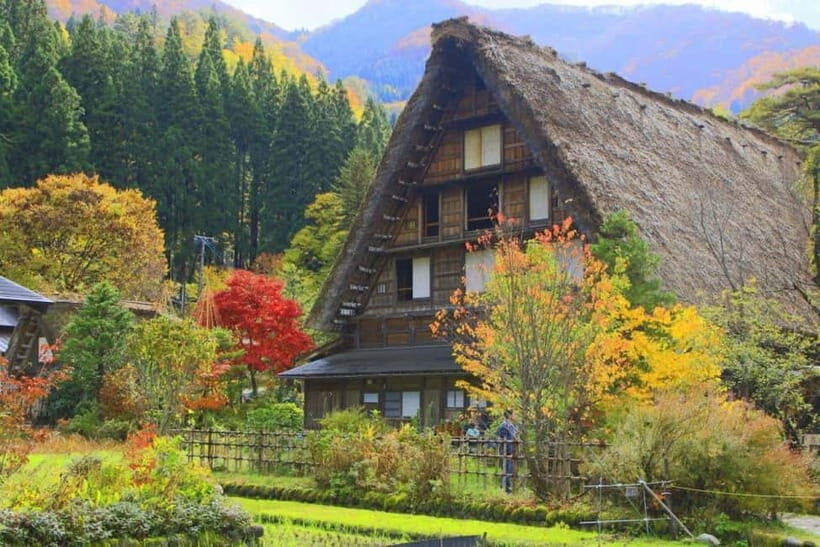
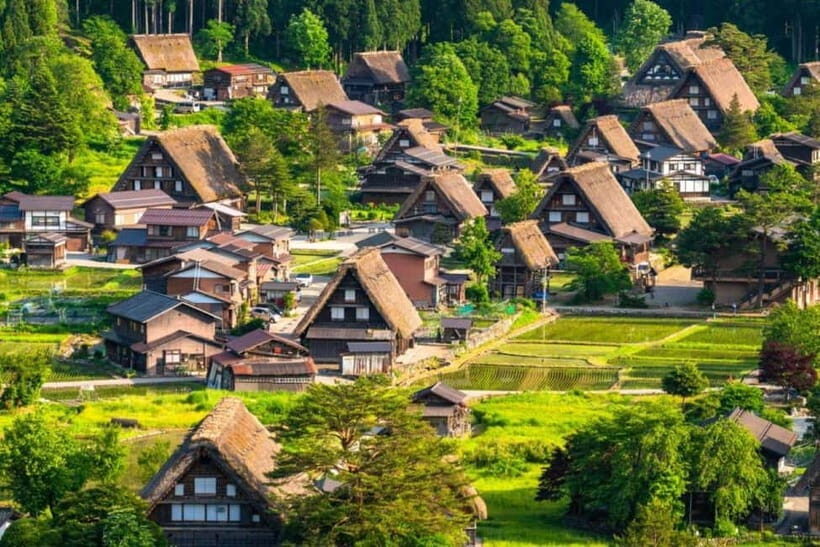
- UNESCO Shirakawa-go Gassho-zukuri Village, known for well over 100 steep-roof houses that people still live in
- Guaranteed observatory stop with a panoramic view over the whole Shirakawa-go village and surrounding Gifu mountains
- Nature + traditional culture elements discussed along the way in Hida Shirakawa-go
- Tight, full-day timing that fits a lot into one day without forcing you to drive
- Pickup clarity tips matter, especially if you’re trying to find the right bus among several at the same meeting area
One-day route: Nagoya to Takayama, then UNESCO Shirakawa-go
This is a classic “big-hitters” day trip: leave Nagoya, spend time in Takayama, continue to Shirakawa-go, and finish with a view that’s built for postcards. The whole plan is structured around a single bus day, which is exactly why it’s valuable if you want the highlights but don’t want to manage trains, transfers, and schedules yourself.
You’ll start from the Ministop at 名駅椿町店, then ride about 2.5 hours toward Takayama. The mid-day portion is where the tour does its best work: you get guided walking time, not just a stop at a photo spot. After Takayama, you’ll head toward Shirakawa-go for about 1.5 hours of guided sightseeing, then transfer back for another 2.5 hours ride. In total it’s designed to fit within 10 hours, so you’ll feel the pace, but you won’t be stranded or juggling your own transportation.
Also, this is offered with a live guide in English, Traditional Chinese, Japanese, or Chinese. That matters because the cultural details in Takayama and the village layout in Shirakawa-go are easier when someone explains what you’re looking at in plain terms.
Other Shirakawa-go and gassho-zukuri village tours in Takayama

Takayama old townscape walk: canals, sake breweries, noren curtains
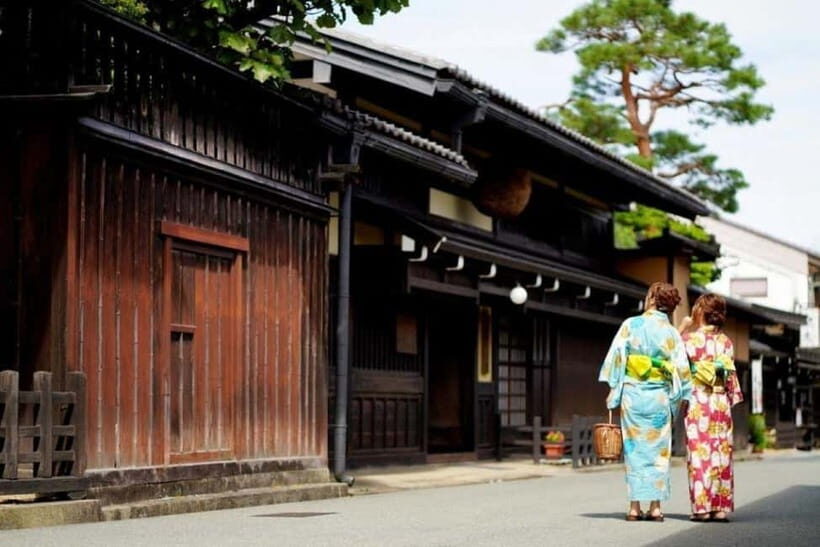
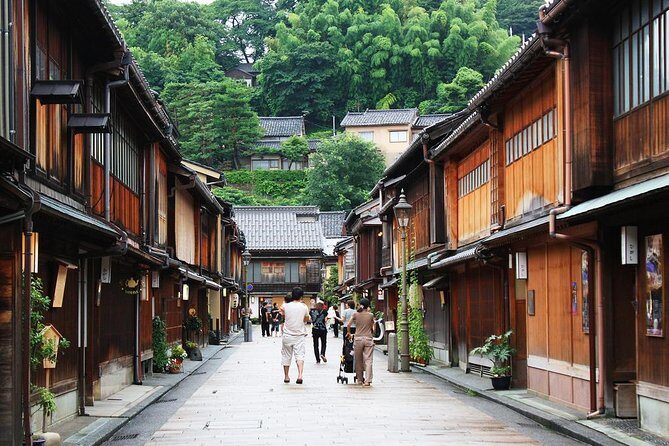
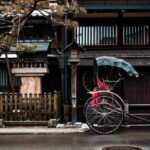
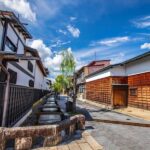
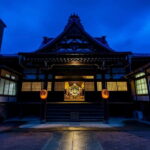
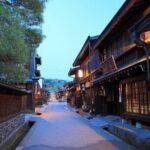
Takayama is the reason this tour feels more complete than a quick “bus-and-photos” day. The old townscape walk is described as a top sightseeing spot in Hida, and it’s easy to see why once you’re there: it’s not just architecture, it’s the everyday street details that make the town look alive.
Here’s what you should expect to notice during the guided stroll:
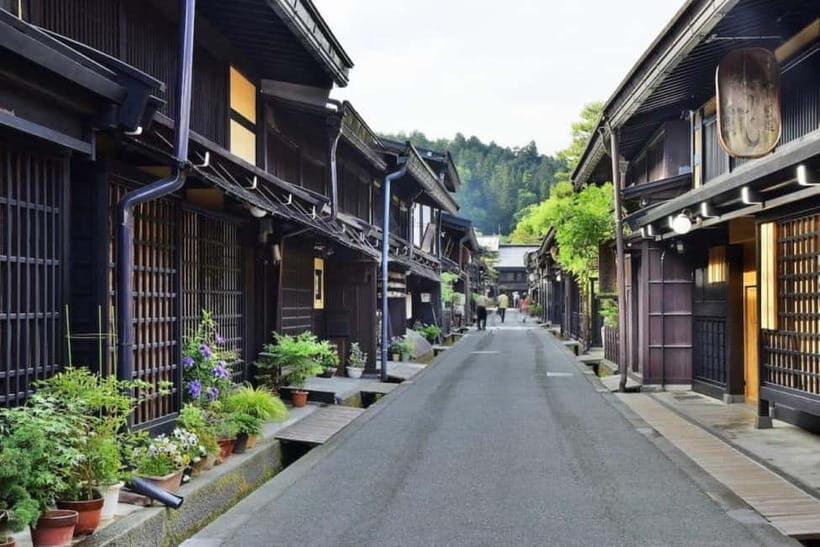
- Irrigation canals running under the eaves, with trellised latticework along the same lines
- Sakebayashi cedar-leaf arrangements hanging like a sign connected to sake breweries
- Large doors of older townhouses that reflect how these buildings worked in daily life
- Noren curtains from long-established shops under the eaves
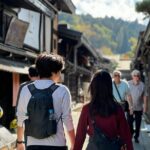
What I like about this approach is the way it trains your eye. Instead of asking you to appreciate “old Japan” in general, the guide points you at specifics—where water flows, how merchants advertised, and how shopfronts are integrated into the architecture. Even if it’s busy (it is, year-round), it’s the kind of crowd where you can still find good viewing angles by slowing down.
One small consideration: the tour is walking-heavy. You’re on your feet during Takayama, and your pace will matter more than your photo instincts. Think comfortable shoes first, camera second.
Shirakawa-go Gassho-zukuri Village: more than 100 steep-roof houses
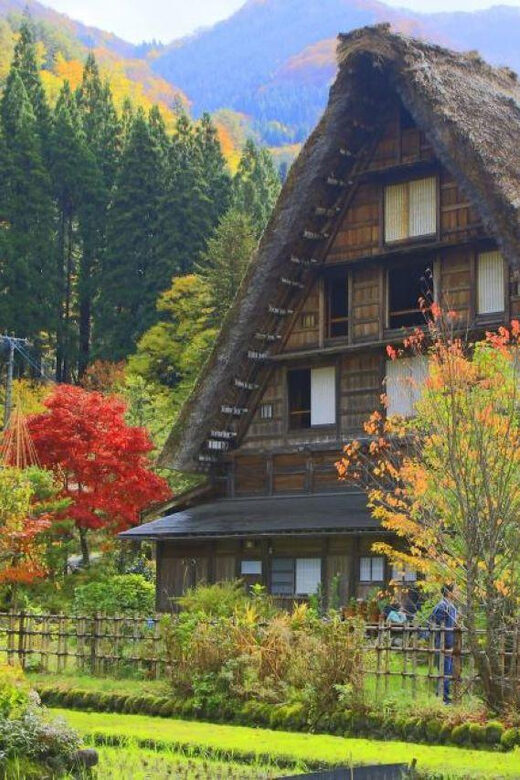
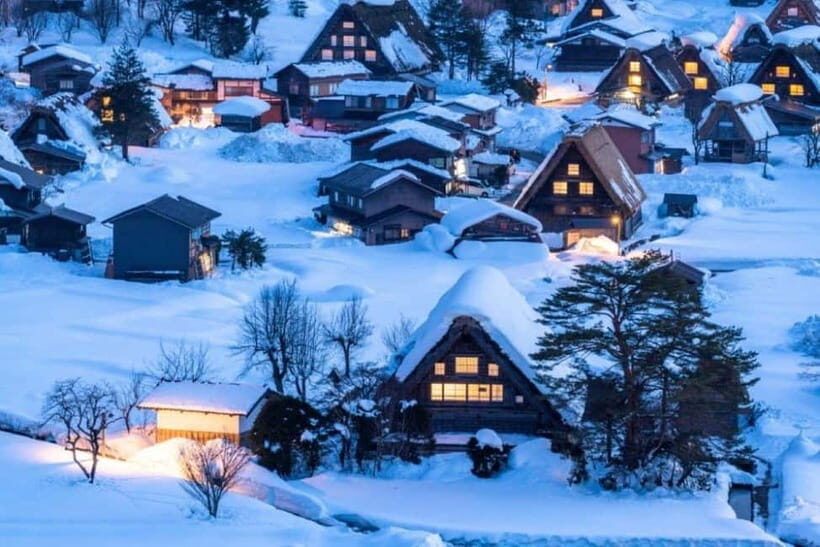
Then the day shifts gears—dramatically. Shirakawa-go’s Gassho-zukuri Village is UNESCO World Heritage, and the key detail is that it’s not only preserved scenery. The description highlights that more than 100 gassho-zukuri buildings remain and people still live there, so the village feels like a functioning community, not a theme park.
Those steep thatched roofs—often associated with this area—are the visual signature. You’ll spend time walking and sightseeing with your guide, which is the smart way to do it. Without context, it’s easy to treat the village like a collection of roofs. With a guide, you can better understand how the form ties to the local environment and the traditional wisdom behind it.
You also might hear about related cultural and natural elements in the wider Hida Shirakawa-go area. The tour info specifically mentions Hirase Onsen, whose source is at the foot of the sacred mountain Hakusan. Even if you don’t get a long soak stop, it’s the kind of connection that helps you place Shirakawa-go in the region rather than as an isolated photo stop.
A drawback to keep in mind: Shirakawa-go is famous for a reason, so it can get crowded. But guided time helps you keep your bearings and see the village in an organized flow instead of wandering in circles.
The Shirakawa-go Observation Deck payoff: Ogimachi Castle panoramic views

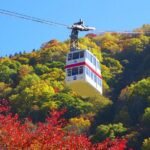
If there’s one moment this tour is built around, it’s the view from the Shirakawa-go observation point—sometimes described as the Shirakawa-go Observation Deck or Ogimachi Castle Observation Deck. This stop is called out as guaranteed, which is a big deal for a one-day schedule.
From the deck, you should expect a wide, iconic panoramic view over:
- the entire Shirakawa-go village, including the spread of thatched houses
- the surrounding Gifu mountains and the larger terrain framing the valley
Why this matters: in the village itself, you’re close to the buildings and narrow streets. From above, the same area becomes readable. The roof shapes align into patterns, the village layout makes sense, and you can appreciate the scale that photos sometimes hide.
This is also where you’ll feel how geography drives architecture here. The steep roofs are one thing, but seeing them set against mountains gives you a different kind of understanding—how the settlement fits into its setting.
Practical tip: bring a camera, but remember flash photography isn’t allowed, and conditions can change fast with weather. If it’s misty, don’t assume you’re doomed; wait for a clear window if the guide suggests it.
Timing, transfers, and the reality of a 10-hour day
The schedule is clearly mapped:
- about 2.5 hours of transfer to Takayama
- about 2.5 hours in Takayama, with sightseeing and lunch time built in
- about 1 hour transfer to Shirakawa-go
- about 1.5 hours sightseeing in Shirakawa-go
- about 2.5 hours return transfer
That’s a total of about 10 hours. For many people, that’s perfect: you get two major locations plus the deck view without having to solve logistics. But you should go in knowing it’s not a slow travel day.
A few things I’d plan around:
- Bring water (your tour guidance specifically suggests a bottle, and it’s smart on long rides)
- Use comfortable shoes because both the Takayama walk and Shirakawa-go walking add up
- Check the weather forecast and dress for it. This region can feel cool, and observatory views can be windy.
Also, the tour may include lunch time in the itinerary, but meals aren’t clearly stated in the standard inclusions. That leads to an important point.
Other Takayama walking tours and old-town experiences


Price and value: what you’re paying for at about $50
At roughly $50 per person, this is priced like a value-packed day: you’re covering the bus cost and driver, plus guided time in Takayama and Shirakawa-go. For many visitors, the expensive part of a day trip like this isn’t the attraction—it’s the transport and the friction of timing. This tour takes that burden off you.
The included items listed for the experience are:
- Driver and bus cost
- Guided tour of Takayama’s old townscape
- Visit to the Hida Shirakawa-go Gassho-zukuri Village
- Service charge (10%)
Not included:
- meals and beverages (even though lunch time is scheduled)
- transportation to and from the starting point
- attraction tickets
- personal expenses
So here’s the balanced truth on value: you’re paying for transport and interpretation that connects the stops. You’re not necessarily paying for all meals or entrance fees. If you want a fully guided “leave Nagoya, return to Nagoya” day where you don’t think about schedules, this is good value. If you expect meals to be fully covered, double-check your confirmation.
Food, breaks, and the buffet breakfast/dinner confusion
The highlights mention buffet breakfast and dinner at Toyama Royal Tonami Hot Spring Resort, which sounds like a real add-on. But the detailed inclusion section says meals and beverages aren’t included.
So what should you do? Treat it as a verify-before-you-go situation:
- Confirm whether the buffet meals are included in your specific booking.
- If you don’t see meals listed in your confirmation details, assume you’ll need to budget for food during the day.
I also recommend planning for a gap in energy. Even if lunch is on the schedule in Takayama, you may still want snacks on the bus ride. That aligns with the tour’s practical suggestion to bring snacks.
Pickup reality at Nagoya: how to avoid the wrong bus
One of the most useful practical tips isn’t about the scenery—it’s about finding your vehicle fast.
At the meeting point near Ministop, 名駅椿町店, multiple tour buses or microbuses can be staged. The key confusion to avoid is relying on a QR code alone. Instead, use the email you receive the day before—it’s noted as containing the guide name and the bus number. That helps you match yourself to the correct group when several yellow-flagged participants are standing around.
If you’re unsure, do this:
- Look at the buses/microbuses parked nearby
- Find your vehicle number
- Ask for help by pointing to the guide/bus info from your email
This is one of those moments where being calm saves time. Once you’re with the right group, the tour runs smoothly, and the guide explanations are described as careful and clear.
Practical rules for photos and walking
You’ll move through areas where rules matter, so take them seriously—they protect the site and keep you moving smoothly. The tour info lists these:
- Wear comfortable shoes
- No smoking
- No flash photography
- No littering
- No touching plants
Even if some of these sound obvious, they’re the difference between getting an interrupted flow and keeping your time intact. Also, since the visit includes walking, your “small discomfort” budget should be realistic. If your feet aren’t happy, you’ll rush the best parts.
Who should book this trip (and who should skip it)
This is a strong fit if:
- You want Takayama + UNESCO Shirakawa-go in one day without driving
- You value guided explanations that point out details
- You’re comfortable with a 10-hour outing and multiple transfers
- You want the panoramic payoff from the observatory deck
It’s not a fit if you fall into the tour’s stated limitations:
- Children under 5
- Pregnant women
- People with mobility impairments
- People with heart problems
- Wheelchair users
If any of those apply, it’s worth looking for a smaller-group or more accessible alternative.
Should you book Hida Takayama, Shirakawa-go + Observatory from Nagoya?
I’d book it if you want maximum “Japan-at-the-street-level” value: a guided Takayama walk with concrete details, a UNESCO village where people still live, and a guaranteed observation deck moment that makes the whole area snap into focus. The price makes sense because it bundles transport plus guide time, which is usually the hard part on your own.
I’d hesitate if you’re sensitive to long days, crowds, or lots of walking. And I’d absolutely verify the meal situation—because the day’s highlights mention buffet meals at Toyama Royal Tonami Hot Spring Resort, while the structured inclusion list says meals and beverages aren’t included.
If you’re ready for a full, efficient day and you plan your feet and your pickup carefully, this is one of the more practical ways to see the best of Hida from Nagoya.
FAQ
How long is the day trip?
The tour runs for about 10 hours.
What’s included in the price?
It includes the driver, bus cost, guided tour of Takayama’s old townscape, visit to Hida Shirakawa-go Gassho-zukuri Village, and a 10% service charge.
Are meals included?
The tour details you provided say meals and beverages are not included, but the highlights mention buffet breakfast and dinner at Toyama Royal Tonami Hot Spring Resort. Check your booking confirmation to confirm what’s actually included for your departure.
Do I get to visit the observation deck?
Yes. The tour description says the observatory stop is guaranteed, with a panoramic view from the Shirakawawa-go Observation Deck / Ogimachi Castle Observation Deck.
What languages are available for the live guide?
English, Traditional Chinese, Japanese, and Chinese.
What should I bring and what’s not allowed?
Bring comfortable shoes, and consider a camera plus a water bottle and snacks. Flash photography, smoking, littering, and touching plants are not allowed.