Zenko-ji feels different when you sleep there. This 2-day small-group tour in Nagano pairs a hands-on goma prayer fire ceremony at Zenko-ji with an overnight shukubo temple lodging, plus serious local food time (including Nagano-style spice and a sake tasting). I love that it’s not just sightseeing: you practice the ritual yourself, then you get to slow down the next morning in temple rhythm. I also like the way the food stops fit the place, from local shichimi spice to what you’ll be served and taste nearby. One possible drawback: day 2 is mostly self-paced, so if you want constant English guidance and a fully scheduled day, this format might feel a bit open.
The tour runs with an English-speaking guide during the guided portions, and it’s capped at a small group size (up to 10). You’ll also get a mobile ticket, and the key activities are paced with real time allowances, not rushed checklists. The big win here is that Zenko-ji isn’t treated like a photo backdrop; it’s treated like a living temple that still has ceremonies, routines, and food traditions tied to the area.
Here’s how to judge it for your trip: if you want a meaningful temple stay that includes meals and a specific cultural highlight (the goma ritual), this delivers. If your dream is shopping-heavy Nagano or a super-packed itinerary every hour, you might prefer a different style of tour.
In This Review
- Key highlights you’ll care about
- Zenko-ji after dark: why shukubo changes the whole trip
- Day 1 start: Saiko-ji and the “warming up” temples
- Yawataya Isogoro Honten: shichimi spice that tastes like Nagano
- Zenko-ji’s core moment: the goma fire ceremony (you participate)
- Yoshinoya sake tasting: beer vibes, food focus
- Shukubo night: dinner timing, futons, and what to expect
- Day 2 at Zenko-ji: optional o-asaji morning service
- Price and value: what $306.96 actually buys you
- Logistics that affect your day: time blocks and ticket style
- Who this tour suits best (and who should pass)
- Should you book this Zenko-ji shukubo tour?
- FAQ
- What’s included in the tour price?
- Do I get to participate in the goma ceremony?
- What kind of lodging is the shukubo?
- Is day 2 fully guided?
- What is the o-asaji morning service?
- How many people are in the group?
- Where do I meet the tour?
- Can I cancel for a full refund?
- When should I book?
Key highlights you’ll care about
- You perform the goma prayer fire ceremony yourself inside Zenko-ji’s Daikanjin temple complex, not just observe.
- A shukubo overnight means futons on the floor, dinner in the temple lodging time window, and a real overnight shift in your day.
- Nagano’s signature shichimi spice is a focused stop at Yawataya Isogoro Honten, with ingredients explained and a can gifted to take home.
- A guided sake tasting at Yoshinoya ties local brewing to food you can actually understand and order later.
- Small group size (max 10) keeps the tone friendly and helps the guide manage questions.
- Day 2 offers temple morning service optional participation with the o-asaji ceremony.
Zenko-ji after dark: why shukubo changes the whole trip
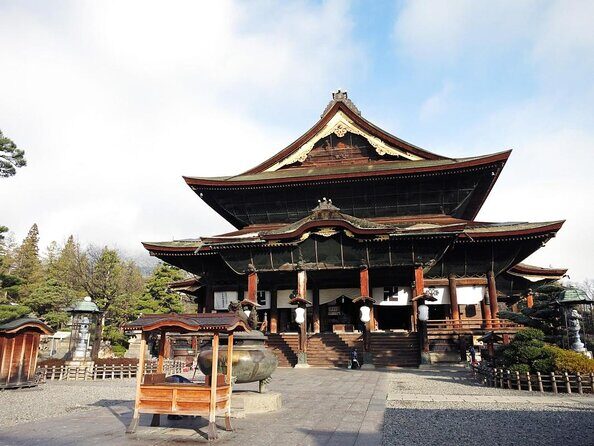
Zenko-ji is one of Japan’s best-known temples, but most visits are compressed into a few hours. This tour flips that. By staying at a shukubo—traditional temple lodging—you experience Zenko-ji as a place with a schedule, not just a route.
You check in for the night after the guided day is done, and your evening is guided by the lodging’s rhythm: dinner arrives between 18:00 and 20:00, and breakfast the next day is 07:30 to 09:00. That timing matters because it shapes how you move and when you can slow down. Even if you’re visiting for culture, the overnight is where it starts to feel personal.
Also, your lodging is a Japanese-style room with futon bedding on the floor. That’s traditional, but it also means you should treat it like part of the experience—not a hotel swap. If you’re used to beds and private bathrooms, you’ll want to mentally prepare for basic, temple-stay comfort.
Other Zenkoji and Nagano temple tours

Day 1 start: Saiko-ji and the “warming up” temples
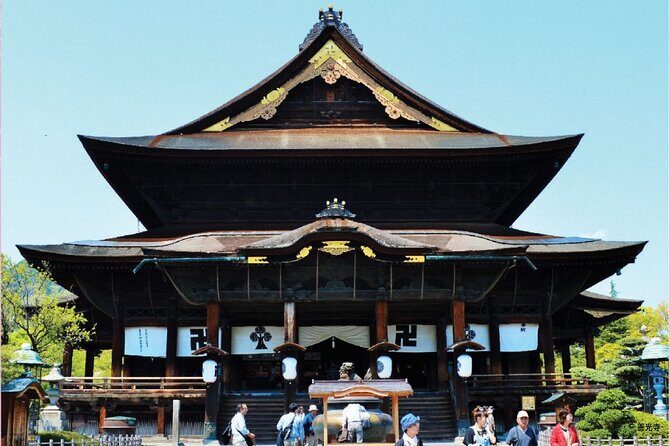
Day 1 begins with a 12:15 start at Nagano Station. From there, the day starts by easing you toward Zenko-ji through a smaller stop: Saiko-ji Temple.
Saiko-ji is described as a smaller Buddhist temple connected to the Kamakura period (1185–1333). The practical reason this stop exists is simple: it helps you get the temple mindset before you hit the bigger, more complex Zenko-ji grounds. You get a short visit (about 15 minutes) and it’s free to enter.
If you hate feeling “trapped” in long explanations, this stop is a good warm-up. It’s short enough that you keep your energy for the main event later.
Yawataya Isogoro Honten: shichimi spice that tastes like Nagano
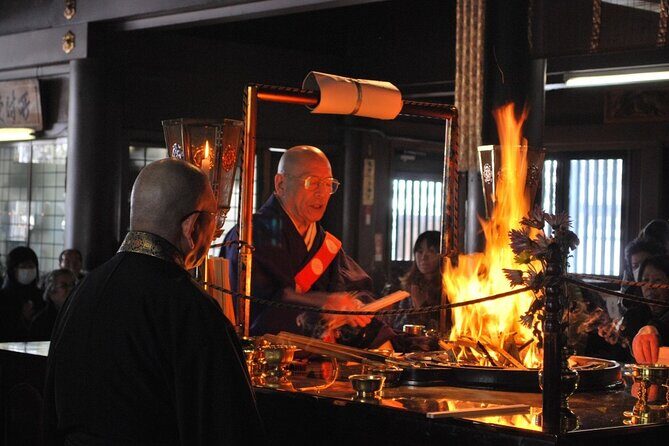
Next comes a food culture stop with a very Nagano-specific identity: Yawataya Isogoro Honten. This place is rooted in the Edo period (the mid-1700s), and it connects directly to Zenko-ji through the idea of spices sold near the temple gate.
What I like about this stop is the clarity of the product and the story:
- You learn what shichimi is, often called 7 spice
- You get a breakdown of ingredients that go beyond vague “spicy seasoning”
- You receive a can of shichimi (12–14g) as a gift before leaving
The spice blend includes capsicum, sesame, hemp seed, shiso, Japanese pepper, mandarin peel, and ginger. That’s the kind of list that makes it easier to picture the taste later—something you can use when you try to cook or order similar flavors at home.
The timing is also reasonable: about 30 minutes, and it’s free to enter. If you want one souvenir that isn’t just a trinket, this is a solid choice because it’s specific and usable.
Zenko-ji’s core moment: the goma fire ceremony (you participate)
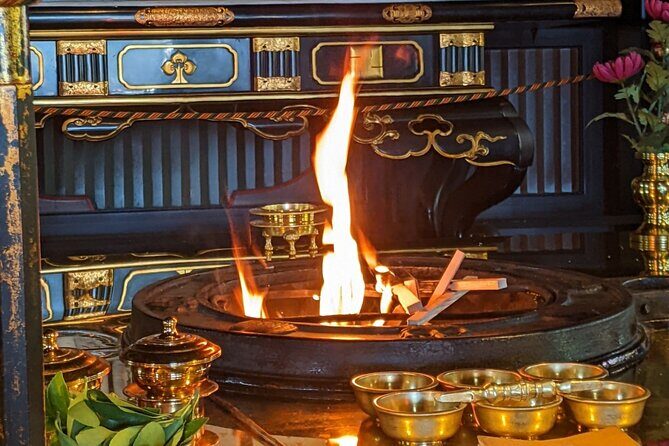
Then you reach the part that makes this tour feel distinct: Zenko-ji itself.
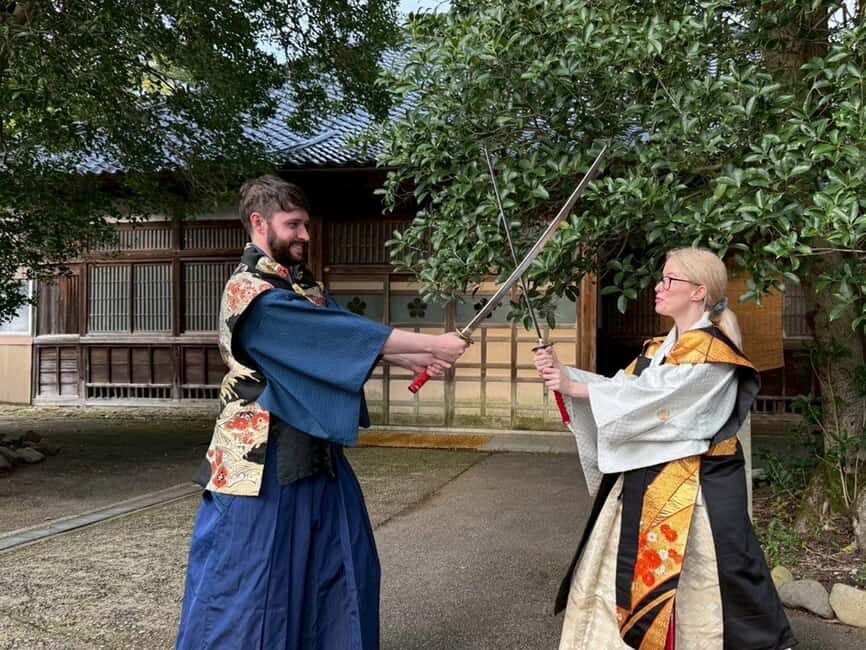
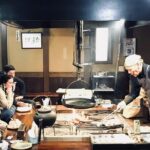
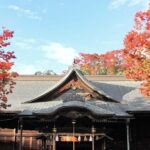
You’ll take part in a private goma prayer fire ceremony inside the Daikanjin temple complex within Zenko-ji. The key detail is that you do the ritual yourself. That’s a big difference from many temple experiences where you watch quietly while someone else performs the main actions.
After the fire ceremony, you get a detailed guided tour of Zenko-ji (with time kept flexible for what’s possible), and then you also receive free time on the temple grounds depending on schedule.
This structure is practical. The ceremony gives you context through participation, then the guide’s narration helps you connect that experience to what you’re seeing. After that, free time lets you return to the parts that caught your eye—without feeling like every minute must be “learned.”
If you’re the kind of traveler who likes meaning over photo ops, this is the centerpiece. And if you’re traveling with someone who gets impatient during long temple tours, the ceremony gives even non-temple people a clear “wait, this is happening” moment.
Yoshinoya sake tasting: beer vibes, food focus
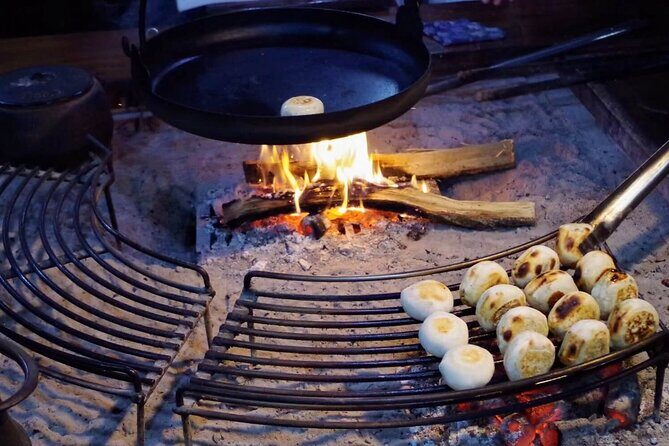
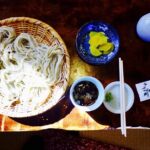
After Zenko-ji, the day moves into a brewery-and-food lens at Nishimon Yoshinoya. You get a guided sake tasting along with samples linked to traditional Nagano flavors, including miso and tsukemono.
Yoshinoya is noted as one of Nagano’s oldest and most renowned breweries, which helps explain why the tasting is paired with small food items instead of just cups of alcohol. The idea is to show how local tastes connect: fermented flavors, pickles, and seasoning all sit around the same regional identity.
This segment takes about 30 minutes and is included. If you enjoy trying food in a guided context—so you can ask questions and understand what you’re tasting—this stop is a strong add-on. It also makes the whole tour feel less like “ceremony, then nothing” and more like a full cultural day with taste-based checkpoints.
If you're still narrowing it down, here are other tours in Nagano we've reviewed
Shukubo night: dinner timing, futons, and what to expect
Once day 1 ends, you check in at your shukubo lodging. Your guide says goodbye there, and you get to spend the evening at the lodging.
Meal timing is built in:
- Dinner: between 18:00 and 20:00
- Breakfast: between 07:30 and 09:00
That’s helpful because it removes decision fatigue. You don’t have to figure out where to eat or when. You’re also getting breakfast, lunch, and dinner included on the tour, which is a big part of why the price makes sense (more on that soon).
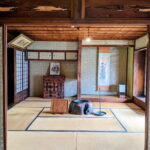
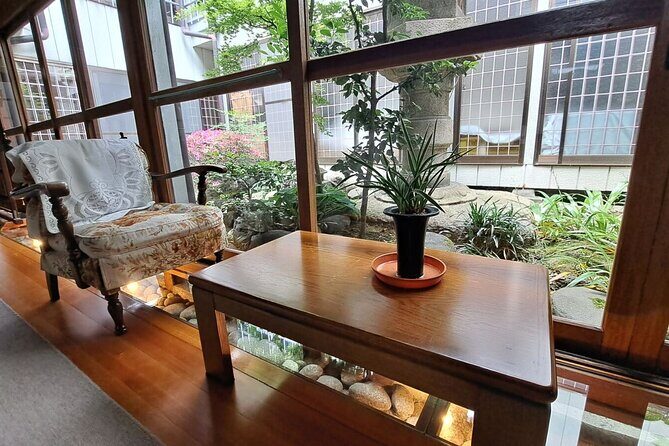
The room is a Japanese-style room with futon bedding on the floor. That usually means you’ll sleep close to the traditional style: simple, spare, and intentionally different from hotel comfort. If you want a hotel bed and a Western routine, this part may not feel “relaxing.” But if you want a genuine experience, it’s exactly what you’re paying for.
Day 2 at Zenko-ji: optional o-asaji morning service
Day 2 starts with Zenko-ji again, but the tempo shifts. This portion is non-guided, so you can choose how you want to spend your morning and day.
The big optional ritual here is o-asaji, a morning service held every morning of the year. It’s led by the head of the Tendai and Jodo sects responsible for the temple, and it’s described as welcoming participation regardless of background or faith.
Important practical note: the o-asaji ceremony is not included in the tour price, and the listed entry is about 6 hours. That means you’ll need to decide whether it’s worth giving up the morning’s flexibility for a longer ceremony block.
Even though day 2 is non-guided, this still can be a good fit. After the guided “meaning building” on day 1, you get space to explore at your own pace, and you get to decide how much you want to lean into Zenko-ji’s daily rhythm.
Price and value: what $306.96 actually buys you
At $306.96 per person, this tour looks “not cheap” at first glance. But the value comes from the package shape.
You’re paying for:
- Guided temple time in Nagano city, including the Zenko-ji guided tour
- A private goma fire ceremony experience where you participate
- A sake tasting with food samples
- Shichimi spice (12–14g can) gifted to you
- One overnight shukubo stay
- All meals: breakfast, lunch, and dinner
The overnight matters most. Temple lodging isn’t the same category as a standard guesthouse, and you’re also receiving meal inclusions. When you compare this kind of temple stay plus meals to piecing things together on your own, the “bundle” logic starts to make sense.
Also, the group size is capped at 10, which can matter for quality. Smaller groups usually mean fewer delays during ceremonies and more time for questions.
One thing to consider: you do not get access to every paid experience at Zenko-ji, and the o-asaji ceremony has its own cost. If your must-do list includes specific paid attractions, you’ll want to double-check what’s included versus what you’d pay separately.
Logistics that affect your day: time blocks and ticket style
The tour uses a mobile ticket, and it starts at Nagano Station at 12:15 pm. That midday start gives you a practical rhythm: you’re not burning your whole morning traveling, and day 1 still reaches the key experiences without dragging.
Day 1 also runs on a sequence of short, clear stops:
- Saiko-ji (about 15 minutes)
- Yawataya Isogoro Honten (about 30 minutes)
- Zenko-ji and the goma ceremony plus guided temple tour time (about 1 hour 30 minutes)
- Nishimon Yoshinoya (about 30 minutes)
Those time blocks help prevent the “hour ends before you feel ready” problem. By design, you spend the majority of energy at Zenko-ji rather than on transit or long filler.
The end point is your lodging address at Ryōshōin in Motoyoshichō, where you check in. Your guide handles the handoff, then you’re on your own for the overnight schedule.
Who this tour suits best (and who should pass)
This tour is a great match if you want:
- A real temple stay, not just a day visit
- A cultural activity you can do, like the goma ritual
- Food culture that connects to place—spices and sake aren’t random add-ons
- An English-speaking guide during the key guided portions
- A small group experience
It’s less ideal if you:
- Want a fully guided day 2 with constant explanations
- Prefer hotel-style comfort and minimal “traditional lodging” difference
- Are only interested in Zenko-ji as a fast sightseeing stop rather than participating in ceremonies
The best part for many people is how the experience flows: you warm up through a smaller temple, learn a Nagano signature flavor (shichimi), hit the main temple through participation, then finish with sake and food before sleeping inside the culture.
Should you book this Zenko-ji shukubo tour?
Book it if you want a temple experience with structure and meaning: the goma ceremony participation plus a shukubo overnight is exactly the kind of combo you’ll remember. The meals are included, the food stops are specific (shichimi, miso, tsukemono, and sake), and the small group size keeps it from feeling chaotic.
Skip it if you’re chasing maximum independence on both days or you don’t want the traditional overnight format (futon on the floor). Also consider the o-asaji option: if you’re hoping to do that, plan around the fact that it’s listed as not included.
If your goal is “I want to understand Zenko-ji in a way that goes beyond photos,” this tour is a strong, practical choice.
FAQ
What’s included in the tour price?
You get breakfast, lunch, and dinner, accommodation at a shukubo temple lodging in a Japanese-style room with futon bedding, an English-speaking guide in Nagano City (including the Zenko-ji guided tour and the fire ceremony), a gift can of shichimi (12–14g) per guest, and a guided sake tasting at Yoshinoya.
Do I get to participate in the goma ceremony?
Yes. The tour includes a private goma prayer fire ceremony at Zenko-ji where you perform the ritual yourself inside the Daikanjin temple complex.
What kind of lodging is the shukubo?
You stay in traditional Japanese-style rooms with futon bedding on the floor at a temple lodging called a shukubo.
Is day 2 fully guided?
No. Day 2 is non-guided, so you can enjoy the day according to your preferences. You can also choose to attend the morning o-asaji ceremony, but that is not included.
What is the o-asaji morning service?
The o-asaji is a morning service held every morning of the year at Zenko-ji, led by the heads of the Tendai and Jodo sects. The tour notes that it welcomes participation regardless of background or faith.
How many people are in the group?
The tour has a maximum of 10 travelers.
Where do I meet the tour?
The start is at Nagano Station. You end at Ryōshōin (your shukubo check-in point).
Can I cancel for a full refund?
Yes. Free cancellation is available up to 24 hours before the experience start time for a full refund.
When should I book?
On average, this tour is booked about 62 days in advance.