Kanazawa changes fast after dark. This 2-hour guided night tour connects the dots between samurai power and the city’s quieter back streets, with photo stops and a guide who keeps the pace easy. You’ll start at Mister Donut Kanazawa Musashi Shop and finish near Korinbo, so you’re not stuck hunting for your own way at night.
I love how the route mixes recognizable landmarks with lesser-seen alleys. Asanogawa Bridge lighting and the moats around Kanazawa Castle’s Otebori give you dramatic views without requiring a long day pass or extra tickets. I also like the small-group feel (max 6 travelers), which makes questions easier and turns the walk into something more than a checklist.
One thing to plan for: it’s still a nighttime walking tour. Expect dark and sometimes narrow roads, plus winter cold can bite at night, even if the city looks romantic under the lights.
In This Review
- Key highlights at a glance
- Night-time samurai culture in Kanazawa: why this works
- The walk itself: how the 2 hours play out
- Owaricho → Kazuemachi Chayagai: stately streets with an Edo-era heartbeat
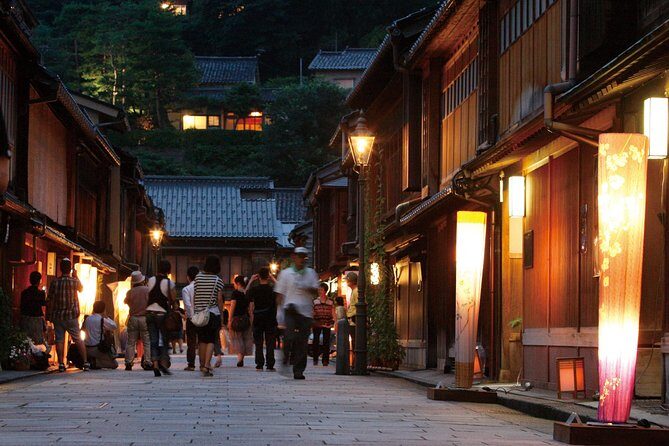
- Higashi Chaya District: tea-house lanes with a calmer nighttime feel
- Asanogawa Bridge: the river story plus illuminated bridges
- Kanazawa Castle Otebori moat: Edo-period water you can still see
- Oyama Shrine: the Go-Shinmon Gate and the Maeda connection
- Nagamachi Bukeyashiki ruins: where samurai lived, not just where they ruled
- Price and value: does $56.50 make sense?
- What to expect from the guide experience
- Practical tips so the night feels easy, not stressful
- Should you book this Kanazawa Samurai Culture Night Tour?
- FAQ
- How long is the Guided Night Tour to Feel the Samurai Culture in Kanazawa?
- Where does the tour start and end?
- Do I need to pay admission fees for the stops?
- How big is the group?
- Is hotel pickup included?
- What should I wear or bring?
- Are there bathrooms and drinks available during the route?
- Can I choose where the tour ends?
- What if the tour is canceled due to poor weather?
Key highlights at a glance
- Night photo stops that are worth slowing down for, especially Asanogawa Bridge’s illuminated views
- Owaricho and chayagai streets where the samurai-era city layout still shows through
- Tea district walking in Higashi Chaya with a calm nighttime rhythm
- Otebori moat by Kanazawa Castle where the water’s look dates to the Edo period
- Nagamachi Bukeyashiki ruins that help you picture where samurai lived day to day
Night-time samurai culture in Kanazawa: why this works
If you’ve only seen Kanazawa in daylight, you’ve missed a big part of the mood. At night, the city’s wooden lanes, canal-adjacent corners, and stone walls start to feel less like scenery and more like a place with rules, routines, and social levels. That’s exactly the angle this tour gives you: samurai culture, not as distant facts, but as something you can sense while you walk.
The real win is the guide framing. You’re not just passing by places. You’re getting the story of how power and daily life shaped the city—where economic activity clustered, where elites and warriors lived, and why certain buildings and gates matter. That turns a short, 2-hour stroll into a mental map you can carry into the rest of your trip.
And because it’s nighttime, you get a calmer feel in many areas. The tour is designed for walking and photography, with multiple short stops so you’re not stuck rushing through one big sight.
Other Kanazawa tours and samurai-district walks


The walk itself: how the 2 hours play out
This is a compact route built around six stops. The total time is about 2 hours, and the pacing is broken into shorter segments—some around 15 minutes, others around 30—so you get time to listen, look, and take pictures without feeling like your legs are filing a complaint.
You should expect:
- A guided night stroll through central Kanazawa
- Photo breaks at key illuminated spots
- Mostly outdoor viewing (plan for standing and walking, not long indoor time)
- Comfortable shoes as a must, because the course can involve dark or narrow roads
The tour ends near Korinbo, which is convenient for dinner afterward. The provider also notes you may be able to request a different ending area, including the Omicho market area or the Higashi tea house area. That flexibility is handy if you’re trying to keep your evening plan simple.
Owaricho → Kazuemachi Chayagai: stately streets with an Edo-era heartbeat
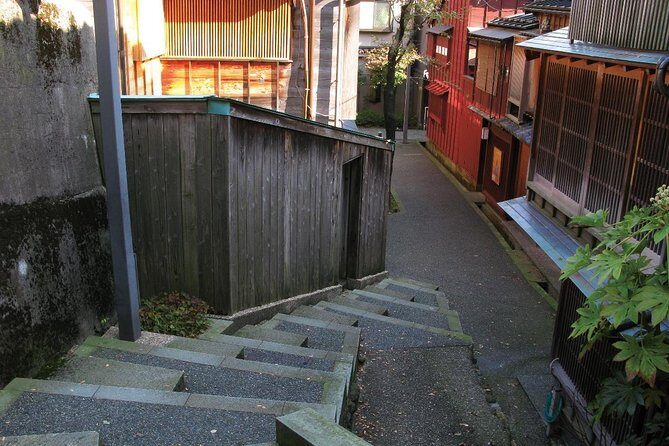
Your first major stop is Kazuemachi Chayagai, reached after a walk through Owaricho, described as the former Kanazawa economic center during the Samurai era. This is one of those moments where a city’s present-day texture is directly tied to its old job roles—trade, wealth, and the kind of neighborhoods that supported leadership nearby.
What makes this stop work at night is contrast. In daylight, you can miss the layout. At night, the lighting and quiet lanes help you notice the rhythm of the buildings and the way the street turns you into a slow observer. The route also includes a lively back alley to the chayagai area, which is where the atmosphere starts doing the heavy lifting.
Practical tip: bring your camera-ready mindset here. This is the kind of place where small details—wall edges, street angles, and building lines—end up being the best photos, not just wide shots.
Higashi Chaya District: tea-house lanes with a calmer nighttime feel
Next is Higashi Chaya District for about 15 minutes. This is the geisha and tea-house neighborhood side of Kanazawa, and the tour treats it as more than a postcard stop. It fits into the samurai story because Kanazawa’s old social world wasn’t one straight line of warriors and battle. It was a layered system, with culture, hospitality, and status operating alongside power.
At night, these districts feel different. You’re walking through lanes where the atmosphere tends to be quieter, and the guide’s explanations help you understand what you’re seeing: the role of these districts, how they related to the broader city structure, and why the “entertainment geography” matters historically.
Photo tip: in the tea-house areas, it’s often easier to get good shots by slowing down at the corners and letting the street perspective work for you. Don’t wait until you’re already at the end of a lane.
Asanogawa Bridge: the river story plus illuminated bridges
Then you hit Asanogawa Bridge (about 15 minutes). The Asano River is described as deeply tied to Kanazawa’s history and lifestyle, and the tour uses that connection to make the river feel like infrastructure, not just scenery.
The big draw here is lighting. The tour notes that four bridges in different styles on the Asano River are illuminated, creating a magical atmosphere. This is the kind of stop where you get a payoff for being patient with the walking: you suddenly have a wider sense of space, reflections, and lines that look great on camera.
What I like about this stop is that it balances emotion with context. The bridge photos are fun, but the explanation helps you understand why this water system mattered in the first place—how movement, trade, and daily routines shaped the city.
Other guided tours in Kanazawa


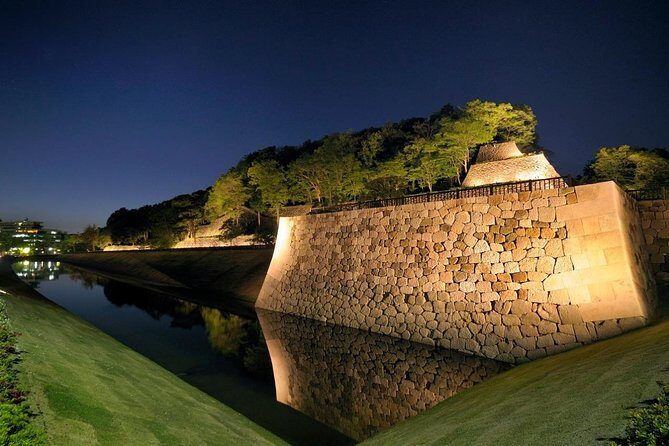
Kanazawa Castle Otebori moat: Edo-period water you can still see
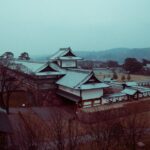
After the river moment, you move to Kanazawa Castle Otebori, again about 15 minutes. Otebori is the moat lined with stone walls surrounding Kanazawa Castle. The tour highlights a detail that’s easy to overlook: the water has not been drained even in modern times, so its appearance hasn’t changed since the Edo Period.
That single fact changes how you look at the scene. A moat isn’t just defensive theater. It’s a living part of how a castle complex has persisted through time. The stone walls plus the water line give you a sense of permanence, and at night the edges and reflections make it feel even more weighty.
One practical note: moats and stone areas can be slippery or uneven depending on weather. If you’re visiting in colder months, wear shoes with solid traction and keep your pace steady.
Oyama Shrine: the Go-Shinmon Gate and the Maeda connection
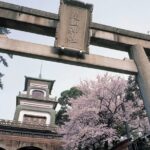
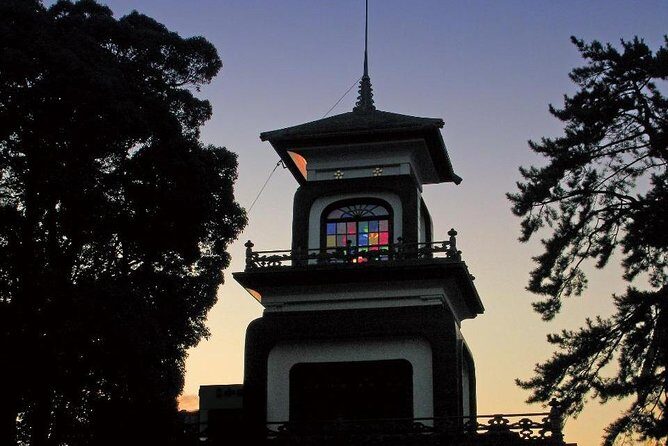
Stop five is Oyama Shrine, about 15 minutes. The tour calls out a specific feature: a peculiar Go-Shinmon Gate, dedicated to Toshiie Maeda, the founder of the Kaga Domain.
This stop is a good reminder that samurai culture in Kanazawa isn’t only about homes and districts. It’s also about religious and civic recognition—who was honored, how authority was memorialized, and how gate design can carry meaning. A “peculiar” gate detail matters because gate architecture often signals status and symbolism in Japanese shrine design.
If you’re the type who likes learning the story behind a structure you would normally walk past, this is the stop for you. It’s short, but focused.
Nagamachi Bukeyashiki ruins: where samurai lived, not just where they ruled
Your final stop is the Ruins of Nagamachi Bukeyashiki for about 30 minutes. This is where old samurai residences remain, and the tour points out something important: some citizens still live there. That continuity is a big part of why this stop feels real.
You’ll walk through old-street elegance—stone pavements and earthen walls are specifically mentioned—and the goal is to let you picture daily life in a samurai neighborhood. This is different from seeing a museum piece. It’s about atmosphere and spatial design: how streets, walls, and residential boundaries shaped social behavior and security.
This is also where you’ll understand why Kanazawa can feel distinct from other big Japanese historic cities. The city reads as practical and lived-in rather than staged. You get a clearer sense of how “samurai culture” was woven into the everyday physical layout.
Price and value: does $56.50 make sense?
At $56.50 per person for about 2 hours, the value depends on what you want from the evening.
Here’s what you’re paying for:
- A live guide to explain the why behind what you see (not just the what)
- A route designed for nighttime walking and photography
- A small group (max 6 travelers), which is a real quality-of-life factor
- Several free-to-view stops, since the listed admissions are free on the schedule
If you’re visiting Kanazawa for the first time, this kind of guided night session can save you time. Instead of sorting your own route in the dark, you get a coherent path that links samurai-era neighborhoods with later cultural districts. That’s especially valuable if your days are packed and you don’t want to spend your first evening troubleshooting directions.
If you already know the history and prefer solo wandering, you might not need a guide. But if you want the story tied to the streets, this price is easier to justify.
What to expect from the guide experience
The overall tone from past groups is that the guides make the city feel friendly and understandable. Names that show up in feedback include Hiromi-San, Miki-San, Masayo, Nozomi, and Ohhara, plus Ms Shirai. People praised them for answering questions, explaining details clearly, and making the walk feel like it has momentum.
Even if your guide’s style is different, the structure is built for interaction: short stops, photo moments, and space to ask questions without holding up a long line of people.
Also, the provider mentions the guide will make suggestions for special light-ups on weekends or during the season. That’s not guaranteed to be every night, but it’s a nice way to get something extra when it’s available.
Practical tips so the night feels easy, not stressful
A night tour is only “fun” if logistics don’t steal the joy. Here’s how to set yourself up.
Wear: comfortable shoes. The tour explicitly asks for that, and for good reason. The roads can be dark or narrow.
Bring: warm layers in winter. The info notes temperatures may get low at night during winter, so plan for cold instead of hoping the city lights will warm you up.
Use bathrooms early. The course has bathrooms, and the tour says they’ll be indicated during the walk. There are also automatic vending machines, but it’s still smart to drink before you start.
Expect a smooth start. The meeting point is clearly given at Mister Donut Kanazawa Musashi Shop (Japan, 920-0907 Ishikawa, Kanazawa, Aokusamachi, 88番地 1F). It’s a landmark you can find fast.
No hotel pickup. You’ll make your own way to the start, and that’s normal for a walking route.
Mobile ticket: yes. You’ll use a mobile ticket, which makes last-minute day-of changes less annoying.
Should you book this Kanazawa Samurai Culture Night Tour?
Book it if:
- You want a first-night orientation to Kanazawa that makes samurai culture feel tangible
- You like walking routes with built-in photo stops and short explanations
- You prefer a small group setup (max 6 travelers) rather than a large tour crush
- You’re visiting in a season when light-ups might be running, since your guide can suggest what’s on
Skip it (or consider another plan) if:
- You don’t want nighttime walking at all, especially in winter
- You need hotel pickup or you dislike moving between multiple sites in one outing
- You’re mainly looking for large, open indoor exhibits, since the tour focuses on seeing the city and districts at night
My take: for most first-timers, this is a smart way to get value out of a short evening. You leave with a clearer mental map of where samurai power lived, where culture flourished, and why Kanazawa feels like its own world after dark.
FAQ
How long is the Guided Night Tour to Feel the Samurai Culture in Kanazawa?
The tour is about 2 hours.
Where does the tour start and end?
It starts at Mister Donut Kanazawa Musashi Shop (Aokusamachi) and ends in the Korinbo area.
Do I need to pay admission fees for the stops?
The listed stops show admission ticket free for the activities on the schedule, and the tour includes the guided tour fee.
How big is the group?
The tour is limited to a maximum of 6 travelers.
Is hotel pickup included?
No. Hotel pickup is not available.
What should I wear or bring?
Wear comfortable shoes. In winter, it can get cold at night, so bring enough warm layers. The tour also notes bathrooms are available along the course, but it’s smart to use them before the tour begins.
Are there bathrooms and drinks available during the route?
Yes. There are several bathrooms on the course, and automatic vending machines are available. The bathrooms will be indicated during the tour.
Can I choose where the tour ends?
The end is not only around Korinbo. You can request another area such as the Omicho market area or the Higashi tea house area.
What if the tour is canceled due to poor weather?
If the experience is canceled due to poor weather, you’ll be offered a different date or a full refund.