Seki turns steel into skill. This hands-on knife-making day in Seki, Gifu combines a classic craft workshop with museum time, so you understand what you’re doing, not just watch it. I especially like the hands-on Damascus kitchen knife process and the small-group feel with instructors who guide every step. The main drawback is the price: at $316.27 per person, it only feels like a smart buy if you genuinely want a personalized knife you’ll use at home.
Your day runs with a clear flow and lots of attention from the crew, including guides such as Sumio, Yoshi, and Hiro (and you may also meet Sumi). In the shop, the instruction stays practical and friendly, and there’s room for humor while you’re working carefully with the tools.
In This Review
- Why Seki Is the Right Place for a Damascus Knife Day
- Key Things You’ll Notice Right Away
- Stop 1: Knife Museum in Seki (2 hours of blades, not boredom)
- Stop 2: Seki Swordsmith Museum (Samurai swords and the local craft story)
- Stop 3: Gifu Cutlery Hall (short visit, big production scale)
- Stop 4: Seki Zenko-ji Temple (bell sounds and classic surroundings)
- The Main Event: Making Your Damascus Kitchen Knife (polish, sharpen, engrave, assemble)
- 1) Polishing and sharpening: the craft you can feel
- 2) Engraving: making it yours
- 3) Assembly and final checks
- 4) The sharpness test on fresh vegetables
- Lunch, Certificate, and the Mini Knife Souvenir Bonus
- Price and Value: Is $316.27 Reasonable for This Day?
- Who Should Book This Knife-Making Day?
- Should You Book This Seki Damascus Knife Workshop?
- FAQ
- How long is the knife making experience in Seki?
- Where is the meeting point?
- Is this a private tour?
- What is included in the day?
- Is a pickup offered?
- What is the cancellation policy?
Why Seki Is the Right Place for a Damascus Knife Day
Seki City in Gifu Prefecture is one of Japan’s most important places for blades and cutlery. The local knife scene traces back to sword-making activity as early as the 13th century, and you can feel that continuity in how the museums explain the trade and how the workshop teaches craftsmanship as a process.
What I like about the setup is that it starts with context. You don’t jump straight into grinding metal with no background. Instead, you get a quick tour of the kinds of knives and sword culture tied to the region, then you apply those ideas to your own blade.
This is also a place where “knife” means more than one thing. In the museums and showrooms, you’ll see rare blades, you’ll learn about Samurai sword history, and you’ll also get a look at how Seki’s cutlery world connects to modern production.
Key Things You’ll Notice Right Away
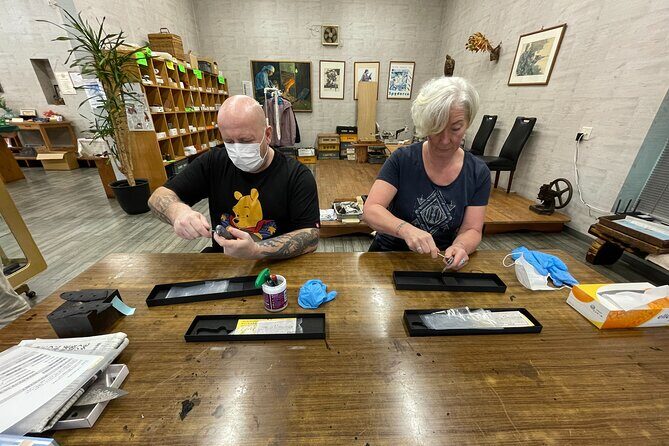
- A personalized Damascus kitchen knife, with hands-on work in polishing, sharpening, engraving, and assembly
- A real sharpness test on fresh vegetables after the blade is finished
- Small-group, private tour attention, guided by instructors like Sumio, Yoshi, and Hiro
- Museum stops that explain why Seki matters, from sword history to modern cutlery production
- Lunch and certification included, plus a limited mini knife souvenir bonus
- A practical day-trip schedule, starting at 10:30 and running about 5 hours
If you're still narrowing it down, here are other tours in Gifu Prefecture we've reviewed.

Stop 1: Knife Museum in Seki (2 hours of blades, not boredom)
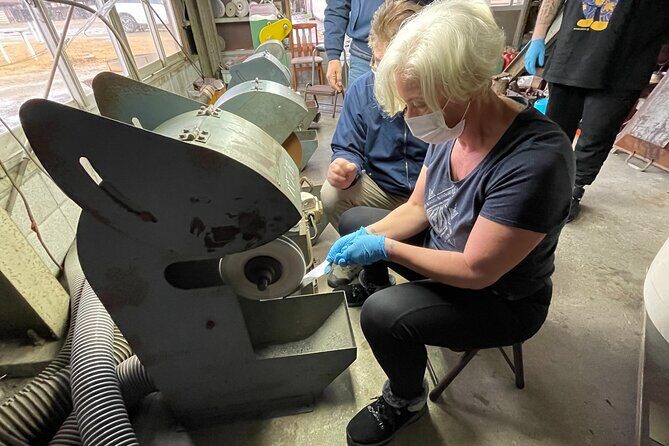
The Knife Museum is your warm-up, and it’s the kind of place that helps your brain understand the difference between a knife as an object and a knife as a tool. You’ll see several kinds of rare and unique knives, including examples from around the world.
This matters because your workshop is building a Damascus-style kitchen knife. Before you start polishing or sharpening, you’ll be able to picture what good craftsmanship looks like. Even if you’re not a knife nerd, it helps you notice details you’d otherwise miss.
What to expect
- A focused museum visit designed to set context for the craft you’ll do next
- A lot of visual variety, including distinctive blade styles
Possible drawback
- If you prefer outdoors walking and scenic stops over indoor looking, the museum time can feel a bit “watch and read.” It’s still worth it for the way it makes your later work click.
Stop 2: Seki Swordsmith Museum (Samurai swords and the local craft story)
Next you move into sword history with a visit to the Seki Swordsmith Museum. This stop is all about Samurai and Japanese sword context, and it helps explain why Seki became a major sword-making center.
A good museum visit doesn’t just tell stories. It gives you a mental map for what you’re seeing when you handle steel later. For this day, the goal is simple: you finish the museum time with a clearer picture of where the bladesmith tradition came from and why knife-making skills have to be taught and practiced carefully.
What to expect
- Learning about Samurai and Japanese sword history
- Another admission-included museum stop to keep the day flowing
Tip for your attention
If you’re the type who takes notes, jot down the words the guide uses for materials and processes. Later in the workshop, those terms help you follow the instructions without guessing.
Stop 3: Gifu Cutlery Hall (short visit, big production scale)
Gifu Cutlery Hall gives you the modern angle. Seki City is one of the three main cutlery-producing regions in the world, and it’s described as having the highest cutlery production volume in Japan. You’ll see how the craft heritage connects to actual output.
This stop is shorter, about 30 minutes, and it’s free, so you don’t have to worry that it’s padding. It’s a useful contrast after the two sword/history focused stops. Where the sword museums slow you down with stories, this stop speeds up your understanding with practical context: Seki’s knife tradition isn’t stuck in the past.
What to expect
- A quick look at the cutlery production side of Seki’s identity
- A free, low-pressure break in the middle of the day
Possible drawback
- Because it’s only 30 minutes, don’t expect deep hands-on demos here. This is context before the main workshop time.
Stop 4: Seki Zenko-ji Temple (bell sounds and classic surroundings)
After the craft-heavy portion of the day, you get a calmer cultural stop: Seki Zenko-ji Temple. The foundation is dated to the mid-eighteenth century, and the site is known for features like the Great Bell and the Tour of the Kaidan.
You can also try ringing the bell, which is one of those small moments that makes the visit feel personal instead of purely sightseeing.
Why this stop feels smart
It balances the metallic focus of the knife workshop with something sensory and social. Your ears and eyes get a break, and it also helps you regroup before the final part of the day.
Possible drawback
- If you have limited time or weather is bad, this stop may feel like extra walking. Still, the temple visit is timed so you can keep the whole day together without rushing.

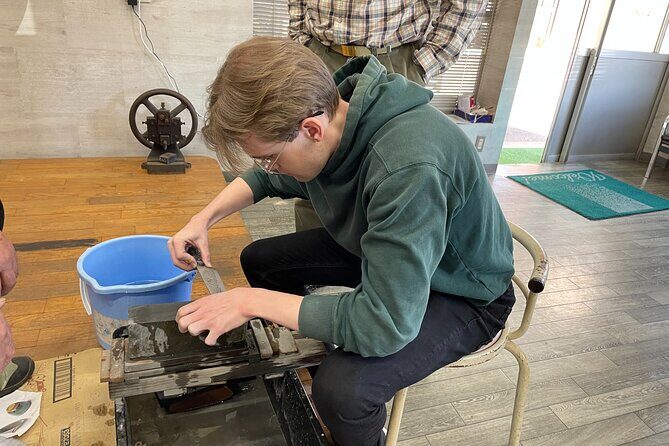
The Main Event: Making Your Damascus Kitchen Knife (polish, sharpen, engrave, assemble)
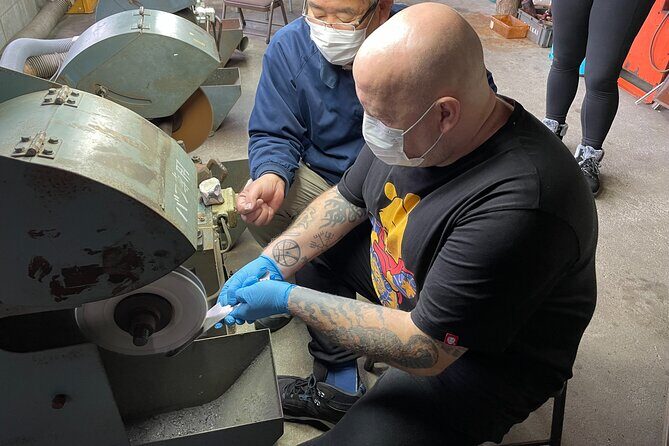
Now for the part you actually paid for: the Damascus-style kitchen knife experience.
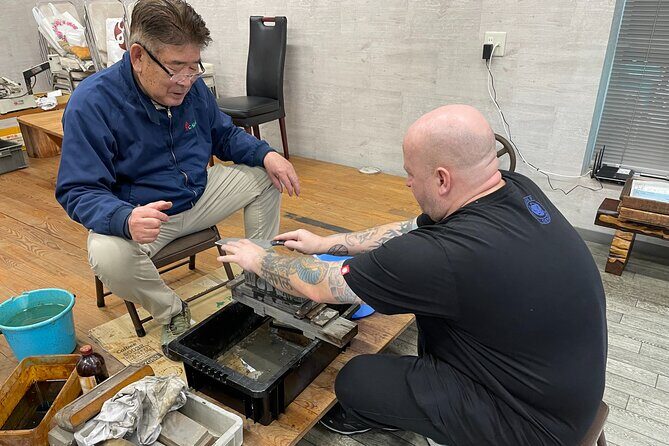
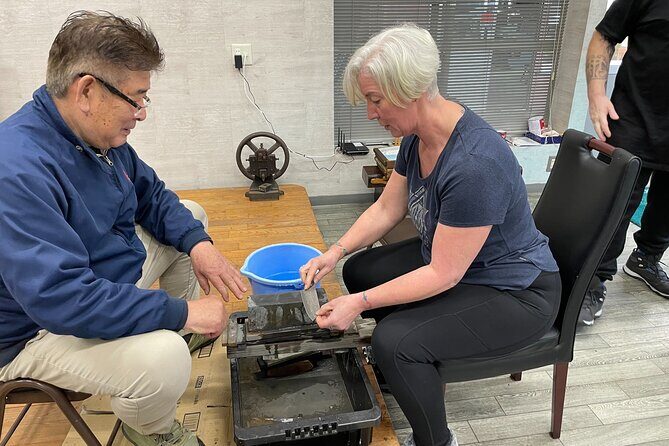
You’ll be guided by a master bladesmith with over 50 years of experience, and the workflow is designed so you’re not just doing one single step. You’ll sharpen, polish, and engrave your blade, then you’ll handle assembly. This is the difference between a craft demo and a real making experience.
1) Polishing and sharpening: the craft you can feel
Polishing is where you start to see progress quickly. It’s also where your care matters. The guide’s job is to show you how to move steadily and work with the tool rather than against it.
Sharpening teaches you the practical side of knife performance. When the instruction is clear, it stops being scary and becomes methodical. And because you’ll test sharpness later, you’ll understand what “sharp enough” actually means.
2) Engraving: making it yours
Engraving is often the part people remember most, because it’s the personal mark. You’re not just learning how steel is shaped; you’re also leaving your signature on the blade, which is what turns a workshop into a keepsake.
3) Assembly and final checks
Once the pieces come together, the assembly step helps you see the knife as a tool, not just a blade. You’ll get guidance so the final product feels intentional and usable.
4) The sharpness test on fresh vegetables
The sharpness test is one of the best ways to make the day click. A test on vegetables gives immediate feedback, and it turns craftsmanship into something you can understand right away at home when you cook.
Small-group advantage
In this kind of workshop, instruction quality matters. The day is structured for privacy, so you’re more likely to get timely help when you need it. Guides such as Sumio, Yoshi, and Hiro are known for clear teaching and a good vibe, which makes slower, careful work feel less stressful.
Possible drawback to consider
This is a working workshop, not a sit-and-watch show. If you’re sensitive to standing for stretches of time or you hate repetitive precision tasks, you might find it more demanding than you expected. Still, the guided steps are built to keep you moving forward.
Lunch, Certificate, and the Mini Knife Souvenir Bonus
After the main craft time, you’ll enjoy a delicious Japanese lunch. Having food included helps the day feel complete, and it also keeps your energy steady so you’re not trying to hunt for meals between stops.
You’ll also get a signed certificate of completion. That’s a nice touch for two reasons: it acknowledges the effort, and it makes the knife-making experience feel official, not like a quick activity you squeezed into a travel day.
There’s also a handcrafted mini knife souvenir, but it’s limited availability. This matters for value. If you’re hoping to get the bonus, arrive with flexibility and don’t treat it like a guarantee.
Price and Value: Is $316.27 Reasonable for This Day?
At $316.27 per person, this isn’t a cheap activity. But in return, you’re paying for a full package that includes: a guided Damascus kitchen knife-making process (including sharpening, polishing, engraving, and assembly), a vegetable sharpness test, museums with admission included on key stops, Japanese lunch, and keepsakes like the certificate and a potential mini souvenir.
What makes it feel like better value than many “tour + demo” options is that you’re building something you can use. If you care about cooking tools, the finished knife can justify the cost more than a generic souvenir.
That said, if you’re only mildly interested in knives or you mainly want scenic sightseeing, you might feel the price is steep. In that case, Seki has other cultural sights you could enjoy without the custom-work investment.
Who Should Book This Knife-Making Day?
This tour fits best if you want any of these:
- A hands-on cultural craft you can take home as a usable item
- A small-group experience where your questions get answered on the spot
- Knife curiosity that goes beyond shopping—polishing, sharpening, engraving, and assembly are all part of the day
It’s also a good match for:
- People traveling from Kyoto since it’s a day trip, roughly 1.5–2 hours by train, and the meeting point is near public transportation
- Anyone who likes mixing museums with practical making time
You might skip it if:
- You hate precision work or you prefer relaxed sightseeing only
- You don’t plan to cook at home (a Damascus kitchen knife is only valuable if you’ll actually use it)
Should You Book This Seki Damascus Knife Workshop?
Yes, I’d book it if your dream day in Japan includes learning a craft you can physically understand and then bringing home the result. The blend of museums (Knife Museum, Seki Swordsmith Museum) plus the actual workshop steps plus lunch makes it feel like a complete, coherent experience.
I’d think twice if the idea of polishing and sharpening feels stressful to you. It’s guided, but it’s still hands-on making. And at $316.27, it’s worth booking only when you’ll genuinely use the knife and enjoy the process.
FAQ
How long is the knife making experience in Seki?
The experience runs for about 5 hours.
Where is the meeting point?
You meet at Sekitomioka Station, Hidase, Seki, Gifu 501-3911, Japan.
Is this a private tour?
Yes. It’s a private tour/activity, so only your group participates.
What is included in the day?
You get guided knife making with hands-on polishing, sharpening, engraving, and assembly, a sharpness test on fresh vegetables, a Japanese lunch, and a signed certificate. Admission is included for the Knife Museum and Seki Swordsmith Museum, while Gifu Cutlery Hall and Seki Zenko-ji Temple are free.
Is a pickup offered?
Pickup is offered.
What is the cancellation policy?
Free cancellation is available up to 24 hours in advance for a full refund.