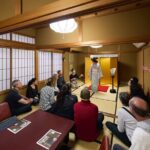
One hour can feel like a reset button. This Kanazawa calligraphy trial lesson is taught like a real practice session in a historic home, not a staged tourist show. You’ll get hands-on brush time and a chance to make something personal, even if your Japanese is limited to a few favorites from the menu.
I especially like that you create a finished piece you can take home, usually on a hanging scroll or folding fan. The drawback to consider: calligraphy tools and ink can include animal-derived materials, so it’s not suitable for vegans.
In This Review
- Key things to know before you write your first stroke
- A 100-year house lesson that feels like quiet practice
- Finding Culture Lab Nomachi in Kanazawa (and walking in fast)
- Tools, ink, and those first controlled strokes
- Kanji, Hiragana, Katakana: why the choice of script changes the feel
- Picking your own word: where the workshop becomes yours
- Writing on a hanging scroll or folding fan
- The meditative part: why calligraphy works as a one-hour reset
- How English-friendly teaching keeps you from getting lost
- Pricing at $44: what you really get for your money
- Who should book this calligraphy workshop
- A few practical considerations before you show up
- Should you book mindful calligraphy near Kanazawa’s ninja-temple area?
Key things to know before you write your first stroke
- A real classroom feel: tool talk, guided strokes, then your turn.
- Choose your own word: pick what you like and shape it your way.
- A historic 100-year house setting: quieter, more grounded than a commercial studio.
- English-friendly guidance: the instructor supports you in English alongside Japanese.
- Take-home artwork: your work goes directly onto a hanging scroll or folding fan.
A 100-year house lesson that feels like quiet practice
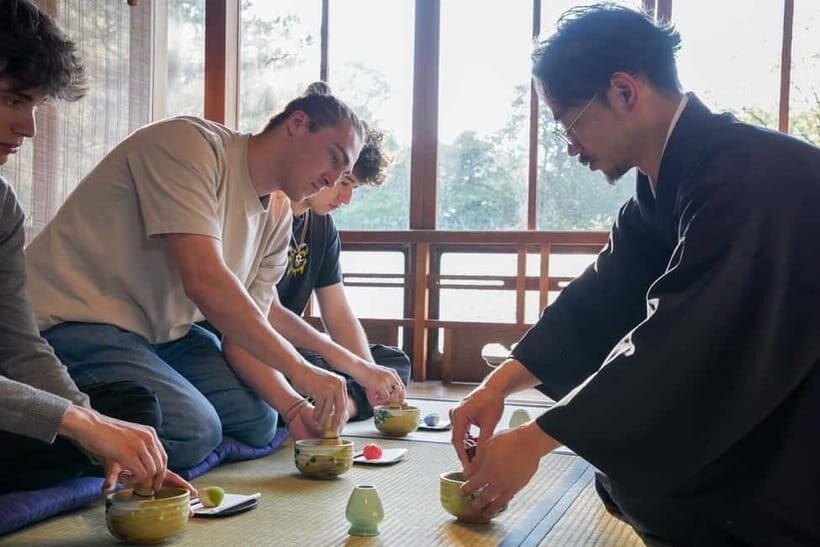
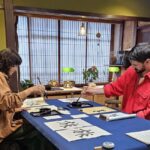
The address is simple, but the vibe is not. Culture Lab Nomachi sits in a traditional, 100-year-old house, and you can feel the change in pace as soon as you step inside. In a city full of sights, this is the kind of activity that slows you down on purpose.
What makes this experience interesting is how ordinary calligraphy is treated. You’re not watching a performance. You’re learning how to hold a brush, how to use ink, and how to control the line. That focus on technique turns calligraphy from a nice souvenir into a skill you understand at least a little by the end of the hour.
And yes, you’ll still go home with something pretty. But the better win is that calm, focused hour where you stop multitasking and your hands start doing the thinking.
Other ninja experiences in Kanazawa
Finding Culture Lab Nomachi in Kanazawa (and walking in fast)
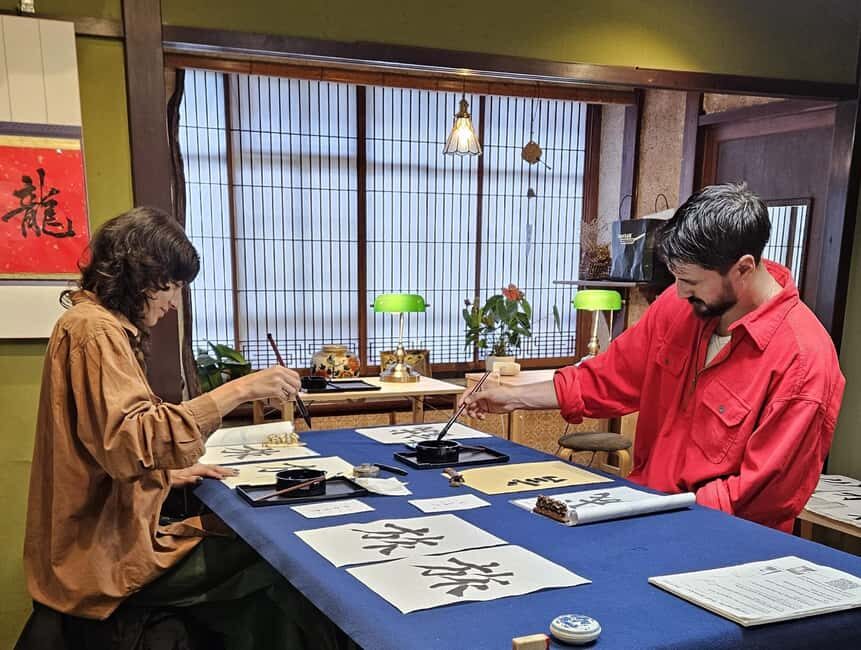
The meeting point is listed clearly at 1-1-26 Nomachi, Kanazawa, Ishikawa 921-8031. The helpful detail here is that calligraphy works are visible from outside the building, so you’re not playing a long guessing game at the street level.
A bus stop served by the Kanazawa Loop Bus is nearby, which is handy if you’re bouncing between sights. In practice, I like arriving a few minutes early so you can settle in before ink and brushes show up.
If you’re already sightseeing around Kanazawa’s famous “ninja-temple” area, this class works well as a reset between busy stops. It’s also a good way to break up a day that’s heavy on temples, gardens, and photos.
Tools, ink, and those first controlled strokes
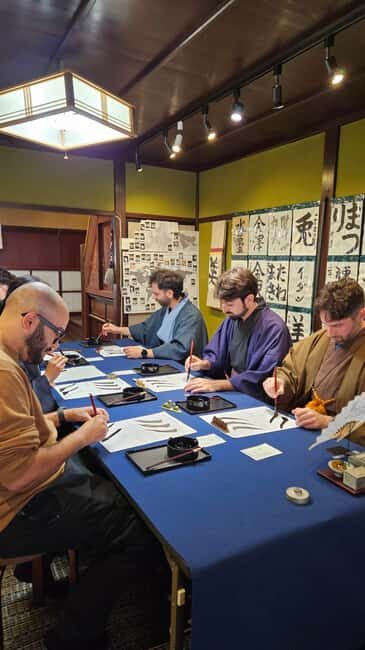
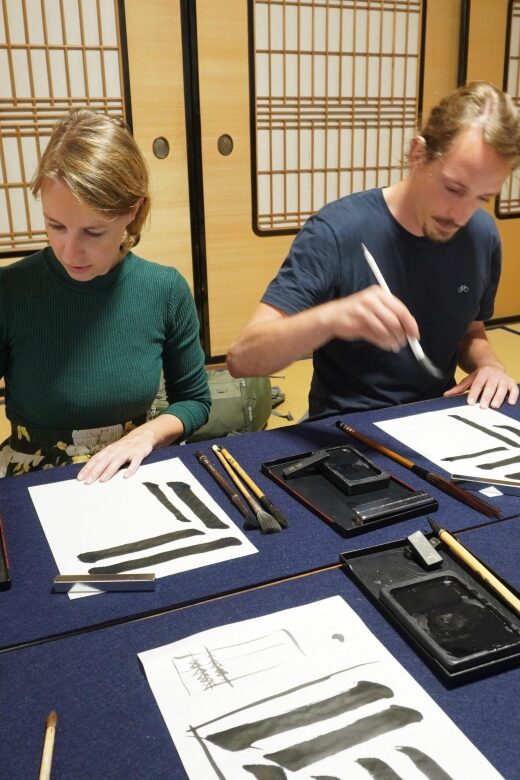
You start with the fundamentals. The lesson includes an explanation of calligraphy tools like brushes and ink, plus guidance on how to use them. Then you practice basic strokes with guide sheets. This matters because calligraphy isn’t just about writing a character correctly. It’s also about controlling pressure, speed, and direction so the line looks intentional instead of shaky.
You should go in expecting that your first attempts won’t look like a master’s work. That’s part of the learning. The good news is that the class is structured to get you moving quickly from explanation to practice, so you don’t spend the whole hour watching.
One practical heads-up: calligraphy tools such as brushes and ink can contain animal-derived materials. If that’s a concern for your personal ethics or diet, this is the one point you shouldn’t ignore. The class is also listed as not suitable for vegans.
Kanji, Hiragana, Katakana: why the choice of script changes the feel
Japanese writing comes in three script types: Kanji, Hiragana, and Katakana. In the lesson, you’ll learn how the scripts differ and why Japanese calligraphy treats them as more than just fonts.
Here’s the useful way to think about it:
- Kanji are ideographic characters, more like visual symbols with deep meaning. Each stroke helps “build” the idea.
- Hiragana and Katakana are phonetic scripts, shaped more like flowing forms derived from Chinese characters.
When you’re choosing your word, keep this in mind. A Kanji character can feel more “architectural,” built from structure and balance. Hiragana and Katakana can feel more “rhythmic,” where the shape of the stroke carries a different kind of movement.
Even if you don’t know the scripts well, the instructor’s guidance in English and Japanese helps you make a choice you can write with confidence by the time the practice moves to your final piece.
Picking your own word: where the workshop becomes yours
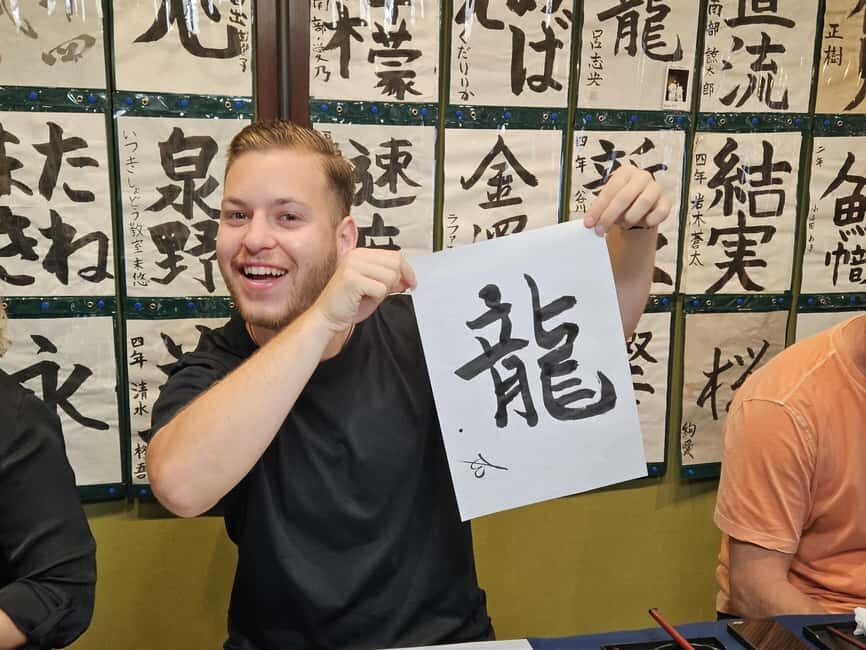
This is the moment that turns an art class into a memory. After practicing basic strokes, you choose a word you like and make a unique calligraphy artwork from it.
That choice matters more than you might think. When people leave with something they picked themselves, they’re more likely to remember how they made it. You’re also more likely to notice the details you’d otherwise skip, like how the brush tip behaves or how ink saturation affects line thickness.
In the studio, instruction is supportive and encouraging. Names you may hear include Naomi (an instructor mentioned often) and Daiki (also noted for patient English communication). Some classes also include additional guidance from a master calligrapher connected to the teaching team, which adds context and technique without making the lesson feel intimidating.
One tip for your own experience: choose a word you actually want to live with on a wall or shelf. A calligraphy piece is personal. Pick something that feels like you, not just something that looks impressive in the sample book.
Other Kanazawa tours and samurai-district walks




Writing on a hanging scroll or folding fan
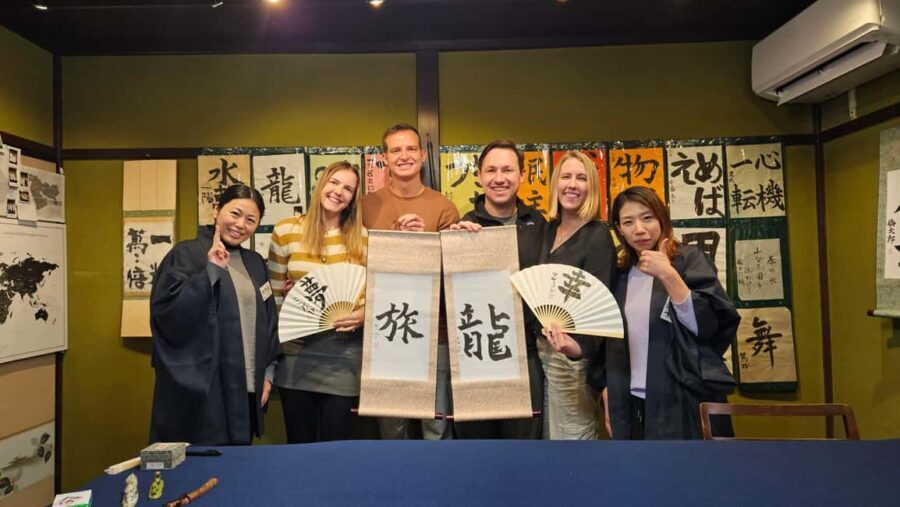
Your final artwork is created directly on a hanging scroll or folding fan, and it becomes your souvenir to take home. This is a big value point. Many “crafty” activities give you a worksheet or a loose craft item. Here, your work becomes a finished format, ready to display.
Because the final piece is made on the real medium, you’ll pay attention in a different way during the last steps of the class. You’re not just practicing anymore. You’re creating something you’ll keep.
If you’re thinking about what to do with it later, consider simple framing or display at home. Even without fancy presentation, a take-home scroll or folding fan makes the lesson feel complete. It’s also a great “one activity that isn’t another photo” kind of souvenir.
The meditative part: why calligraphy works as a one-hour reset
Calligraphy is often described as mindful, but in this class you feel it because the structure forces quiet attention. You’re learning technique, yes. But the practical side is that calligraphy takes focus: you can’t rush the line, and you can’t multitask while your brush decides where the ink goes.
People tend to leave saying it’s calming for a reason. The lesson timing is short enough to feel manageable, but long enough to give you repeat practice. That repeat loop is where the mental quiet happens.
Also, the class is described as a real practice session in a classroom setting, which typically means less performance pressure and more “try, correct, try again.” That’s ideal if you’re rusty at drawing or you worry you’ll be bad at artsy things.
How English-friendly teaching keeps you from getting lost
This lesson is listed with instruction in English and Japanese, and the teaching style seems built for mixed skill levels. You’ll get help with tool use, stroke practice, and putting your chosen word onto the final piece.
What I like about this kind of language support is that it doesn’t shrink the experience. You’re still learning the cultural and aesthetic ideas behind the writing system, but you’re not forced to decode everything on your own.
The small group format also helps. The experience is offered as a private group, and some people have noted extra attention when the group is small. That doesn’t mean you’ll always have the same level of 1:1 time, but it does mean the instructor can pace the lesson to your learning needs instead of rushing everyone as a big class would.
Pricing at $44: what you really get for your money
At $44 per person for a 1-hour session, the price can look simple on paper. The value comes from the combination:
- You get guided tool instruction and stroke practice.
- You choose your own word and learn how to put it into a finished form.
- You take home the artwork created on a hanging scroll or folding fan.
If you’ve ever paid for “experience classes” that mostly produce a cheap keepsake, this is different. The take-home piece feels like the main event, and the time is used for actual technique rather than just watching someone else work.
Also, you’re paying for a real setting: a traditional house, not a generic storefront. That atmosphere isn’t free, and it changes how the class feels.
Who should book this calligraphy workshop
You’ll likely enjoy this if you want:
- A break from sightseeing that’s hands-on and calming.
- A Japanese cultural activity that teaches basics instead of staging a photo moment.
- A souvenir you can display, not just carry in a bag.
It also makes sense for couples or small friend groups since it’s offered as a private group. Families can do it too, but it’s listed as not suitable for children under 5, and on Thursdays and Saturdays after 3:00 PM you may see local children in the studio because another calligraphy school is in session.
If you’re traveling solo and want a structured activity, this works well because the instructor can guide you step by step even if your Japanese is minimal.
A few practical considerations before you show up
Two things to plan around:
- Materials: the tools and ink traditionally contain animal-derived materials, and the class is not suitable for vegans.
- Time of day: after 3 PM on Thursday and Saturday, the studio may have local children watching or participating due to the local school schedule.
For everything else, it’s straightforward. You’re in a calm room, you practice, you create your piece, and you leave with it. That predictability is a big part of why it works as a mid-day activity when energy is running low.
Should you book mindful calligraphy near Kanazawa’s ninja-temple area?
I’d book it if you want a real, low-pressure art lesson that ends with a usable keepsake and a calmer brain for the rest of your trip. The combination of English-friendly guidance, a 100-year-old house setting, and take-home work on a hanging scroll or folding fan is strong value for a one-hour block.
Skip it if vegan considerations are a dealbreaker for you, or if you’re looking for something more like a show than a practice session. This class rewards participation, not spectating.
If you’re already in Kanazawa, this is exactly the kind of experience that makes the city feel human-sized. One hour. One word. One brush line at a time.