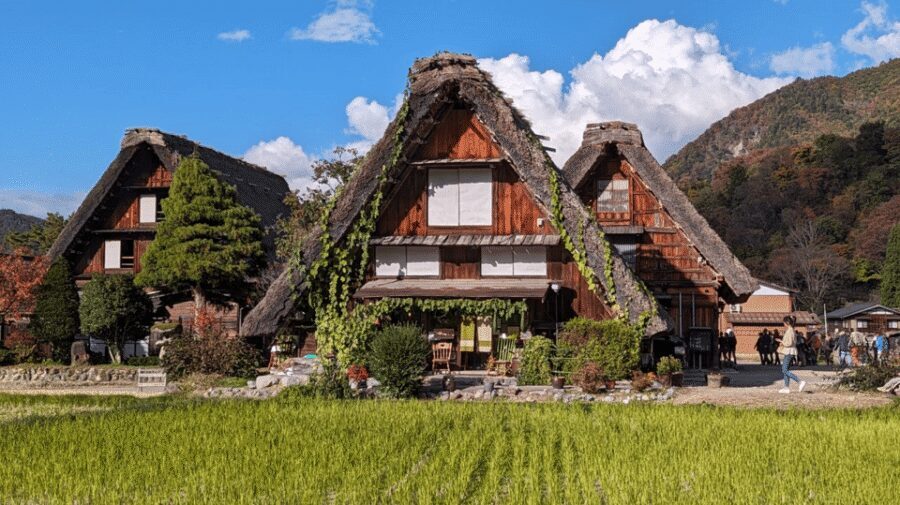
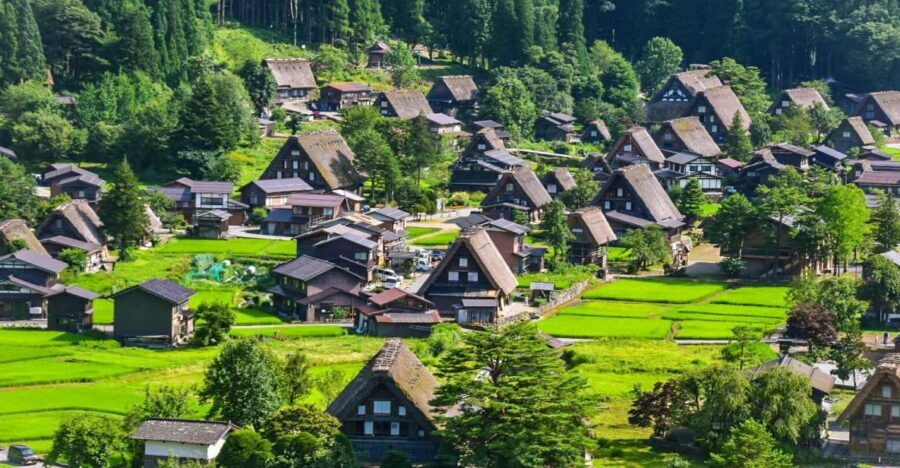
Fukui’s coastline is the main character here. You get dramatic cliffs, rock formations, a sacred island feel, and then a step back in time at Mikuni Port. It’s a smart mix of nature and history, without turning the day into a checklist blur.
Two things I especially like: the way the route links coastal viewpoints with spiritual sites (Oshima’s shrine area) and the chance to see Mikuni Port through a former wealthy merchant’s house visit. If you want a day off the crowded main circuits, this hits.
One possible drawback: it’s about 9 hours, so you’ll be on your feet and walking between stops. Also, cliff views depend on weather, so keep expectations flexible if clouds roll in.
In This Review
- Key highlights you’ll care about
- From Kanazawa to Fukui’s sea edge: how this day fits together
- Echizen Matsushima: a quick start with coastal mood
- Oshima Island via the bridge: sacred, quiet, and a little eerie—in a good way
- Tojinbo cliffs at lunch time: the coast at full volume
- Mikuni Port breakwater: history you can actually step into
- National Heritage temples and shrines: the quiet details
- Awara Onsen Ashiyu: warm feet after the sea air
- Price and value: is $211.75 worth a coast day?
- Who this tour suits best (and who should rethink it)
- Should you book this Kanazawa to Fukui cliff, island, and port day?
- FAQ
- How long is the tour?
- How much does it cost?
- What is the meeting point in Kanazawa?
- What time does the tour start?
- How many people are in the group?
- Is it a mobile ticket?
- Which stops have free admission?
- Is admission included for the onsen stop?
- Is there time for lunch?
- Can I cancel for free?
Key highlights you’ll care about
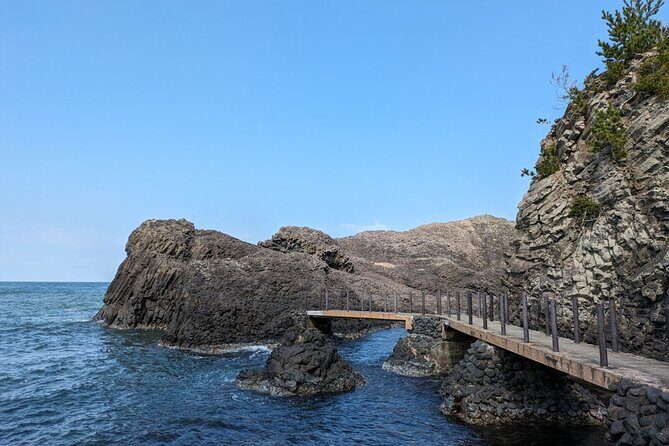
- Tojinbo cliffs and coastal rock formations: big Sea of Japan scenery in a short, guided day.
- Oshima Island by bridge: a calmer, more secluded mood with mangrove-like trees and an old shrine.
- Mikuni Port breakwater history: you’ll step into a former merchant home, not just look at buildings from outside.
- Blue-stone temple gates and a garden: small details that make the port feel thoughtfully curated.
- Awara Onsen Ashiyu foot bath: built-in recovery for tired feet after the coast walking.
- Small group size (max 20): easier questions, slower pacing when the view is worth it.
From Kanazawa to Fukui’s sea edge: how this day fits together
This tour is designed for one clear goal: you come from Kanazawa, then spend your day pressed up against the Sea of Japan. Instead of hopping between far-flung sights, it keeps everything in a tight geographic story—coastline first, then port history, then a simple onsen finish.
The day starts at Kanazawa Station at 8:45 am. Your meeting point is outside the Shinkansen ticket gate, in front of the information center sign. That’s helpful because it’s an obvious landmark, and you’re not hunting for a tiny curb-side sign after a long train ride.
Group size is capped at 20 people, which matters more than you’d think. On busy tours, you get pushed along and you never get to linger. Here, you can actually slow down when the cliffs pull you in.
The tour also uses a mobile ticket, which is one less thing to worry about the morning of. Just make sure your phone battery is healthy.
Other Kanazawa tours and samurai-district walks

Echizen Matsushima: a quick start with coastal mood
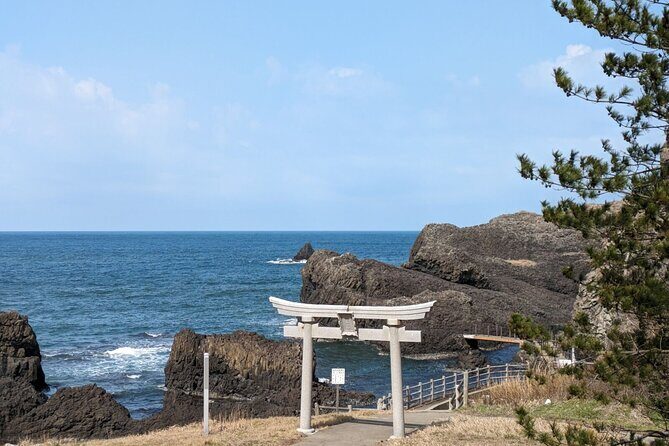
Stop one is Echizen Matsushima, with free admission and about 1 hour 15 minutes. The time here is short on purpose. Think of it as your warm-up: get oriented to the coast, get the sea air in your lungs, then you’ll be ready for the bigger cliff-and-island parts later.
What I like about a first stop like this is pacing. You’re not committing to a long hike right away. You’re getting your bearings and learning what to look for as you go—rock shapes, coastline angles, and the way the shoreline changes direction.
If you’re someone who hates rushing, keep this in mind: this tour moves, but it doesn’t throw everything at you immediately. The rhythm helps.
Oshima Island via the bridge: sacred, quiet, and a little eerie—in a good way
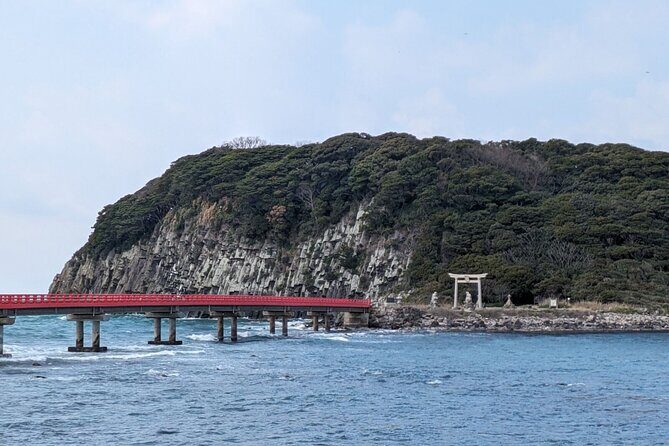
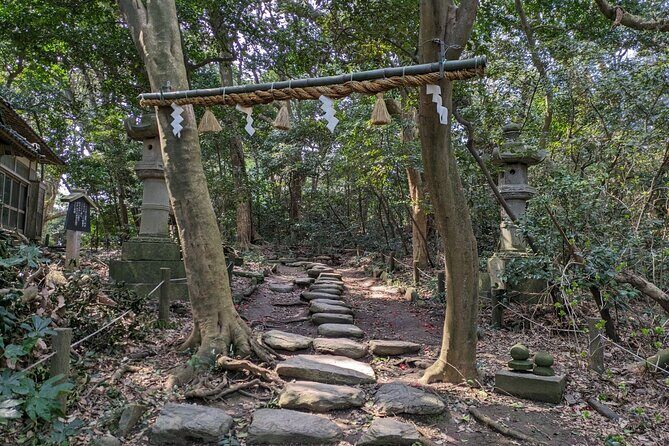
Next comes Oshima Island, reached by crossing a bridge. This part is where the tour earns its “spiritual island” reputation.
You’ll see:
- a mysterious island atmosphere
- mangrove-like trees
- a shrine that’s stood for hundreds of years
That combination creates a very specific mood. It’s not a theme park island. It feels like a place that has been there longer than people’s schedules. And because the island is described as uninhabited, you’re likely to feel more separation from the normal flow of sightseeing.
This is also a spot where your guide can change how you experience it. One recent group had a guide named Mike, and he was praised for going out of his way to make the day feel right. A good guide matters here because you’re walking in a place where the details are the point, not big signage.
One practical note: island crossings and any walking can feel longer when the ground is uneven. Bring shoes you’d wear for a real walk, not just train-station strolling.
Tojinbo cliffs at lunch time: the coast at full volume
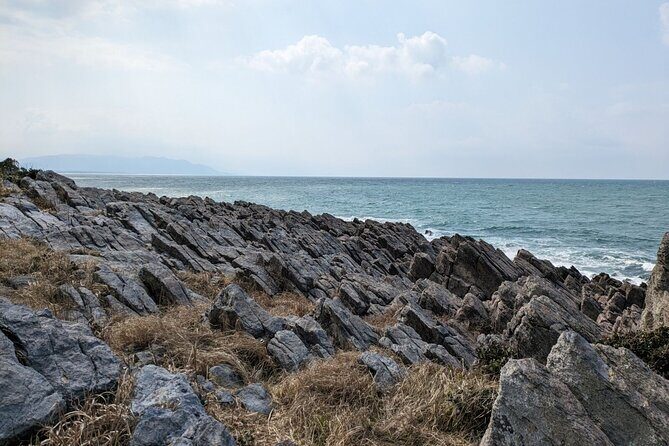
After Oshima, the schedule brings you to Tojinbo for lunch and a good stretch of time. The provided timing shows about 3 hours here, with time to look around.
Tojinbo is the headline for a reason: this area is widely known for dramatic cliffs and striking rock formations. On a day like this, these views are what you’ll remember when you get back to your hotel.
I like that the itinerary gives you time to absorb rather than just take a couple photos and move on. You can stroll the coastal edges at your own pace, stop when the light hits a cliff face, and let the rock geometry do its thing.
What to consider: cliff weather can change quickly. Even on a pleasant morning, wind can ramp up near the sea. If you tend to get cold easily, pack a light layer.
And yes, lunch timing here is real-world helpful. You’ll be near the coast when you eat, not off somewhere inconvenient. Just don’t expect a set meal from the tour details. The info mentions time for lunch; it doesn’t say lunch is included.
Mikuni Port breakwater: history you can actually step into
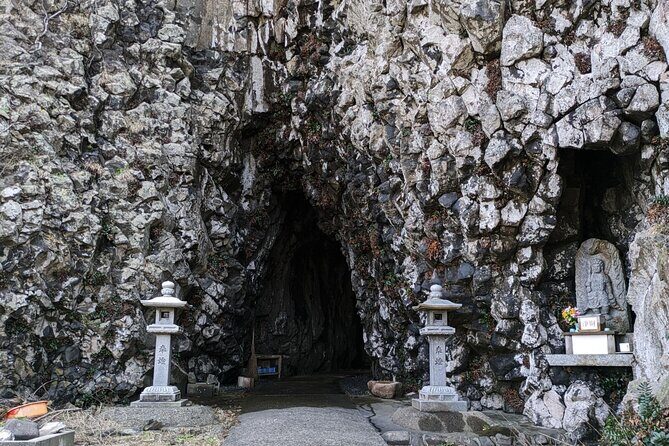
Then the tour shifts from nature to port life at Mikuni Port breakwater.
You get about 2 hours, and the structure here is what makes it good value. You’re not only looking at the harbor scene. You’re also going inside:
- a former wealthy merchant’s house
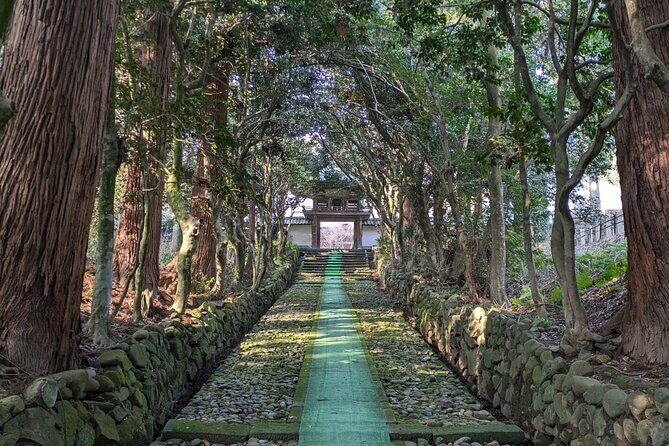
- parts of the port’s temple setting, including a gate made from blue stones
- another temple gate area associated with a famous garden
That “inside the house” element is a big deal. It’s the difference between seeing a postcard and seeing how wealth and daily life were arranged in the past. Port towns often feel complicated on the surface, but when you’re inside a preserved home, you get a clearer picture of how prosperity worked.
Also, the port has historical buildings, so even outside walking moments feel purposeful. This is the part of the day where I’d slow down and let your guide point out small cues—materials, layouts, the way spaces were designed.
A drawback to note: since the tour keeps moving, you won’t have hours to go deep like a museum visit. But for most people, it’s the right amount of history without overdoing it.



National Heritage temples and shrines: the quiet details
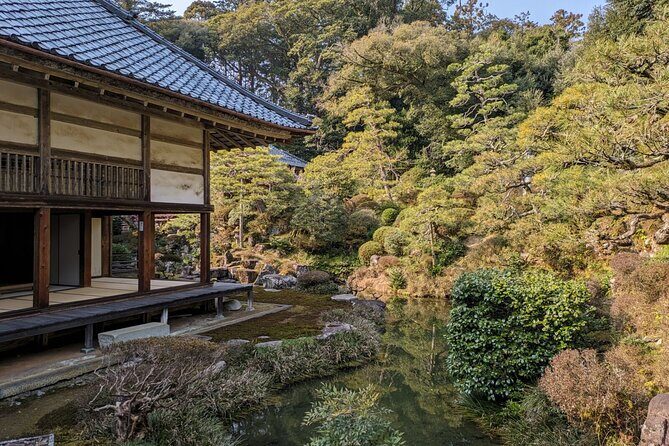
The route includes visits connected to National Heritage Site temples and shrines. The most specific named detail you’ll experience here is the blue-stone temple gate, plus another gate tied to a famous garden.
This is where careful observation pays off. Gates and temple approaches often look similar until you’re paying attention to how stone is used, how paths are laid out, and how gardens frame what you’re meant to notice. Even if you’re not a history expert, you can still get something from it because the setting is visual and grounded.
If you like travel that feels respectful rather than performative, this portion tends to land well. It also balances the day. After cliffs and exposed coastline, a more enclosed temple area feels like a mental exhale.
Awara Onsen Ashiyu: warm feet after the sea air
The final stop is Awara Onsen Ashiyu, with admission included and about 2 hours 40 minutes.
Ashiyu is an onsen-style foot bath. That’s a smart ending for this itinerary because your feet have done the heavy lifting by this point. Walking along coast edges and moving between stops can leave you stiff. A warm soak gives you relief without turning the day into a long spa commitment.
I also like that it’s not just a random add-on. It fits the story: you spend the day exposed to wind and sea air, then you reset your body with warmth before heading back.
One practical consideration: dress for easy removal. If you arrive already prepared with footwear that’s easy to slip off, the foot bath experience goes smoother.
Price and value: is $211.75 worth a coast day?
At $211.75 per person for roughly 9 hours, this is priced like a guided full-day experience rather than a DIY “buy a ticket and hope” outing. For your money, you’re paying for:
- a guide to connect the stops into a coherent day
- the logistics of getting you between Kanazawa and Fukui coast sights
- time at multiple sites instead of rushing one place only
- admission included at Awara Onsen Ashiyu (while other major stops listed are free)
The value improves because several stops show free admission in the tour details (Echizen Matsushima, Oshima Island, Mikuni Port breakwater). That means you’re not juggling extra ticket lines for everything.
Also, the fact that it’s booked about 47 days in advance on average suggests demand for this exact mix—cliffs plus port history plus an onsen-style finish. If you’re planning a trip around peak season, don’t wait too late to reserve.
Who this tour suits best (and who should rethink it)
This is a great match if you:
- want dramatic coastline scenery without needing a car
- like spiritual sites that aren’t overcrowded
- enjoy history you can see up close (like the merchant house visit)
- want a practical end to the day with Ashiyu for tired feet
I’d rethink it if you:
- dislike long days with steady walking between stops
- need fully guaranteed weather-perfect cliff views (coast days can’t promise sunshine)
- expect a deep-dive museum level experience at each location (this is a guided sampler day, not an all-day immersion in one town)
Should you book this Kanazawa to Fukui cliff, island, and port day?
If your goal is a coast day that feels different from the usual big-name routes, I’d say yes. You’re getting several major pieces—Tojinbo cliffs, Oshima Island, Mikuni Port history, and a warm foot bath finish—under one guided plan.
Book it if you want good variety without turning the day into chaos. The small group size helps, and the mix of free and included admissions keeps it feeling like a thoughtful package.
And if plans shift, there’s free cancellation up to 24 hours in advance for a full refund, which gives you breathing room while you finalize your Japan schedule.
FAQ
How long is the tour?
The tour runs for about 9 hours.
How much does it cost?
The price is $211.75 per person.
What is the meeting point in Kanazawa?
You meet outside the Shinkansen ticket gate, in front of the information center sign at Kanazawa Station.
What time does the tour start?
The start time is 8:45 am.
How many people are in the group?
The tour has a maximum group size of 20 people.
Is it a mobile ticket?
Yes, the tour uses a mobile ticket.
Which stops have free admission?
Echizen Matsushima, Oshima Island, and Mikuni Port breakwater are listed as free admission.
Is admission included for the onsen stop?
Yes. Admission is included for Awara Onsen Ashiyu.
Is there time for lunch?
Yes, there is time for lunch at Tojinbo.
Can I cancel for free?
Yes. You can cancel up to 24 hours before the experience start time for a full refund.