Kanazawa at human pace is special. This private, 4-hour walk is built around the city’s most story-rich areas: Kenroku-en for garden calm, then Nagamachi and the nearby samurai residences for that feudal feel you can actually see and step around. You get a guide who helps you connect the dots across gardens, castle grounds, and old quarters without feeling rushed.
What I like most is the straightforward route with time to actually notice details, plus the fact that the schedule lists admission as free at each main stop—so your money mainly goes to the guide and your transport.
The one consideration I’d plan for is cost beyond the tour price: transportation money isn’t included, so you’ll want to budget for trains or taxis to move between sights.
If you want Kanazawa to feel personal instead of crowded, this is a good fit. It ends in the Naga-machi Buke Yashiki District, which is a nice place to finish because it leaves you surrounded by the old-street atmosphere rather than a random bus stop.
In This Review
- Key things that make this tour worth your time
- A private Kanazawa route that feels efficient, not stressful
- Kenroku-en: the garden stop where the pace slows down on purpose
- Kanazawa Castle Park: stepping into the stone-and-gate era
- Higashi Chaya District: old-street geisha culture in a short window
- Nagamachi Samurai District: the neighborhood feel of honor and residence
- Naga-machi Buke Yashiki District: elite samurai-home atmosphere to end on
- Price and value: what $367.32 per person is buying
- Getting there smoothly: transport isn’t included, so plan your move
- Who this private tour suits best
- Should you book Kanazawa’s Timeless Culture Private Tour?
- FAQ
- FAQ
- How long is the Kanazawa Timeless Culture private tour?
- Is this tour private?
- What does the tour price include?
- Are admission tickets included for the sights?
- Do I need to pay for transportation during the tour?
- Where does the tour start and end?
- Does the tour offer a mobile ticket?
- How far in advance is it typically booked?
- What is the cancellation policy?
- What happens if the weather is poor?
- Is the tour difficult for most people?
Key things that make this tour worth your time

- Private guide, private group: you’re not sharing commentary with strangers.
- Kenroku-en first: start in calm mode, then shift into history and old neighborhoods.
- Castle Park without the museum pressure: focus on the atmosphere of stone walls and gates.
- Higashi Chaya District time-boxed right: enough wandering to see the narrow lanes and tea-house vibe.
- Two samurai-area stops back-to-back: Nagamachi and Buke Yashiki are both covered in the same loop.
- Akari-level service style: one guide named Akari is praised for being friendly, informed, and good at adding local food recommendations (like a standout Kanazawa curry spot).
A private Kanazawa route that feels efficient, not stressful

Kanazawa can overwhelm you if you try to DIY every neighborhood at random. What I like about this tour format is that it’s built as a clear loop: gardens → castle grounds → geisha district → samurai districts. You spend your brainpower on what you’re looking at, not on figuring out what order makes sense.
You also get the practical advantage of a local guide with a plan. That matters in places like Higashi Chaya and the Nagamachi areas, where the streets are narrow and the mood is part of the experience. A guide can help you slow down on purpose instead of just walking and hoping it clicks.
And because it’s private, you can ask quick questions as you go—something you won’t always manage in a larger group.
Other Kanazawa tours and samurai-district walks

Kenroku-en: the garden stop where the pace slows down on purpose
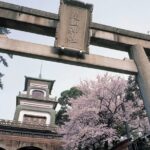
Kenroku-en is a strong start because it changes your mental gear immediately. The tour has you spending about an hour here, and the focus is on the things that make the garden feel serene: tranquil ponds, graceful bridges, and colorful plant life.
Why this works so well in a 4-hour tour: gardens are a reset button. You’ll get out of the “sightseeing sprint” mode early, so the rest of the day feels more like a sequence of chapters than a checklist. If you’re the type who likes atmosphere—water, pathways, quiet corners—this is the stop that usually delivers that feeling first.
What to watch for: since the time is capped, don’t try to see every single angle like you’re on an all-day garden quest. Use the hour to pick a couple of viewpoints—especially where the ponds and bridges shape the view—and let the guide point out what’s worth your attention.
Kanazawa Castle Park: stepping into the stone-and-gate era
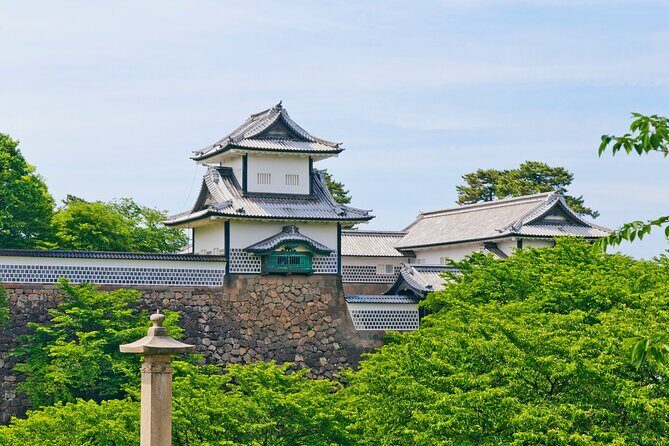
Next is Kanazawa Castle Park for about an hour. The tour frames it around the feeling of the place: stone walls, ornate gates, and the sense that samurai legends echo through the grounds.
This stop is valuable because it doesn’t require you to have special background knowledge to enjoy it. You can read the setting visually—thick stonework and formal entry points naturally communicate power and order. A guide also helps you translate what you’re seeing into something more meaningful, so it’s not just walking around impressive walls.
Possible drawback: if you’re hoping for a lot of time inside buildings or for a deep dive into specific structures, this portion is intentionally timed. It’s still rewarding, but it’s built for atmosphere and overview rather than a long, museum-style session.
Higashi Chaya District: old-street geisha culture in a short window
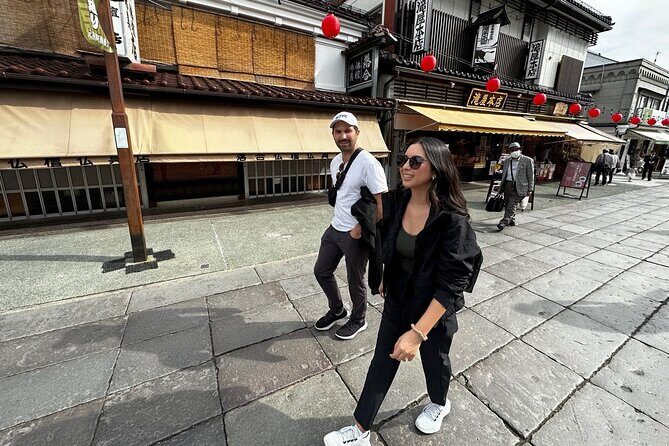
Then you shift into Higashi Chaya District for about 30 minutes. This is a compact stop, but that’s not a bad thing if your goal is to get oriented and catch the district’s signature feel: narrow streets, traditional tea houses, and the sense of geisha-era rituals that shaped the neighborhood.
In half an hour, you can do the right kind of sightseeing: walk the main lanes, pause where the street character is strongest, and soak in the contrast with the castle park area. It also sets up the next part of the day by showing how Kanazawa’s old culture wasn’t only military and political—it also had refined social life.
What to keep in mind: because the time is short, it’s not the moment to hunt for every tea-house entrance. Instead, use it to understand the layout and atmosphere. If you want more time here, you can always plan a return later on your own.
Nagamachi Samurai District: the neighborhood feel of honor and residence
After Higashi Chaya, the tour includes 30 minutes in Nagamachi Samurai District. This area is described around well-preserved samurai residences and that clear sense of timeless honor.
This is one of those places where where you walk matters as much as what you see. The residential layout gives you a stronger impression of daily life than a single monument ever could. Even in a short window, you’ll likely notice how the neighborhood’s preserved structures create a lived-in historical atmosphere.
If you’re traveling with someone who loves culture but doesn’t want long museum stops, this is a great segment. It’s human-scale, and the architecture and street mood do the storytelling for you.
One practical note: because it’s a shorter stop, I’d treat it like a photo-and-feel break. Get a sense of the area first, then decide if you want to return later for extra time.
Other private tours in Kanazawa





Naga-machi Buke Yashiki District: elite samurai-home atmosphere to end on

Finally, you go to Naga-machi Buke Yashiki District for about an hour. This stop is aimed at the stately homes of samurai families, and it’s a strong ending choice because it helps you finish with maximum old-neighborhood impact.
You’ll spend longer here than in the neighboring samurai segment, which is smart. The Buke Yashiki area is set up to make you feel the status difference through scale, presence, and the “grand house” mood. It’s also where the tour ends, so you’re not rushing out to catch a train right after.
If you like souvenirs, this ending spot often works well for lingering—though what you find will depend on what’s open that day. The key is that you finish in the same neighborhood energy that you visited, not miles away.
Price and value: what $367.32 per person is buying
The tour price is $367.32 per person for about 4 hours. That’s not “budget,” but it also isn’t just paying for walking. You’re paying for a private, local guide to connect multiple Kanazawa highlights in one clean route.
Here’s the value logic I’d use:
- The schedule lists admission as free at Kenroku-en, Kanazawa Castle Park, Higashi Chaya, and both samurai-district stops.
- You still pay for your transportation separately, so your real all-in cost depends on whether you walk between areas, take trains, or use a taxi.
- A private guide can prevent wasted time—wrong turns, slow delays, and confusion about what’s worth prioritizing.
As a rough math check, it works out to about $92 per hour per person for guided time. If you’re traveling with a partner or small group and you care about smooth pacing, that can feel reasonable fast. If you’re solo and trying to keep costs tight, you may prefer a cheaper group tour or self-guided route and spend the savings on food and extra admissions.
The best “value fit” is when you want someone to set the rhythm and keep your day coherent.
Getting there smoothly: transport isn’t included, so plan your move
Your tour starts at Kenroku-en (1 Kenrokumachi, Kanazawa, Ishikawa 920-0936) and ends in Naga-machi Buke Yashiki District (Chome-3 Nagamachi, Kanazawa, Ishikawa 920-0865). It’s noted as near public transportation, but that still doesn’t mean the tour transportation is handled for you.
So do this:
- Plan how you’ll get to Kenroku-en before the start time.
- Decide in advance whether you’ll rely on public transport or taxis as you move between stops.
- Bring some cash or a card that can cover local transit, since transport money isn’t included.
This matters because the tour is private and time-boxed. If you arrive late or if your transit plan collapses, you’ll feel it more in a 4-hour experience.
Who this private tour suits best
I’d especially recommend this tour if you:
- Want a private guide and don’t want to coordinate with a bigger group.
- Prefer a focused route that hits Kenroku-en and Kanazawa’s old quarters without turning your day into a research project.
- Enjoy visual culture—gardens, old streets, residences—more than long ticketed attractions.
- Like having a guide who can also nudge you toward local food. One guide named Akari has been specifically praised for being friendly and knowledgeable, and even for pointing people to a special local venue for Kanazawa curry.
It’s also a solid pick for first-time visitors to Kanazawa who want the “main old neighborhoods” experience but still want it to feel personal.
Should you book Kanazawa’s Timeless Culture Private Tour?
Book it if you want a tidy, high-impact day with a local guide who can connect the dots between Kenroku-en, castle-area atmosphere, and both geisha and samurai districts. The free-admission schedule at each main stop makes it easier to predict what you’ll spend, and the private setup keeps the experience calm and responsive.
Skip it (or consider another option) if you’re trying to minimize costs and you already know you won’t use a guide. Since transportation isn’t included and the time at some districts is intentionally short, you’ll only feel the value if you actually want guided pacing and neighborhood context.
FAQ
FAQ
How long is the Kanazawa Timeless Culture private tour?
It’s approximately 4 hours.
Is this tour private?
Yes. It’s a private tour/activity, so only your group participates.
What does the tour price include?
It includes a professional local tour guide.
Are admission tickets included for the sights?
The tour schedule lists admission as free for the main stops (Kenroku-en, Kanazawa Castle Park, Higashi Chaya District, and the samurai districts). Optional entrance fees may apply if you choose attractions inside.
Do I need to pay for transportation during the tour?
Yes. Transportation expenses (public transport or cab) are not included.
Where does the tour start and end?
It starts at Kenroku-en (1 Kenrokumachi, Kanazawa) and ends at Naga-machi Buke Yashiki District (Chome-3 Nagamachi, Kanazawa).
Does the tour offer a mobile ticket?
Yes, mobile ticket is listed as a feature.
How far in advance is it typically booked?
On average, it’s booked 75 days in advance.
What is the cancellation policy?
Free cancellation is offered up to 24 hours in advance for a full refund. If you cancel less than 24 hours before, your payment is not refunded.
What happens if the weather is poor?
This experience requires good weather. If it’s canceled due to poor weather, you’ll be offered a different date or a full refund.
Is the tour difficult for most people?
The information says most travelers can participate.